Need help with your project?

Oops! Something went wrong while submitting the form.


Creating a business idea is only half the problem: you also need to find a development partner who will execute exactly your vision, make it look good, and deliver an app on time. The market for Node.js developers is crowded with candidates, rates vary wildly, and it’s hard to tell from a resume alone who can actually deliver a stable, scalable product instead of creating new problems.
In this article, we share the 3 key tips on how to hire a Node.js developer, what criteria to pay attention to, and what budget to plan for an app. Let’s explore this process together!
%20(1)%20(1).png)
Let’s start with the basics: why choose Node.js over other frameworks for software development?
Node.js is an open-source and cross-platform tool for creating web apps and backend services. Before this framework, JavaScript code could only run in a browser, but now Node.js has changed that. It is built on the V8 JavaScript engine, the core of Google Chrome, and works outside the browser, which allows the framework to be very performant and create server-side logic fast.
Node.js development has several advantages for business owners:
Many large players on the market use the Node.js framework to develop and maintain their web applications.
‼️ Next, let’s move to the key 3 tips on how to hire Node js developers and not make a mistake. We recommend defining ideal skills and experiences beforehand, picking the right engagement model, and preparing for the interview with our list of essential questions.
Now, we get to the gist: how to choose your dream team that will make sure your web development goes smoothly and quickly. The hiring process starts before you even post a job or talk to agencies — first, you need to define what an ideal candidate would look like and what skills they would possess. Here is a short how-to in 4 steps.
Start with what product you are actually building. Is this an MVP, a full-scale web app, or just an update with a feature addition? Write down core functionality, target audience description, and timeline. Clear project requirements will guide you through the hiring process, helping to estimate the workload, outline must-have technical skills, and avoid paying for expertise you do not need.
Not every Node js developer fits every project. Some focus on API development, others on real-time systems or integrations. Decide which technical skills are critical for your app and which are optional to narrow down the search.
Choose sourcing channels based on your budget, desired engagement model, and urgency. It can be freelance platforms like Upwork, a rating of the best outsourcing agencies with Node.js developers, and referrals from colleagues. All these options have their own pros and cons, so knowing your ideal candidate helps filter faster.
Look for similar projects and niches, not just executed code or knowledge of programming languages. Make sure that a Node js developer has experience with the industry you are working in — some of them, like healthcare or finance, have various standards and regulations, so it’ll be helpful to have someone with this expertise.
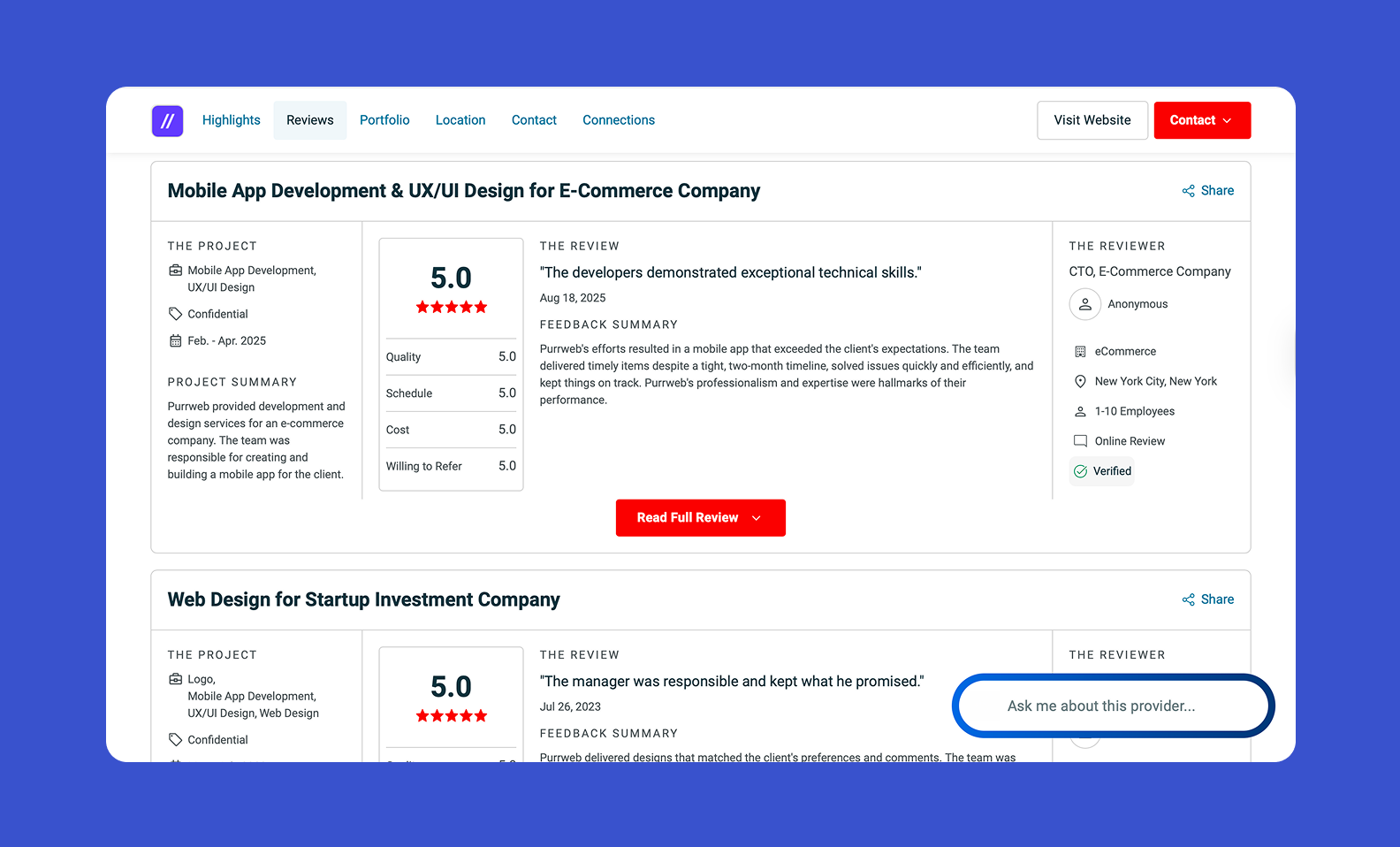
Clutch.co is a great resource to check reviews and see what projects Node.js developers have completed.
Another important element of hiring Nodejs developers is choosing an engagement model: freelance, outsourcing, or in-house. This decision will define how you work with the team, how you pay for the work, and how responsibilities are shared.
Freelancers are usually independent contractors who are paid per hour or per project. Their responsibility and expertise are limited to the task you have assigned them. For example, if you hired a Node js developer for a quick bug fix but in the process discovered that the user flow doesn’t work well, you’ll have to find a separate specialist for UI/UX audit.
The pros of the freelance hiring model are flexibility and lower upfront costs. The downside is limited expertise and dependency on one person. Therefore, this type of engagement works for startups with clear tasks and limited budgets.
Ideal for: short-term projects, MVP development, or bug fixes
Outsourcing is a popular hiring model when an outside agency provides a full team, often including Node.js developers, QA, UI/UX designers, and project management. They cover comprehensive services and bring web applications to life without operational overhead and delivery delays. In the case of this model, costs are higher than freelancers', but for that price, you get a technical team with a versatile skillset and set up communication.
Ideal for: long-term projects, intricate industries, and stable and predictable delivery
<div class="post_divider"></div>
⭐️ Our experience
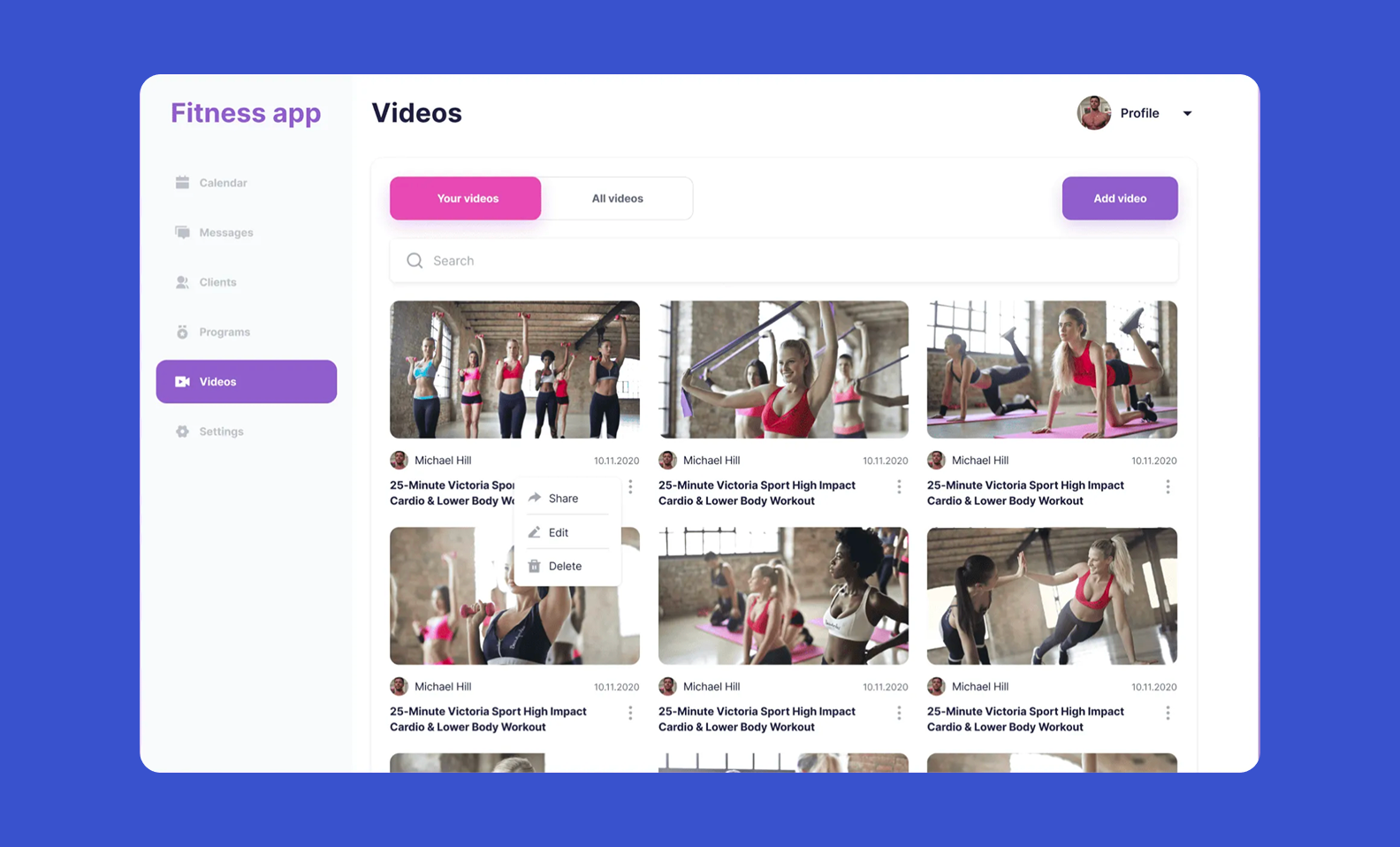
Purrweb is an outsourcing IT agency that offers web and mobile app development on cross-platform frameworks like Node.js and React Native. For one of our clients, we’ve created a fitness app that lets users exercise at home, stay connected with personal gym coaches 24/7, and design personal training programs.
Our task was to develop two apps: a mobile solution for customers and a web platform for trainers that supported consultations, custom workout plans, and live chat feature. The key challenge was to balance desired functionality with launch timelines, so our Node.js developers postponed some advanced features until after release.
<div class="post_divider"></div>
Another route is an in-house team, which includes Node.js developers, QA engineers, and designers who become part of your company. This gives you full control and long-term knowledge retention. It also comes with higher costs, including salary, onboarding, and project management.
Ideal for: large enterprises with complex, long-term products and stable funding
Lastly, make sure that you ask the right questions when interviewing a Node js developer. As a business owner, this is your opportunity not to test the candidate's knowledge but to understand how the candidate works in real projects and how their decisions affect risk, cost, and timelines.
These questions will help you evaluate whether the Node js developer can protect your investment, use critical thinking, and deliver a stable, in-demand product, not just write code.
❓Can you show me examples of web applications you have developed that are similar to my project?
🗣️ Look for concrete examples in the same niche and clear explanations of the business problem. Hiring Nodejs developers with relevant experience will reduce onboarding time and the risk of expensive mistakes.
❓What tools do you usually use to ensure your app is secure? How do you handle sensitive data?
🗣️ A good answer will explain practical measures like data encryption and trade-offs. Remember that in industries like healthcare or fintech, security issues lead to legal and financial risk, so you want to make sure Node.js developers get you covered.
❓How do you optimize app performance and manage memory leaks?
🗣️ The ideal candidate should be able to deploy monitoring, asynchronous programming, JavaScript runtime, testing, and real fixes, since performance problems during software development increase infrastructure costs and hurt user retention.
❓What is your experience with the app submission process? Have you ever had an app rejected?
🗣️ App rejections delay launches, but they happen. Look for solutions Node.js developers propose if something like this happens — pivoting and adaptability are key soft skills.
To help business owners choose a Node js developer, we’ve prepared a cheat sheet with the most important skills a candidate should demonstrate, both technical and soft.
Once you decide on project scope, hiring model, and key skills, it finally comes time to sort through candidates. Here are a few places to start your search for a Node js developer.
These platforms are large pools of freelance developers, designers, and testers. Through Fiverr or Upwork, you can hire a specialist within a few hours and start the development process fast. It’s a perfect place for small tasks that need urgent fixes or early prototypes.
Clutch is a platform that provides a list of verified agencies and web development teams, together with rankings, case studies, client feedback, and industry focus. The rates you will see on Clutch are higher than on freelance platforms, but the risk is lower, since Node.js developers are vetted and have a reputation to uphold.
Referrals from founders, investors, or advisors are often the most reliable. First, you can get honest, first-hand feedback about communication, delivery, and problem-solving among Node.js developers. Also, this is a very cost-effective way of hiring.
Going directly to an outsourcing IT agency is always an option. Most teams have developers with Node.js expertise and certainly can help you execute any app. While outsourced Node.js developers build the product, you can delegate the control, focusing on marketing and investments.
<div class="post_divider"></div>
⭐Our experience:
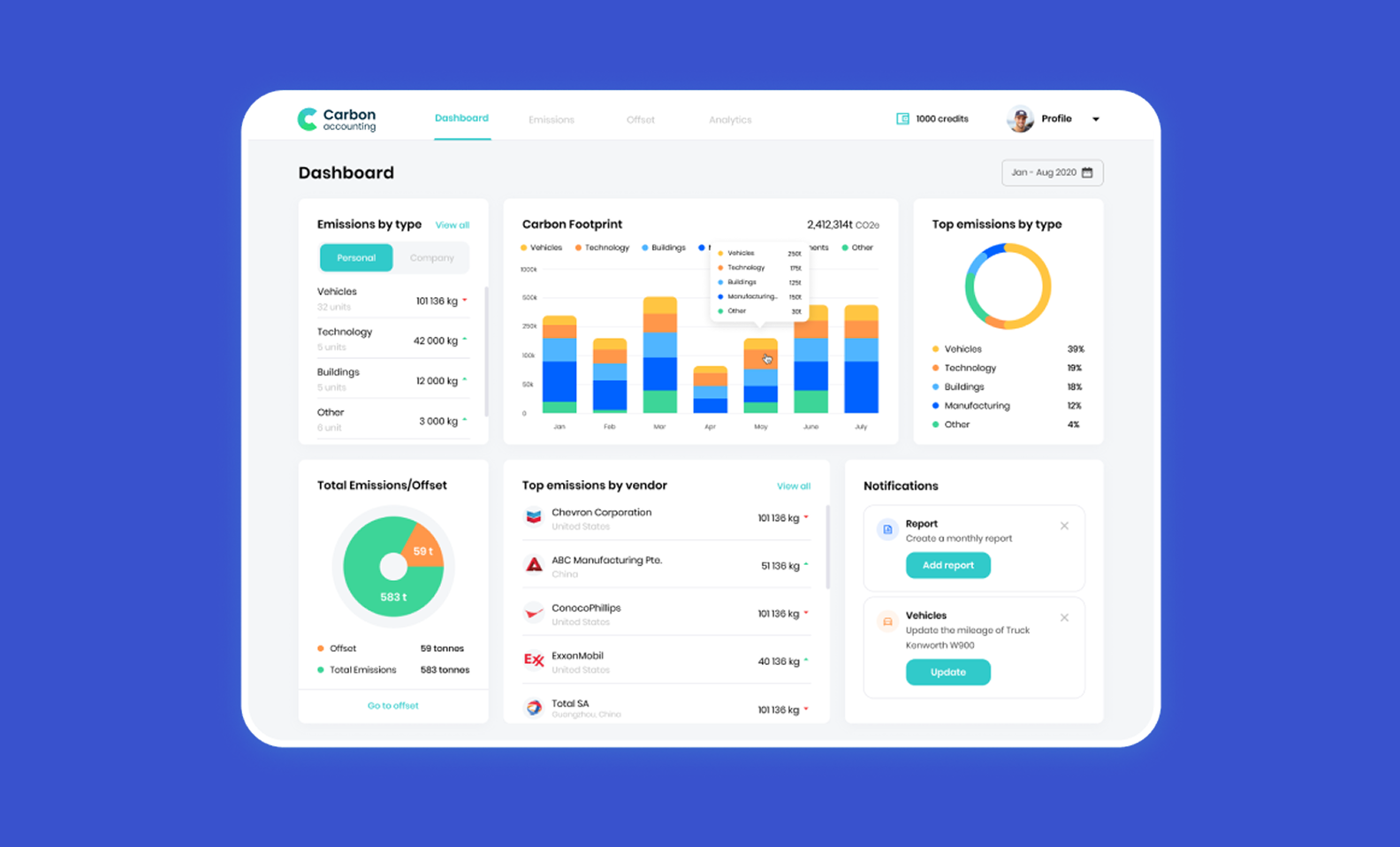
We developed a carbon accounting platform to help companies track, manage, and reduce CO₂ emissions. The client was a repeat customer of ours and needed a solution that would support compliance, investor reporting, and green financing requirements in the US and EU markets.
Our team built a web-based platform that acts as a digital eco-consultant, using the Greenhouse Gas Protocol to calculate Scope 1, 2, and 3 emissions. A key challenge was presenting large volumes of complex data without overwhelming users, especially across different roles inside a company. We decided to focus on the consistency of UI and put together a dashboard with clear logic and accent colors.
<div class="post_divider"></div>
Rates that Node.js developers charge vary based on experience, location, and project complexity. We’ve gathered all the information we could about prices to help you plan a realistic budget and avoid surprises during the development process.
Let’s start with freelance and in-house salaries for Node.js developers to help you understand what expenses to expect. The compensation depends on the experience level.
Junior Nodejs developers, with less than 2–3 years of experience, usually charge $25-$50 per hour. This level is suitable for simple tasks, bug fixes, or working under supervision, but juniors cannot independently execute and release an app yet.
A mid-level developer, with 3–5 years of experience, typically costs $50-$100 per hour. These Nodejs developers can work independently, build APIs, operate the JavaScript runtime environment, and handle most backend tasks.
Senior Nodejs developers, with 5+ years of experience, charge anywhere from $100-$150 per hour to infinity. Seniors bring architectural thinking, performance optimization, and risk management. They are often involved in system design and make critical decisions.
Now we can talk about what budget to plan. Let’s assume you decide on an outsourcing model and hire a team of Node.js developers with a mix of juniors, middles, and seniors. The price of the project will be based on the number of hours needed to complete it.
Looking for Nodejs developers to turn your idea into a user-friendly app with a sleek UI/UX? Purrweb’s team has completed over 550+ projects in many niches, including healthcare, fintech, logistics, retail, and IoT. You can check our expertise and the full portfolio here.
➡️ <a class="blog-modal_opener">Share your idea with our team</a> to get a free consultation and cost estimation in 48 hours

.svg)