Explore
Need help with your project?
This field is required
Incorrect phone number
Incorrect Email
This field is required
Please fill in all fields
Next
Next
Your role in the project
Services
Budget
Please select one option in each category
Submit
Submit
several colorful figures
Request sent
Our manager will contact you shortly.
Oops! Something went wrong while submitting the form.

Custom Remote Patient Monitoring Software

We develop remote patient monitoring software that gives healthcare providers secure access to patient data for remote monitoring and coordinated patient care. Our team specializes in development, data security and legal compliance for medical platforms, so you can protect sensitive patient data, avoid fines, and meet HIPAA requirements from day one.

RPM: ~$90,000–$120,000 HIPAA-ready from day oneWearables + EHR + telehealth4.9 average rating across 80 reviews

Some facts about us

44
reviews on Clutch
19
reviews on GoodFirms
200
IT experts in our talent pool
48h
to get a free project estimation

Our remote patient monitoring services

Custom RPM development

We offer custom RPM development for projects at any stage. If you only have an idea, we will help research the market, identify user flows, plan the logic of the platform, and draft a technical proposal.
If you’re past testing the idea and want to scale your MVP up, our team will analyze user feedback, conduct product discovery, and suggest new features to strengthen patient health information security and increase the operational capacity of your platform.
Depending on the device workflow and user needs, an RPM product can include web interfaces, mobile apps, or cross-platform development for iOS and Android.

UX/UI audit for existing RPM

For existing RPM solutions that experience a drop in patient engagement and retention rate, we offer audit and redesign services. Our team will identify usability issues, confusing flows, and barriers for patients or staff. After the audit, we’ll provide actionable recommendations to improve your RPM platform.

Device integration

We integrate patient monitoring devices such as glucometers, blood pressure monitors, pulse oximeters, smartwatches, and other RPM devices with clinical dashboards. The system can collect patient vitals from Bluetooth/BLE or cellular-connected hardware, map the readings to the relevant patient record, and surface device status for care teams. See our IoT software solutions for the broader device-integration approach.

Project discovery

Before you fund RPM software development, get a project discovery service to evaluate and validate your idea. This analysis includes in-depth market research, user interviews, and unit economics to calculate profitability. At the end, you get a full discovery report with recommendations on whether you should move forward or pivot.

Our cases

My Therapy Assistant
Healthcare
UX/UI design
Web development
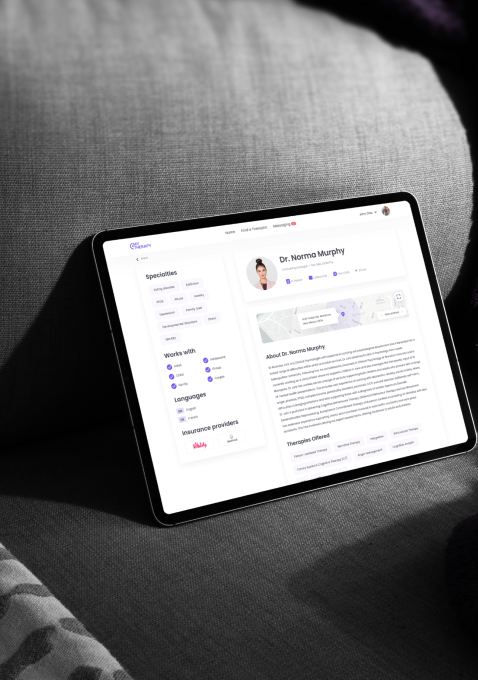
My Therapy Assistant is a web and mobile platform that connects patients with licensed mental health specialists in the UK for online therapy. Our client, an entrepreneur and a practicing therapist, came to us with the idea, and we handled the full development cycle: from UI/UX design to mobile and web app development.
The platform supports video calls, chats, progress tracking, and content sharing. As a bonus, we added a shared notebook where users write down insights during a session. We also integrated HealthCode for insurance billing, which required close coordination with UK healthcare systems. After the launch, over 30 therapists and 1,000 users joined the platform.

My Therapy Assistant

My Therapy Assistant: RPM software development by Purrweb
Biogeek
MVP
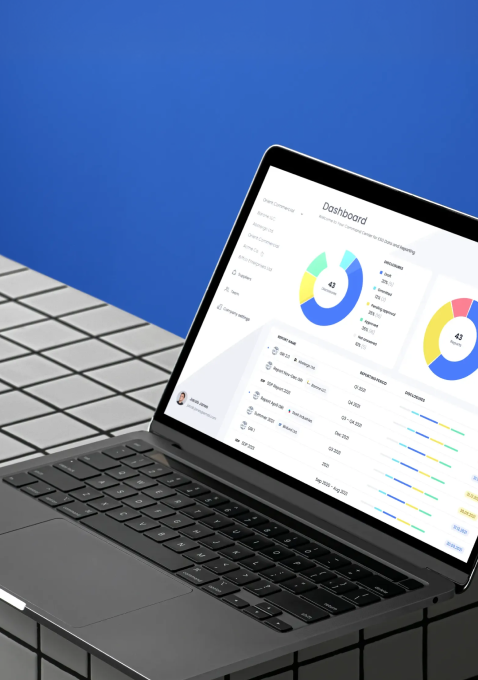
We developed Biogeek, a web platform that helps users store lab test results and track their health in one place.
The clients came to us with an idea of one complex app for both test results and nutritional advice based on patient outcomes. After we did our research and budget estimation, they decided to split the project into two apps: Biogeek.Health for lab results and Biogeek.Expert for working with nutritionists. We started with the first idea and handled UI/UX, development, and PDF parsing using ABBYY to extract and display health data from lab results.
The MVP was released in 2022, and the client continues working with us on support and scaling up internationally.

Biogeek

Biogeek: healthcare IoT platform by Purrweb
Medico
Mobile app development
Web app
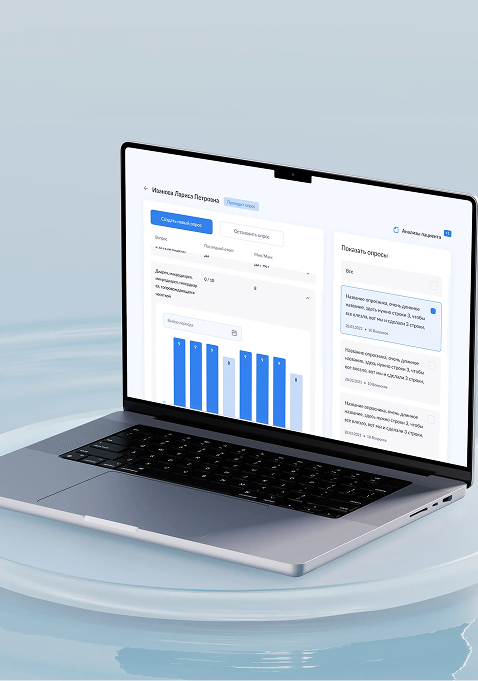
Medico is an RPM platform to assist oncologists. It digitizes routine patient surveys and lab results to reduce doctors’ workload on in-person appointments.
For the project, our team developed both a mobile app for patients and a web app for doctors, with features like customizable surveys, lab uploads, dashboards, and time-zone-based notifications. Together with the client, we focused on how to design a scalable system ready for hospital-level use, while keeping costs low.
After a year of development and legal prep, we launched an MVP on the App Store and Google Play in early 2023.

Medico

Medico: telemedicine app by Purrweb
Get a free project estimation within 48 hours
We can’t wait to hear your ideas! Contact us and get a free project estimation within 48 hours.
This field is required
Incorrect number
Incorrect Email
This field is required
Please fill in all fields
Get in touch
Get in touch
Get in touch
We can’t wait to hear your ideas! Contact us and get a free project estimation within 48 hours.
Your role in the project
Service of interest
Budget
Please select one option in each category
Request sent
Our manager will contact you shortly.
Oops! Something went wrong while submitting the form.

Technologies & Devices Used in Remote Patient Monitoring

Wearables / Glucometers / BP monitors / Pulse oximeters / Scales → Bluetooth/BLE or cellular → Integration layer → RPM platform → Clinical dashboards / EHR

Monitoring devices

The platform can ingest vital signs and other readings from compatible glucometers, blood pressure monitors, pulse oximeters, weight scales, and wearables. The device mix follows the care process and the data a team needs to review for each patient.

Data transmission

Devices can transmit readings over Bluetooth/BLE or cellular connections. The integration layer handles device identity, measurement formats, connectivity status, and failed transmission paths before a reading reaches the RPM platform.

Platform connection

At the platform layer, we design data ingestion, access boundaries, and dashboard flows for clinical teams. Browse our IoT software solutions and IoT in healthcare guide for related engineering patterns.

EHR/EMR Integration & Interoperability

EHR/EMR systems

An RPM platform can exchange patient readings, care-plan data, and clinician-facing alerts with an EHR or EMR system. We map the required data to the target system’s APIs and HL7 FHIR resources, then define authorization, error handling, and data-validation paths for the integration. The scope depends on the EHR version, its implementation guide, and the care process the team needs to support, whether that system is Epic, Oracle Health, Allscripts, or another clinical platform. Explore our EHR/EMR development services for related integration work.

Telehealth apps

If you decide not to add video call functionality directly into the RPM platform, you can set up an integration with a third-party telemedicine provider like Zocdoc or Teladoc. Through this partner, patients can quickly schedule a virtual checkup with healthcare professionals.
For a unified product scope, see our telemedicine app development services.

Wearable medical devices

An RPM platform can support wearables and home-use patient monitoring devices, including smartwatches and rings, blood pressure monitors, pulse oximeters, and glucose sensors. Device integration gives clinical teams timely patient health information.

Patient portals

Let patients access their data, including patient health information shared through the platform, track their progress, and view care plans through a portal they already use. This improves patient engagement and helps them take more responsibility for their treatment.

Analytic and reporting tools

These tools help healthcare providers analyze monitoring data across a patient population: track trends and pattern breaks, flag early risks, and generate custom dashboards.

Compliance & Regulatory Requirements for RPM Software

HIPAA safeguards

RPM software that handles electronic protected health information needs access controls, audit controls, data-integrity controls, authentication, and transmission security. For a healthcare organization, the implementation scope depends on its role and the systems that process the data.

GDPR and privacy by design

For EU patients, health data is a special category of personal data. The platform design needs a valid processing basis, clear controller and processor responsibilities, data-protection-by-design measures, and security appropriate to the risk.

FDA records and signatures

FDA 21 CFR Part 11 applies when electronic records or signatures are subject to FDA requirements. In that context, the system needs validation, controlled access, secure time-stamped audit trails, record retention, and signature controls. For a broader healthcare-product scope, see our custom healthcare software development services.

Reimbursement & Billing Automation for RPM Services

RPM billing workflows can consolidate device readings, monitoring time, and patient interactions into a reviewable record. The relevant billing rules depend on the payer, care setting, and current CMS guidance, so the platform should support the billing process without treating a code as automatic reimbursement eligibility.
CPT code
What it covers
Operational condition
99453
Initial device setup and patient education
Used at the start of an RPM service, subject to current payer rules
99454
Device supply, daily recordings, and programmed alert transmission
CMS guidance generally requires at least 16 days of data in a 30-day period
99457
First 20 minutes of RPM treatment management
Reported as cumulative monthly management time
99458
Each additional 20 minutes of RPM treatment management
Reported in addition to 99457 when the criteria are met
Payment amounts are intentionally omitted because they vary by year, locality, facility status, payer, and billing circumstances.

The roadmap to a remote patient monitoring solution

Each stage produces a concrete deliverable, from requirements and a clickable prototype to a released platform with post-launch support.
1

Project planning

It all starts with an initial meeting where you tell us about the platform. Once we grasp the idea, we research the market and analyze how healthcare professionals and patients will want to use the platform. We also check which regulatory and healthcare standards apply.
Duration: 1-2 weeks
Then, we define the scope, make a list of must-have features for the first version, and create a development roadmap for the RPM platform. The goal of this stage is to consider all possible changes and estimate the workload to avoid surprises later on. Teams that need to validate the product scope before development can start with mobile app consulting. For a mobile delivery context, see our healthcare mobile app development guide.
What you get:
Technical requirements for the platform and a roadmap

2

UI/UX design

Once the roadmap is ready, we move to the UI/UX design stage. Here, our designers create user flows for each category of healthcare providers: doctors, nurses, and admins. After that, they turn this logic into colorful wireframes on Figma, and finally, after your approval, into a clickable prototype.
Duration: 2-2,5 months
At the design stage, our priority is to keep the platform intuitive and user-friendly, so even doctors who aren’t familiar with technology can access patient health details without frustration.
What you get:
Wireframes on Figma, a UI-kit, and visual
3

RPM development

We work on the front end, which includes organizing patient data, dashboards, communication tools, and user profiles, and the backend that handles device integrations, server connections, and analytics.
Duration: 4-7 months
We split the development of the RPM platform into 2-week sprints. At the end of each one, we have a check-in to review the progress and adjust the scope if needed.
What you get:
Fully working solution ready to be launched
4

QA testing

Our approach is to perform manual and automated tests during the development of patient monitoring software, not after. This helps us catch all bugs and errors early on and fix them before they become a big problem.
Duration: in parallel with the development
Also, with this approach, we save time, since our QA engineers don’t sit around and wait for the development to be completed. Instead, they test parts of the platform as they are ready and alert the developers about bugs in real-time.
What you get:
A bug-free solution that runs smoothly
5

Release and post-launch support

Once we finish coding and testing the RPM platform, we will prepare it for release. If you have a mobile app, we make sure it’s compliant with the requirements of the App Store and Google Play before submitting it for approval.
Duration: 1 week
The release of the RPM platform is not the end of the road. We can stay with you for post-launch support services, whether it’s just a simple bug fix or an update with newly added features.
What you get:
The platform is available for users
Get a free project estimation in 48 hours
Contact us and get a free project estimation in 48 hours.
This field is required
Incorrect number
Incorrect Email
This field is required
Please fill in all fields
Let’s go!
Let’s go!
Let’s go!
Contact us and get a free project estimation in 48 hours.
Your role in the project
Service of interest
Budget
Please select one option in each category
Request sent
Our manager will contact you shortly.
Oops! Something went wrong while submitting the form.

How much does RPM development cost

Scope
Estimated cost
What is included
Project audit with the business analysis and consulting
~$5,000
Goals and objectives for the remote patient monitoring solution
Market and audience research
UI/UX design analysis
Personal recommendations
Remote patient monitoring software development
~$90,000-$120,000
Market analysis
Competitor research
UI/UX design
Key platform features
Frontend and backend development
Testing
Bug fixes
Release assistance
User feedback collection
For a broader breakdown of budget drivers, see our healthcare app development cost guide.

6 key features of remote patient monitoring software

Data collection & exchange

The RPM solution collects patient vitals and other readings, such as heart rate, oxygen level, glucose level, and blood pressure. For continuous monitoring, IoT sensors and devices can connect to a server through Bluetooth, Wi-Fi, or cellular networks, with the readings stored in a centralized database.

Patient engagement tools

Give patients one place to review their care plan, readings, and next steps. Secure messages, reminders, educational content, and appointment prompts keep the care team and patient connected between visits while the platform keeps the relevant activity in the patient record.

Device management & real-time alerts

A device-management dashboard shows connection status, recent readings, and missing data for each compatible monitoring device. Configurable thresholds and routing rules can surface an alert to the appropriate clinical role when a reading needs review or a device stops sending data.

Billing

Generate billing reports and include necessary information for insurance reimbursement. For example, a U.S.-based RPM platform needs to generate CPT codes to report the procedures and determine reimbursement amounts.

Analytics dashboard

A clinical dashboard groups patient readings, trends, device status, and monitoring activity in one view. Teams can filter the data by patient cohort or chronic conditions, review changes over time, and use the same information to support patient care and chronic disease management when they update a care plan.

Security

RPM platforms process sensitive health information. Any leak or cyberattack can lead to financial liability. For our clients, we implement encryption, access control, and HIPAA-compliant storage to keep the system protected and reliable.

FAQ

What is the best software for remote patient monitoring?

The best RPM software fits the care process, device ecosystem, and EHR requirements of the organization using it. Patient monitoring systems need to match those requirements before a program is launched. A custom RPM platform can connect the required devices, structure patient data for care teams, and support the billing and compliance process the program needs.

Is remote patient monitoring profitable?

RPM revenue depends on payer eligibility, required monitoring activity, staffing, device costs, and the billing workflow. CPT codes can support an RPM program, but reimbursement is not automatic. The applicable payer policy and local payment rate need review before the program model is finalized.

How much does it cost to develop remote patient monitoring software?

The cost of custom RPM software depends on the device ecosystem, patient and clinician interfaces, EHR integration, billing workflow, and compliance requirements. A project assessment defines the required scope before a development estimate is prepared.

Which technology is used in remote patient monitoring?

An RPM system can collect readings from compatible IoMT devices through Bluetooth/BLE or cellular connectivity, supporting remote care when the clinical process calls for it. The software can use cloud infrastructure, APIs, and HL7 FHIR resources to route data to clinical dashboards and EHR systems when the target system supports the integration.

What are the key features of remote patient monitoring software?

RPM software commonly includes device-data collection, patient and clinician communication, device management, billing support, analytics, and security controls. The specific feature set follows the clinical workflow, supported devices, and integration requirements of the program.

Why healthcare providers opt for remote patient monitoring software

1. Early detection of serious problems

Patient monitoring devices, including wearables and medical devices such as the Apple Watch, can collect patient vitals and support timely clinical review. When a relevant pattern is detected, an alert can route the reading to the appropriate clinical role for review; software alone does not improve patient outcomes without clinical follow-up.

2. Optimized staff workload

A remote care management platform collects and sends information to healthcare providers automatically. Nurses can review heart-rate or oxygen-level readings without manually measuring every patient, while doctors can access patient data online and prioritize cases that need attention.

3. Improved patient engagement

Medical data can be difficult for patients to interpret. We can visualize it in a clear dashboard that supports a more understandable patient experience and helps people stay engaged with their treatment.

4. Competitive advantage

For a healthcare organization, remote healthcare can extend communication and monitoring between visits. The product should be shaped around the care process, supported devices, and the information clinicians need to review.

As simple as 1-2-3

From the first form to a signed contract: three steps, each with a concrete outcome.
1

Schedule a call

After you fill out the form, our manager will contact you within 24 hours and arrange a call. If necessary, we are ready to sign an NDA.
Duration: within 24 hours
At the meeting, we will get to know each other and discuss the project. We’ll also talk about the approximate budget and deadlines.
What you get:
A call with our manager; NDA if necessary
2

Dive into project details

After the first meeting, a business analyst will contact you for a mini-audit: gathering technical requirements and creating a portrait of the project’s target audience.
Duration: after the first meeting
To do that, we’ll talk about your project, what your goals and restrictions are, and look at positive and negative references.
What you get:
A mini-audit and a portrait of the project’s target audience
3

Prepare and submit an estimate

We prepare a detailed estimate and presentation, which includes cost, timeline, team, and project roadmap.
Duration: final step
After that, all that’s left is to sign the contract, and we’ll get started on your project! Now, let’s talk about what happens after the estimate.
What you get:
A detailed estimate and presentation

Why work with us

Expertise in various niches

We delivered 550+ successful products in the niches of healthcare, fintech, edtech, finance, logistics, and IoT. Our team members have expertise in every aspect of product launch, from ideation to testing and market release.
For the product and compliance decisions behind this type of platform, see our medical software development guide.

Fast development

Need to test your idea quickly? We can design, develop, and launch a remote patient monitoring MVP in just 4 months, so you can get real user feedback and validate your idea before scaling up.

Any stage of a project

Whether you’re starting with a fresh idea or expanding an existing remote patient monitoring solution, we can jump in, evaluate what the product needs, and recommend to you how to move forward.

Transparent communication

When working with us, you get a project manager who tracks the progress on your project and sends you updates after each 2-week sprint. If you have questions in between, we’re always available, so you don’t get left in the dark.

What our clients say about us

William Angel, Personalised — wellness app design
William Angel
CTO
Personalised — wellness app design

I'm the CTO of Personalised Co., an app for tracking supplement and vitamin intake. Purrweb designed the product's UI/UX with a Shopify store integration for automatic reordering, and built an interface for healthy living with personalized tracking.

Personalised — wellness app design
HealthTech, Design, Mobile app, Shopify, Wellness

Personalised Co. is an app for people who take supplements and vitamins regularly: intake tracking and automatic reordering through a Shopify integration. Purrweb designed the product's UI/UX with a supplement marketplace and a personal intake schedule.

View full case
Kota, Everglaide
Kota
CEO and founder
Everglaide

Over the last six months Purrweb took us from research to design. They helped us architect a very smooth process — from our original mind maps to BPM diagrams and all the user flows, which they designed very beautifully. In the end this helped us come up with solutions we didn’t originally envision, which we believe will be more impactful for our users.

Weekly meetings let us give careful feedback and get to a finished product that is very polished. It’s been a great experience, and we definitely recommend Purrweb.

Everglaide
Healthcare & wellness, HR, Discovery, analysis, prototype, UI/UX & web design
View full case
Weilin Meng, Health Research App
Weilin Meng
Health Research App

I contracted Purrweb to build a health data mobile application, and so far my experience has been really wonderful. The whole team has been easy to talk to, with really fast response times.

The best part is that they take the time to really understand your project — to the point of suggesting new ideas and helping us think about things we hadn’t thought about. Very responsive, at a great price point as well. I would highly recommend them.

Health Research App
Healthcare & wellness, Mobile development, Redesign & UX audit
View full case
Vaibhav Kashyap, Insuretech App
Vaibhav Kashyap
Product Owner
Insuretech App

We used Purrweb to get the UI/UX done for our wellbeing and insurtech app. They did a fantastic job. The team was very communicative and kept us up to date on how the project was going, and the design and results are fantastic. I would highly recommend them.

Insuretech App
Fintech, banking, insurance, Healthcare & wellness, UI/UX & web design
View full case
William Angel
CTO
Personalised — wellness app design

I'm the CTO of Personalised Co., an app for tracking supplement and vitamin intake. Purrweb designed the product's UI/UX with a Shopify store integration for automatic reordering, and built an interface for healthy living with personalized tracking.

Personalised — wellness app design
HealthTech, Design, Mobile app, Shopify, Wellness

Personalised Co. is an app for people who take supplements and vitamins regularly: intake tracking and automatic reordering through a Shopify integration. Purrweb designed the product's UI/UX with a supplement marketplace and a personal intake schedule.

View full case
Kota
CEO and founder
Everglaide

Over the last six months Purrweb took us from research to design. They helped us architect a very smooth process — from our original mind maps to BPM diagrams and all the user flows, which they designed very beautifully. In the end this helped us come up with solutions we didn’t originally envision, which we believe will be more impactful for our users.

Weekly meetings let us give careful feedback and get to a finished product that is very polished. It’s been a great experience, and we definitely recommend Purrweb.

Everglaide
Healthcare & wellness, HR, Discovery, analysis, prototype, UI/UX & web design
View full case
Weilin Meng
Health Research App

I contracted Purrweb to build a health data mobile application, and so far my experience has been really wonderful. The whole team has been easy to talk to, with really fast response times.

The best part is that they take the time to really understand your project — to the point of suggesting new ideas and helping us think about things we hadn’t thought about. Very responsive, at a great price point as well. I would highly recommend them.

Health Research App
Healthcare & wellness, Mobile development, Redesign & UX audit
View full case
Vaibhav Kashyap
Product Owner
Insuretech App

We used Purrweb to get the UI/UX done for our wellbeing and insurtech app. They did a fantastic job. The team was very communicative and kept us up to date on how the project was going, and the design and results are fantastic. I would highly recommend them.

Insuretech App
Fintech, banking, insurance, Healthcare & wellness, UI/UX & web design
View full case
Get a free project estimation in 48 hours
We can’t wait to hear your ideas. Contact us and get a free project estimation in 48 hours.
This field is required
Incorrect number
Incorrect Email
This field is required
Please fill in all fields
Let’s go!
Let’s go!
Let’s go!
We can’t wait to hear your ideas. Contact us and get a free project estimation in 48 hours.
Your role in the project
Service of interest
Budget
Please select one option in each category
Request sent
Our manager will contact you shortly.
Oops! Something went wrong while submitting the form.