Need help with your project?

Oops! Something went wrong while submitting the form.


It can be tough to find straightforward information about e-сommerce development costs and timelines for aspiring entrepreneurs. Existing articles cater to developers, leaving startup owners lost in tech talk and industry jargon. At Purrweb we decided to change this and created the ultimate guide on e-сommerce app development for startup owners.

Our guide aims to make the process simple, empowering entrepreneurs to embark on their mobile app development journey with confidence. We collected and answered frequently asked questions, such as:
Enough talking, let’s delve in.
E-commerce (electronic commerce) apps are platforms for buying and selling goods and services. They act as a mediator and connect businesses with consumers online. Usually, these services use a B2C (business-to-customer) model, like Amazon.com, or C2C, like eBay.com or Etsy.com. Some of them operate as B2B (business-to-business) platforms.
Can you imagine a world without online shopping? We certainly cannot.
The market is growing fast and with a rising competition, needless to say, users expect seamless shopping experience and feature rich functionalities.
The history of online shopping started with commercial sales websites. Over time, mobile traffic overtook web traffic and these platforms were forced to evolve into e-commerce mobile apps. Mobile traffic currently accounts for about 60% of all website traffic, leading startups to prioritize mobile solutions from the start.
The pandemic has sped up e-commerce app development processes and changed online shopping. After many countries went into lockdown and implemented stay-at-home orders, the number of searches with the word “delivery” was up between 300% to 900% in various countries, according to Google stats.
The uncertainty of the situation has had an impact on shoppers’ habits worldwide. Studies show that people started spending more money on essentials, for example, groceries and household items. Meanwhile, the budget for apparel and travel saw a decrease during these times.
Despite the apparent trepidation, now is a great time to start an e-commerce startup. Currently, the retail mobile app market doesn’t meet the demand of billions of users wishing to shop online — they’re dealing with delivery delays, increased fees, and out-of-stock items because there are no good competitors to go to.
It can be easy for you to find the first users for your future app, as there are 2 problems of small businesses that an e-commerce mobile app can solve: it broadens the audience nationwide, or even worldwide, and increases the retention rate for long term success. Let’s take a closer look at both of them.
E-commerce apps increase the retention and engagement rates of your service. For example, a user adds an item to the cart but doesn't complete the payment. Your platform can catch a customer later on send a push-notification with a special offer to bring them back. It's possible only with an app because the desktop version allows you to interact only through email, if a customer leaves one, which is likely to go directly to their junk folder.
Online shopping platforms expand your target audience local, to everyone shopping online. Imagine opening up a gift shop in a nice neighborhood, but then the pandemic hits, and footfall goes to near zero. Sales rapidly drop and you have to find a way to reconnect with customers again. You have 2 choices: to wait it out and possibly close up shop or to go online and find new customers via an e-commerce platform.
There are several monetization strategies for such apps to thrive:
The most popular and easiest way to make money out of an e-commerce app is to charge a small fee for the delivery of each item. However, we would recommend you take a look at other strategies because studies show that 75% of consumers expect delivery to be free. For some, it becomes the deciding factor in whether to buy from you or not. For example, giants like Amazon dropped delivery fees in favor of other monetization strategies.
The majority of apps charge a sales commission for each item sold on their marketplace. For instance, Myntra charges a fixed commission of 4% to 5%, depending on the category and brand of the product.
This is one of the most popular methods to monetize an e-commerce app. Amazon offers Amazon Prime, a membership package that unlocks special offers and unlimited free delivery on millions of items. Users have a choice to pay $12.99 monthly or $119 annually.
If sellers want to be on top of search results, they can pay a little extra and attract more buyers.
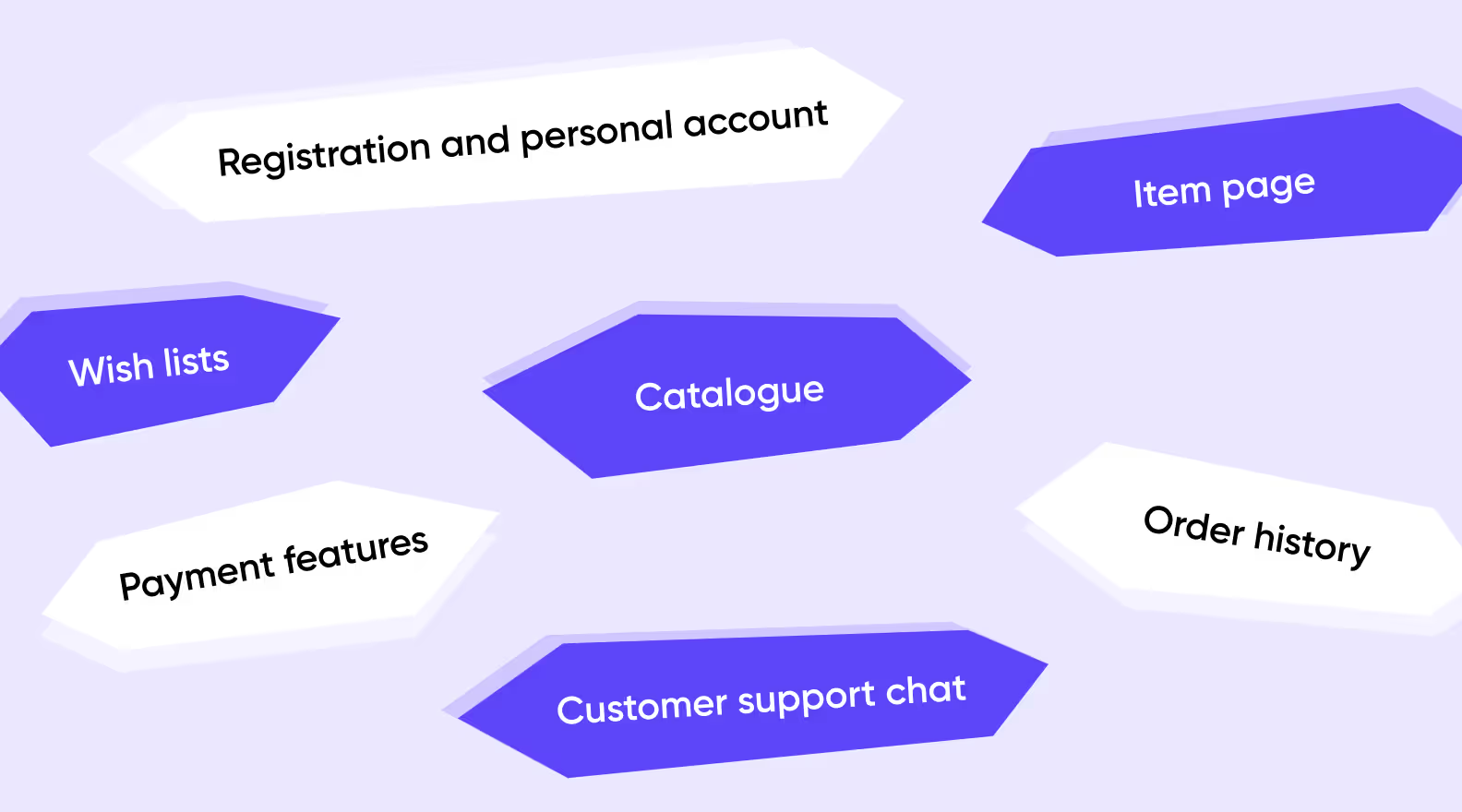
Any e-commerce app is a double-sided platform for both sellers and buyers. We created a list of key features your solution will need for both parties:
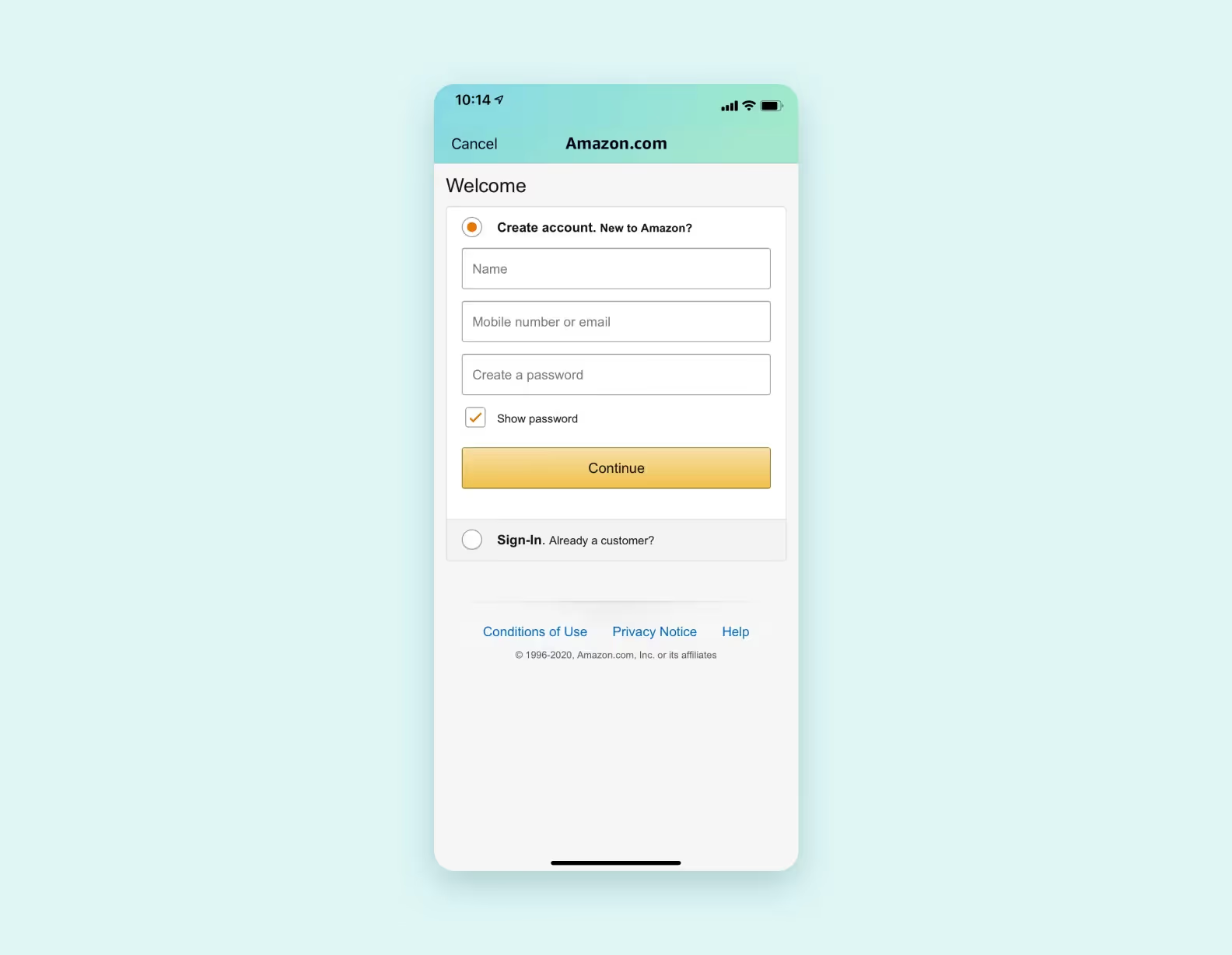
Every app starts with a login page. No matter who opens it – buyer or seller – they have to start by providing basic information about themselves. We suggest keeping it as short and simple as possible: ask for an email, the first and last names, and a phone number. Make sure to add social media integration, so new users can sign-up using their existing accounts on Facebook or Instagram.
Don’t forget about a personal account page so that later on users can get back to it and set it up with more details and preferences.
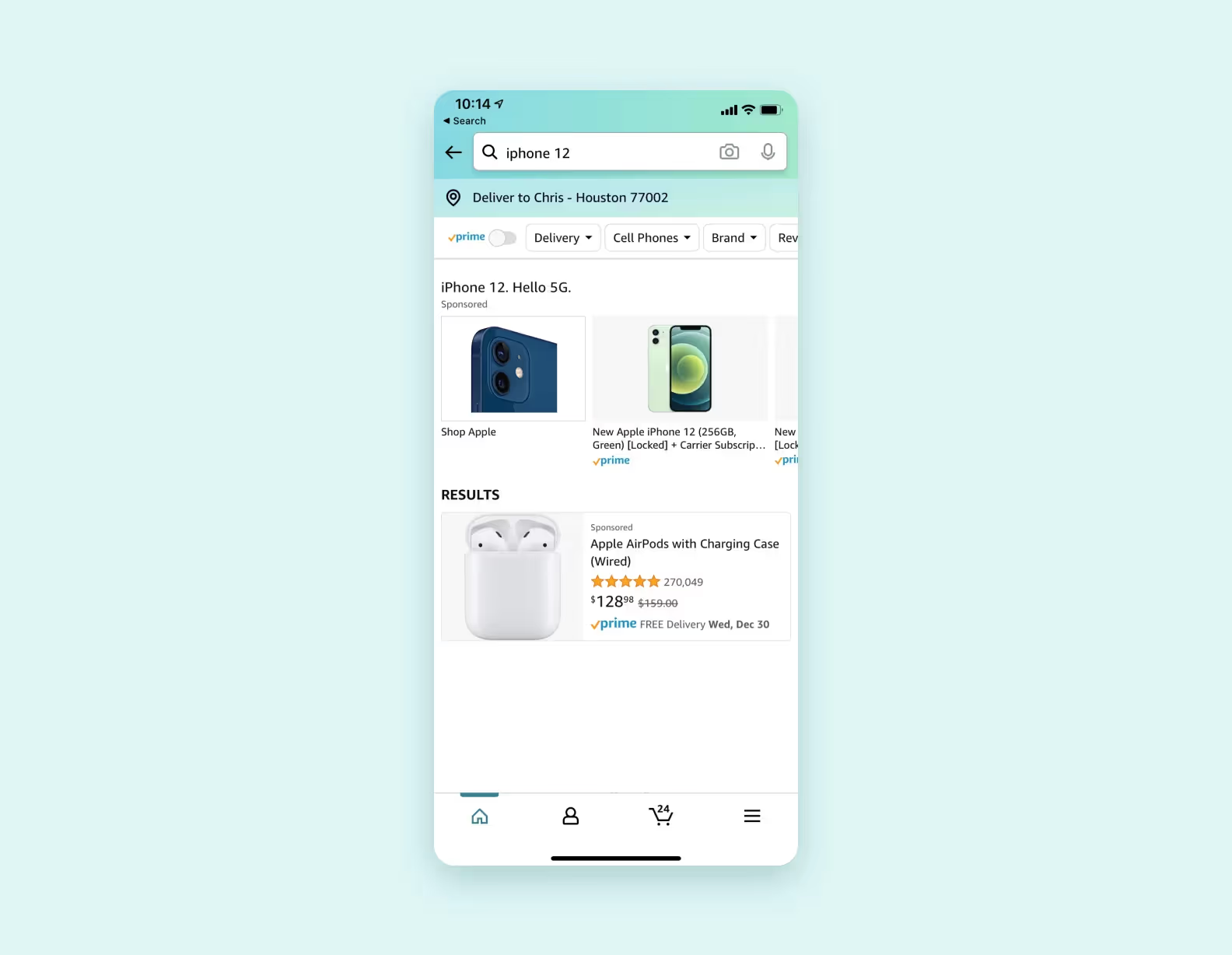
Here your solution will need a search bar to look for a particular item and also be able to filter by categories such as price, color, brand, etc. Sellers should be able to add new items to the list and attach photos and filter tags to them.
Overall, the search results page will contain a lot of elements, so make sure you work with an experienced UX/UI designer, who will keep the item catalog intuitive and easy to navigate. Additionally, make sure to add a Share button, so users can easily share a product in a message or on social media accounts.
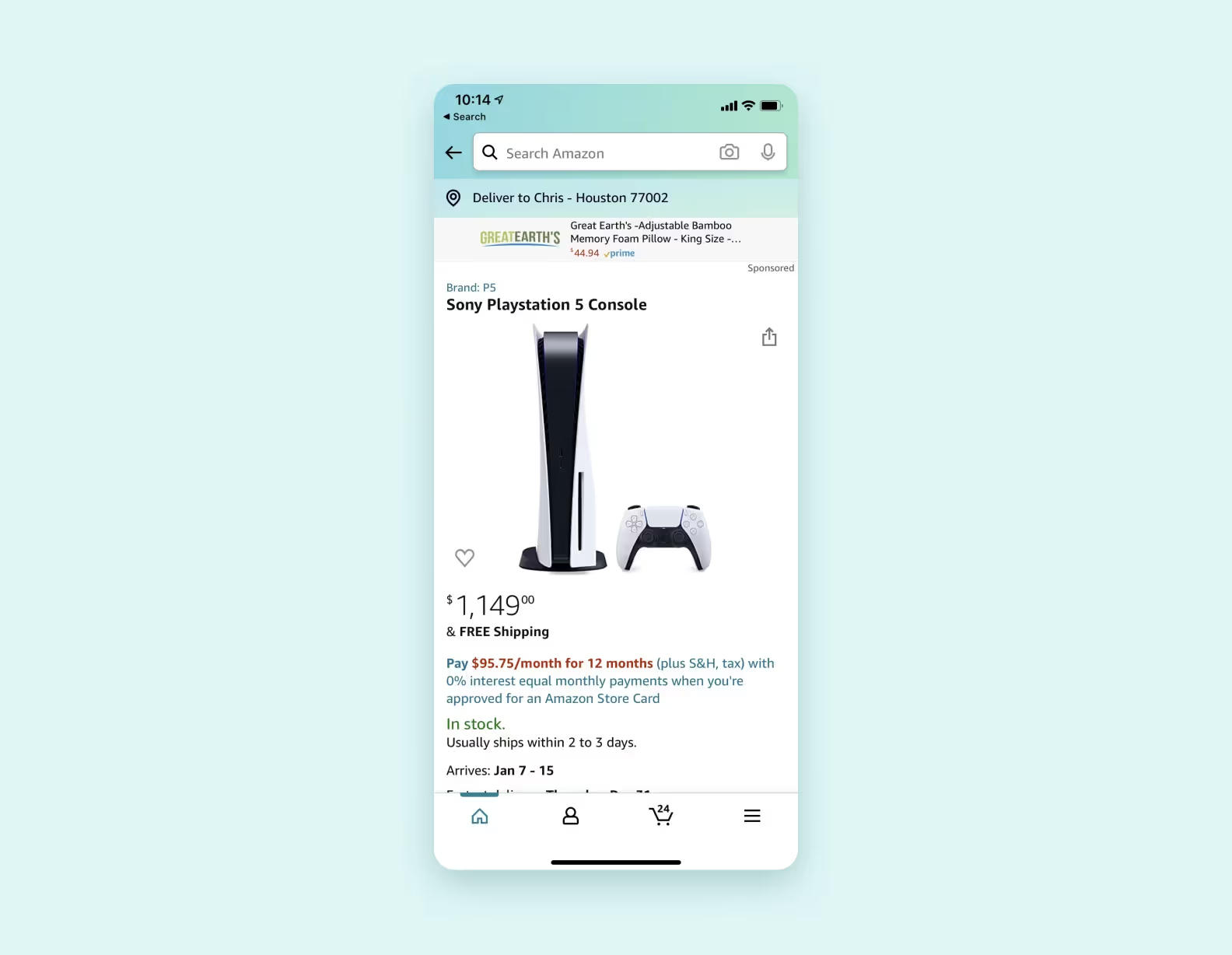
The item page should represent necessary information about the item, such as the name, photos, description, price, delivery date, and reviews from previous buyers. Also, many consumers consider shipping costs and special deals even before getting to the checkout page, so make sure you display these from the beginning.
When browsing, you probably see a lot of things that you want to save for the future, it’s useful to be able to just add the item to your wishlist. This feature is essential for customer retention. They can bookmark items that they like, and if the price for a wishlist item drops, you can send a push-notification to inform the user.
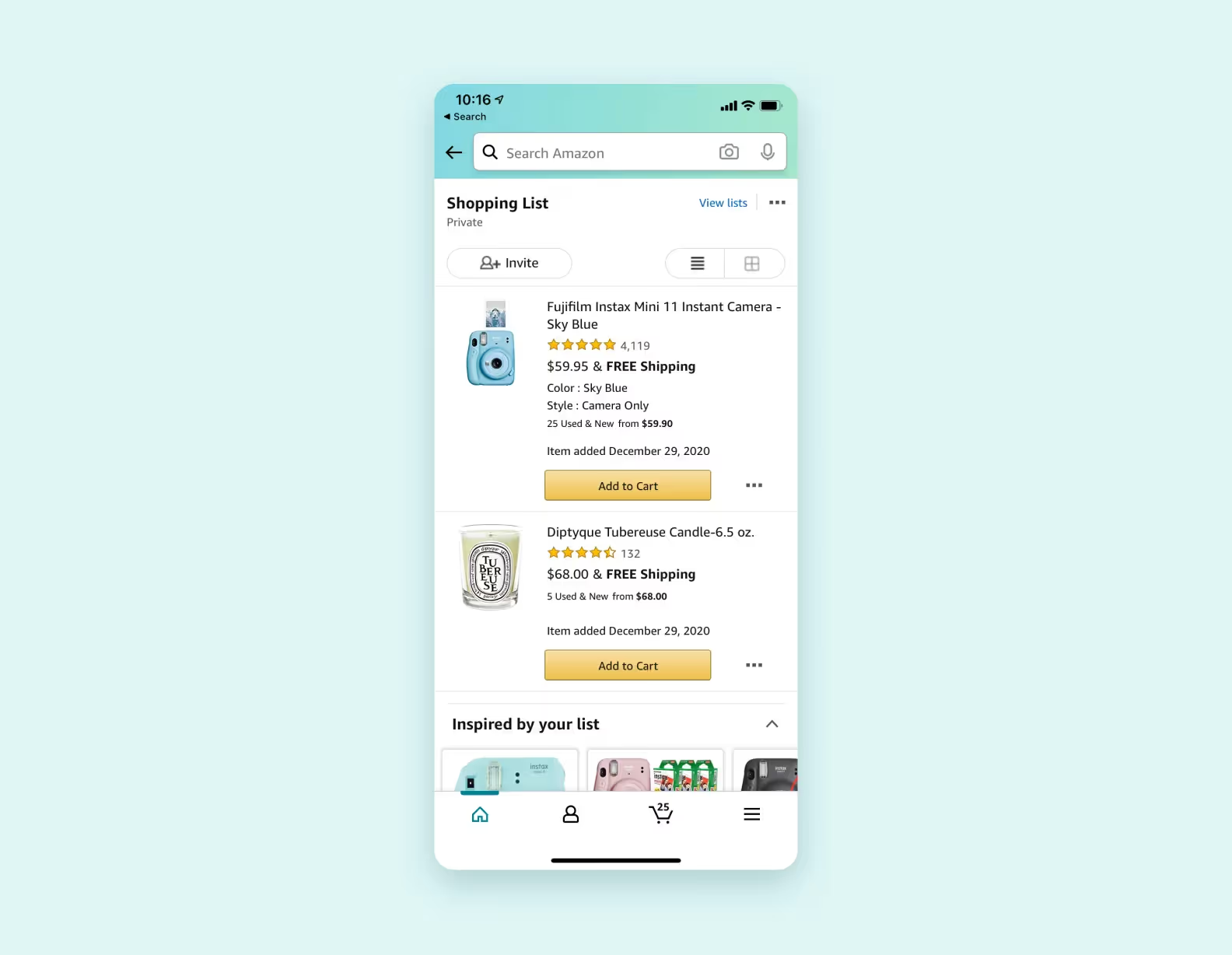
Customers should be able to add a product to the cart, see the total and then pay. If they don’t complete the payment, you can remind them about the order later on and bring them back to the app, increasing retention rate. Also, make sure your app supports ApplePay, GooglePay, and PayPal for the convenience of your customers.
When it comes to finances, we recommend double-checking that you implemented a reliable payment gateway and secured the connection with data storage services.
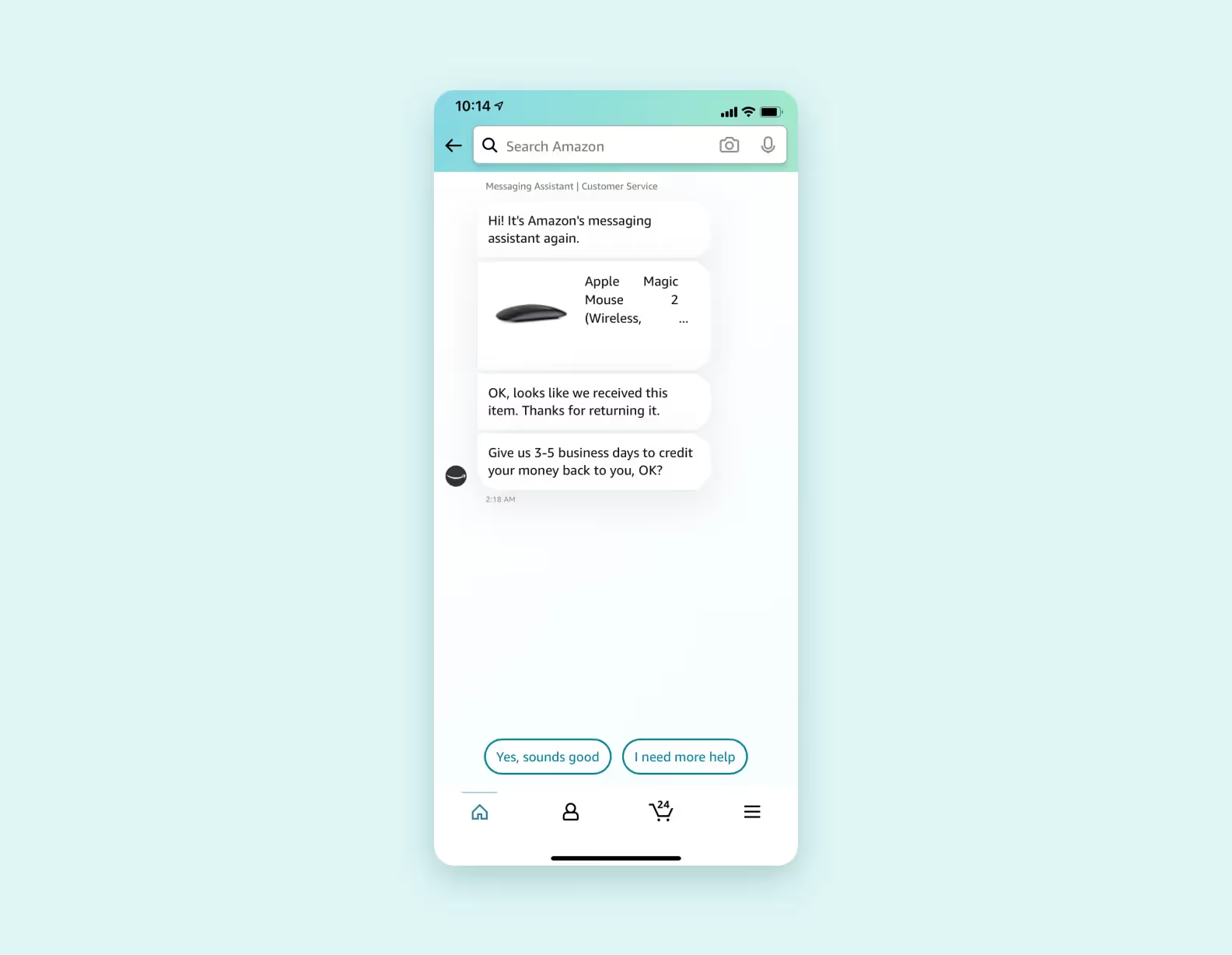
The history of previous orders and payments is essential for both sellers and buyers. Customers could see what they've bought, when, and also how much money they've spent, while vendors could track their sales and count their income with this feature.
Startups like e-commerce apps deal with a lot of customer inquiries and feedback. People buy and sell a high volume of goods daily and it might be difficult to keep an eye on the quality of every single item. If you don’t want unsatisfied customers to go to social media, customer support should be easy to reach so they can address their questions and concerns. We recommend implementing messaging functionality so users can easily contact support and get help quickly.
Here are the essential steps of the e-commerce app development process:
Here’s what goes into market research:
By researching these, it'll be easier to meet the needs of your audience and make the app useful.
Choose what best suits your needs and budget:
The choice depends on your current resources and goals:
Choose the model that best balances your need for speed, cost, and control.
First comes the UI/UX design development. Make sure your e-commerce mobile app has a clean and intuitive interface. This will give users a smooth user experience and keep them using your app.
Then, the development team starts building the app. They write the code and implement features one by one.
Once you've developed the application, it’s time to test its performance and check for bugs. Pay close attention to security. Users’ personal data and payment information must be securely protected.
After you release the app to the app stores, it’s essential to plan ongoing maintenance. This includes bug fixes, security patches and new features. Releasing regular updates will keep your app competitive.
Here comes the most interesting and vital part: e-commerce app development cost and timeframe. Before we start, an important note from us: at Purrweb we try to make the process for our clients as transparent as possible, and we always openly discuss future steps. If you want to get a personalized price estimation, just contact us <a class="blog-modal_opener">through the form</a>.
When it comes to costs, the general rule is the bigger team you hire, the more you pay. The good news is that we work with React Native framework which allows us to develop apps like Amazon or Myntra quickly and to use one JavaScript code and one team for both iOS and Android systems. It saves our clients and money.
Let’s do the math now! When you create your solution with us, you’ll pay for the following:
We plan and execute the interface, build a prototype, and choose fonts and color schemes that match your style and business requirements best.
It’s simple: you pay, and we build an e-commerce app. Our team can offer React Native cross-platform development in line with best practices and cutting edge technology on the market to cover a larger market by building an app for both iOS and Android e-commerce apps. During this, we consider important elements, including a secure payment gateway, product page and push notifications.
We test the usability of your application to find and fix potential bugs before the release.
We upload the app to the production environment and connect it with servers, making it available for your audience.
We chaperone the project, plan sprints, track the progress and solve administrative tasks.
🚨 Disclaimer: These are our estimations and we don’t guarantee other companies have the same costs or timelines. The following is valid only if you work with us.
Average -commerce app development time for the Purrweb team is 3 months. According to similar projects we have made, the estimated e-commerce app development cost is around $106 000 for a full cycle of execution – UI/UX design, building a prototype, testing, creating iOS and Android versions, and more.
Building a successful e-commerce mobile app requires a good understanding of the factors that influence cost of developing. By considering these 5 things and making informed decisions, businesses can build an e-commerce app that meets the needs of their customers and gets the most out of their investment.
UI/UX design plays a vital role in determining the cost of developing. A simple and minimalistic app design may require less time and effort, resulting in lower costs. On the other hand, a complex and trendy design with intricate user interfaces, animations, and unique features can increase development time and drive up costs.
Also, an e-commerce app development company is responsible for creating seamless user experience, intuitive navigation, and visually appealing aesthetics. It requires investment in user research, prototyping, and testing, as well as skilled UI/UX designers — their level of expertise will also impact the overall development costs.
The choice of app development platform and technology stack is another critical factor influencing the cost of building an e-commerce mobile app. Businesses have the choice to either develop separate native apps for iOS and Android, or opt for cross-platform development frameworks like React Native.
Developing native apps for multiple devices incurs higher costs because it requires two separate development teams and maintenance efforts. In contrast, cross-platform frameworks offer cost efficiencies as a single team can handle development for both iOS and Android.
The features and functionality of an e-commerce app impact the overall cost of mobile app development. Basic e-commerce apps with standard features like catalog, push notifications, product recommendations, wish lists, shopping carts, and secure payment gateways tend to be more affordable. However, as the app complexity increases, so does the cost.
Integration with third-party services, such as inventory management systems, customer support tools, and analytics platforms, may also add to the e-commerce mobile app development costs. Moreover, the inclusion of advanced features like augmented reality (AR) for virtual try-ons, personalized product recommendations, and in-app chat support will require additional development time and resources.
Where your development team is located and how many experts it consists of, matters. Hiring a team of experienced developers, designers, quality assurance engineers, and project managers will have an impact on the overall budget.
The hourly rates of the e-commerce app development company can vary significantly based on their location. Offshore development teams, in countries with lower labor costs, may offer better rates but can also pose challenges related to communication and project management. On the other hand, hiring a local team may involve higher hourly rates, but it can lead to more efficient collaboration and better quality control.
The timeline set for your e-commerce mobile app development is a critical factor in determining the overall cost. Rushing the development process to meet an unrealistic deadline can only cause higher expenses due to overtime pay and potential compromises on quality. Conversely, extending the project timeline might lead to additional costs in terms of team retention and maintenance.
Depending on your business requirements and planned budget for developing an e-commerce app, there are several ways to reduce costs:
Nowadays it's not easy to find a reliable and fast developer to build mobile e-commerce app. There is no time for mistakes, you have to move quickly with your solution while the market is evolving. Here we gathered 3 bits of advice from our team on how to choose e-commerce app developers:
It’s more convenient and time-efficient to get services from a professional team with good communication. Imagine spending time finding a coder and designer and then managing the processes by yourself. Why bother, when you can delegate and focus on release strategy and investor pitching, the developers’ lab will cover technical aspects of development and polish your solution.
It's better to be safe than sorry. We advise performing a background search and reading feedback on your potential contractor beforehand. First of all, google the name of the company and see what comes up. Then check professional websites, such as Behance and Dribbble for portfolios and reviews.
For a startup, money and time can be crucial. The React Native framework has many benefits for newly released apps. For example, a shared codebase allows developers to build two apps for both iOS and Android with 60-65% similar code. It not only saves time and money for the startup but also helps to release the product for a larger market. Also, React Native eases the testing process and helps to quickly discover and fix possible bugs before the release.
Recent years boosted the e-commerce sector.
The market is growing and the demand exceeds its current opportunities. That’s why now is the perfect time to choose your niche and start building your solution.
Here are 7 key features to consider when developing an e-commerce app:
Let’s talk money. If you're wondering how much does e-commerce app development could cost and how much money you can make, here is the answer. Studies show that the average e-commerce store generates $150,000 in revenue after 3 months on the market. There are 4 main monetization strategies:
Our advice is not to stick to only one strategy, but to mix them together. Also, keep an eye on recent trends and big companies’ updates. For example, recent research showed that 80% of customers prefer delivery to be free of charge when they're shopping online, and they look at it before getting to the checkout page.
The estimated full-cycle e-commerce app development cost is from $20,000 to $40,000, and it takes around 800 hours [64 days].
Since 2014, we’ve worked on 550+ projects. Our team builds e-commerce mobile platforms with a focus on UX/UI design and QA testing to develop a robust cutting-edge solution. Check out our blog where we openly share our experience and a portfolio with previous works where you can check our style. Plus, we work with cost effective and time-efficient React Native that helps us develop fully-functioning high-performing marketplace apps in 4-6 months.
➡️ If you’re interested in developing your app with us, <a class="blog-modal_opener">fill in the form</a> to get a free estimate of your project in 48 hours.

.svg)

.avif)