
Need help with your project?

Oops! Something went wrong while submitting the form.


A good VR app doesn’t have to be expensive. You just need a thought-out strategy when it comes to a project budget: understand what elements are worth investing in right now, what can be moved to a later stage and what hidden costs to expect.
In this article, we’ll share how much VR app development cost, what factors impact the budget, and how you can use them to your advantage.
%20(1)%20(1).png)
The VR app market is truly flourishing now. In the past few years, it has gone through a shift from a technology popular in niche industries like gaming and among early tech adopters to mass devices like Meta Quest, Apple Vision Pro, or PlayStation VR2.
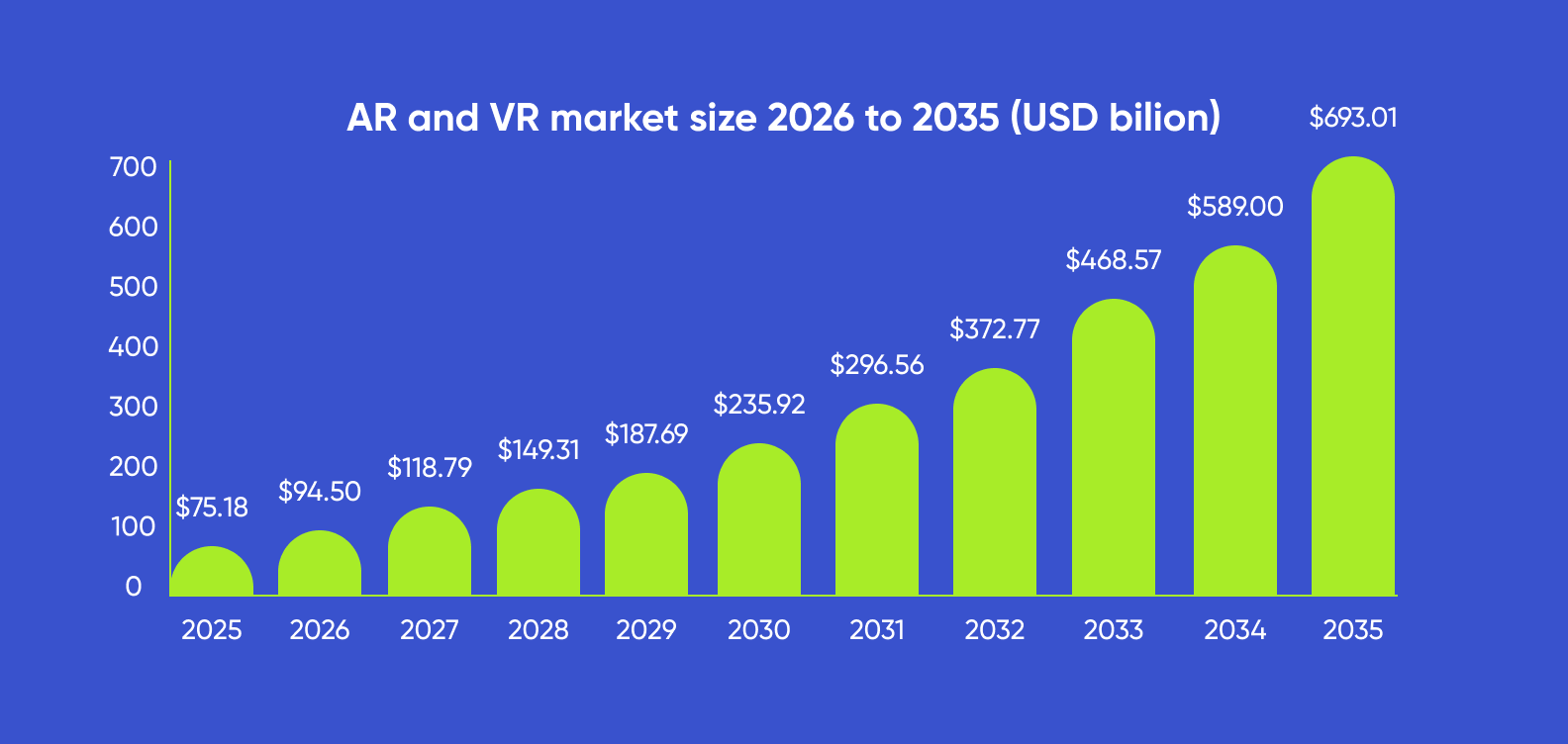
Globally, the revenue of the virtual reality industry is growing and expected to reach almost $700 billion by 2035, with a compound annual growth rate (CAGR) of almost 25%. Top geographical locations for VR apps are the United States, China, Japan, Germany, and Australia.
Though VR game development remains the main industry, the current application of VR technology is becoming more widespread. Healthcare, edtech, retail, manufacturing, and aerospace — these niches have started using virtual reality, creating more opportunities.
VR development cost depends on several factors, the main one being how complex the structure is.
Complexity relates to any part of the VR app structure that makes it difficult to put together and modify. For example, the use of advanced features like AI interactions or eye-tracking for resolution rendering. The more steps a process requires, the more billable working hours for the team it requires, and a longer time for the project to be completed.
Complexity level is determined based on:
Here is a breakdown of the average budget for VR applications with 3 different tiers of complexity.
Basic virtual reality apps include a simple user interface (UI) and a standard set of features. It is usually developed for one platform with the help of pre-built templates and allows for limited interactions. Therefore, in these cases, the development process is really fast and inexpensive. This level of complexity is ideal for products with straightforward logic, one key task, and testing prototypes.
Average cost: $XX,XXX–$XX,XXX
Timeline: 3–4 months
Mid-level complexity for a VR app involves customization in UI, multi-scene environments, and real-time interaction. It’s a step up from basic software and can have some third-party integrations or advanced features. For example, simple object manipulation and sound design.
Average cost: $XX,XXX–$XX,XXX
Timeline: 5–7 months
Advanced VR apps have full 3D environments, complex custom elements, non-linear physics simulation, and AI or enterprise-level integrations. These VR projects demand extended testing cycles and a bigger team: specialized developers, QA engineers, and multiple project managers. More people and a longer development process = higher costs.
Average cost: $XX,XXX–$XX,XXX
Timeline: 8–10 months
<div class="post_divider"></div>
⭐Our experience
✅ >10 months of work from scratch
✅ Project successfully released to the market
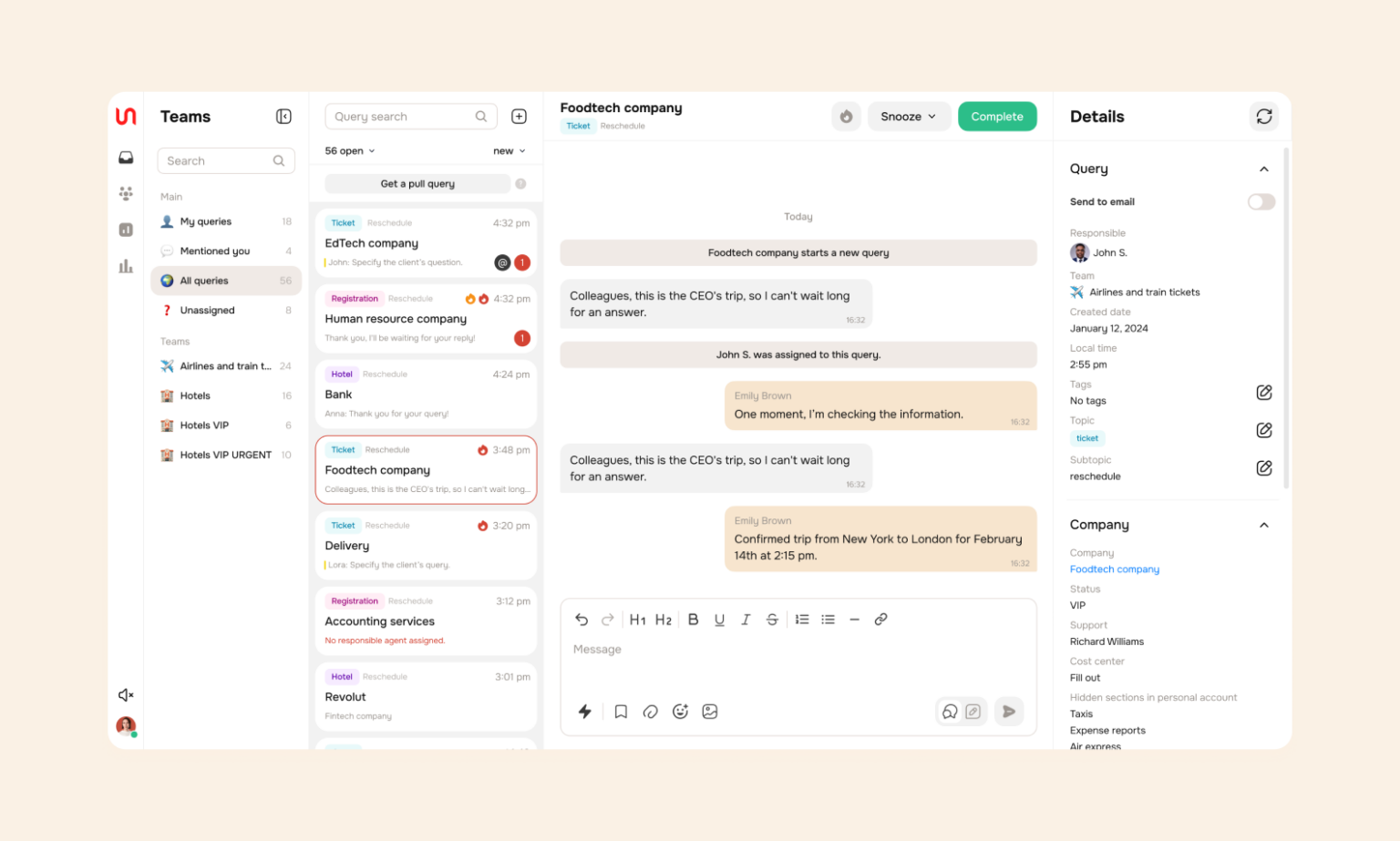
We’ve created numerous apps with complex functionality, custom UI, and integrations. For one of our clients, Smartway Travel Group, we built a B2B web app to provide support services and communicate with customers.
Before that, the company used a third-party service, Intercom, which didn’t have all the necessary functionality and came with a hefty subscription fee. Our alternative, SmartChat, was customized to the client’s business processes and included automated chat distribution, role-based access, detailed analytics, and full integration with Smartway's internal back office.
Our development team worked on a tight deadline for a project of this complexity, but we still ran extensive stress-testing of the system at 1,000 chats per hour and optimized the database architecture to handle the load.
<div class="post_divider"></div>
When we write an estimate for a project (free at Purrweb, btw!☺️), we take into account multiple factors that impact the length of the VR development and the necessary manpower. Among them are tech stack, integrations, and even team location.
Here we explain the 7 key factors that determine the costs of virtual reality development and share how they can drive expenses up or down, depending on the strategy.
The project scope includes the number of features, scenes, interaction types, and the level of customization required. It determines how many hours go into building your VR app and directly shapes the budget. The scope needs to be defined before the VR development starts to set timelines and avoid unexpected costs.
⬆️ Costs up: large feature set, multiple scenes, custom interactions, and complex logic
⬇️ Costs down: limited features, single task, pre-built templates, fixed scope for VR platforms
The platform your VR app runs on affects both the tech stack and the development effort. Standalone headsets and mobile VR platforms like Meta Quest require different optimization than PC-based platforms like SteamVR or enterprise solutions like HoloLens. Plus, each platform has its own hardware limitations, rendering requirements, and SDK specifics that also impact the scope and the budget of the VR development.
⬆️ Costs up: native VR development, proprietary hardware, enterprise devices
⬇️ Costs down: cross-platform VR development, widely supported headsets like Meta Quest, mobile VR platforms
In VR development, there are two dominant engines: Unity and Unreal Engine. Unity is more accessible and cost-efficient for most projects, while Unreal delivers higher visual fidelity but requires more specialized expertise and is more suitable for advanced VR apps.
On top of the engine, the stack will include 3D modeling tools, animation software, backend infrastructure, and any AI or spatial computing frameworks that can increase VR development cost.
⬆️ Costs up: Unreal Engine (C++), custom frameworks, AI, or spatial computing for a VR app
⬇️ Costs down: Unity (C#), standard tools, widely available tech with a large talent pool for VR app development
.avif)
Most VR apps need a connection to external systems like payment gateways, CRM platforms, analytics tools, medical databases, or IoT devices. Each integration extends development time and increases the VR app development cost: APIs, licensing fees, and extra tests.
⬆️ Costs up: multiple integrations, proprietary or poorly documented APIs, licensing fees
⬇️ Costs down: few or no integrations, well-documented public APIs, no third-party licensing
If your VR app operates in a regulated industry, such as healthcare, finance, or education, you might need to be compliant with several laws and standards. For example, healthcare products with VR technology may need to meet HIPAA requirements for data privacy or follow FDA guidance for medical software. Fintech applications must align with PCI DSS or other financial regulations, depending on your market.
⬆️ Costs up: regulated industries, HIPAA or PCI DSS compliance, mandatory audit in VR app development
⬇️ Costs down: no regulatory requirements, standard data handling, unregulated use cases
The way you engage with your development team affects both cost and flexibility. The two main models are outsourcing and outstaffing. Outsourcing means handing the VR project to an external team that manages the full development cycle. Outstaffing is when an IT company contracts its specialists to work under your management.
⬆️ Costs up: outstaffing with large dedicated teams, long-term retainers, senior-only staffing for VR app development
⬇️ Costs down: fixed-price outsourcing for well-defined scope, mixed seniority teams
Depending on where your development team is based, your total VR project cost can change. IT teams in the US typically charge $150-200+ per hour, while VR developers in Central Europe or Southeast Asia often work for $20-59 per hour.
If you go with developers from a region different from yours to cut VR app development costs, consider how well they communicate in multiple time zones and if they have regional market expertise.
⬆️ Costs up: US or Western European teams, on-site development, local hiring
⬇️ Costs down: Central European or Asian remote teams, offshore outsourcing

The overall VR app development process consists of 6 steps, from planning to release and post-launch support. We’ve estimated the cost and timeline for each stage. Take a look below ⬇️
At this step, the development team defines project scope, technical requirements, and target users. Here, the budget is also determined, alongside milestones and the VR app development roadmap.
Deliverables: Project brief, technical specification, roadmap
Timeline: 1-2 weeks
Cost: free at Purrweb
Next, the designers create wireframes, interaction flows, and optimize the interface for a VR app. Plus, if you have existing branding guidelines, the team will make sure all elements, colors, and typography of a VR app align.
Deliverables: Wireframes, prototypes, UI kit, branding for a VR app
Timeline: 5-12 weeks
Cost: $10,000-$40,000
The development team builds the core of a VR app, including 3D environments, interactions, backend integrations, and platform-specific optimization. This is the longest and most important phase of the project.
Deliverables: Functional VR app with integrated key features
Timeline: 8-30 weeks
Cost: $75,000-$300,000
Here, the VR app is tested across target devices for performance, usability, and stability. VR-specific issues like latency and motion comfort are prioritized. At Purrweb, we run QA testing alongside the development to save time and find bugs at the root, before they become a bigger problem.
Deliverables: Test documentation, bug reports, optimized performance of a VR app
Timeline: 8-30 weeks
Cost: $15,000-$60,000
Now it’s time to deploy the VR app to target platforms. For instance, to App Lab, SteamVR, or enterprise distribution channels.
Deliverables: The VR app, available to all users publicly
Timeline: 1-2 weeks
Cost: $2,000-$3,000
The product lifecycle is not over after the release. The development team continues to perform, fixes bugs, and rolls out updates based on user feedback. This service is optional and is based on your requirements, needs, and budget.
Deliverables: Updates of VR applications, scale-up, bug fixes
Timeline: per agreement
Cost: per agreement
In total, you can expect to pay anywhere from $102,000 for a platform with simple functionality and no customization up to $403,000 for advanced VR apps. In the table below, we break down what steps of VR app development are included in this estimate.
Some of these hidden expenses can exceed the initial estimation by 20-30%. To plan for the costs correctly and avoid budget blowouts, it’s crucial to consider these charges during VR app development.
VR platforms involve multiple interconnected systems with 3D environments, backend integrations, and real-time interactions. After the release, you probably will need to hire in-house developers or retain an outsourced team for bug fixes and VR app updates.
Meta, Steam, and other virtual reality platform providers regularly release new SDK versions. You need to stay current with them to avoid compatibility issues and performance drops. This means more dedicated VR app development time and extra budget.
New headsets launch regularly, each with different hardware specs and rendering requirements. Some VR applications optimized for one device may need significant rework to run properly on another.
<div class="post_divider"></div>
⭐️ Our experience
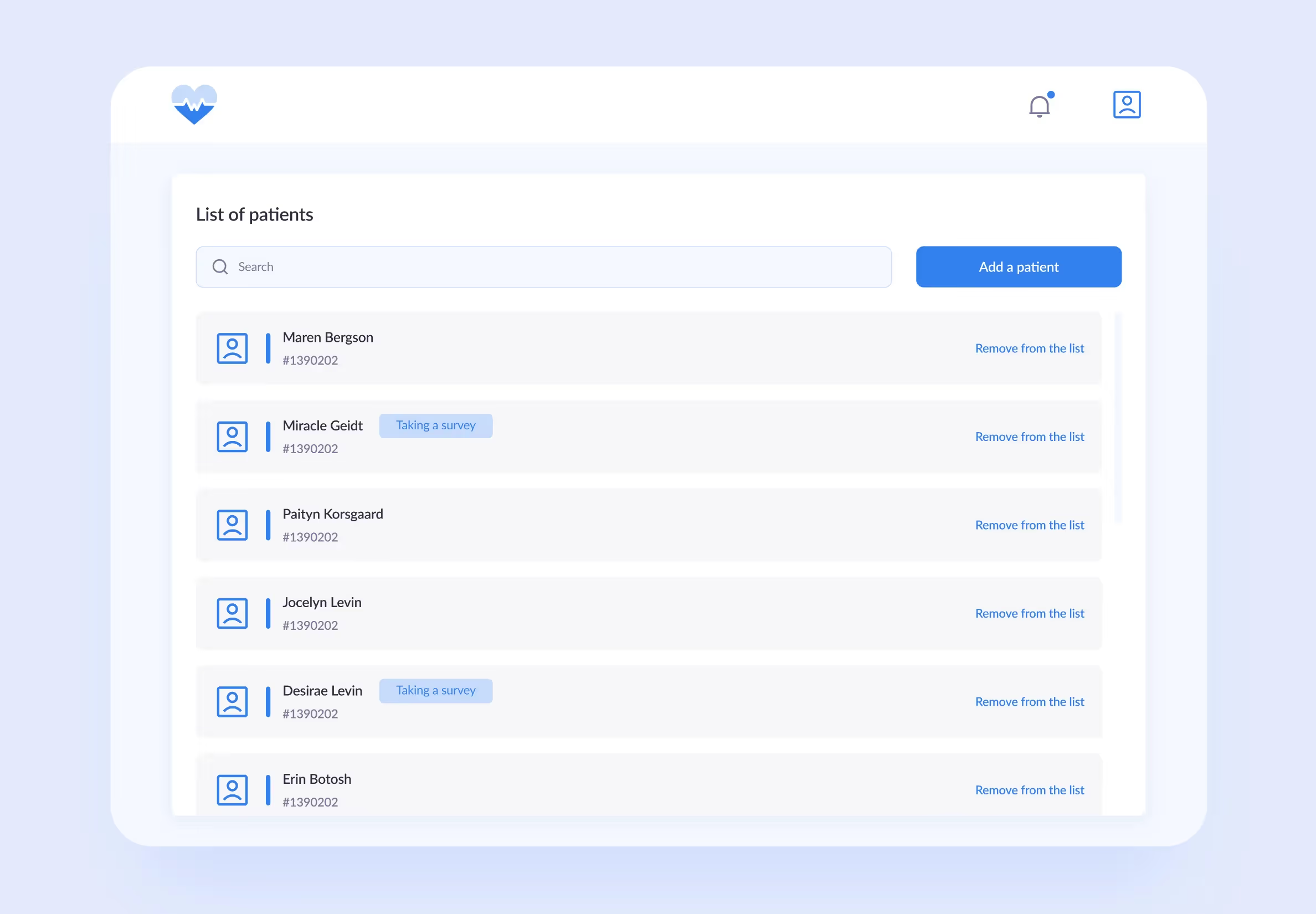
VR app development has gained popularity in healthcare, where we have a lot of experience. Once we built Medico, a web and mobile app for oncology patients and doctors. The founder approached us with an idea to replace routine in-person monitoring with a digital platform to reduce the workload on personnel and make the process more convenient for patients.
The platform features custom survey kits, lab result uploads, abnormal indicator alerts, and data dashboards. It was completed as a SaaS solution for oncology departments and launched in January 2023 on the App Store and Google Play.
<div class="post_divider"></div>
There are multiple ways to make money from VR app development and offset ongoing maintenance costs.
You can sell additional VR games or paid add-ons after the initial release. DLC works especially well for entertainment and training apps where users are already engaged and willing to pay for more content. This model is one of the most popular ways to monetize products and make up for VR app development cost.
.png)
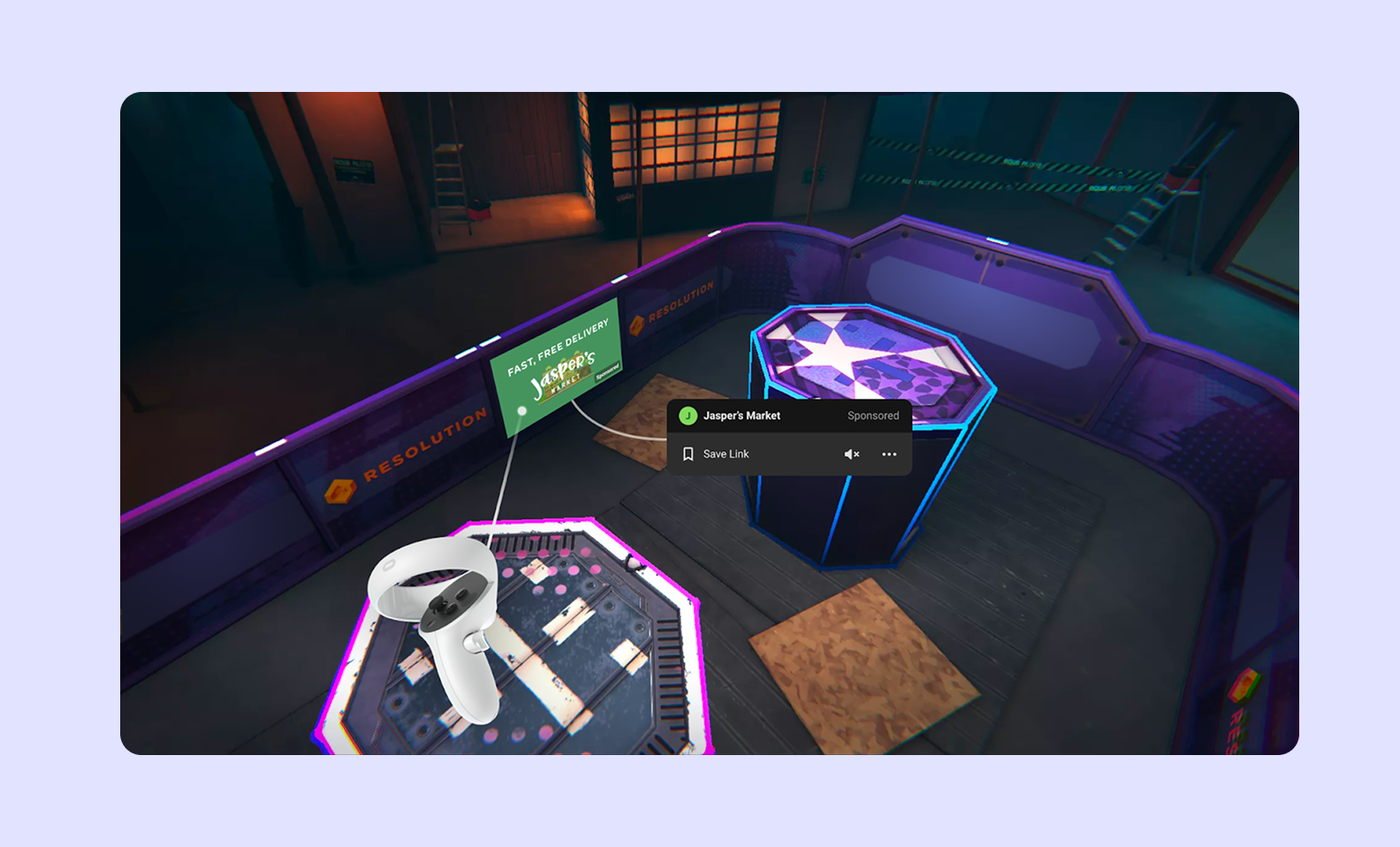
In-app ads can generate revenue without charging users directly. This model is not for advanced VR apps — it rather works best for free VR applications with a large loyal user base who wouldn’t mind seeing branded environments or sponsored content.
Another option is to offer basic access to a VR app for free and charge for premium features, exclusive content, or advanced functionality. Subscriptions tiers can provide predictable recurring revenue and work particularly well for enterprise, fitness, or education apps with virtual reality.
Looking for a partner to start VR app development? Purrweb’s team has completed over 550+ projects, including complex projects in edtech, healthcare, virtual reality, and enterprise. You can check our full portfolio here.
➡️<a class="blog-modal_opener">Share your idea</a> of a VR app with our team to get a free consultation and cost estimation in 48 hours

.svg)


.avif)





.avif)