Need help with your project?

Oops! Something went wrong while submitting the form.


Virtual reality in healthcare is gaining momentum because it can deliver both clinical and business value. What seemed like a gimmick of the future several years ago is now turning into a strategic investment area for healthcare providers and digital health founders alike. Read the article to find out why.
%20(1)%20(1)%20(1)%20(1)%20(1)%20(1)%20(1)%20(1)%20(1)%20(1)%20(1).png)
Days of virtual reality being an emerging experiment are long gone. Today, VR is a fast-growing, investment-backed segment of the healthcare software market. Both market data and real-world adoption trends show that VR is moving toward mainstream use.
The global VR healthcare market is expanding rapidly. It was valued at around $5.6 billion in 2024 and is expected to reach approximately $29.4 billion by 2030, growing at a CAGR of over 30%, according to Grand View Research.
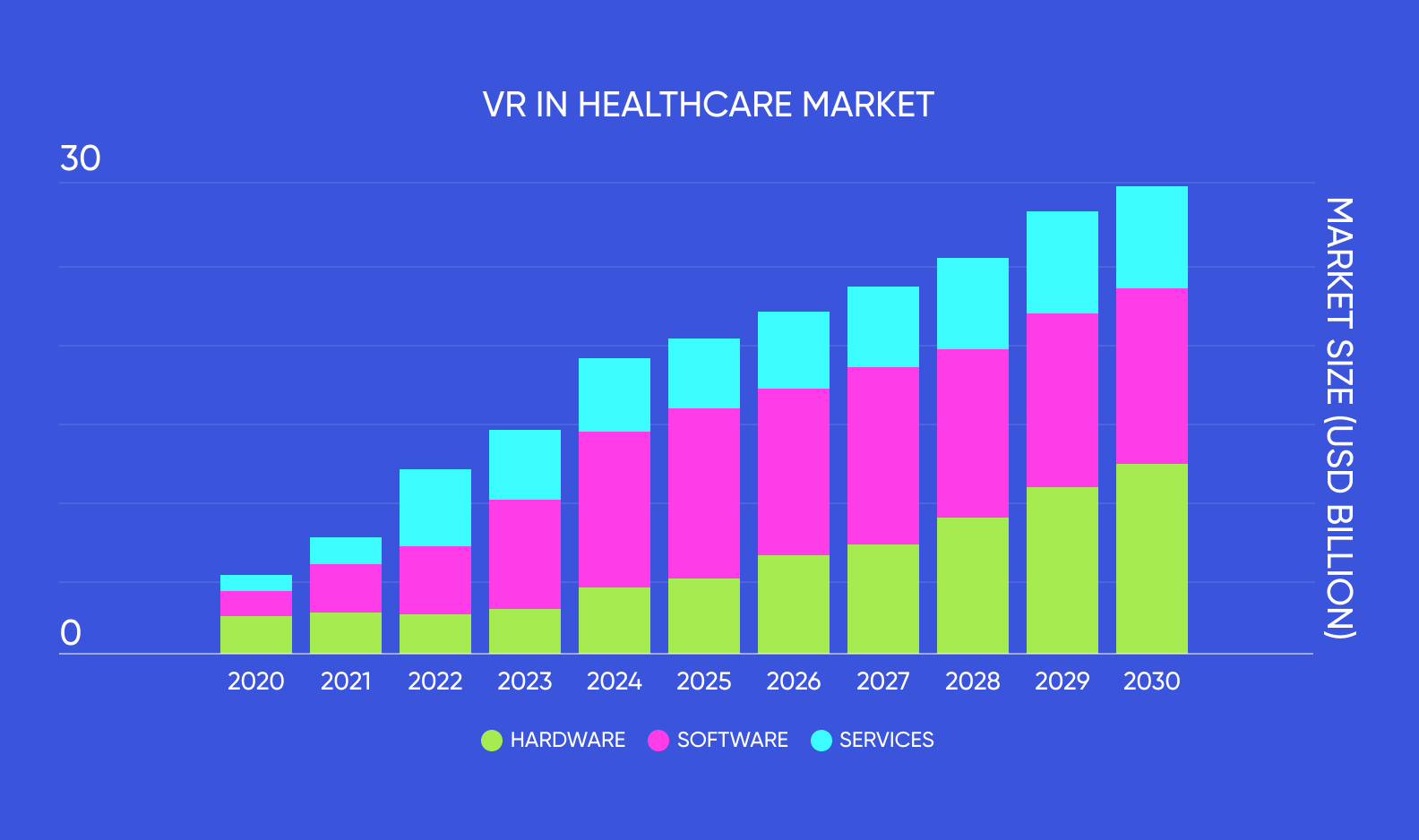
Forecasts from Mordor Intelligence also confirm the trend: the market is projected to continue double-digit growth through 2031, driven by increasing adoption in hospitals, training centers, and rehabilitation programs.
Hospitals, startups, and digital health companies use VR to improve training, patient outcomes, and operational efficiency. Here are the key advantages.
We already mentioned above how VR allows medical students and professionals to practice complex procedures in a realistic but controlled environment. Surgeons can rehearse operations, emergency teams can simulate critical scenarios, and trainees can repeat procedures as many times as needed. But the most important part is that it happens without risking patient safety.
VR is widely used in physical and neurological rehabilitation. Patients recovering from stroke, injuries, or surgery can perform guided exercises in immersive environments that make physical therapy more engaging and easier to track. This often leads to higher adherence to treatment plans.
VR experiences can distract patients during painful procedures or stressful treatments. Hospitals increasingly use VR during chemotherapy, wound care, and dental procedures to reduce perceived pain and anxiety without additional medication.
The rise of VR in healthcare means more business opportunities for healthtech founders, medical professionals seeking to monetize their expertise, clinics, and even medical administrations.
Whether it’s a telemedicine app, analysis tracker, or any other healthcare app, there is room to develop, grow, and scale digital health solutions.
VR helps patients better understand their conditions and treatments. For example, doctors can visually explain surgeries or disease progression using immersive models, which improves communication and helps patients make more informed decisions based on their health records.
Virtual reality is no longer limited to experimental labs. Here are (just) 5 ways healthcare professionals are already using it in real life.
VR allows surgeons and medical students to practice procedures in realistic simulations. Complex operations can be repeated multiple times, helping doctors build confidence and refine their skills before working with real patients.
In surgical training, VR is already the new black. For example, University College London students have developed a VR app that creates 3D models from patients’ CT and MRI scans.
Such software allows precision and visualization that 2D scans simply cannot provide — aside from the fact that you can hold a human heart in your hands without going to a lab and touching any specimens.
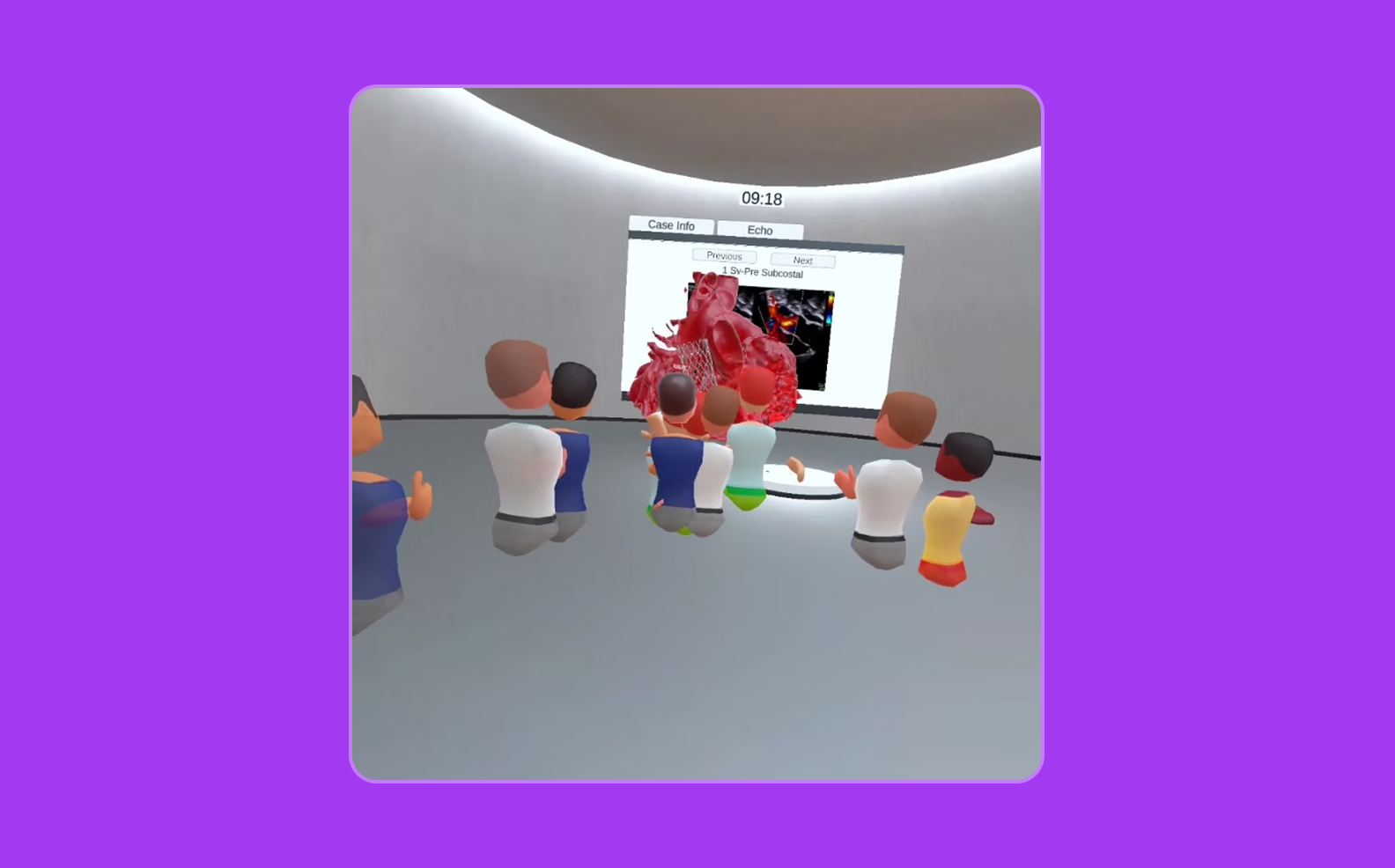
Don’t mistake it for just another fun way to study. Research by Yale University School of Medicine Department of Surgery has found that VR-trained groups of medics were six times less likely to make errors in the operating room.
VR is widely used in exposure therapy for conditions such as anxiety, post traumatic stress disorder, and phobias. Therapists can safely simulate situations that trigger fear or stress, helping patients gradually build coping mechanisms.
<div class="post_divider"></div>
⭐Our experience. We built an MVP for GSR — a platform for online psychologist consultations with specialists that work with a niche methodology.
GSR aims to work with negative feelings and attitudes that cause self-doubt and a lack of confidence. The main goal is to help a person succeed in life and find harmony.
But there was no separate platform for such psychologists — until our client decided to create one, with an option to book appointments and learn more about the methodology.
We built the MVP version of the web application with basic functions: viewing the catalog of specialists, choosing a psychologist, and booking a session (without payment). We also created a modern and sleek design for it, adapted the platform for different devices, and developed a simple user journey.

We finished the MVP in 4 months, and it cost our client $40,000.
💡At the time, VR in healthcare wasn’t that popular, but if it was… here’s what we could also do:
<div class="post_divider"></div>
VR experiences can distract patients during painful treatments or procedures. Hospitals use immersive environments to reduce stress and discomfort during wound care, chemotherapy sessions, or dental treatments.
Today, telemedicine is generally limited to healthcare mobile apps with AI-powered chatbots that give you health recommendations or platforms connecting patients to doctors.
VR, however, gives telemedicine more space to grow: instead of chats and video calls, imagine controlled environments that allow doctors and their clients to focus and fully immerse themselves.
Why stop at “doctor and patient situations”? VR platforms allow healthcare professionals to meet in shared virtual environments, review medical data, and discuss treatment strategies. This is especially useful for multidisciplinary teams working across different locations.
Yes, augmented reality (AR) and virtual reality (VR) are not the same. They are often mentioned together, but they solve different problems in healthcare.
VR creates a fully immersive digital environment that replaces the real world. AR, on the other hand, overlays digital elements on top of the real world. Instead of replacing reality, it enhances it with additional information.
High-growth segments in both markets are surgical training for AR and mental health practices for VR. But of course, they are not limited to just that. Here’s a table that will help you differentiate between the concepts.
Development of a medical VR app is a complicated process, so it’s better to leave it to professionals. Here’s how we at Purrweb handle the development process.
Timeline: 1–2 weeks
Estimated cost: $1500-$3500
At this stage, the team defines clinical use cases, target users, compliance requirements, and technical constraints. This step sets the foundation for architecture and product scope.
Timeline: 1–2 weeks
Estimated cost: $1,000-$5,000
The choice of VR devices impacts performance, UX, and scalability. Whether it’s standalone headsets or high-end systems, the decision should align with real clinical environments and budgets.
Timeline: 2–4 weeks
Estimated cost: $6,500-$15,500
Design in healthcare VR must balance usability, accessibility, and clinical accuracy. Interfaces should be intuitive for both patients and medical professionals, minimizing friction and learning time.
Timeline: 2–4 months
Estimated cost: $22,300-$45,600
At the MVP stage, the core functionality is built: interactions, environments, and integrations. The goal is to launch a working product fast, validate the idea, and prepare for scaling.
The final stage includes deployment, testing in real environments, and performance monitoring. It’s also where feedback is collected for further iterations and scaling.
Timeline: 2–3 weeks
Estimated cost: $2,000-$12,300
The cost of developing a healthcare app with VR can vary significantly depending on the complexity of the product and the clinical scenarios it supports. Below are the main factors that typically influence the budget.
The scope of the product is the biggest cost driver. A simple VR experience for patient relaxation or education is relatively quick to build. But a surgical simulation platform with realistic physics, anatomy models, and interactive scenarios requires significantly more development effort.
<div class="post_divider"></div>
⭐Our experience
We developed Medico — a mobile and web app with digital patient surveys that helps oncologists and, well, their patients.
We developed the platform, created a fast and easy onboarding process, and most importantly — made custom surveys. They turned out to be even easier than Google Forms.

We added dashboards to make it easier for patients and doctors to monitor their health.
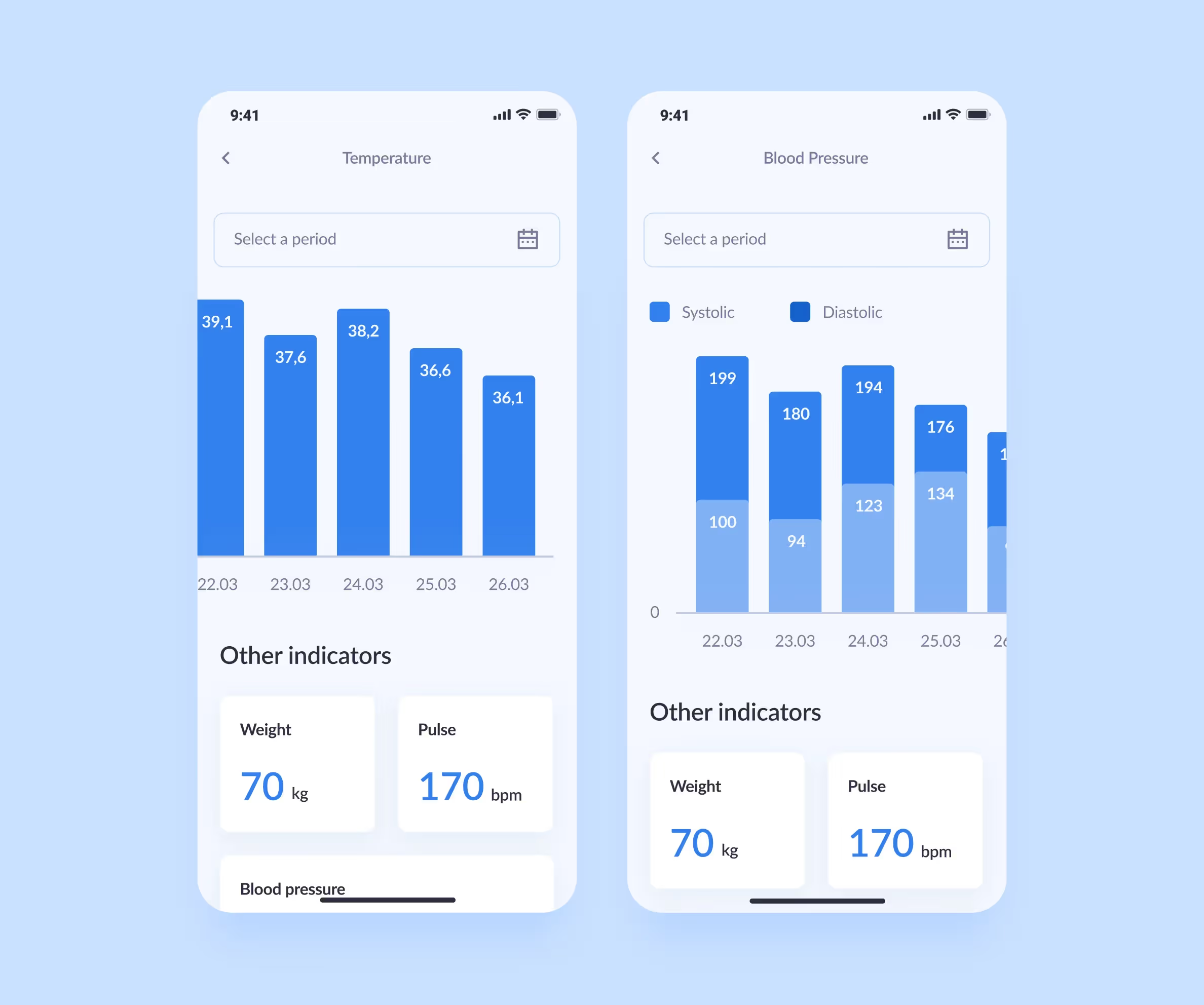
Initially, we only planned two roles for Medico: doctor and patient. That’s when integrations came: the platform needed to work with hospitals and clinics as a SaaS solution. To do that quickly and on a budget, we enabled external editing via Excel — such basic functions work great at the MVP stage.
💡If we were to add VR to this project, here’s what we could do:
<div class="post_divider"></div>
Healthcare VR apps often require highly detailed 3D models of organs, medical equipment, and environments. Creating accurate medical visuals usually involves medical consultants, advanced modeling, and complex animations. They all increase production time and cost.
The choice of VR hardware also matters. Supporting a single headset is simpler, while building an app that works across multiple devices (such as standalone headsets, PC-based systems, or specialized medical hardware) requires additional testing and optimization.
Some VR products need to integrate with existing healthcare infrastructure, such as electronic health records (EHRs), CRMs, training platforms, or data analytics systems. These integrations add backend development, security requirements, and compliance considerations.
Healthcare software must meet strict standards related to data privacy and security. Depending on the market, the product may need to comply with regulations such as HIPAA or GDPR.
While VR opens exciting opportunities in healthcare, founders also need to navigate several practical constraints. Let’s look at three key challenges that are dangerous to ignore.
Healthcare applications often need to comply with strict regulations depending on the market. If a VR product influences diagnosis, treatment, or clinical decision-making, it may be classified as a medical device.
That means additional certification, documentation, and regulatory approval processes before the product can be used in clinical settings. Here is a quick look at regulations in different markets you may want to study before launching a VR healthcare app there:
Not all healthcare facilities have access to high-end VR equipment. Some hospitals operate with limited budgets or older hardware infrastructure. Founders must consider device availability, ease of setup, and maintenance when designing VR apps to ensure the product can realistically be adopted.
Doctors and clinical staff often work under intense time pressure, which makes them cautious about adopting new tools. If a VR solution adds friction to existing workflows or requires long training sessions, adoption may be slow.
Virtual reality in healthcare is evolving quickly. Here are the key trends shaping its future — as of 2026.
Artificial intelligence is becoming a core layer in VR healthcare products. It can personalize therapy sessions, adapt training scenarios in real time, and analyze user behavior to improve outcomes.
For example, in rehabilitation or mental health, AI can adjust difficulty levels or environments based on patient progress, making treatment more effective and data-driven.
Haptic technology is adding a new level of immersion by introducing the sense of touch. In medical training, this allows surgeons to “feel” tissues, resistance, and instruments during simulated procedures.
As haptics improve, VR will move closer to replicating real-life clinical conditions. It will be a huge step forward for high-risk training scenarios.
Aside from haptic feedback, advancements in graphics, hardware, and processing power are making VR environments more realistic than ever. High-fidelity 3D models, real-time rendering, and better motion tracking allow for more accurate simulations of human anatomy and medical procedures.
VR in healthcare is already a practical tool for training, treatment, and patient engagement. “Whether to build” is no longer a question, but the challenge is how to do it fast, compliant, and scalable.
➡️If you’re exploring a VR healthcare product, Purrweb can help you validate the idea, build an MVP, and bring it to market without overengineering or delays. <a class="blog-modal_opener">Share your vision</a> and receive a free project estimation in 48 hours.
.avif)


%20(1)%20(1)%20(1)%20(1).avif)