Explore

Need help with your project?

Oops! Something went wrong while submitting the form.
Want to build a healthcare app but don’t know where to start or how to plan your budget?
In this guide, we’ll walk you through every step — from budgeting and scoping to choosing the tech stack and releasing your app. Whether you're planning a simple symptom checker or a full-scale telemedicine platform, you'll learn what it takes to turn your idea into a working product.
Healthcare app development costs $40,000–$500,000 depending on app type and complexity. A simple patient-facing app with appointment booking and HIPAA-compliant storage runs $40,000–$80,000. A telemedicine platform with video consultations, EHR integration, and real-time messaging runs $150,000–$300,000+. Timeline: 4–18 months.
Healthcare app development cost in 2026 starts at about $40,000 for a focused MVP and reaches $500,000+ for an enterprise platform. For healthcare app development in 2026, an experienced healthcare app development company should define scope and timeline. Its quote should tie the cost to build a healthcare product to post-launch duties.
Digital health now spans the healthcare industry, including mobile healthcare delivery beyond fitness tracking. In a nationally representative 2025 KFF survey, about three in four US adults had used a healthcare app or website during the previous year. Healthcare apps handling clinical workflows or protected health information need more security and integration work than wellness tools.
The useful comparison is not “simple” versus “complex” in the abstract. It is what the team can deliver, validate, and support within each scope.
| Product scope | Typical planning range | Typical timeline | What usually fits |
| Focused MVP | 40, 000–80,000 | 4–6 months | Profiles, booking, notifications, a basic dashboard, and secure storage |
| Mid-complexity product | 80, 000–150,000 | 6–10 months | Multiple roles, payments, analytics, selected integrations, and stronger admin tools |
| Advanced or enterprise platform | 150, 000–500,000+ | 9–18 months | EHR/FHIR, telehealth, RPM, AI, data migration, and multi-system integrations |
A mid-complexity healthcare mobile app usually falls between $80,000 and $150,000 as a Purrweb planning estimate. That range covers a production product with several user roles and a controlled integration scope. An app like a symptom checker, appointment tool, or wellness app can stay closer to the MVP range when it does not process complex clinical data.
Budgets move beyond $150,000 when the product combines regulated data with telehealth, EHR connectivity, remote patient monitoring, or AI. These functions add work outside the visible interface, including data mapping, security testing, validation, and ongoing monitoring.
An MVP proves one workflow with the smallest production-ready scope. It usually costs 40, 000–80,000. A clickable prototype costs much less because it validates the interface and product idea without a production backend, compliance architecture, or live integrations.
⭐Our experience.
For example, the Clearstep startup began with just an idea and a small budget of $1,500. Our team created a clickable prototype of a healthcare app in just 1.5 weeks with a clear, modern design. This prototype helped Clearstep secure $400,000 in investments and laid the foundation for further product development.
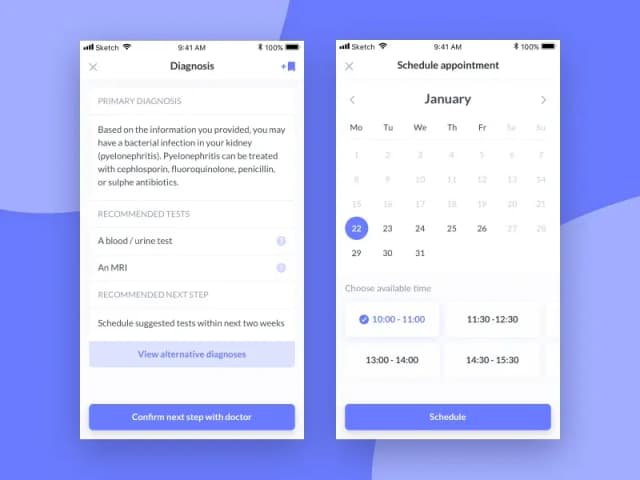
A production MVP includes working business logic and the infrastructure needed for real users. That was the relevant scope for our GSR project.
⭐Our experience.
One more example is the development of a user-friendly web platform inspired by psychological GSR methodology. We developed a basic MVP with a catalog of psychologists, a matching questionnaire, and adaptive design — in just 4 months for $40,000. This helped test the idea and scale the platform later.
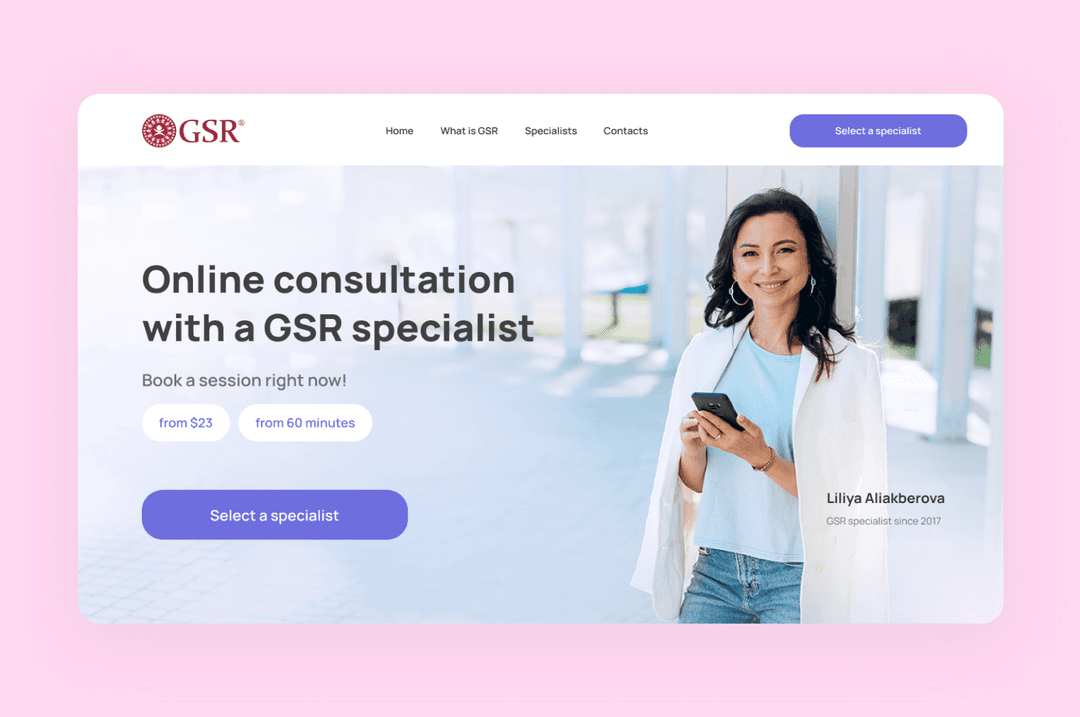
A full healthcare app adds broader workflows, stronger administration, and more integration coverage. Its budget commonly starts around $100,000 and rises as the number of systems, regulated data flows, and operational responsibilities grows.
A useful healthcare mobile app development quote separates discovery, design, core development, integrations, validation, and launch instead of presenting one total. This cost breakdown makes exclusions visible and gives founders a development budget they can compare across vendors. The percentages below are an illustrative Purrweb planning allocation, not a fixed industry formula.
Each phase answers a different budget question, from defining the clinical workflow to preparing a production release.
| Phase | Illustrative share of build budget | What is included |
| Discovery and estimation | 8% | Clinical workflow, user roles, scope, compliance needs, and an integration map |
| UX/UI design | 15% | Research, user flows, wireframes, accessible UI, and a prototype |
| Core development | 45% | Frontend, backend, admin panel, database, and business logic |
| Integrations and migration | 12% | EHR/FHIR, payments, video, wearables, and legacy data migration |
| QA, security, and compliance validation | 15% | Functional QA, accessibility checks, penetration testing, and audit preparation |
| Deployment and launch | 5% | Release setup, monitoring, app stores, documentation, and handoff |
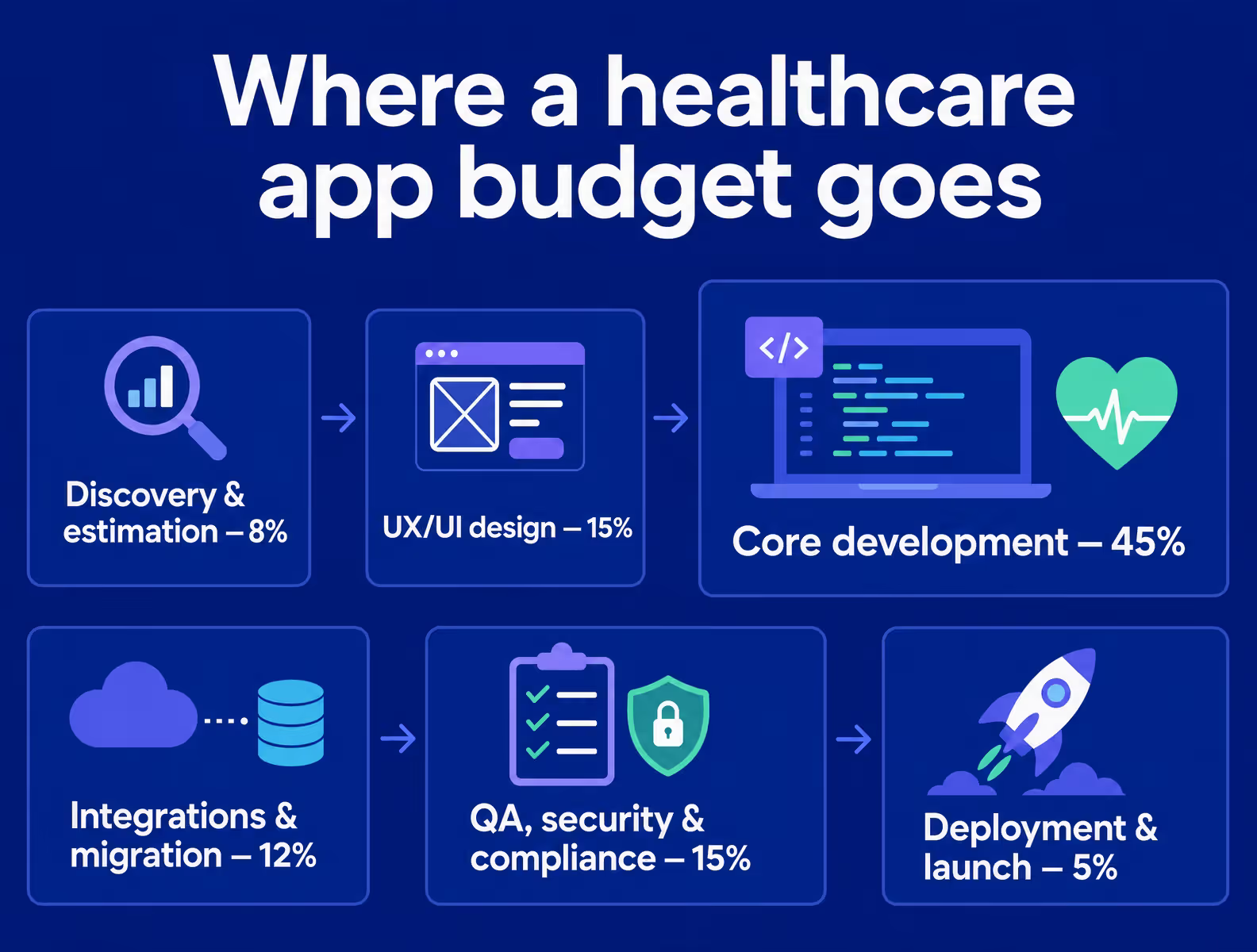
The allocation changes across healthcare apps. An integration-heavy platform moves more development hours into data mapping and connector testing. A patient-facing app with several clinical roles requires more design and validation work than a basic internal tool.
These shares cover the initial build. Recurring cloud services, third-party API fees, legal review, external compliance audits, and post-launch maintenance need separate lines in the estimate. Keeping those costs outside the phase table prevents a low initial quote from being mistaken for the first-year total cost.
Let's explore the main cost drivers — from feature complexity to team composition — and explain how each influences your final development bill.
Medical app development cost reflects the systems and validation behind features, not only their screens. EHR connectivity, regulated video, AI features, and device data need different engineering and testing. These development costs are Purrweb planning estimates, not prices to add without checking overlap.
| Cost driver | Planning impact | Budget note |
| EHR integration | High | About 20, 000–80,000, depending on a standard FHIR API versus legacy connectors, migration, and certification |
| HIPAA-compliant app development and external security review | High | About 15, 000–50,000 for architecture, controls, documentation, testing, and validation |
| Secure video, chat, and scheduling | Medium–high | Moves a basic product toward a telemedicine scope that commonly totals 80, 000–200,000+ |
| AI or NLP component | High | About 30, 000–60,000 for a focused component, plus data, evaluation, inference, monitoring, and validation |
| Two native mobile codebases | High | Adds delivery and QA work compared with one suitable cross-platform codebase |
| Maintenance and compliance updates | Recurring | Plan 15–25% of the initial build cost per year |
Each integration needs a data-flow and test scope. A standard API differs from a bi-directional legacy connector with migration and vendor approval. Shared security or backend work belongs once in the estimate, not in every feature line.
⭐Our experience.
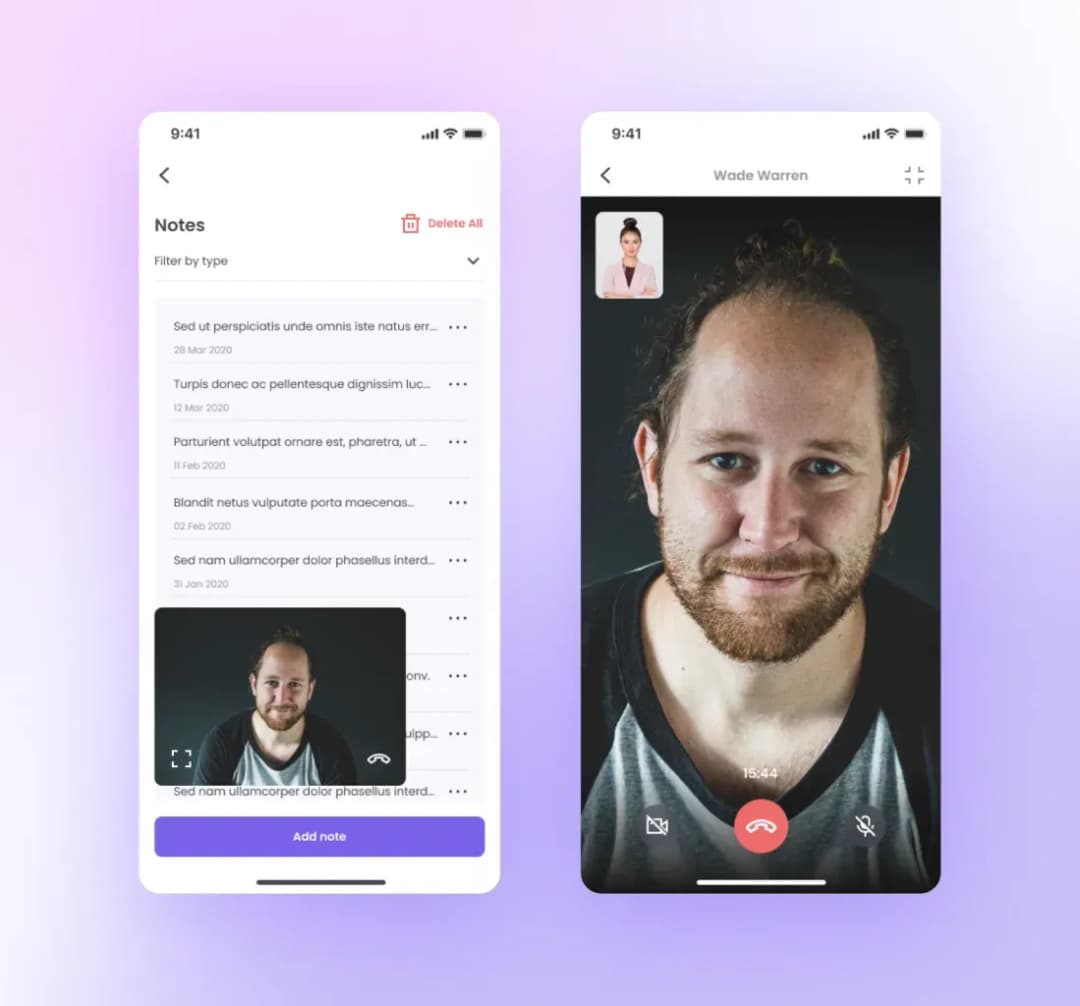
A good example of complex healthcare app development is an online psychotherapy service we built for the UK market. We developed a web platform and mobile app that included real-time video calls, therapist verification, and integration with an outdated insurance system API. The app launched with 1,000+ users and 30 therapists.
The cost of developing healthcare applications varies by product category, data flow, and failure tolerance. A wellness app may store self-reported habits and wearable data. A remote patient monitoring medical app, a mobile application, collects clinical readings and needs reliable alerts, device validation, and a clinician dashboard.
Telemedicine adds video, scheduling, payments, and secure communication. Hospital management and EHR products add role-based access, audit trails, data migration, and interoperability testing. The category therefore affects the integration and regulatory compliance workload more than the number of screens. Detailed planning ranges for each solution type appear later in the guide.
Effective UI/UX design for healthcare apps means creating safe, easy-to-use, and inclusive experiences, not just attractive interfaces. Gathering user feedback throughout the design and development helps ensure the app meets the needs of its audience.
You can use a standard UI. It means the app consists of ready-made design elements and templates. This speeds up the development process and keeps costs lower. It works well for apps aimed at general users with simple needs.
Custom design adds research, accessibility work, tailored user flows, and extra QA. The estimate should price that scope directly rather than applying a universal percentage.
It's important to consider accessibility during development to ensure healthcare apps work well for users with vision, hearing, or motor disabilities. This means adding screen reader support, large fonts, high-contrast modes, and simple buttons.
On top of that, apps must follow HIPAA design rules. This means protecting user data through secure login screens, showing clear privacy messages, and keeping sensitive information safe.
Who builds your healthcare mobile app matters as much as what you're building.
You can go with an in-house team, an outsourced partner, or a mix of both.
Costs also depend on the size and composition of the development team:
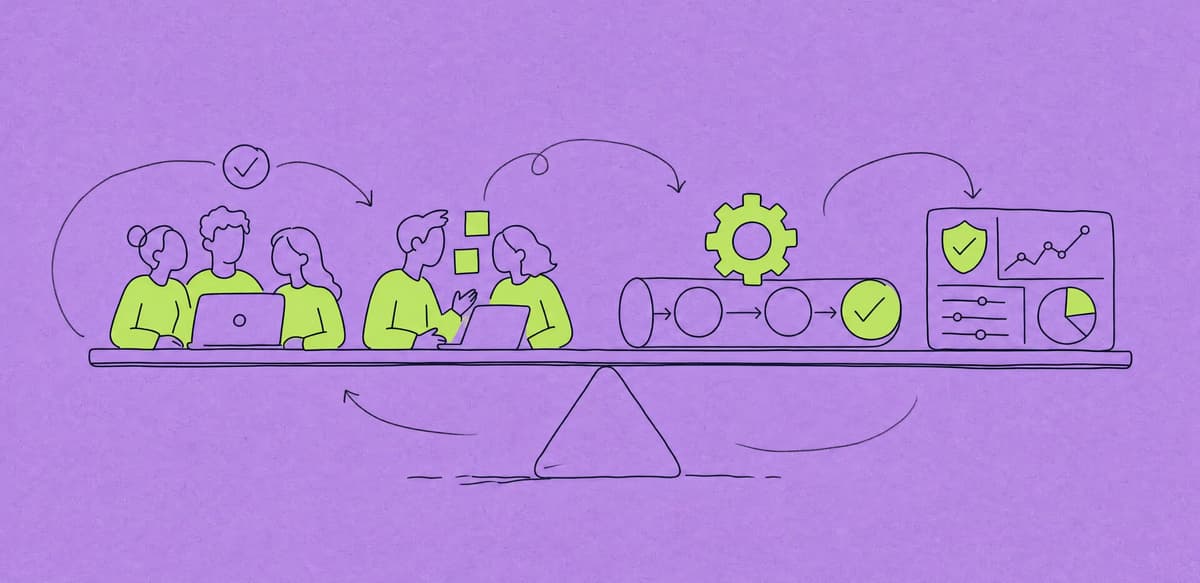
When everyone knows their role and works well together, the whole development process goes faster, and you avoid extra costs.
Low upfront development costs do not guarantee the lowest healthcare app cost. White-label and low-code products trade speed for fees and platform limits. Custom software development costs more initially but gives the team control over workflows, integrations, and source code.
| Approach | Upfront cost | Recurring cost | Control and compliance | Best fit |
| White-label platform | Lower | Subscription, user, or module fees | Limited source-code and workflow control, with vendor lock-in risk | Standard telehealth or patient engagement workflow |
| Low-code with custom integrations | Low–medium | Platform and API fees | Faster iteration, but every vendor and data flow still needs review | Prototype or controlled internal workflow |
| Custom cross-platform app | Medium–high | Cloud, maintenance, and third-party services | Strong control over workflow, UX, and integrations | Startup or provider with differentiated product logic |
| In-house enterprise build | Highest | Salaries, infrastructure, and operations | Maximum ownership with the largest hiring and operating burden | Organization with a permanent product and security team |
The comparison needs three-year TCO, migration work, and vendor replacement cost. A platform can fit a standard workflow. Teams build healthcare software when custom healthcare workflows or legacy integrations make workarounds too costly.
Team location changes the hourly rate, but it does not determine the final healthcare app cost by itself. The ranges below are Purrweb planning estimates for August 2026. They provide an HTML equivalent to the existing rate map and show the delivery trade-off behind each range.
| Region | Typical hourly rate | Planning trade-off |
| US and Western Europe | 80–150/hour | Higher local rates and easier overlap for organizations based in these markets |
| Eastern Europe | 40–70/hour | Moderate rates with a large engineering talent pool and partial US time-zone overlap |
| India and Latin America | 20–40/hour | Lower rates, with delivery quality depending more heavily on team selection, communication, and time-zone planning |
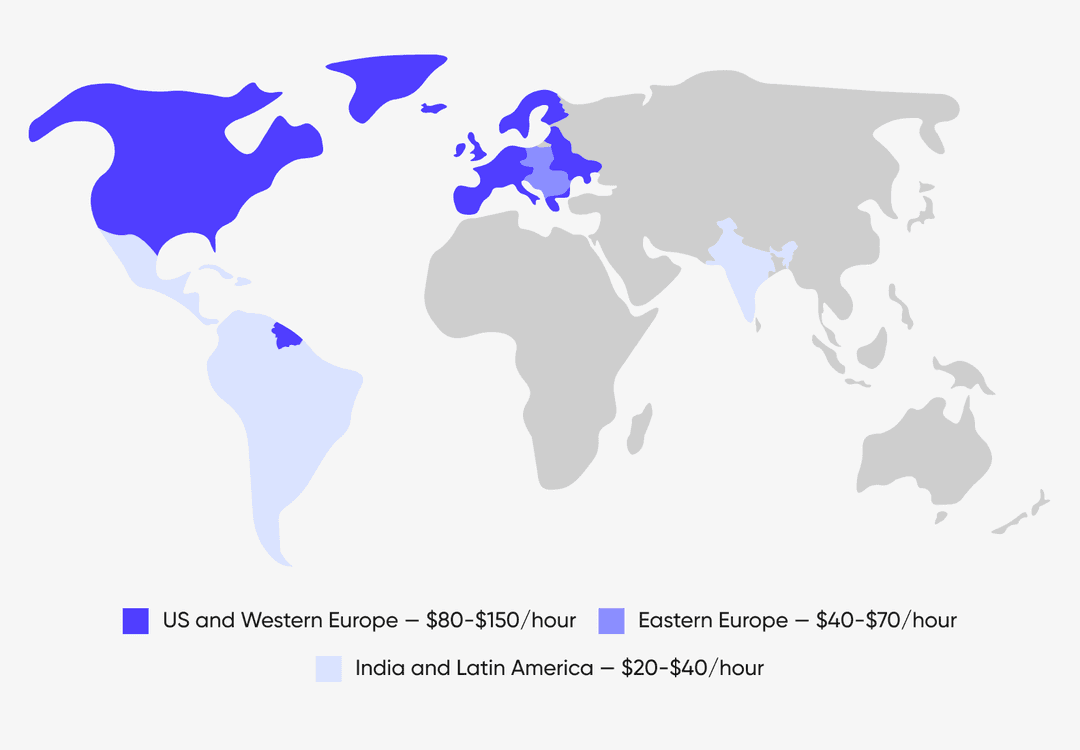
Hourly rate comparisons work only when every team prices the same scope. Healthcare experience, compliance maturity, communication, rework risk, delivery speed, and support obligations can outweigh the difference between two regional rates.
One of the first choices that healthcare organizations face is whether to develop the app for iOS, Android, or both.
If you build two separate native healthcare apps — one for iOS and one for Android — you'll get top performance and a great user experience. But this also means twice as much work, which will lead to more time and higher costs for the development process.
Many teams use cross-platform development with Flutter or React Native so one codebase covers both platforms. It reduces duplicated delivery when the product does not rely on platform-specific performance or device access.
If your users are on one platform, like iOS, you can start there and add Android later. But if you're targeting a wide audience, support both from the start.
Healthcare apps are not limited to mobile devices. Many doctors, administrators, and patients prefer using web versions on their computers. Purrweb develops web applications using React.js — these apps run smoothly in any modern browser. They are quick to build and easy to update without the need to go through app stores.
For desktop solutions such as hospital management tools or clinic dashboards, Purrweb utilizes Electron.js. The technology allows us to create cross-platform desktop software. This approach reduces development time and costs compared to building native Windows or macOS applications from scratch.
Healthcare professionals spend a lot of time at their desks, so having web and desktop versions from the start is practical and cost-effective. This approach aligns well with our strong experience in healthcare and wellness app development.
For healthcare providers, ensuring compliance and protecting sensitive patient data is not optional — it's a core requirement. Healthcare app development deals with private and sensitive data, so platforms have to follow strict rules to keep that information safe.
In the US, apps must follow HIPAA rules. In the EU, it's GDPR. These laws protect personal data and require strong security.
There are also healthcare-specific standards like HL7 and FHIR, which make sure medical systems can share data in the right format.
The estimate should price secure storage, encryption, audit logs, privacy controls, documentation, and external validation as separate workstreams. Their cost depends on the data flow and systems in scope.
Compliance work belongs in the initial scope because adding controls after the architecture is built creates redesign and revalidation work.
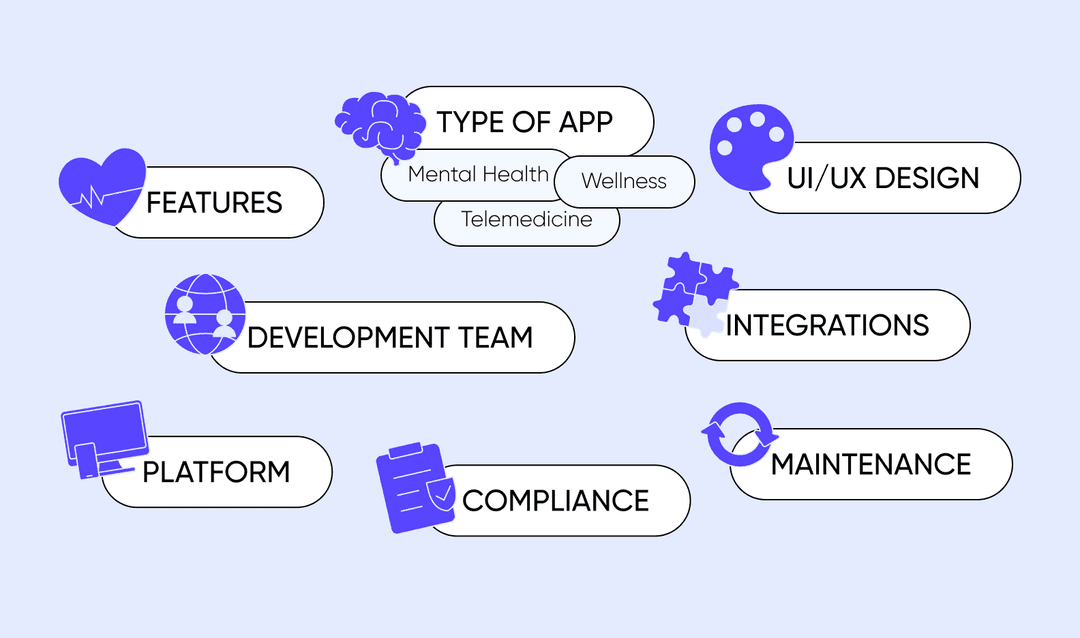
Solution type affects the cost of healthcare app development because each category carries a different clinical workflow, integration load, and operating model. These app development costs are Purrweb planning estimates for typical product scopes, not fixed prices.
Telemedicine app development costs 80, 000–300,000+ for a production product. An MVP for a telemedicine app narrows video, messaging, scheduling, payments, and EHR scope for patients and healthcare providers. Our telemedicine app development services page covers the delivery scope in more detail.
Mental health app development cost ranges from about $60,000 to $120,000 for mood tracking, guided sessions, journals, and community tools. Therapist workflows, regulated communication, AI, or crisis escalation move the product toward a higher scope.
A wellness app typically costs 55, 000–150,000. Wearable data, real-time synchronization, personalized plans, and social features create most of the spread. Products that make clinical claims need a separate validation and regulatory assessment.
A medical CRM or hospital management app usually starts around $150,000 and can exceed $400,000. Role-based access, billing, inventory, staff scheduling, and connections to existing hospital systems make these products integration-heavy.
An electronic health record (EHR) or EMR with a patient portal typically costs 90, 000–250,000. Fast Healthcare Interoperability Resources (FHIR), legacy connectors, bi-directional exchange, migration, identity matching, and vendor certification raise the estimate. This corrects the previous $900,000 lower-bound typo.
A remote patient monitoring app connects wearable technology and medical-device readings to alerts and a clinician dashboard. Cost depends on the devices, sampling frequency, data volume, escalation workflow, and whether the product enters an FDA or clinical-validation scope. A universal range would hide those differences, so RPM needs a device-level estimate.
Artificial intelligence (AI) features can place the overall healthcare app within a 70, 000–350,000+ range. The build budget covers data preparation, model or API integration, evaluation, and clinical validation. Recurring costs include inference, monitoring, retraining, human oversight, and incident review.
| App type | Key features | Planning considerations | Estimated development cost |
| Telemedicine and remote consultation | Video, chat, scheduling, and payments | Real-time performance, regulated communication, and provider workflows | 80, 000–300,000+ |
| Mental health and meditation | Mood tracking, guided sessions, journals, and community features | Clinical content, crisis escalation, and therapist workflows | 60, 000–120,000 |
| Wellness and fitness tracking | Activity, nutrition, sleep, and wearable synchronization | Data quality, personalization, and optional social features | 55, 000–150,000 |
| Medical CRM and hospital management | Patient records, staffing, billing, and inventory | Custom workflows and connections to existing hospital systems | 150, 000–400,000 |
| EHR/EMR with patient portals | Medical history, results, prescriptions, and patient access | Backend complexity, interoperability, migration, and security | 90, 000–250,000 |
| Remote patient monitoring | Device readings, alerts, and clinician dashboards | Device validation, data frequency, and clinical scope | Requires a device-level estimate |
| AI-powered assistants and chatbots | Symptom intake, reminders, and conversational support | Data, evaluation, inference, monitoring, and human oversight | 70, 000–350,000+ |
The first-year cost of app development for healthcare equals the initial build, external services, and the first year of operations. Healthcare apps require ongoing maintenance, often 15–25% of build cost per year. Cloud computing, audits, legal work, and vendor fees sit outside that percentage when billed separately.
The ranges here are Purrweb planning estimates for August 2026. Their purpose is to expose cost categories that a development quote may exclude.
| Cost after or outside the build | Current planning benchmark | What changes it |
| Annual maintenance and updates | 15–25% of the initial build per year | OS releases, dependency updates, integrations, and the support SLA |
| Cloud hosting and monitoring | 50–200/month for a small product, 200–1,000 for a medium product, and $1,000+ for high load | User count, storage, video, AI inference, backups, and observability |
| Security audit | 5, 000–15,000 for a basic scope and 20, 000–50,000+ for a complex product | Systems in scope, integrations, data sensitivity, and regulatory risk |
| Legal and privacy review | 3, 000–10,000 for standard software and $20,000+ for highly regulated products | Markets, contracts, clinical claims, and data-sharing partners |
| App store and vendor fees | A separate recurring or one-time line | Developer accounts, APIs, video, payments, EHR connectors, and wearable SDKs |
For a $100,000 build, the maintenance benchmark alone adds 15, 000–25,000 during a typical year. That figure does not include a new external audit or usage-based services. Healthcare apps with video, AI, EHR, or wearable integrations can have similar build budgets but different operating costs.
A comparable estimate separates one-time implementation, fixed recurring fees, and usage-based charges. It also states who pays each vendor and which support work is included. This prevents a lower development quote from appearing cheaper only because infrastructure, compliance, or maintenance was left outside the scope.
Cost control comes from removing unnecessary scope, duplicated delivery, and avoidable rework. Moving an expense into maintenance or a subscription only shifts it to another budget.
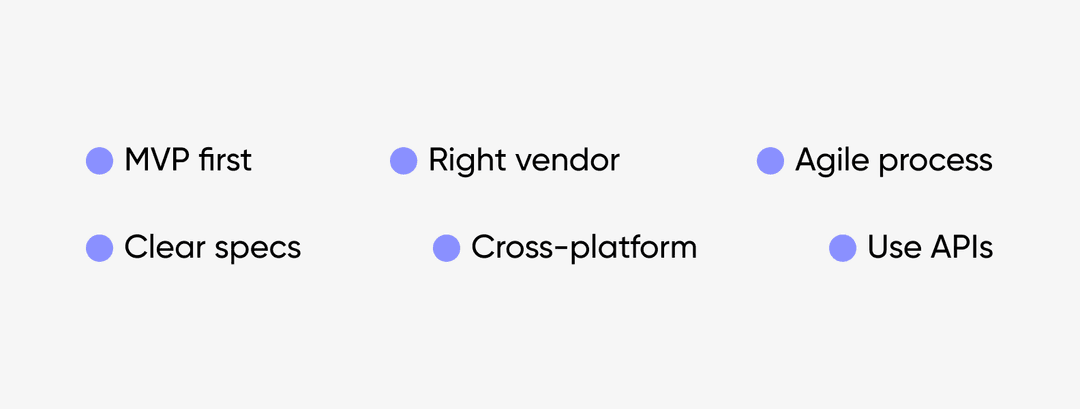
Ways to reduce costs without cutting corners
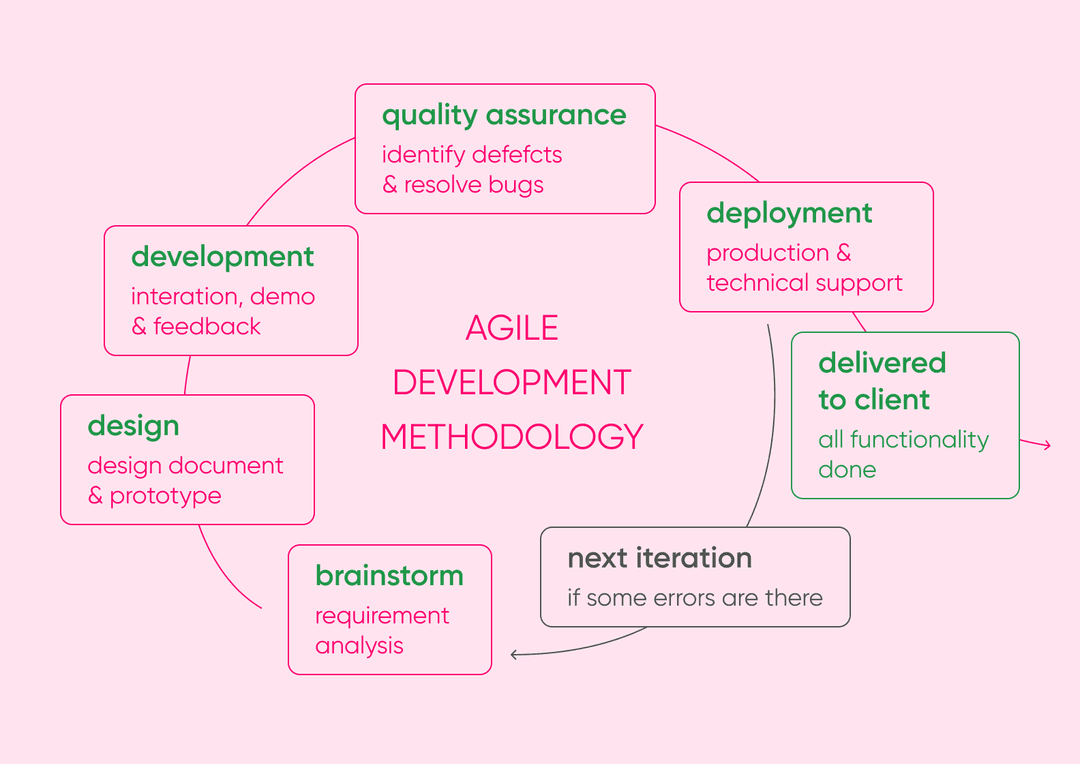
The cycle of Agile methodology
Compare specialized healthcare app development services on equal scope when choosing the right development partner. A mobile app development company hired to develop a medical app should understand regulated data to reduce rework. Our guide to choosing a healthcare development partner covers the broader vendor comparison.
Healthcare software architecture changes development costs when it duplicates work, widens audit scope, or complicates integrations. The broader architecture and mobile app development process belong in our mobile health app development guide. Here, compare what each technical layer adds to the estimate.
| Layer | Typical options | Cost implication |
| Mobile | React Native, Flutter, or native iOS and Android | Cross-platform avoids duplicated delivery for many products. Native codebases add development and QA work when device access or performance justifies them. |
| Backend | Node.js or Python | Real-time load, AI workloads, team expertise, and auditability matter more than framework popularity. |
| Data and cloud | PostgreSQL, encrypted object storage, and eligible AWS, Azure, or GCP services | Vendor agreements, access logs, backup, residency, and monitoring create setup and recurring costs. |
| Integrations | FHIR/HL7, video, payments, and wearable platforms | Connector scope and testing often make this the least predictable part of the budget. |
| AI | An assessed API or a custom model | The estimate includes data preparation, evaluation, inference, monitoring, and human oversight. |
No framework makes a healthcare mobile application compliant by itself. Compliance depends on healthcare regulations, data flows, vendor contracts, access controls, and operating procedures. A familiar stack improves estimate reliability. A low-cost component can still raise TCO when it creates vendor lock-in or requires custom connectors later.
Building a healthcare app is a big step, both in impact and investment. Whether your budget is $50,000 or $300,000+, knowing what to expect at each stage helps set clear goals. A smaller budget can cover an MVP with core features, while a larger budget allows for advanced functions, integrations, and custom design.
No matter the budget, thoughtful preparation and partnering with the right development team are the best ways for healthcare providers to make your healthcare app a success without overspending.
➡️ At Purrweb, we have healthcare experience and focus on compliance and modern tech. Our team helps clients turn ideas into working products. The development approach emphasizes smart planning, clear specifications, and choosing the right tech stack to avoid delays and extra costs. Fill out the form, and you'll get a free project estimate within 48 hours.
Healthcare app development typically costs $40,000–$500,000+ in 2026. A focused patient-facing MVP may fit within $40,000–$80,000. Telemedicine, EHR/FHIR integrations, remote patient monitoring, AI, data migration, and enterprise compliance can push the budget above $150,000. Always state the scope, platforms, integrations, security work, and post-launch costs behind the range.
HIPAA-ready architecture and external validation can add roughly $15,000–$50,000 to a healthcare app project as a Purrweb planning estimate. The work may include access controls, encryption, audit logs, vendor agreements, security testing, documentation, and incident procedures. Annual compliance maintenance, re-audits, and infrastructure costs should be budgeted separately.
EHR integration can add about $20,000–$80,000, depending on the system and data flow. A standard FHIR API connection is usually less complex than a bi-directional integration with a legacy EHR, custom connector, data migration, and vendor certification. Budget extra time for mapping, testing, error handling, monitoring, and API or licensing fees.
Telemedicine app development commonly falls within $80,000–$200,000+ for a production product. Scheduling, secure messaging, video visits, payments, e-prescribing, multi-provider administration, EHR integration, and compliance controls all affect the total. A focused MVP costs less than a multi-clinic platform, but vendor and post-launch fees remain part of the budget.
Mental health app development may start at about $40,000 for a focused self-guided MVP. Teletherapy, clinician workflows, secure communication, AI, or EHR integration can push it above $150,000. The estimate also depends on regulated health data and support for licensed care. Crisis escalation, clinical content review, and model monitoring add further scope.
Team location changes hourly rates, but the lowest rate does not always produce the lowest total cost. Compare healthcare experience, compliance maturity, communication, rework risk, delivery speed, and support obligations together with the rate. Ask every vendor to quote the same scope and show assumptions, team roles, exclusions, integrations, and post-launch costs.
Plan about 15–25% of the initial build cost per year for maintenance as a budgeting benchmark. This can cover OS and dependency updates, cloud infrastructure, monitoring, security patches, compliance reviews, bug fixes, vendor API changes, and support. Video, AI, EHR, or wearable integrations can create additional usage and monitoring expenses.
Healthcare app development pricing usually covers discovery, design, frontend and backend work, integrations, QA, security testing, deployment, and project management. It often excludes cloud hosting, third-party APIs, app-store fees, legal review, external compliance audits, and post-launch maintenance. Request both the build cost and first-year total cost.
Outsourcing is often cheaper upfront because the vendor already has a delivery team and healthcare experience. An in-house build requires hiring and ongoing salaries. Compare three-year total cost across management, security, infrastructure, vendor fees, maintenance, and knowledge retention. Communication overhead and the cost of replacing a team also belong in the comparison.
A focused AI or NLP component may add roughly $30,000–$60,000 as a planning estimate, while custom diagnostic or multimodal models can cost more. Budget separately for data preparation, privacy review, evaluation, clinical validation, cloud inference, monitoring, retraining, and human oversight. Recurring AI costs can matter as much as initial implementation.


.svg)