Explore

Need help with your project?

Oops! Something went wrong while submitting the form.
Recently, we have shifted our focus to online solutions ranging from food delivery to online medical consultations. And banks are no exception. We have long been accustomed to mobile banking — applications and websites of a traditional bank. Today, the younger generation can solve almost any issue without going to the office. So why not pick up the trend of digitalization and create your own neobank?
In this article, you will learn how to create a neobank, what you need for this, and how much it will cost.

A neobank is a fully digital bank that operates without physical branches, usually on top of a partner bank’s licence. Its business model blends several revenue streams — interchange fees, premium subscriptions, and interest on lending and deposits. This guide breaks down how neobanks make money, the must-have features and tech stack, and what budget it takes to build one from scratch.
Neobank is a financial organization that operates entirely online. These alternative FinTech startups communicate with clients and provide online banking services without physical offices.
Usually, neobanks are licensed financial organizations that conduct financial transactions and perform offline bank functions independently. But, in rare cases, neobanks are also intermediary organizations that cooperate with offline financial institutions to provide their services remotely.
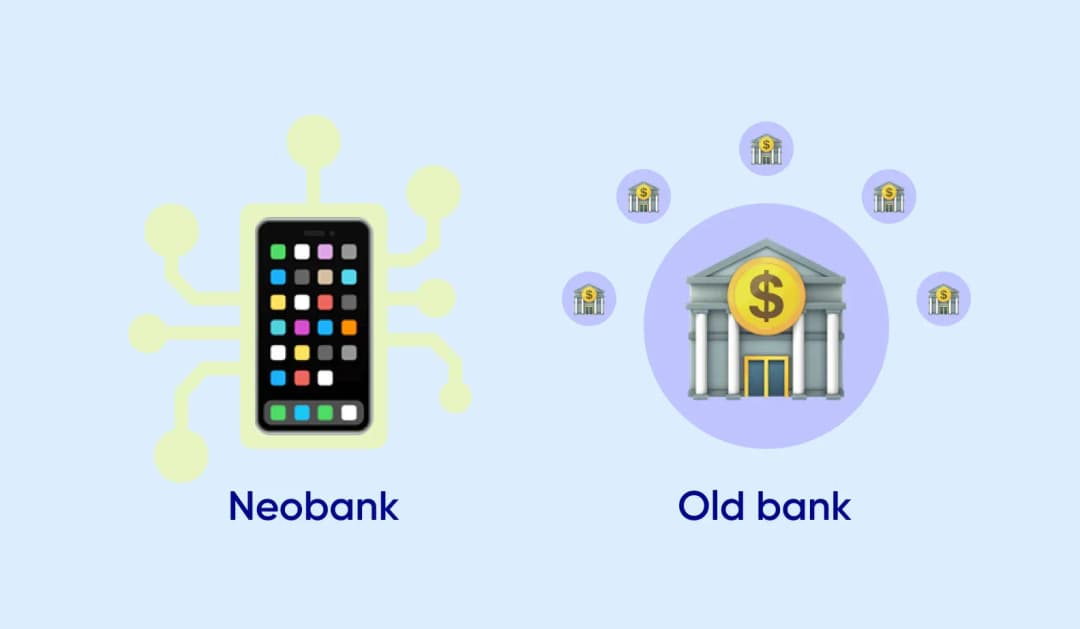
The first banks appeared about 2,500 years ago, and, despite the centuries-old changes, the bank’s functions have remained the same: they lend, store, and transfer money. We can say that the digitalization of the economic environment has added convenience to the entire system of traditional banking services.
Today, coming to the bank office on any issues is customary but not necessary! There is no problem paying a bill and transferring money to another person in the bank application. Even getting a card, issuing cash, filing a fraud complaint, or consulting is possible via apps, online consultants, and ATMs.
Here come neobanks — a new step in the finance sector and a potential booster for the growth of banking. How are they different from regular banks? Firstly, the trend towards switching to online is clear: neobanks do not have offices, but there are ATMs where people can independently receive services and withdraw or deposit money.
Secondly, unlike conventional banks, neobanks can be specialized. It is an important reason for the neobank building because they can both be habitual and render regular online banking services or narrowly focused, for example, to serve entrepreneurs, to lend only to organizations, and so on.
Thirdly, the government models differ. To be more specific, the Central Bank or the Fed is the governing body of a conventional bank, whereas a neobank can use business models that differ from traditional ones because it does not need to comply with strict state banking rules. As a result, neobanks differ in their offerings and structure from conventional banks.
Lastly, digital-only neobanks raise the accessibility of financial services. People who for some reason cannot receive a bank card in the office, gain a golden opportunity to open an account remotely.
If you are planning to launch a financial app and consider neobank as one of the options, you will most likely have to weigh the pros and cons. We have compiled the current market statistics and advantages of neobanks, so it will be easier for you to make a decision.
In short, the key takeaway is as follows: if you have identified the unique banking needs of a particular group of people, for example, freelancers or e-commerce marketplace owners, feel free to launch your neobank from scratch. You will find your clients even without a physical office. The main aim is to create a high-quality application that meets the requirements and needs of a potential customer base and then advertise it correctly.
Today, more and more people tend to use digital-only banks. For example, the number of such bank account holders in the USA is already 61.86 million, and it’s forecasted to reach 80.78 million by 2028.
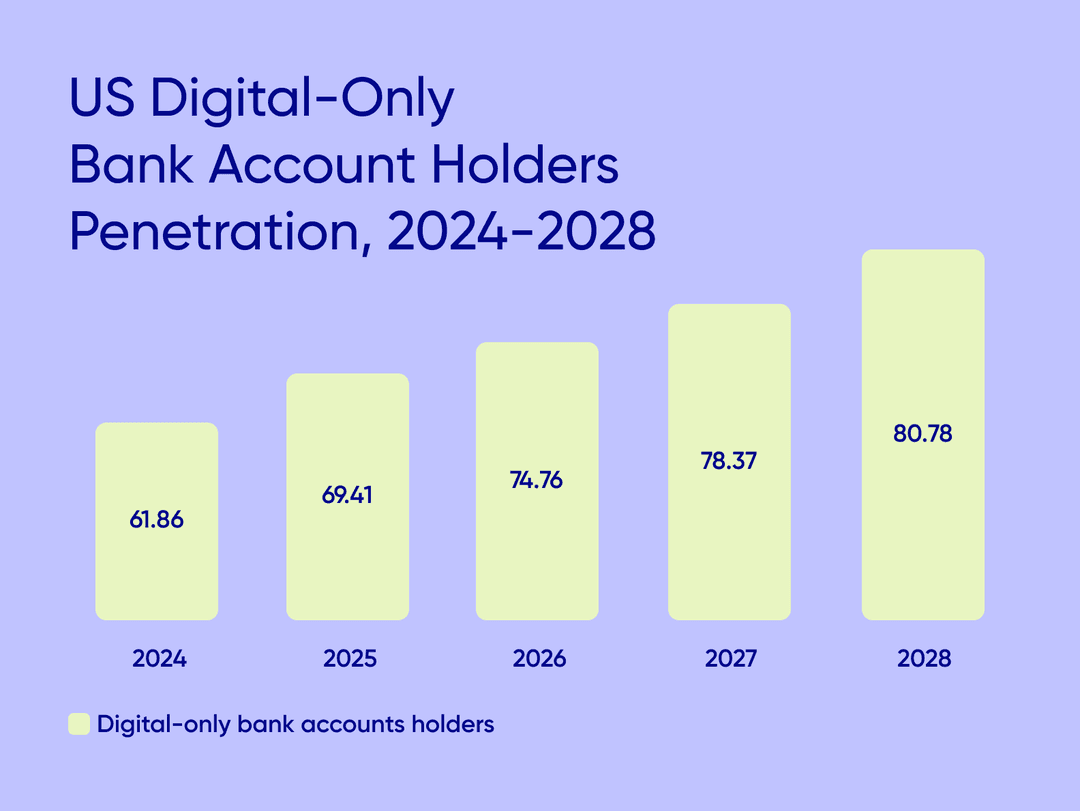
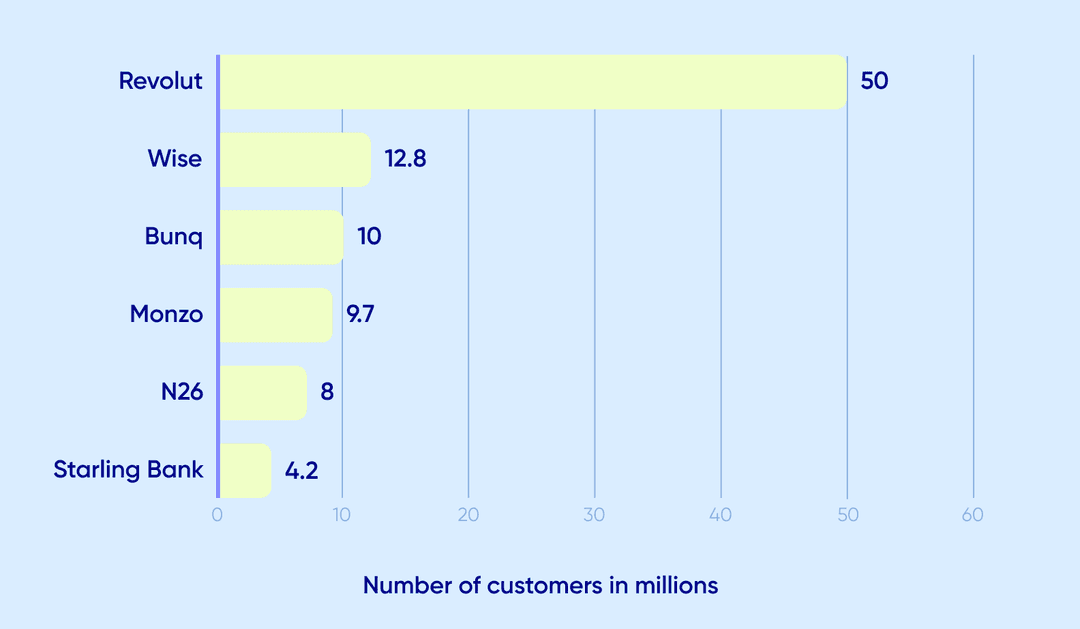
Thanks to neobanks, the acceptability of banking services represented in the number of bank accounts being opened online is surging, and consumers are focused on digital technologies. For example, in Europe, if you opt for a digital bank, it’s possible to complete the signup process from anywhere with a solid Wi-Fi connection. A client just needs to prepare an ID, a residency document, and proof of employment or school enrollment. As of 2024, the number of customers in the largest European banks operating only online is as follows:
If you are still not convinced that neobanks are the solution of the future, let’s look closer at the peculiarities of a strong and popular US neobank.
The increased consumer interest in financial services apps is driving competition globally. Consumers value convenience, speed of transactions, simple problem-solving, and exclusive offers. So, neobanks introduce noteworthy features, such as overdraft protection and registration of incentives. We want to tell you more about an encouraging example of neobank.
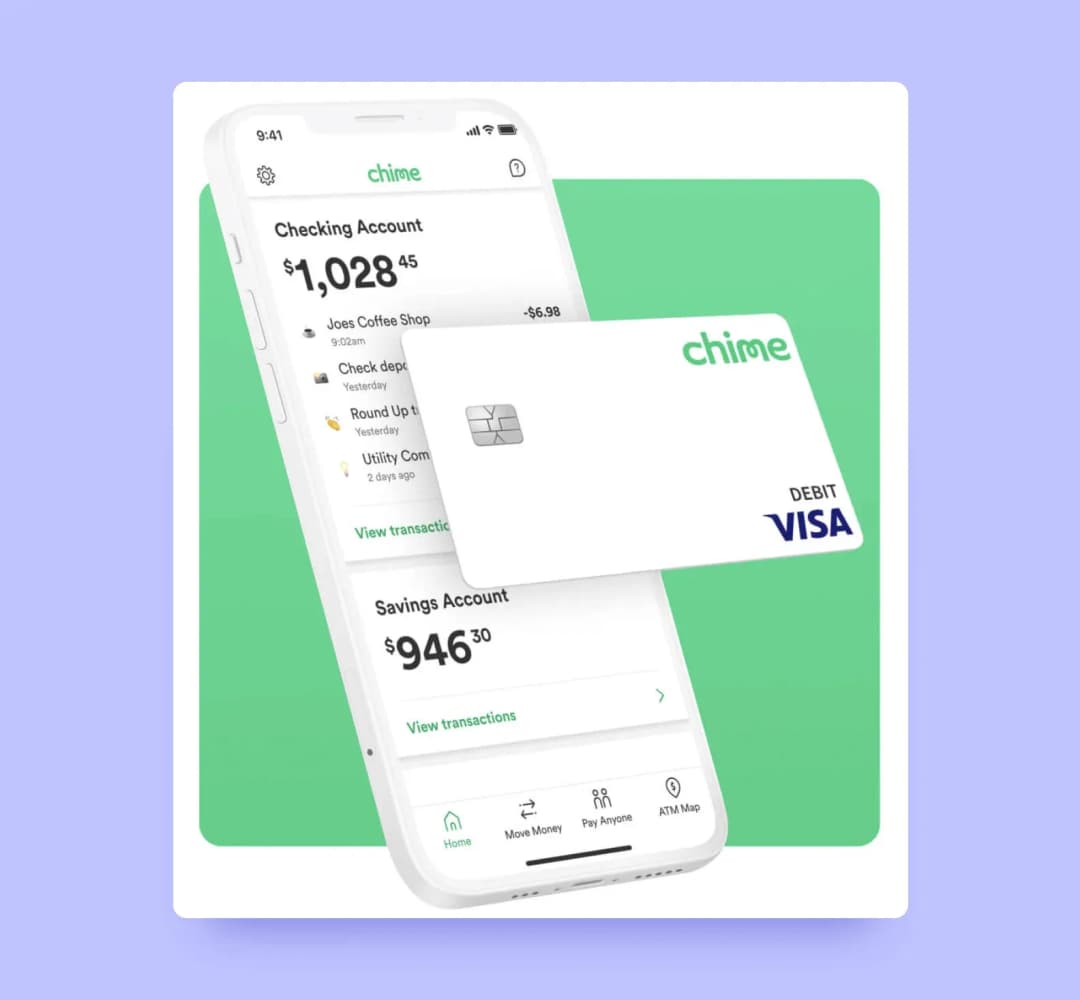
Let’s take Chime, the most popular neobank in the US. Chime is a FinTech company that provides digital banking services and issues debit cards. The Bancorp Bank and Central National Bank partner with it.
There are two features that make this neobank popular. Chime offers a $200 overdraft and access to more than 60,000 ATMs for free. It has over 22.3 million customers, over half of which have Chime as their primary banking service app. And, as we mentioned, this bank has found its niche: Chime is only available in the USA, and there is no information on whether it plans to expand to other countries.
The benefit of creating a digital bank is obvious. It is reasonable to transfer the entire business to the internet, save on renting premises, hiring staff, and buying equipment, and still be in demand. But keep in mind that you need to identify the market needs before launching. Overall, if you develop a neobank app today, you are highly likely to find your clients while taking advantage of staying online.
Perhaps you have a logical question that sounds like this: Okay, I can create a neobank from scratch, it will have users and popularity. But how do you make money off of it?
Generally, neobanks receive a large share of their profits from interchange fees paid to the company whenever a customer makes a purchase using a debit or credit card of the neobank. For example, the aforementioned Chime generated $1.3 billion as revenue in 2023 mostly through this process. The 1.5% of the interchange fee paid by merchants to Visa for each transaction goes to the service provider.
Moreover, you can make a profit from accruing interest on loans, account maintenance, paid banking services, premium subscriptions, integrating third-party services in your mobile app, etc. Additionally, neobanks also profit from the interest earned on ATM fees.
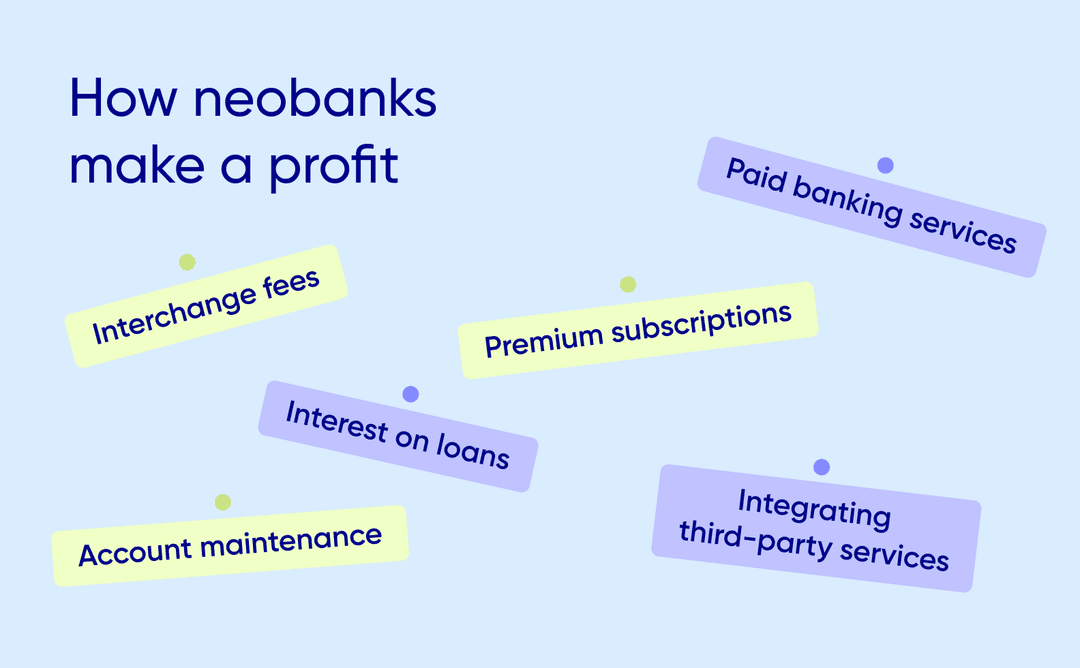
Neobanks make money primarily through interchange fees on card transactions. They also earn from premium subscription tiers, interest on lending and customer deposits, FX fees, and referral partnerships. Most neobanks combine several of these streams rather than relying on one.
Neobanks don’t run branches or loan officers, so their cost base looks nothing like a traditional bank’s. Which revenue streams dominate depends on the charter structure: full bank, e-money license, or sponsor-bank arrangement. Here are the seven streams that drive virtually all neobank revenue today.
Interchange fees are the dominant stream for most US neobanks. Every card swipe generates a fee paid by the merchant’s acquirer to the card-issuing bank. That fee then splits between the issuer, the network (Visa or Mastercard), and the acquirer.
Chime built its entire model here. Chime partners with Bancorp Bank and Stride Bank, both of which hold assets below $10 billion. That exempts them from the Durbin Amendment cap on debit interchange, which limits large-bank issuers to roughly $0.21 plus 0.05% of transaction value per swipe.
Chime captures approximately 1.5% per transaction instead. At that rate, Chime reported $2.19 billion in 2025 revenue, up 31% from $1.67 billion in 2024. The company went public on Nasdaq (CHYM) in June 2025 and now serves 9.5 million active members, out of roughly 25 million lifetime signups.
Interchange-led models need volume. Chime acquires members with no-fee positioning and direct-deposit incentives, then earns on their transaction flow.
Subscriptions convert a usage relationship into a recurring revenue relationship. Revolut’s Standard tier is free, Premium runs $9.99 per month, and Metal runs $16.99. Each step up unlocks higher ATM limits, FX allowances, and access to features like travel insurance.
In 2024, Revolut’s subscription revenue reached $541 million, 13.5% of its $4.0 billion total and up 74% year-over-year. The tier structure does double work: it generates direct revenue and reduces churn through feature lock-in.
When a neobank places customer deposits at a partner bank, it earns a net interest margin. That margin is the spread between what it pays depositors and what the partner bank earns on Fed-rate placements. With rates at 4.25–4.5% in 2025, overnight placements generate real income.
The constraint matters here. Neobanks operating under an e-money license can’t earn net interest income directly on deposits. They depend on sponsor bank arrangements to capture any margin at all. Neobanks with full banking charters hold deposits directly and keep the full spread, which is a structural profitability advantage.
Customers who carry a balance pay variable APRs that typically run 14–29.99%. This is a high-margin stream, but it requires either a banking charter or a tight sponsor-bank relationship to issue revolving credit in the US.
Nubank in Brazil is the canonical credit-led neobank, reaching more than 130 million customers primarily through credit products targeting underbanked populations. The US path is harder. Regulatory requirements are higher, and credit-risk modeling without traditional bureau data is complex. Most US neobanks enter lending after establishing a large deposit base first.
Two charges sit under this category. An FX markup is a spread on the mid-market rate during currency conversion, typically 0.5–2% outside any free allowances. A foreign transaction fee is a flat card-level surcharge, usually 1–3%, on purchases in a foreign currency.
Revolut cites FX as one of four primary revenue pillars: $540 million in 2024, matching its subscription revenue at 13.5% of total. The margin is narrower than interchange because Revolut’s own marketing promises better rates than traditional banks.
Neobanks monetize their customer bases through third-party partnerships without building new products. Insurance referrals pay $20–100 per conversion. Personal loan referrals from partner lenders pay $50–300. Typical partners are retailers, lenders, insurance providers, and investing platforms.
Chime inverts this model. Rather than receiving commissions, it pays existing members $100 for each new member who sets up direct deposit. That’s an acquisition cost, not revenue, but it drives the deposit volume that powers the interchange model.
Some neobanks license their own core banking infrastructure to other fintechs. Starling Bank’s Engine division generated £55.4 million in FY2024 by licensing its platform to institutions including NatWest and Lloyds. This is Banking-as-a-Service (BaaS), and it represents a second revenue layer well above consumer banking margins.
Most neobanks reach BaaS only after five or more years proving their consumer model. Building a neobank business model that opens this path requires early architectural decisions. Those decisions get made at the earliest stage of mobile banking app development.
Most neobanks are not profitable. The economics are tight — thin per-user margins on interchange and free-tier subscriptions rarely cover acquisition costs in the first few years.
Profitability arrives at scale, and it usually requires diversified revenue: subscriptions, lending, and FX on top of interchange and subscription fees. The neobanks that have broken the pattern all followed that formula.
Revolut cleared $1.4B pre-tax in 2024. It was the company’s fourth consecutive profitable year, on $4.0 billion in revenue and 52.5 million customers.
Nubank cleared net income above $2 billion in 2024 on its Brazilian credit book. Monzo turned an £113.9 million pre-tax profit in FY2025, an eightfold jump.
The common thread is a customer base large enough to make thin per-user margins add up, plus product lines diverse enough to keep any single stream under 30% of revenue.
The term “neobank business model” usually refers to the strategic mix — which one or two streams a neobank leans on to define its identity. Most analysts group the field into five archetypes. Chime and Nubank anchor the extremes. Revolut spans several at once.
| Business model | How it earns | Example |
| Interchange-led | Fee on each card transaction (interchange fee) | Chime |
| Credit-led | Interest on loans and credit cards | Nubank |
| Asset-led | Net interest income on deposits and high-yield savings | Marcus by Goldman Sachs |
| BaaS / platform-led | Licensing core banking stack to other fintechs (API and platform fees) | Starling Engine |
| Subscription / product-extension | Paid premium tiers and add-on products (wealth, insurance) | Revolut |
Which archetype a founder can even attempt depends on the licensing route. Interchange-led and referral models work under an e-money license alone. Credit-led and asset-led need a banking charter or a tight sponsor-bank arrangement. BaaS-led usually requires a full charter plus years of proven infrastructure. Subscriptions layer on top of whatever else the neobank is doing.
In practice the labels blur. Chime is unambiguously interchange-led but supplements with a small SpotMe overdraft. Revolut collects revenue from all five buckets and only calls itself subscription-led because Standard-to-Premium conversion drives strategy. Starling’s Engine BaaS division now generates more headline revenue than its consumer accounts.
Successful neobank business model design is layered over time. Interchange funds the first million users. Subscriptions and lending pay for scale. BaaS opens up once the retail base is proven.
Now, neobanks have both unique functions for the target audience and attractive solutions for the layman. If you are interested in how to start a neobank, check out its core functions that you will need to implement in the application.
The number one thing you need to take care of when it comes to finances is security. Your application must protect customer data from fraudsters, potential hacks, and data leakage. You also need to secure your server, where all customer information is stored.
Sometimes, neobanks are not protected in the same way as conventional banks, for example, they are not included in the guaranteed insurance fund but they can establish a high level of cybersecurity, for example, using biometric verification and data encryption. If a digital organization is independent, it also must meet such requirements as ensuring the protection of user accounts, ensuring clients’ money, and not using clients’ funds in business turnover.
If you use payment gateways that connect you to Visa or Mastercard, make sure everything is trustworthy and verified. Financial flows also need to be encrypted, the 3D secure protocol will help you. The overall sign-in flow should be simple but safe. For your users, create an additional layer of protection by offering them a PIN code to log into the neobank application.
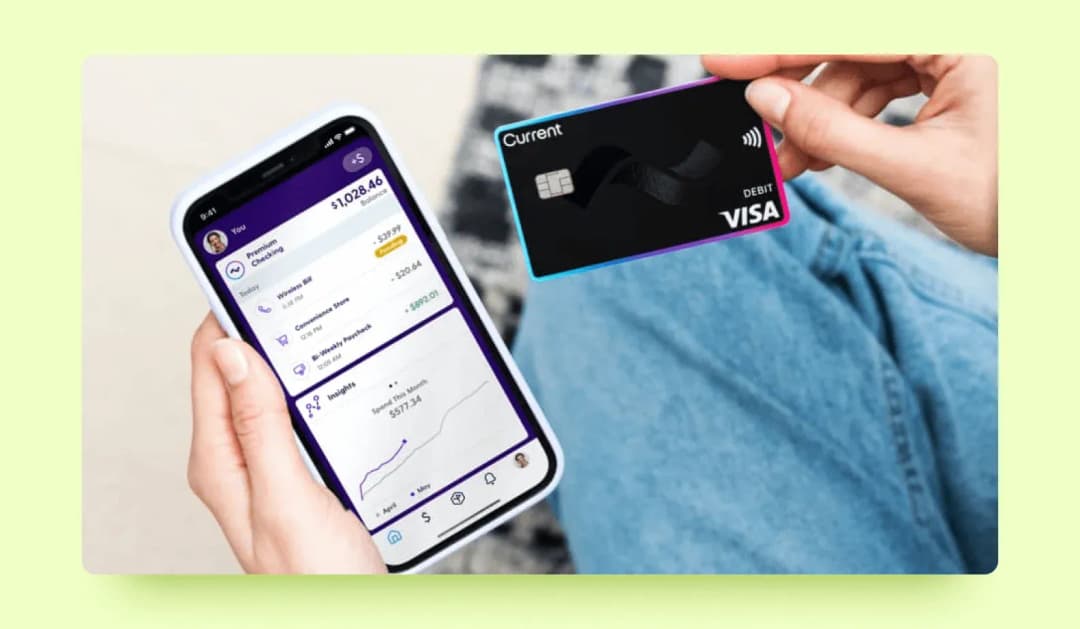
Creating an account and getting a card is a must-have for any neobank application. It is the main product of the financial app. Through the account, the user interacts with financial flows and receives and withdraws money. Additionally, in the Current neobank, not only can you open a virtual account but also receive a plastic debit or credit card. Such cards are already used by more than 4 million people in the US.
The most basic financial operations are money transactions, payment of bills and taxes, and debiting and crediting funds to the account. You can add currency conversions and additional banking products, such as savings accounts and deposits or an investment account.
Push notifications are a great tool to inform the user about their debits and credits or other actions with their account. Via push notifications, users can also receive messages from the neobank itself about news and offers.
Our client had an idea to develop a P2P payment app for the local market. In Kuwait, the population is not fully covered by banking services and the client wanted to give people the ability to make P2P payments quickly and easily.
The app has features for convenient money management:
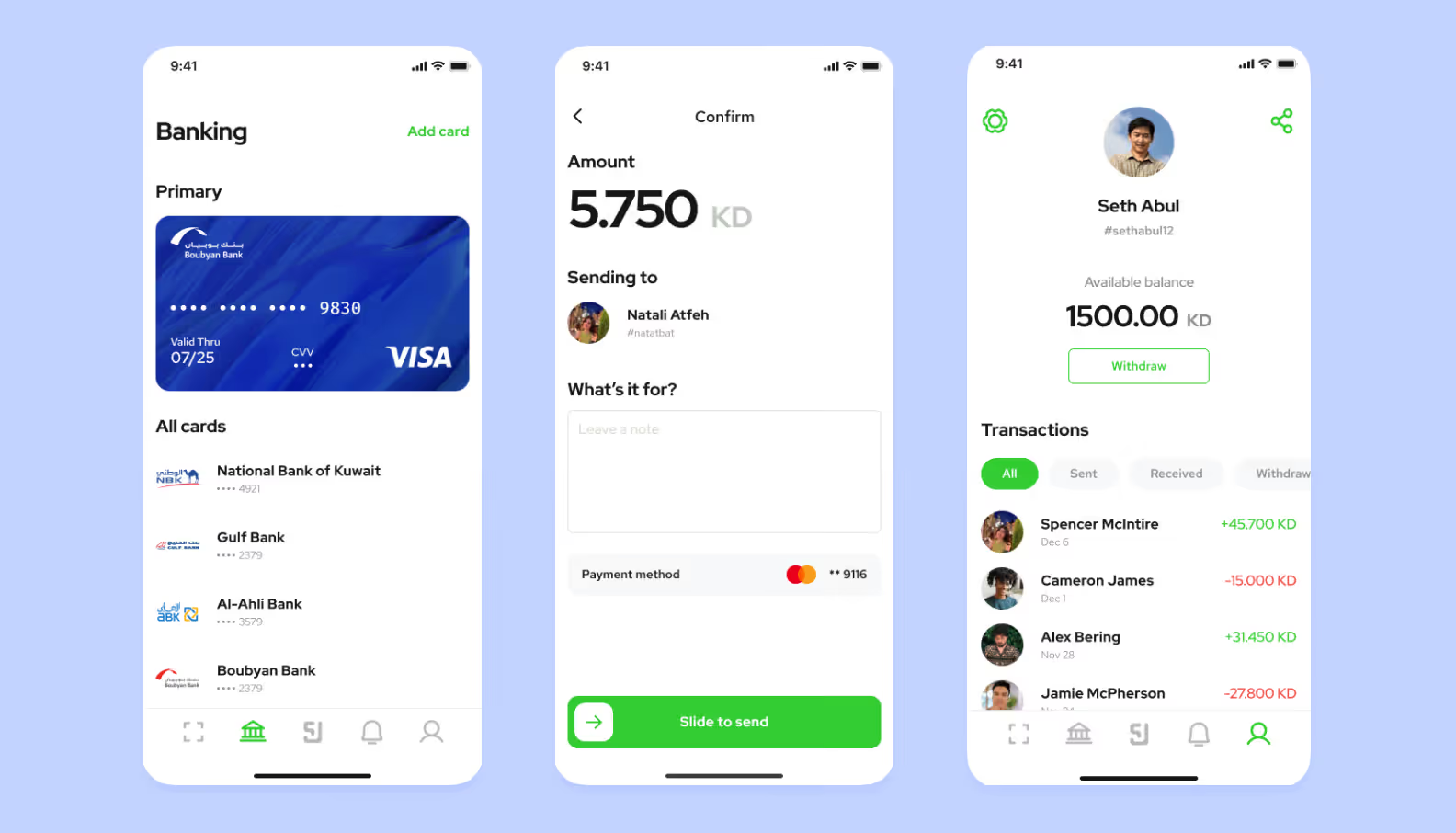
A useful banking application can be built only with basic functions. However, if you add optional but convenient and innovative solutions, it will help you stand out from the competition. Here are some popular additional features.
Companies are expanding the use of adaptive machine learning and artificial intelligence technologies. Machine learning and AI are real tools that select offers for each client individually and give them an accurate answer in a chat to reduce the time contacting the bank during servicing. Personalization includes the ability to transfer money to a frequently used number, use a regularly needed service, and view up-to-date spending analytics. Ultimately, these instruments are supposed to increase conversion and bring you more customers.
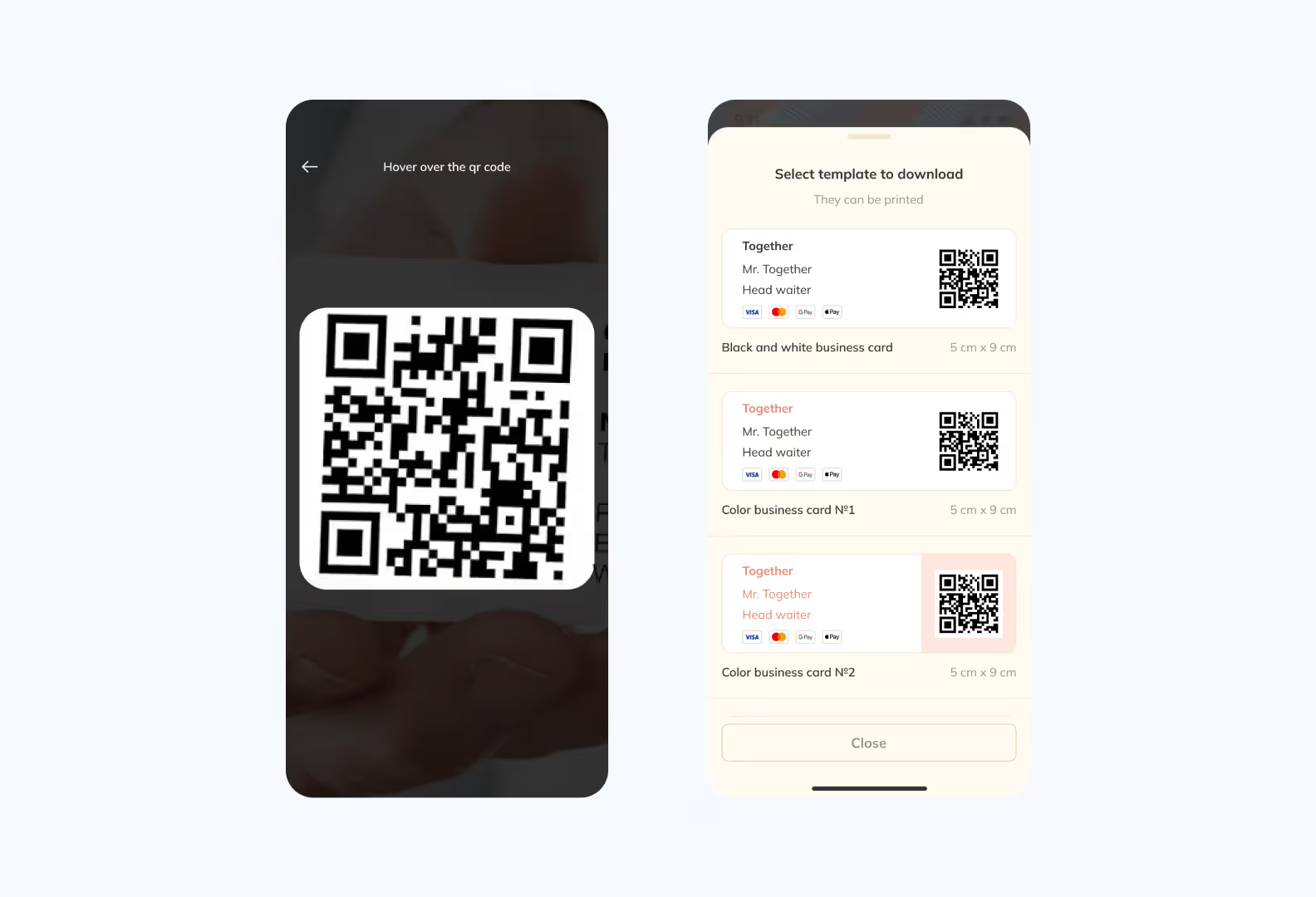
QR code is one of the fastest payment methods. To boost the user experience, many companies already accept payments made using a QR scanner in the banking app. The buyer just needs to click a QR code button in the app interface. While China was the first to implement QR code, the United States will catch up very soon. Going forward, QR codes use in the US will likely increase.
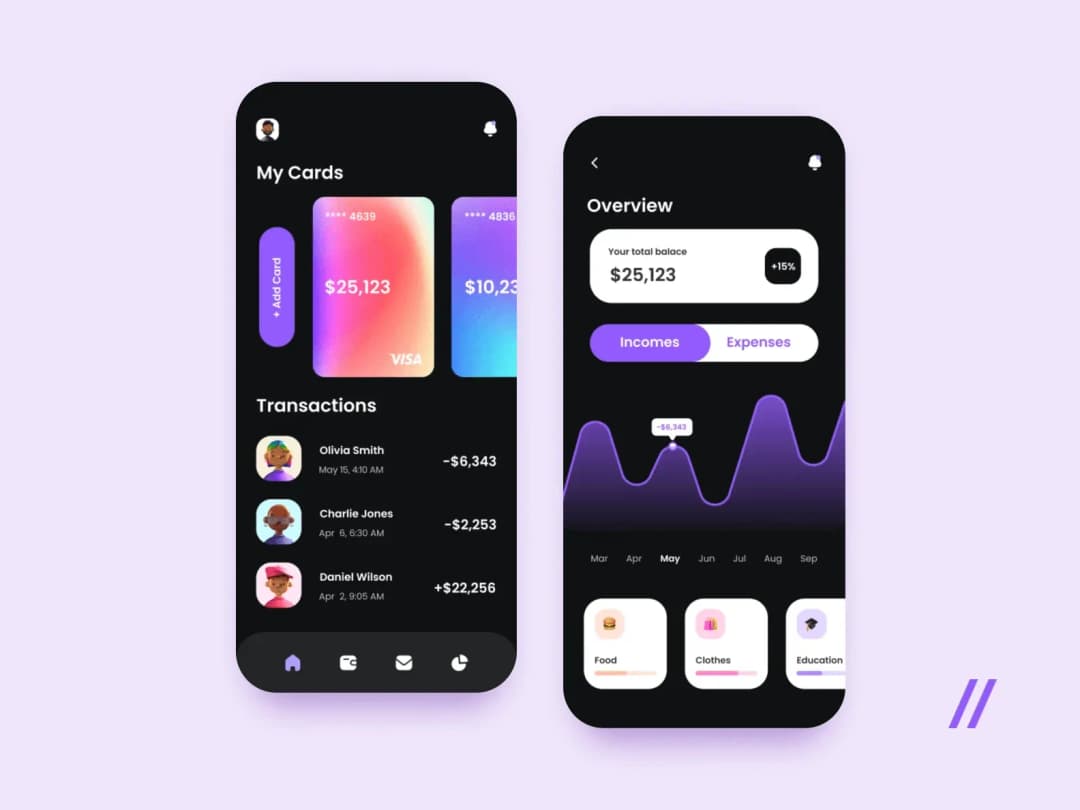
In the app, specially designated information panels can store user information. This can be an analysis of recent income or the most popular categories of expenses. Make sure that everything your neobank users may need is available on the dashboard without any unnecessary data or advertising.
Neobank is a FinTech company app, therefore, it interacts with money and must comply with the requirements and international standards. There are many laws regulating the industry, Including:
One more point to consider is a banking license. This is not a mandatory requirement, but an important signal that the bank has been verified by government authorities and can be trusted. The license gives the right to attract funds for deposits, payments via open bank accounts, and currency transactions.
That license question splits three ways in practice. In the US, most neobanks skip a full charter and route deposits through an FDIC-insured partner bank. Chime holds funds at Bancorp Bank and Stride Bank, so FDIC insurance up to $250,000 passes through to customers.
The 2024 Synapse collapse showed the trade-off: partner-bank arrangements don’t protect against ledger failures at the middleware layer. Chartering directly (Varo Bank in 2020, still the only US consumer fintech to do so) takes 18–36 months and $12–30 million in initial capital.
In the EU, an Electronic Money Institution license from the FCA, BaFin, or Bank of Lithuania is faster. A full banking license (Revolut, 2024) unlocks lending but takes years.
Also, ensure that:
Define the set of programming languages, software development kits, and frameworks that will fit your app. For example, use React Native for cross-platform development to make an app for both Android and iOS at once.
Digital banking software development is not much different from other app development processes. To start a neobank, you need to go through several vital steps. Mind that it is always better to go for creating a neobank with an experienced team. It is also worth noting that it is rational to start with MVP (Minimum Viable Product). We’ll look at the steps of MVP development below.
You should start by choosing a niche and determining a target audience that potentially needs your services. Perhaps you should consider opening your neobank with the help of a partner bank. Think over the ideas, the concept, and the logic of the work. If you have any questions at this stage, contact experts who will help you with market analytics and estimation of the potential costs and time frames.
When developing an application, you need to think about the user experience. Find several references that the design team will use to create the best interface for the application. Take the time to analyze competitors’ solutions, and user reviews about app convenience. Create a mindmap to make your design process easier. Then, develop your neobank application together with the UI/UX team.
Your next step is to build a neobank application. Our experienced team has identified the most convenient tools, but there are other options. To develop a desktop application, we recommend an Electron.js framework, for the web version, React.js and Node.js JavaScript libraries, and for the mobile app, React Native will suit you best. Don’t forget to take into account the subtleties of the banking industry, as they are strictly regulated.
After many years of experience, we realized that the ideal approach is to test the application in parallel with development. So, errors can be detected early and not after the hard and time-consuming work stages. QA (Quality Assurance) will help remove all bugs so that your application works efficiently.
At this stage, your application is completely ready, and you need to open it to users. Ask the first of them to evaluate your application and rate some aspects of its operation. Offer your clients to leave comments and suggestions. Thanks to the feedback, you will have ideas about what can be fixed and improved.
A neobank MVP runs from around $80,000 on a Banking-as-a-Service provider to $500,000 and up for a full build with its own licence, and the build path is the single biggest cost driver. Team location, feature scope, and compliance move the number from there. For the full breakdown by module, build path, team, and licensing, see how much it costs to build a neobank.
Now that you’ve read our guide, you know what to do if you want to start a neobank app. When creating a neobank, you are not constrained by the strict limits of the traditional banking industry, so you have more opportunities to find solutions that the younger generation needs. You do not need to spend money on offices and staff so the initial investment will be significantly less.
➡️ If you are interested in more detailed information or an individual consultation, fill out the form, and the Purrweb team will contact you.
A neobank MVP costs between $80,000 on a Banking-as-a-Service provider and $500,000 for a full build with its own licence — covering core banking infrastructure, compliance setup, and a mobile app. Teams that use a BaaS provider like Railsbank or Synapse cut upfront costs by 40–60% versus building core banking software from scratch. A fully featured platform with lending and multi-currency wallets runs $500,000 to $2 million+. Budget a 12–18 month runway before the product reaches profitability.
Most neobanks do not hold a full banking charter. In the US, they partner with an FDIC-insured bank — Chime uses Stride Bank — or obtain a limited-purpose charter. In the EU, a Payment Institution or Electronic Money Institution license from the FCA or BaFin is required. Applying for a de novo US bank charter takes 12–24 months and requires $12–20 million in initial capital.
A neobank MVP — account opening, transactions, push notifications, and a card — takes 6 to 12 months with a team of 5 to 8 engineers. Using a BaaS provider shortens this to 6–9 months; building core banking in-house extends it to 14–24 months. Regulatory approval adds another 3–12 months on top of development time depending on the jurisdiction.
Modern neobanks use React Native or Flutter for the mobile front end, Node.js or Python microservices for the backend, and PostgreSQL or cloud-native databases for transaction data. Core banking logic runs on BaaS platforms such as Mambu, Thought Machine, or Temenos — because building a proprietary core engine adds 18–24 months to the timeline. Payment rails connect via Plaid, Stripe Treasury, or Railsbank APIs. Cloud infrastructure runs on AWS or GCP for PCI-DSS compliance.
Neobanks primarily earn through interchange fees — 1.2–2% of each card transaction paid by merchants, the main revenue source for Chime, Revolut, and N26. Secondary streams include premium subscriptions ($5–$15/month), interest on lending products, and currency conversion margins. Most US neobanks reach breakeven at 500,000–800,000 active users because per-transaction margins are thin.
The primary risks are AML (Anti-Money Laundering) failures and data breaches — GDPR fines reach 4% of annual global revenue, while US BSA violations carry $1 million+ per incident. Neobanks that rely on a BaaS partner inherit that partner’s regulatory exposure: if the partner bank faces enforcement action, operations can halt overnight. KYC failures during onboarding are the most common compliance trigger for early-stage neobanks.
Neobanks generate revenue through interchange fees (1.2–2% per card transaction, their largest source), premium subscription tiers ($5–$15 per month), interest income from deposits and lending products, foreign exchange fees, and referral commissions. Chime, for example, relies primarily on interchange — Visa collects the swipe fee and passes a share to Chime.
Most neobanks are not profitable — fewer than 5% clear breakeven. Exceptions appear at scale via diversified revenue: Revolut posted $1.4 billion in pre-tax profit in 2024, its fourth consecutive profitable year, and Nubank cleared over $2 billion in net income the same year on its Brazilian credit book. Monzo turned an £113.9 million pre-tax profit in FY2025.
Starting a neobank costs roughly $1–3 million using a Banking-as-a-Service partner to avoid a full charter. That covers business setup, compliance, BaaS onboarding, and initial capital reserves. Pursuing a de novo US bank charter raises the range to $12–30 million plus 18–36 months of regulatory review. App development is a separate line item — see the MVP cost question above.
Neobanks are not FDIC members themselves. They protect deposits through partner-bank arrangements: Chime holds customer funds at The Bancorp Bank and Stride Bank, both FDIC-insured up to $250,000 per depositor. The 2024 Synapse collapse showed the risk — even with FDIC-insured partners, middleware failures can temporarily lock funds.


.svg)