Explore
Need help with your project?
This field is required
Incorrect phone number
Incorrect Email
This field is required
Please fill in all fields
Next
Next
Your role in the project
Services
Budget
Please select one option in each category
Submit
Submit
several colorful figures
Request sent
Our manager will contact you shortly.
Oops! Something went wrong while submitting the form.

Education software development company

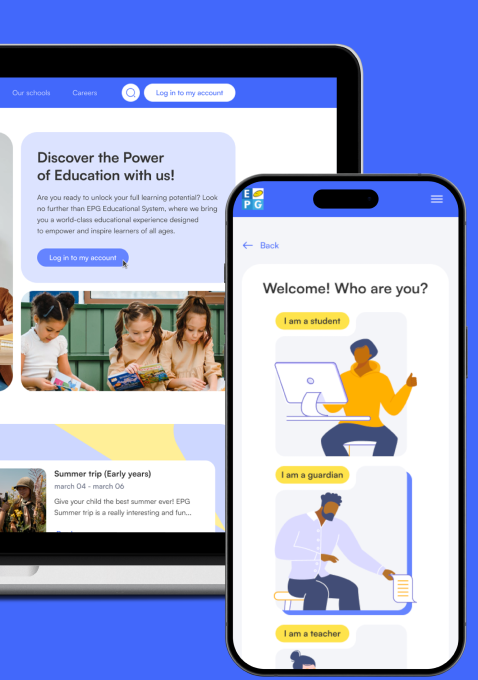
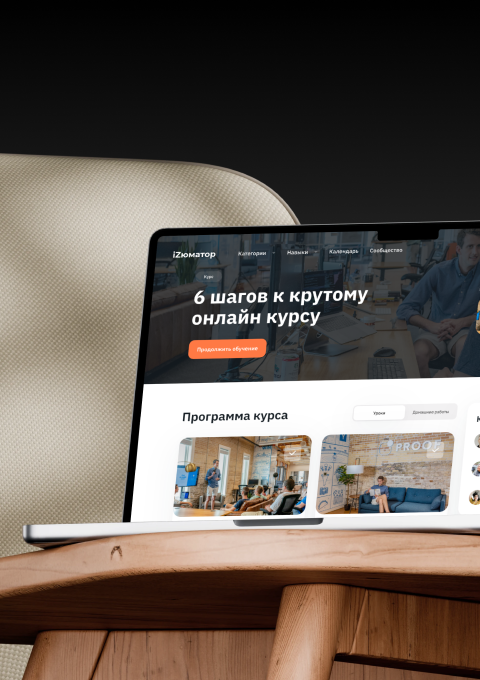
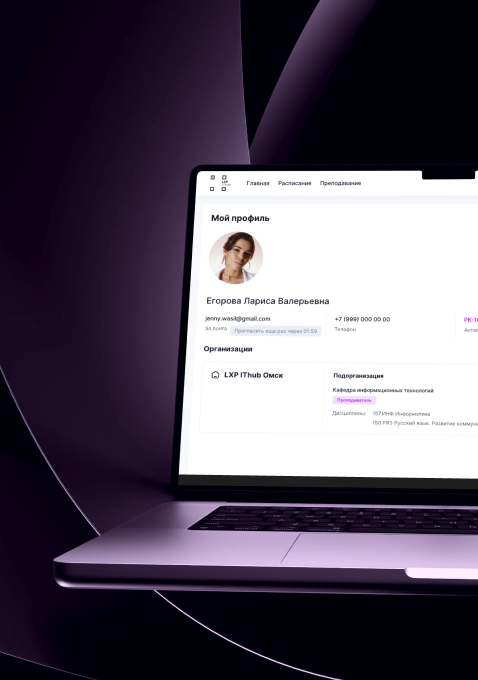
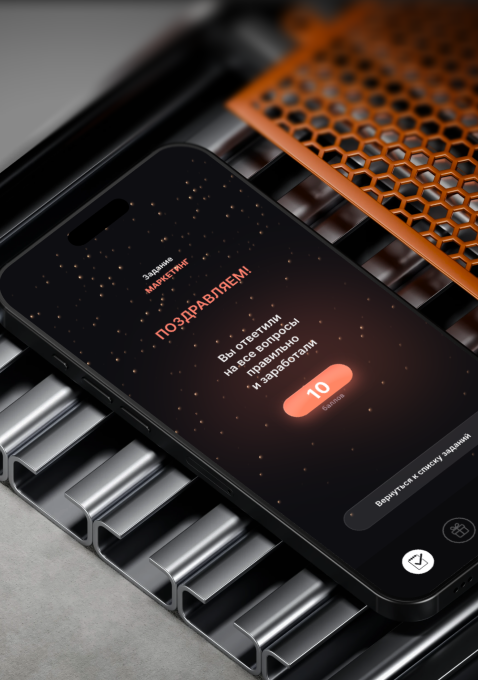
Build custom education software around the way people learn and organizations operate. Purrweb designs and develops LMS platforms, eLearning apps, student portals, and web or mobile products for digital learning. We combine product discovery, UX, engineering, integrations, QA, launch, and ongoing support in one development process. This lets education teams create a new platform, modernize a legacy system, or introduce AI-powered learning capabilities without coordinating separate vendors.

Free estimate in 48 hoursCase: 11 months, 9,000 studentsGamification + AI / VR

Key education software development services

Purrweb provides education software development services for teams creating or improving educational software products. We work across the full delivery cycle: clarify the product goal, design learning flows, build the software, connect it to the systems around it, and support it after launch.

Product discovery and education technology consulting

Start with EdTech product consulting when the product scope, user roles, or delivery priorities need to be defined. We turn the discovery findings into a clear development plan for learners, educators, administrators, or corporate training teams.

Custom education software development

We build custom education software for learning workflows that standard EdTech software cannot cover. This can include student portals, assessment tools, virtual classrooms, mobile learning products, and multi-role education platforms with a roadmap that stays under your control.

LMS development and modernization

Use custom LMS development for a new learning management system or to replace a restrictive platform. We can connect course delivery, assignments, assessment, progress tracking, and role-based access. For a detailed product-planning perspective, see our guide on how to build an LMS.

Integrations and platform modernization

We connect education software to the systems that already run your operations, including HR tools, payment services, communication tools, analytics, and existing data sources. The development team can also modernize a legacy platform without forcing every workflow into a replacement product at once.

Artificial intelligence (AI)-powered learning capabilities

We add AI integration for education products where it solves a defined learning or operations task: an adaptive learning path, personalized learning experiences, recommendations, content support, tutor assistance, and analytics. Human review and product safeguards remain part of the workflow.

Maintenance and support

After launch, we help teams improve the product, address defects, and plan new capabilities. Support can cover monitoring, releases, performance work, and further development as the learning environment and its users evolve.

Contact us if you’re looking for an education app development company!

We can’t wait to hear your ideas!
Contact us and get a free project estimation within 48 hours.
This field is required
Incorrect number
Incorrect Email
This field is required
All fields must be filled in
Next
Next
Your role in the project
Service of interest
Budget
Please select one option in each category
Request sent
Our manager will contact you shortly.
Oops! Something went wrong while submitting the form.
What’s next?
Our manager will contact you within 24 hours and arrange a meeting. If necessary, we are ready to sign an NDA.
At the meeting, we will get acquainted and discuss the task. We will also talk about the preliminary budget and timeline.
After the meeting, a business analyst will reach out to you to gather technical requirements and make a portrait of the target audience of the project.
Then we will present an estimate for you project, where we will outline the cost, timeline, team, and project roadmap.
After that, all that’s left is to sign the contract, and we’ll start implementing your project!

Education software capabilities for learners, educators, and platform teams

Education software should give each role the tools it needs without turning the product into a generic feature catalog. We group capabilities around learning delivery, teaching workflows, and platform administration so the product can grow with the organization.

Learning paths and progress

Learners can follow structured courses, view their progress, receive reminders, and return to unfinished modules. Personalized learning paths can adapt the next step to a learner’s role, completed work, or approved learning objectives.

Virtual classrooms and collaboration

Video calls, discussion spaces, and shared learning activities support live classes, one-to-one tutoring, and group work. These capabilities are useful when the platform needs to combine synchronous sessions with self-paced digital learning.

Course delivery and assessments

Educators can publish educational content, distribute assignments, review submissions, and track results in one learning environment. Assessment workflows can support interactive learning through quizzes, test retakes, feedback, and completion records.

Content search and discovery

Search, filters, and course catalogs help learners find relevant materials without navigating a long list of modules. See our overview of eLearning app features and technologies for planning considerations.

Role-based access and administration

Platform teams can manage learner, educator, mentor, and administrator permissions without exposing the same interface to every user. An ERP software for education can also connect schedules, payments, and academic workflows across an institution.

Payments, subscriptions, and reporting

An education platform can support course fees, subscriptions, and payment records alongside reporting for enrollment, completion, and platform activity. The exact billing model depends on the audience, product type, and existing financial systems.

Technology for education software development

The right technology depends on the product’s learning model, not on a fixed stack. We assess expected users, real-time features, offline access, integrations, data migration, and the level of platform administration before choosing an architecture. A web platform may prioritize role-based workflows and integrations, while mobile learning can require offline access and push notifications. Real-time classrooms need reliable communication technology, and mature platforms may need a staged modernization path rather than a full replacement. The development team selects technologies that fit the product’s infrastructure, learning experience, and plan for future updates.
Got a project?
Contact us and get a free project estimation in 48 hours.
This field is required
Incorrect number
Incorrect Email
This field is required
Please fill in all fields
Let’s go!
Let’s go!
Let’s go!
Contact us and get a free project estimation in 48 hours.
Your role in the project
Service of interest
Budget
Please select one option in each category
Request sent
Our manager will contact you shortly.
Oops! Something went wrong while submitting the form.

Education software for different operating models

Educational institutions

Schools, colleges, and universities can use a digital learning platform to run online learning, manage courses, share materials, assign work, and track student progress. The product can combine class schedules, assessments, communication, and administration in one learning environment.

Corporate learning teams

Corporate learning software can support onboarding, role-based training, certification, and internal knowledge sharing. Teams can add video modules, quizzes, checklists, mentor sessions, progress dashboards, and integrations with the HR systems they already use.

Course businesses and independent educators

Course businesses can run self-paced programs with content release schedules, enrollment, payments, learner profiles, and community tools. The product can give creators and small teams control over delivery without forcing their workflows into a generic platform.

Our education software development process

Seven stages take the product from the business goal to a supported release, each with a concrete deliverable.
1

Discovery and product definition

We clarify the business goal, user roles, learning objectives, product constraints, success criteria, and the learning outcomes the product should support. The output is a prioritized product brief that gives the development team a shared starting point.
2

UX and learning flows

We map how learners, educators, and administrators move through the product before engineering begins. For dedicated UX work, see our learning platform UX and UI design.
3

Architecture and delivery planning

We define the platform architecture, technical dependencies, data model, and delivery plan. This stage identifies where the product needs a web platform, mobile apps, third-party services, or a staged modernization approach.
4

Iterative development

The development team delivers the product in working increments and reviews progress with stakeholders. This keeps the implementation tied to the agreed priorities while leaving room to refine details through feedback.
5

Integrations and data migration

We connect the product to the systems around it and plan the transfer of relevant data. When an existing LMS needs evaluation before implementation, LMS consulting and implementation planning can define the migration path.
6

QA, accessibility, and load testing

We test core workflows, permissions, integrations, accessibility requirements, and expected load before release. The goal is a verified learning experience for every role, not only a completed feature list.
7

Launch and support

We prepare the release, monitor the product after launch, and plan the next improvements. Ongoing support can cover fixes, performance work, new capabilities, and further development of the learning platform.

Education software development cost and engagement models

The cost of educational software development depends on the product scope, not on a fixed feature list. A focused MVP starts at $96,000. A full-scale eLearning product starts at $320,000 when it requires more roles, workflows, and platform capabilities.

What shapes the budget

✓ Number of user roles and the complexity of their workflows.
✓ Web, mobile, or multi-platform delivery.
✓ Integrations and data migration from existing systems.
✓ AI, real-time communication, and analytics requirements.
✓ Accessibility, security, QA, and load-testing scope.
Engagement modelBest whenBudget structureDelivery approach
Fixed-price projectThe scope, priorities, and acceptance criteria are defined before development.The agreed product scope and planned release define the project budget.The team delivers a focused MVP or clearly scoped platform release against the agreed requirements.
Dedicated development teamThe product has an ongoing roadmap, multiple integrations, or regular releases.Budget follows the agreed team composition and engagement period.The same team keeps product context, continues delivery after launch, and owns the technical direction with the client.
Time and materialsDiscovery, testing, or stakeholder feedback can change priorities during delivery.Budget reflects the work completed against the prioritized backlog.The team plans and delivers the next increment without treating each scope adjustment as a separate project.
If you need to assess an existing LMS before building or modernizing it, start with LMS consulting and implementation planning. For further context, see our education app development cost guide and LMS development cost breakdown.

Why choose Purrweb as your education software development company

Education software delivery experience

We build education platforms for different learning models, including multi-school operations, corporate training, and online college workflows. The relevant cases show how we approach roles, learning content, platform administration, and ongoing product development.

One product team and clear ownership

Designers, developers, QA specialists, and project managers work as one team from discovery through release. You keep ownership of the code and design materials, while regular demos keep the work visible and decisions grounded in the current product priorities.

Security and accessibility review

Education products often handle personal information, documents, and role-based access. We include security and accessibility review in the delivery process, so these requirements are considered before release rather than treated as an afterthought.

Post-launch support

Launch is not the end of the development process. We can continue with fixes, monitoring, performance work, integrations, and new capabilities as the platform, its users, and its learning needs change.

Some facts about our education app development company

550+
projects released
Since 2014
Making apps for startups and businesses
50K+
positive reviews collected by our customers’ apps in the app stores
7+ years
longest partnership with a client
100
people on the team
Worldwide
clients from the USA, UAE, Japan, and Germany
Got a project?
We can’t wait to hear your ideas. Contact us and get a free project estimation in 48 hours.
This field is required
Incorrect number
Incorrect Email
This field is required
Please fill in all fields
Let’s go!
Let’s go!
Let’s go!
We can’t wait to hear your ideas. Contact us and get a free project estimation in 48 hours.
Your role in the project
Service of interest
Budget
Please select one option in each category
Request sent
Our manager will contact you shortly.
Oops! Something went wrong while submitting the form.

What our clients say about our educational app development services

Client Photo
Asami Moriya
CEO
Client Photo
Seth Abel-Sadeq
CEO
KEM — Payment app
Client Photo
Matt Brzowski
Founder
Client Photo
William Angel
CTO
Personalised — wellness app design
Client Photo
Weilin Meng
Health Research App
Client Photo
Sameera Nilupul
Founder and CEO
Client Photo
Mariano Ponce
CEO
Moon Sun Fire Limited - Health & Fitness Startup
Client Photo
Mutaz Atiyat
Senior Business Development Manager
Insuredoo — insurance aggregator

FAQ

What is education software development?

Education software development is the design, engineering, integration, and support of digital products used by learners, educators, administrators, or corporate training teams. It can cover LMS platforms, student portals, assessment tools, virtual classrooms, mobile learning apps, analytics, and custom workflows that off-the-shelf products cannot support.

How much does custom education software development cost?

Custom education software development starts at $96,000 for a focused MVP and at $320,000 for a full-scale eLearning product. The final budget depends on user roles, platforms, integrations, data migration, real-time features, AI scope, accessibility, security requirements, and the testing workload.

How long does it take to develop education software?

The timeline depends on the scope and release strategy. A focused MVP can be planned and delivered faster than a multi-role LMS or SIS with migrations and third-party integrations. Discovery defines the milestones, dependencies, and launch criteria before the development team commits to a delivery plan.

Should we build custom education software or use an off-the-shelf platform?

Off-the-shelf software works when standard workflows and limited customization are acceptable. Custom development is a better fit when the product needs unique learning flows, branded experiences, complex integrations, data ownership, specialized roles, high-load behavior, or a roadmap that a vendor-controlled platform cannot support.