Explore

Need help with your project?

Oops! Something went wrong while submitting the form.
Creating a fintech startup is a great option, if you’re looking to start a business and enter the field of financial services. Traditional financial institutions are gradually losing ground to technologically developed and innovative startups, which makes fintech a promising new niche worth exploring.
In this guide, we'll define fintech, go over some existing startups and trends, as well as talk about the pros and cons. You’ll learn how to start a fintech company and discover how much it costs to launch.

Fintech, which stands for financial technology, refers to the field of innovative financial products and services that are offered online. The fintech industry uses cutting-edge technologies to compete with traditional financial service providers.
Fintech solutions range from convenient payment/transfer apps to advanced software for insurance, finance management, financial planning, and much more.
Fintech is not only about convenient and accessible digital payments solutions. Innovation-focused companies improve financial data and security for customers with robust fraud protection measures. All of this helps financial institutions earn the trust of their users. Even now, the fintech sector is expanding, so we are to see many other great features like eco-friendly solutions.

Digital bank — a bank without physical branch offices. Offering fintech services via online platforms, it improves quality, saves time and costs, all while increasing personal data security. Digital banks go through the rigorous process of obtaining a banking license, so they are much more trustworthy. To see where this category is heading, check the latest mobile banking trends.
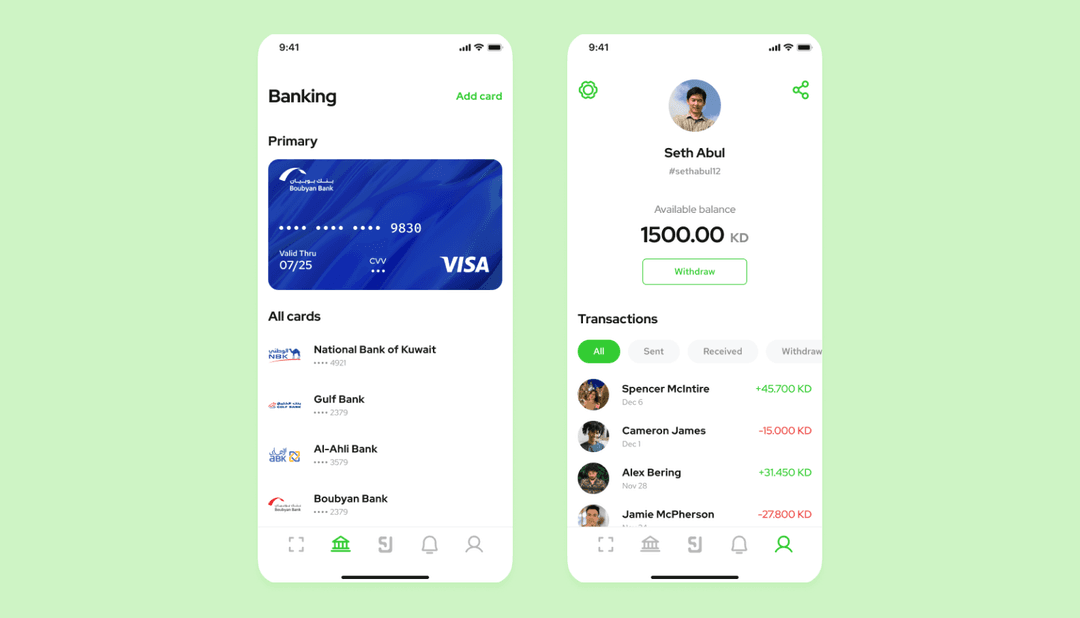
Investment apps — apps that help users make investments in the stock market and manage your assets. You can choose securities, metals, commodities, funds, etc.
Crypto apps — apps that allow users to interact with cryptocurrencies. With their help, users can invest, get information about exchange rates, earn from buying and selling assets, store their savings, and even collect unique NFT tokens.

Insurtech — companies that use modern technology in the insurance industry. The most popular is auto insurance, although health, life, real estate, and travel insurance are also in demand. New technologies in this sphere create an ecosystem, so clients can solve all necessary issues in one app.
Personal finance management — a personal finance app allows users to monitor their financial resources. Tracking expenses and allocating income and savings to achieve various goals. Users can also track cash flows and view deadlines for loans and installment payments.
We have listed the simple steps to start a fintech company below. You can click on the relevant heading in the content on the right to skip through the sections. Besides the step-by-step, it’s important to know the context, complexities, trends, market statistics etc. All of these areas are important to consider before starting a project.
Fintech organizations have several characteristics that set them apart from their peers in other industries. We’ve outlined the main ways in which they differ.
Modern technologies. Fintech firms are committed to technological advancements. They use new technologies such as artificial intelligence, blockchain, machine learning, and big data analytics, to create innovative tools for the financial sector.
Flexibility. Fintech companies are more dynamic, so they provide services and process financial transactions faster. They adapt quickly to market changes and rapidly develop and introduce new financial products.
A customer-centric approach. Fintech companies put the needs of their customers first. Unlike the apps of traditional banks, fintech apps are more personalized and responsive to individual requirements, making them much more user-friendly.
Financial inclusion. It is estimated that about 1.3 billion adults worldwide are still unbanked, and another 2.8 billion don’t have bank cards.Fintech companies promote financial inclusion and can reach a segment of the population which may not be able to gain full or easy access to financial instruments.
Fintech continues to accelerate: according to McKinsey, the global fintech industry generated roughly $650 billion in revenue in 2025 — up about 21% year over year. The market is still maturing, but momentum now spans payments, lending, embedded finance, and digital banking alike.
Currently, the key fintech market players are North America, the UK, and the EU.
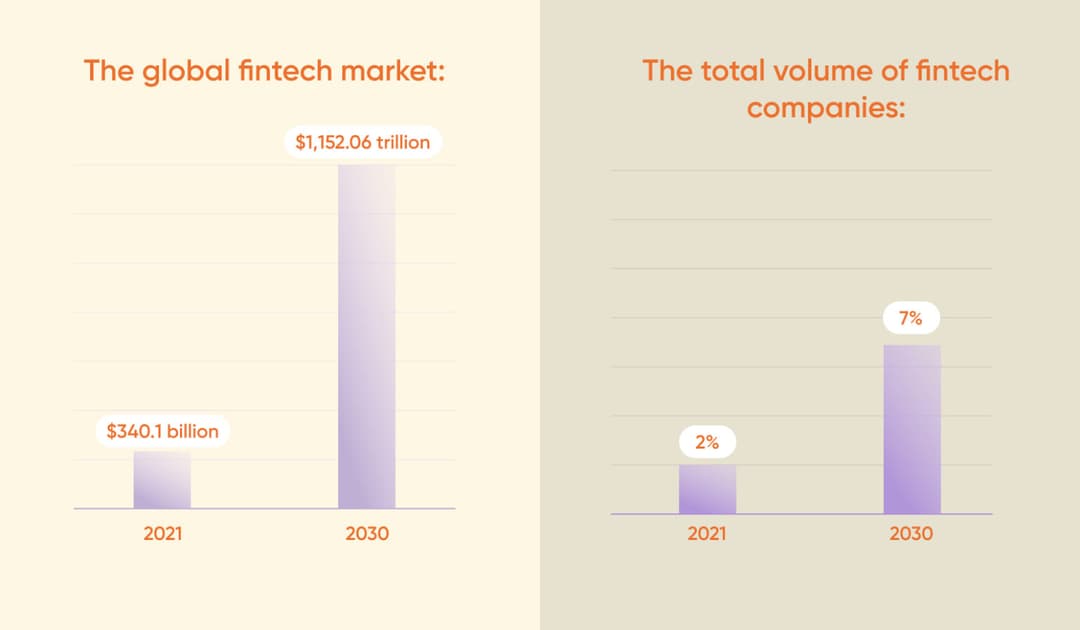
Beyond raw growth, CB Insights’ 2026 fintech predictions point to five trends shaping the space this year:
Artificial intelligence has moved from pilot projects to core infrastructure. Fintechs now rely on it for real-time fraud detection and underwriting, and adoption has climbed to roughly 59% of financial companies — up from 37% in 2023. The stakes are high: according to Juniper Research, global e-commerce fraud losses reached $48 billion in 2025 and are projected to climb to $107 billion by 2029, pushing more spend toward AI-powered defenses.
Payments, lending, and accounts are increasingly delivered through API integrations inside non-financial platforms — checkout pages, payroll tools, marketplaces — so customers never leave the app they are already using. Open banking standards make this possible by letting third parties access financial data securely, with the customer’s consent.
Challenger banks are no longer niche. They are filing for IPOs and winning full licenses — Chime went public, and Nubank secured a US banking license — a sign that digital-only banking has entered the mainstream. If you are weighing this model, our overview of current digital banking trends is a useful starting point.
Stablecoins and tokenized bank deposits are maturing into real payment rails, settling transactions faster and cheaper than legacy systems and increasingly used to move money between automated services and AI agents. Expect more regulated experiments here as clearer rules take shape.
Buy-now-pay-later leaders such as Klarna and Affirm are expanding well beyond installment payments into full consumer banking, adding accounts, cards, and savings. For founders, it is a reminder that a single product is often just the entry point to a broader financial relationship.
The modern finance industry is changing the way we manage our money, maybe you use at least one of the fintech apps already. From payment applications to investment platforms, various solutions have made a significant impact globally. Here’s a list of the financial market leaders from different areas such as digital banking, payments, and blockchain technologies.
Each successful fintech app and business model is different, and their features may not fit your app. Do the research, but don’t feel pressured to cram your app with features you don’t need. If you are comparing vendors, our roundup of top banking software companies breaks down the major players. These remain among the best fintech businesses in 2024.

Stripe is an Irish-American technology company that develops solutions for electronic payment acceptance and processing. The main function of Stripe is to enable businesses to quickly and securely accept payments over the internet.
This paytech company has the following functions:

Square is a financial technology company based in the US. It enables small businesses and individuals to accept electronic credit card payments. It offers innovative hardware and software solutions to facilitate financial management.
This is also a paytech firm, featuring:
This is a technology company that offers modern fintech services and operates primarily in China as a subsidiary of the Alibaba Group, a huge Chinese conglomerate. This fintech company is part of the open banking segment.
It offers:
Nubank is a Brazilian fintech company that offers digital banking and financial services. This is a “challenger bank”, a small retail bank that competes with the longer-established banks to deliver services online. Nubank is one of the leading fintech companies in Brazil.
There, you can find:

Polygon is an Indian blockchain company that provides solutions for developing decentralized applications (dApps). It solves the scalability problems of blockchain networks with a focus on the Ethereum network, in particular. Interestingly, Polygon is carbon-neutral, which is a great green initiative.
Polygon’s digital payments solutions comprise:
There are many benefits financial technology companies bring to society. B, but what about the company owner? Here, we’ve compiled the top advantages a fintech startup has to offer.
| Advantage | Explanation |
|---|---|
 You can start your business from home
|
You don’t have to have a physical storefront or office space to start your business. You can do everything from home, at least at first. However, you may need to set up a call center and plastic card delivery service as you grow. |
 Scalability
|
You can grow and expand, and there will always be new features, products, and services that you can add. What’s more, a fintech startup can be turned into an entire ecosystem over time. Use several business models and pricing tiers to reach all types of customers. |
 High margins
|
Gross margin is a financial metric that measures the percentage of revenue your business has after paying the cost of goods sold. A high gross margin means that your business is making a lot of profit. |
 Readily available information
|
When you start your fintech startup, you will have a wealth of information available online. Search for insights on professional forums, watch YouTube videos, and check financial news. This will help eliminate questions, doubts, or concerns you may have. |
 Unlimited income
|
When starting a fintech startup, there is no limit to the size of your income. It all depends on how many customers you attract and how good your marketing is. The stronger your business skills are and the more time you invest, the more you can earn. |
Before you start a fintech company, it’s important to learn about the common pitfalls and challenges presented in fintech. The more you learn about this field in advance, the higher the chances are for your startup’s success.
| Challenge | Explanation |
 High competition
|
The finance industry has been actively developing in recent years and there are already many big names. Rivals could be more successful and popular. You will face high startup competition, but if you choose the right target audience, you can carve your own niche and get new clients consistently. |
 Need for constant maintenance
|
With a fintech startup, you’ll have to protect yourself from cyber threats and hacking, implement security protocols, and constantly keep the site up and running. Find top app developers who will help you. You’ll also have to devote time to promoting your blog and advertising to stay in sight of those searching for you on the web. |
 Difficult to build trust with customers
|
Digital products cut out personal interaction with customers and tangible products. This can make it harder to build trust. It will take careful work with each customer and plenty of personalization to win over the target audience. |
Another industry-specific factor to keep in mind is legislation. You have to comply with all local and federal requirements in order to get a business permit.
Laws regulating the fintech industry include:
Even a well-funded fintech faces hurdles that rarely show up in other industries. Planning for them early makes the launch far less painful.
Regulatory complexity and compliance costs. Licensing, KYC/AML, and audits add both time and money before you earn a cent, and the requirements shift as you enter new markets.
High customer acquisition cost. Fintech is a crowded market, and winning users away from established banks and apps is expensive. A clear niche and a sharp value proposition matter more than a broad feature set.
Fraud and security liability. Handling money and financial data makes you a target, and a single breach can erase hard-won trust. Investing in custom fintech software development with security built in from day one is cheaper than retrofitting it after an incident.
A long road to profitability. Most neobanks and paytech startups run at a loss for their first few years; profitability tends to arrive only at scale, once revenue is diversified across transaction fees, subscriptions, and lending.
In fintech, compliance is not a phase you get to later — it shapes the product from day one. Any company that touches money has to satisfy know-your-customer (KYC) and anti-money-laundering (AML) rules, protect user data under regulations such as GDPR, and, in most markets, hold some form of license before it can move funds. Skipping this groundwork is the fastest way to stall a launch or get shut down after it. The good news: you do not always need your own license to begin.
| License type | What it allows | Typical path |
| Banking license / bank charter | Full deposit-taking, lending, own balance sheet | Slowest, most capital-intensive — for well-funded, later-stage companies |
| Payment institution (PI) license | Process payments, issue payment accounts (no lending) | Common first license for payment-focused fintechs |
| E-money institution (EMI) license | Issue e-money, prepaid cards, digital wallets | Popular for neobanks and wallet apps |
| Banking-as-a-Service (BaaS) partnership | Operate under a partner bank’s existing license | Fastest route — no license upfront, most common for early-stage startups |
Which route you take usually comes down to stage, product, and geography. Requirements vary widely by jurisdiction — in the US you may need state-by-state money-transmitter licenses, while an EMI license in the EU can be passported across member states. Most early-stage fintechs sidestep that complexity by launching through a Banking-as-a-Service (BaaS) partnership: you build the app and the user experience while a licensed partner bank supplies the regulated rails and API integrations underneath. That gets you to market in months instead of the year-plus a full charter can take. As you grow and want more control over unit economics, you can graduate to your own PI, EMI, or banking license.
Whatever path you choose, plan for ongoing compliance rather than a one-time approval: KYC and AML monitoring, data protection under GDPR and local privacy laws, and deposit insurance such as FDIC coverage in the US or its regional equivalent. Founders who build fintech security and compliance into the product from the start have a far smoother path than those who bolt it on later.
Building a fintech app is only one piece of launching a fintech company. Long before you write a line of code, you need to confirm there is real demand, decide how the business will make money, and work out how you will operate legally. Treating product development as step one, rather than step five, is where many first-time founders lose time and money.
The roadmap below reframes the process around the business, not just the build — from market research through funding to launch — and shows exactly where the product-build phase fits. Each stage links to the section that covers it in depth.
| Step | What it covers |
| 1. Validate the idea & research the market | Confirm demand, study competitors, define your target segment |
| 2. Choose your business model | Interchange, subscription, lending, B2B/BaaS, or a mix |
| 3. Handle licensing & regulatory setup | Get a license or partner with a licensed bank (see the regulatory section) |
| 4. Raise funding | VC, angel, crowdfunding, or bootstrapped (see the venture capital section) |
| 5. Build your product | Design → develop → test → release → maintain (detailed breakdown below) |
| 6. Launch & iterate | Soft-launch, gather feedback, monitor compliance and security |
Here’s how the product-build phase (step 5) breaks down in detail:
When you decide to start a fintech startup and create your fintech app, we recommend starting with an MVP. A minimum viable product is a version of the product that includes only the core functions, which is perfect for launching a functional product quickly and within a limited budget. It’s the best option if you want to test your idea on the market with low risk.
To launch a successful startup, you need to analyze the current market. Keep an eye on what your competitors are up to. Think about the features you would like to have in your minimum viable product: from simple ones to advanced ones like a chatbot with artificial intelligence. Choose the essentials and don’t overload the first version of the app.
To illustrate the value of market research, let’s look at one of our projects. A client approached us to create an MVP for a travel planning app, but was unsure whether their target audience had a real need for the product. To help them avoid investing in an app that might not succeed, we suggested conducting a Project Discovery phase.
We used the Jobs to be Done (JTBD) framework. It centers on addressing users’ needs rather than focusing solely on product features. We defined the audience’s pains and the hypotheses we needed to explore.
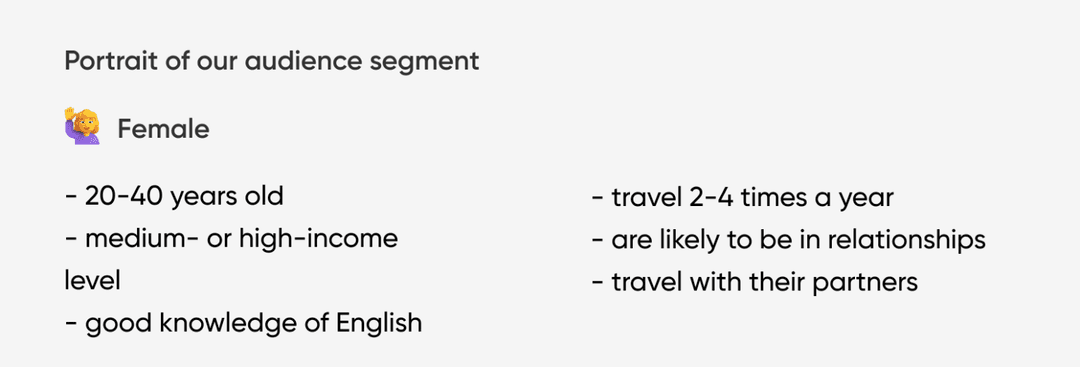
Through this research, we identified a segment likely to use and pay for the app. We also make a list of the app’s features. The client gained a clearer understanding of the audience’s needs and confirmed the demand for the product. They could now proceed with the development of the MVP.
You need to create a clear, modern UI/UX design. Research your competitors and decide what you like and dislike. Next is to ensure the designers make your app functional and easy to use. At Purrweb, we first create mind maps and wireframes to make sure the design fits your needs and then turn them into live clickable prototypes.
After the designers finish their work, they pass the prototypes on to the developers. Programmers write the logic of your app using the top tech stack and then code the server side and the user side. For a financial application, you’ll need to integrate APIs and a payment gateway, which will also appear at this stage. For bank-grade products, our guide to banking software development covers the architecture and compliance details.
No matter how experienced your team is or what tech stack you use, set some time aside to test your app. Quality assurance will help you fix bugs and deal with potential issues. Once tested, your application will run smoothly and users will have a better experience. As professional app developers, we believe that it’s better to start testing your app in parallel with the development process to remove bugs early on.
When you are done with all the previous steps, you can release the app. Put it out in the App Store and Google Play and engage your target audience. Collect feedback from your first users to make adjustments. Think about improving your customer acquisition strategy to keep up with competitors.
The release is not the final stage, as the application needs to be maintained, updated, and fixed as needed. You may also decide to add new features as you grow. Our team will always help support the product after launch.
Starting a fintech company typically costs $50,000–$250,000+ in total. Legal registration, licensing, and compliance setup usually run $10,000–$40,000+ depending on your jurisdiction and license type, while building the MVP itself costs around $70,000–$100,000 — see the full development cost breakdown below.
Now that you know all about the development process, let’s look at the costs. If you’re wondering how much a fintech app costs to build, it depends heavily on the feature set, tech stack, and your team’s location. To build a successful fintech startup, you’ll need to find experienced financial app developers. At Purrweb, we have more than 9 years experience creating MVPs, check out our portfolio to learn more.
To show you a real-world example, we’ve decided to evaluate the MVP with features like that of Stripe, a paytech app. Here’s how our software development team estimates the cost and timing of each stage of app creation.
Product development is usually the largest line item in a fintech launch.
| Stage | Estimation in hours | Estimation in weeks | Approximate costs |
| Business process project analysis | 40 hours | 1 week | $1 200 |
| UI/UX design | 150 hours | 5 weeks | $7 500 |
| App development stage | 950 hours | 6 weeks | $47 500 |
| QA Testing | 380 hours | In parallel with the development | $7 600 |
| Project management | during the whole project | during the whole project | $9 900 |
Overall, fintech app development will cost you approximately $73 700. To get an individual offer, contact our development team. If you are interested specifically in personal finance management app costs, check out our guide.
Our team has experience in creating functional MVPs for financial companies. In this section, we will tell you about our best web and mobile apps.
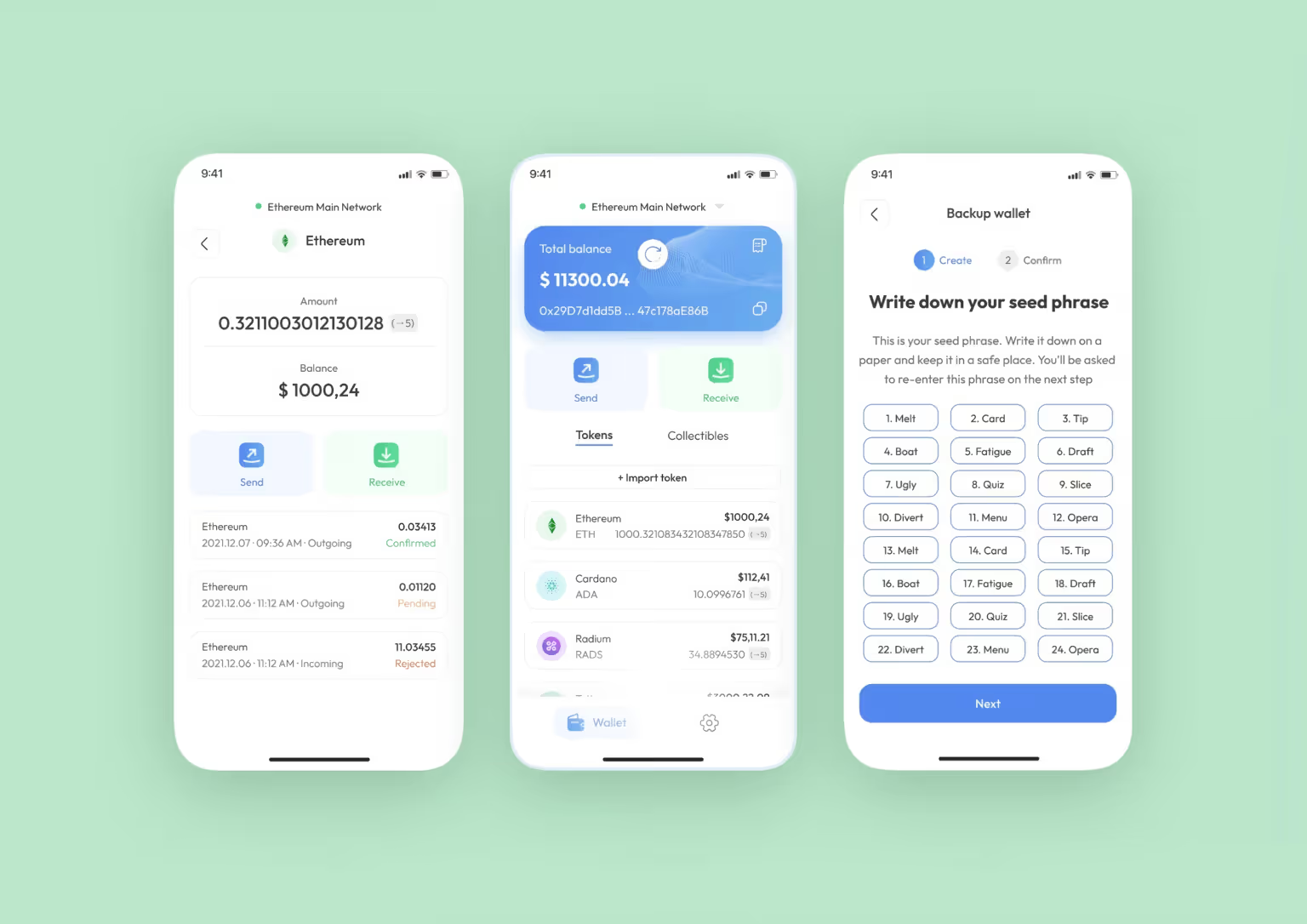
Our development team can handle complex tasks involving advanced technology. We created a crypto wallet for storing, exchanging, and converting cryptocurrencies. On the main screen, the user finds their total balance and a list of their tokens, they can also quickly send and receive tokens.
This fintech app supports financial transactions and has advanced security protocols to keep the user’s funds safe. Learn how we made a mobile multicurrency crypto wallet.
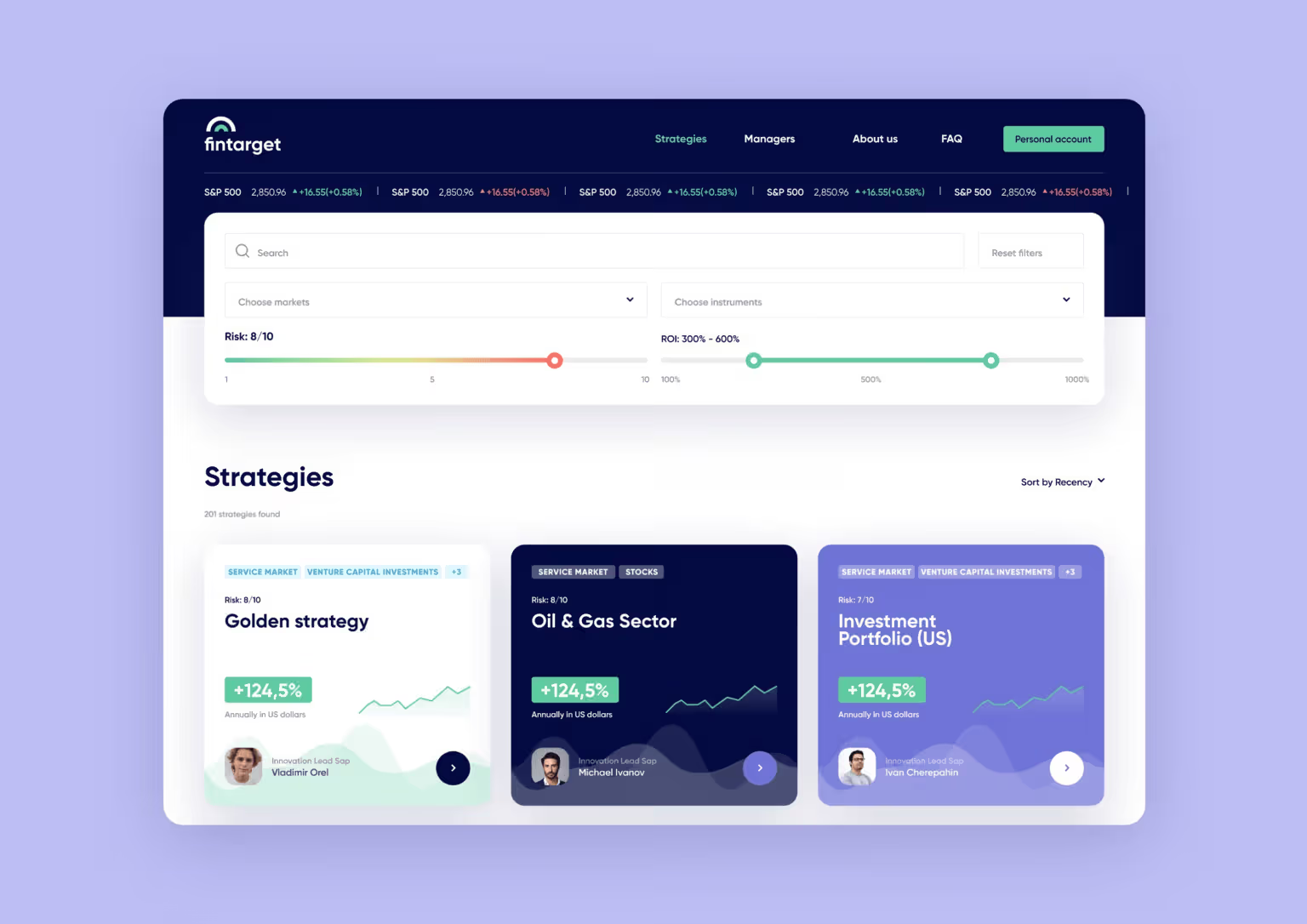
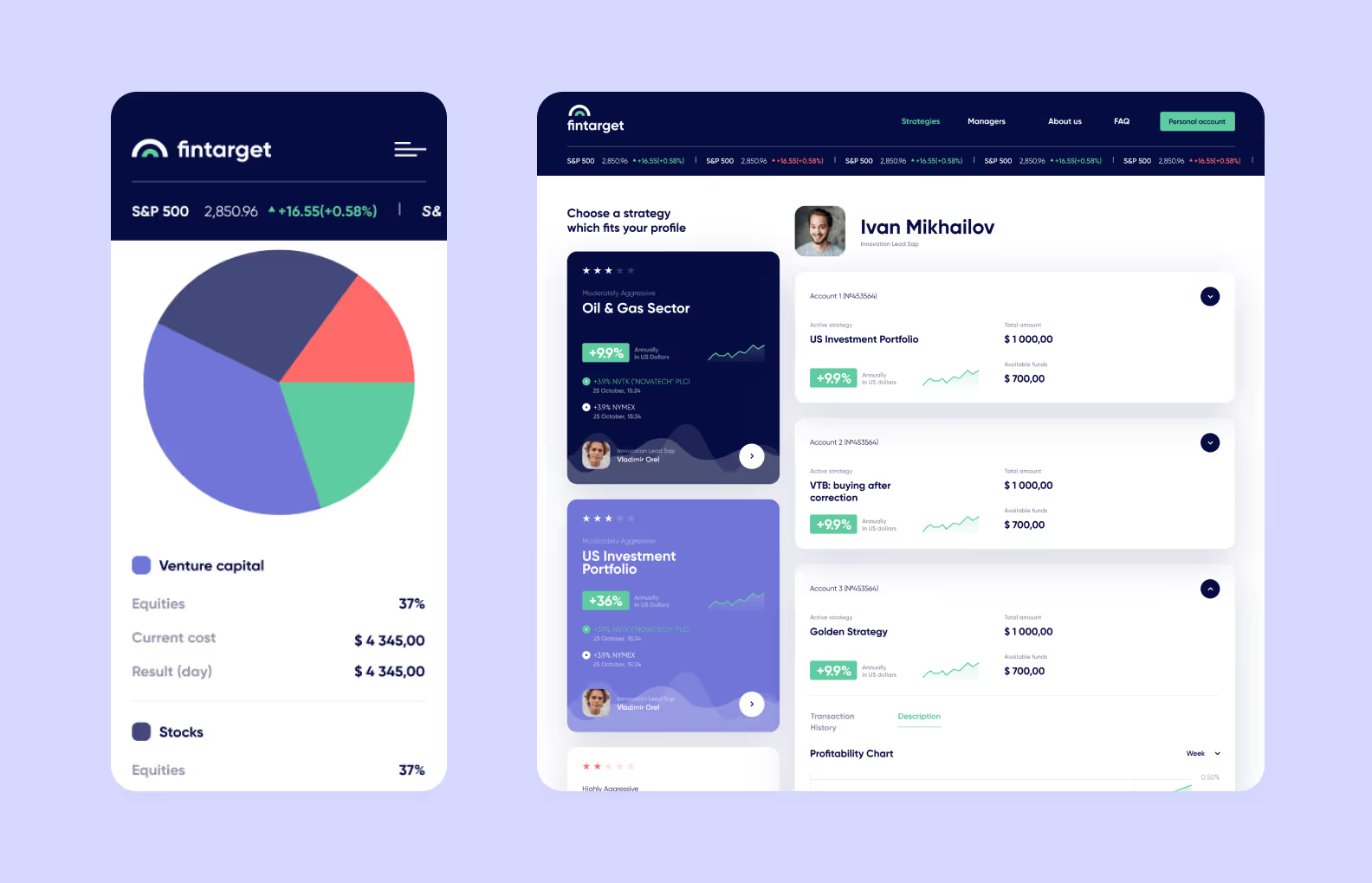
Fintarget is a platform for brokers and investors, which provides tools for searching and placing investment strategies and allows users to generate passive income.
In this app, you can find an investment account, financial transactions feature, a dashboard with statistics, and a knowledge base. Here’s how Purrweb’s development team launched an investment strategies app.

We created a smart business tool called APPT. APPT is a smartly designed fintech web app tailored to cater to the needs of individuals and expanding companies. It facilitates the efficient organization of their online presence and streamlines lead generation.
We added onboarding, a business profile, a reporting dashboard, appointment scheduling, and much more. Now entrepreneurs and businesses can establish their professional websites, showcase a range of services they offer, and let clients conveniently book service providers online.
If you like this app type, we can build a similar platform for you. Fill out the form!
When the idea is ready and there are plans to create an app, fintech entrepreneurs face a common challenge of funding the project. This is where they look to raise venture capital or seek strategic financing to start a fintech company.
Venture capital for fintech business is a popular option, as venture investors are usually willing to take more risk in exchange for potentially high returns on investment. However, in recent years, alternative funding sources for fintech startups have emerged, providing business people with a range of options for financing their companies. Let’s go over what some of these are.
Crowdfunding. The popularity of crowdfunding in financing the fintech business has increased dramatically. Crowdfunding is a method of raising funds for a project by collecting small amounts of money from many people, typically online. Allowing companies to reach out to a wide audience and ask for financial support to start a fintech startup.
Angel investors. Another viable option for fintech startups is angel investors, who not only provide financial support but also bring valuable experience and mentorship. Like the TV show Shark Tank in the US or Dragons Den in the UK.
Debt financing. You can also use debt financing, although it involves interest payments and collateral requirements. Still, it may be a less risky choice compared to equity financing for companies with a stable revenue stream.
Equity financing. This remains the traditional method of raising capital for fintech companies, allowing investors to receive an ownership stake in exchange for financing.
Seed funding. This is a common form of equity financing, done through family, angel or crowd funding. Allowing early-stage companies to obtain the necessary funds for initial operations.
Bootstrapping. This is a way to finance a company using personal savings or income generated from the business itself. While this method may be slow, it gives founders more freedom, control and flexibility.
We are a team of professionals ready to help business enthusiasts from all over the world to develop web and mobile applications. Our goal is to help startups validate business hypotheses quickly and efficiently. You can test any idea in the market by creating an MVP, the very first version of a product.
We develop fintech apps that bring convenience and transparency to financial systems of all sizes. From home budget monitoring and wallets to banking apps, ERP systems, and trading platforms. Read more about our previous projects and check clients’ reviews to get to know us better.
Benefits of developing a financial app with us:
➡️ Start a fintech startup with Purrweb to take a major step towards becoming a unicorn. Fill in the form and get a quote today.
Not necessarily. Most fintech startups launch without a full banking license by partnering with licensed banks or payment processors through a Banking-as-a-Service (BaaS) model. This approach lets you offer financial products — cards, accounts, loans — under a partner’s regulatory umbrella while you focus on product development. A full banking license is only required if you plan to hold customer deposits directly, which adds 12–24 months and $500,000–$5,000,000 in regulatory costs. For most early-stage founders, BaaS is the faster and cheaper path to market.
Development costs for a fintech MVP typically range from $60,000 to $150,000, depending on product complexity, platform (iOS, Android, or cross-platform), and the team model you choose. An in-house team in the US or Western Europe will cost significantly more than an experienced outsourced team. Beyond development, budget for compliance ($10,000–$50,000+ depending on jurisdiction), third-party API integrations (payment processors, KYC providers), and ongoing infrastructure. A realistic total first-year budget for a lean fintech MVP is $100,000–$250,000.
Fintech startups commonly use React Native or Flutter for cross-platform mobile apps, Node.js or Python for backend services, and PostgreSQL or cloud-hosted databases for financial data. Security-critical layers often rely on AWS or Google Cloud with SOC 2-compliant configurations. For payment processing, Stripe, Plaid (US), and TrueLayer (EU) are standard integrations. The right stack depends on your regulatory requirements: apps handling PII or transactions need end-to-end encryption, tokenization, and audit-logging built in from day one — retrofitting these is expensive.
A fintech MVP takes 4–6 months to build if the scope is tightly defined — typically one core user flow (e.g., send/receive payments or track spending), basic KYC, and a single platform. Adding complexity — multiple payment rails, lending logic, multi-currency support, regulatory reporting — pushes timelines to 9–18 months. From Purrweb’s fintech projects, the most common delay factor is not development but compliance review: integrating a KYC provider and passing a payment processor’s onboarding can add 4–8 weeks independently of coding progress.
Payment apps and personal finance tools (budgeting, expense tracking, savings automation) are the lowest-barrier fintech categories. They require fewer regulatory approvals than lending or insurance, and mature APIs like Stripe or Plaid reduce the infrastructure burden. Neobanking requires a BaaS partnership from day one. Lending involves credit risk modeling and state-by-state licensing in the US. Insurtech carries actuarial and state insurance department requirements. For a first fintech product, focus on a narrow financial workflow where you can validate demand without needing a license.
The most common fintech revenue models are: interchange fees (a cut of each card transaction, typically 0.5–2%), subscription fees for premium features, interest income on loans or float, and SaaS fees charged to businesses using your API or white-label product. Many consumer fintech apps start with a freemium model — free basic features, paid premium tier — and add interchange or interest income as transaction volume grows. B2B fintech (embedded finance, compliance tools, treasury software) typically charges monthly SaaS fees with usage-based overages.
Yes, but the path depends on your approach to development. Options include: hiring a development agency (fastest to MVP, predictable cost), using no-code tools for the simplest proof-of-concept, or hiring a freelance tech lead. The no-code route is limited for fintech — most payment and compliance integrations require custom code. Working with an experienced fintech development agency gives you a full team (developers, QA, designer) without the equity dilution or hiring risk of a technical co-founder. The key requirement is that someone on the founding team understands enough to evaluate technical decisions and vendor proposals.
Most fintech startups aren’t profitable in their first few years — early-stage companies typically prioritize growth and market share over margins. Profitability usually comes with scale, once a company diversifies revenue streams (transaction fees, subscriptions, lending) beyond a single income source.
The main risks include heavy regulatory and compliance burdens, high customer acquisition costs in a crowded market, fraud and cybersecurity liability, and a long runway to profitability. Founders who plan for these from day one have a much easier path to launch.


.svg)