Explore

Need help with your project?

Oops! Something went wrong while submitting the form.
To create a startup, you don't always need to look for places where unicorns graze. You can turn to eternal issues that remain relevant for every person regardless of their gender, race, profession, and culture. What could be more common than the desire to find love?

Despite the saturated market, dating apps still leave room for growth, 56% of users remain disappointed in dating apps. And this can become a source of dating app ideas for a new, explosive startup that will help millions of people find their soulmates without getting a traumatic experience along the way. In this article, we will look at 7 dating app ideas that would inspire you to create your own application.
To test your dating app ideas with a real audience, you only have to implement a basic set of functions during the dating app development. Your app just needs a secure registration form, a person’s profile, geolocation to find a person nearby, a messenger, and integration with social media. But there is something extra, like the cherry on the cake, that will make your product more special.
Now, let’s look at some ideas to spice up your app.
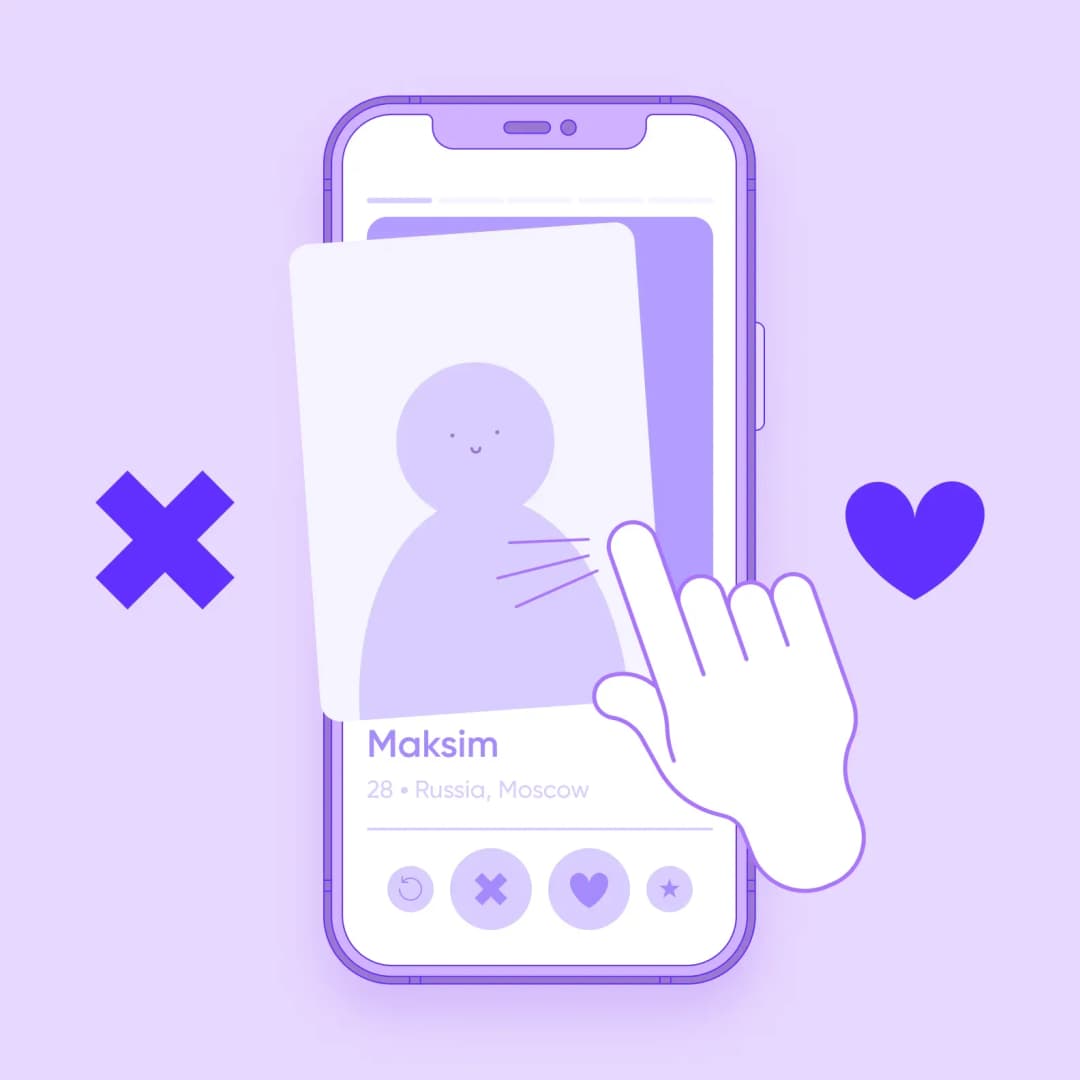
1. Gamify the dating process.This is what made Tinder a global star among top dating apps. Finding a partner by swipes feels like a game. And it is so exciting that people can spend a couple of hours swiping and earning likes. Simple scrolling is boring, it’s better to make this process a playful activity.
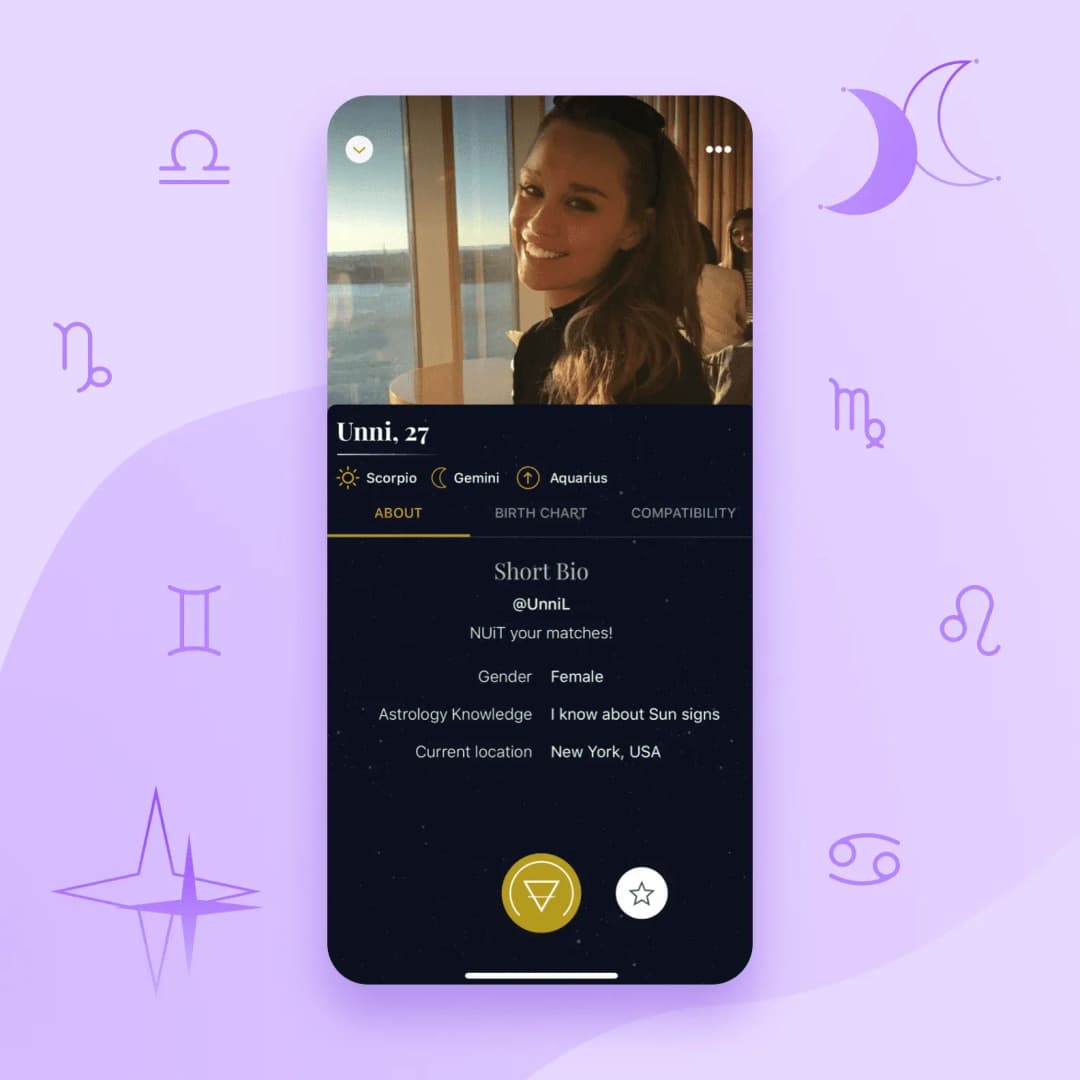
2. Use astrology and numerology. Zodiac signs, numbers, and mysterious connections are what people believed in long before psychological compatibility and matching algorithms appeared. Your app can use this to find a suitable match for every user. For example, the NUiT app offers astrology-based dating using the date of birth and the horoscope sign.
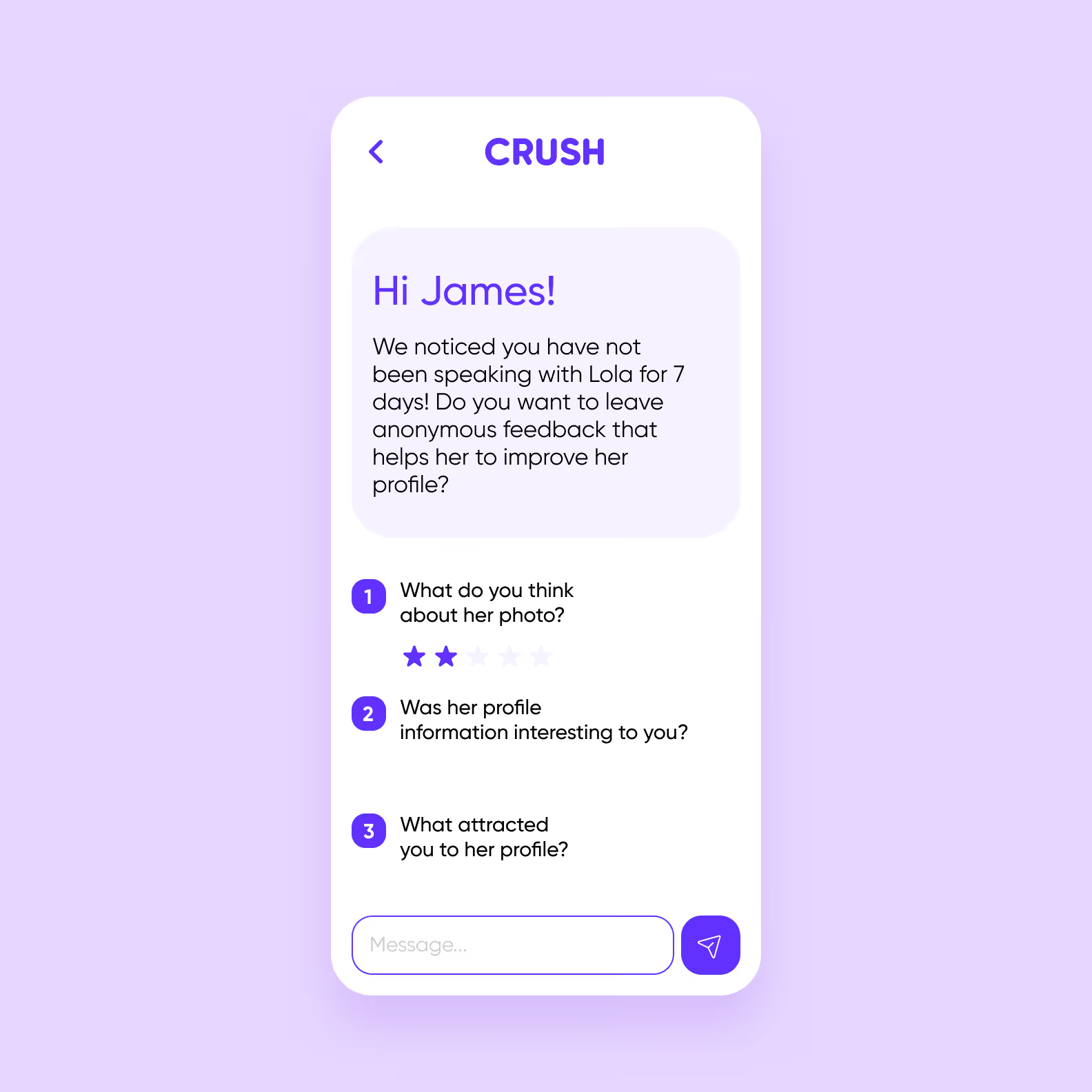
3. Give feedback to users. Dating app users would like to know which of their photos and profile descriptions are the best. They will be able to improve their profile instead of being disappointed and deleting the app. You can use artificial intelligence or anonymous feedback from people with whom the user already had contact. However, in the last case, it is necessary to enable moderation to avoid harassment of users.
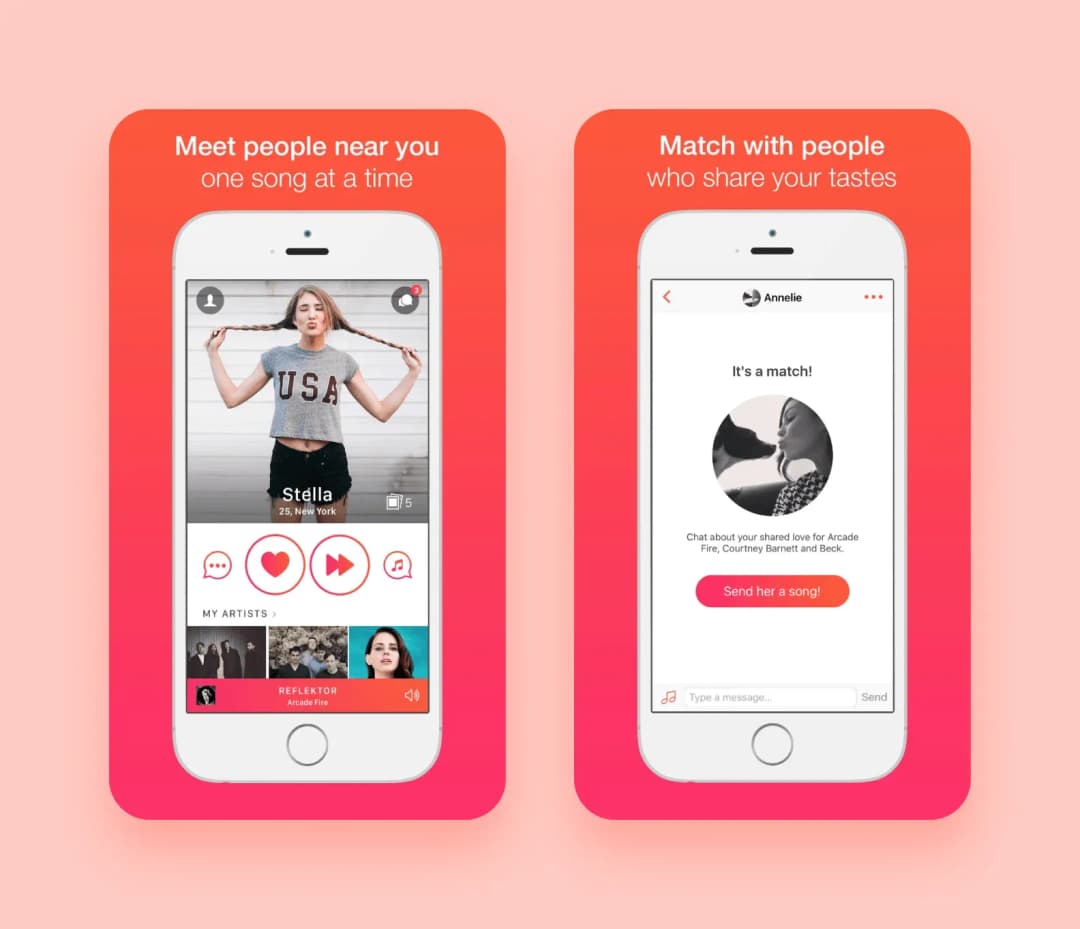
4. Match people with similar tastes. One research on the OkCupid app showed dating app users with a mention of music in their profiles receive 28% more likes. Some applications show users’ playlists on streaming music services or social media. The Tastebuds app uses music for uniting people with similar tastes. What if it had to do the same with movies and even offer users the function of viewing them online?
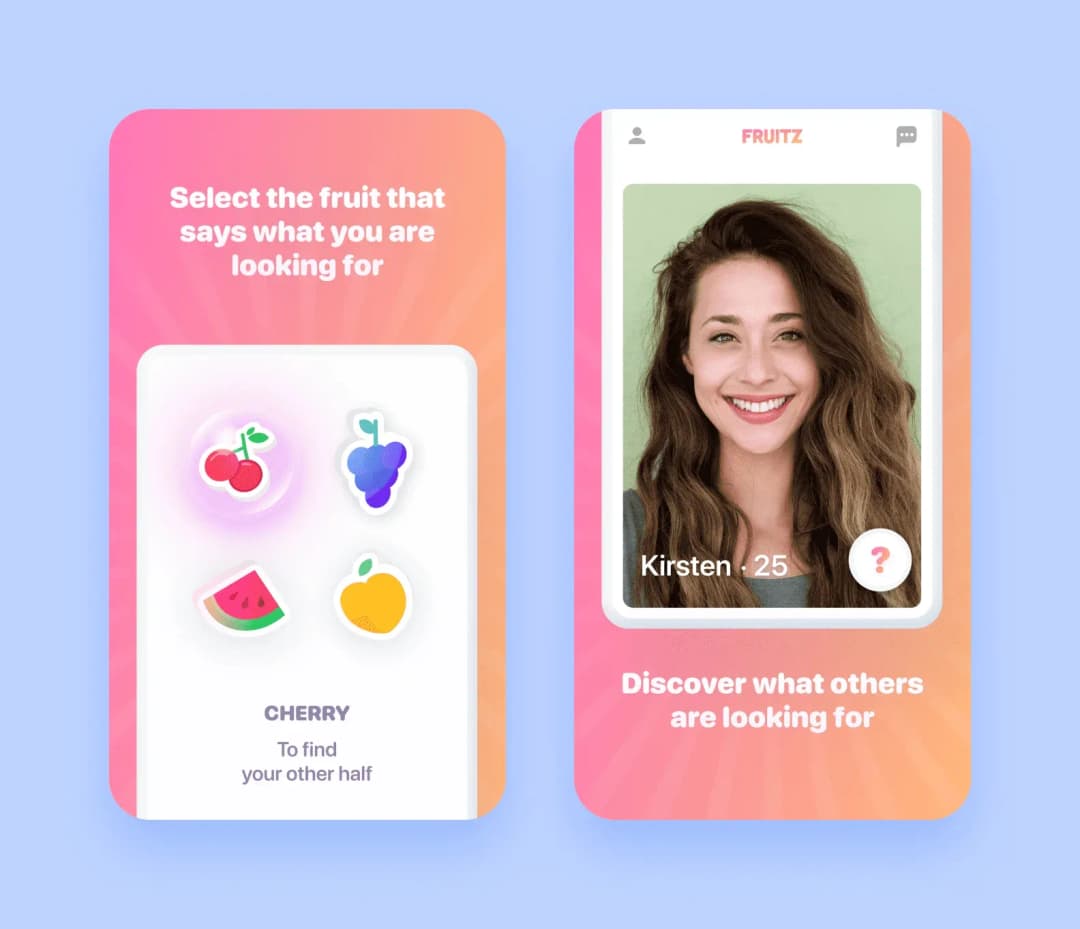
5. Let people be honest. Dating apps are not always downloaded to find the love of one’s life. Therefore, 72% of women and 53% of men consider it important that the profiles indicate what type of relationship they are looking for. For example, the Fruitz app assigns fruit to users depending on their purpose. There is a cherry for users looking for love, grapes for those who just want to have a good time, and other options.
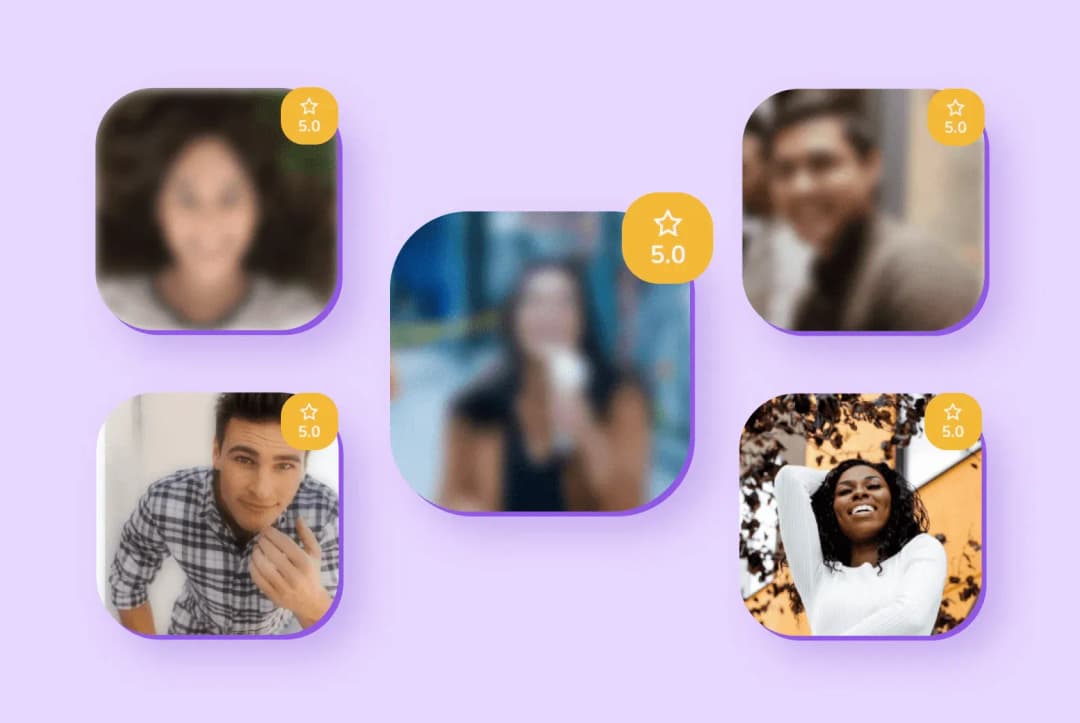
6. Focus on meaningful conversations. Apps are often accused of dictating a superficial way to find a partner through photos. So, there is definitely a demand for alternative options. The S’more app opens to users only a blurred version of a person’s profile photos — until they start chatting. The longer the conversation lasts, the clearer the photos of the person become.
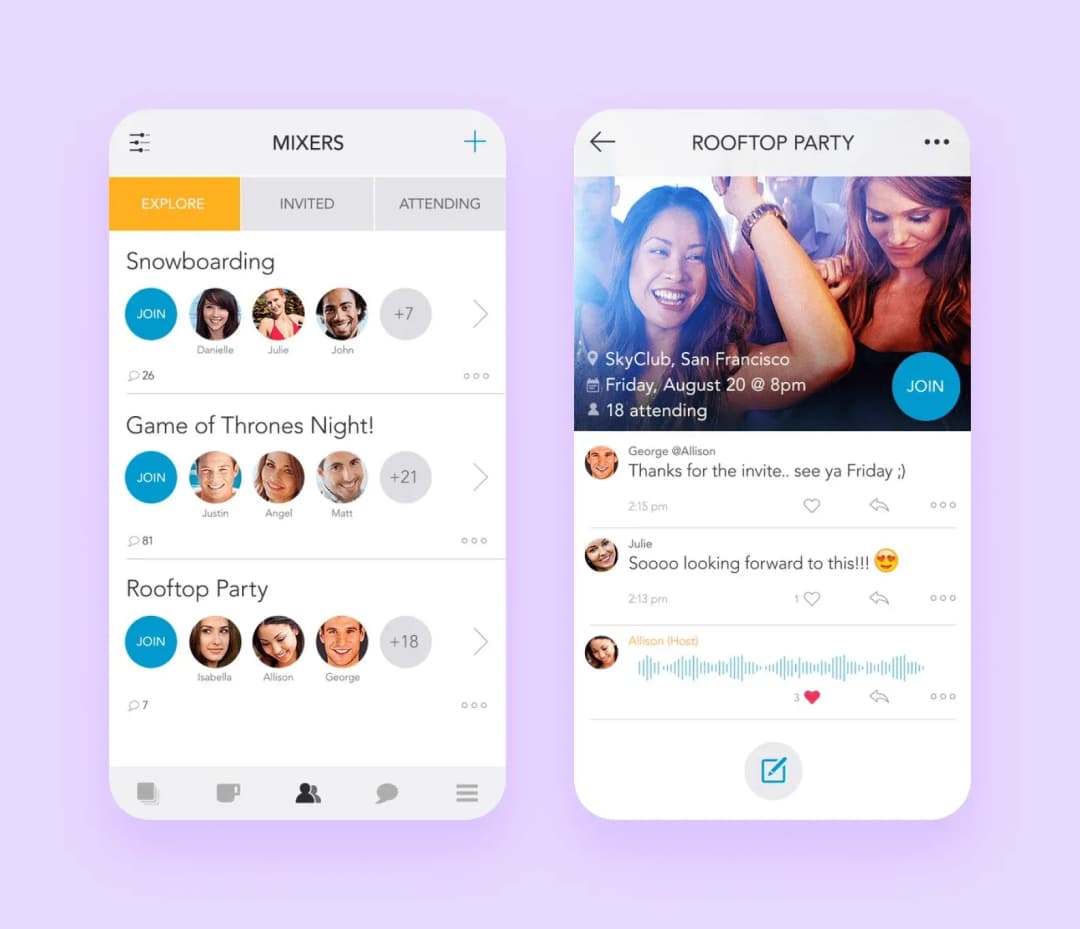
7. Start group dates. It is catastrophically difficult for some people to go offline and have a one-on-one date. You can offer to arrange group dates, as it is possible in the Clover app. Even if the match doesn’t work, the user will be able to find like-minded people and friends.
Looking not only for how to build a dating app? Explore more trending app ideas here
Finding love via a dating app is already a new reality that will stay with us for a long time. The market is developing rapidly but still has many points for growth in terms of user engagement, safety, and audience segmentation. Feel free to take any dating app ideas from this article and use them as inspiration for your application!
➡️ If you have already come up with the concept of a new application that will win Tinder, contact us. We already have created apps for a startup that helps make parties with friends, a startup that offers restaurant order management software, a startup that helps rent a power bank and many others. Our team will be glad to make your idea a real dating app!
No — saturation is concentrated at the top of the mass market, not in niches. Over 56% of users report disappointment with mainstream apps, which signals unmet demand. Niche platforms focused on shared values, specific communities, or unconventional matching mechanics have a clear gap to fill. A founder who targets a defined audience of 500k–2M users rather than "everyone" faces far less direct competition and lower CAC.
Traditional algorithms rank profiles by proximity and activity. AI matching models analyze behavioral signals — response patterns, conversation length, shared interest co-occurrence, and even photo style preferences — to predict compatibility before a match is shown. Apps like Hinge use a variant of this; a niche app can train on a smaller, higher-signal dataset and outperform giants within that community. The key implementation pieces are a recommendation engine and a feedback loop that retrains on real user outcomes.
A viable MVP needs six modules: user registration and profile creation, photo upload with moderation, a matching engine (rule-based is fine for v1), in-app messaging, push notifications, and basic safety reporting. Video calling, AI recommendations, and gamification can ship in v2 after you validate retention. Launching with fewer features is better than launching late — most successful niche apps reached first-user validation within 3–4 months of build start.
A focused MVP with the six core modules typically costs $20,000–$50,000 depending on platform (iOS-only is cheaper than cross-platform) and team location. A full-featured app with AI matching, video, and a web admin panel runs $80,000–$150,000+. The biggest cost drivers are the matching algorithm complexity, content moderation infrastructure, and identity verification integration. Purrweb has built social and dating-adjacent products in the $25k–$80k range.
A focused MVP typically takes 3–5 months from kickoff to App Store submission: 2–3 weeks of discovery and design, 10–14 weeks of development, then 2–3 weeks of QA and store review. Timeline expands if you add video calling (+3–4 weeks), AI matching (+4–6 weeks), or dual-platform launch simultaneously. Planning a soft launch with a waiting list before build completion is standard practice to validate demand in parallel.
Three models have proven traction: (1) Freemium — free matching, paid "super likes" or profile boosts, typical ARPU $5–$15/month; (2) Subscription — full access for $10–$30/month, works when the niche audience is willing to self-select; (3) Event or experience upsell — charging for in-app speed dating, group video events, or curated date suggestions. Advertising is rarely viable at niche scale. Tinder earns roughly $16 per paying user monthly; niche apps with high intent users can exceed that at lower volume.
Yes — apps that add game-like mechanics report meaningfully higher session frequency. Effective patterns include daily challenges ("answer one question to unlock a match"), streaks that reward consistent profile activity, and badge systems tied to conversation quality rather than swipe volume. The design goal is to make the app feel like a social experience, not a catalogue. These features are best introduced post-MVP once baseline retention data exists — premature gamification can obscure whether core matching is working.