Explore

Need help with your project?

Oops! Something went wrong while submitting the form.
Connected devices in healthcare create value when their data reaches the right clinical system and prompts a clear response. A wearable, sensor, or smart hospital device on its own is not a complete solution. Reliability, integration, and security determine whether the wider workflow supports patient care or adds another disconnected data stream.
In this guide, we'll look at how healthcare IoT solutions move data into care workflows. We'll also examine practical applications and the implementation risks teams account for when planning an Internet of Things product.

Healthcare IoT solutions connect medical devices, sensors, apps, and clinical systems. Together, these smart healthcare solutions improve patient care through remote monitoring, medication management, asset tracking, and faster decisions.
The strongest IoT deployments combine reliable connectivity with interoperable health data. They also depend on clear clinical workflows and security by design.
This guide explains how the Internet of Medical Things works, where it creates value, which real-world use cases matter, and what teams check before implementation.
Healthcare IoT solutions, or medical IoT systems, combine devices, data transport, a platform, clinical integration, and a care workflow. Teams in a healthcare organization use IoT app development services to validate this path. The Internet of Medical Things (IoMT) depends on each layer passing usable health data forward.
These layers connect technical checks to care.
| Layer | What it does | Healthcare examples | What to validate |
| Devices and sensors | Capture vital signs, equipment, or environmental data | CGM for blood glucose monitoring, smart infusion pump, wearable, RTLS tag | Device identity, supported firmware, data accuracy |
| Gateway and connectivity | Move data from devices to software | Bluetooth Low Energy, Wi-Fi, cellular, 5G, edge gateway | Encryption, offline behavior, coverage, latency |
| IoT platform and cloud | Register devices, ingest data, run rules, store events | Device registry, message broker, rules engine, analytics | Access control, audit logs, fleet visibility, retention |
| Clinical integration | Connect data to care systems | EHR integration, FHIR APIs, clinician dashboard, alerting | Data mapping, interoperability, duplicate records |
| Care workflow | Turn data into a decision or action | Escalation to a nurse, medication reminder, maintenance ticket | Alert thresholds, ownership, fallback process |
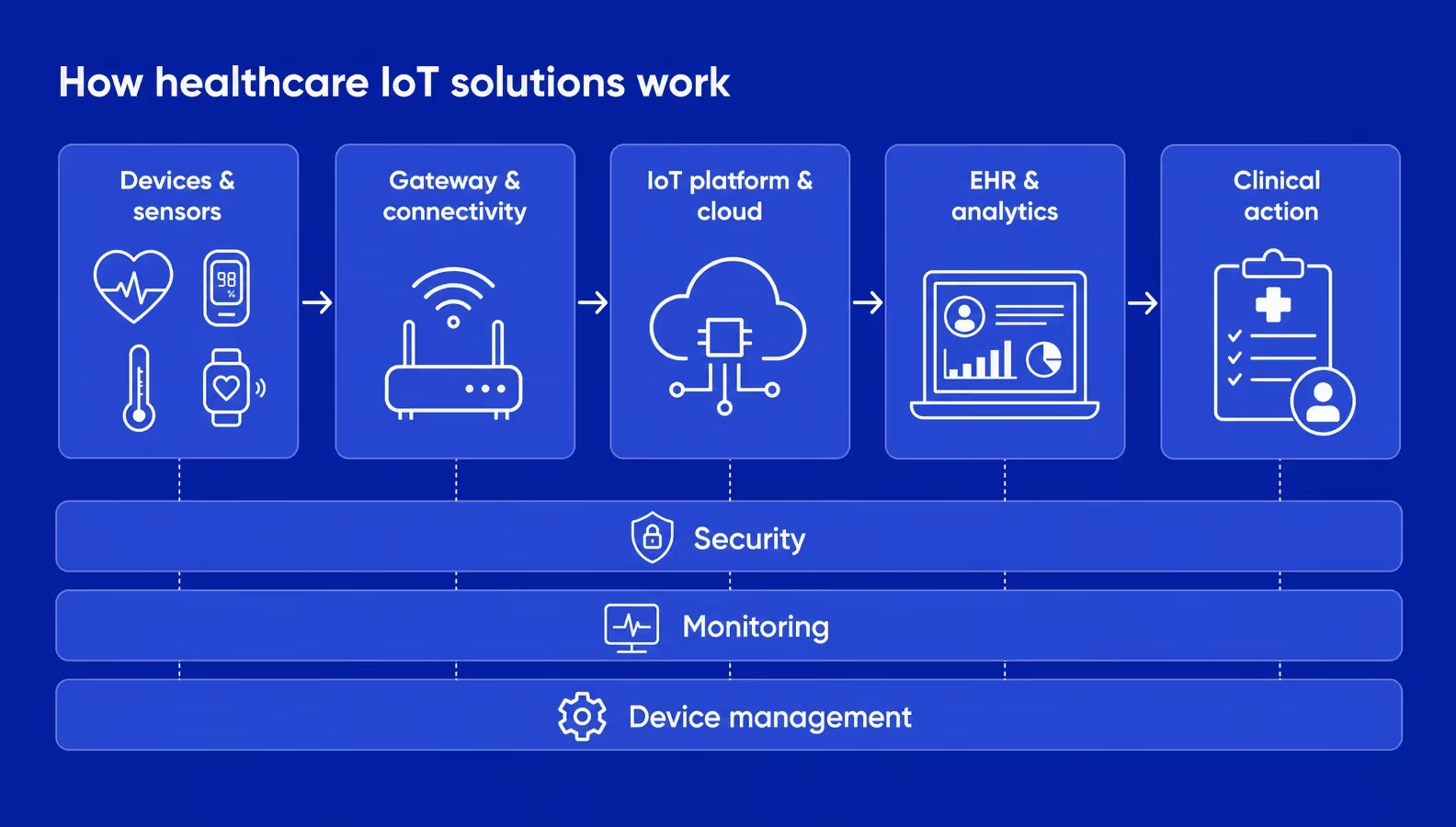
Healthcare providers use IoT connectivity with fallback behavior.
IoT technologies and IoT applications in healthcare help healthcare systems connect care between visits and inside healthcare facilities. The same technology supports patient monitoring at home, equipment tracking across a smart hospital, or data exchange with connected diagnostics. The useful comparison is not the device name but the data, workflow, and failure mode behind each use case.
| Healthcare IoT solution | Devices / data | Value | Implementation check |
| Remote patient monitoring | Wearables, blood-pressure monitors, pulse oximeters, CGMs | Continuous visibility between visits and earlier escalation | Alert thresholds, patient consent, connectivity fallback |
| Smart medication and infusion | Connected dispensers, infusion pumps, adherence apps | Fewer missed doses and traceable medication events | Dose safeguards, device identity, audit trail |
| Asset and staff tracking | RTLS tags, BLE beacons, location gateways | Faster equipment location and less idle inventory | Location accuracy, battery life, staff privacy |
| Environmental and cold-chain monitoring | Temperature, humidity, air-quality sensors | Protect vaccines, medications, labs, and care spaces | Calibration, alert routing, sensor replacement |
| Predictive maintenance | Equipment telemetry and usage data | Detect degradation before downtime affects care | Maintenance ownership, false-positive control |
| Smart hospitals and patient flow | Occupancy sensors, connected rooms, patient-flow dashboards | Better bed use, queue visibility, and staff coordination | Integration with hospital systems and workflows |
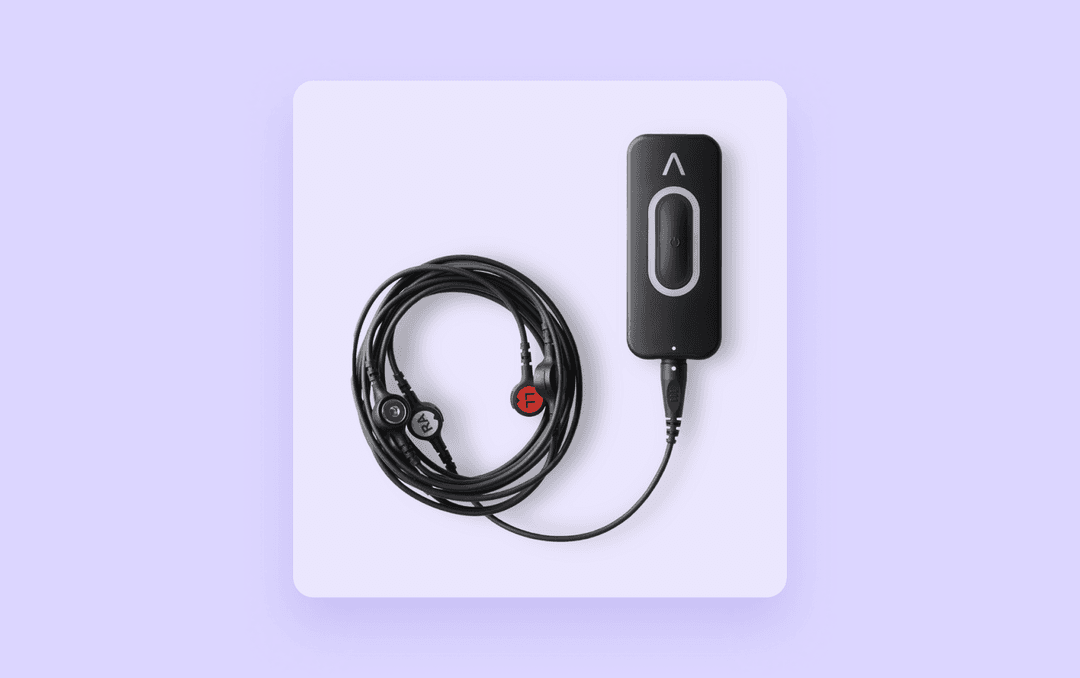
| Connected diagnostics and surgery | ECG monitors, imaging systems, robotic equipment | Real-time data sharing and more informed decisions | Network reliability, cybersecurity, human override |
Telehealth supports patient-centric care when patient health readings lead to a defined response. Remote monitoring solutions need visible data freshness, filtered alerts, and clear ownership. These requirements overlap with custom healthcare software development because device data has to fit the wider clinical product. A separate dashboard is not enough.
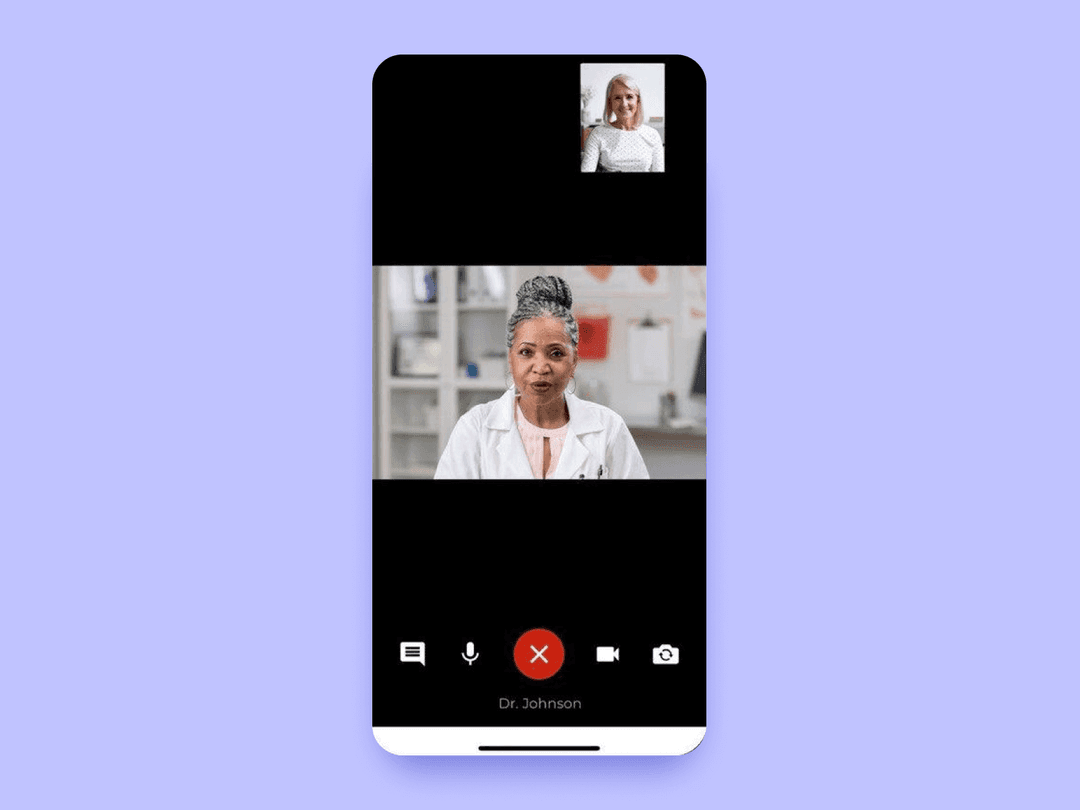
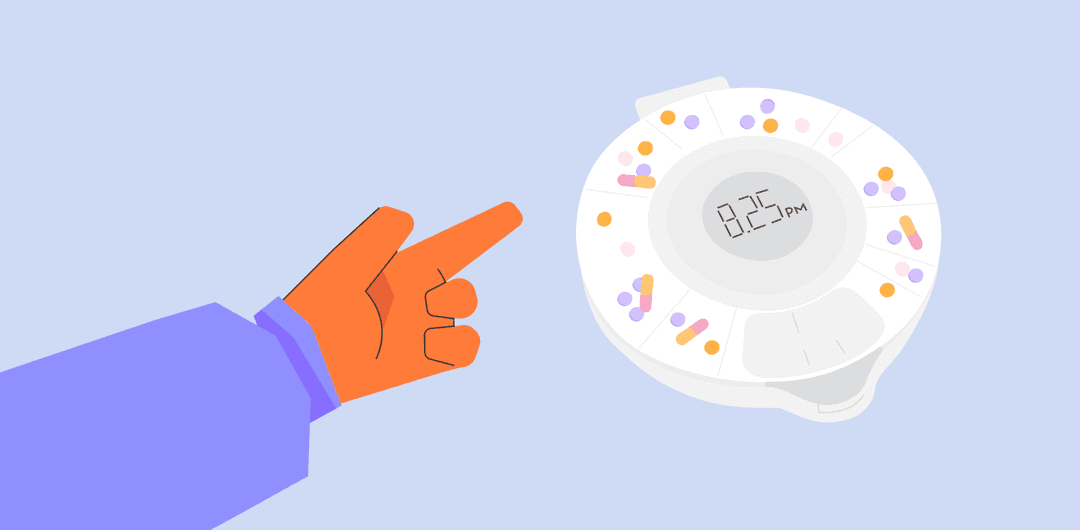
Connected dispensers and infusion pumps support patient adherence when the system records each dose. Device identity, dose safeguards, and an audit trail matter more than reminders alone. The same workflow also needs a fallback for missed connections. Otherwise, patients and healthcare providers can mistake missing IoT device data for a completed medication event.
Real-time locating system tags improve efficiency by locating equipment, while environmental sensors protect medicines and laboratory materials. Predictive maintenance uses equipment telemetry to reveal degradation before a device becomes unavailable.
Each use case needs an owner for calibration, battery replacement, and false-positive review. Otherwise, more IoT sensors create more data without improving resource allocation across healthcare facilities.
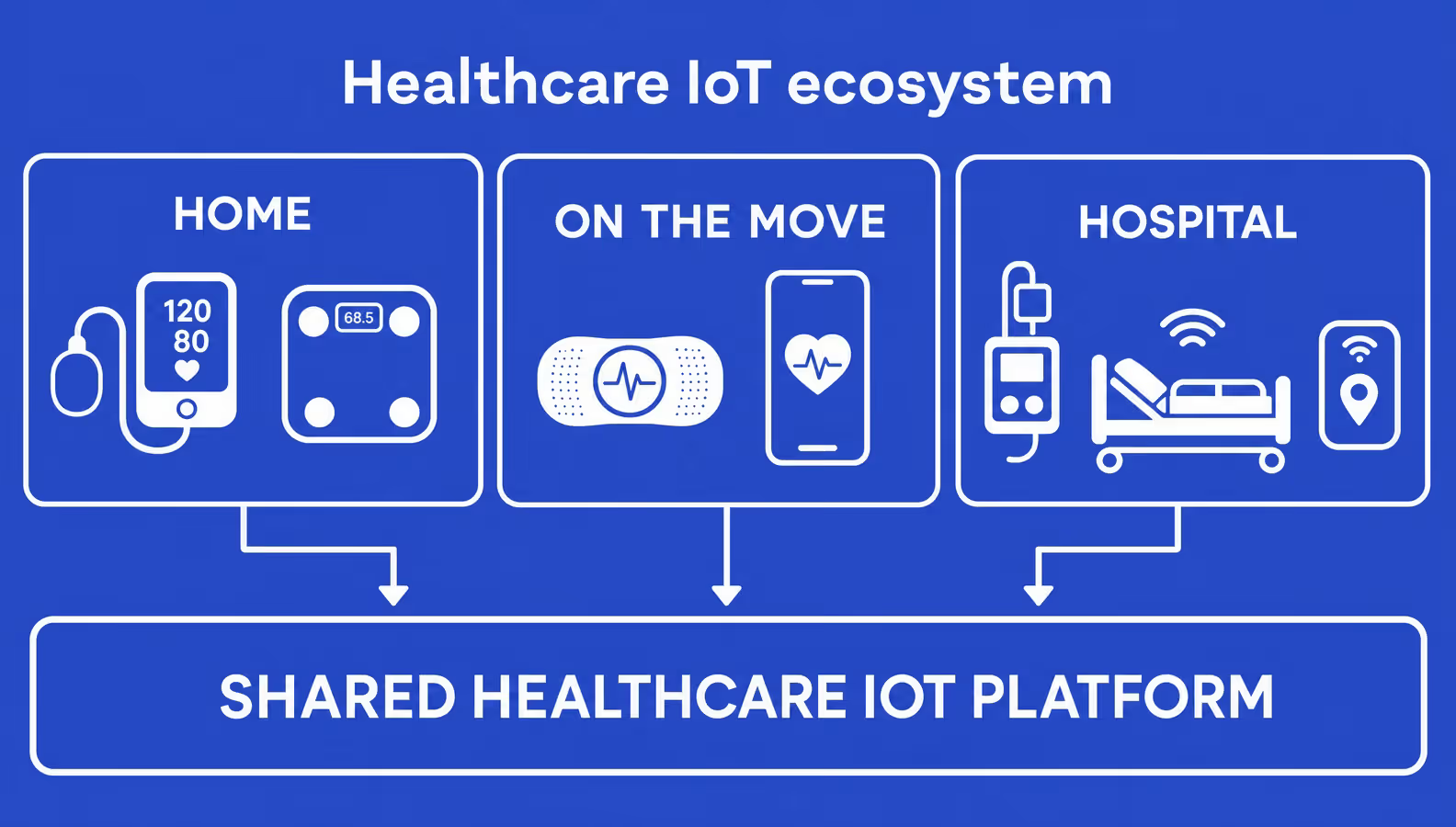
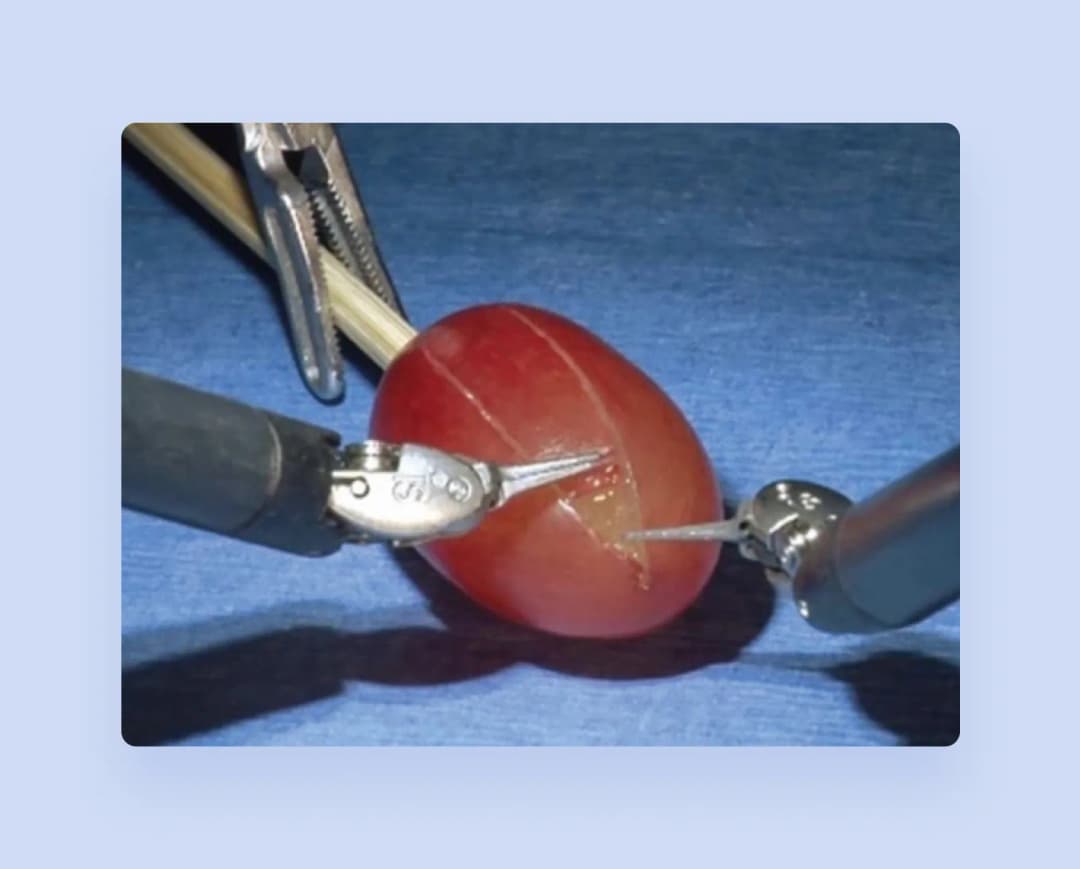
ECG monitors, imaging systems, and robotic equipment place stricter demands on network reliability and patient safety. Healthcare providers need current data, clear system status, and a human override when connectivity or automation fails. Smart hospitals integrate IoT into a coordinated health system when technical behavior leads to a decision that healthcare IT teams can act on.
Across these healthcare IoT use cases, value comes from the response around the device rather than connectivity alone.
Healthcare IoT devices are easier to evaluate when grouped as wearable technology, home devices, hospital equipment, or implants. A hospital pump and a home monitor may send similar data, but they face different constraints around power, IoT connectivity, maintenance, and supervision. The categories below keep that context visible.
| Category | Examples | Typical role |
| In-hospital | Smart beds, infusion pumps, imaging systems, RTLS tags | Clinical workflows, asset visibility, patient safety |
| At-home | Blood-pressure monitors, pulse oximeters, connected scales | Remote patient monitoring and chronic care |
| On-body | Fitness trackers, ECG patches, continuous glucose monitors | Continuous vital-sign and behavior data |
| Implantable / ingestible | Cardiac devices, implantable sensors, ingestible sensors | Long-term monitoring or targeted diagnostics |
Device category does not determine risk on its own. An at-home monitor needs consent and reliable offline behavior. An in-hospital medical device needs integration with clinical systems and support across a managed fleet. IoT adoption therefore depends on matching hardware limits to the healthcare workflow around each device. That distinction also shapes testing, support, and replacement planning.
Healthcare IoT creates value when teams control security, interoperability, reliability, and clinical workflow together. Healthcare organizations must treat IoT systems, data exchange, and incident response as one operating model. IoT connectivity is part of that model, not a separate checklist.
| Risk | Why it matters | Minimum control |
| Internet exposure and weak credentials | Exposed devices can become entry points into clinical networks | Asset inventory, remove unnecessary exposure, change defaults, MFA for remote access |
| Unsupported firmware and vulnerabilities | A compromised monitor or pump can affect data and patient safety | Patch policy, vendor support checks, replacement plan, vulnerability monitoring |
| Interoperability failures | Correct device data can still reach the wrong record or workflow | Standards-based APIs, mapping tests, end-to-end validation with EHR |
| Connectivity gaps | Missing or delayed data can trigger false confidence | Offline queue, retry logic, coverage testing, visible data freshness |
| Alert fatigue | Too many low-value alerts hide urgent events | Clinical thresholds, escalation ownership, periodic tuning |
| Information privacy and retention | Health data crosses devices, apps, vendors, and cloud systems | Least privilege, encryption, audit logs, retention rules |
CISA guidance on internet exposure emphasizes asset inventory, removing unnecessary exposure, and changing default credentials. It also calls for replacing unsupported devices and monitoring traffic. Its CMS8000 alert shows why firmware risk can affect patient data and patient safety.
Teams implementing IoT solutions include these controls when planning how to develop an IoT application. IoT security and interoperability testing checks whether implementation works across devices, software, and clinical integrations.
Modern healthcare solutions draw on two capabilities: healthcare product workflows and IoT ecosystem integration. My Therapy Assistant demonstrates patient-facing healthcare software, while Energo demonstrates communication between an app, physical infrastructure, and payment logic. Neither project is presented as a healthcare IoT case. Together, they show the work that a connected-care product combines.
Our healthcare product case study covers an online psychotherapy service with video appointments, messaging, and clinician notes. The product also needed insurance workflows, so we integrated it with Healthcode. Its outdated application programming interfaces created constraints around data exchange and error handling. We adapted the integration without shifting that complexity onto patients or therapists.
This work reflects a broader medical software development concern. A reliable clinical workflow depends on how the product handles external systems, incomplete responses, and sensitive health information.
⭐ Our experience. 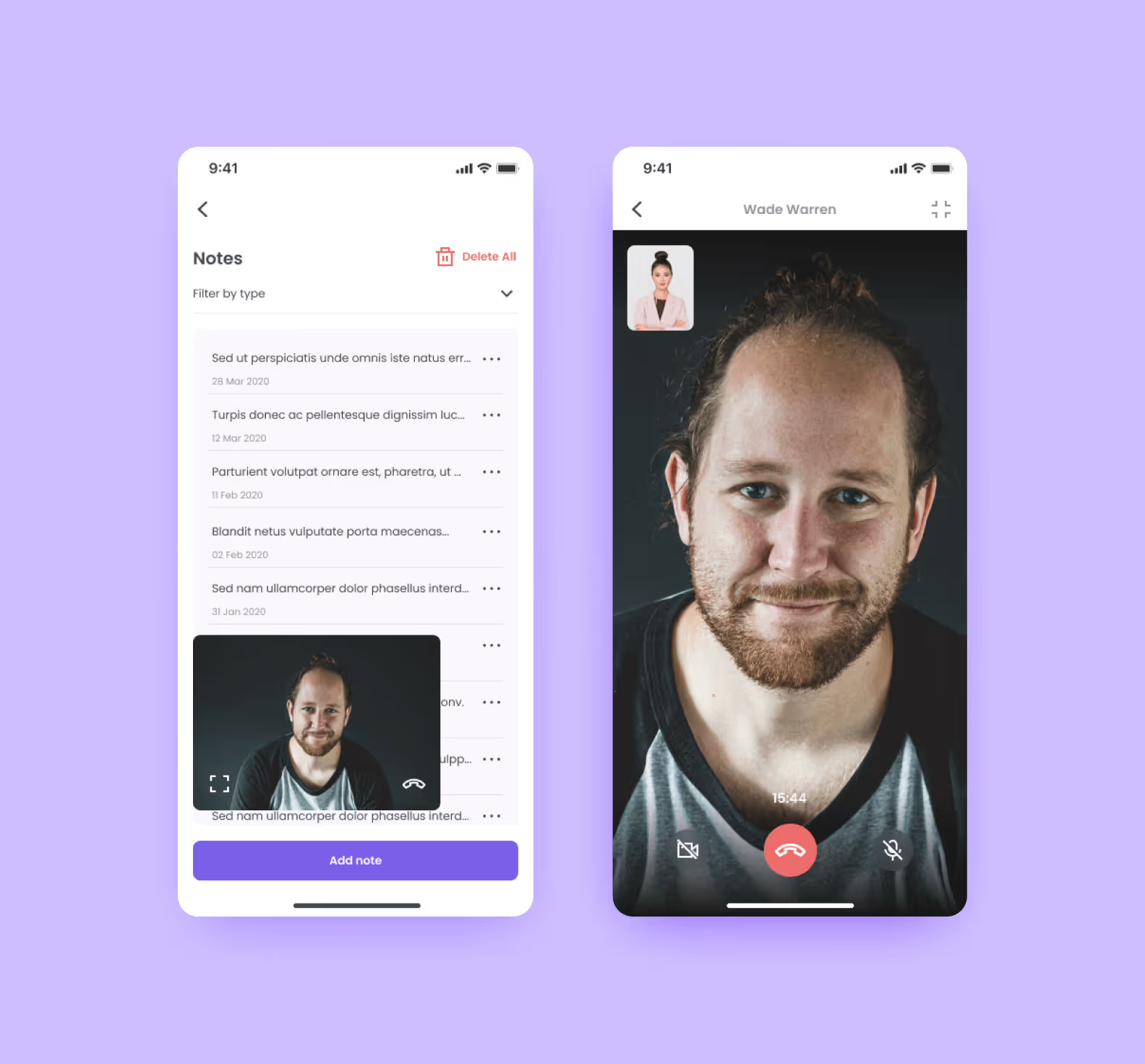 Video and notes stay visible in one care workflow alt: my therapy assistant video consultation and notes interface |
Energo is an IoT ecosystem for renting power banks. The mobile app helps a user find a charging station, scan its QR code, and start a rental. A SIM card inside the station carries commands between the physical unit and the software.
The product therefore coordinates device location, availability, account state, and payment events rather than treating the station as passive hardware. Energo is not a healthcare product, but its architecture demonstrates the integration work behind a connected-device service with real-world infrastructure.
⭐ Our experience. 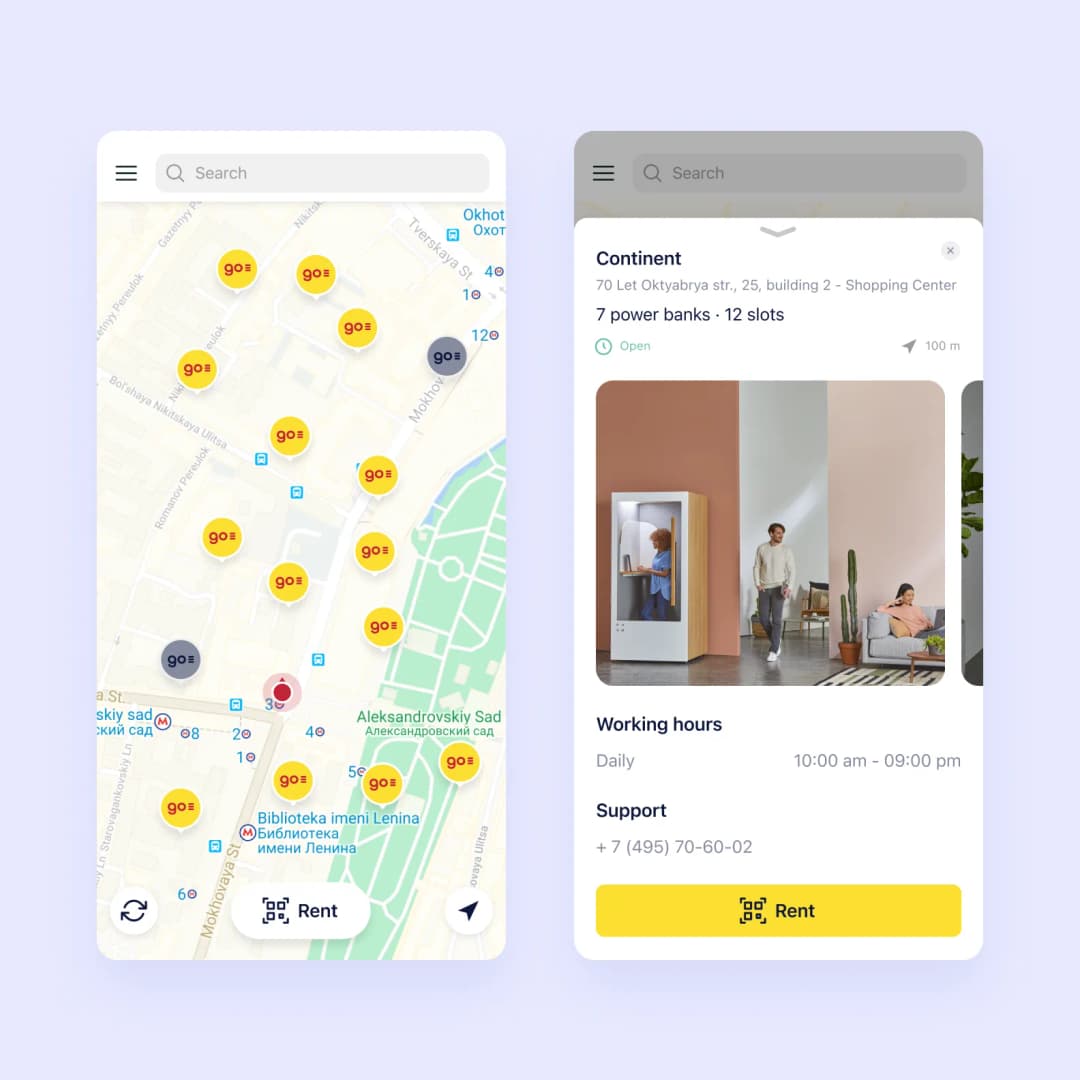 The app and station coordinate one connected service alt: energo power bank rental app and connected station workflow |
Healthcare UX and IoT integration solve different parts of a connected-care product. Combining them is relevant when a medical device has to exchange data with software and support a clear patient or clinician workflow.
IoT enables healthcare providers to improve patient care when device data reaches the right system, person, and action. Product teams evaluate connectivity alongside security, integration, and operational ownership rather than treating the device as the complete solution.
➡️ Planning a connected-care product? Tell us what you are building, and we’ll help map its integration scope.
Healthcare IoT solutions connect medical devices, sensors, software, and care teams so health data can move securely from patients or hospital equipment to clinical systems. Typical solutions include remote patient monitoring, smart medication tools, asset tracking, environmental monitoring, and connected workflows that support faster decisions and more efficient care delivery.
Five common examples are remote patient monitoring wearables, continuous glucose monitors, smart medication dispensers, real-time location systems for hospital assets, and connected surgical or diagnostic equipment. Each device collects or exchanges data, while software turns that data into alerts, trends, or actions for patients and healthcare professionals.
The Internet of Medical Things is the healthcare-specific part of IoT. IoMT includes connected medical devices, clinical software, gateways, and health data workflows used for diagnosis, monitoring, or treatment. Unlike many consumer IoT products, IoMT systems must account for patient safety, privacy, interoperability, reliability, and healthcare regulations.
The main challenges are device security, data privacy, interoperability with electronic health records, unreliable connectivity, fleet management, and regulatory compliance. Healthcare organizations should inventory connected assets, segment networks, remove unnecessary internet exposure, patch supported devices, test integrations, and define how clinicians respond when data or devices fail.


.svg)