Explore

Need help with your project?

Oops! Something went wrong while submitting the form.
With a SaaS product idea ready, a founder may still struggle to turn a broad agency estimate into a real launch budget. Scope, delivery time, and the spending that begins after release often get discussed separately, leaving the SaaS development cost decision unclear.
In this guide, we'll look at how scope and timing shape a cost estimate, then bring initial build and recurring spend into one planning view. That gives you a way to decide what the budget needs to cover before choosing a development path.
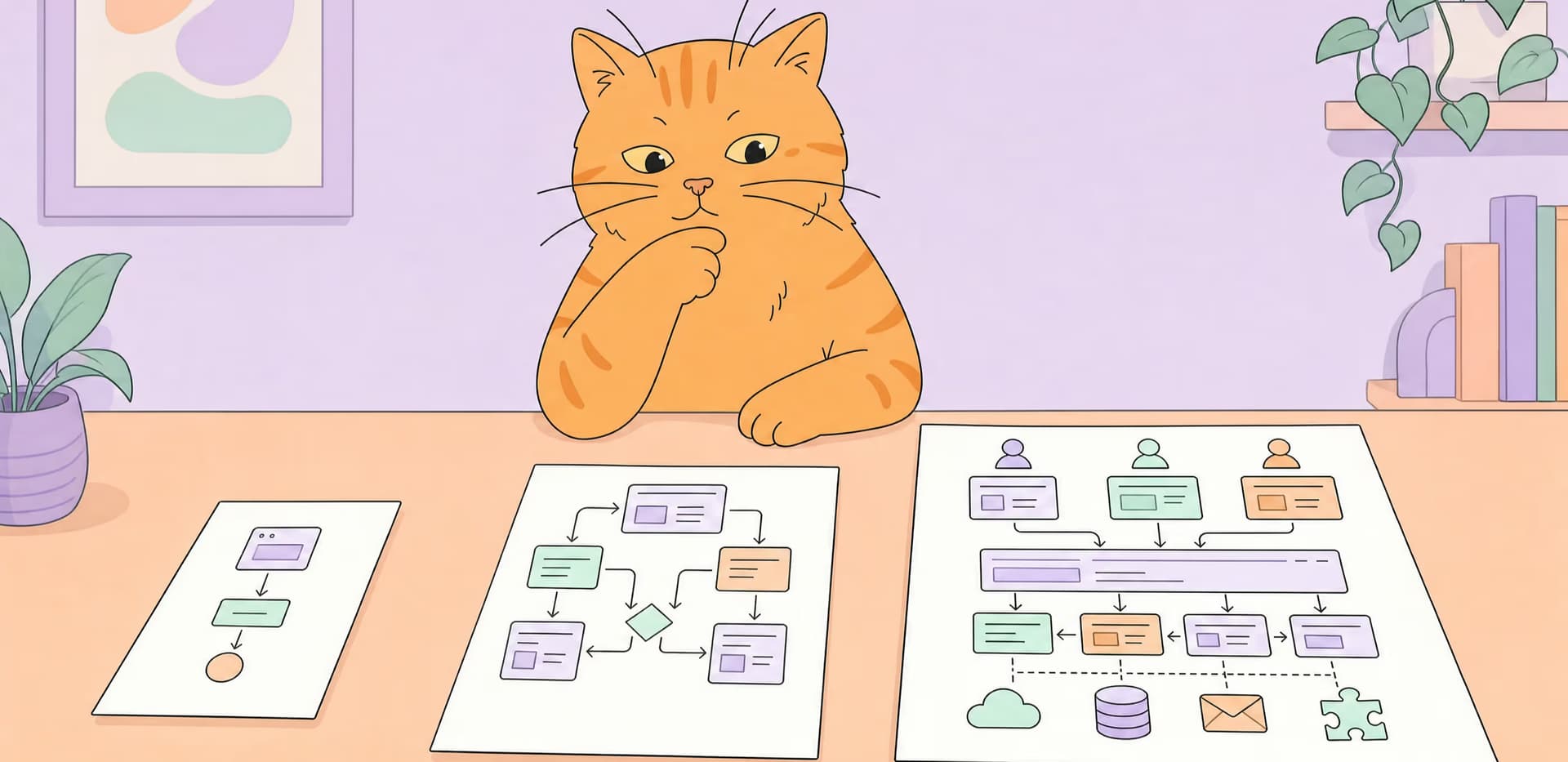
In 2026, SaaS development cost starts at an $30,000-$80,000 MVP. A full platform costs $150,000-$300,000+. Mid-size products typically cost $80,000-$150,000. Scope determines each tier's launch window and keeps planning tied to the selected scope.
| Product scope | Planning range | Timeline | What changes the estimate |
| SaaS MVP with core features | $30,000-$80,000 | 2-4 months | One problem, core user flow, and limited integrations |
| Mid-size SaaS product | $80,000-$150,000 | 4-8 months | More roles, workflows, integrations, and reporting |
| Full-scale SaaS platform | $150,000-$300,000+ | 8-12+ months after scope definition | Complex permissions, custom integrations, and product depth |
Those bands are planning estimates, not fixed quotes. A development partner uses feature choices and delivery constraints for cost estimation. SaaS development services turn those decisions into a product-specific estimate.
A SaaS cost range becomes useful only when the scope line is clear. Adding an admin role, a billing flow, or an external application programming interface (API) adds scope to the software as a service product. It can also change the estimate for the SaaS solution.
The same rule applies to development time. Teams that build SaaS products around one validated workflow resolve fewer open questions. A team planning to build a SaaS platform faces more when the scope includes multiple roles, integrations, and permissions. The planning band creates a starting point for the cost of building a SaaS product. The estimate becomes credible when the product scope is written down.
For one illustrative Purrweb $120,000 SaaS budget, the development spend is divided across five stages. Those stages are discovery, design, development, quality assurance (QA), and launch. The allocation shows where work sits and the budget risks to consider if a stage is deferred.
The table separates the total into budget lines so design, testing, and launch remain visible in the estimate.
| Stage | What it covers | Illustrative allocation | Budget risk if deferred |
| Discovery and planning | Scope and core workflow | Illustrative Purrweb example: 10% / $12,000 | Potential rework if scope changes later |
| User interface and user experience (UI/UX) design | Flows, screens, and interactions | Illustrative Purrweb example: 15% / $18,000 | Potential redesign if flows remain ambiguous |
| Frontend and backend development | SaaS app, data, and core integrations | Illustrative Purrweb example: 50% / $60,000 | Potential pressure on core scope or launch timing |
| Quality assurance (QA) and testing | Test automation and release validation | Illustrative Purrweb example: 15% / $18,000 | Potential post-release support and engineering work |
| Deployment and launch | Production setup and release checks | Illustrative Purrweb example: 10% / $12,000 | Potential delay from unresolved release issues |
The app cost calculator provides a separate feature-based estimate.
Multiple user roles or external APIs can require more design and development work. A narrowly scoped first release may lower those lines, but discovery still defines the work included in the build.
In the development process, discovery turns a broad idea into decisions a software development team can use to estimate the cost. Late questions about user roles, data, or integrations can require rework. Design defines the workflow for front end and back end implementation.
Deferring QA or launch work creates budget risk. A released software bug can require support and engineering time, while unresolved production setup can delay market entry.
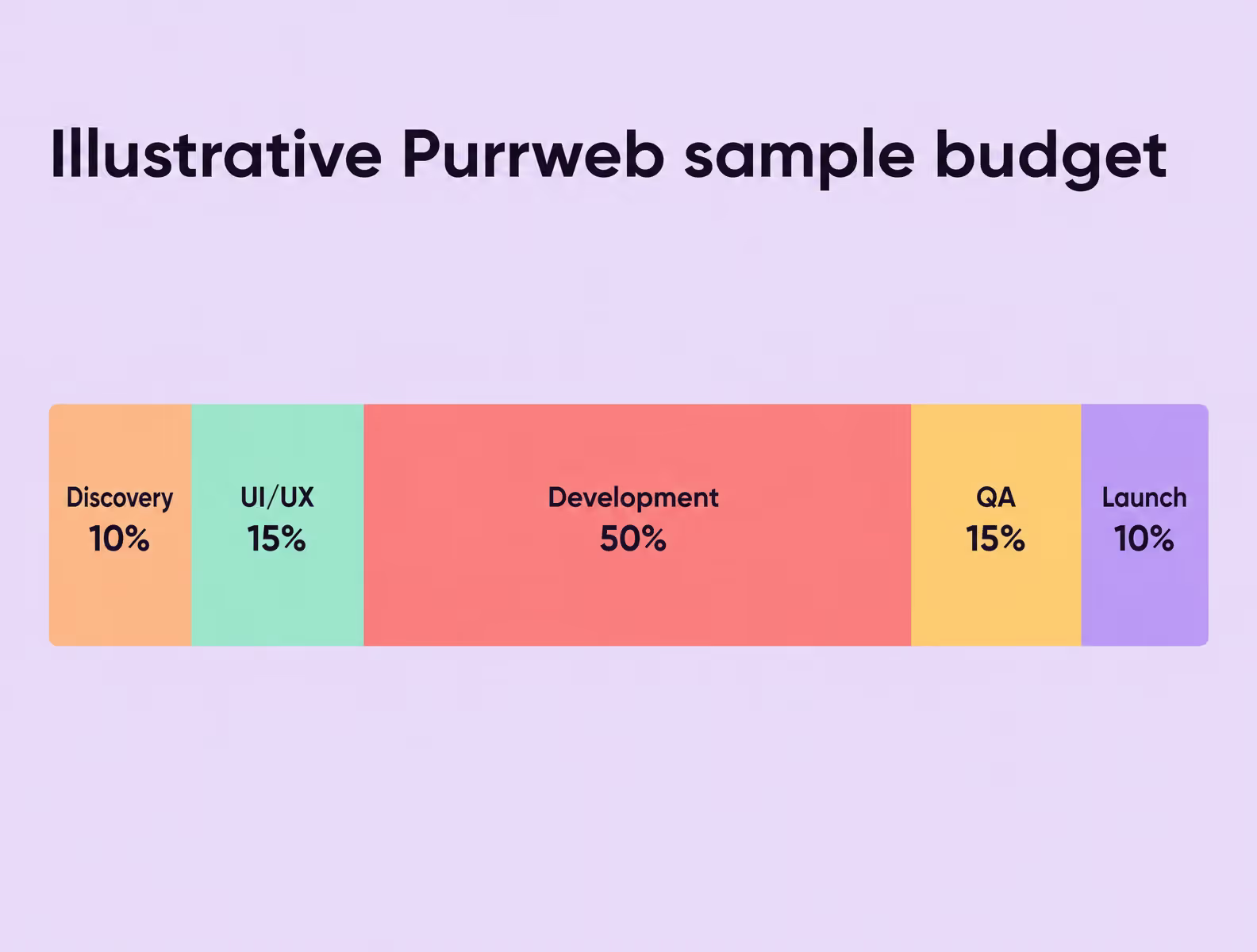
This sample reserves budget for discovery, usability work, quality checks, and launch readiness before concentrating half of the total on development
The cost factors behind the product explain why identical stages can produce different estimates.
Six key cost factors commonly move a SaaS estimate: scope, team, stack, integrations, artificial intelligence (AI) features, and design complexity. No single factor determines the cost or serves as the universal biggest cost driver. Each one adds or removes work from the development team instead of carrying a fixed markup.
Teams developing a SaaS application can arrive at different budgets and launch dates. The useful question is which choice adds workflows, specialist effort, or coordination. These six factors that affect SaaS estimates separate the business decisions that materially affect the cost of developing a SaaS product from secondary technical detail.
Scope changes the budget before technology does. One role and core workflow give the team fewer screens, rules, and test cases. Multiple permissions, approvals, or reporting expand work across design, backend behavior, and quality assurance (QA).
Labor costs reflect the people required to deliver the scope and how they work together. A senior specialist, a larger team for a compressed deadline, or limited time-zone overlap changes coordination and delivery capacity. Netguru's 2026 web app development guide offers context through blended agency ranges, not fixed regional rates.
| Delivery market | Netguru 2026 blended agency range | What it does not fix |
| US and Canada | $100-$180/hour | Seniority and team shape |
| Western Europe | $70-$120/hour | Specialization and overlap |
| Eastern Europe | $45-$85/hour | Scope and delivery model |
An accurate cost estimate still depends on the development team, seniority mix, specialization, and working overlap. Lower blended guidance does not make a complex SaaS product smaller.
The commercial question is whether the product architecture supports the first release without custom work the product does not yet require.
The same test applies to application development tools. Proven services and frameworks can narrow initial implementation. A stack can lead to higher costs due to scarce expertise or bespoke infrastructure. The stack is only one part of our guide to SaaS development, while this article stays focused on its cost effect.
An integration earns its budget line when the SaaS product depends on an outside system to complete a core job. A payment gateway or another application programming interface (API) adds implementation, authentication, error handling, and testing work. Each extra connection can increase development and testing work. That work increases costs as the number of systems and reliability requirements grow.
AI feature cost belongs to product scope, not to a general claim about faster delivery. Data readiness, model choice, evaluation, and integration decide the work.
Published vendor estimates differ by feature. Inexture lists a natural language processing (NLP) chatbot near $10,000-$25,000. ZTABS places recommendation or predictive work in the broad tens of thousands. Eucalipse starts custom machine learning (ML) work at $50,000+.
AI-assisted development is different. It may accelerate development for selected tasks, but it does not establish an overall saving or shorter schedule without comparable project evidence.
The ChatGPT-integrated business report service shows the scheduling mechanism in practice.
We built a ChatGPT-integrated business report service that guides teams through non-financial reporting with a dynamic form and GPT-4. The form structures the source information before it enters the GPT-4 reporting flow, so users do not have to assemble each report from scratch.
The main constraint was time. The client needed the product in four months, while our first estimate was six. We expanded the delivery team and ran design, frontend, and backend work in parallel. That decision did not make the scope cheaper. It traded a larger delivery budget for the shorter launch window.
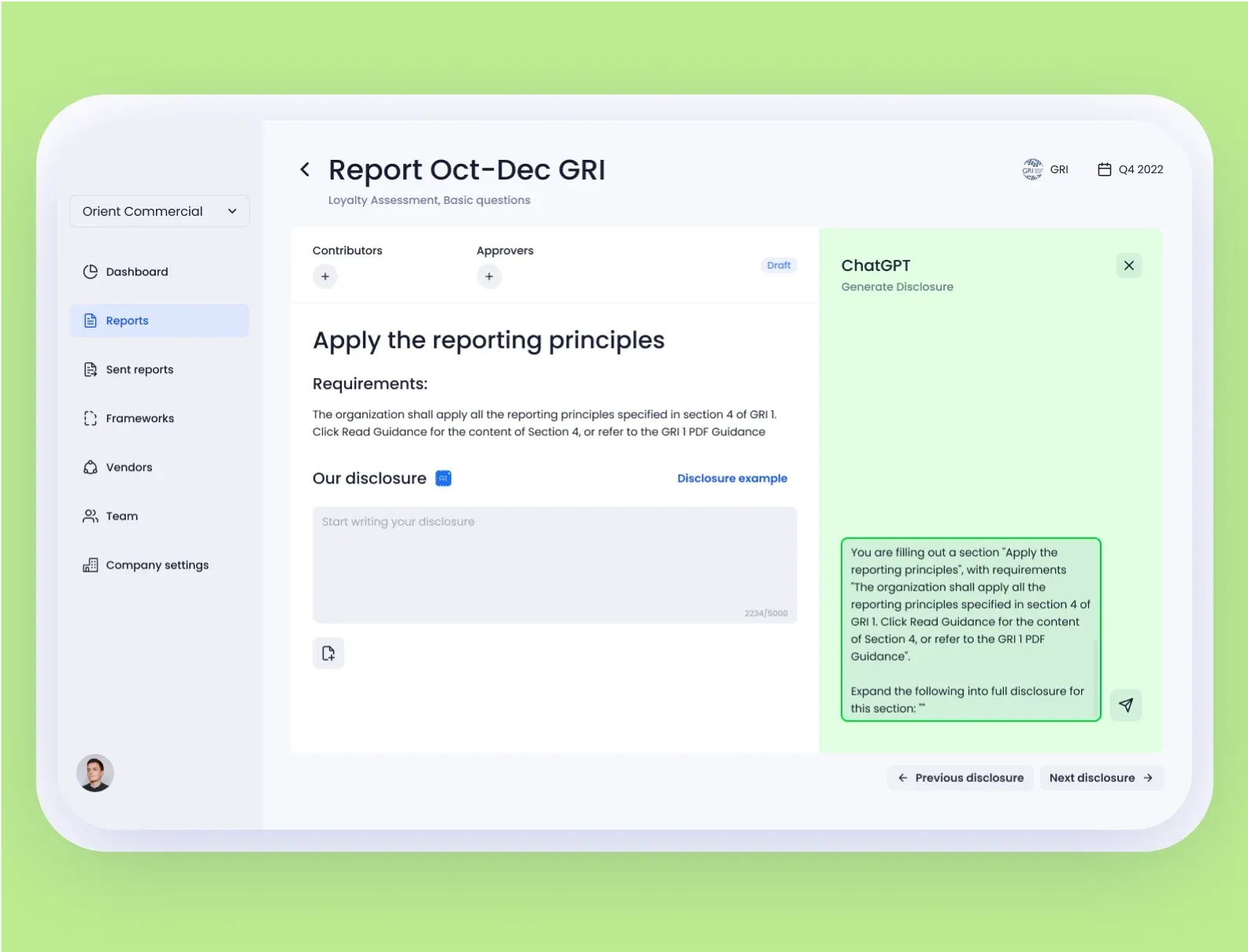
A larger parallel team traded budget for a four-month launch window
User interface (UI) design and user experience design (UX design) costs follow user decisions, not polished-screen count. New roles, dense workflows, and custom interactions require more flow design and usability testing. A consistent component system focuses effort on differentiating product behavior.
Building a SaaS MVP typically costs $30,000-$80,000 and takes 2-4 months when the scope stays narrow. It is a planning estimate, not a quote for every idea. For more on MVP development cost, see our guide. The initial development budget funds one problem and its core flows, not less validation, testing, or security.
The first release centers on an observable outcome. For example, a buyer submits a request and a provider can respond. A prototype helps test assumptions, but a usable minimum viable product needs an end-to-end flow, feedback capture, and basic reliability to observe real behavior.
At GSR, Purrweb held that boundary by building the decision path, not the full platform.
We built GSR, an online consultation platform for psychologists, to test whether users would move from finding a specialist to booking a consultation. The MVP included a specialist catalog, a selection flow, booking, two user roles, and responsive screens.
The client needed evidence before funding a broader platform, so we left payments and more complex features outside the first release. The team delivered the complete booking path in four months for a historical $40,000. That figure documents this project, not a current quote. The client could test the service before committing budget to the next product stage.
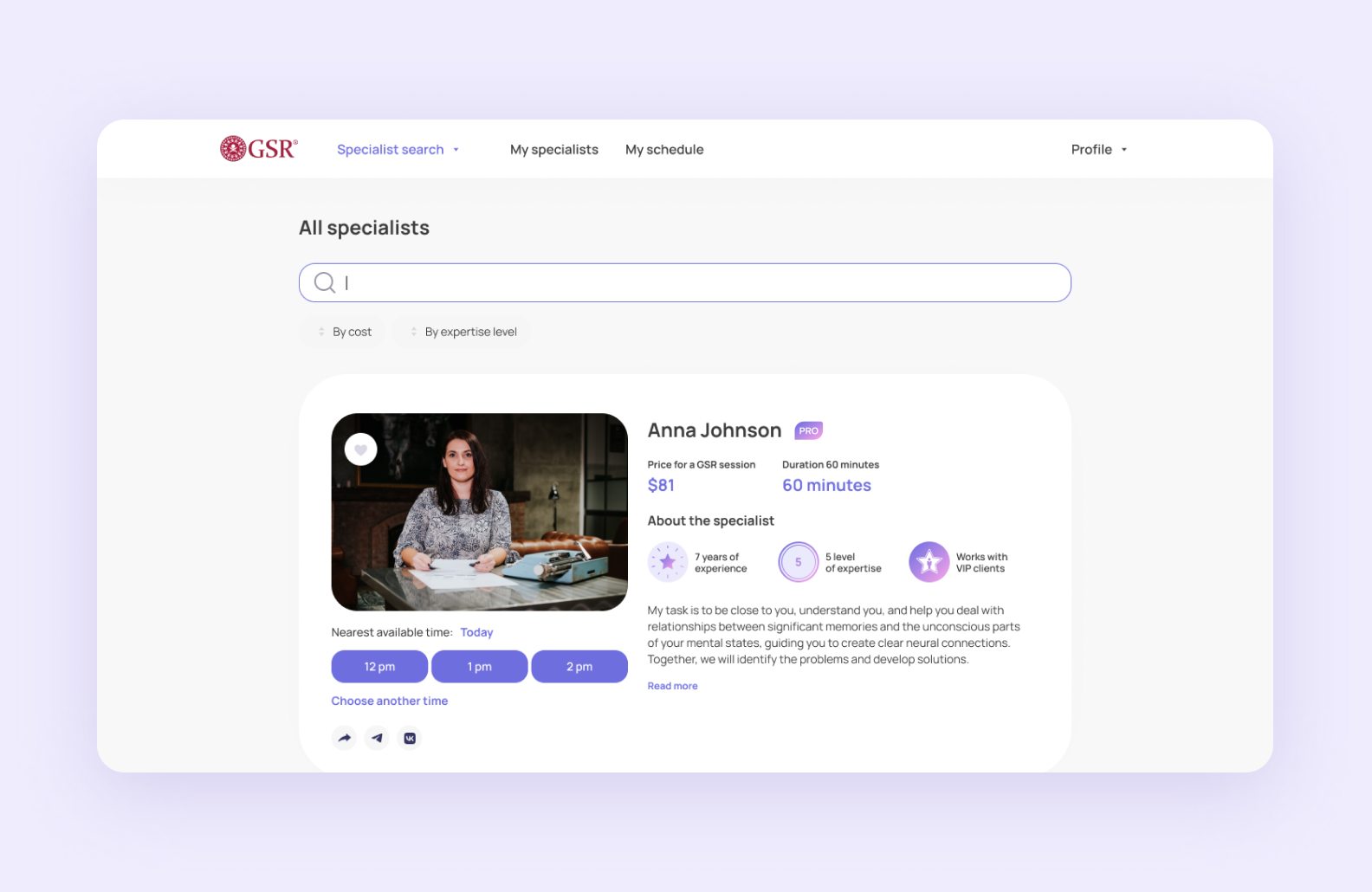
The MVP funded the complete path to booking while deferring payments and platform depth
Product type changes the SaaS app development cost through the work attached to its core flow. A scheduling SaaS stays compact when booking is the only job. Data migration, advanced permissions, or real-time coordination add systems to build and test.
Advanced automation, expanded roles, and broad reporting often wait until feedback proves the core workflow. The boundary is not an excuse to remove discovery, quality assurance (QA), or security. It keeps initial development costs tied to a credible first launch before recurring costs enter the plan.
Hidden costs in SaaS development sit outside the build quote and vary by product. The budget needs separate owners for recurring services and post-launch work. Usage and the launch plan determine the size of each line.
Cloud infrastructure costs need a separate budget. In Flexera's 2026 survey, respondents estimated that 29% of infrastructure as a service (IaaS) and platform as a service (PaaS) spend was wasted. That estimate is not a rule for every company or total cloud spend.
Products built around large uploads can create a larger cloud line. Contentplace had to accept uploaded video and process it.
We built Contentplace as a private marketplace where creators upload videos and sell usage rights to buyers. The product had to accept large media files, store them, and process them before buyers could work with the content.
We used Amazon S3 for uploads and AWS Step Functions to coordinate processing. The cost constraint was specific: the marketplace owner, not the creator, paid for that processing. We added video compression to reduce the data moving through the pipeline and keep the recurring cloud expense under control. The team delivered the MVP in three months so the client could test the concept with a working product.
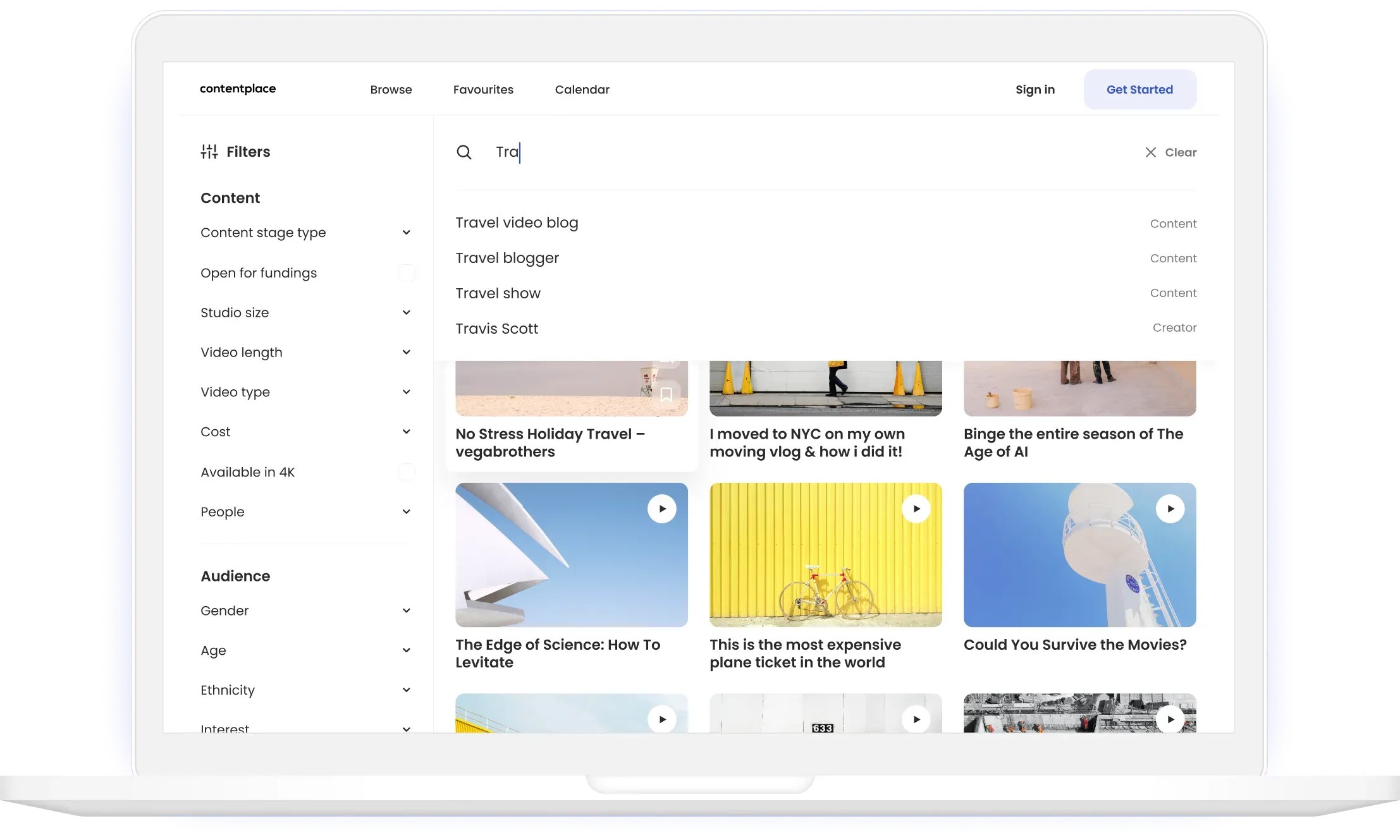
Compression reduced the recurring processing load created by creator video uploads
That case does not make Amazon Web Services a fixed line for every SaaS application. A text-based tool and a marketplace with large uploads create different infrastructure costs. A useful planning move is to name the service, its usage trigger, and the person who reviews it.
The cost of maintenance changes after release as the environment moves. Products that depend on external APIs or operating-system behavior need capacity for those dependencies to change. Security and compliance follow data handling and customer commitments. Go-to-market spending often starts before release and continues after launch. Assigning owners keeps each line visible in the plan.
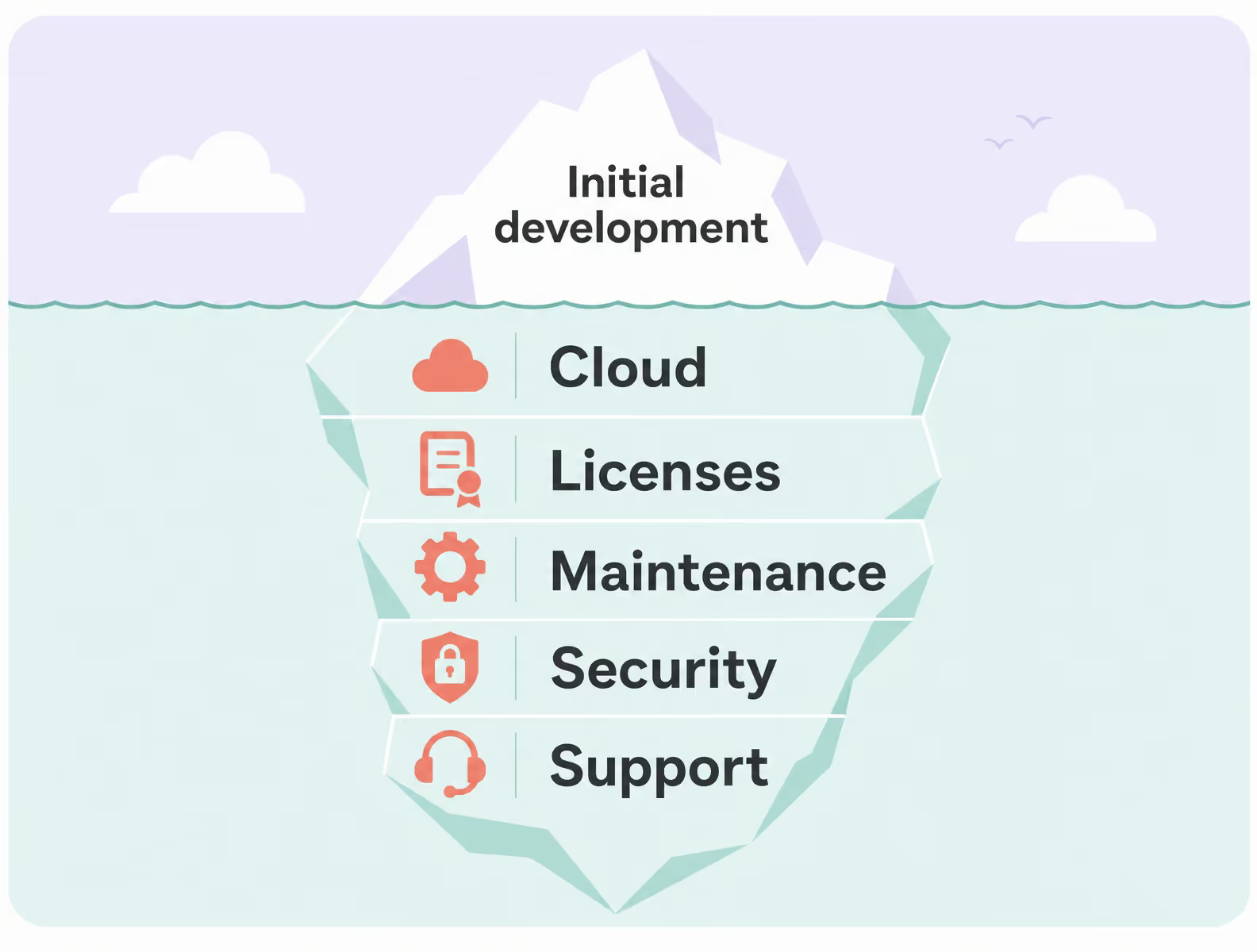
The first-year budget extends below the build quote into recurring product decisions
With those lines visible, cost reduction centers on deferred scope and avoided rework, not cutting quality controls.
When developing a SaaS app, balancing cost and quality starts by separating the first release from later capabilities. This can defer work and reduce rework risk, but it does not guarantee a lower total.
These six patterns expose trade-offs within the scope of a SaaS plan: what belongs in the estimate, what depends on requirements, and what waits for evidence.
Look4Pro illustrates one of those controls: bounded additions within a documented project buffer.
We built Look4Pro as a B2B platform where contractors, suppliers, and potential partners publish listings and find one another. The first release combined email registration, filtered search, personal accounts, and Stripe subscriptions that unlock contact details.
The startup had a limited budget and a five-month window, so the core flow centered on discovery and paid access rather than a broad marketplace. After the essential flow was covered, the remaining project buffer funded favorites, an archive, smartphone and tablet adaptations, and a feedback form. Those additions stayed inside the same five-month project instead of turning the release into an open-ended build.
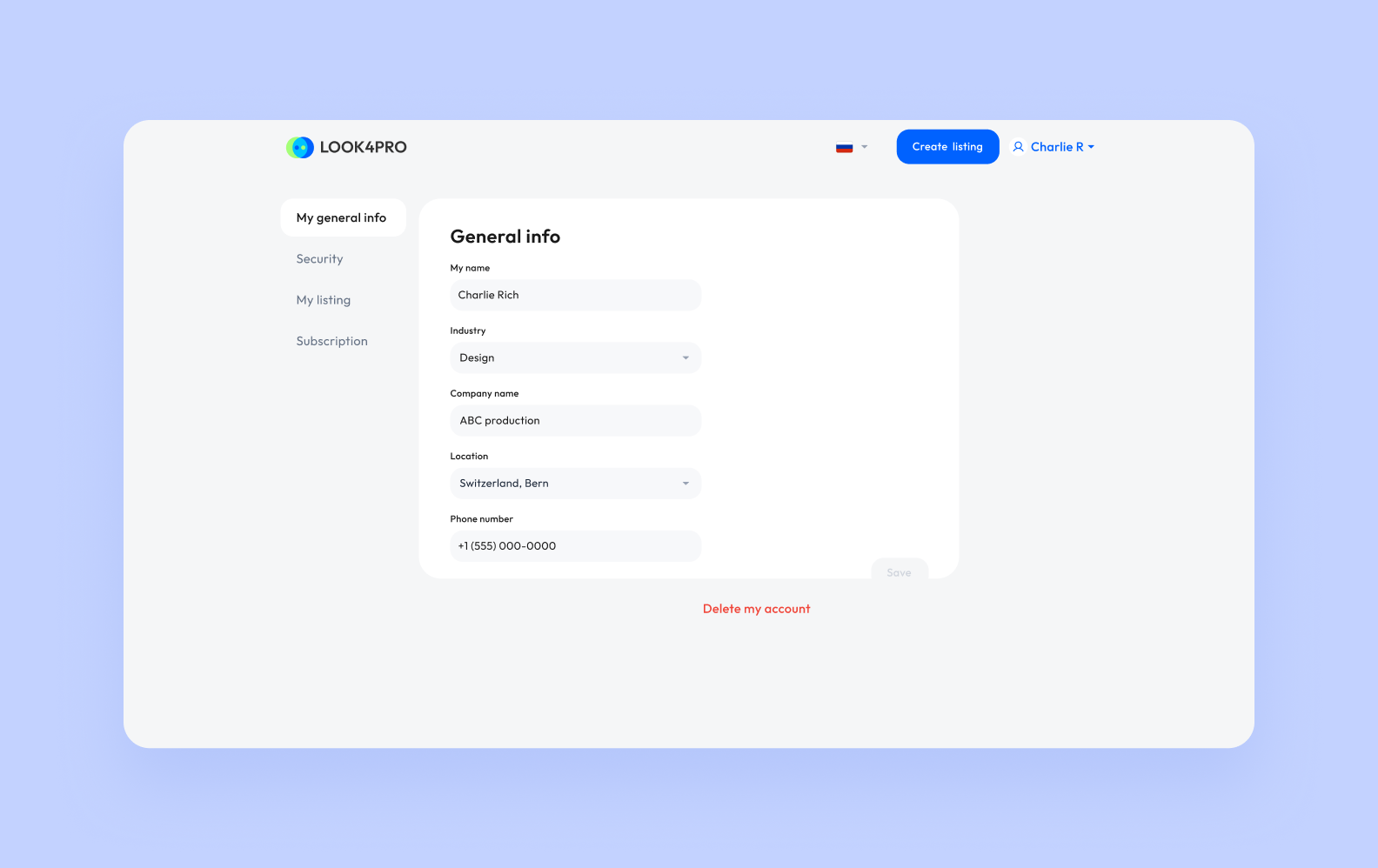
A bounded scope left room for secondary features inside the same five-month project
This project record does not prove that another SaaS product will fit the same timeline or budget. Different integration, validation, security, and maintenance requirements can change the cost of development. The point is to keep those decisions explicit before work starts, then reassess additions against evidence.
Discovery examines whether the core flow is worth funding, while testing and security check the release. Reuse, outsourcing, and AI assistance change effort only when they fit the product and team.
A SaaS product development cost range is not a final quote. It becomes useful once the team has defined the core workflow, roles, integrations, and launch target.
A complete estimate for the cost of SaaS development states whether discovery, design, development, testing, and launch are included in the quoted scope.
A funded first-year plan goes further. It assigns separate budget lines and owners to recurring product costs.
Cost control comes from deciding what belongs in the first release and what waits for evidence. This order can defer non-core work and lower rework risk without treating quality controls as expendable.
➡️ our SaaS development team can turn a defined core workflow and launch target into a project-specific cost estimate.
For planning, the cost to develop a narrow SaaS MVP falls around $30,000-$80,000 when it focuses on one core workflow. A mid-size product may use an illustrative $80,000-$150,000 band. A complex platform may reach $150,000-$300,000+. Scope, integrations, team shape, and delivery model determine where a product lands. These are planning bands, not quotes.
There is no universal annual multiplier for hidden SaaS costs. Product-specific lines can include cloud infrastructure, third-party licenses, maintenance, security and privacy work, customer support, and go-to-market activity. In Flexera's 2026 survey, respondents estimated that 29% of infrastructure as a service (IaaS) and platform as a service (PaaS) spending was wasted. That figure is not a rule for every company or its total cloud budget.
There is no universal 12-24-month period for recovering SaaS development spend. Customer acquisition cost (CAC) payback measures how long gross profit takes to recover acquisition cost, not the initial build budget. Bessemer's segment targets use under 12 months for small and medium-sized businesses, under 18 for mid-market, and under 24 for enterprise CAC payback. Build-cost recovery depends on each product's pricing, retention, acquisition cost, and operating spend.
SaaS can be profitable in 2026, but category growth does not establish profitability for an individual product. A global SaaS market forecast gives limited context about the category. The product case still rests on retention, pricing, acquisition cost, and operating costs, including the recurring infrastructure and support required to serve customers.
A narrowly scoped custom MVP is one path for teams whose budget accommodates the $30,000-$80,000 planning range. It funds one problem and its core user flow while later capabilities wait for evidence. That boundary does not mean cutting discovery, testing, or security, and it does not mean every SaaS idea fits the same range.


.svg)