Explore

Need help with your project?

Oops! Something went wrong while submitting the form.
Lists of web development companies in Germany often place marketing-site agencies beside product studios and engineering consultancies. The names look comparable, but the work behind them is not. For a founder or CTO, the real question is which team has evidence for the product, delivery model, and compliance constraints already on the table.
In this guide, we’ll look at ten companies through that decision lens. Each profile focuses on project fit and first-party evidence. The comparison shows where a company is strongest and where its public record leaves questions for a discovery call.
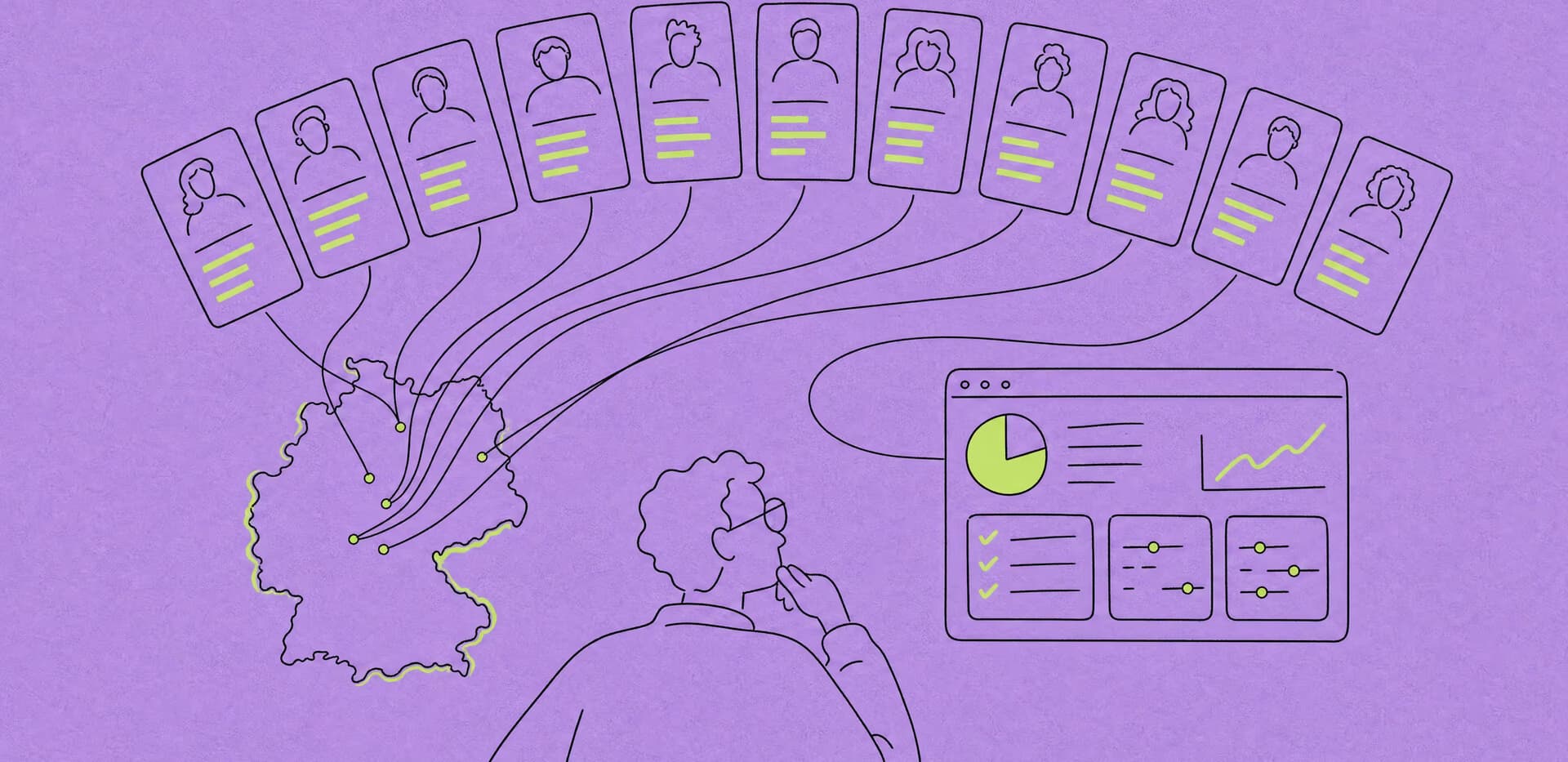
Web development companies in Germany turn product plans into working sites and web apps. Their role can cover the first interface concept, the underlying engineering, and the support that keeps a product useful after launch.
Agency websites often use the same service language for very different work. The practical differences become clearer when the market is split into four delivery groups:
These services operate inside a large technology economy. Bitkom forecast Germany’s information-technology market at €161.3 billion in 2025. The figure covers hardware, software, and IT services, so it describes the wider environment rather than agency revenue alone.
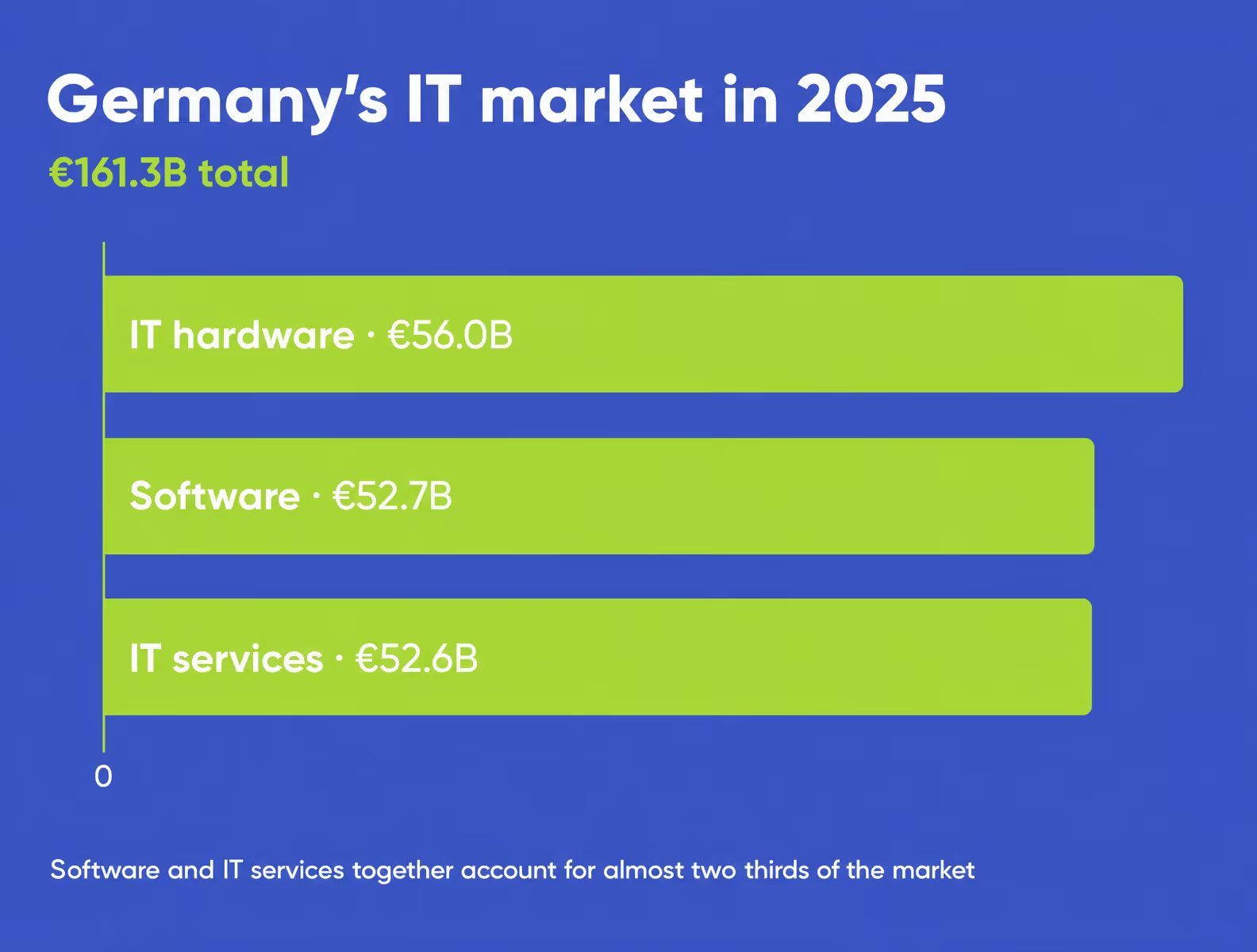
Software and IT services together account for almost two thirds of the market
The same forecast projected approximately 1.354 million people working across Germany’s IT and telecommunications sector. That category is broader than software developers, but it shows the depth of the market companies hire from and sell into.
A service label therefore says less than the evidence behind it. The next step is checking whether an agency’s actual projects, delivery model, and technical depth match the product being planned.
The German web development firms in this ranking cover different parts of the market. Some focus on product engineering and modernization, while others combine website delivery with design or marketing. The comparison starts with project fit, delivery shape, and public evidence rather than treating every agency as interchangeable.
The four columns show where each company appears strongest based on its official services and published work:
| Company | Best for | Delivery model | Key specialization |
| Purrweb | SaaS, fintech, and healthcare products | Full-cycle product team | React, Next.js, Node.js, product design |
| Mobiteam | Corporate websites and online stores | Design and development agency | UX/UI, CMS, Shopify, WooCommerce |
| Mainmatter | Complex digital products and modernization | Engineering consultancy | JavaScript, Ember.js, product strategy |
| Dinarys | Commerce platforms and migrations | E-commerce engineering team | Shopware, Shopify, Adobe Commerce |
| Makers’ Den | React products and team extension | Senior product engineers | React, TypeScript, Node.js, headless CMS |
| Keyperformance | Marketing websites and CMS projects | Full-service digital agency | Responsive design, WordPress, SEO |
| Sparkout Tech | SaaS and blockchain products | Custom software team | Web3, smart contracts, React, cloud |
| Chudovo | Legacy modernization and enterprise web apps | Engineering and team extension | .NET, Java, Node.js, cloud migration |
| Keenethics | SaaS products and dedicated teams | Product team or staff extension | React, Node.js, TypeScript, Next.js |
| eobiont | Brand-led websites and campaigns | Marketing and design agency | Brand strategy, UX, HubSpot automation |
The profiles below explain the evidence behind those fit statements. They also show which web development services in Germany have stronger public evidence and where the record is less detailed.

Purrweb fits teams that want one partner to take a web product from interface design through engineering and launch. The studio’s web stack includes React.js and Next.js on the front end, with Node.js frameworks on the back end. Its public service work covers software as a service (SaaS), financial technology (fintech), and health care products. In these fields, integrations and data handling shape the architecture.
The delivery model combines product design, development, quality assurance, and post-launch support. English-first communication and European working-hour overlap give the buyer direct access to the product team.
Purrweb also publishes compliance-specific service material for products that handle financial or health data. Its banking software development work shows the type of regulated product context the team plans around.
The strongest fit is a founder or product team with a custom workflow to validate, not a company looking only for a template-based marketing site.
We built KEM, a payment MVP where users sign up by phone, link cards, and send or request money from their contacts.
The client needed a working product to present to banks and investors before live banking infrastructure was available. We focused the MVP on demonstrating the full payment flow.
Kuwaiti banks allowed only a technical team located in the country to access their APIs. Our team therefore could not complete the live bank integration.
We prepared the codebase for handover, transferred access, and supported KEM’s CTO for one month. The in-house team added the real API backend and rebranded the product. KEM launched and raised $1 million in seed funding.
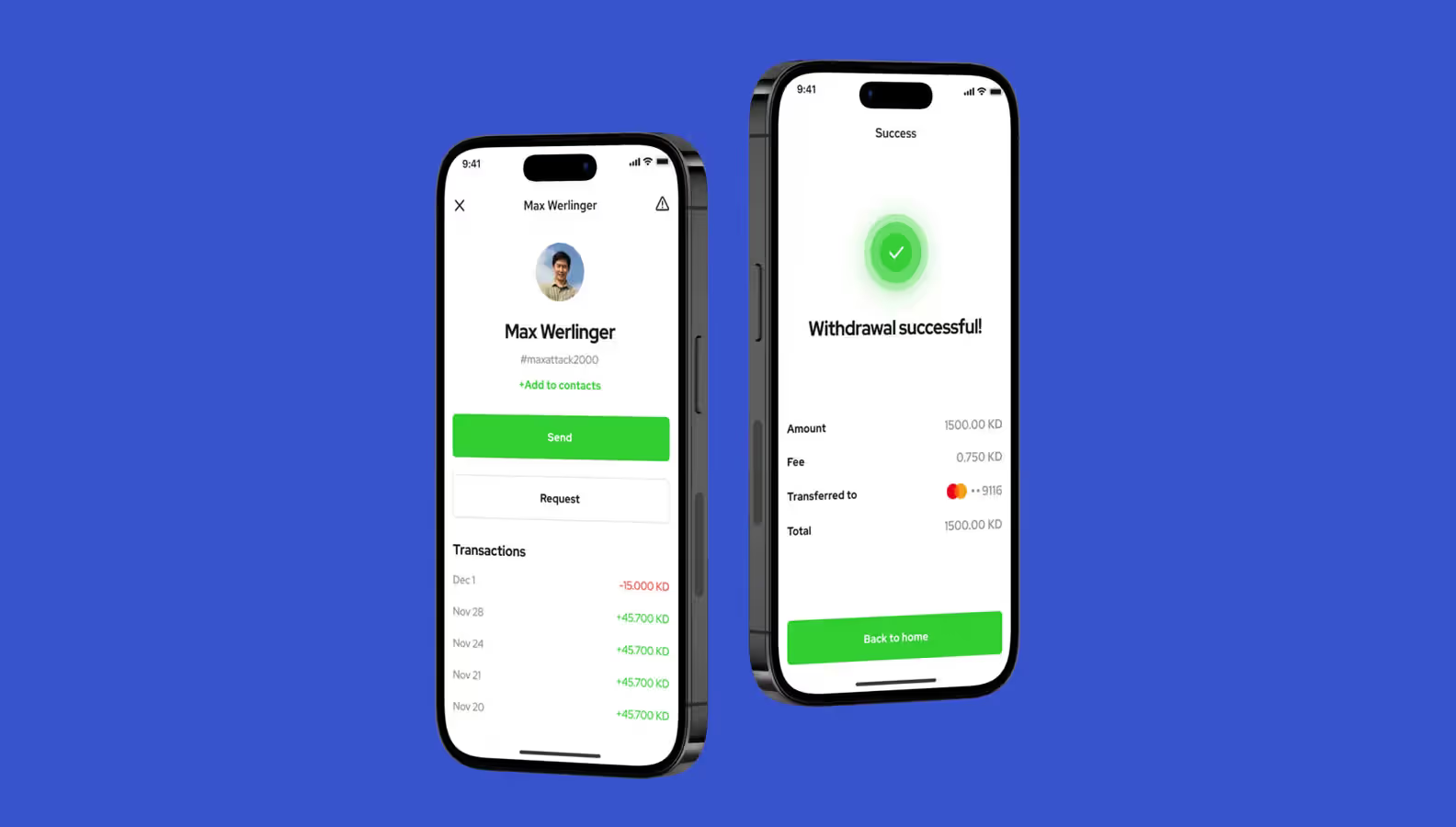
KEM separated a demonstrable payment flow from the restricted bank integration
KEM is relevant here because the delivery model was shaped by a constraint that no portfolio screenshot could solve. The MVP had to work as an investment and banking demonstration, while the production integration belonged to a future local team. Planning the codebase, access transfer, and technical support around that handover kept the constraint from becoming a late surprise.

.svg)

Mobiteam operates as a full-service web development company that combines web design, website delivery, brand, and marketing work. Its public services include custom web design, online stores, search optimization, consulting, maintenance, and visual identity. Shopify and WooCommerce appear in its commerce offering, while its wider technology list covers several content-management and custom-development options.
This profile fits a company whose website is also a customer-acquisition channel. The agency can connect interface design, content presentation, and the technical store or CMS rather than handing those concerns to separate vendors.
The Martely case provides concrete evidence for that model. Mobiteam handled strategy, branding, UX/UI, WordPress development, marketing, and maintenance for an online store. The case page says the business sells in more than 25 countries. That makes Mobiteam easier to assess for a commerce or corporate-site brief than for a complex SaaS backend, where its public evidence is less prominent.
For a buyer, the distinction is between a website-led engagement and a custom web development project with substantial application logic. The public evidence is strongest on the first side.
The open questions concern ownership of user experience research, search engine optimization, analytics, hosting, and maintenance. If the planned web project includes complex account roles or integrations, another storefront example is not enough. The useful proof would be a comparable backend walkthrough.
Mainmatter works as an engineering and digital-product consultancy rather than a conventional website agency. Its public offering covers product strategy, design and implementation, architecture assessment, modernization, engineering mentoring, and reinforcement of client teams.
The company has strong public evidence around Ember.js and broader JavaScript engineering. It also documents work across React, Rust, and product-platform architecture. That range fits organizations with an existing product or engineering team that needs specialist depth, a modernization plan, or help resolving architectural bottlenecks.
One official case describes a functional IT-infrastructure security dashboard MVP delivered in approximately six weeks. Other engagements focus on booking systems, onboarding, technical transformation, and team enablement.
The pattern is consultancy-led product work with close client-team involvement. A founder seeking a compact outsourced MVP team may find the model heavier than needed. An established product organization may value the architecture and mentoring depth.
Mainmatter is easier to evaluate when the buyer already has internal ownership of the digital product and engineering process. Its model can place architecture assessment, project management, mentoring, and implementation inside the same engagement. That structure can make the budget and decision boundary easier to inspect.
That matters in a complex web modernization effort. The goal is not only to ship application software, but also to leave the client team able to operate it. The engagement boundary needs to state which decisions remain internal and which belong to the software development partner.
Dinarys is most clearly positioned as a custom web development company for e-commerce engineering. Its official services cover Shopware, Shopify, Adobe Commerce, BigCommerce, commercetools, and WooCommerce. The work includes new storefronts, platform migration, custom integrations, performance optimization, and ongoing support.
That current evidence differs from a generic custom-software profile. Dinarys fits projects with commerce at their center. The hard part is often moving product data, orders, content, or operational systems without disrupting sales.
The Antik Wein case shows that delivery shape. Dinarys migrated the retailer from Shopware 5 to Shopware 6 and moved its data and content. The team also redesigned the storefront and added custom search, filters, sliders, and plugins.
Its portfolio contains other platform migrations and commerce integrations. The decision is whether the project needs commerce-platform depth or a broader custom-product team.
E-commerce migrations are rarely limited to the storefront. A custom web development scope may also include product catalogs, search, payment providers, customer accounts, warehouse connections, and analytics.
Those dependencies determine whether replatforming can proceed in one release or needs a staged migration. Evaluation therefore covers the target platform, required custom development, data ownership, rollback plan, and support responsibilities after the new store goes live.
Makers’ Den focuses on React and TypeScript product development. Its public services cover full-stack web applications, React Native products, headless CMS websites, and engineering support for client teams. The company emphasizes direct access to senior engineers, which suits buyers who want technical collaboration without several management layers.
The portfolio shows both new builds and work on existing products. In the AtomicHub case, Makers’ Den took an advertising-platform concept from prototype to production using ReactJS, TypeScript, Node.js, Prisma, and PostgreSQL. Other cases cover team extension, property management, developer portals, and ownership of an existing React and Node.js platform.
This evidence fits a product organization with a JavaScript stack. It is especially relevant when front-end complexity or senior team extension is the main constraint. Companies seeking a large multi-stack enterprise consultancy may prefer a different delivery model.
The fit becomes clearer when a project needs scalable web applications or connected mobile products in the same JavaScript ecosystem. React Native gives the mobile app development work a direct connection to the React and Node.js stack used elsewhere.
The senior-engineer model can reduce handoffs, but it also requires clear product ownership on the buyer’s side. A useful proposal assigns responsibility for backlog decisions, quality assurance, release management, and maintenance after the app development phase.
Keyperformance combines web design with digital marketing. Its service pages cover responsive interfaces, UX/UI work, CMS integration, and search optimization. The agency also offers back-end development, page-speed work, maintenance, and support. WordPress and WooCommerce have dedicated offerings.
This mix fits marketing websites, corporate platforms, and online stores where visibility and content operations matter alongside the build. A single agency can handle the site, search work, and continued optimization instead of splitting those responsibilities across several suppliers.
The public English-language material provides service detail and client references. It does not expose a similarly detailed case-study library with the problem, implementation, and measured result.
That is not evidence of weak delivery. It means the discovery stage needs to establish relevance through a private walkthrough, references, or a technical proposal. Complex application briefs also need architecture evidence beyond the CMS-centered public portfolio.
For buyers comparing web development agencies, Keyperformance is more naturally assessed as a web design agency. It can connect user experience, content operations, and search engine optimization. That combination is useful when the target audience reaches the product mainly through search, campaigns, or editorial content.
It is less conclusive for custom web applications with complex roles or data flows. For those briefs, buyers need separate evidence for backend architecture, testing, integrations, and ownership of the finished web solutions.
Sparkout Tech’s software development services cover custom mobile and web products, SaaS platforms, and blockchain. They also include artificial intelligence and enterprise software development. Its public technology material includes React, React Native, cloud delivery, smart contracts, and modernization.
The breadth suits projects where web development connects to a specialized technical layer. A SaaS platform with blockchain components, for example, needs more than a responsive interface. It also needs wallet flows, contract integration, data handling, and infrastructure planning.
Sparkout publishes a case about a developer-community platform for the LayerOneX blockchain ecosystem. Its broader case library covers SaaS, logistics, marketplaces, healthcare, and Web3 products.
The range gives buyers several first-party examples to examine, but it also makes scope definition important. A discovery call needs to identify the exact team and relevant project. The full service catalog is not evidence for every specialization.
Sparkout’s broad catalog makes team selection part of the buying decision. A custom software development project involving blockchain or AI may need engineers who understand the specialized layer as well as the web application around it.
The same applies to mobile app development connected to a SaaS backend. The practical check when assessing the custom software development company is the named team, relevant case evidence, infrastructure ownership, and security-review plan. Experienced web developers still need a delivery model that makes those responsibilities visible.
Chudovo focuses on custom engineering and modernization. Its public stack includes .NET, Java, Node.js, React, Angular, Vue, Python, and cloud technologies. Services cover code and architecture review, refactoring, application migration, microservices, application programming interface work, and team extension.
This model fits an organization with a working system that has become hard to change. The project may need a framework migration, a redesigned interface, database work, or a gradual move away from a monolith. Those engagements depend on understanding existing constraints before replacing technology.
One case describes the modernization of a B2B recruiting platform. Chudovo worked on both the front end and back end, redesigned the interface, created reusable Vue.js components, and refactored code. Other public cases cover healthcare systems, commerce platforms, and legacy .NET applications. The evidence is stronger for modernization and engineering support than for brand-led website work.
Modernization work usually starts with diagnosis rather than replacement. For enterprise web applications, the useful first step is mapping dependencies, unsupported web technologies, and test coverage. It also identifies the parts of the system that can change independently.
Chudovo’s custom web development services fit that staged approach. A proposal should separate urgent stability work from architecture changes and visible features. It should also explain how the development project will remain deployable while old and new components coexist.
Keenethics builds web and mobile products and provides dedicated development teams. Its public stack centers on React, Node.js, TypeScript, Next.js, NestJS, and related JavaScript technologies. The company also offers product support, interface design, and integration work.
The portfolio gives specific evidence across SaaS, real estate, procurement, education, finance, and manufacturing. GetPart is a B2B cloud procurement platform built with Node.js, TypeScript, React.js, and GraphQL. The official case says the initial product was delivered in five months. Other cases show both MVP delivery and long-term product cooperation.
That range fits founders building a JavaScript product and established teams that need additional engineers. The choice between a product team and staff extension needs to be explicit. Responsibility for discovery, backlog decisions, and technical leadership changes between those models.
Keenethics can operate either as a product team or as a dependable development partner that adds engineers to an existing organization. Those models solve different problems.
Full-cycle web development needs discovery, user experience, quality assurance, and delivery ownership. A narrower web app development scope can instead sit inside an existing product process. Team extension depends more heavily on the buyer’s project management and technical leadership. The selected model needs named decision owners, expected overlap, and clear responsibility for releases before development starts.
This distinction is especially relevant to development for startups that have not built an internal engineering function.
eobiont approaches web work through marketing and brand strategy. Its official services cover brand development, website development, marketing strategy, and online campaigns. The agency also identifies HubSpot as a partner for marketing automation and customer-relationship management.
This profile fits a company whose website must connect positioning, content, lead capture, and campaign operations. It is less aligned with a product brief dominated by custom backend logic, complex user roles, or a large application architecture.
The public site lists clients and describes the agency’s service model. Detailed technical case pages are limited in indexed results.
Buyers can assess the visible brand and campaign work, then verify the CMS, integrations, analytics, and support model during discovery. The evidence supports a marketing-led website partner more clearly than a full-cycle custom-software company.
For a marketing-led web project, the main integration questions sit around content, analytics, lead capture, customer relationship management, and usability. That makes eobiont relevant when the website and campaign system must support the same target audience, customer engagement, and customer journey.
The discovery gap is technical depth. The technical review covers the CMS, planned data flow into HubSpot, consent handling, and deployment. It also needs to establish maintenance ownership before the agency is treated as a broader web development partner.
The right company has current evidence for the product being built and a delivery model that fits the buyer’s team. It also makes ownership of communication, security, compliance, and handover clear. A broad service list alone says little.
The profiles above narrow the field, but the final comparison still starts with the constraint that carries the most project risk. For one product, that might be a complex integration. For another, it is a fixed launch window or a regulated data flow. Five signals show whether an agency’s web development services fit that situation:
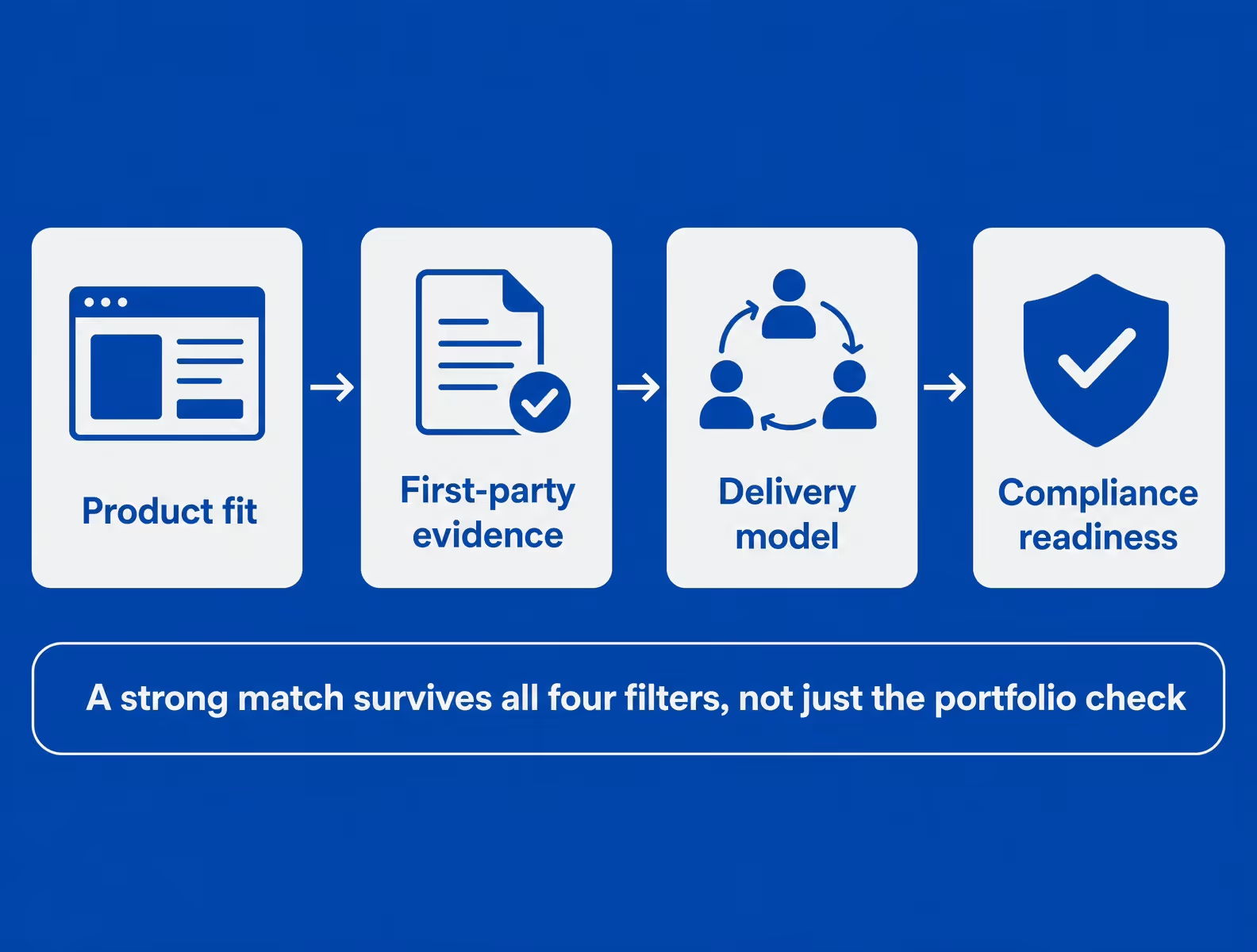
A strong match survives all four filters, not just the portfolio check
Public evidence has limits. Some agencies publish detailed case studies with the stack, problem, and result. Others show only service pages or client logos. That difference does not prove that one team is stronger, but it changes what the discovery call needs to establish. Thin public evidence creates an open question around delivery experience rather than permission to assume it exists.
Handover deserves the same attention as development. A product might move to an internal team after an MVP, or the agency might remain responsible for support. The architecture, documentation, access model, and test process need to match that destination from the start. Otherwise, the transition becomes a separate recovery project.
The main trends are not isolated features. AI, cloud infrastructure, privacy, and operating efficiency affect how a product handles data and connects to other systems. They also shape what a buyer needs to verify before selecting a development partner.
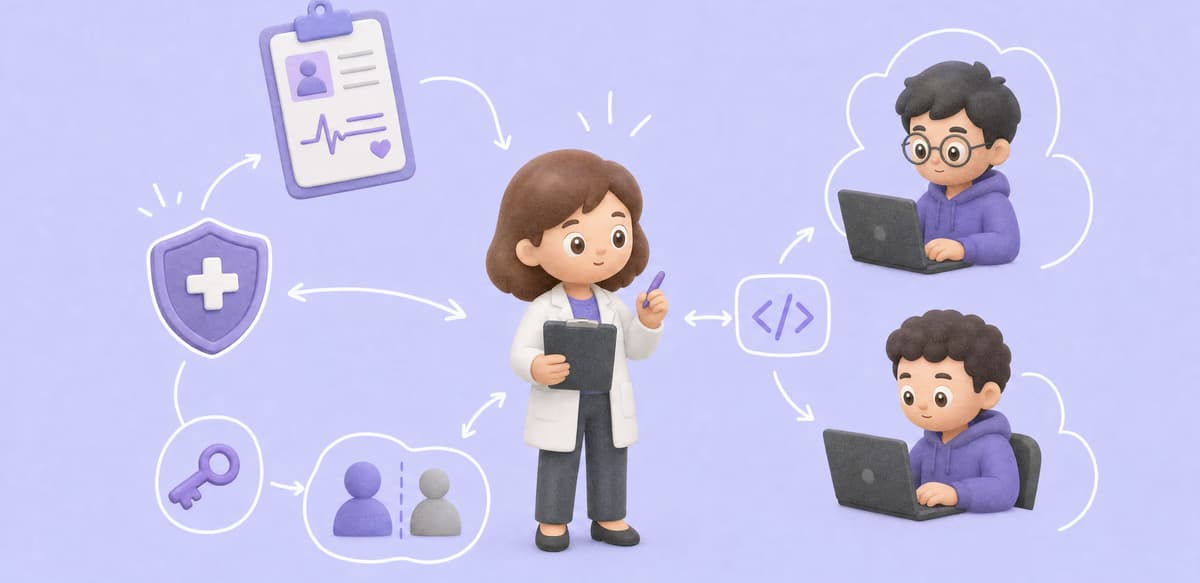
We built Medico, a healthcare product with a web application for doctors and a mobile application for patients.
Doctors create treatment surveys, review test results, and receive alerts when results move outside expected ranges. Patients complete surveys and submit information through their own interface.
The product needed to keep these role-specific workflows separate while maintaining a connected flow of treatment data between them.
Nest.js and React Native support the two product surfaces. The resulting architecture gives each role a focused workflow while keeping updates available to the doctor.
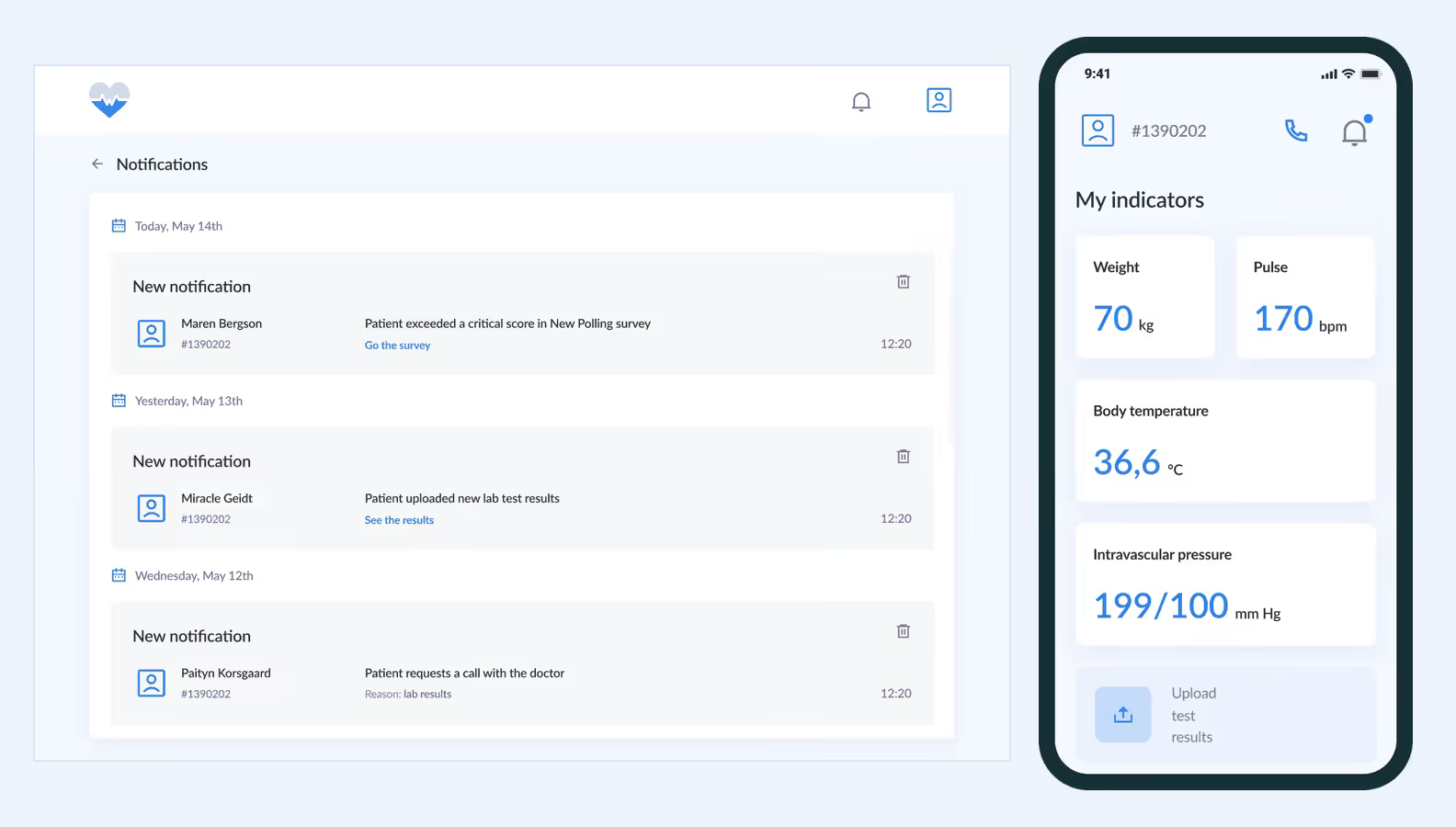
Medico connects role-specific web and mobile workflows around one treatment process
The Medico case shows why trend labels are not enough. Privacy, integrations, and cloud services become useful only when they support a defined workflow and ownership model. During discovery, the stronger partner can explain where data enters the product, which role can access it, and how failures or handover will be managed.
Software was the fastest-growing segment in Bitkom’s 2025 forecast for Germany’s information-technology market. That direction matches the work represented in the company profiles above. Buyers are comparing partners for applications, modernization, data flows, and continued product development rather than for a single static launch. The strongest evidence explains the mechanism, trade-off, and long-term ownership behind the proposed architecture.
The ten companies in this ranking cover different types of web work. Some focus on product engineering or modernization, while others are stronger in commerce, corporate websites, or brand-led experiences. The useful choice is therefore not the company with the longest service list. It is the team whose evidence and delivery model match the product’s hardest constraint.
A focused discovery process starts with the expected user roles, integrations, compliance requirements, launch conditions, and ownership after release. A clear brief for software development gives each candidate the same context. Their responses can then be compared through the project evidence, technical depth, communication, contracts, and handover questions used throughout this guide.
➡️ Tell us what you are building, and we will help define the scope, team, and first delivery stage.
The companies compared in this ranking are Purrweb, Mobiteam, Mainmatter, Dinarys, Makers’ Den, Keyperformance, Sparkout Tech, Chudovo, Keenethics, and eobiont. They cover different project types, including SaaS products, commerce platforms, modernization, corporate websites, and brand-led digital experiences. The relevant choice depends on the product and delivery model rather than the list position alone.
Planning estimates from the article brief place mid-size agency rates around €80–150 per hour and enterprise consulting around €120–200 per hour. Boutique, offshore, and nearshore models may fall around €50–80 per hour. These are not verified market benchmarks. The final quote depends on scope, seniority mix, product risk, team size, and whether the engagement uses fixed-price or time-and-material billing.
Start with the constraint that creates the most risk, such as an integration, regulated data flow, modernization requirement, or fixed launch window. Compare candidates through relevant project evidence, technical depth, delivery model, communication, compliance readiness, and handover terms. A discovery call should clarify who owns decisions, access, testing, documentation, and post-launch maintenance.
Web development companies may deliver corporate websites, online stores, custom applications, SaaS products, and internal tools. Related work includes UX/UI design, API integrations, data migration, cloud setup, and legacy modernization. It may also cover quality assurance, monitoring, security updates, and continued development. The mix varies, so a capability list still needs support from relevant project evidence.
Yes. Bitkom reported approximately 109,000 unfilled IT-specialist positions in Germany in 2025. The category includes more than web developers, so it should not be read as a count of web-development vacancies alone. The broader shortage increases demand for internal hiring, outsourcing, team extension, and nearshore delivery. These models help when companies cannot fill every required role directly.