Explore
Need help with your project?
This field is required
Incorrect phone number
Incorrect Email
This field is required
Please fill in all fields
Next
Next
Your role in the project
Services
Budget
Please select one option in each category
Submit
Submit
several colorful figures
Request sent
Our manager will contact you shortly.
Oops! Something went wrong while submitting the form.

Smart Contract Development Services for Web3, DeFi & NFT

The cheapest smart contract is the one you don't have to rewrite. Rushed code ships fast, then breaks under real load or locks you out of your own protocol when it's time to upgrade. We design for what comes after launch: audited contracts, gas kept low, and upgrade paths built in from day one, so growth never means starting over.

From $5,000Security audit in every buildSolidity, Rust, EVM

What you get:

Smart contract audit in every build. Internal and external review before anything touches mainnet.
Gas-optimized contracts. Lower transaction costs for every user, on every call.
Full source code and verified contracts. On-chain transparency and zero vendor lock-in.
Upgradeability patterns (UUPS / proxy). Fix and extend safely after deployment.
From $5,000
Security audit in every build
Solidity, Rust, EVM

Smart Contract Development Services for Web3, DeFi & NFT

The cheapest smart contract is the one you don't have to rewrite. Rushed code ships fast, then breaks under real load or locks you out of your own protocol when it's time to upgrade. We design for what comes after launch: audited contracts, gas kept low, and upgrade paths built in from day one, so growth never means starting over.
What you get:
Smart contract audit in every build. Internal and external review before anything touches mainnet.
Gas-optimized contracts. Lower transaction costs for every user, on every call.
Full source code and verified contracts. On-chain transparency and zero vendor lock-in.
Upgradeability patterns (UUPS / proxy). Fix and extend safely after deployment.

Our expertise in numbers

550+
projects delivered
70%
of clients return for a second project
210+
specialists on the team
10+
years in the market — not a single unfinished project
⭐⭐⭐⭐⭐ 4.9 on Clutch (44 reviews) |
⭐⭐⭐⭐⭐ 5.0 on GoodFirms (19 reviews)
⭐⭐⭐⭐⭐ 4.9 on Clutch (44 reviews) |
⭐⭐⭐⭐⭐ 5.0 on GoodFirms (19 reviews)
⭐⭐⭐⭐⭐ 4.9 on Clutch (44 reviews) |
⭐⭐⭐⭐⭐ 5.0 on GoodFirms (19 reviews)

Who we help

We build smart contracts for teams at every stage of Web3, from a founder's first token to an enterprise blockchain pilot.

Web3 founders

For those launching their first token, NFT collection, or DeFi product and who can't afford a costly mistake in immutable code.
Working with us, you:
Go from idea to audited mainnet contracts in 2 to 4 weeks for a standard token launch
Get custom smart contract development on Ethereum, Solana, or Polygon, matched to your business needs
Launch with a security audit included, not billed as a separate line item
Keep full source code and verified contracts, so there's no lock-in to us
Get a clear estimate in 24 hours, with pricing that starts at $5,000

Enterprise CTOs & product leads

For those adding blockchain to an existing product: tokenization, supply chain provenance, or a fintech pilot that has to meet real compliance bars.
Working with us, you:
Add smart contract capability without hiring a full in-house blockchain team
Get architecture that fits your stack, with the right upgradeability pattern chosen up front
Ship on a realistic timeline, with weekly demos and no black boxes
Work with a smart contract development company that signs an NDA before details
Get internal plus external audit, so security holds up to your stakeholders

Dev leads hiring a contractor

For those with a team already in place who need smart contract specialists to extend capacity, audit existing code, or own the on-chain layer.
Working with us, you:
Hire smart contract developers fluent in Solidity, Rust, and EVM tooling
Hand off the on-chain layer while your team focuses on product
Get an independent audit of contracts a previous team left behind
Receive clean, documented, verified code your engineers can maintain
Scale the engagement up or down as your project requirements change

AND EVERYONE ELSE

If your scenario isn't listed above, that doesn't mean we can't help.
Fill a form and you'll get:
Smart contract scoping in 3 days — architecture, contract structure, and estimate.
Analysis of your use case and the best-fit blockchain for it.
Integration recommendations for your existing dApp, wallets, or backend.
Security and audit-readiness review of your requirements.
Signed NDA before the first call.

Smart contract scenarios we deliver

From a single token to a full DeFi protocol, we cover the cases where on-chain code has to be right the first time.

Launching a token but a flawed contract could sink it

A token contract is the foundation everything else stands on. Get the supply chain logic, access control, or mint function wrong and you can't quietly patch it later. We write and audit ERC-20, ERC-721, and ERC-1155 contracts so your launch holds up under real money and real scrutiny.
Show details
When this is relevant:
You're launching a utility or governance token and need a clean ERC-20
Your NFT collection requires ERC-721 or ERC-1155 with minting logic
Vesting, cliffs, or multi-sig control are part of your tokenomics
You need verified contracts so holders can trust what they're buying
Our approach:
Capture your tokenomics and access rules in a short technical spec
Build with OpenZeppelin standards and cover logic with unit tests
Run internal plus external security audit as a non-optional step
Deploy to testnet, then mainnet, with verification and monitoring
What you get:
Audited token contracts ready for mainnet, broken on purpose before launch
Gas-optimized mint and transfer logic that keeps user costs low
Verified, publicly readable contracts for on-chain transparency
Source code and full ownership, with zero vendor lock-in

NFT drop needs contracts that survive a mint rush

NFT projects fail in public. When thousands of wallets hit your contract in the same minute, weak code means failed mints, runaway gas, or an open door for bots. We build NFT smart contracts and marketplace logic designed for that exact moment.
Show details
When this is relevant:
You're launching an NFT collection with a public or allowlist mint
You need a marketplace with listing, bidding, and royalty enforcement
Creator royalties have to be enforced on-chain, not by trust
Your drop expects high concurrency and bot pressure at launch
Our approach:
Model the mint mechanics and edge cases before writing code
Implement ERC-721 or ERC-1155 with batching and access control
Stress-test mint scenarios and audit for reentrancy and overflows
Deploy, verify, and monitor through the launch window
What you get:
NFT smart contracts that handle high-concurrency minting cleanly
On-chain royalty logic so creators get paid on every resale
Gas-optimized batch minting to cut costs during the drop
Marketplace contracts for listing, escrow, and settlement

You're building DeFi, where one exploit drains the pool

DeFi is where smart contract risk is highest and most expensive. Lending, AMM, and staking logic moves real value every block, and attackers probe it constantly. We build DeFi smart contracts with security treated as the core requirement, not a final checkbox.
Show details
When this is relevant:
You're building a lending platform, DEX, or AMM
Staking or yield-farming logic has to handle funds safely at scale
Your protocol needs oracle integration for reliable pricing
You want a security audit before a single dollar of TVL goes in
Our approach:
Translate your protocol mechanics into a precise technical spec
Build core logic with extensive unit and scenario testing
Run security audit with tools like Slither and MythX plus manual review
Deploy in stages, testnet first, with post-launch monitoring
What you get:
DeFi contracts built around audited, battle-tested patterns
Oracle integration for tamper-resistant price feeds
Gas-efficient protocol logic that scales with usage
Internal and external audit before any value enters the system

Contract is already live and you need an audit or a safe upgrade

Plenty of teams come to us after launch, not before. Maybe an audit is overdue, maybe you need to ship new features without redeploying from scratch. Because contracts are immutable, both jobs demand care, and the right upgradeability pattern decides how much freedom you keep.
Show details
When this is relevant:
Your contract is live but was never independently audited
You need to add features without breaking existing state
You're choosing between UUPS, Transparent proxy, or Diamond
A prior team left code you no longer fully trust
Our approach:
Review the deployed code and map its risks and dependencies
Recommend an upgrade pattern that fits your control needs
Implement and test the upgrade against the live state
Audit the changes, then deploy and verify on mainnet
What you get:
An independent security audit of your existing contracts
A clear upgradeability path with the trade-offs explained
Safe migration that preserves state and user balances
Documentation so your team understands what changed and why

Smart contract development pricing

Real ranges, not "request a quote." Final cost depends on contract complexity, audit scope, and your target blockchain. A security audit is included in every tier.

Simple project

Price: from $5,000
Timeline: 2 to 3 weeks
1 core contract | Standard logic
What's included: ERC-20 token, access control, unit tests, internal plus external audit, mainnet deployment and verification
Examples: utility token, governance token, basic vesting

Standard project ⭐

Price: $10,000 to $40,000
Timeline: 4 to 8 weeks
Multiple contracts | Custom logic
What's included: ERC-721 or ERC-1155, minting and royalty logic, marketplace listing or DAO governance, gas optimization, full audit
Examples: NFT collection, NFT marketplace, DAO governance suite

Complex project

Price: From $30,000
Timeline: 2 to 4 months
Protocol-grade | High value at risk
What's included: lending, AMM, or staking logic, oracle integration, upgradeability patterns, multi-round security audit, staged deployment and monitoring
Examples: DeFi lending platform, DEX, yield protocol
Exact cost depends on:
number and complexity of contracts
audit depth and external review
target blockchain and gas model
oracle and third-party integrations
For a deeper breakdown of budgets across a full Web3 build, see our Web3 project cost breakdown.
Get the exact cost and timeline for your smart contract development project
Free system scoping in 3 days: architecture, estimate, and roadmap. NDA signed before we discuss any details.
This field is required
Incorrect number
Incorrect Email
This field is required
Please fill in all fields
Get your free audit in 3 days
Get the exact cost and timeline for your smart contract development project
Free system scoping in 3 days: architecture, estimate, and roadmap. NDA signed before we discuss any details.
Your role in the project
Service of interest
Budget
Please select one option in each category
Request sent
Our manager will contact you shortly.
Oops! Something went wrong while submitting the form.

How we build your smart contracts

A five-step process with a security audit built in as a required step, not an optional extra. After every step you get a concrete deliverable and know exactly where the project stands.
1

Requirements & business logic

We capture what your contract must do and turn fuzzy ideas into precise, testable rules.
Duration: 3 days
What happens: We map your tokenomics, access rules, and edge cases, then write a short technical specification. This is where we catch logic gaps before they become immutable code.
What you get:
A technical spec. The agreed source of truth for every contract function.
A fixed estimate and timeline. You plan budget and roadmap with no surprises.

2

Smart contract architecture

We design the contract structure and decide how it will be upgraded, if at all.
Duration: 1 week
What happens: We define the contracts, their interactions, and the upgradeability pattern up front. We pick UUPS, Transparent proxy, or Diamond based on how much control and flexibility you need after launch.
What you get:
An architecture plan. A clear blueprint your team can review before code is written.
An upgrade strategy. You know exactly how the contract can change later, and at what cost.
3

Development & testing

We write the contracts in Solidity or Rust and cover every function with tests.
Duration: 2 weeks
What happens: Our engineers build the logic using OpenZeppelin standards and proven patterns, then write unit and scenario tests. We share progress as we go, so nothing happens in a black box.
What you get:
Working, tested contracts. Code that behaves correctly under normal and edge-case conditions.
A full test suite. Evidence that each function does what the spec says.
4

Security audit

We break the contracts on purpose before anyone else can.
Duration: 1 week
What happens: We run an internal review plus tools like Slither and MythX, then an independent external audit. Vulnerabilities get fixed and re-checked. This step is mandatory on every project, because a live contract cannot be quietly patched.
What you get:
An audit report. A documented list of findings and the fixes we applied.
Hardened contracts. Code reviewed by more than one set of eyes before it holds value.
5

Deployment & monitoring

We ship to mainnet and keep watch after launch.
Duration: 3 days
What happens: We deploy to a testnet first, validate behavior with real conditions, then deploy and verify on mainnet. We set up monitoring so issues surface early.
What you get:
Verified contracts on mainnet. Publicly readable code your users can trust.
Post-launch monitoring. Early warning if anything behaves unexpectedly.

Our reviews

Cover with service screenshots
William Angel
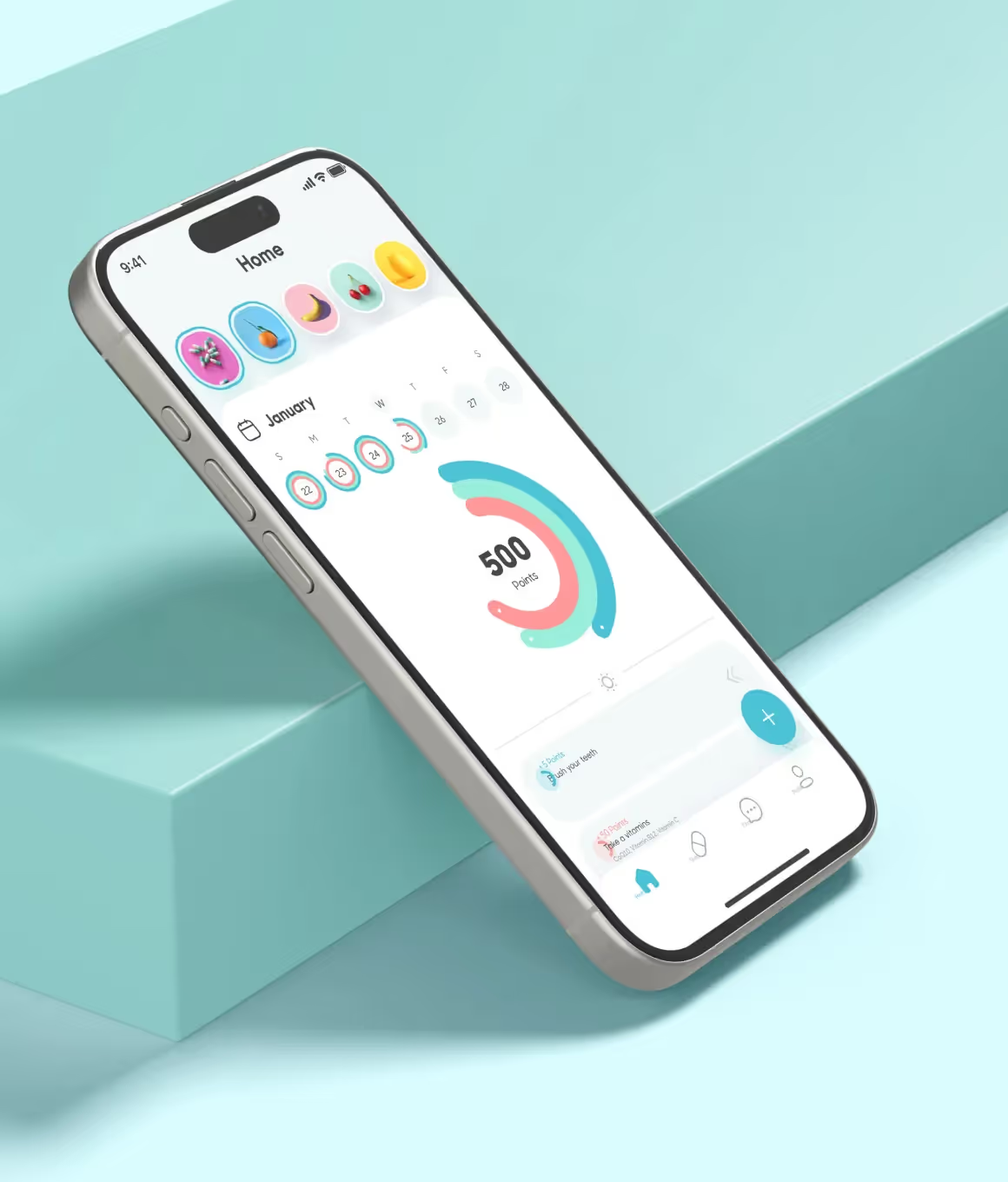
Personalised — wellness app design

I'm CTO of Personalised Co. — an app for tracking supplement and vitamin intake. Purrweb designed the UI/UX with a Shopify integration for automatic reorders. They built an interface for a healthy lifestyle with personalized tracking.

Personalised — wellness app design
HealthTech, Design, Mobile App, Shopify, Health

Personalised Co. — an app for people who regularly take supplements and vitamins: intake tracking and automatic reorders through a Shopify integration. Purrweb designed the UI/UX with a supplement marketplace and a personal intake schedule.

View full case
Cover with service screenshots
Seth Abel-Sadeq
KEM — Payment app

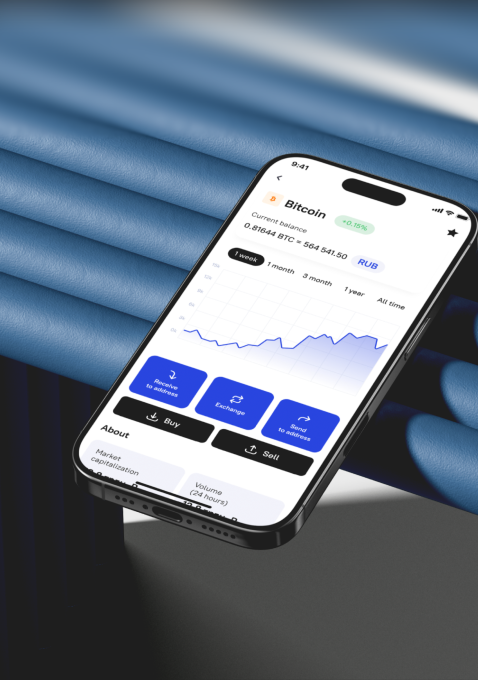
I'm CEO of KEM — a P2P mobile payments service for the Kuwaiti market, where online banking isn't accessible to everyone. Our banking partners needed an MVP for demos. Purrweb built the design and MVP, working around restricted access to the banking API. At handoff, they passed the project to our in-house team with full documentation and a month of technical support.

KEM — Payment app
Fintech, Design+Development, Mobile App, Cross-platform, MENA

KEM — a P2P app for instant money transfers in the Kuwaiti market, with bank card linking, requesting funds from a contact list, and transaction history. Key challenge: Kuwaiti banks don't grant external developers API access — Purrweb built the backend on mock data that fully mirrored the final functionality for the demo.

View full case
Cover with service screenshots
Matt Brzowski
Founder
Buzz

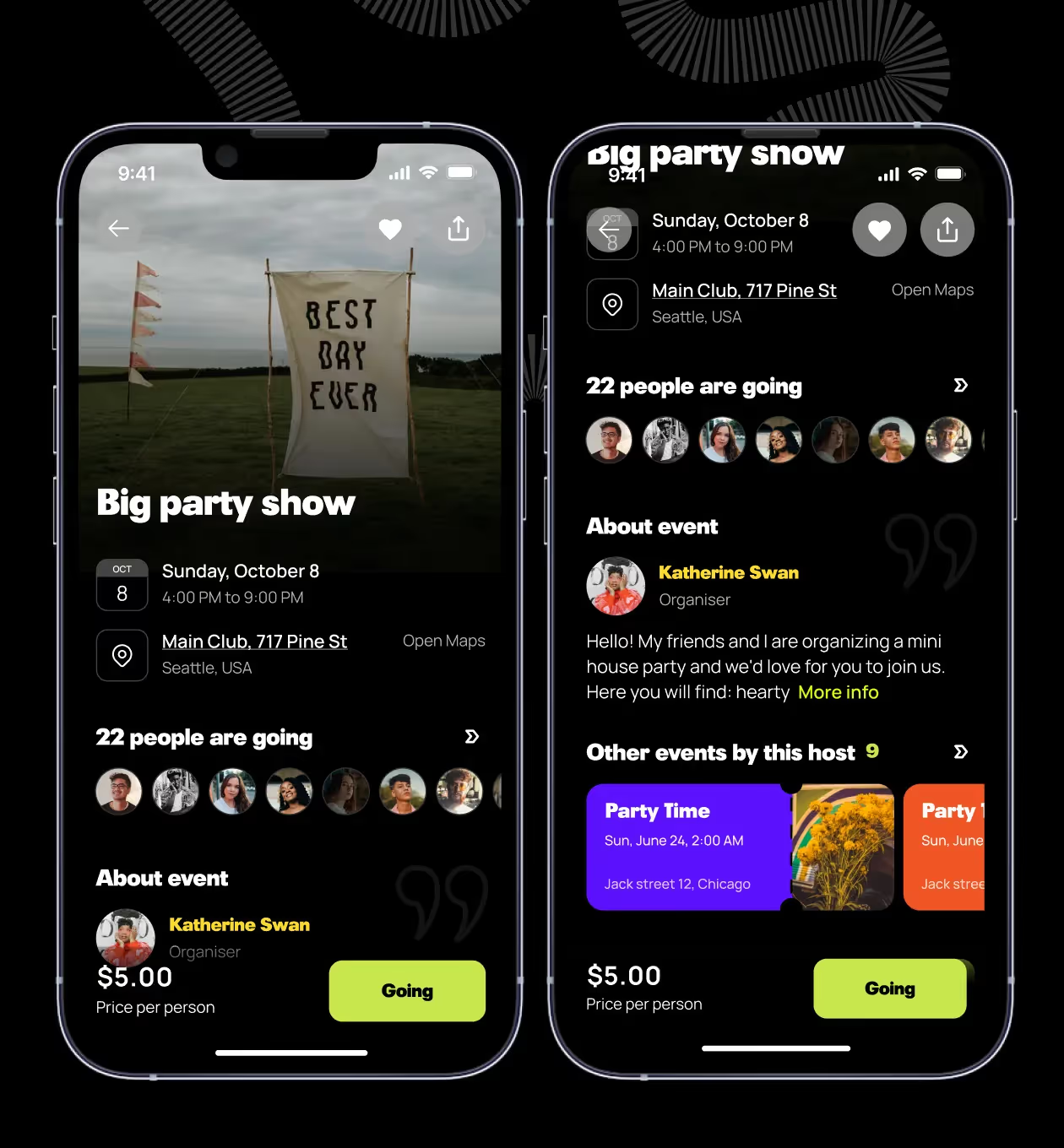
I'm building Buzz — an app for finding and organizing events in small American towns. I came to Purrweb with almost nothing, just an idea. Purrweb helped with marketing, branding, and the logo, and stuck with us through the whole build to MVP, even as our requirements shifted a lot early on. I valued the flexibility and the quality of the design.

Buzz
Lifestyle, Design+Development, Mobile App, Social App, Geolocation

Buzz — a geosocial app for people in small American towns: a feed of open local events by geolocation, private events with friend invites, group chats, and a Ticketmaster integration. Purrweb built the brand identity from scratch, optimized the architecture, reused existing modules, and shipped the MVP in 12 months.

View full case
William Angel
Personalised — wellness app design

I'm CTO of Personalised Co. — an app for tracking supplement and vitamin intake. Purrweb designed the UI/UX with a Shopify integration for automatic reorders. They built an interface for a healthy lifestyle with personalized tracking.

Personalised — wellness app design
HealthTech, Design, Mobile App, Shopify, Health

Personalised Co. — an app for people who regularly take supplements and vitamins: intake tracking and automatic reorders through a Shopify integration. Purrweb designed the UI/UX with a supplement marketplace and a personal intake schedule.

View full case
Seth Abel-Sadeq
KEM — Payment app

I'm CEO of KEM — a P2P mobile payments service for the Kuwaiti market, where online banking isn't accessible to everyone. Our banking partners needed an MVP for demos. Purrweb built the design and MVP, working around restricted access to the banking API. At handoff, they passed the project to our in-house team with full documentation and a month of technical support.

KEM — Payment app
Fintech, Design+Development, Mobile App, Cross-platform, MENA

KEM — a P2P app for instant money transfers in the Kuwaiti market, with bank card linking, requesting funds from a contact list, and transaction history. Key challenge: Kuwaiti banks don't grant external developers API access — Purrweb built the backend on mock data that fully mirrored the final functionality for the demo.

View full case
Matt Brzowski
Founder
Buzz

I'm building Buzz — an app for finding and organizing events in small American towns. I came to Purrweb with almost nothing, just an idea. Purrweb helped with marketing, branding, and the logo, and stuck with us through the whole build to MVP, even as our requirements shifted a lot early on. I valued the flexibility and the quality of the design.

Buzz
Lifestyle, Design+Development, Mobile App, Social App, Geolocation

Buzz — a geosocial app for people in small American towns: a feed of open local events by geolocation, private events with friend invites, group chats, and a Ticketmaster integration. Purrweb built the brand identity from scratch, optimized the architecture, reused existing modules, and shipped the MVP in 12 months.

View full case
Do you want to order a development?
We will discuss your project in 30 minutes: we will assess the complexity, suggest solutions, and name approximate deadlines and budgets. We sign the NDA before the call. No strings attached.
This field is required
Incorrect number
Incorrect Email
This field is required
Please fill in all fields
Let’s go!
Let’s go!
Do you want to order a development?
We will discuss your project in 30 minutes: we will assess the complexity, suggest solutions, and name approximate deadlines and budgets. We sign the NDA before the call. No strings attached.
Your role in the project
Service of interest
Budget
Please select one option in each category
Request sent
Our manager will contact you shortly.
Oops! Something went wrong while submitting the form.

FAQ

How much does smart contract development cost?

A simple ERC-20 token runs $5,000 to $10,000. An NFT collection with minting and marketplace listing is typically $10,000 to $25,000, and a DeFi protocol with lending, AMM, or staking starts around $30,000 and climbs from there. A DAO governance suite usually lands between $15,000 and $40,000.

The final number depends on contract complexity, how deep the security audit needs to go, and which blockchain technology you target. Tell us what you're building and we'll send a free estimate within 24 hours.

How long does it take to develop smart contract solutions?

A simple ERC-20 token takes about 2 to 3 weeks. An NFT collection runs 4 to 6 weeks, and a full DeFi protocol typically takes 2 to 4 months depending on its mechanics and integrations.

The security audit adds roughly 1 to 3 weeks, and we treat that time as non-negotiable. Skipping it to ship faster is exactly how live contracts get exploited, so we build the audit into the schedule from day one rather than bolting it on at the end.

Which blockchain should I use for smart contract development?

It comes down to throughput, gas cost, ecosystem, and who your users are. Ethereum has the deepest ecosystem and tooling but higher gas, which suits high-value DeFi and serious protocols. Polygon gives you EVM compatibility with low fees, a strong fit for NFTs and consumer apps. Solana offers very high throughput and low cost using Rust, good for high-frequency, transaction-heavy products.

We help you weigh these trade-offs against your project requirements during the spec stage, so the choice fits your business needs rather than the current hype.

Why is a smart contract security audit mandatory?

Once a contract is deployed, it's immutable. You can't quietly push a fix the way you would with a web app, so a single overlooked line can let an attacker drain everything the contract holds. The cost of an exploit almost always dwarfs the cost of the audit.

That's why we run a security audit on every build, internal review plus an independent external audit, before anything touches mainnet. We treat it as a required step in the process, not an optional add-on you can decline.

Can smart contracts be upgraded after deployment?

Yes, if you plan for it before launch. Because the deployed code itself is immutable, upgrades rely on proxy patterns. A UUPS proxy is gas-efficient and keeps upgrade logic in the contract. A Transparent proxy separates admin and user calls clearly. The Diamond standard suits large systems that need modular, near-unlimited logic.

Each pattern trades simplicity against flexibility and adds its own attack surface. We pick the right one during the architecture stage and explain the trade-offs, so you keep the control you need without inviting new risk.

What is gas optimization in smart contracts?

Gas is the fee users pay for every on-chain operation, so inefficient code means a worse, pricier experience. Gas optimization is the work of writing contracts that do the same job for less.

Common techniques include struct packing to use storage slots efficiently, batching operations to cut repeated calls, using custom errors instead of revert strings, and marking values immutable where possible. Applied together, these can reduce gas costs by roughly 10 to 40 percent, which adds up fast for any contract with real transaction volume.

Are smart contracts suitable for startups and small businesses?

Yes, with the right architecture. You don't need an enterprise budget to launch something solid on-chain. The key is scoping tightly and building only what your first version actually needs.

Good starting points for startups include a token launch, an NFT collection, or a basic DeFi MVP to validate demand. A standard ERC-20 token starts at $5,000, which keeps the entry point realistic. We help you prioritize so your budget goes into audited, production-ready code rather than features you don't need yet.

Do you sign an NDA for my custom smart contract development project?

Yes. We sign an NDA before we get into the details of your project. It's standard practice for us, and it applies whether you're an early-stage founder protecting an idea or an enterprise team with compliance requirements. Your concept, code, and business plans stay confidential.

What are the benefits of hiring blockchain smart contract development services?

You get expertise across multiple blockchains without building an in-house team from scratch. That means engineers who already know the standards, the tooling, and the failure modes, so you avoid expensive early mistakes.

With us specifically, a security audit is included in every build, not sold separately. You get faster time-to-market, verified contracts you fully own, and the option of ongoing support to monitor, audit, and upgrade your contracts after they're live and holding value.

What programming languages do you use for smart contract development?

Mostly Solidity and Rust. Solidity is the standard for Ethereum and EVM-compatible chains like Polygon, BNB Chain, Arbitrum, and Optimism, so it covers the majority of projects. Rust is what we use for Solana and Polkadot, where performance and throughput matter most.

We also work with Vyper as an alternative for Ethereum when a project benefits from its simpler, more auditable syntax. The choice follows your target blockchain and security needs, which we settle during the spec and architecture stages.