Explore

Need help with your project?

Oops! Something went wrong while submitting the form.
When tools report different stock figures, the discrepancy becomes an operating problem. The team cannot tell what is safe to promise or replenish. The question is whether configuration can close the gap or stock-data ownership has to change.
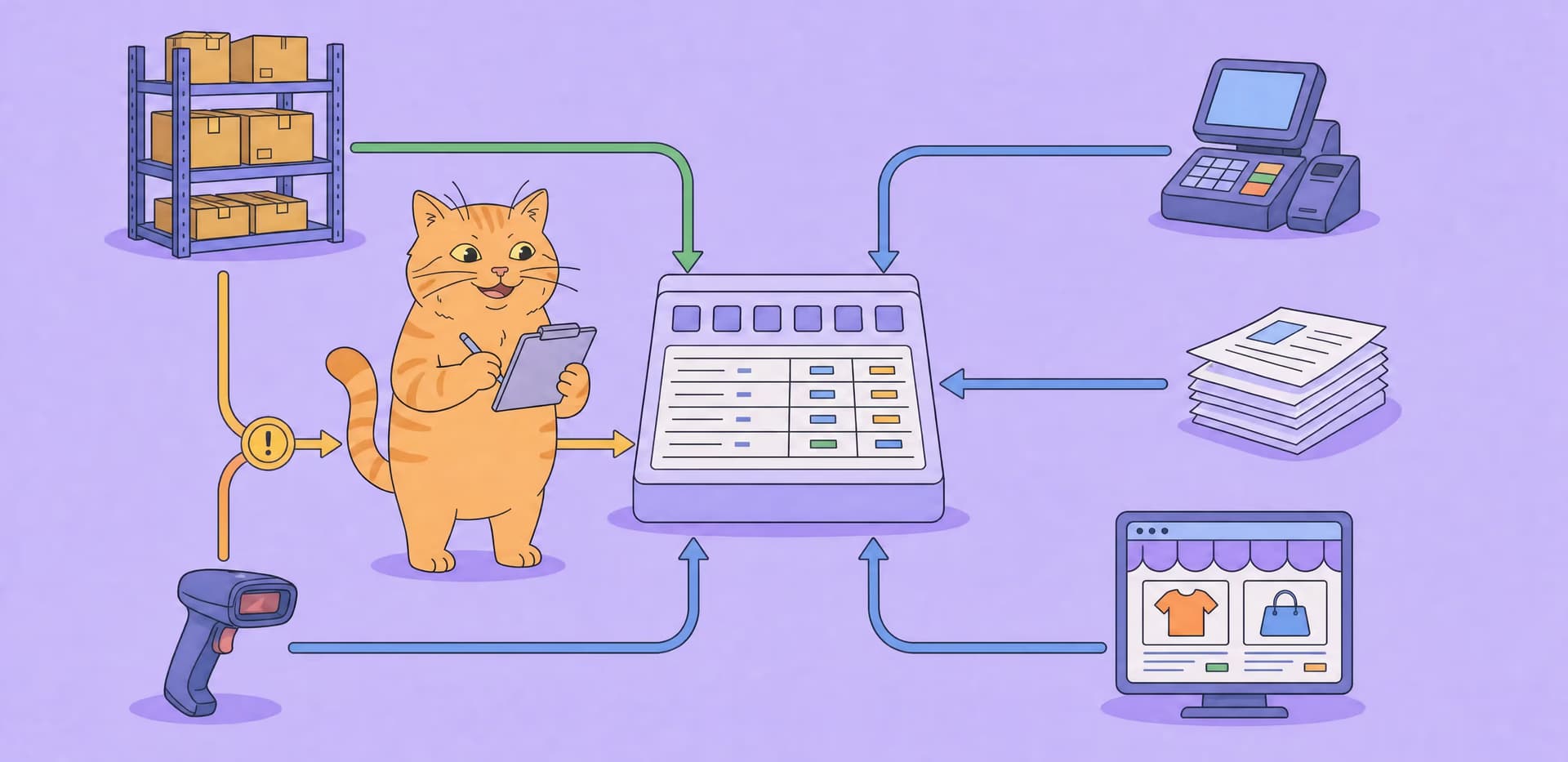
When tools report different stock figures, the discrepancy becomes an operating problem. The team cannot tell what is safe to promise or replenish. The question is whether configuration can close the gap or stock-data ownership has to change.
In this guide, we'll talk about how to frame that decision before features or vendors enter the conversation. We'll look at how a team can establish a dependable operating record before wider rollout.
Stock management solutions are lower risk when software holds the record, supports handoffs, and explains adjustments. An inventory management solution fits when conflicts reflect rules the product cannot represent.
The decision is whether software solutions meet business needs or the business process lacks a dependable record. An inventory management system gives supply chain management and inventory control a shared way to record stock-changing events. It assigns responsibility and traces exceptions.
Re-entered movements, overridden reservations, and reconciled stock figures provide the evidence.
| Decision | Configure an existing product when | Consider a custom build when | Evidence to collect |
| Workflow | Receiving, reservation, and adjustment steps match daily work | Staff use side processes to manage inventory movements | A record of handoffs that leave the product |
| Data | One system owns each stock fact | Several systems can change the same quantity without a clear owner | A discrepancy traced to its source |
| Change | New rules fit available settings and permissions | Policy changes require a spreadsheet or manual reconciliation | Recent rule changes and their workarounds |
| Economics | Configuration effort stays contained | Maintaining workarounds consumes recurring operational effort | Configuration work versus ongoing manual handling |
Custom inventory management software is not the automatic answer. Clear ownership and manageable adaptation favor configuration. A company may assess custom software development services.
Features arrive too early when availability and reservations move without a clear owner. A warehouse management system, enterprise resource planning platform, point of sale, and ecommerce store can report conflicting stock levels. Systems that track inventory need an owner and dispute route.
Ownership belongs to the fact, not the screen. A warehouse may govern available-to-sell quantity, or stock safe to promise, after a receipt or count. Sales and ecommerce promise stock from inventory levels. Finance uses adjustments for accounting, while IT maintains the route when records disagree.
The inventory operations matrix separates consumers, authoritative owners, and exception owners.
| Stock fact | Template owner | Consumers | Exception owner |
| SKU (item code) | Operations | Warehouse, sales/ecommerce, finance | Operations with IT |
| Available-to-sell quantity | Warehouse | Sales/ecommerce | Warehouse lead with IT |
| Reservation (stock held for an order) | Sales/ecommerce | Warehouse, operations | Sales lead with IT |
| Adjustment (count correction) | Warehouse | Finance, operations | Warehouse and finance |
| Purchase order (purchasing record) | Operations | Warehouse, finance | Operations with IT |
Conflicts need a destination, not a silent overwrite. A return or canceled order that changes stock or reservation state for a SKU leaves an audit trail and reaches the named exception owner. The issue is resolved or investigated before it spreads.
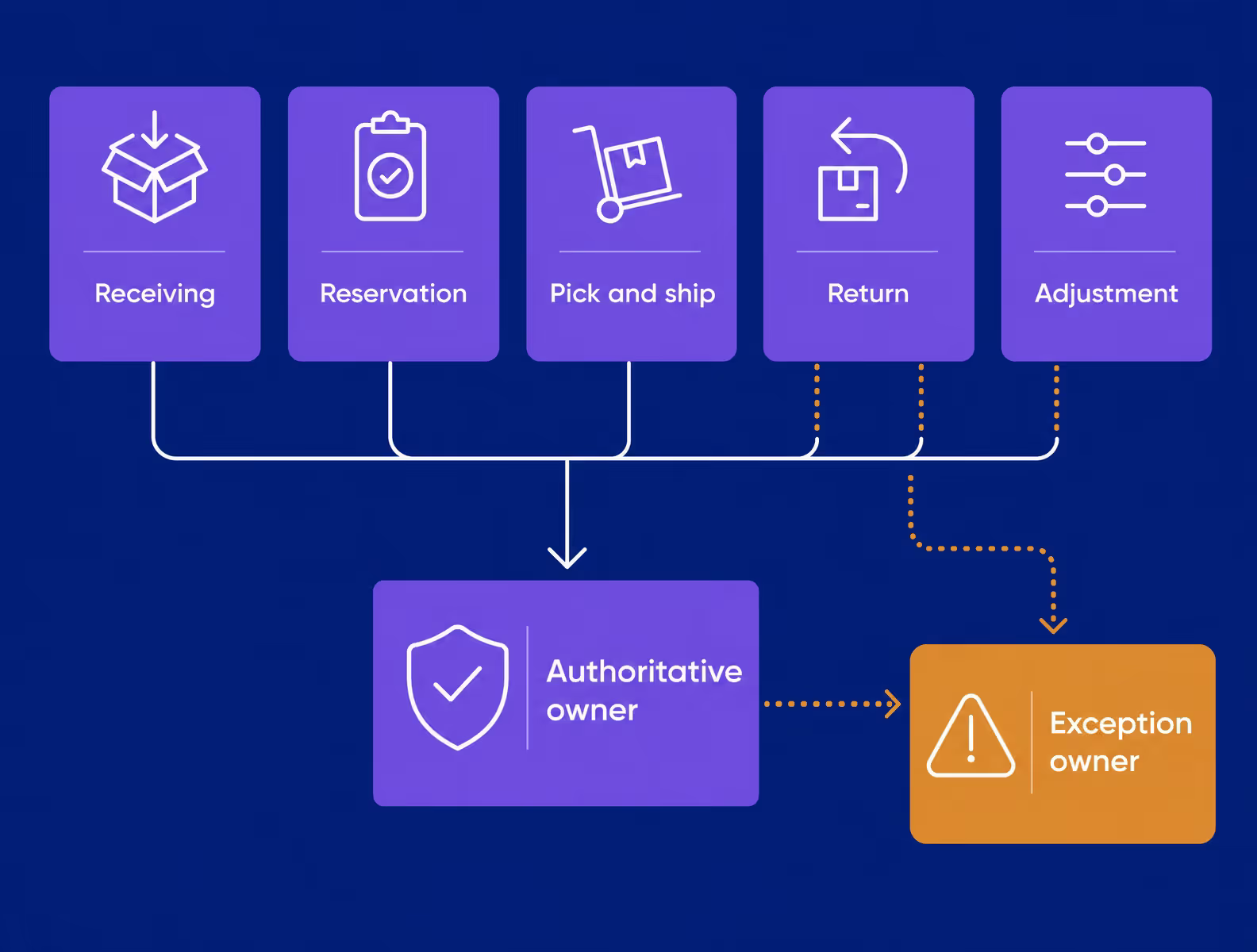
A SKU becomes dependable when every event has an owner and a resolution path
Feature pressure arrives before receipts, transfers, and adjustments produce records people trust. Effective inventory control favors a focused first release over a platform project. Optimization, artificial intelligence, and machine learning follow only when dependable records make them testable.
Product and location records, stock movements, permissions, and an audit trail explain why a balance changed. A warehouse management system may feed or consume these records, but it does not replace the control model. Features of inventory management belong only when they protect a named control with an acceptance result.
| Capability | First release include when | Defer when | Acceptance metric |
| Product and location records | Every balance must resolve to an item and location | Catalog ownership remains unsettled | A record resolves to one item and location |
| Receiving, transfers, and adjustments | Physical handoffs change stock | The movement rule is not defined | Each movement has an actor, reason, and timestamp |
| Reservations and available-to-sell | Orders hold or promise stock | Sales never reserve stock | Confirmation changes availability predictably |
| Barcode or RFID capture | A handoff needs machine-readable identification | The capture path is still unclear | Each capture has a traceable event and fallback |
| Reorder and forecasting | Reliable history informs replenishment | Records still need reconciliation | Output supports a reviewed reorder decision |
Barcode and radio-frequency identification (RFID) are capture technologies in inventory management, not scope drivers. Barcode scanning supports data collection at a documented handoff that needs faster identification. Teams can automate inventory capture, add RFID, or introduce demand forecasting only when a named failure and dependable records justify each change.
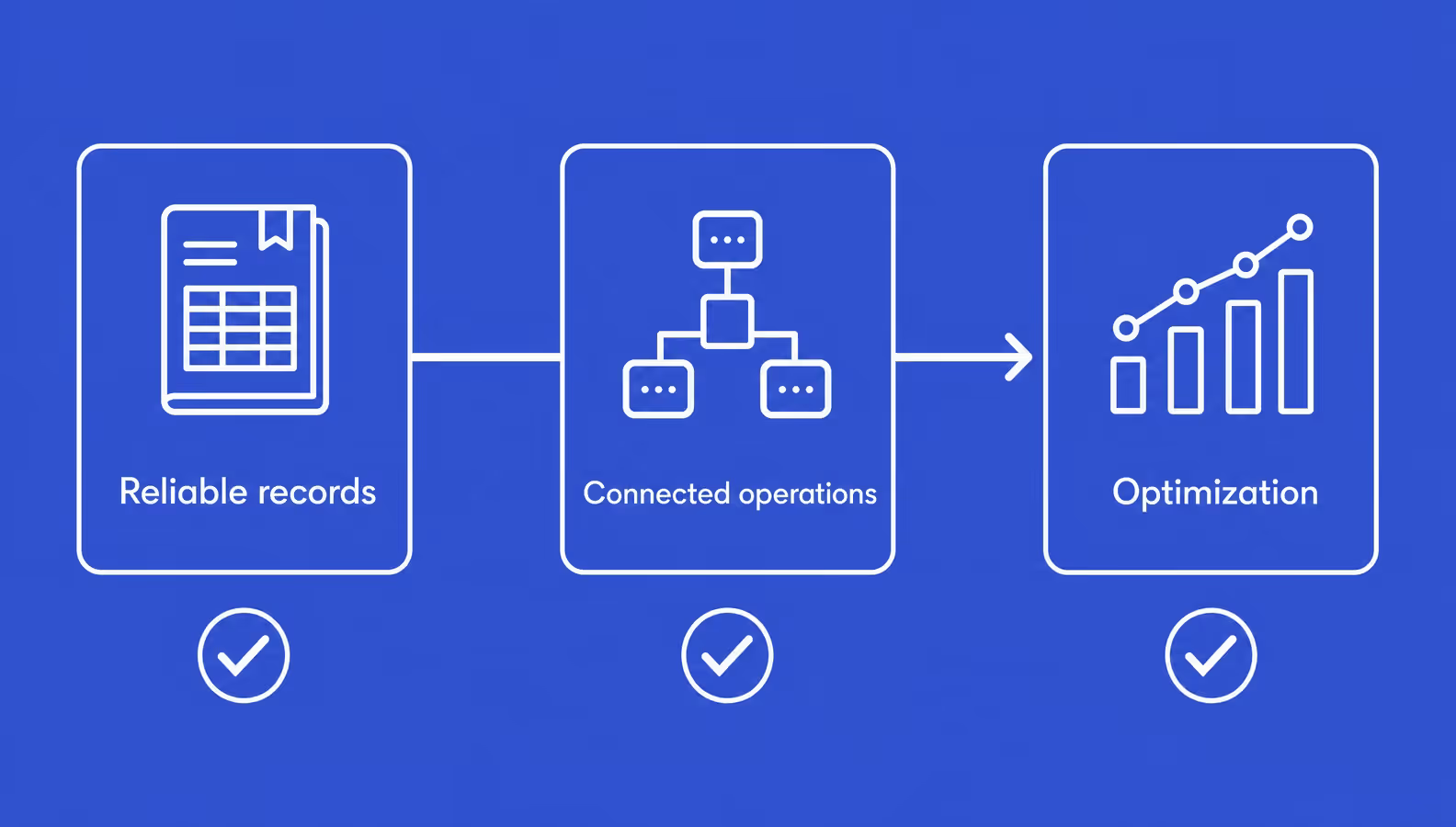
Optimization follows dependable records and connected daily operations
Normal flow cannot be the only acceptance path. When a code cannot be read, the system needs controlled data entry, a traceable event, and a state for the next operator.
Cargo synchronized warehouse and driver workflows with real-time traffic and operational data updates.
Its parcel-loading flow used barcode scanning and allowed manual code entry when a barcode could not be read. Driver controls exposed pause, resume, and undelivered states. Capture stayed connected to fallback and state handling rather than becoming an isolated scanner feature.

The fallback preserves a usable record when the usual scan path breaks
Before rollout, connected records need agreement on ownership, migration, and reconciliation.
A connected inventory process is not proof that business records reconcile. Timing, retries, migration mapping, and exception evidence determine whether a cutover holds. Warehouse management software, accounting software, POS, and ecommerce may own, create, consume, or display different inventory facts.
Cutover planning for inventory management processes names owners, routes, and responses to delays or API limits. It produces reconciliation evidence, not just a live connection.
Operational data from a WMS or transport management system (TMS) needs an owner. That ownership defines the logistics app development scope. An order management or ecommerce/API owner defines the stock-change route, while an audit trail records synchronization. Idempotency means retrying the same stock-change operation has the same net effect as applying it once.
We built Pony Express as a dispatcher-facing parcel workflow for receiving, hand-out, returns, and accounting. A barcode scan confirmed receipt, changed the shared parcel status, and a customer notification followed.
At hand-out, the dispatcher could scan a barcode or enter an order number manually. An unsuccessful scan showed a clear alert, with a visible exception route for the next operator.
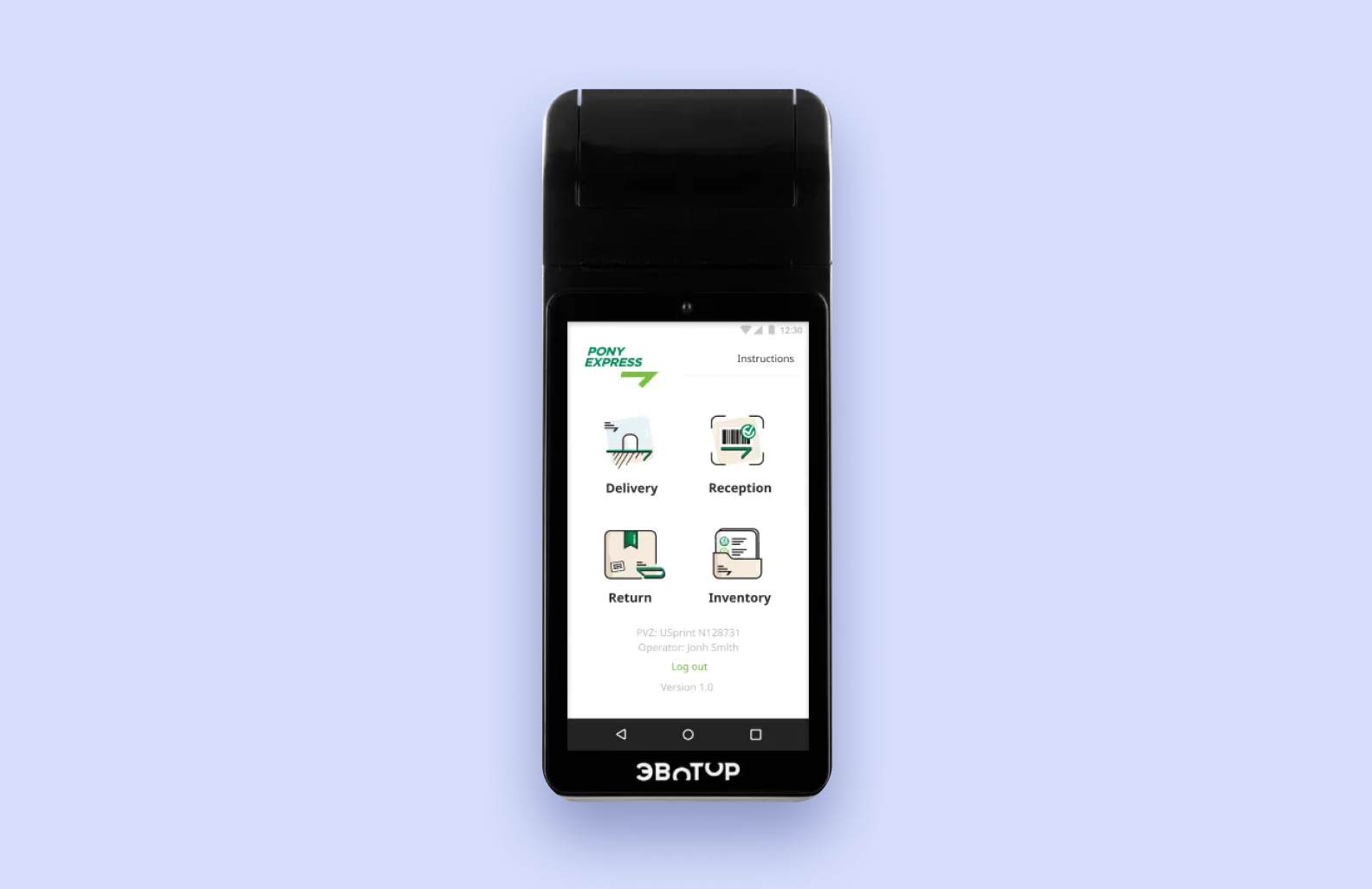
The terminal workflow links a parcel scan to the next shared status
Data migration needs rehearsal. Mapping translates old fields, staging protects live work, and a parallel run compares datasets. Cutover evidence shows mapped test records resolve before live records move.
| Control | Risk | Evidence before cutover | Owner |
| Mapping and staging | Wrong data | Test records match | Data owner |
| Idempotency and API limits | Duplicate event | A repeat changes stock once | Integration owner |
| Parallel run | Records disagree | Reconciliation report assigns exceptions | Exception owner |
A reconciliation report records discrepancies, and an exception owner handles each one. A pre-agreed unresolved discrepancy is a rollback trigger that pauses cutover and keeps the prior record path active. Traceable architecture keeps event history and reconciliation status visible.
Cloud computing does not remove traceability from cloud-based inventory management. A traceable inventory management system shows what changed, who initiated it, why it happened, and whether connected records agree across channels and users.
A central inventory ledger gives stock-changing events one dependable record. Each receipt, reservation, transfer, return, or adjustment adds a new event without overwriting earlier records. The event retains its source, timestamp, actor, and reason, so the current balance stays connected to the changes that produced it.
Role-based access limits who creates, approves, or corrects a movement, and an audit log records those actions. ERP, WMS, POS, ecommerce, and mobile-scanner integrations expose when data arrived and which reconciliation exceptions remain open. Real-time inventory tracking shows freshness, ownership, and unresolved exceptions.
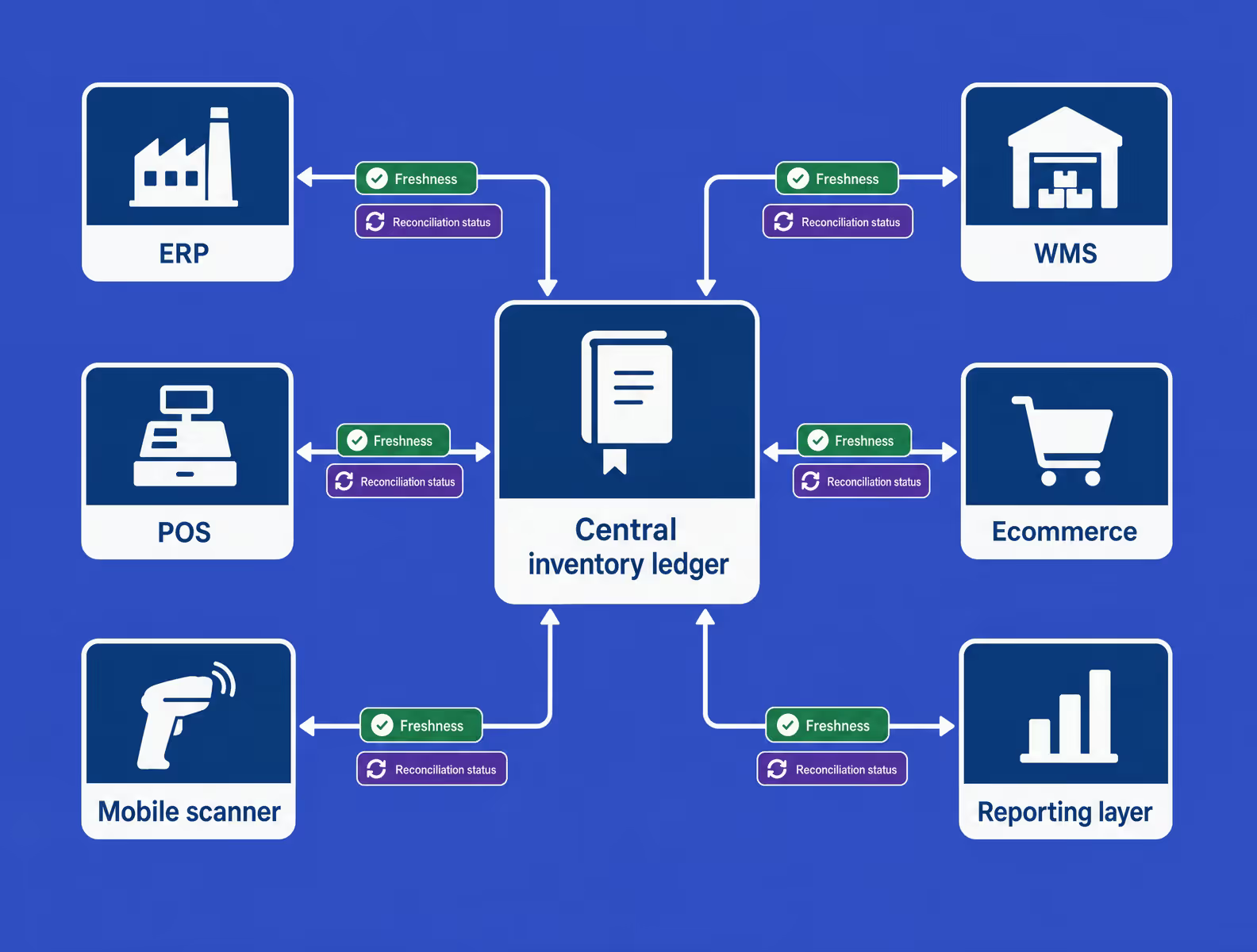
Visibility depends on freshness and open exceptions, not direct database access
Reporting infrastructure reads approved data for dashboards instead of letting every screen query the central database. Teams still see confirmed data, its owner, and unresolved exceptions without bypassing the controls that preserve inventory traceability.
Inventory software development reduces risk when every stage gives decision evidence, not progress updates. Each artifact answers an operational question and exposes what remains unresolved. A prototype demo does not prove daily operations are ready.
Teams develop inventory management software by focusing the first release on records, movements, permissions, and required synchronization. For a related discussion of scoping an enterprise first release, see the enterprise MVP development guide. Inventory system development advances after quality assurance covers integrations, exceptions, and workflows.
| Phase | Decision artifact | Open risk | Advance condition |
| Discovery | Accepted workflow map with inventory control owners and exception routes | Assumed handoffs | Every stock-changing event has an owner and a real workflow |
| Prototype and data model | Clickable handoff prototype and data migration map | Missing states | A normal and failed handoff can be traced |
| Focused first release | Accepted scope for records, movements, permissions, and essential integrations | Unproven controls | QA completes integration, exception, and real-workflow tests |
| Parallel pilot | Reconciliation view comparing new and current records | Unexplained differences | Every exception has an owner and a resolution path |
| Phased rollout | Expansion decision for each location or channel | Local workflow changes | The new workflow has pilot evidence and operational support |
These unanswered questions become the cost drivers.
Budget depends on workflow uncertainty, integrations, data migration quality, access roles, and rollout requirements. Pricing before discovery creates false certainty because those inputs remain unknown.
Discovery identifies stock-changing events, approval paths, and pilot evidence. Open questions become an estimate a software development company can defend.
Scope affects the cost of developing inventory management software. Logistics app development costs provides a neighboring example.
The next decision is whether post-launch performance earns expansion.
A rollout can look calm while exceptions remain open. Expansion needs evidence, not efficiency claims. A trust scorecard tests inventory control across supply chain management, from POS to order fulfillment. Teams optimize inventory with demand forecasting only after records become dependable.
Pilot thresholds belong to the organization. Each signal changes a decision, not a decorative KPI. Automation changes an exception path. It does not eliminate human error. RFID technology still requires reconciliation. RFID in retail operations adds context.
| Signal | Decision |
| Inventory accuracy | Expand if inventory counts agree. |
| Reconciliation variance | Correct or roll back unexplained differences. |
| Stockout, overstock, or excess inventory trend | Investigate untrusted-record effects. |
| Data freshness | Correct a stale owner or integration. |
| Time to resolve exceptions | Correct cases that remain open. |
| Fulfilled orders with accurate available-to-sell data | Expand availability if promise and fulfillment align. |
| Manual adjustment rate | Investigate recurring workarounds. |
Customer-facing availability needs confirmed available-to-sell data and visible fulfillment states. The quantity promised in an order must align with available-to-sell inventory for delivery before a point-of-sale flow confirms it. Fulfillment later tests whether that promise held. An audit trail shows where a mismatch began.
Panam Pizza handled delivery and pickup. Customers could schedule delivery or select an as-soon-as-possible option.
The app gave each scenario its own state screen. Order tracking showed accepted, preparing, handed to driver, and delivered on the main page.
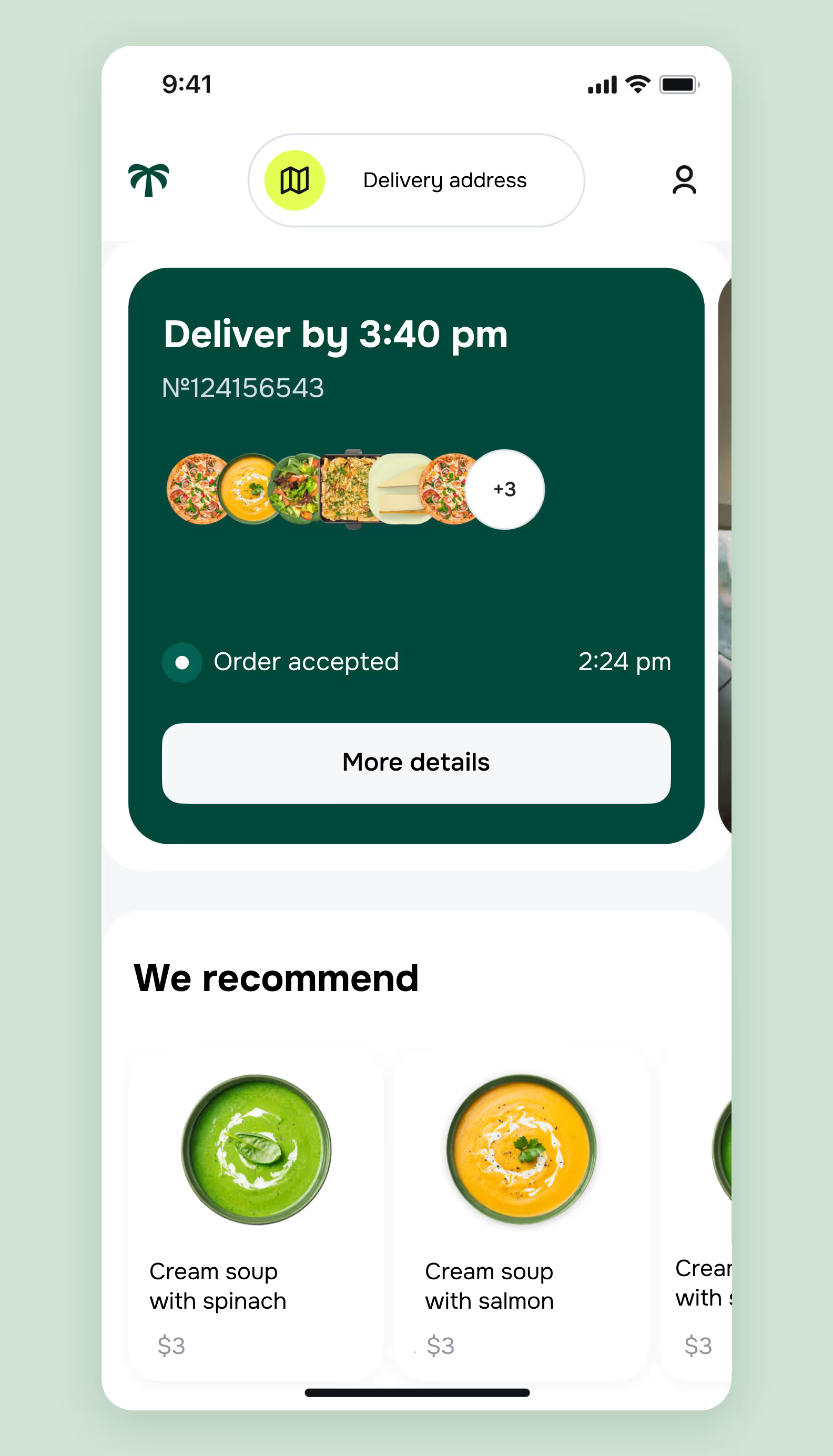
Tracking makes the next fulfillment step visible without exposing a back-office record
Expansion is earned when the scorecard and visible exception paths hold.
An inventory solution starts with a source of truth for each stock fact and a narrow first release that protects it. Connected records need traceable events and reconciliation before rollout. A parallel pilot shows whether exceptions resolve and expansion is earned.
➡️ Need to turn your inventory workflows into a clear first-release scope? Discuss the project with Purrweb.
Inventory management software provides stock quantity, movement, reservation, replenishment, and adjustment records. Operations, sales, and finance then use the same information. Its value lies in visible ownership, exceptions, and the reason a balance changed.
A team may create a custom inventory system when standard products cannot support material workflows, integrations, ownership rules, or audits. Manual workarounds and conflicting records distinguish an operating gap from a configuration problem.
The first release includes reliable product and location records, stock movements, adjustments, permissions, and an audit trail. Required integrations keep data current. Barcode capture, forecasting, automation, and analytics follow when the workflow is stable and measurable.
Developing an inventory management system depends on workflows, integrations, migration, and pilot requirements. A useful plan separates discovery, a focused first release, a parallel pilot, and phased rollout. Each phase advances on evidence.
Development cost depends on digitized workflows, connected systems, data quality, mobile or scanning requirements, reporting, and rollout support. A credible estimate follows discovery, when ownership, exceptions, and integration risk are clear.
A pilot compares the new inventory system with existing inventory records in agreed scenarios. Variance, freshness, unresolved exceptions, manual adjustments, and investigation time show whether the record is dependable. Defined rollback triggers stop expansion when differences remain unresolved.


.svg)