Explore

Need help with your project?

Oops! Something went wrong while submitting the form.
The cost of web application development isn’t random — it’s the result of scope, priorities, and execution. A simple MVP and a scalable enterprise platform require completely different levels of time, expertise, and investment.
In this article, we’ll walk you through the key cost drivers, explain how pricing changes depending on team structure and project scope, and highlight common budget mistakes. If you’re planning a web app, this breakdown will help you approach your investment with clarity and control.
%20(1)%20(1)%20(1)-1.avif)
Web application development and enterprise software represent a large and expanding slice of this market, underlining increasing demand (and investment) in custom software solutions.
Project expenses vary based on multiple variables, from the complexity of features to the composition of the development team. Let’s take a closer look so you can budget more accurately and avoid unexpected costs during development.
Simple web apps with basic functionality require fewer development hours than complex systems with multiple user roles and advanced features. We use feature complexity as a primary cost determinant when estimating project budgets.
A basic content management system with standard login and content publishing capabilities costs significantly less than an enterprise-level application with custom workflows, advanced analytics, and complex user permission systems.
Each additional feature increases both development time and testing requirements. Complex features often need specialized expertise, further increasing costs.
| Project type | Cost range | Features included | Team involvement |
| Simple | $20,000–$50,000 | Basic UI, standard authentication, simple dashboard, limited integrations | Small team (1–3 developers) |
| Medium | $50,000–$250,000 | Multiple user roles, API integrations, payment systems, admin panel, custom workflows | Cross-functional team (3–6 specialists) |
| Advanced/Enterprise | $250,000–$800,000+ | Complex architecture, real-time features, advanced analytics, high security, scalability, AI/ML integrations | Dedicated team with senior developers, DevOps, QA, security experts |
When planning your web application, carefully evaluate which features are essential for initial launch versus those that can be added in later development phases to manage costs effectively.
⭐ Our experience
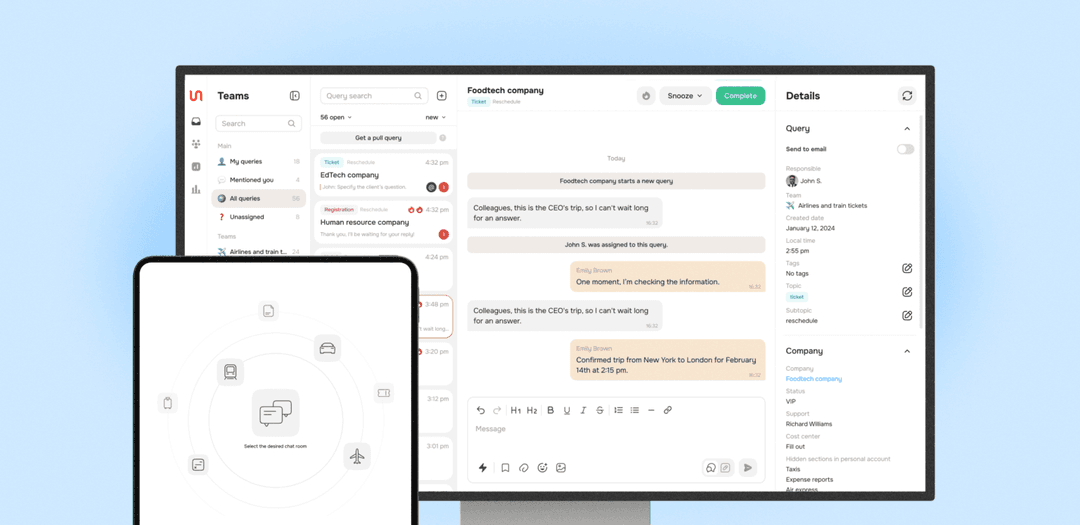
Our client needed to replace Intercom with a tailored alternative in just 10 months, with a pre-launch version due in 9 months.
The team had to deliver a complex system capable of handling 550 chats per hour while meeting specific business requirements. We developed a web application that integrated with the client’s back office, implemented real-time communication capabilities, and created a user-friendly interface for 300 support agents.
Despite the tight timeline, we met all deadlines by using efficient project management.
What helped was working closely with the client to define what features mattered most and keeping the design simple and familiar. We integrated the chat with internal systems, made sure it could work reliably day and night, and built it to handle heavy use.
Technology decisions affect development speed, talent availability, and future scalability. For example, using frameworks like React or Angular may increase initial development efficiency but require developers with specific expertise, potentially affecting hiring costs.
Open-source technologies often reduce licensing costs but may increase complexity in implementation and maintenance. Proprietary solutions typically offer better support but include ongoing licensing fees.
Design complexity and customization levels directly influence development costs. A web application using standard UI components and basic layouts requires less design and development time than one with completely custom interfaces and complex interactive elements.
High-fidelity designs with unique visual elements, animations, and responsive behaviors increase both design and development hours. Accessibility requirements, while essential, add another layer of complexity and testing.
| Design level | Cost range | Design characteristics |
| Basic/Standard UI | $5,000–$15,000 | Pre-built UI components, standard layouts, minimal customization |
| Custom/Branded Design | $15,000–$40,000 | Custom UI elements, branded visuals, tailored user flows, responsive design |
| Advanced/High-fidelity UX | $40,000–$100,000+ | Unique visual identity, complex interactions, animations, microinteractions, advanced accessibility compliance |
Determine which design elements provide genuine user value versus those that may increase costs without significantly improving the user experience.
⭐ Our experience
A software company for EV charging infrastructure needed a complete redesign of their mobile app and web dashboard. While their technical features outpaced competitors, their interface was outdated and cluttered.
We conducted a thorough UX audit that included competitor analysis, interface evaluation, and user surveys to identify pain points. The redesign focused on simplifying complex workflows and improving information visualization.
For the mobile app, we redesigned the station search interface, optimized information display, and visualized the charging process instead of relying on text. The web dashboard saw similar improvements, with clearer layouts, enhanced data presentation, and streamlined user interactions.
%2520(1)-p-1600.webp&w=1080&q=75)
Developer experience levels and geographical location create the most significant cost variations across similar projects.
Web development teams in North America or Western Europe typically command higher rates than teams in Eastern Europe, Asia, or Latin America, even with comparable expertise levels.
| Region | Junior (0–2 yrs) | Middle (2–5 yrs) | Senior (5+ yrs) |
| North America | $50–$80 | $80–$120 | $120–$180+ |
| Western Europe | $40–$70 | $70–$110 | $110–$160 |
| Eastern Europe | $25–$45 | $45–$70 | $70–$110 |
| Latin America | $25–$40 | $40–$65 | $65–$100 |
| Asia | $20–$35 | $35–$60 | $60–$90 |
Senior developers with specialized expertise command premium rates but often complete work more efficiently and with fewer quality issues than less experienced counterparts. The team structure — whether in-house, outsourced, or hybrid — affects not only hourly rates but also communication efficiency and project management overhead.
Consider both immediate cost savings and long-term quality implications when making team composition decisions.
The selected development methodology affects both the project timeline and budget. Let’s compare the cost differences between the two most popular types of methodologies.
Waterfall development typically requires extensive upfront planning and documentation, potentially increasing initial costs but providing more predictable budgets.
Agile approaches allow for more flexibility but may lead to scope expansion if not properly managed. Development approaches impact the distribution of costs throughout the project lifecycle and the frequency and nature of client involvement.
Integration requirements often emerge as significant web app cost factors during development. For example, integrating with payment gateways, CRM systems, or analytics platforms adds development hours for both implementation and testing.
Each integration requires understanding external API documentation, implementing connection logic, handling authentication, managing data synchronization, and testing edge cases.
Complex integrations with poorly documented systems or legacy platforms significantly increase development time. When planning integrations, carefully evaluate which connections provide essential functionality versus those that could be implemented in later development phases to control initial costs.
⭐ Our experience
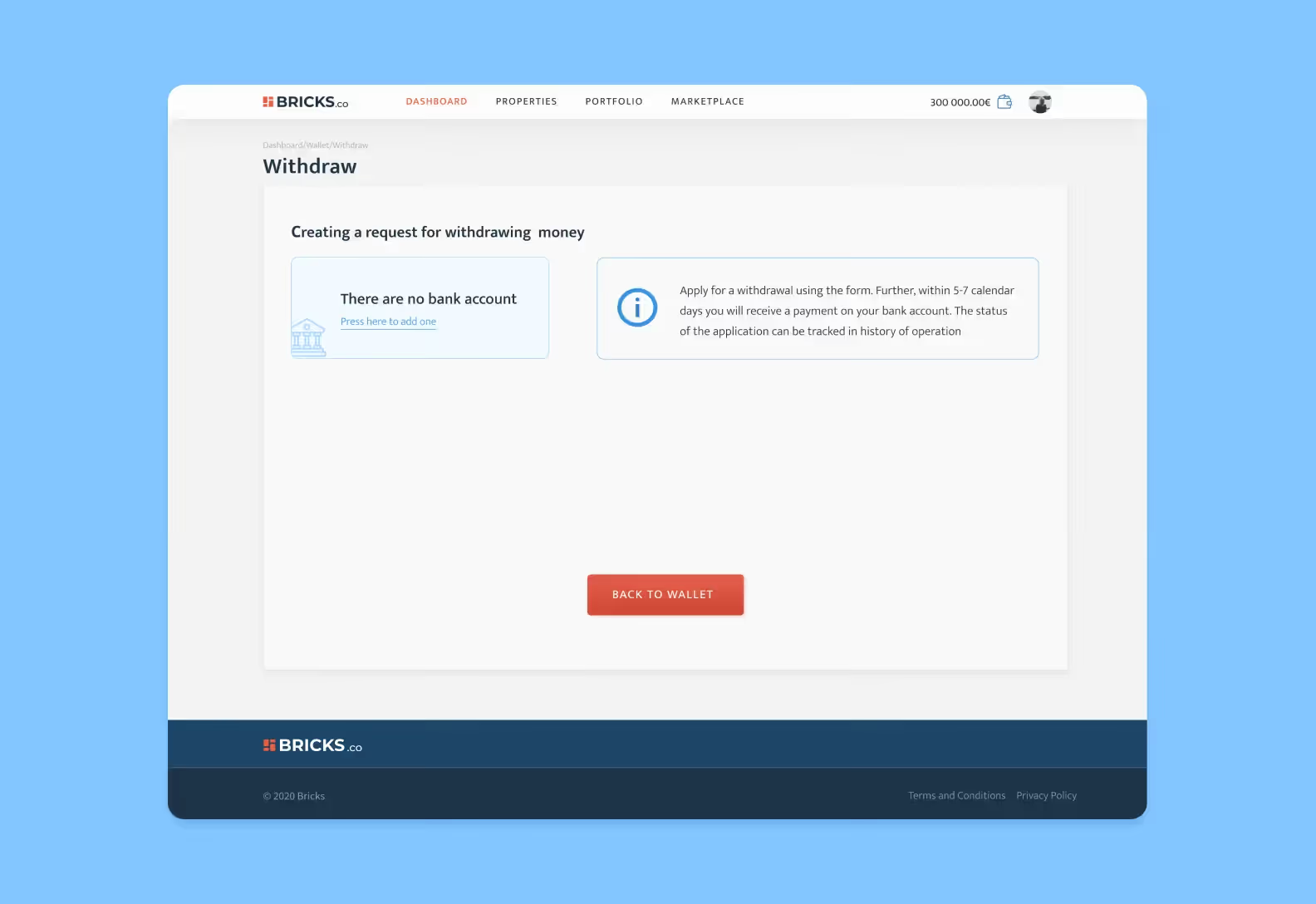
When developing a real estate investment platform, we faced unexpected challenges with payment processing. Initially, we planned to use Stripe for handling transactions. However, it turned out Stripe didn’t support investment platforms, forcing us to quickly switch to Lemonway, a French payment service.
We worked directly with Lemonway to solve integration issues while ensuring compliance with European regulations. These regulations only allowed saving card details for recurring payments with fixed amounts.
To accommodate variable investment amounts, we implemented a two-step process: first, users make a symbolic €1 payment to verify their card, then complete the actual investment transaction separately.
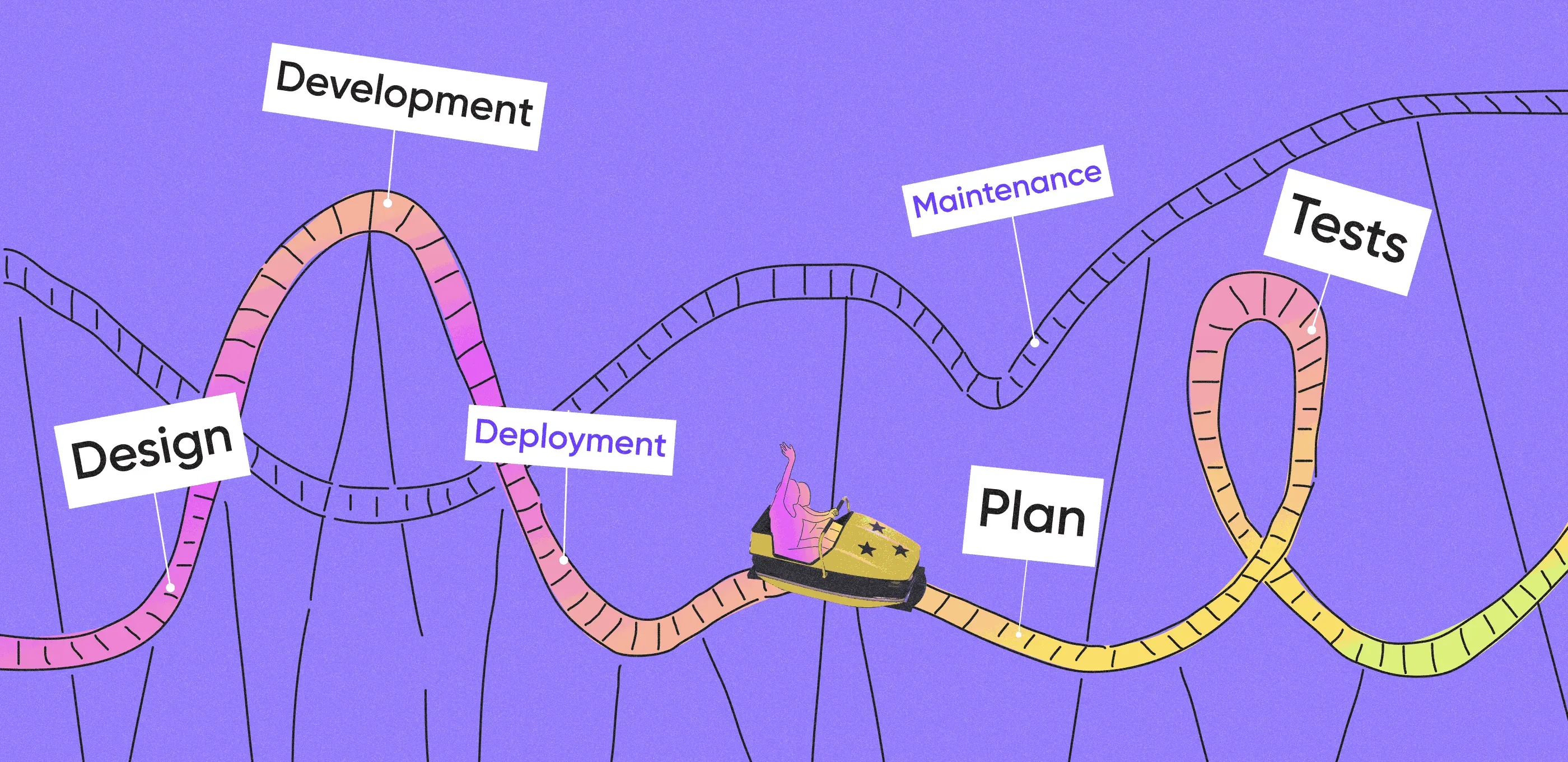
Web application development follows a structured process with distinct stages, each contributing differently to the overall app development budget. The table below provides an overview of typical timelines and budget allocations across the five primary development phases.
| Development stage | Timeline | Budget (% of total) | Budget range |
| Discovery | 2–4 weeks | 5–10% | $5,000–$15,000 |
| UI/UX design | 3–8 weeks | 10–15% | $10,000–$30,000 |
| Development | 3–9 months | 50–60% | $50,000–$250,000 |
| Testing | 2–6 weeks | 15–20% | $15,000–$40,000 |
| Deployment | 1–3 weeks | 5–10% | $5,000–$20,000 |
Timeline: 2–4 weeks
Budget: $5,000–$15,000
The discovery phase accounts for 5–10% of the total project budget but significantly impacts overall project success and cost efficiency. During this stage, we define project requirements, create specifications, and develop the initial project roadmap.
Proper investment in discovery reduces expensive changes during later development stages and provides more accurate overall project estimates. Skipping or minimizing this phase often leads to scope creep and budget overruns during implementation.
Timeline: 3–8 weeks
Budget: $10,000–$30,000
Design represents 10–15% of the total project budget, with costs varying based on application complexity and customization requirements. This stage includes user and market research, wireframing, prototyping, and final UI design.
Comprehensive design work before development reduces implementation costs. It provides developers with clear specifications and resolves potential user experience issues before coding begins.
Timeline: 3–9 months
Budget: $50,000–$250,000
Development forms the largest cost component, typically representing 50-60% of the total project budget. This stage includes frontend and backend implementation, database development, and integration work.
Development estimated costs scale directly with application complexity and feature scope. Breaking development into smaller iterations helps manage costs and provides opportunities for course correction throughout the process.
⭐ Our experience
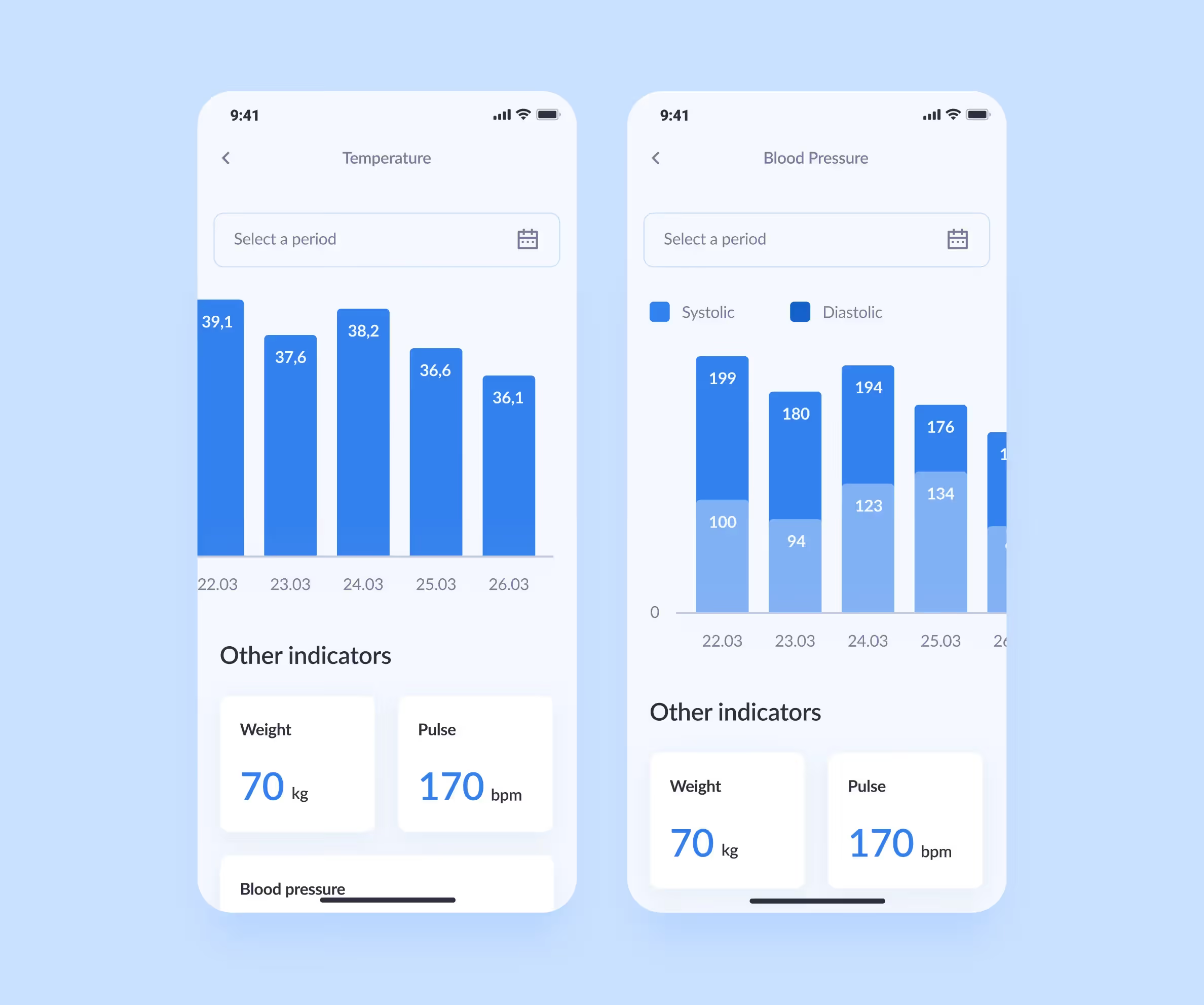
We built a platform for patient surveys and doctor monitoring. The client needed a tool that could handle recurring surveys, test result uploads, and alerts when patients’ values were out of range.
Together we prioritized the core features first to control the budget and avoid extra costs. Features that weren’t essential were delayed or simplified, which helped keep development manageable.
The result was a simple, functional tool ready for doctors and patients, built efficiently under time and budget constraints.
Timeline: simultaneously with the development process
Budget: $15,000–$40,000
Quality assurance accounts for 15–20% of the total app development project budget. This phase includes manual testing, automated test development, performance testing, and security validation.
Adequate testing investment reduces post-launch maintenance costs and minimizes business disruption from production issues. Testing requirements increase proportionally with application complexity and regulatory requirements.
Timeline: 1–3 weeks
Budget: $5,000–$20,000
Deployment represents approximately 5–10% of the total project budget. Deployment activities include configuring production servers, implementing CI/CD pipelines, data migration, and creating operational documentation.
Proper deployment planning ensures a smooth transition to production and reduces system downtime during updates. Cloud-based deployments typically require less upfront investment but include ongoing operational costs.
Beyond the direct development expenses, custom web applications incur several less obvious costs that significantly impact the total investment required. Here are some of them:
Most web applications require ongoing refinements after initial launch. You should typically budget for 15–20% of the original development cost for post-launch fixes and improvements during the first 3–6 months.
Even with thorough testing, real-world usage reveals issues that need correction. User feedback often leads to feature refinements that weren’t apparent during initial development.
Many web applications rely on external services that incur ongoing subscription costs. We find these expenses often surprise clients who focused primarily on development budgets.
For example, a web application using cloud hosting, payment processing, email delivery services, and mapping APIs might require $500–$2,000 in monthly subscription fees.
As user numbers grow, applications require infrastructure upgrades that weren’t necessary during initial development. An application deployed on a single server might need load balancing, database clustering, and content delivery network implementation as traffic increases.
Ongoing maintenance for security represents a significant hidden cost in web application ownership. We recommend budgeting for regular security assessments and updates throughout the application lifecycle.
For example, changes in data protection regulations might require implementing new consent mechanisms, data handling procedures, and security controls not included in the original development scope.
Staff turnover and knowledge transition create hidden costs in maintaining web applications. Plus, inadequate documentation significantly increases long-term maintenance expenses.
When original developers leave a project, new app development team members require additional time to understand undocumented code and architectural decisions. That’s why comprehensive documentation requires investment during development but reduces future maintenance costs.
These tips address both immediate development costs and long-term maintenance expenses.
Feature prioritization is basically focusing on building a Minimum Viable Product (MVP) that includes only essential features and reduces the initial development cost.
Focus development resources on features that directly support core business objectives and generate immediate value. Defer nice-to-have features to subsequent development phases after the application demonstrates market fit.
⭐ Our experience
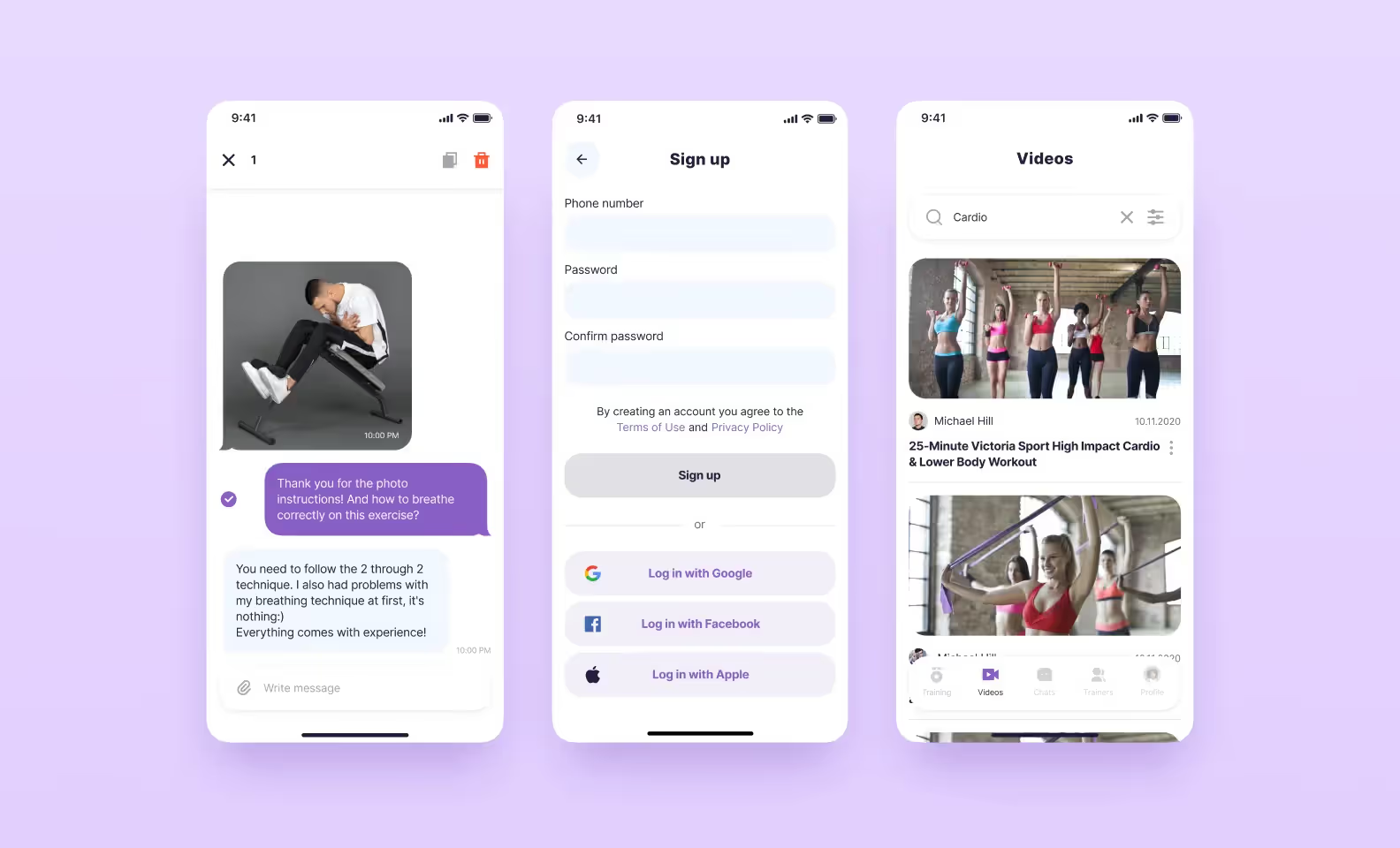
Our client needed an MVP of a fitness app to quickly test the concept and gather user feedback. The goal was to focus on the core features that would provide the most value to users while keeping development time and costs low. We started by identifying the essential functions and built them into a simple, user-friendly interface.
Instead of launching with a fully loaded app, we focused on these basic features to get the app into users’ hands faster. The feedback we received from the MVP helped us understand user needs better and shaped the next steps in the app’s development, ensuring the product was on the right track.
We recommend selecting established technologies with strong community support and proven scalability. Widely used frameworks like React or Angular ensure access to extensive documentation, community resources, and a large talent pool.
Avoid cutting-edge technologies without compelling advantages, as they typically increase development time and create future maintenance challenges. Standardizing the technology stack across projects further reduces costs by enabling knowledge sharing and resource flexibility.
Comprehensive planning reduces expensive changes during development. Creating detailed user stories with acceptance criteria before development begins prevents misunderstandings that lead to rework.
Document architectural decisions, API specifications, and data models before starting implementation. Establish clear communication channels and decision-making processes to minimize delays and misalignments.
Strategic outsourcing can significantly reduce development costs while maintaining quality. Evaluate outsourcing partners based on technical expertise, communication capabilities, and cultural alignment rather than hourly rates alone.
Consider nearshore options that balance cost savings with timezone compatibility and cultural similarities. Establish clear expectations, communication protocols, and quality standards when working with external partners to prevent quality issues that could increase long-term costs.
Web application development costs can vary widely — and that’s completely normal. The final budget depends on what you’re building, which technologies you choose, who’s on your team, and how the project is managed. When you understand not only the obvious development expenses but also the hidden costs, planning becomes much easier and far more predictable.
➡️We at Purrweb specialize in creating efficient, scalable web applications. Contact us to discuss your idea and get a free estimation in 48 hours!


.svg)

.avif)