Explore

Need help with your project?

Oops! Something went wrong while submitting the form.
Web3 development operates differently from traditional software projects, and so does the budgeting. Between blockchain selection, smart contract complexity, security requirements, and ongoing operational costs, it’s often a struggle to estimate what your project will actually cost.
This guide walks you through the key cost drivers, project types, development stages, and strategies to help you plan the Web3 budget realistically and avoid expensive surprises along the way.

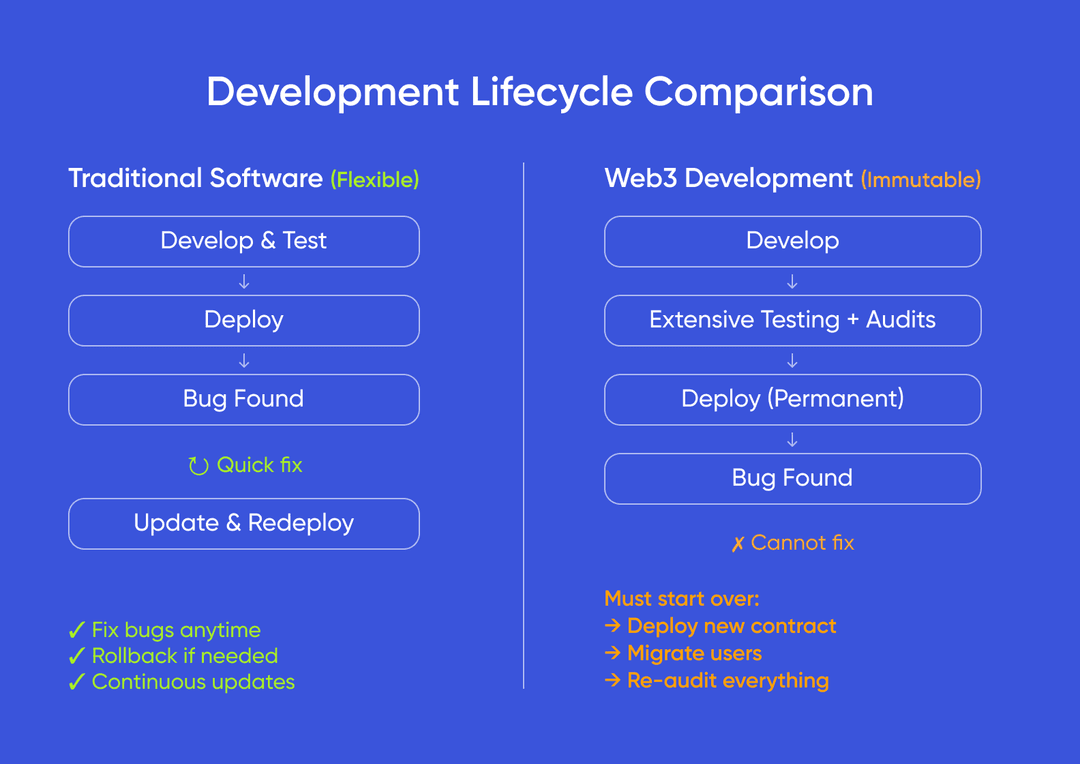
Web3 projects come with constraints and risks that don’t exist in traditional software development. In conventional applications, you can update code, fix bugs, and roll back changes whenever needed.
With blockchain-based systems, smart contracts become permanent once deployed. This immutability means every line of code must be thoroughly tested and audited before launch — there’s no room for quick patches.
The technical requirements are also different. Traditional developers work with centralized databases and familiar server architectures. Web3 projects require expertise in blockchain protocols, cryptographic principles, and distributed systems. This specialized knowledge comes at a premium.
Security takes on new dimensions in Web3. A smart contract vulnerability can lead to irreversible financial losses, as many high-profile hacks have shown. This demands extensive security audits, formal verification processes, and ongoing monitoring.
Compliance adds further complexity. Web3 projects must navigate evolving regulations around digital assets, securities laws, and data privacy across jurisdictions. Unlike traditional software, where features can be adjusted later, blockchain immutability makes early legal planning essential.
Unlike traditional software where hosting and development dominate expenses, Web3 projects distribute costs across multiple technical and operational areas. Here’s a breakdown of the main cost components.
Your choice of blockchain directly impacts Web3 development cost. Ethereum offers the largest ecosystem but comes with higher gas fees. Alternative networks like Polygon, Arbitrum, or Solana provide lower transaction and maintenance costs but may have smaller developer communities and fewer tools.
You’ll need to set up nodes, configure network connections, and build infrastructure to interact with your chosen blockchain. This includes wallet integration, transaction monitoring systems, and backend services that bridge Web2 and Web3 components — many teams bring in a specialized wallet development company for this part rather than building it in-house.
Expect to invest in DevOps expertise specific to blockchain environments. Infrastructure costs range from $5,000 for simple integrations to $50,000+ for custom node infrastructure and complex multi-chain architectures.
Smart contracts are the backbone of Web3 applications, and their development requires specialized skills. Developers proficient in Solidity, Rust, or other blockchain languages command premium rates — typically 20-40% higher than traditional developers.
Beyond writing code, developers must implement comprehensive testing suites, including unit tests, integration tests, and scenario-based testing to simulate real-world conditions.
Web3 development cost typically range from $15,000 for basic contracts to $150,000+ for sophisticated protocols.
⭐ Our experience
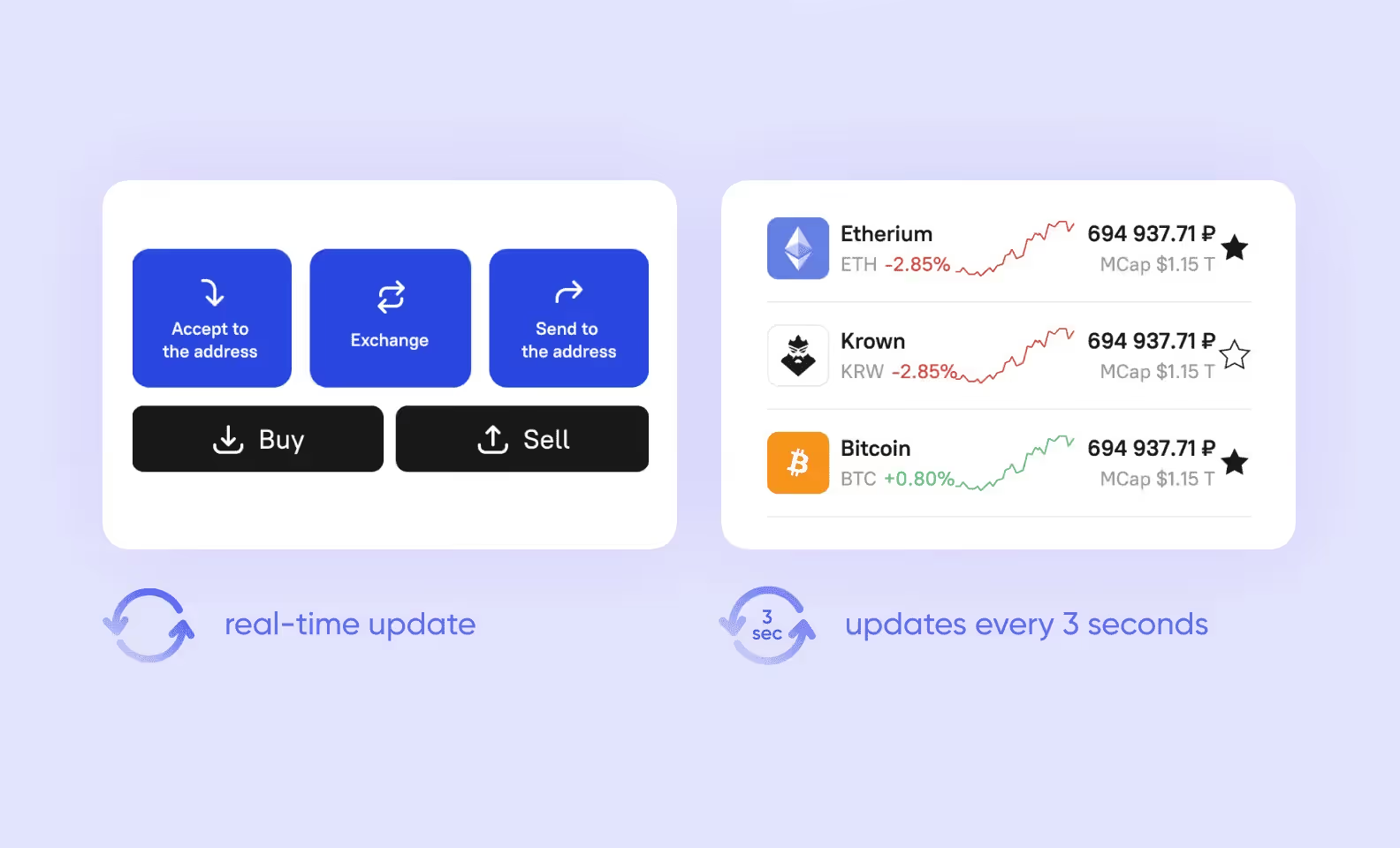
One of our projects was a crypto app that uses smart contracts to automate token distribution and manage user rewards. We created smart contracts that handle staking and reward calculations transparently and securely, ensuring users receive their earnings without manual intervention.
These contracts were designed to be upgradeable, allowing future improvements without redeploying everything. Integrating these smart contracts with the app’s backend enabled smooth, trustless interactions between users and the blockchain.
You’ll likely need multiple smart contract audits throughout development — initial audits after core development, follow-up audits after changes, and final audits before mainnet deployment. Bug bounty programs add ongoing costs but help identify vulnerabilities before attackers do, typically requiring $10,000-$50,000 in reserved funds.
Compliance requirements vary by jurisdiction and project type — token offerings face stricter scrutiny than NFT projects. Legal consultation for regulatory compliance can run $20,000 to $200,000 for complex projects.
You may also need KYC/AML integration if your project handles significant financial transactions, adding another $10,000-$30,000 for implementation and ongoing verification services.
Most Web3 projects rely on external services to function efficiently. Node providers like Infura or Alchemy offer blockchain access without running your own infrastructure, costing $0-$500+ monthly depending on request volume.
Data indexing through The Graph helps query blockchain data efficiently, with costs scaling based on queries. Oracle services like Chainlink provide off-chain data to custom smart contracts, charging per data feed and update frequency.
Analytics platforms, wallet connection libraries, and monitoring tools add additional monthly expenses. Budget $500-$5,000 monthly for these services, with costs increasing as your user base grows.
Gas fees are the costs paid to blockchain networks to process and confirm transactions, including deploying smart contracts and executing contract functions. These fees fluctuate based on network demand and directly affect both development and user experience.
High gas prices increase the cost of deploying contracts and running operations, which can significantly raise your project’s budget. Deploying a complex smart contract on Ethereum mainnet can cost $5,000-$50,000 during high network congestion, though layer-2 solutions reduce this significantly.
Factor in ongoing operational transactions for contract interactions, administrative functions, and protocol upgrades. Some projects allocate $10,000-$100,000 just for deployment and initial operational transactions.
Web3 projects vary significantly in cost, timeline, and complexity depending on their type and scope. The ecosystem is also expanding rapidly, with more than 17,000 companies and over 3,000 startups currently operating in the Web3 space.
The table below provides a high-level comparison, followed by a closer look at what influences the budget for each project type.
|
Project type |
Cost range |
Timeline |
Complexity |
Key cost drivers |
|
DeFi platforms |
$100,000 - $500,000+ |
6-12 months |
High |
Security audits, oracle integration, complex financial logic |
|
NFT marketplaces |
$50,000 - $300,000+ |
3-6 months |
Medium |
IPFS storage, royalty systems, UI/UX development |
|
DAOs |
$30,000 - $200,000+ |
2-6 months |
Medium |
Governance mechanisms, treasury management, voting systems |
|
Web3 gaming |
$80,000 - $1,000,000+ |
6-18 months |
Very high |
Game development, asset management, tokenomics, graphics |
|
DEXs |
$150,000 - $600,000+ |
8-14 months |
Very high |
AMM logic, liquidity mechanisms, extensive security audits |
|
Enterprise solutions |
$100,000 - $1,000,000+ |
6-18 months |
High |
Custom blockchain, legacy system integration, compliance |
DeFi apps handle financial transactions, making them among the most complex and expensive Web3 projects. You’re building lending protocols, yield farming mechanisms, or liquidity pools — all requiring sophisticated smart contract logic.
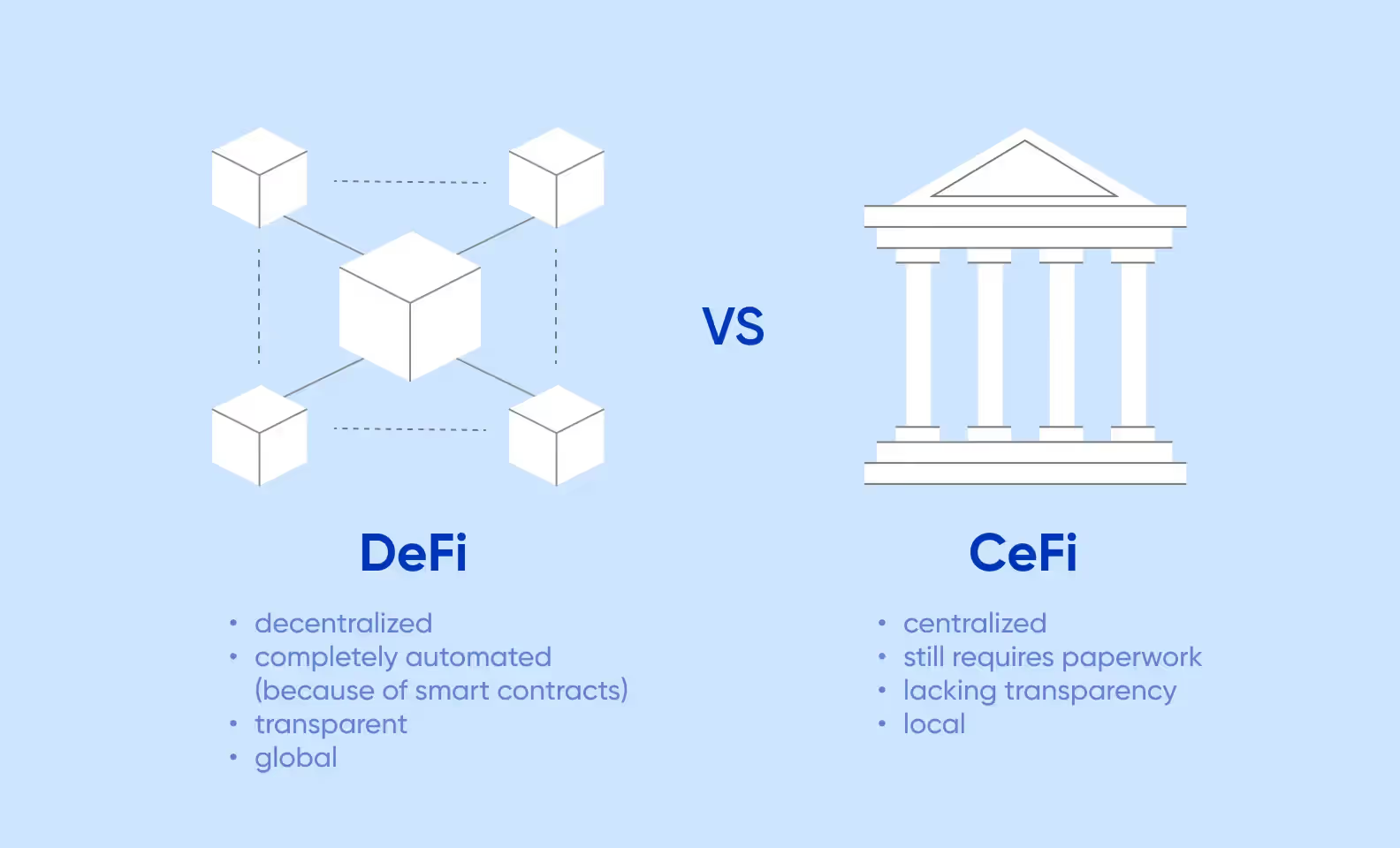
Security is paramount since vulnerabilities can lead to millions in losses. Expect multiple security audits, extensive testing periods, and formal verification processes.
NFT marketplaces require smart contracts for minting, buying, selling, and royalty distribution. You’ll need IPFS integration for metadata storage, wallet connectivity, and a user-friendly interface for browsing collections. The complexity increases if you add features like auctions, bundling, or cross-chain support.
DAO development focuses on governance mechanisms, proposal systems, and treasury management. Smart contracts handle voting, token distribution, and execution of approved proposals.
Complexity varies significantly — simple voting DAOs are straightforward, while DAOs with complex governance models, multi-signature requirements, and automated treasury strategies require extensive development.
Web3 games combine traditional game development with blockchain integration for in-game assets, play-to-earn mechanics, and NFT ownership. This requires both game developers and blockchain specialists.
The app will include the game engine, graphics, and gameplay mechanics, plus smart contracts for asset management and tokenomics design. Metaverse projects add virtual world infrastructure and real-time multiplayer capabilities.
⭐ Our experience
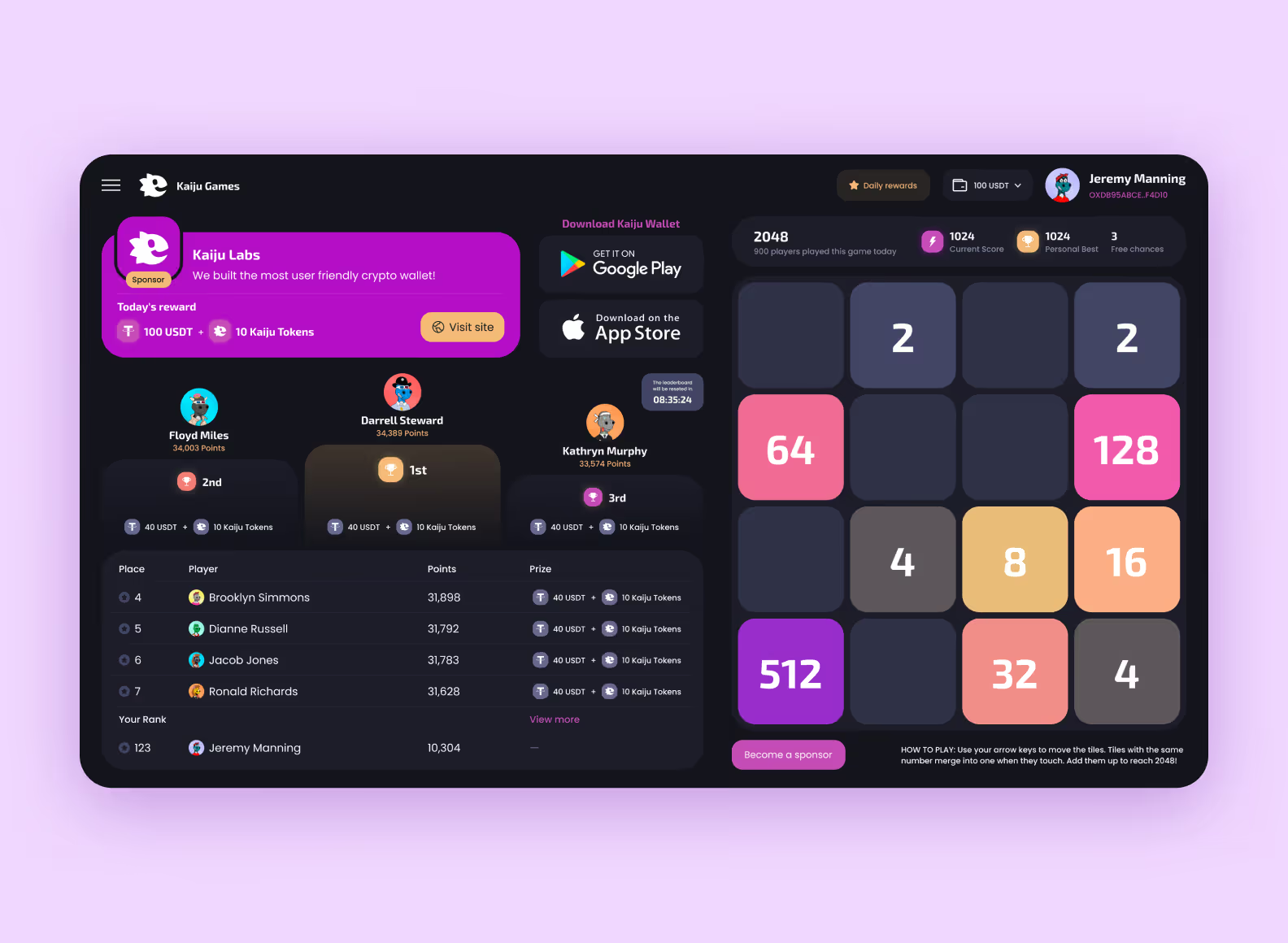
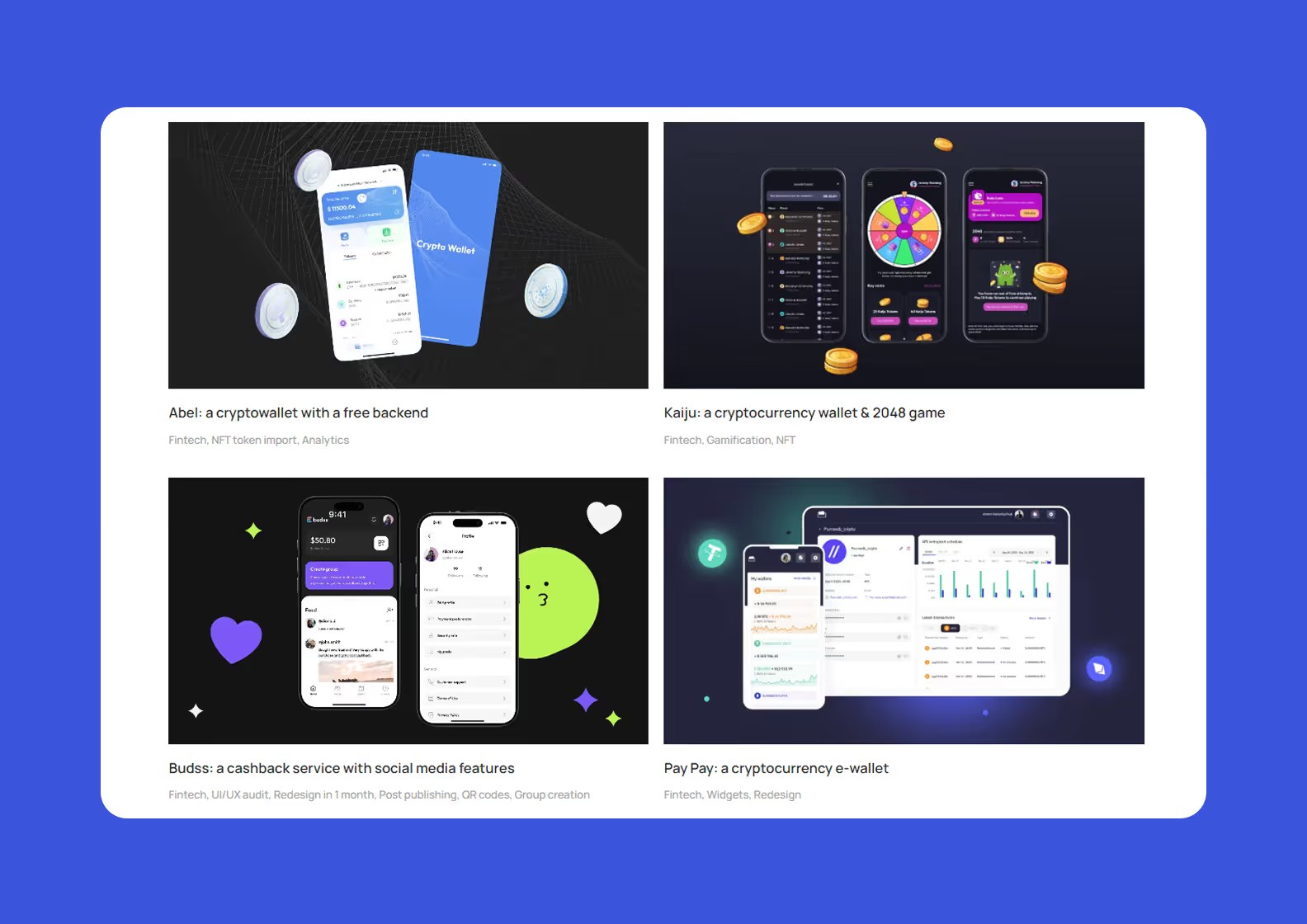
Our client wanted a cryptocurrency wallet with a game attached to it. The idea was to get people to actually use the wallet by giving them a reason to sign up.
We made a browser version of "2048," the puzzle game where you merge numbered tiles. Players can earn tokens and some cryptocurrency for playing daily, and there’s a leaderboard with bigger rewards for top players. But you have to register in the wallet to claim anything.
It’s basically a workaround for a common problem. Getting people to install a crypto wallet is expensive, and most drop off during the process. If they’re already playing a game and want their rewards, they’re more likely to actually complete the registration.
DEXs enable peer-to-peer trading without intermediaries. They include automated market makers (AMMs), liquidity pools, and swap mechanisms.
Security requirements are extreme — DEXs are prime targets for exploits. You’ll need advanced smart contract development, extensive auditing, and robust front-end interfaces.
Enterprise blockchain solutions focus on private or permissioned blockchains for supply chain tracking, document verification, or internal processes. These projects often require custom blockchain implementations, integration with existing enterprise systems, and compliance with corporate security standards.
Web3 projects follow a structured development lifecycle, with each stage requiring different resources and budget allocations.
|
Development stage |
Budget allocation |
Typical cost range |
Duration |
Key activities |
|
Discovery & requirements |
5-10% |
$5,000 - $30,000 |
2-4 weeks |
Market research, blockchain selection, tokenomics design |
|
Architecture & planning |
10-15% |
$10,000 - $50,000 |
3-6 weeks |
Technical specifications, system design, security planning |
|
Development & implementation |
35-45% |
$50,000 - $300,000+ |
2-6 months |
Smart contract coding, frontend/backend development, testing |
|
Testing & security audits |
20-25% |
$30,000 - $150,000 |
1-3 months |
QA testing, external audits, bug bounties, testnet deployment |
|
Deployment & launch |
5-10% |
$10,000 - $40,000 |
1-2 weeks |
Mainnet deployment, liquidity provision, monitoring setup |
|
Post-launch support |
15-20% |
$20,000 - $100,000/year |
Ongoing |
Maintenance, optimization, upgrades, community support |
The first step is requirements analysis, where you define your project scope, target blockchain, and technical needs. This includes deciding which features are essential and which are optional.
Technical teams assess blockchain options, evaluate trade-offs between different networks, and estimate gas costs for your use case. This stage also includes initial tokenomics design if your project involves a native token.
The discovery phase goes beyond basic requirements by including market research, competitor analysis, and regulatory review. Rushing this phase leads to expensive pivots later. A thorough discovery process involves blockchain architects, business analysts, and legal advisors to ensure regulatory considerations are addressed upfront.
⭐ Our experience
Taking the time for discovery reduces risks and helps ensure your project starts with a solid foundation. We worked with a client who wanted to build an AI dating app. Before starting development, we ran a discovery phase to test the idea.
We talked to users, ran surveys, and checked the main assumptions. It turned out people were already comfortable with how dating apps work and didn’t really need AI features. This meant the core idea wasn’t as useful as expected.
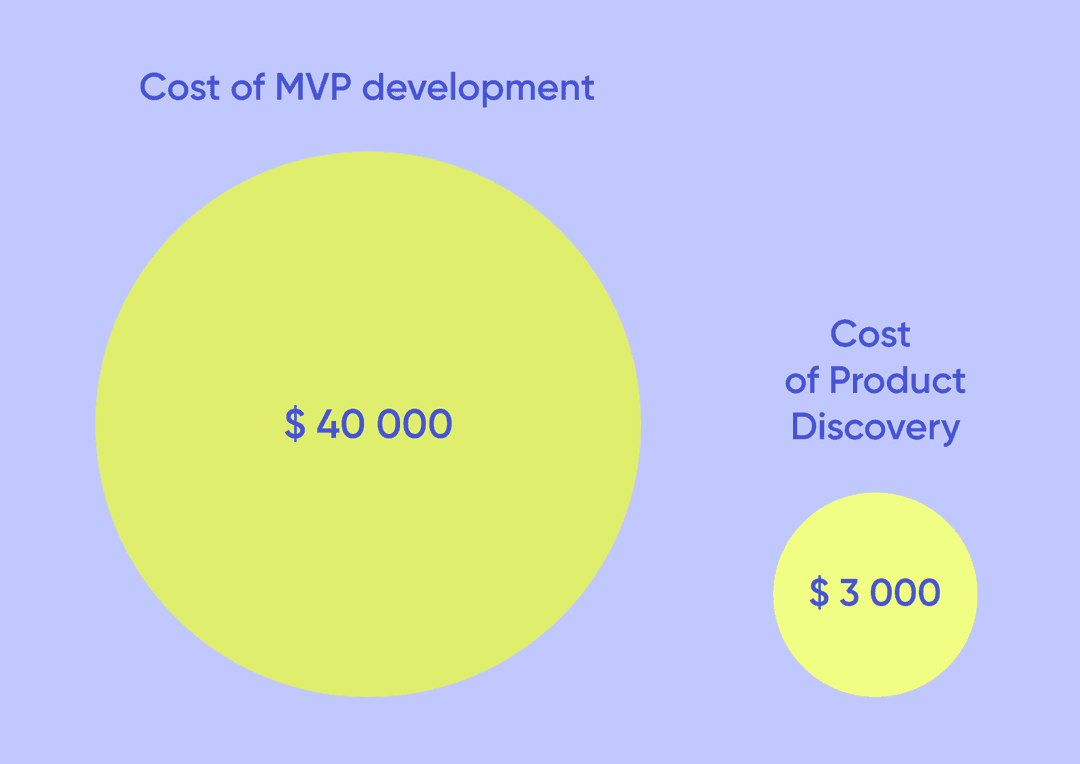
Building an MVP would have cost about $40,000, while discovery cost much less. By doing this early research, we helped the client avoid spending money on a product that users didn’t actually want.
Here you create detailed technical specifications, smart contract architecture, and system design documents. Your team maps out contract interactions, defines data structures, and plans integration points with external services.
This includes designing the frontend architecture, database schema for off-chain data, and API specifications. Security considerations are built into the architecture from the start — identifying potential attack vectors and designing defensive mechanisms.
You’ll also create a detailed development roadmap with milestones and deliverables. Proper architecture prevents costly rewrites and security vulnerabilities.
This is the longest and most resource-intensive phase. Experienced developers write smart contracts, build frontend interfaces, and create backend services.
Smart contract development happens in parallel with frontend work, though contracts must be finalized before full integration testing. Developers write extensive test suites alongside production code — test coverage should exceed 90% for development of smart contracts.
You’ll iterate through multiple versions, refining logic and optimizing gas consumption. Frontend development includes wallet integration, transaction handling, and user interfaces for interacting with contracts.
In Web3, you’ll conduct unit testing, integration testing, and scenario-based testing that simulates various market conditions and edge cases. Testnet deployment allows real-world testing without financial risk.
Security audits are mandatory — review your code line-by-line, looking for vulnerabilities, logic errors, and potential exploits. Skimping on security audits is the fastest way to lose user funds and destroy your reputation.
At this stage, the team deploys smart contracts, verifies them on block explorers, initializes contract parameters, and sets up monitoring systems. If launching a token, you’ll need to provide initial liquidity on DEXs and coordinate listing efforts.
You’ll also set up infrastructure for monitoring transactions, tracking errors, and responding to issues. The actual deployment process takes 1–2 weeks, but preparation and coordination can span a month.
Web3 projects’ post-launch activities include tracking contract performance, responding to user issues, and monitoring for security threats. Gas optimization continues post-launch as you identify inefficient patterns in real usage.
Smart contract upgrades (if you’ve built upgradability into your architecture) require careful planning and execution. Community management, documentation updates, and feature enhancements are ongoing expenses.
Even with careful planning, Web3 projects encounter unexpected expenses that can derail budgets. Anticipating these challenges helps you build appropriate buffers into your financial planning.
Gas prices on Ethereum and other networks fluctuate dramatically based on network activity. A contract deployment budgeted at $10,000 during normal conditions might cost $40,000 during peak congestion.
Users also face these fluctuations — high gas fees can make your application unusable during busy periods. Mitigate this by deploying during low-traffic periods, optimizing contract code to minimize gas consumption, or choosing layer-2 solutions with predictable fees.
Discovering a bug after mainnet deployment creates a crisis. Since you can’t modify deployed contracts, you must deploy new versions and migrate users — a process that’s expensive, time-consuming, and damages trust.
Each redeployment incurs full deployment costs again. Avoid this by investing heavily in pre-launch audits and testing. If you need upgradeability, implement proxy patterns from the start, though these add complexity and their own security considerations.
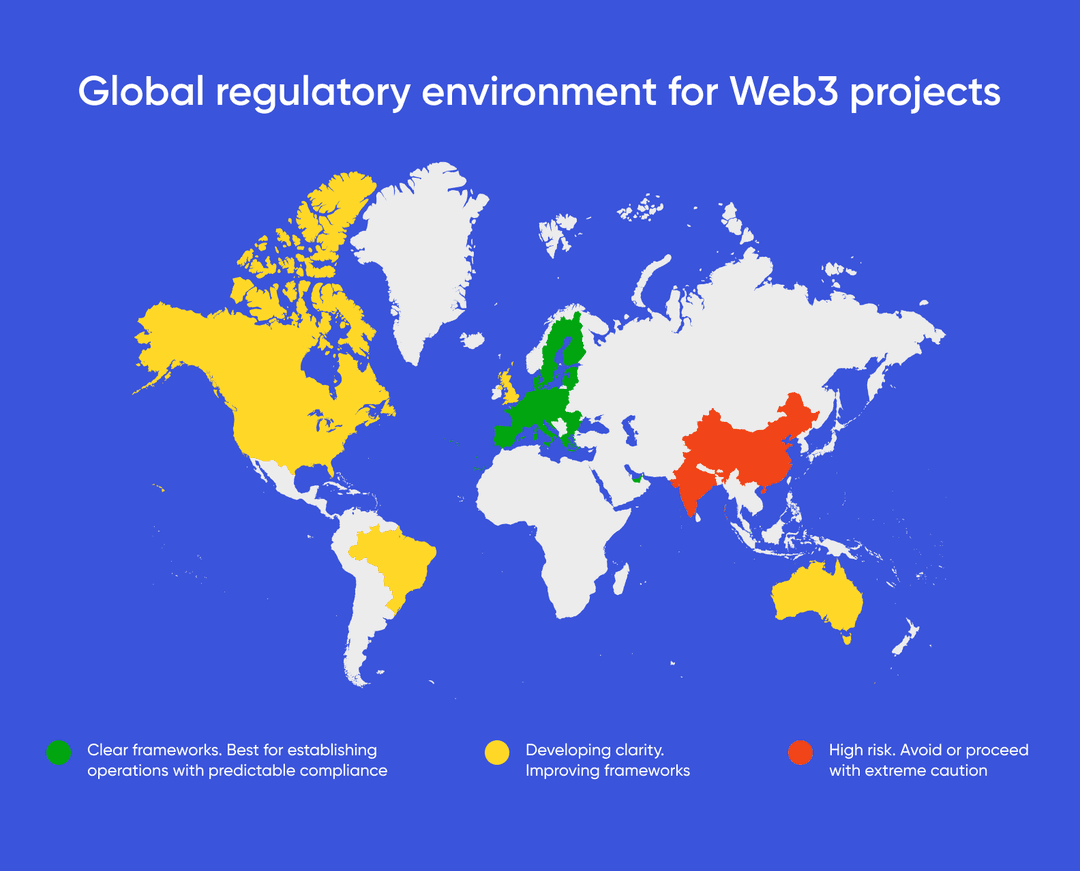
Cryptocurrency regulations evolve rapidly. A compliant project today might face new requirements tomorrow — KYC mandates, securities registration, or operational restrictions.
Adapting to new regulations can require significant code changes, legal consultation, and operational adjustments. Stay informed about regulatory developments in your target markets and build flexibility into your architecture where possible.
Projects that gain traction quickly hit scalability limits. Your infrastructure might handle 100 users smoothly but collapse at 10,000.
Upgrading node infrastructure, implementing caching layers, or migrating to more scalable solutions requires unplanned investment. Design for 10x your expected initial usage and load-test thoroughly before launch.
If your project includes a token, you’ll need ongoing liquidity management. Providing liquidity on DEXs locks up capital — often $50,000-$500,000, depending on your token’s market cap.
Market-making activities, treasury management, and responding to token price volatility require continuous attention and capital. Reserve adequate funds for liquidity provision and consider token economics carefully during the design phase.
Smart cost management doesn’t mean cutting corners on security or quality. Here are several approaches to help you build robust Web3 applications without overspending.
Not every project needs Ethereum mainnet. Polygon, Arbitrum, and Optimism offer significantly lower gas fees while maintaining Ethereum compatibility.
Solana provides high throughput for applications requiring fast transactions. Base and other emerging chains offer competitive features with lower costs.
Analyze your specific requirements — transaction speed, decentralization level, ecosystem maturity, and cost constraints — then select accordingly.
Don’t reinvent the wheel. Using established codebases reduces development time by 30-50% and inherits security from widely audited code:
You still need audits for your custom logic, but the foundation is solid.
⭐ Our experience
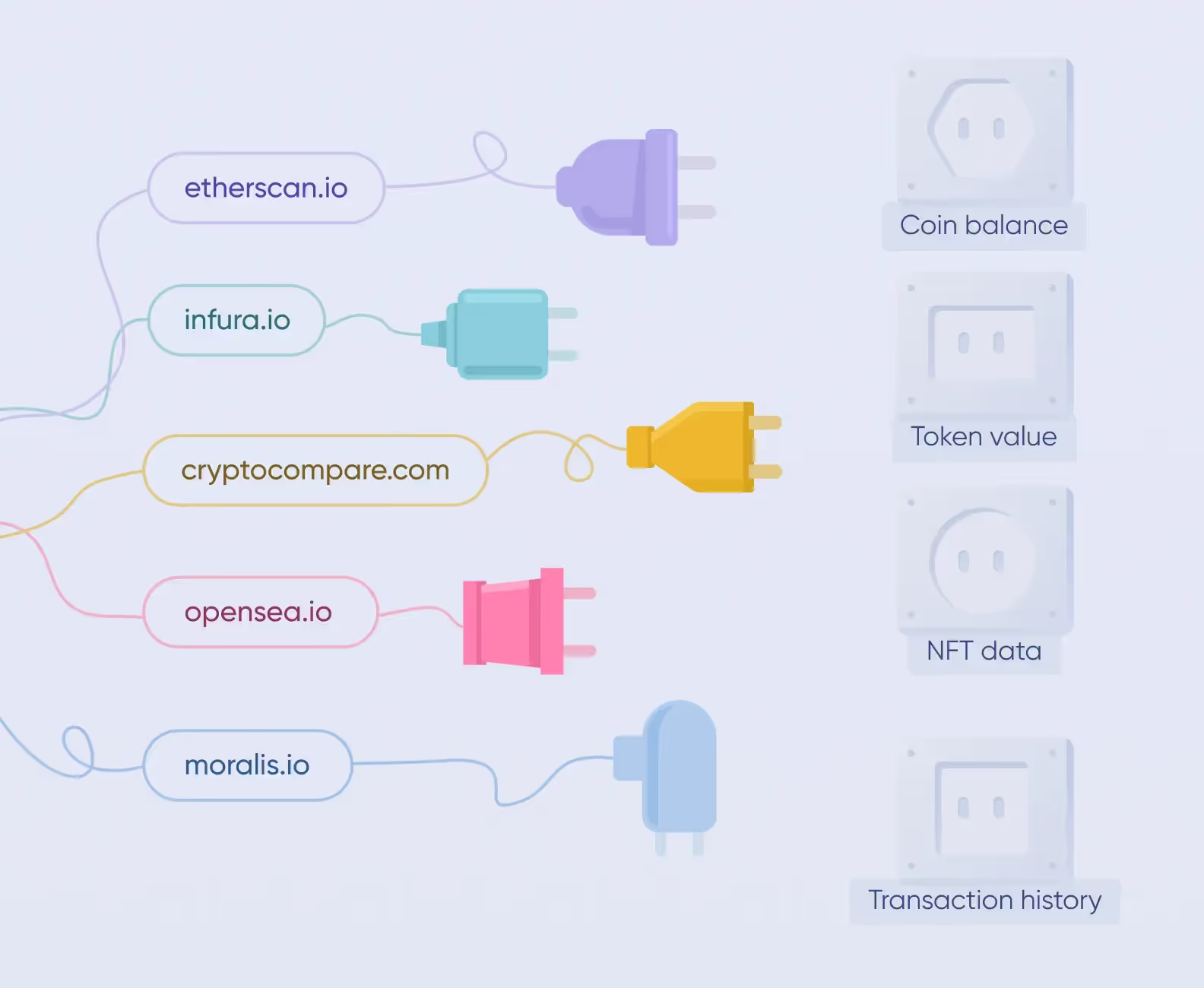
Our client wanted a crypto wallet that wouldn’t cost much to run and wouldn’t have a backend. Everything had to run on the user’s device to keep things anonymous. No servers, no databases, just the app pulling data from somewhere.
We figured out how to use free APIs instead of building expensive infrastructure. We mixed different services — Etherscan for token balances, CryptoCompare for prices, OpenSea for NFTs, and Moralis for transaction history.
Launch with core features first. A basic NFT marketplace with minting and trading beats a feature-packed platform that never launches.
Identify your minimum viable product — the essential functionality that delivers value — and build that first. Gather user feedback, validate assumptions, then add features incrementally.
This reduces initial Web3 development cost by 40-60% and lets you adapt based on real usage patterns rather than assumptions.
Paradoxically, planning for scale saves money. Migrating a successful project to new infrastructure costs more than building scalability in from the beginning. Use modular architecture that separates concerns.
Implement efficient data structures and indexing strategies. Choose databases and caching solutions that can grow with your user base. This upfront investment prevents expensive rewrites later.
Hiring full-time blockchain developers is expensive and time-consuming. Specialized Web3 development agencies bring experienced teams, established processes, and proven codebases.
They’ve solved common problems before and can avoid pitfalls that cost in-house teams weeks of debugging. While hourly rates seem higher, total project costs often end up 20-30% lower due to efficiency and expertise.
Selecting the right development partner protects your investment and increases your chances of success. Here are some tips for the vetting process:
Verify that the team has deep experience with your target blockchain. Ask about their experience with similar project types and request examples of complex smart contracts they’ve built.
Check if they have certified blockchain developers and whether team members contribute to open-source blockchain projects. Generic software agencies rarely have the specialized knowledge Web3 demands.
Examine their previous projects in detail. Are the applications still running? How much value do they secure?
Look for projects similar in scope and complexity to yours. A strong portfolio shows completed Web3 projects with verifiable on-chain deployments. Be wary of agencies that can’t provide concrete examples or only show testnet deployments.
Security should be central to their development process. Ask about their testing methodologies, code review practices, and experience with security audits. A quality partner treats security as non-negotiable, not an optional add-on.
Evaluate their project management tools, reporting frequency, and responsiveness during initial conversations. Do they provide regular updates? How do they handle scope changes? What’s their approach to timeline estimates?
A professional team offers transparent pricing, realistic timelines, and structured communication. They should ask detailed questions about your requirements rather than immediately providing estimates.
Building a Web3 application requires significant investment, and you need sustainable revenue to maintain and grow your platform. Web3 offers unique monetization opportunities that differ from traditional software business models.
The most straightforward approach is charging fees on transactions processed through your platform.
NFT marketplaces typically take 2-5% of each sale, with OpenSea and Blur competing on these rates. DEXs charge 0.3-1% swap fees that accumulate with trading volume. DeFi lending platforms take a percentage of interest paid by borrowers.
These fees accumulate quickly with volume — a marketplace processing $1 million monthly at 2.5% generates $25,000 in revenue. The key is balancing competitive rates with sustainability.
Launching a native token creates multiple revenue opportunities but comes with regulatory complexity. Initial token sales or fair launches raise development capital, though regulatory scrutiny has intensified significantly.
Governance tokens give holders voting rights over protocol decisions while providing your treasury with funds for development and operations. The team typically retains 15-30% of total token supply, vesting over 2–4 years.
Token appreciation benefits early stakeholders, aligning incentives between the team and community.
Staking mechanisms let users lock tokens to earn rewards, and platforms can take a percentage of these yields as revenue. Liquidity providers earn fees for supplying capital to pools, with the platform taking a cut of generated fees.
These models work particularly well for DeFi platforms where users expect yield opportunities. Typical platform cuts range from 5-20% of generated rewards. For example, if your staking pool generates 10% APY for users, you might take 2% as a protocol fee.
This creates recurring revenue that scales with total value locked (TVL). The challenge is maintaining attractive yields for users while extracting sustainable platform revenue.
NFT platforms can charge fees at multiple points in the asset lifecycle. Minting fees typically range from $5-50 per NFT depending on the collection and platform positioning.
Creator royalties — usually 5-10% of secondary sales — can be split between creators and the platform. High-volume collections generate substantial ongoing royalty revenue.
A collection with $100,000 in monthly secondary sales and 7.5% royalties generates $7,500, which might be split 5% to creators and 2.5% to the platform.
Some platforms also charge listing fees or premium placement fees for featured collections. The key is providing enough value through discoverability and user base to justify these fees.
Token-gated subscriptions offer tiered access with premium features behind payment walls. Users either pay monthly fees in cryptocurrency or hold minimum token amounts to access advanced features.
This provides predictable recurring revenue — 100 premium subscribers at $50/month generates $5,000 monthly. Premium tiers might include advanced analytics, early access to drops, reduced transaction fees, or exclusive community access. This model works well when combined with a free tier that demonstrates value.
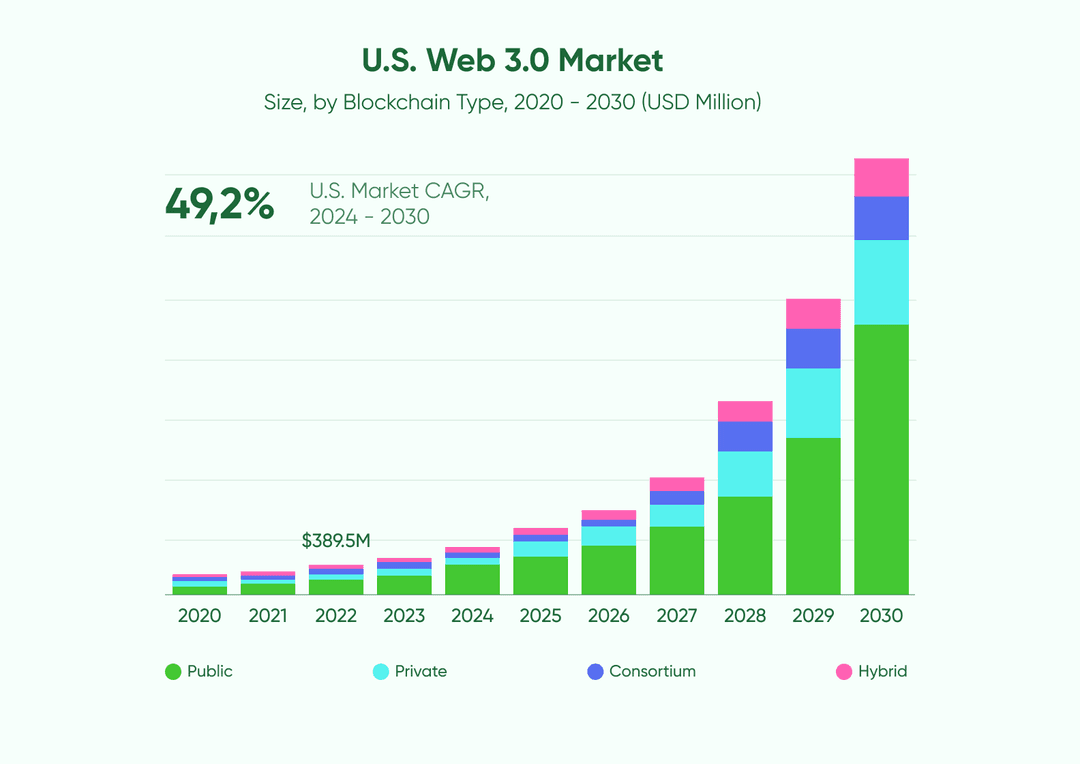
Web3 technology market projections indicate continued rapid expansion, with a growth at a CAGR of over 49% through 2030. And new developments address current limitations and open fresh possibilities.
Layer 2 networks like Arbitrum, Optimism, and Base have dramatically reduced transaction costs while maintaining Ethereum security. Zero-knowledge rollups (zkSync, StarkNet) offer even greater scalability with faster finality.
These solutions make Web3 applications accessible to mainstream users who won’t pay $20 gas fees. Projects building on layer 2 today position themselves for mass adoption as these networks mature.
Decentralized AI models run on blockchain infrastructure, ensuring transparency and preventing censorship. Smart contracts use AI for dynamic decision-making, risk assessment, and automated trading strategies.
AI agents execute on-chain transactions autonomously based on predefined parameters. This integration creates applications that are both intelligent and trustless — AI provides the decision-making while blockchain ensures verifiable execution.
Tokenizing physical assets — real estate, commodities, art, and bonds — brings trillions of dollars of value on-chain. This enables fractional ownership, 24/7 trading, and programmable compliance.
Regulatory frameworks are emerging to support tokenized securities, making this trend increasingly viable. This bridges traditional finance with DeFi, expanding Web3’s addressable market significantly.
Users increasingly demand control over their digital identities and personal data. Decentralized identity solutions let individuals own their credentials, sharing them selectively without relying on centralized platforms.
Blockchain-based identity verification enables privacy-preserving KYC, portable reputation systems, and user-controlled data monetization. This shift fundamentally changes how applications handle user information.
The future is multi-chain, not single-chain dominance. Bridge protocols and cross-chain messaging systems let assets and data move seamlessly between networks.
Applications deploy on multiple chains simultaneously, letting users choose their preferred environment. Chain abstraction layers hide blockchain complexity, making the underlying network invisible to users.
Web3 development requires careful budget planning across multiple cost components — from smart contract development and security audits to ongoing gas fees and compliance. Success depends on choosing the right blockchain, prioritizing security, and working with experienced partners who understand the unique challenges of decentralized systems.
For a clearer picture of what building a Web3 product costs and involves from a development partner's perspective, see our fintech development for Web3 page.
➡️Ready to build your Web3 project? Fill in the form and get a free project estimate in 48 hours.
Development timelines vary widely depending on project complexity. Simple NFT marketplaces can be built in 3–6 months, while complex DeFi platforms or metaverse applications may take 6–18 months or longer. Proper planning and phased releases help manage timelines effectively.
Key risks include security vulnerabilities in smart contracts, regulatory uncertainty, fluctuating gas fees, and scalability challenges. Mitigating these requires thorough audits, legal consultation, gas optimization, and scalable architecture design.
Smart contracts are immutable once deployed, but upgradeability can be built in using proxy patterns or modular contract designs. These approaches add complexity but allow future improvements without full redeployment.
High gas fees can deter users from interacting with your application, especially during network congestion. Layer 2 solutions and gas optimization techniques help reduce fees and improve usability.
Yes. Web3 development requires expertise in blockchain protocols, smart contract languages, and decentralized architectures. Specialized developers ensure secure, efficient, and compliant applications.


.svg)