Explore
Need help with your project?
This field is required
Incorrect phone number
Incorrect Email
This field is required
Please fill in all fields
Next
Next
Your role in the project
Services
Budget
Please select one option in each category
Submit
Submit
several colorful figures
Request sent
Our manager will contact you shortly.
Oops! Something went wrong while submitting the form.

AI MVP Development Services — From Idea to Production-Grade AI Product

AI MVP development services build a minimum viable product where AI or machine learning is a core functional component — not a chatbot bolted on afterward. We design and develop production-grade AI MVPs: a real backend, model evaluation, and error handling included from the first release, not added after a demo breaks. Purrweb is a design-led React Native and fintech development agency headquartered in the UAE. Every engagement is scoped to your data and model requirements before the build starts, so you know what you're committing to.

Free estimate in 48 hoursModel tested on real inputsRAG, GPT-family & OCR

What's included in AI MVP development

AI/ML architecture scoping — deciding what the model actually needs to do, and whether that requires a custom model, a fine-tuned one, or an API integration.

Data pipeline design — the ingestion, cleaning, and storage layer a model runs on; most AI MVP delays trace back to this, not the model itself.

Model integration and evaluation — wiring the model into the product and testing its output against real inputs before it ships, not just on a demo dataset.

RAG and retrieval architecture — where the product needs the model to answer from your data, not just general knowledge.

Production backend and security — authentication, error handling, and data validation so the product survives real traffic, not just a pitch demo.

QA and release — functional, interface, and security testing, then store submission or deployment.

What Is an AI MVP — and Why Vibecoded Prototypes Don't Survive Contact With Real Users

An AI MVP is a minimum viable product where AI or machine learning is a core functional component the product depends on to work — not a feature demo layered on top of a static app. It still follows MVP discipline: narrow scope, real users, fast validation. What changes is that the model, the data it runs on, and the evaluation of its output become part of the build from day one, not an afterthought.
Tools like Lovable, v0, and Bolt generate a working-looking AI prototype in hours. They're built to demo well: a clean UI, a model call that returns a plausible answer, a happy path that looks finished on a screen share. What they typically skip is everything that makes a product survive contact with real users — authentication, input validation, error handling when the model returns something wrong, and a data pipeline that holds up past a handful of test queries.
That gap shows up fast under real traffic: a model call with no retry logic times out, an unvalidated input breaks the UI, and there's no logging to tell you why. None of it is visible in a five-minute demo — it surfaces in week two of production, as a support ticket.
A production-grade AI MVP is scoped to include exactly those parts. The product is still an MVP — narrow, fast to ship — but it's built to run past the first hundred users, not just the first pitch.

Choosing between an AI prototype and a production-grade AI MVP

AI-generated prototype
Good for pitching an idea or testing a UI concept internally.
Built in: hours to days with a no-code/AI-generation tool
Missing by default: authentication, error handling, data validation, model evaluation
Not meant to: hold real user traffic or real data
Production-grade AI MVP (what we build)
Good for launching to real users, raising on traction instead of a mockup.
Built in: weeks, scoped to your data and model requirements
Included: real backend, model evaluation against real inputs, security and error handling, a data pipeline sized for actual usage
Quoted as: a fixed range before the build starts, driven by data readiness, model complexity, and compliance needs
Direct answer: an AI-generated prototype is the right tool for testing whether an idea is worth building at all. Once you need real users on it, the gap between prototype and production-grade MVP is exactly the part a demo tool doesn't build.

How Long Does AI MVP Development Take?

AI MVP development typically runs 8–14 weeks, depending on how ready your data is and how complex the model work is. That's wider than a typical non-AI MVP timeline, and the reason is almost always data, not the interface.
If you're integrating an existing model through an API — a GPT-family model, an OCR engine, a classification service — the timeline sits closer to 8 weeks: discovery, data pipeline, integration, evaluation, QA, release. If the product needs a custom or fine-tuned model, or the data needs cleaning and structuring before a model can use it at all, the range moves toward 12–14 weeks.

Data readiness — how much usable data you already have.

Model complexity — whether the model is an off-the-shelf API integration or requires custom evaluation work.

Compliance requirements — fintech and healthcare products add a security and audit pass before release.

Three decisions that shape your AI MVP

1
Data and model scoping
We start with what the model needs to work, not the UI. That means auditing what data you have, what's missing, and whether the task calls for an off-the-shelf model, a fine-tuned one, or a custom build.
2
Integration and evaluation
The model gets wired into the product and tested against real inputs — not a demo dataset. We track where it fails and build the error handling and fallbacks those failures need before release, not after.
3
Production hardening and release
Authentication, input validation, and security review happen before the product meets real users. QA covers functionality, interface, and security. Then it ships.

How We Build an AI MVP

1. Discovery and spec

We turn your request into a spec the build runs on, and every requirement gets an acceptance criterion precise enough that two people reading it independently reach the same verdict. For an AI MVP that includes the part teams leave vague: what counts as a good enough model output, measured how. Your original request is recorded separately, in your words, and kept untouched.

2. Data and model selection

We audit what data you have, what's missing, and what shape it needs before a model can use it. Then the model decision: off-the-shelf API, fine-tuned, or custom. We select by testing candidates against your actual inputs — on Biogeek that meant three weeks comparing four OCR engines before one proved it could read the forms reliably.

3. Build

The architect defines the project structure and module boundaries; the engineer runs a team of AI agents against it and accepts the result. What admits a change is not an opinion but a machine gate: tests, types, static analysis, dependency and architecture checks. A second model reviews the diff as a source of hypotheses — never as the approval itself.

4. Evaluation and QA

The model is tested against real, varied inputs rather than the sample set used to build the demo — that's where bias and failure modes surface while they're still cheap. A QA engineer then checks a random slice of features blind, before reading any agent report. That slice is what shows the real gap between what agents claim and what holds.

5. Release and operation

A deploy agent prepares the rollout and runs pre-flight checks. Anything irreversible — production deploys, data migrations — is applied by a person, not an agent. Success is confirmed by querying the live system, not by a command exiting zero.

6. Acceptance and scale

Delivery is checked against the request you gave us at the start, not against the spec we wrote from it — and by someone who didn't write that spec. A gap between the two is recorded as our analysis defect, not yours. From there, scaling is a scoping question rather than a rebuild, provided the integration layer was kept separable in stage 3.

Avoiding Vendor Lock-In and Model Bias in Your AI MVP

Building an AI MVP around a single model provider is a common shortcut, and it creates a real cost later: if that provider changes pricing, deprecates the model version, or the model's output quality shifts, the product's core function is exposed to a decision you don't control.

Vendor lock-in

We scope the integration layer so the model call is abstracted from the rest of the product — swapping the underlying model (a new version, a different provider, a fine-tuned alternative) doesn't mean rebuilding the application around it. That's a deliberate architecture decision made at the integration stage, not a fix applied after the fact.

Model bias

Model bias is a separate risk and it doesn't show up in a demo. It shows up when the model is tested against inputs that look like your actual users, not the sample inputs used to build the pitch. Evaluation against real, varied inputs — before release, not after a user complains — is part of the build, not a follow-up phase.

Security and Compliance for AI MVPs

An AI MVP handles two categories of risk a standard MVP doesn't: what happens to the data you send to a model, and what the model does with it. Both need to be scoped before development starts, not audited after.

Data — what's sent to the model, where it's logged, and whether it's retained by a third-party API provider are decisions made at the architecture stage. For fintech and healthcare products, this determines whether the integration is compliant before a single line of product code is written.

Model — input validation before data reaches the model, and output handling when it returns something wrong, empty, or out of bounds. Bad model output isn't a bug in the traditional sense — it's an expected condition the product handles, like a form handling a bad input.

Regulated industries — Purrweb's fintech work means this isn't a new checklist item added for AI — data-handling review, input validation, and audit-ready architecture are part of how we build MVPs in regulated industries already.

FAQ

What is the minimum data needed for an AI MVP?

There's no fixed minimum — it depends on the task. A model integrated through an API (GPT-family, OCR, classification) can launch with a small evaluation dataset, since the underlying model is already trained. A custom or fine-tuned model needs enough labeled data to evaluate accuracy before release. If you don't have that yet, collecting it becomes part of the scope, not a blocker to starting.

Can an AI MVP scale into a full product without a rebuild?

Yes, if the integration layer is architected to allow it from the start — model calls abstracted from the rest of the application, a data pipeline sized for growth, and evaluation built in rather than bolted on later. An AI MVP built as a vibecoded prototype usually can't scale without a rebuild, because none of that separation exists.

What happens if the AI model's output quality isn't good enough during the build?

It gets caught in evaluation, before release — that's the point of testing against real inputs rather than a demo dataset. If quality falls short, the options are adjusting the integration approach, evaluating a different model, or narrowing the MVP's scope to what the model can reliably do today.

How do you handle AI model bias and regulatory compliance in MVPs?

Evaluation runs against inputs that reflect your actual users, not a curated sample, so bias surfaces before release rather than after a complaint. For fintech and healthcare, data-handling decisions — what's sent to the model, where it's logged and retained — are scoped at the architecture stage, before development starts.

Can you build an AI MVP for a startup with limited runway/budget?

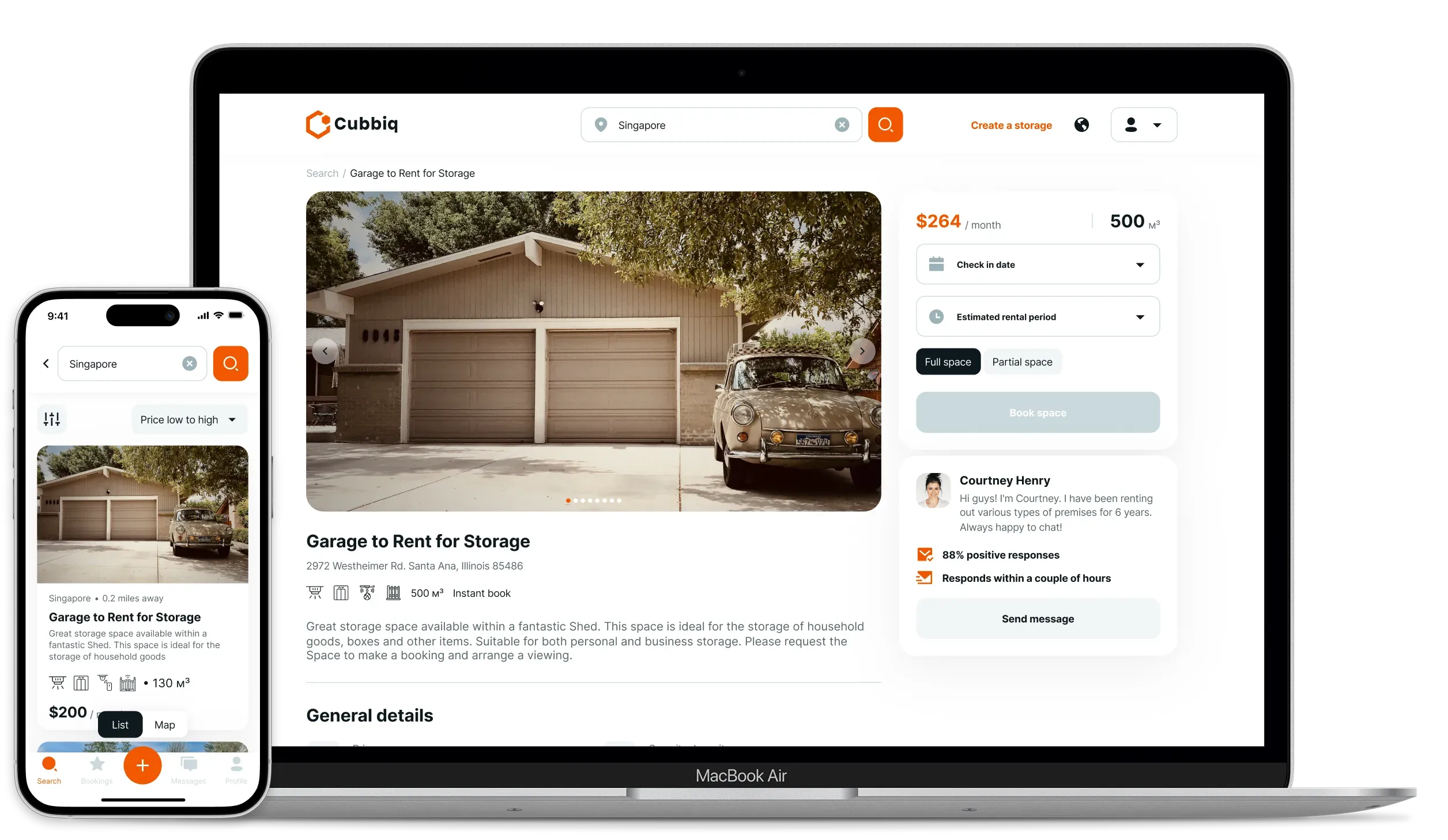
Yes — that's most of what an MVP is for. Scope gets cut deliberately to fit a budget: we remove features, not the parts that make the product work. On Cubbiq that meant dropping roughly 80 hours of scope to hold a fixed budget while keeping the core product and its payment flow intact. What doesn't get cut is security, input validation, and error handling — those are what separate a shippable MVP from a demo.

Estimate your AI MVP

A ballpark range in seconds — refine it below, then talk to an expert.

What are you building?
Platforms
Stage
Features — the cost of each
Design maturity

MVP / new product

$25,000 $40,000

Timeline: 23 months · team of ~4

Plus UI/UX design $5k$5k · QA & project management included

This is already a lean MVP scope — the fastest, cheapest way to launch.

We’ll email the breakdown right away: scope, cost drivers, timeline. No spam.

or discuss it with an expert

Preliminary estimate, refined on a call. USD.

Contact us if you're planning an AI MVP build!
Tell us what the AI needs to do — get a free project estimation in 48 hours.
This field is required
Incorrect number
Incorrect Email
This field is required
Please fill in all fields
Let's go!
Let's go!
Contact us if you're planning an AI MVP build!
Tell us what the AI needs to do — get a free project estimation in 48 hours.
Your role in the project
Service of interest
Budget
Please select one option in each category
Request sent
Our manager will contact you shortly.
Oops! Something went wrong while submitting the form.