Explore

Need help with your project?

Oops! Something went wrong while submitting the form.
AI chatbots in healthcare help patients and staff complete defined tasks, from booking appointments to collecting symptoms before a visit. They reduce routine work, but only when the scope, data access, and handoff rules are clear.
This guide explains where chatbots create measurable value and where human oversight is required. It covers information privacy, production architecture, and safe rollout planning.

The main decisions are:
AI chatbots in healthcare are conversational tools for a healthcare workflow. They guide patients or staff through scheduling, follow-up, or health information, then route uncertain or sensitive issues to a qualified person. They support health care operations, not autonomous medical diagnosis. These AI technologies differ by conversation and action predictability.
Rule-based chatbots follow fixed prompts and approved answers. They fit predictable tasks, such as appointment confirmation or standard forms. Teams exploring chatbot development services can define those limits early. Out-of-script requests route to a defined human recipient.
Intent-based conversational artificial intelligence (AI) recognizes what a user wants. This AI tool selects a response or action. It suits variations around a known service request, such as rescheduling. The action remains predefined. Safe design routes low-confidence requests or questions seeking medical advice to a defined human recipient, rather than interpreting them as diagnosis.
In a bounded implementation, generative AI can produce natural-language replies using approved information. It suits less predictable questions where wording varies, not independent care decisions.
Guardrails and human escalation handle uncertainty, clinical judgment, and actions beyond the assistant’s scope. Clinical decisions require review and approval by a qualified clinician, while the organization assigns accountability under its clinical policy and applicable law.
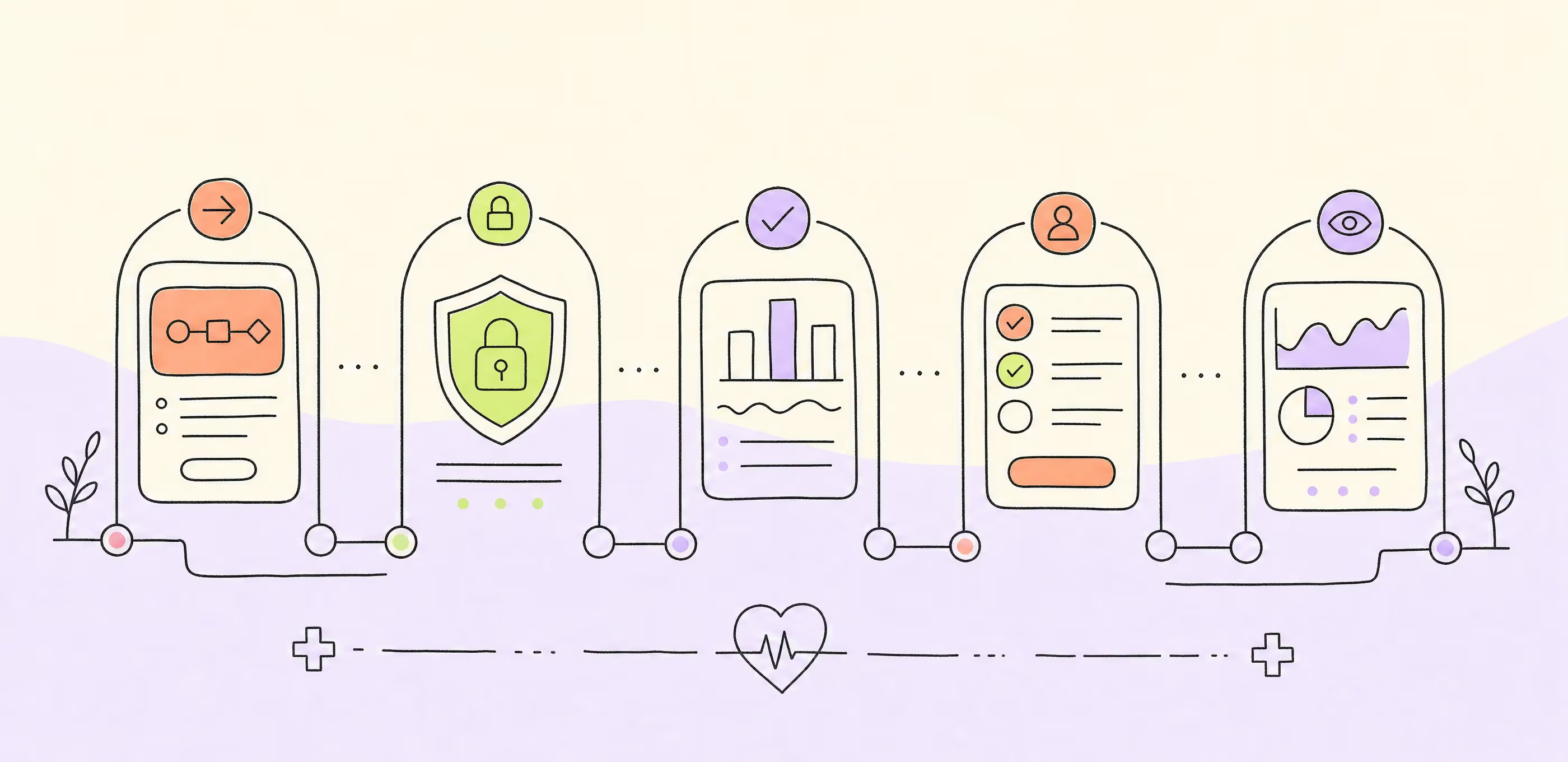
Production design moves a request through a defined path. The path covers channel, authentication and consent, approved knowledge, system action, configured checks, human escalation, and audit. Each stage documents data flow, decisions, ownership, and handoff.
The system authenticates users and authorizes access to electronic health records (EHRs) by role, purpose, consent, and policy.
FHIR (Fast Healthcare Interoperability Resources) can represent and exchange consent and provenance data with supported resources and profiles.
It does not establish consent or compliance.
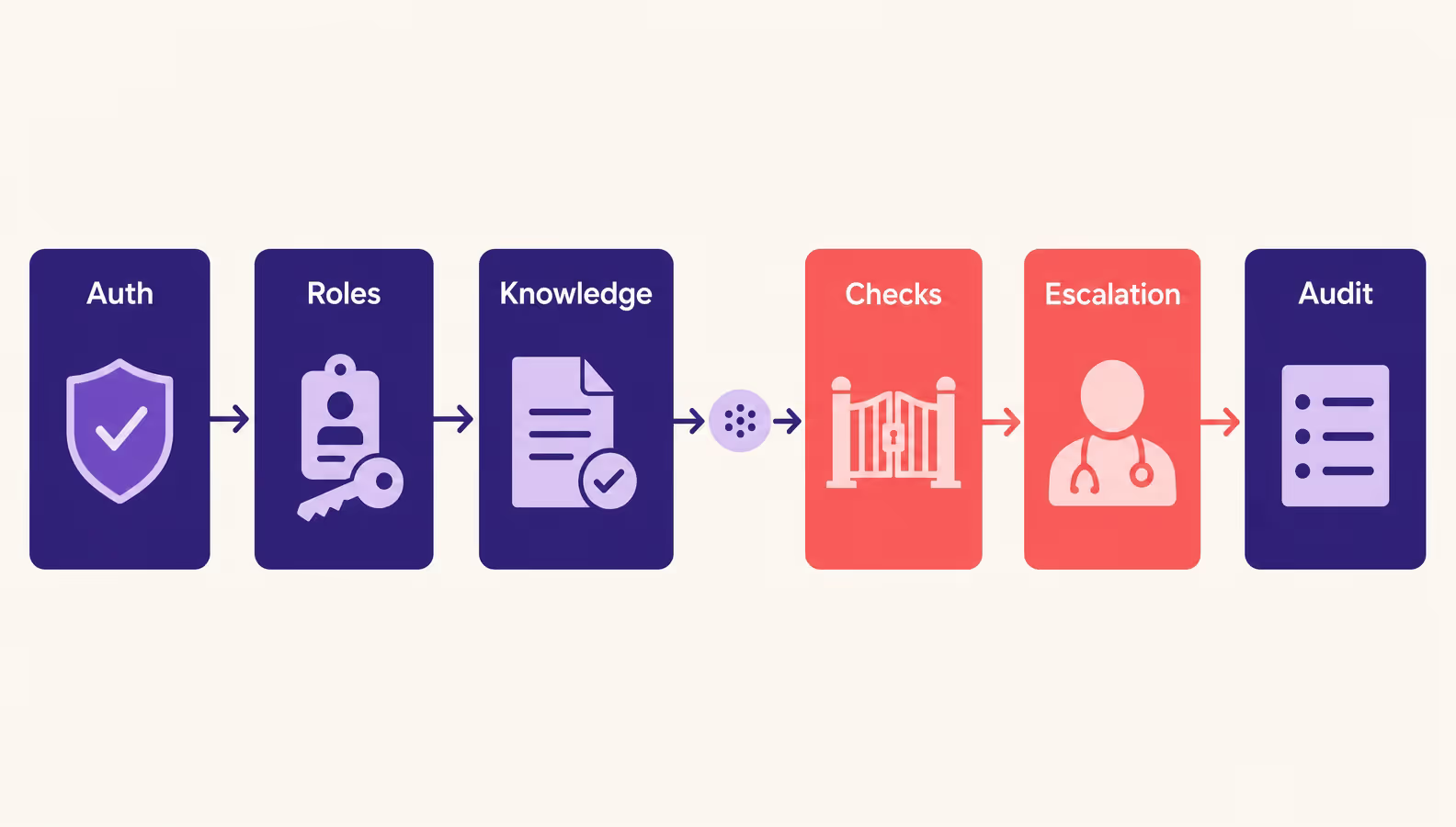
Configured checks can block or route requests
Rules use paths. Intent-based NLP maps requests to actions. In retrieval-augmented generation (RAG), the application supplies approved content to a large language model. EHR access requires user and service-account authorization.
Burden depends on data access, system actions, clinical risk, and handoff design. Assign accountable owners.
Validated checks can block or route failures. Triggers route context to qualified recipients. Audit logs record relevant access and activity. Systems handling ePHI require access and audit controls where applicable.
| Approach | suitable workflow | control model | typical integration burden | typical escalation burden |
| Rule-based | Forms | Rules | Low for stand-alone forms | Staff handles exceptions |
| Intent-based NLP | Requests | Map | Moderate with APIs | Route low-confidence requests |
| Generative chatbot | Q&A | RAG | Knowledge source, more for actions | Review risky requests |
Start a pilot with one bounded workflow, accountable owner, enabling integration, human handoff, and KPI to test value. A 2025 review of healthcare chatbot categories and evidence limits found heterogeneous evidence and limited real-world implementation and cost-effectiveness data. Treat each digital health use case as a pilot hypothesis.
| Use case | Primary user | Measurable outcome | Integration to validate | Mandatory human boundary | Accountable owner | KPI |
| Appointment scheduling | Patient | Booking completion | For example, scheduling system | Resolve exceptions | Access operations | Completion, no-show rate |
| Patient intake and triage | Patient | Complete intake | For example, intake form and clinical inbox | Review urgent or unclear inputs | Clinical lead | Escalation rate |
| FAQs and care navigation | Patient | Resolved service question | For example, approved knowledge base | Handle unsupported questions | Patient services | Containment rate |
| Medication reminders | Patient | Confirmed response | For example, care-plan or reminder system | Review reported concerns | Care team | Response rate |
| Chronic-care check-ins | Patient | Submitted check-in | For example, monitoring or care-management platform | Assess concerning changes | Clinical program lead | Check-in completion |
| Post-visit follow-up | Patient | Follow-up completion | For example, EHR/CRM task queue | Review new symptoms | Care coordinator | Task closure |
| Billing and insurance support | Patient | Resolved account request | For example, billing system, payer connection if needed | Resolve coverage disputes | Revenue-cycle lead | Resolution time |
| Staff knowledge assistant | Healthcare provider | Answered policy query | For example, approved policy repository | Verify clinical decisions | Operations lead | Helpful-answer rate |
Chatbots could show slots, confirm bookings, and collect reschedule requests. Teams should configure scheduling as the source of truth. Exceptions require routing to the scheduling team.
A patient intake workflow should capture information before a visit. Triage should sort it under a clinical policy, not chatbot judgment. Urgent, ambiguous, and high-risk inputs require defined routing to a qualified healthcare provider.
Purrweb designed Lytic Health's historical UX prototype, later Clearstep, and delivered a clickable prototype rather than a working app.
Users entered symptoms, received clarifying questions, and could route to a doctor appointment.
The source framed possible causes as a preliminary diagnosis. The prototype offers no evidence the output was clinically validated or should be treated as diagnosis.
A production symptom-intake workflow requires defined clinical review and escalation outside the chatbot. This case demonstrates interaction design, not clinical performance.
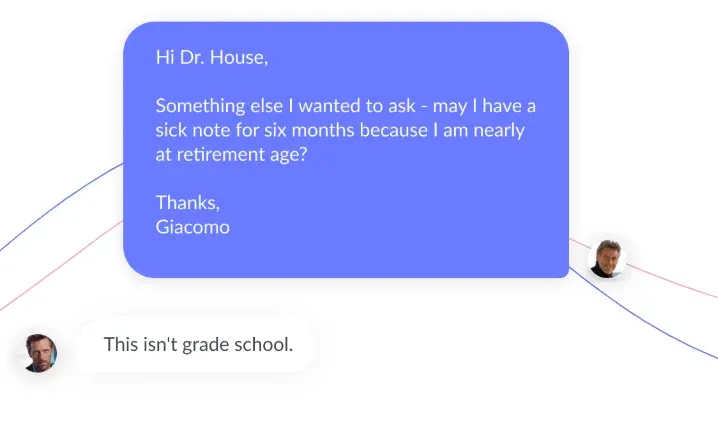
A prototype can test interaction boundaries before clinical workflow validation
A navigation assistant helps patients understand approved medical information about primary care. Test avoidable contacts against a baseline. Missing or disputed information requires routing to patient services.
Reminders can prompt confirmation of an existing care-plan action. Side effects, a requested change, or no response require a configured care-team process. The workflow should record context without altering treatment.
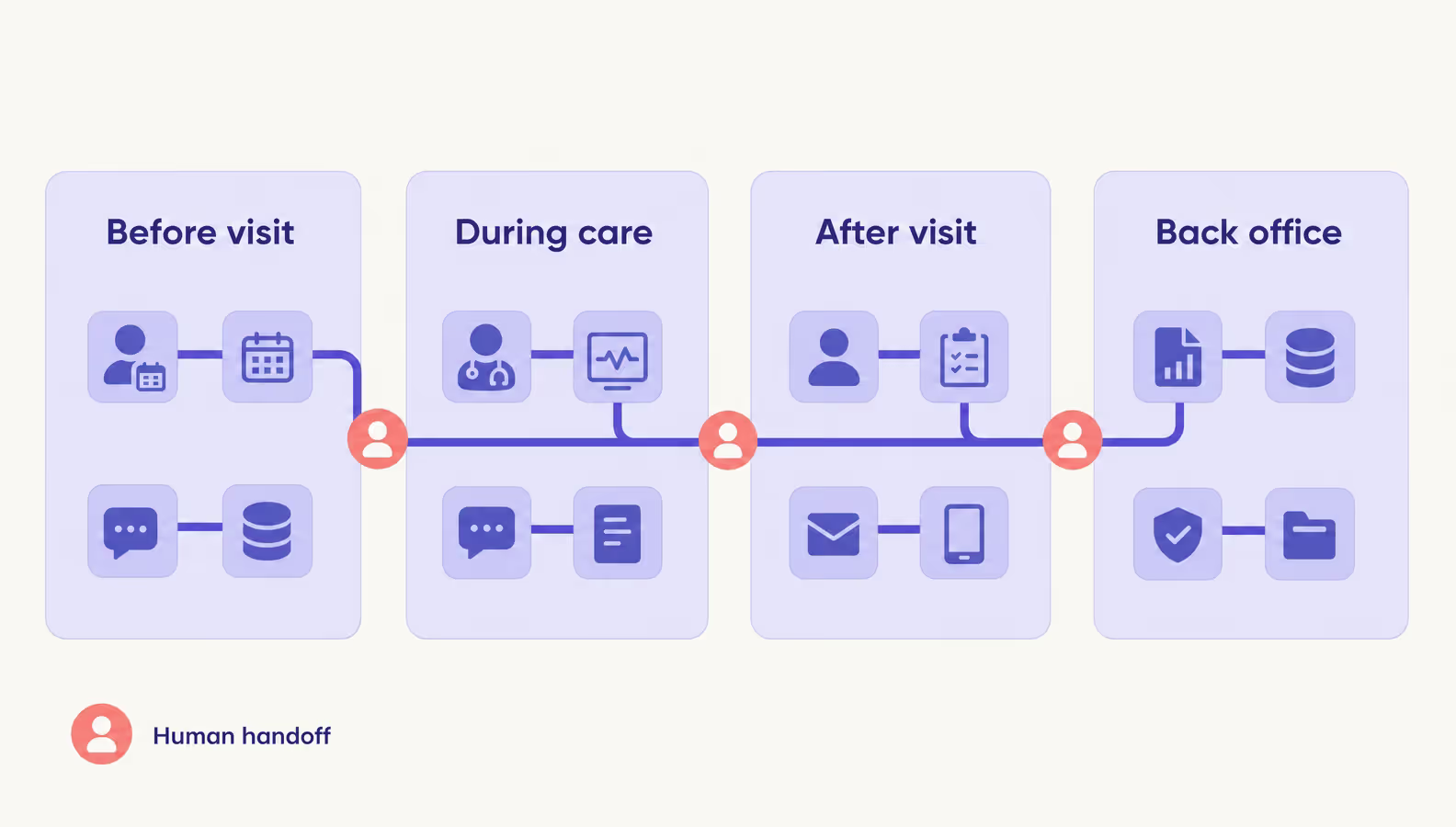
Different journey stages require different integrations and escalation paths
Scheduled check-ins collect patient-reported status between visits. Concerning responses require a configured clinician-visible task process. Test check-in completion and timely review, not health outcomes.
Follow-up can confirm an administrative step or help navigate care. New symptoms or unresolved concerns require configured routing to the care coordinator's queue.
Billing support can explain approved account information and route document requests. For this bounded workflow, the chatbot should not be authorized to decide coverage, adjust balances, or settle disputes. Route those exceptions to a designated revenue-cycle owner.
A staff assistant retrieves approved policy and workflow guidance. Test time spent finding routine answers against a baseline. Clinical decisions, outdated content, and uncertain answers require configured routing to the accountable owner.
Each chatbot benefit is a workflow hypothesis with a baseline, owner, and condition. Evidence about the use of chatbots is mixed, so pilots test improvement instead of assuming value.
| Stakeholder | Outcome to test | KPI | Baseline | Accountable owner | Enabling condition |
| Patients | Completed appointment or intake requests | Completion rate | Current completion rate | Access operations lead | Connected scheduling and intake flow |
| Clinicians | Less repetitive request handling | Requests resolved before clinician entry | Current inbox workload | Clinical operations lead | Usable routed context |
| Healthcare organizations | Workflow completion within service level | Service-level compliance | Current service level | Operations director | Defined staff escalation process |
Patient value centers on access and completion, not a promised clinical effect. A bounded workflow can improve patient engagement during an appointment request or intake step. When staff are unavailable, it identifies missing details before the request reaches the team. The user experience earns its value when fewer people abandon the path and exceptions reach a person who can act.
Healthcare professionals save time when the chatbot routes requests correctly and passes concise, complete, usable context. Otherwise, healthcare providers have to reconstruct the request and repeat the interaction. Reviewing routed conversations exposes whether the tool removes repetitive handling or merely moves it from the inbox into a new queue.
A healthcare organization needs evidence that the clinical workflow finishes within its service level and uses staff time responsibly. Message volume alone says little about either result.
Compare completed requests, delayed handoffs, and staff workload with the baseline before expanding. That keeps the stakeholder discussion focused on operational effectiveness rather than activity. The measure supports a disciplined decision to continue or stop.
Teams govern the use of AI in healthcare by connecting failure modes to a control, owner, recipient, and signal. A disclaimer cannot replace it. The workflow must stop or transfer before uncertainty becomes a safety or privacy event.
Output can be unsupported or miss context. Approved retrieval narrows this risk. Clinical validation and a safe fallback remain launch controls.
Protected health information can reach the wrong role. Completion gaps can expose bias or accessibility barriers. Excessive alerts can bury exceptions. Risk analysis, representative testing, scoped access, and queue monitoring make these failures visible.
The consequence of an error sets the handoff policy. Confidence and workflow rules provide supporting signals.
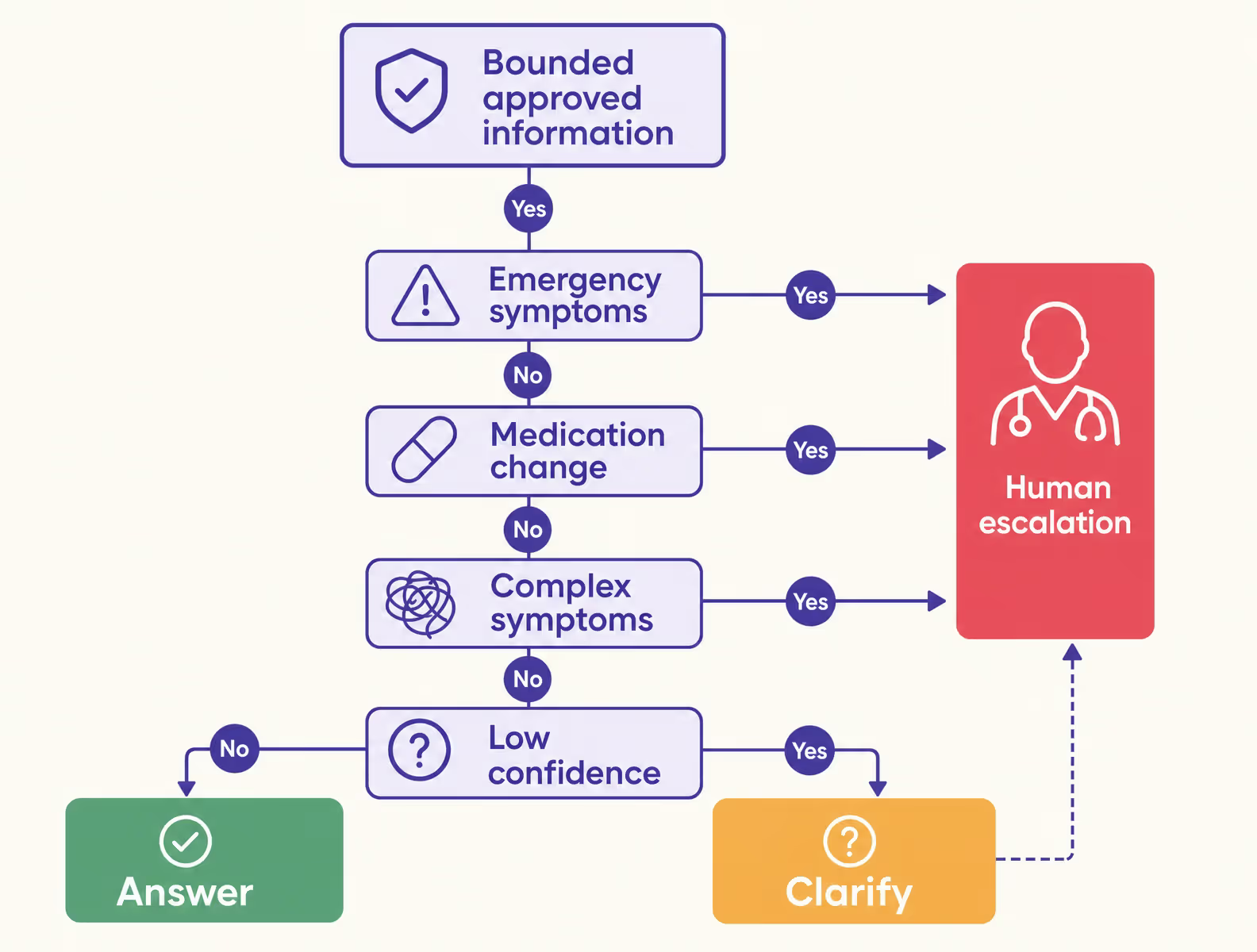
Escalation depends on the consequence of an error, not only model confidence
Emergency symptoms, medication changes, diagnosis requests, and complex reports go to a qualified healthcare provider. Missing context or low confidence also triggers transfer when the workflow cannot resolve them safely. The chatbot sends relevant input and the reason to a designated queue.
A clinical lead approves content and handoff rules. Operations owns queue coverage. WHO/Europe's health AI guidance calls for safety, fairness, and real-world effectiveness testing with accountability and privacy safeguards. Monitoring tracks delayed transfers, unsupported answers, and access anomalies.
| Risk | Failure mode | Guardrail | Owner | Recipient | Signal |
| Answer failure | Unsupported output | Grounding and abstention | Clinical lead | Clinician | Unsupported rate |
| Urgent input | Routine flow continues | Trigger rules | Safety lead | Triage team | Delayed transfers |
| PHI exposure | Unauthorized access | Scoped access | Security lead | Incident team | Access anomalies |
| Bias or inaccessibility | Uneven completion | Representative testing | Product owner | Human support | Completion gaps |
| Alert fatigue | Queue overload | Approved routing | Operations lead | Designated queue | Backlog rate |
The Health Insurance Portability and Accountability Act (HIPAA) is not a product label. The organization assesses its protected health information (PHI) flow and purpose. It verifies vendor roles, agreements, access, retention, auditability, incident response, and clinical ownership.
Map each input, output, storage location, and recipient to a purpose. HIPAA permits some PHI uses or disclosures without individual authorization for treatment, payment, and health care operations when the rule applies. Other uses need a valid pathway. General consent does not replace this analysis.
A provider that creates, receives, maintains, or transmits electronic PHI can be a business associate, even when encrypted data remain unreadable to it. Determine vendor and subprocessor roles, then execute a business associate agreement (BAA) where required.
Role-based access limits systems containing electronic PHI to authorized people. Audit controls record and examine activity. Retention and deletion rules need a documented purpose. The incident plan assigns investigation, evidence preservation, notification, and decision ownership.
The six-year HIPAA Security Rule documentation requirement does not set chatbot retention periods. Our healthcare SaaS compliance and architecture guide covers the context.
A clinical owner approves sources, response boundaries, and escalation rules. Other stakeholders approve changes within their scope. Versioned records connect releases to evidence, clinical validation, and monitoring. Changes to content, data access, AI models, or routing require reapproval.
Vendor evidence should cover five areas:
This evidence supports due diligence. It does not prove compliance by itself.
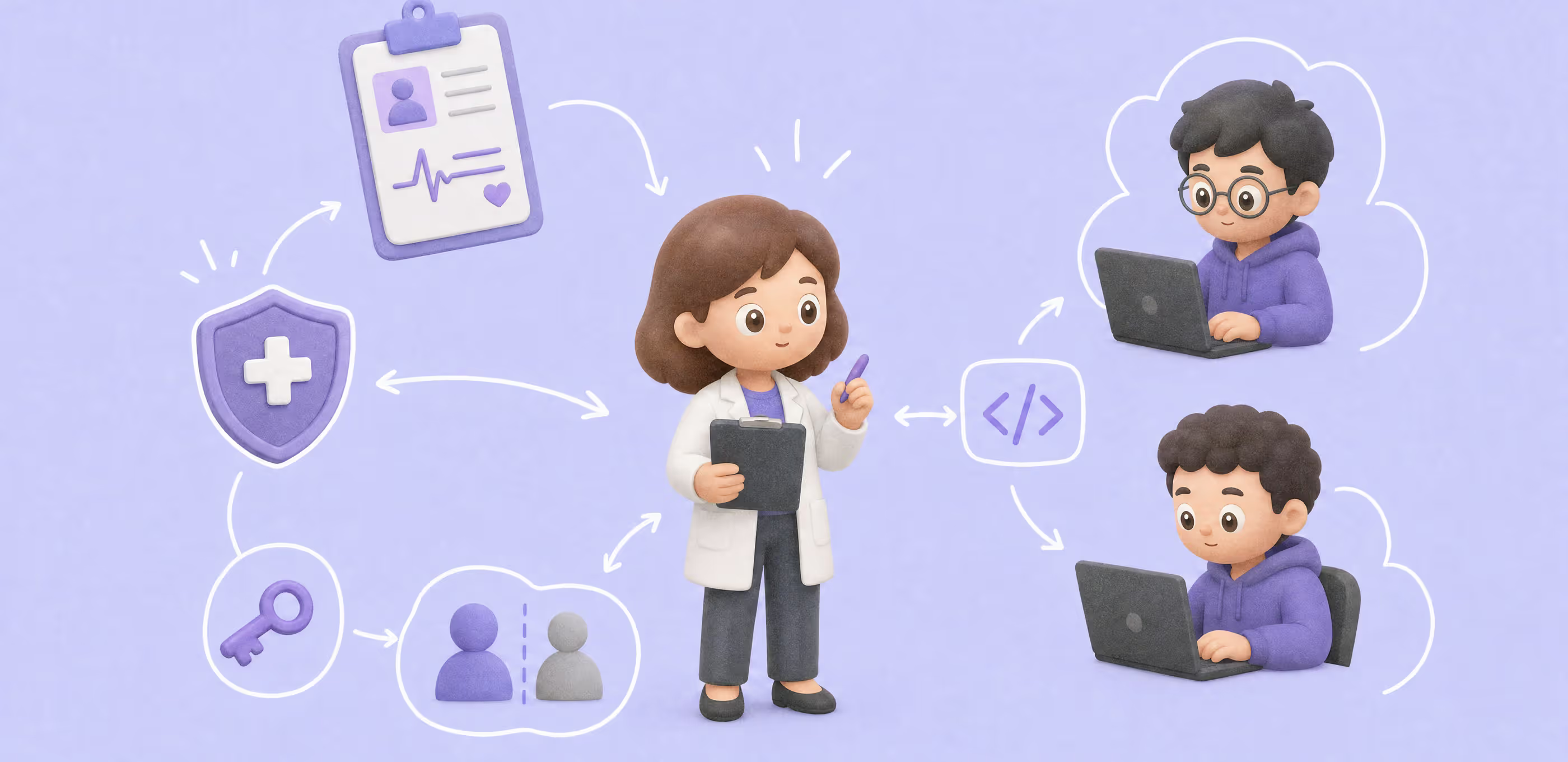
Production architecture keeps the chatbot inside a governed healthcare system. It maps channel, identity, the protected health information (PHI) boundary, approved knowledge, integrations, human inbox, audit, and monitoring. Every data or action crossing needs authorization and an owner.
Authenticate the user before exposing PHI. Role-based access limits data and actions. The boundary covers the EHR, logs, analytics, support tools, and connected services.
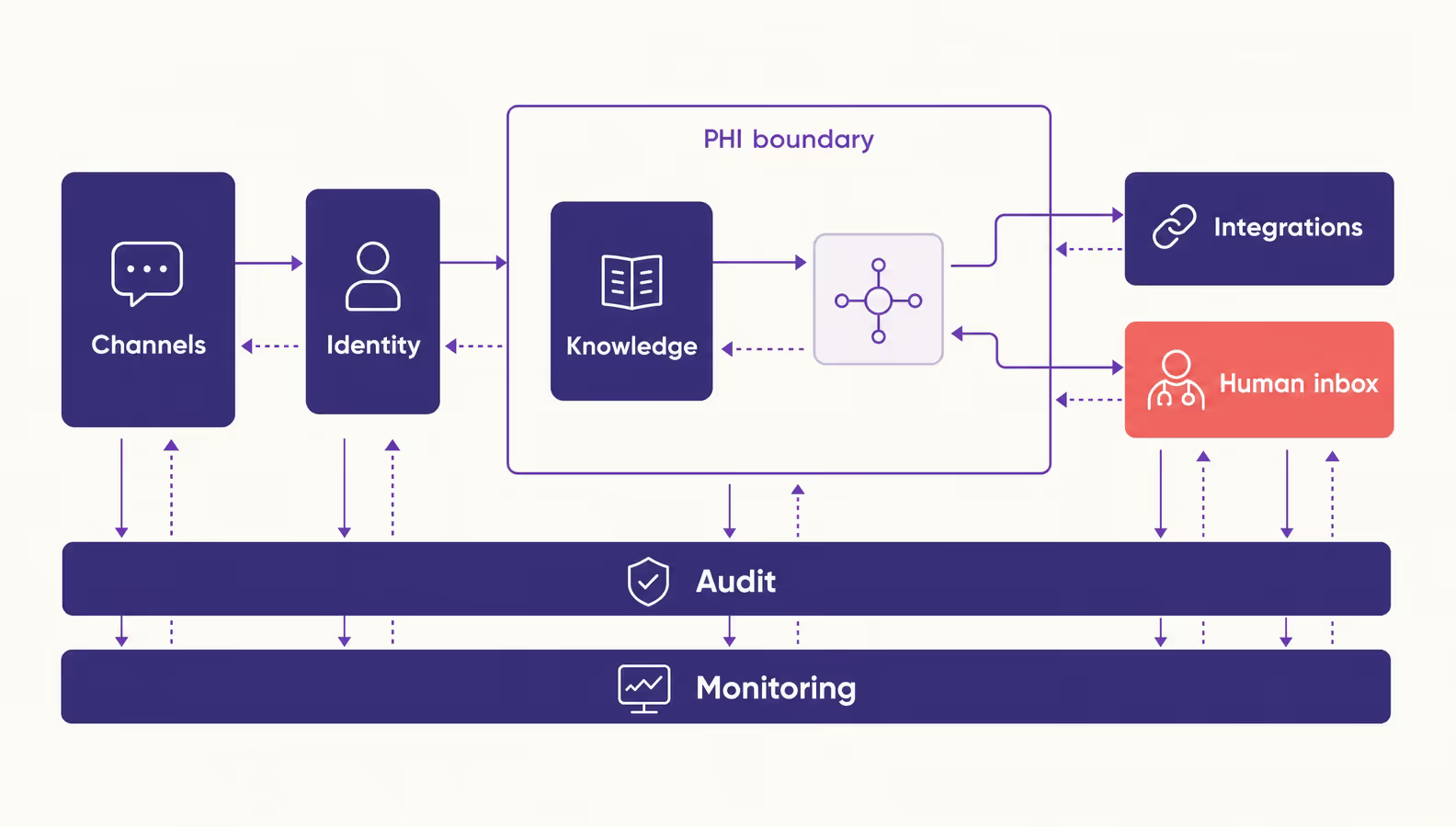
The model remains one controlled component in the clinical system
Retrieval-augmented generation supplies approved information to a large language model but does not guarantee accuracy. Orchestration applies authorization, action limits, configured checks, and human escalation.
Treat EHR, scheduling, billing, and telehealth as separate AI integration services workstreams. Fast Healthcare Interoperability Resources (FHIR) is a Health Level Seven (HL7) exchange standard, not an integration guarantee. Verify versions, profiles, resources, authorization, capabilities, and errors. Route exceptions to a staffed inbox and log access, routing, and outcomes.
We built Medico, a mobile and web monitoring platform for an oncologist, not an AI chatbot.
The doctor sets survey frequency. Patients report their condition and medication side effects, then upload lab results. The system notifies the doctor.
This human-owned destination matters. A conversational front end still needs a clinician inbox, routing, and auditable events instead of automatic care decisions.
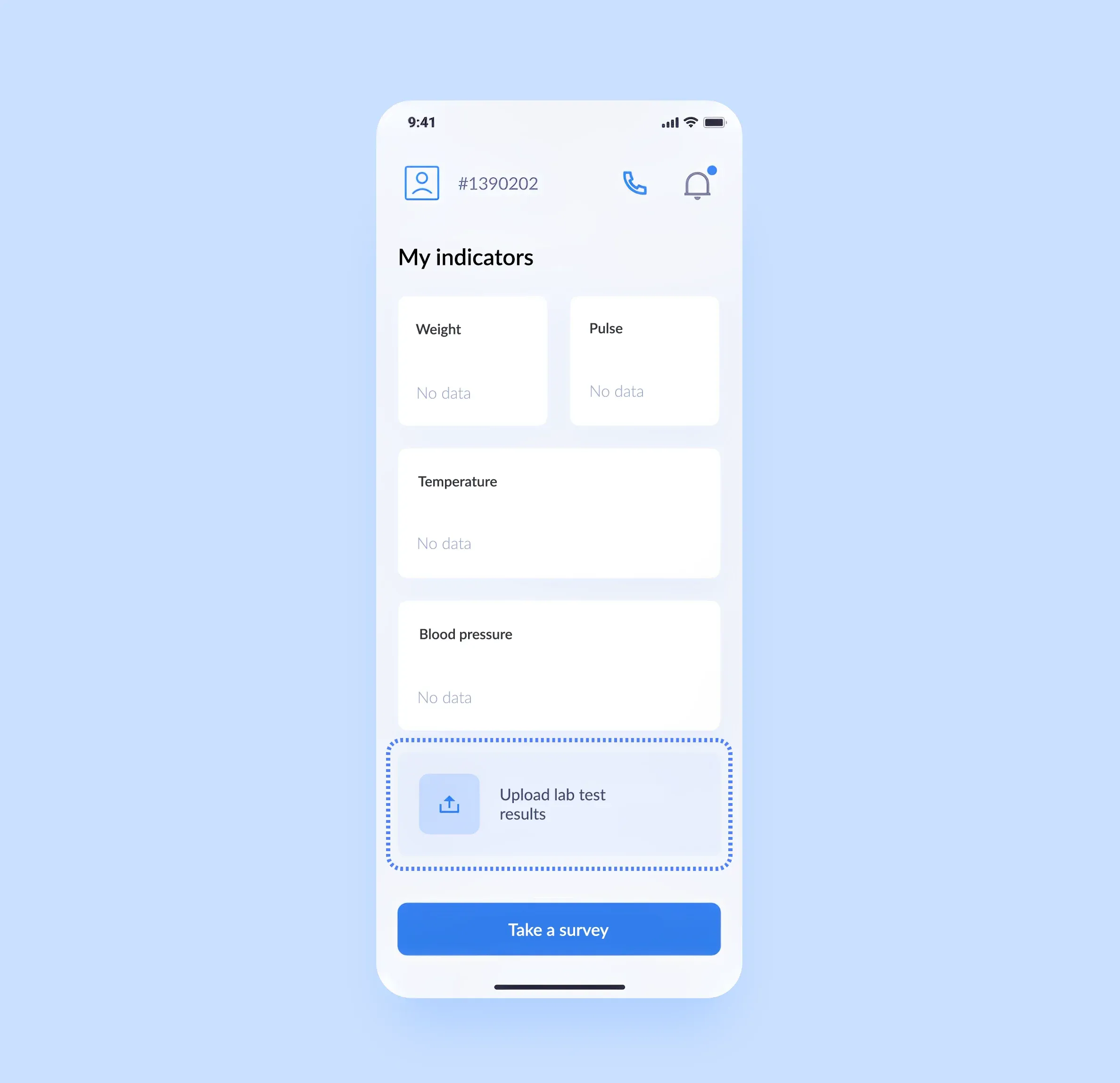
Collected information becomes actionable only when it reaches the person responsible for the next step
A rollout treats the chatbot as a controlled workflow, not a finished product after a demo. Start with one measurable use case. Map its data and failure modes, validate conversations and integrations, then use pilot evidence to decide on expansion.
Name the user, action, exclusions, human recipient, and one outcome metric. Record the baseline. A reversible workflow with a clear owner gives the pilot a stop condition.
Map data sources, recipients, storage, and system actions. Mark protected health information, authorization rules, failure modes, escalation triggers, and incident owners. Workflow-specific risk analysis grounds the controls. Our medical software development guide adds context.
Test with clinicians and users. Include unsupported questions, missing context, prompt injection, accessibility, and failed handoffs. Validate integrations in a sandbox. For a FHIR server, review its CapabilityStatement to confirm supported resources and interactions.
| Stage | Deliverable | Approvers | Go or no-go evidence |
| Scope | Workflow, KPI, baseline | Product, clinical, operations | Owner and boundary agreed |
| Risk | Data flow, controls, escalation | Privacy, security, clinical | Controls and recipients assigned |
| Validation | Conversation and integration tests | Clinical, technical | Defined tests pass |
| Pilot | Monitored limited release | Clinical, privacy, operations, technical | Workflow thresholds met |
Limit the release by channel, population, or operating window. Monitor completion, delayed handoffs, unsupported answers, overrides, workload, and accessibility gaps. The scorecard uses predefined quality, safety, operational, and business measures, not a universal threshold. Expansion follows evidence and owner approval. Monitoring and feedback continue after launch.
We worked on Freelife, an app receiving Libre sensor data and showing glucose dynamics. It was not an AI chatbot.
We improved UX, built the frontend, and integrated the sensor. Connection loss, offline operation, and real-world testing were central constraints.
The lesson applies to chatbot integrations: test failures outside a demo. A conversational layer can collect context or prompt follow-up, but must not infer treatment from glucose data.
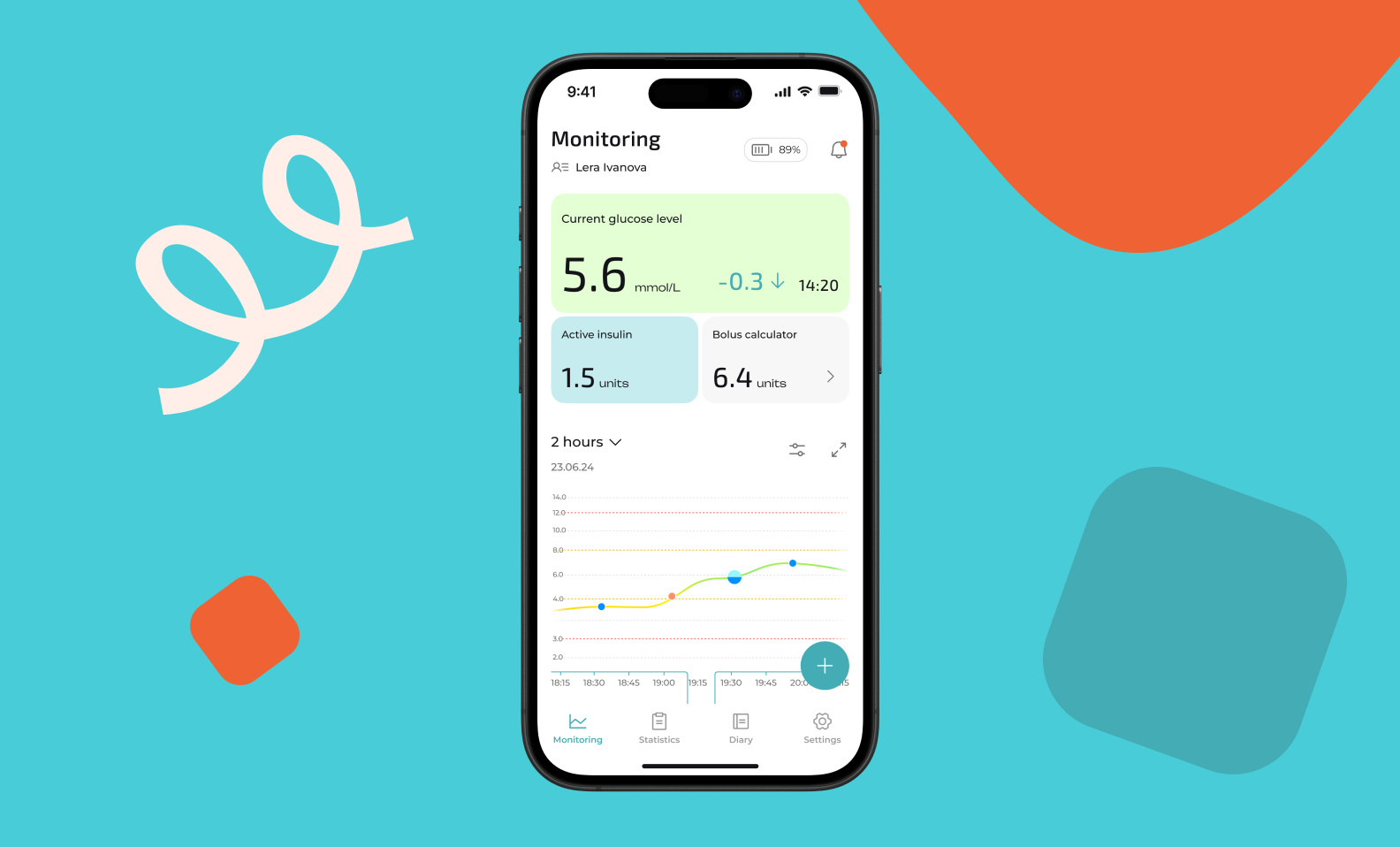
Healthcare integrations need testing beyond the happy path
The decision is not simply license fees versus development effort. Compare control, integration depth, validation work, operating ownership, and vendor dependency after launch. If electronic protected health information reaches a hosted service, verify its role and execute a business associate agreement where required. Our chatbot development cost breakdown covers pricing factors.
Templates fit low-risk, predictable workflows with limited data access. Setup can be faster, but available controls, integrations, audit evidence, and escalation logic define the usable scope.
Configurable platforms provide workflows and integration options for the healthcare industry. Buyers still validate vendor roles, data terms, access, supported system capabilities, errors, monitoring, and clinical ownership.
Custom AI solutions offer greater control over workflow, user experience, guardrails, integrations, and observability. It also makes the healthcare organization responsible for more validation, change management, knowledge maintenance, and production operations.
Compare the three models by the control, operating work, integration responsibility, and vendor dependency left directly with your team:
Healthcare AI chatbots should solve one narrow problem with a measurable outcome and reversible scope. Define PHI handling, integrations, clinical boundaries, accountable owners, and human escalation before launch. Then validate the workflow with clinicians and users.
Expand only when pilot evidence meets predefined safety, quality, operational, and business criteria and the responsible stakeholders approve it. Choose the delivery model by post-launch control and operating workload, not the AI label or price.
➡️ Planning a healthcare chatbot? Tell us about the workflow, its systems, users, and safety boundary. We will help turn it into a scoped pilot plan.
Healthcare chatbots provide support for administrative and clinical-support workflows. Examples include appointment scheduling, patient intake and triage, FAQs and care navigation, and medication reminders. They also support chronic-care check-ins, mental-health support, billing and insurance questions, and support for clinicians and staff.
Each workflow needs approved information, limited system actions, and an accountable owner. It also needs a route to a qualified person when a request becomes uncertain, sensitive, or higher-risk.
Compliance is not automatic and cannot be established by a product label. The healthcare organization must map where protected health information enters, moves, and remains.
It then verifies vendor and subprocessor roles, plus business associate agreements where required. Review also covers authorized access, audit capability, retention and deletion rules, incident handling, and permitted data or model use. The assessment depends on the workflow and parties involved.
No. Medical chatbots can collect patient information, provide approved health information, or route a request. They should not replace a clinician or make autonomous treatment decisions.
Human ownership is required for emergencies, medication changes, complex symptoms, low-confidence answers, and material health decisions. The handoff needs a defined trigger, qualified recipient, relevant context, monitored queue, and accountable owner rather than a disclaimer alone.
The main risks include inaccurate or unsupported output, missing clinical context, bias, and privacy exposure. Other failures include unsafe automation, accessibility barriers, alert fatigue, and delayed escalation.
Teams reduce these risks through narrow scope, approved knowledge, access controls, clinical validation, representative testing, audit, and monitoring. A reachable human recipient must receive the conversation and context whenever a defined safety, privacy, or uncertainty trigger occurs.
Start with one narrow, reversible workflow and one measurable KPI. Record the baseline, map data and integrations, identify protected health information, assign owners, and define exclusions and escalation.
Test conversations and failure states with clinicians and users, then validate integrations in a sandbox. Run a limited pilot and monitor predefined quality, safety, operational, accessibility, and business evidence. Expand only after the responsible stakeholders approve the results.


.svg)