Explore

Need help with your project?

Oops! Something went wrong while submitting the form.
Healthcare teams rarely struggle to make a generative AI demo look convincing. The harder question starts when that demo touches real records, patient communication, or clinical workflows. What makes the output reviewable, bounded, and safe enough for a controlled rollout?

In this guide, we'll look at how product and operations leaders choose a narrow workflow and separate useful assistance from clinical judgment. We'll then follow the controls that carry that workflow through evaluation, ownership, and monitoring. The goal is a practical route from a promising use case to a product workflow that people can review and govern.
Generative AI in healthcare makes text or images for a set task, but trained staff review the output and own all clinical decisions before it is used in patient care.
That boundary starts with the job. A large language model is one of several generative models that can draft notes or patient messages from records. Fluent output can still omit context or add unsupported detail.
Three categories often meet inside the same healthcare system, but they do different work:
A clinical decision support system may combine all three. Rules validate fields, predictive AI algorithms flag risk, and generative AI drafts a summary. Their controls are not interchangeable because rule failures, weak predictions, and fabricated sentences create different problems.
The workflow therefore needs approved context, a defined output, and a reviewer who can reject or escalate uncertainty. AI tools support the task. They do not inherit clinical judgment or organizational accountability.
A useful application of generative AI starts with a bounded task and a person who remains responsible for the result. The same AI model might support a low-risk draft in one workflow and create an unacceptable failure mode in another. The difference lies in the input, the output, and what happens before anyone acts on it.
| Workflow | Appropriate GenAI task | Human owner and review | Boundary |
| Clinical documentation | AI scribes summarize approved records or draft a note | A clinician checks the source context, edits the note, and signs it | The output is not an autonomous clinical decision |
| Patient communication | Draft a plain-language reply from approved information | A clinical or operations owner approves the message before sending | Unapproved health information stays outside the prompt and response |
| Clinical research | Support protocol drafts, consent materials, or data-quality checks | The research team validates the output for the intended study setting | A proposed use is not presented as a proven research outcome |
| Synthetic data | Support synthetic data generation in healthcare for research, testing, or simulation | A data-governance owner reviews privacy and disclosure risk | Synthetic data is not assumed to be anonymous or automatically safe |
| Medical imaging | Support image reconstruction, synthetic-image research, or draft descriptions | A qualified imaging or research specialist validates the result | The generated output does not stand alone as a diagnosis |
| Operations | Summarize approved internal material or draft workflow content | The process owner checks accuracy and the escalation path | Fixed business rules remain separate from generated content |
Documentation shows why the workflow boundary matters. Medical voice recognition software turns speech into text. A generative layer can then reshape that text into a draft note, but the clinician still compares it with the source record before signing.
The same distinction applies to RPA in healthcare. Robotic process automation follows preset rules for repeatable steps. Generative AI produces content whose wording can vary, so its review has to cover meaning and unsupported details rather than process exceptions alone.
Patient communication makes the ownership question especially visible. A generated reply or intake summary only helps when the flow ends with a person who can review the context and decide what happens next. One of our healthcare prototypes shows how that handoff shapes the product even without generative AI.
We designed a clickable prototype for Lytic Health, later known as Clearstep. Patients entered symptoms, answered follow-up questions, and moved toward an appointment flow. A clinician-facing interface kept messages and scheduling activity visible.
This was not a production GenAI system or evidence of clinical validation. The relevant lesson is the handoff. Patient-facing intake still had to lead to a clear human action instead of presenting a generated answer as the end of the workflow.
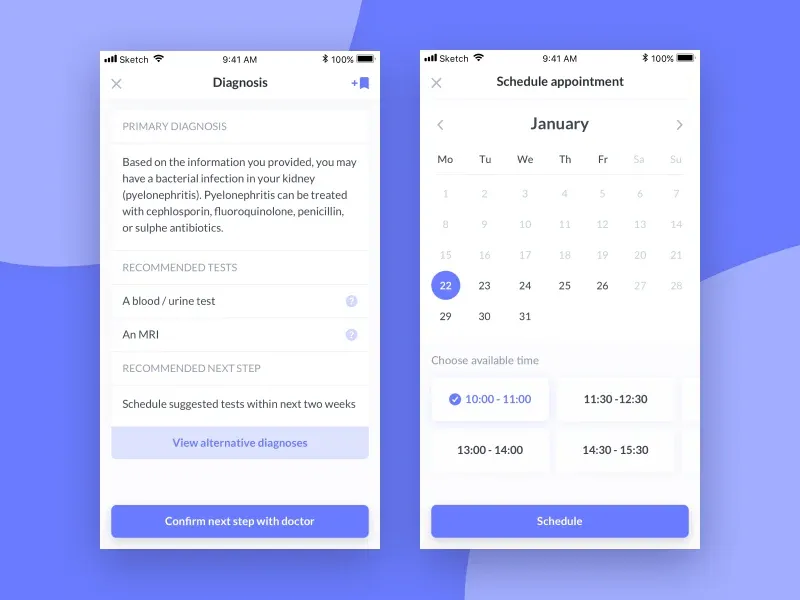
A patient-facing flow becomes safer when intake ends with an explicit clinician handoff
Research and synthetic-data workflows need a different review path. A 2025 healthcare review describes AI applications across research support, synthetic data, imaging, documentation, and administrative work. That breadth does not give every output the same evidence level.
A protocol draft belongs with the research team that understands the intended study. Synthetic data needs disclosure and privacy testing before reuse. An image-related task needs validation by someone who can recognize a clinically relevant error. In each case, the owner reviews the part of the output that creates the real risk.
This owner-and-boundary view keeps the list practical. It also exposes weak generative AI applications early. If a team cannot name who reviews the output or what happens after a failed check, the workflow is not ready to move from an experiment into healthcare delivery.
A convenient task is not automatically a sound use of AI in healthcare. The stronger candidates have a stable place in the workflow, an output that someone can inspect, and an error that the organization knows how to contain. Without those conditions, a polished response can hide more uncertainty than it removes.
Five questions turn that distinction into a practical filter:
Generative AI can help healthcare providers and other healthcare professionals draft routine content or search approved material. The benefits of generative AI still depend on the setting because saved effort must not shift verification work to someone else.
Accuracy also needs a workflow-specific meaning. A patient-message team might check whether each response preserves approved guidance and avoids unsupported advice. A research team might instead test whether a draft keeps required protocol details and flags missing information. One accuracy of AI score would conceal those decisions.
The same logic limits claims across the healthcare industry. Reviews describe the potential of generative AI, not guaranteed outcomes across healthcare services. Healthcare sector teams still need evidence from users, data, and relevant healthcare settings.
A workflow that fails this filter does not always need to disappear. Often the useful move is to narrow it by reducing the permitted context, keeping the output internal, or adding a stronger review step. If the owner and failure action remain unclear, the workflow is still an experiment rather than a production candidate.
Deploying generative AI in healthcare safely requires a narrow workflow, approved data, intended-setting tests, and a qualified reviewer. Monitored escalation precedes routine use.
Passing the filter lets a team use generative AI for one task, not as a production feature. The integration of generative AI still has to connect product ownership with data controls and evidence. Teams often bring in custom AI development services at this point to translate a validated workflow into an architecture, test plan, and delivery scope.
The six steps below treat every stage as a gate. Each gate has an owner, a piece of evidence, and a decision about whether the workflow moves forward.
Choose the workflow and owner. Define the user, the moment in the process, and the output the AI system will produce. Name one workflow owner who has authority to narrow or stop the task. A broad goal such as “support clinicians” is too vague to evaluate. “Draft a visit summary for clinician review” gives the team a specific task and handoff.
Map the permitted data and context. List the electronic health record sources the model can access and what stays outside the workflow. This includes prompts, retrieved records, generated output, logs, and any data reused for AI model training. The data owner decides what the product can retain and disclose. The architecture then enforces that decision through access rules rather than relying on prompt wording.
Build an evaluation set and failure thresholds. Training, validation, and test data sets need examples from the intended setting, including difficult and incomplete inputs. Product, clinical, or research reviewers define what counts as an acceptable draft and what triggers escalation. The evaluation also checks fabricated details, omitted context, privacy exposure, and uneven performance where patient subgroups are relevant.
Integrate inside a controlled environment. Integrating AI requires the product to pass only approved context into the model and keep generated output inside the workflow. A cloud computing in healthcare architecture can support identity, access, logging, and isolation, but those services still need configuration around the use case. The integration also needs a visible route for rejection and manual handling.
Pilot with real human review. Start with a limited user group and keep every output reviewable. The reviewer sees the source context, knows the failure threshold, and records why an item was accepted, edited, or escalated. This stage tests both the model and the surrounding process. A good model inside an unclear review flow still produces an unreliable product experience.
Monitor, audit, and update governance. Generative AI models in healthcare can shift with data, users, and model versions. The operations owner tracks failure patterns, overrides, data incidents, and unresolved feedback. A 2025 consensus paper recommends intended-setting validation, human review, auditability, and ongoing monitoring rather than relying on general model performance.
The gates are easier to scan when the evidence and decision stay attached to each stage. The workflow diagram turns the six delivery steps into five control points, with an owner deciding whether to proceed, narrow the task, or stop.
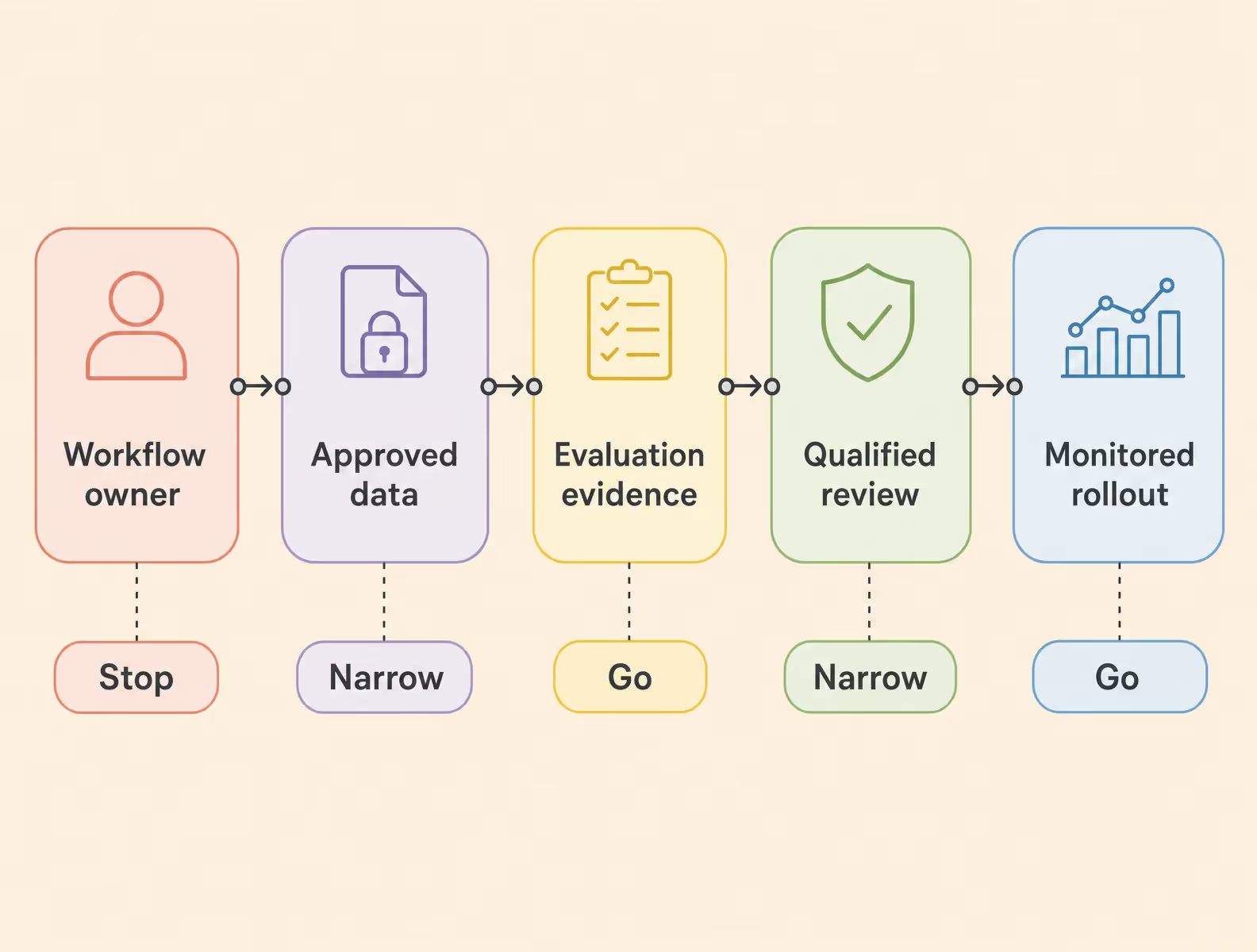
A workflow advances only when its owner has evidence for the next decision
The technical build follows the same sequence as the governance work. A medical software development guide adds the wider delivery context around product discovery, integration, testing, and release. AI technologies in healthcare, including generative AI technologies, add evidence requirements to those stages.
Product-specific legal, privacy, security, and clinical requirements still depend on the jurisdiction and use case. Teams need current authoritative guidance and qualified review for those obligations. The implementation path here provides a delivery structure, not a universal compliance checklist.
Governance matters when it changes a release decision. A production control needs a question, an owner, evidence, and a response when the answer is weak.
The matrix ties each question to evidence, ownership, and a failure action:
| Control question | Evidence or control | Owner | Failure action |
| Is the use case narrow and reviewable? | Workflow description, input and output boundary, escalation path | Product or workflow owner | Pause the pilot or narrow the task |
| Does output fit the intended setting? | Evaluation set relevant to users and applicable patient subgroups | Clinical or research reviewer | Correct, retest, or reject the workflow |
| Are data boundaries respected? | Approved sources, access rules, retention, and disclosure review | Data-governance owner | Block the data flow until controls are approved |
| Can harmful output be detected? | Tests for hallucination, bias, privacy exposure, and weak explanations | Quality and clinical reviewer | Escalate, document, and remediate before rollout |
| Is production behavior monitored? | Audit trail, user feedback route, and model-drift review cadence | Operations owner | Restrict, roll back, or re-evaluate the feature |
Human review is not a final signature. The reviewer needs source context and a threshold for action. Monitoring also covers missing or delayed records that can remove the context needed for review.
Freelife shows why production evaluation includes the data path.
We built Freelife around glucose readings from a Libre sensor. The app stored readings offline, reconnected after signal loss, and synchronized data when connectivity returned. Native modules handled device communication, background work, storage, and charts.
Real sensor testing exposed interruptions, restarts, data gaps, and occasional invalid readings that an emulator could not reproduce. This was not a GenAI product. It shows why a team evaluates the surrounding data path, not one component in isolation.
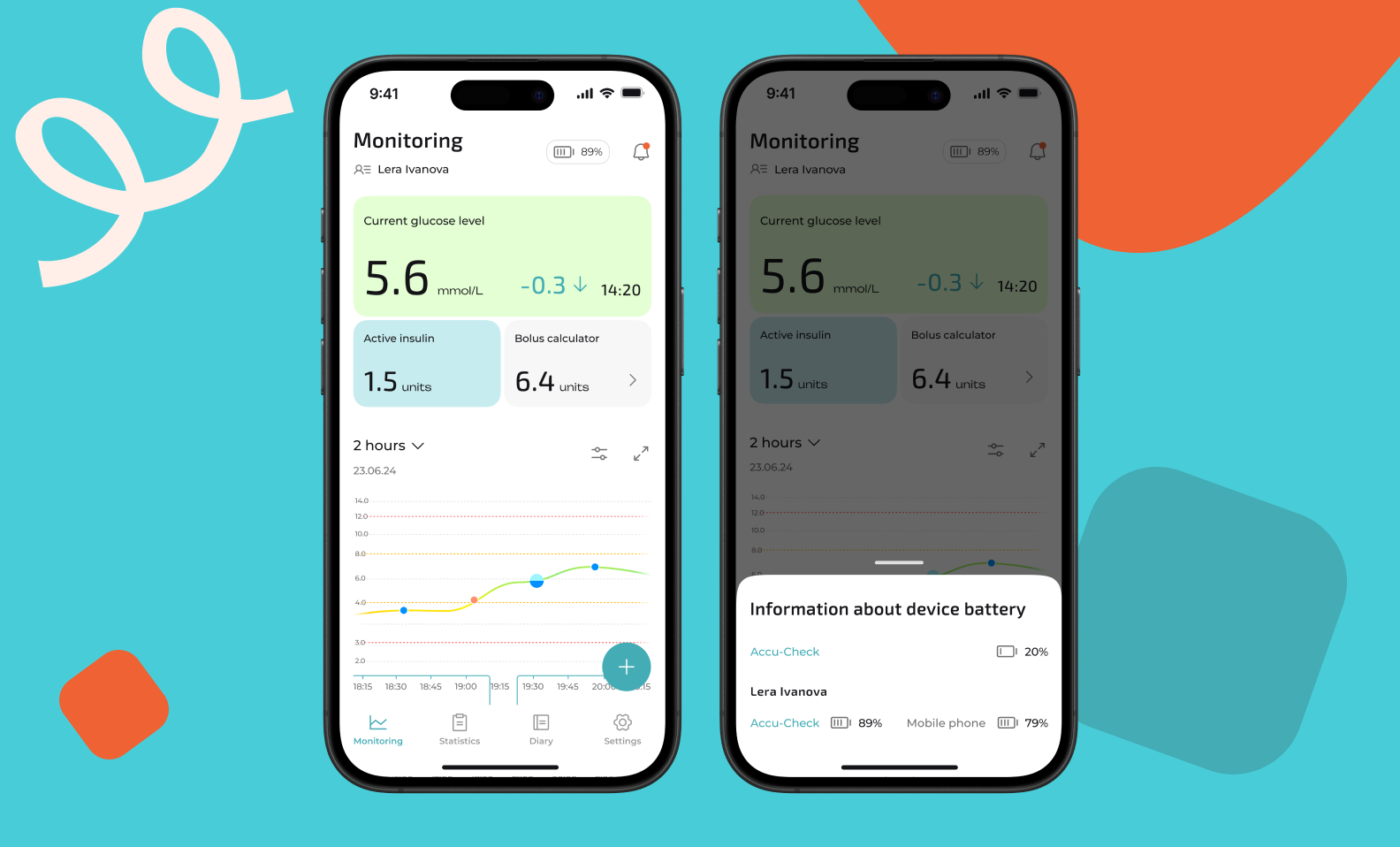
Reliable review depends on the product preserving context when devices or networks fail
Algorithmic bias in generative AI, fabricated output, privacy exposure, and model drift need separate checks. Each failed check still needs a recipient with enough context to act.
Medico makes that ownership visible.
In Medico, patients completed surveys, uploaded results, and reported changes through a mobile app. Doctors reviewed the information in a dashboard and received notifications when the workflow required attention.
Medico was not a GenAI or clinically validated product. Its relevance is operational: collected data had a named recipient and an action path. A generated summary needs the same clarity about ownership and escalation.
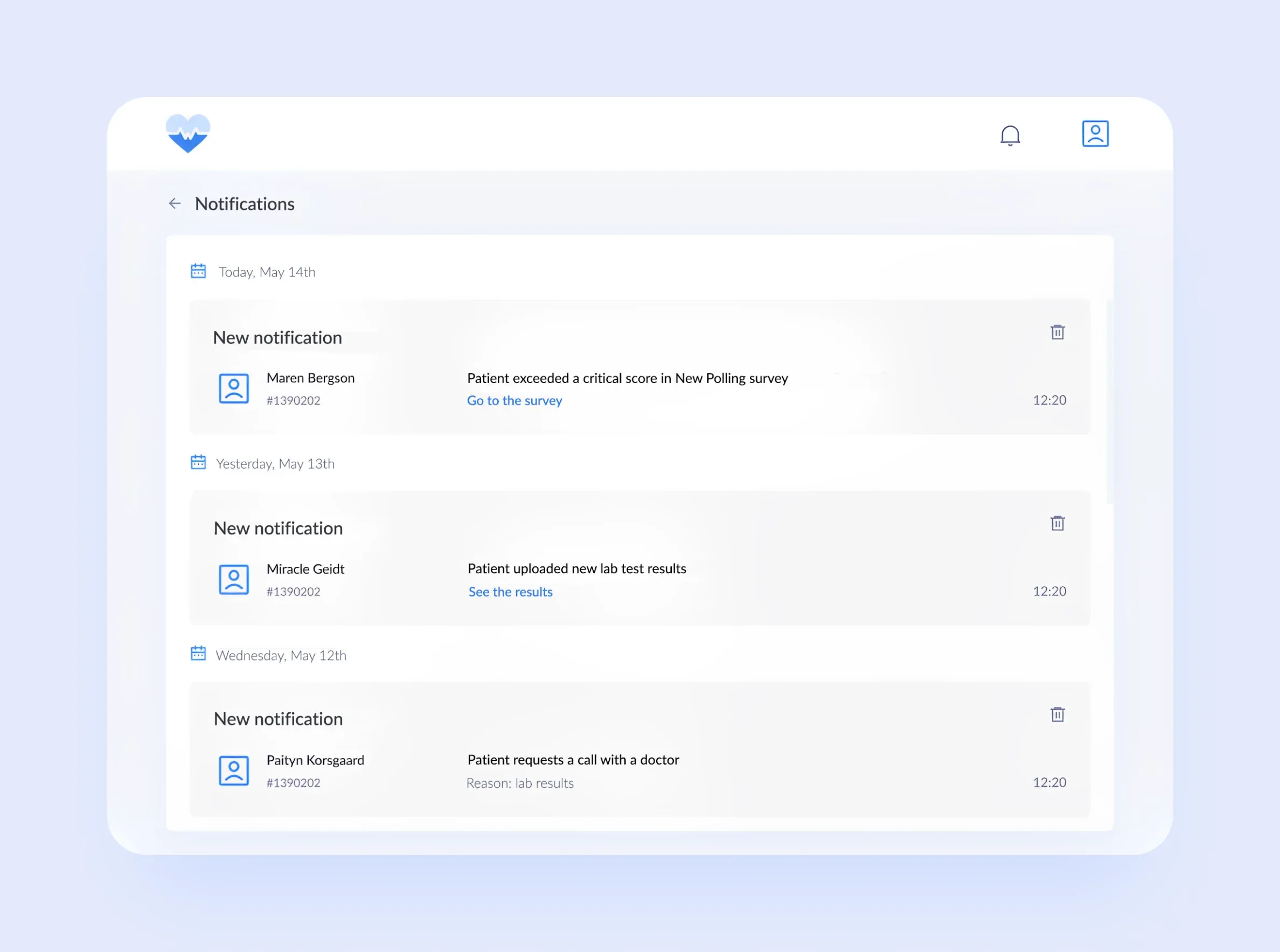
An escalation rule works only when the product sends the right evidence to a named owner
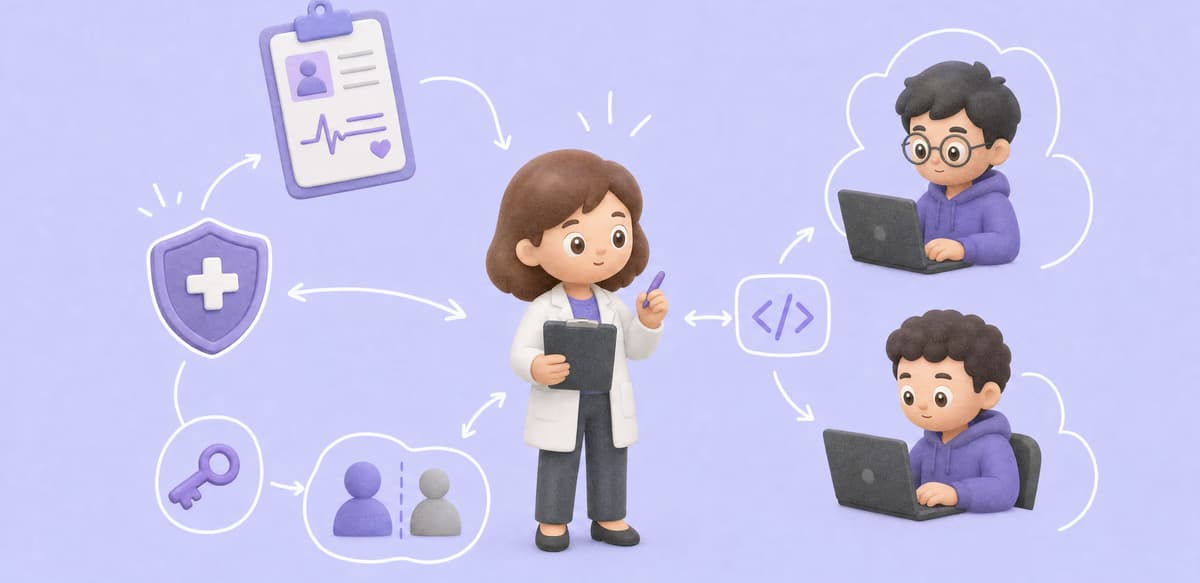
The healthcare team owns validation. The visual traces protected data through the model and back to human review.
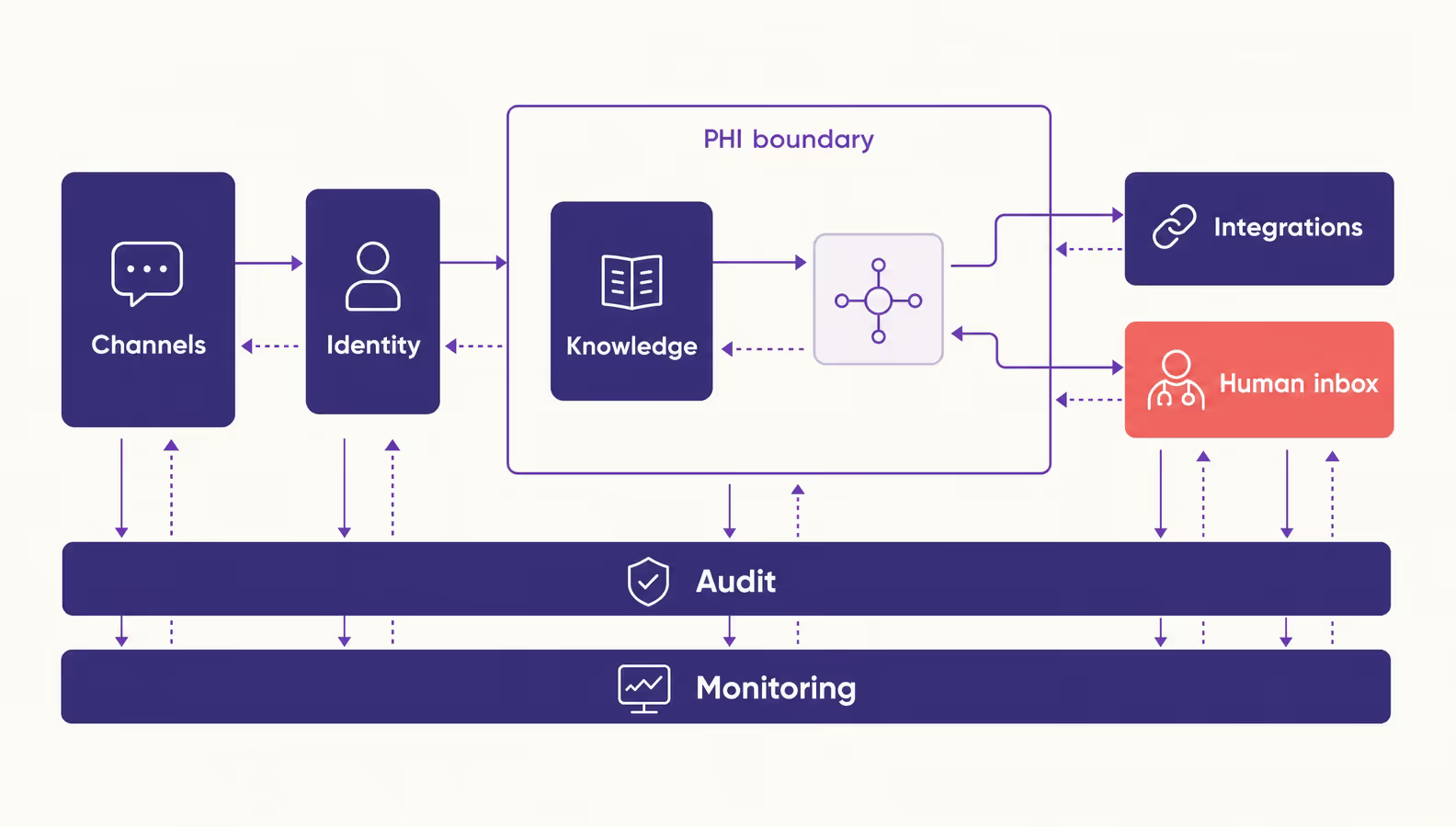
The review gate needs the original context and an audit trail, not the generated answer alone
The architecture matters only when it changes the next decision. Before release, the owner needs a rollback path and a threshold for fresh validation. Launch remains a checkpoint, not the end of evaluation.
Governance becomes part of the product when it shapes what users see, what data enters the system, and where uncertain output goes. The owner, boundary, and failure action from the control matrix need a matching interface or backend behavior. Otherwise, the policy exists only on paper.
Intake and handoff. Lytic Health placed patient questions before an appointment handoff and gave clinicians a separate interface for reviewing activity. A generative feature added to that flow would need approved source context and a clear point where a person takes over. The product cannot hide that responsibility inside a model response.
Data continuity. Freelife shows the same principle at the integration layer. Review becomes unreliable if sensor data is missing, delayed, or detached from its timeline. Offline storage, reconnection, and synchronization are therefore part of the evidence path. A generated summary is only as reviewable as the records that reach it.
Action path. The pattern appears in Medico's alerts and doctor dashboard. A failed check needs a recipient, enough context to act, and a visible status after escalation. Product teams can map those controls during discovery, then carry them through architecture, interface design, testing, and release.
Product delivery. A healthcare software development company contributes more than model integration. The work connects the AI layer with patient and clinician journeys, protected data flows, and operational ownership.
Release threshold. None of the Purrweb cases above proves a GenAI outcome or clinical effectiveness. They show the product mechanics that make controlled review possible. A production candidate is ready when the healthcare team can trace its input and inspect its output. The team also knows who owns the result and what happens when the evidence falls below the agreed threshold.
Production-ready generative AI for healthcare starts smaller than the technology around it. The team defines one task, limits the permitted context, tests the output where people will use it, and gives a named owner authority to reject or escalate the result.
The same controls then shape the product. Interfaces preserve source context, integrations protect the data boundary, and monitoring shows when the workflow moves outside its evidence. Generative AI offers no guarantee that every healthcare use case will work. Healthcare organizations still need evidence to decide which AI solutions move forward.
➡️ Working through a healthcare AI workflow? Tell Purrweb what you are building, and we'll map the product and review path with you.
Examples of generative AI include record summaries, patient-message drafts, and research support. AI can also create controlled synthetic data and administrative content. Each use needs a defined owner and review step. The model's output should assist a qualified professional rather than replace clinical judgment or an organization's escalation process.
Start with a narrow workflow, its permitted data sources, expected output, reviewer, and failure threshold. Evaluate the system in its intended setting and, where relevant, across applicable patient subgroups. Test for fabricated output, privacy exposure, bias, and weak explanations. Define monitoring, audit records, and a way to restrict or stop the feature after launch.
This article does not treat generative AI as an autonomous clinical decision-maker. A healthcare team should define where human expertise is required, who verifies output, and how uncertain or unsafe responses are escalated. The appropriate control depends on the workflow, jurisdiction, and product context. Legal and clinical requirements need current authoritative guidance and qualified review.
RPA follows predefined rules to automate repeatable tasks, while generative AI creates or transforms content from patterns in data. A workflow can use both, but their controls differ. Generative output needs accuracy, privacy, bias, and human-review checks. Rule-based automation needs clear process rules and exception handling. Choose the approach that matches the task instead of treating them as interchangeable.


.svg)