Explore

Need help with your project?

Oops! Something went wrong while submitting the form.
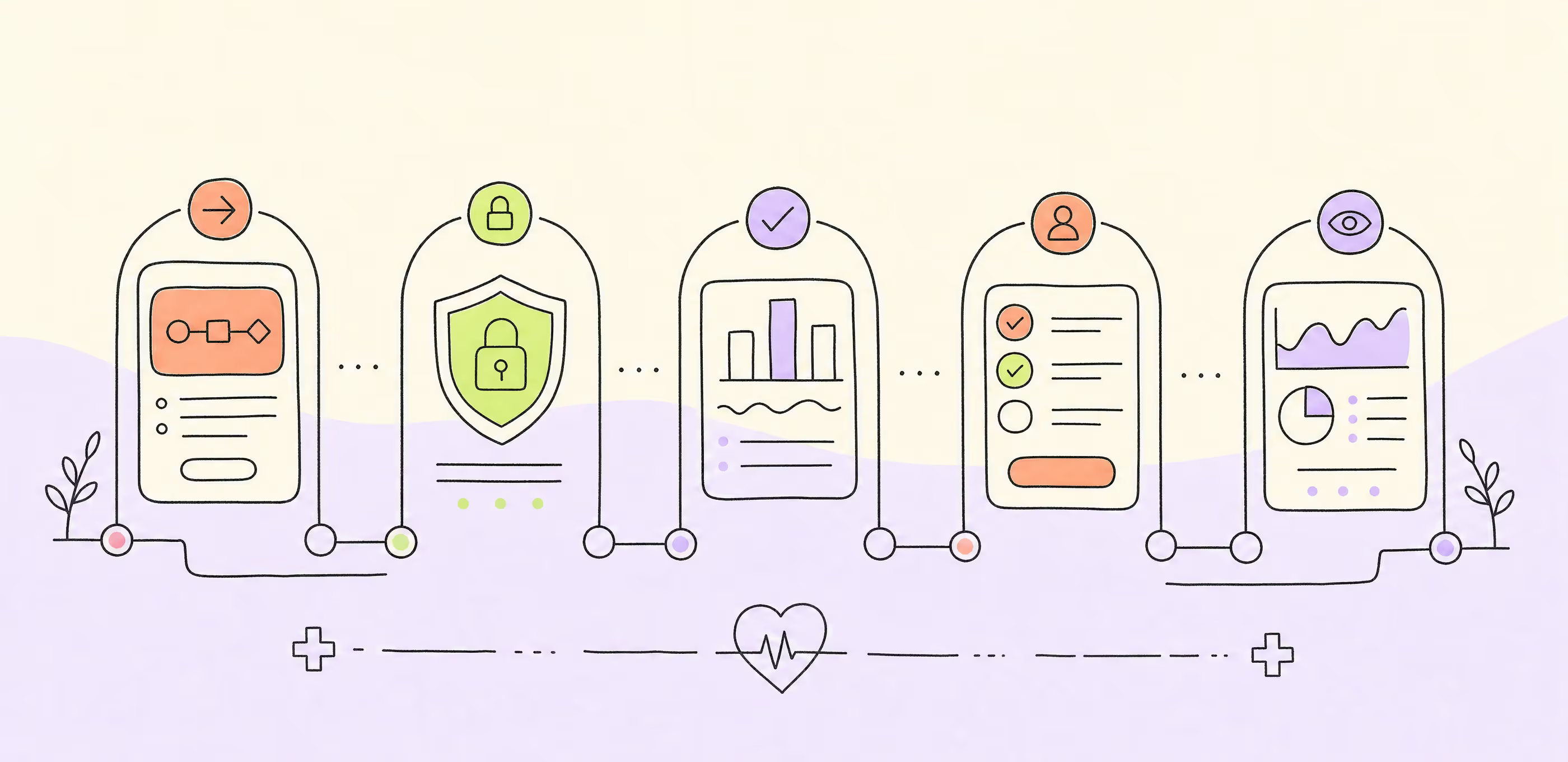
Digital transformation in healthcare changes how care teams use data and tools in daily work. Buying an app is not enough. A program links systems, redesigns key steps, trains staff, and sets clear tests for clinical or business value. Security and ownership are built in from the start. Without those changes, new software often stays an isolated pilot instead of becoming part of care and access across the health system.
This guide maps the areas worth changing, links each technology to a real workflow, and compares implementation options. It also defines the KPIs, risks, and decision gates that separate a promising pilot from a change ready to scale.
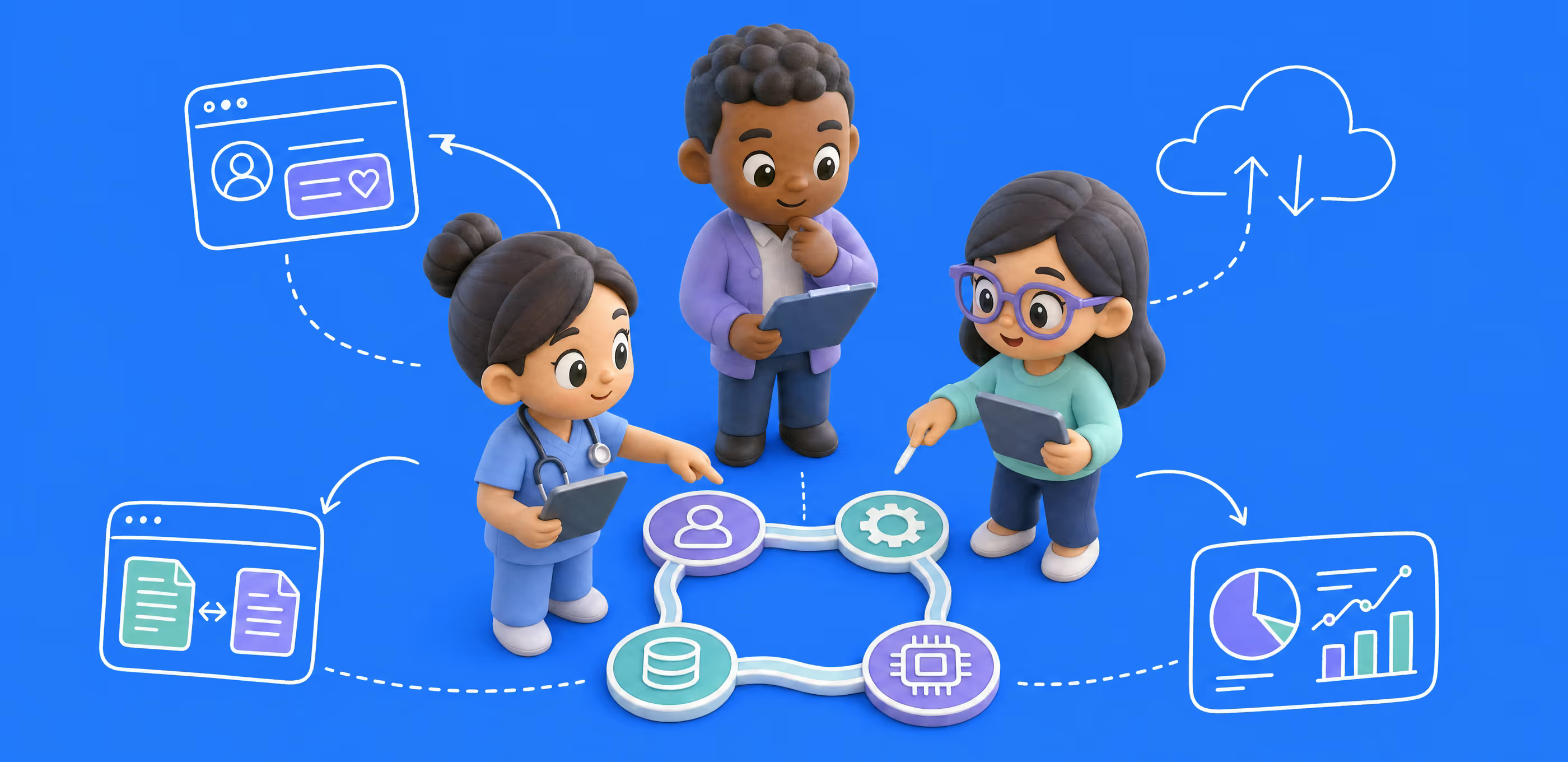
Digital transformation in healthcare refers to a coordinated change to care and business operations. The use of digital tools directly supports a defined outcome across the organization, rather than merely putting one form or task online.
Digital transformation in health care is broader than digitization, which converts one form or task into a digital version.
The digital transformation process redesigns the connected process around care and operations. It aligns roles, data flows, integrations, training, security, and measurement toward a care or business outcome. The redesign also changes how teams judge results across the organization. Technology remains the mechanism, not the protagonist.
Across the healthcare sector, fragmented records, administrative load, workforce pressure, and patient access expectations strain healthcare delivery. Healthcare requires organizations to control costs without weakening care quality, which makes disconnected pilots an operational risk. EMR/EHR software development connects core records so healthcare providers and operational tools share patient context.
That shared context supports workflow change, not just a software purchase. Chartis frames progress in its 2025 survey of 150 healthcare system executives as structured pilots followed by scaled digital and AI deployment. That model leaves room for digital transformations at different stages.
Digital transformations in the healthcare industry need six interdependent pillars to turn isolated projects into an operating model. Each pillar connects a problem to an operating action and a key performance indicator (KPI), so investment decisions remain tied to care or business value.
| Pillar | Problem to solve | Operating action | KPI |
| Patient experience | Fragmented access and communication | Connect portal and telehealth journeys to care workflows | Adoption and no-show rate |
| Clinical workflows | Manual handoffs and documentation | Redesign and automate workflow | Task time and error rate |
| Data and interoperability | Siloed health record, patient-service, and device data | Use interfaces and a shared data layer | Data availability and exchange time |
| Technology architecture | Brittle legacy systems | Adopt modular, cloud-ready services | Uptime and release lead time |
| Workforce and change | Low adoption | Co-design, train, and update roles | Active use and training completion |
| Governance, privacy, and security | Privacy, safety, and compliance risk | Assign ownership, access controls, and auditability | Incidents and audit findings |
The benefits of digital transformation include better patient access. That access matters only when healthcare professionals use the information in a clinical encounter. A portal alone does not change care. Without message, appointment, and intake routing into the electronic health record, it stays a separate channel.
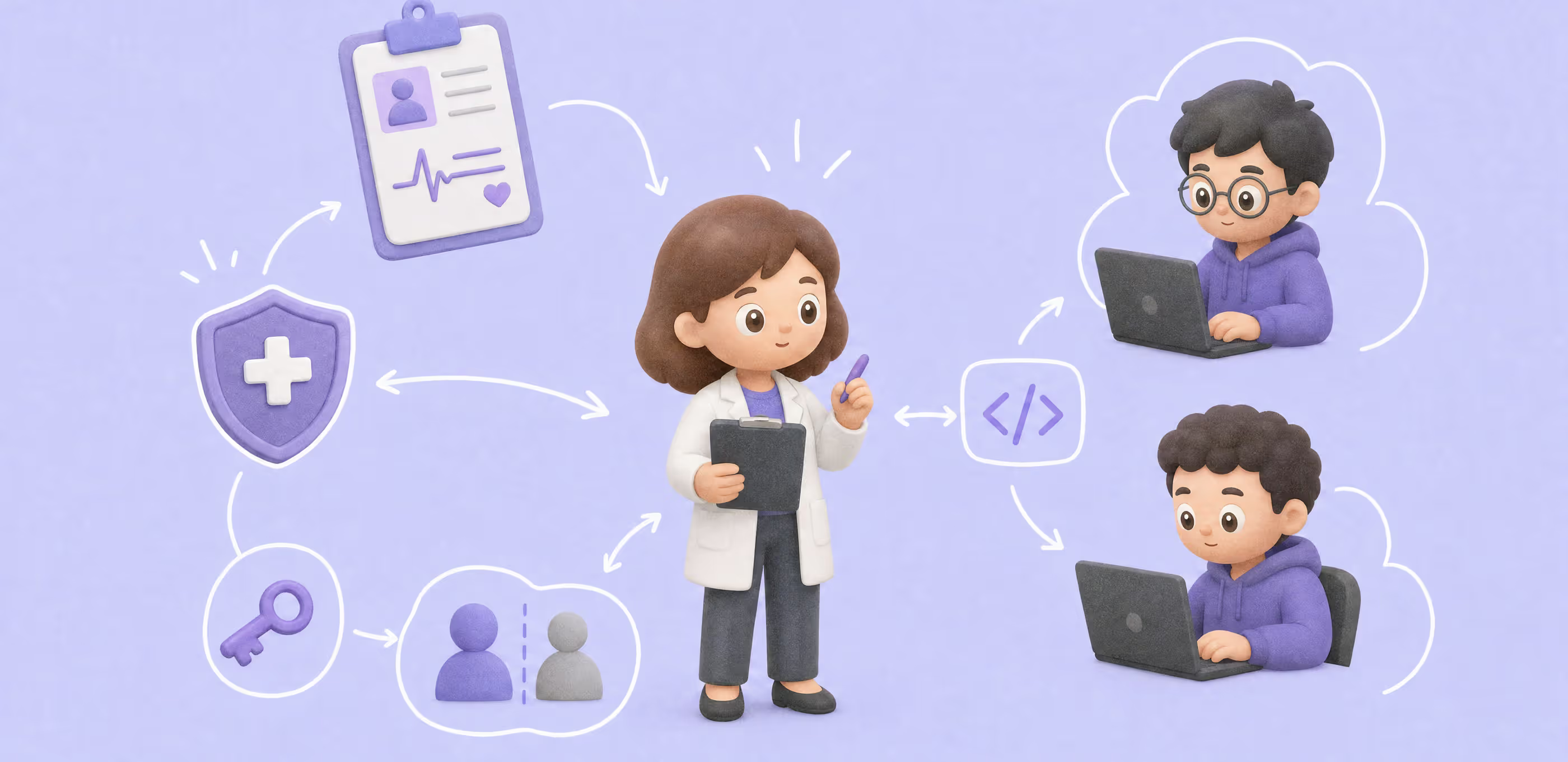
Digital transformations need architecture to make those connections reliable and workforce change to make them routine. Governance assigns who resolves exceptions, authorizes access, and owns the KPI. Privacy and computer security establish limits for data use. A weak pillar shifts work or risk elsewhere. Ownership and measurement therefore sit beside design decisions.
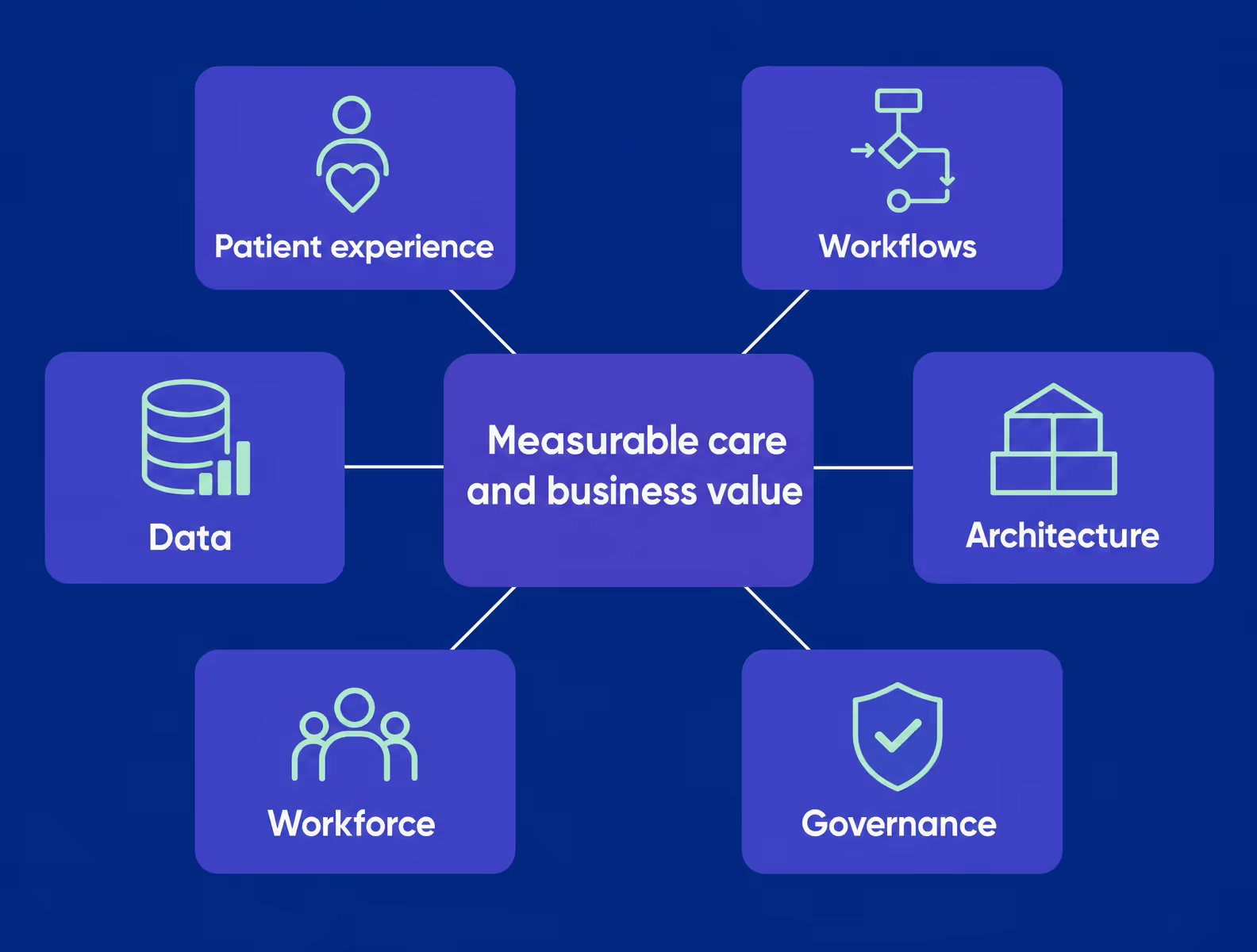
The model works only when every pillar supports the same care or business outcome
Artificial intelligence, analytics, automation, telehealth, and portals are digital technologies. They create value when data, integrations, workflows, and governance are ready. Interoperable records, connected devices, and cloud computing follow the same rule in practice. These new digital solutions have to enter a defined process with an owner and a measurable result.
| Technology | Workflow value | Prerequisite | Main risk |
| AI and analytics | Pattern review | Governed data | Unchecked output |
| Workflow automation | Admin task automation | Defined exceptions | Errors at scale |
| Telehealth and patient portals | Remote access | Staff routing | Disconnected channel |
| Interoperable health records | Shared context | Data mapping and consent | Incomplete records |
| Connected medical devices and wearables | Remote signals | Alert ownership | Alert fatigue |
| Cloud computing | Modular services | Access and backups | Misconfiguration |
The use of digital technologies for AI and analytics depends on consistent data and review roles.
The implementation of digital technology in healthcare depends on exchange standards. Fast Healthcare Interoperability Resources (FHIR) is an API-focused standard for clinical and administrative health-data exchange.
HL7 International, a healthcare standards organization, publishes it. Installing it does not make systems interoperable. Healthcare professionals still map terms, manage authorization, and decide where data enters work.
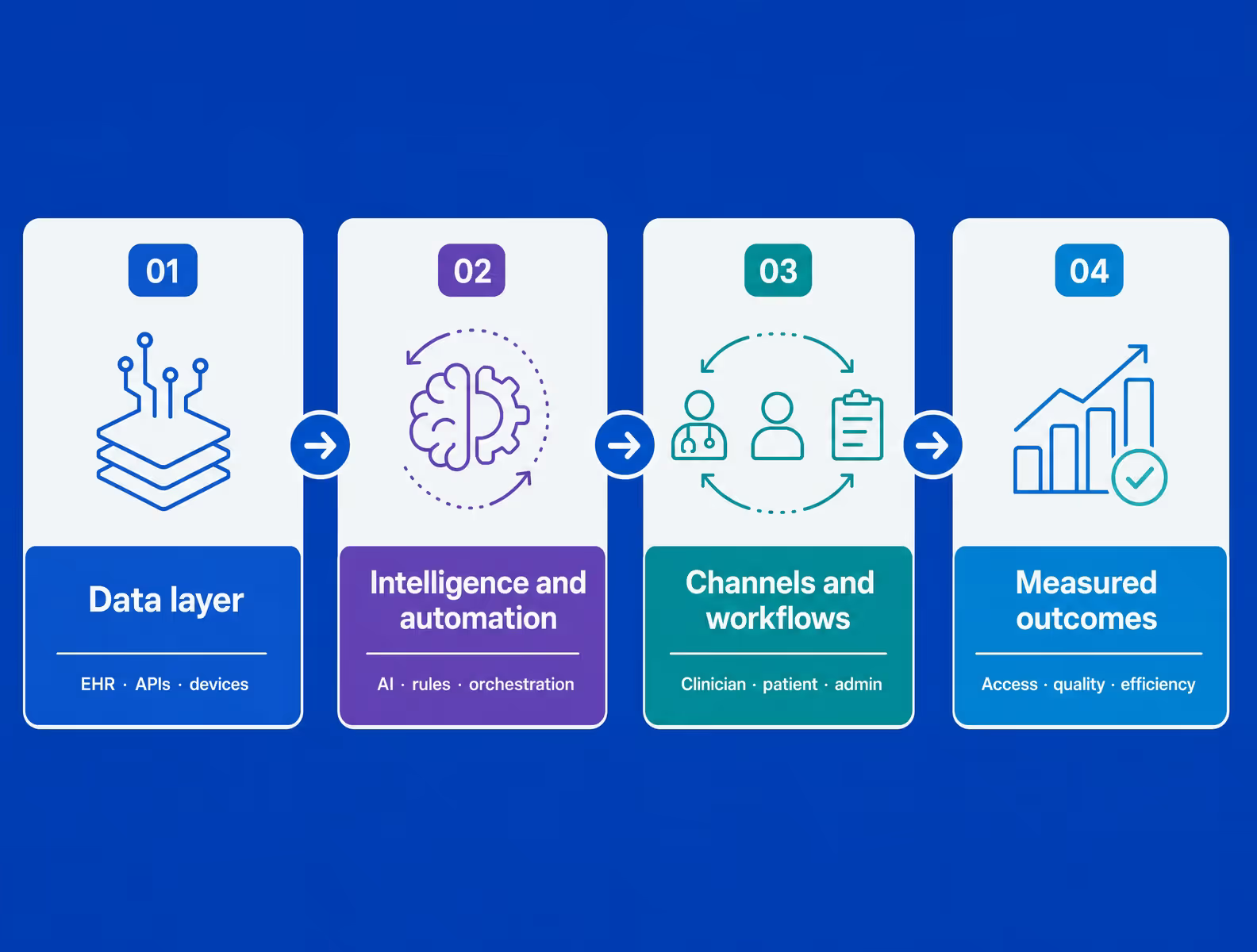
Technology creates value only after it enters a real workflow with accountable owners
Digital health solutions such as telehealth, portals, and devices extend healthcare services beyond the facility. Our guide to Internet of Things (IoT) use cases in healthcare shows how connected data enters staff workflows.
⭐ Our experience
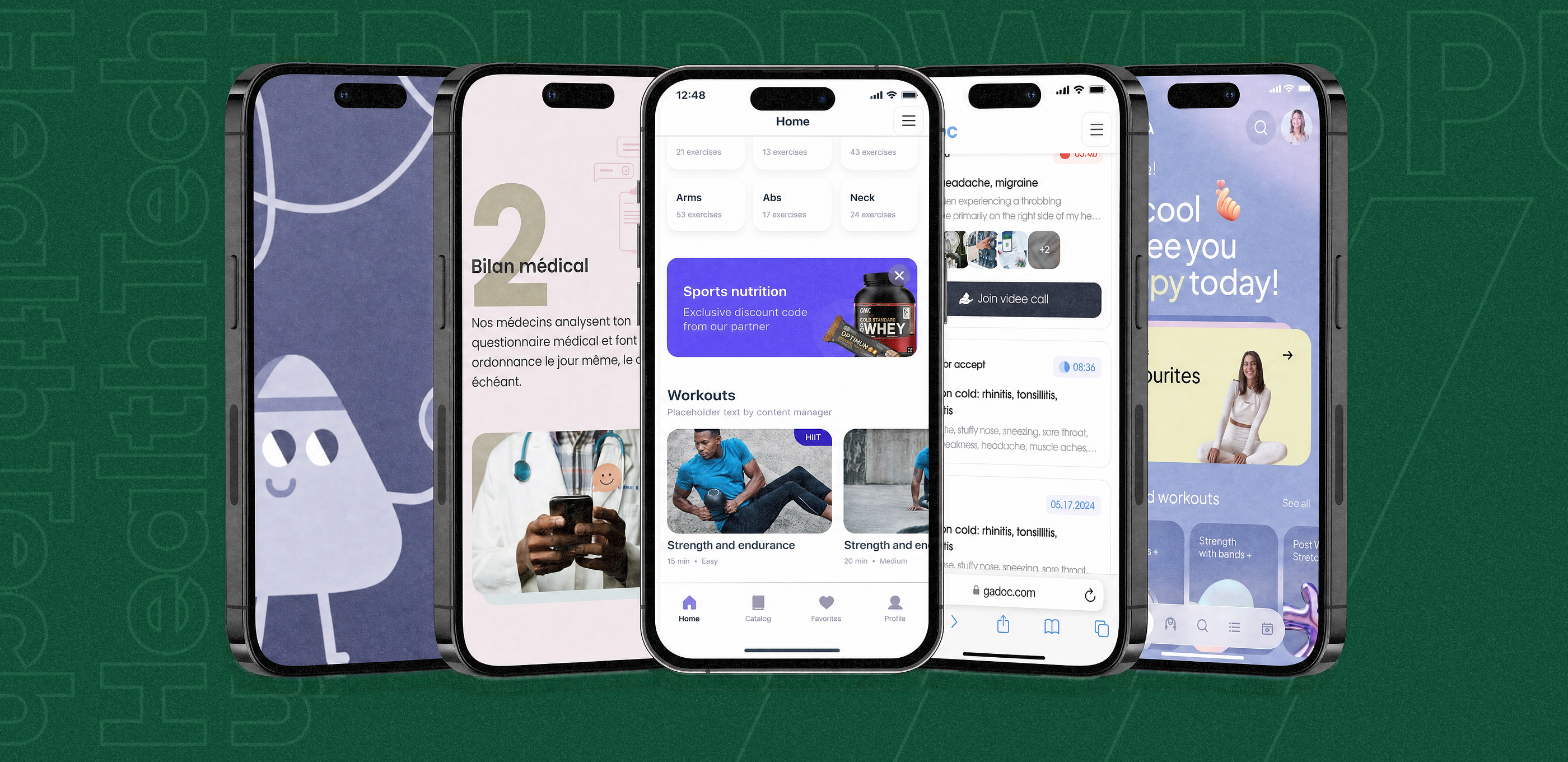
We built My Therapy Assistant for patients, therapists, and administrators across mobile and web. HealthCode integration required JSON-to-SOAP conversion. With no sandbox, we tested real client payments with the provider.
The product connected therapist search, booking, chat, notes, and video sessions in one service. The My Therapy Assistant healthcare platform case reported 30 therapists and 1,000+ registered users at that time. These figures are a historical snapshot, not current scale or evidence of clinical outcomes.

JSON-to-SOAP conversion connected insurance payments to the therapy platform
Cloud services support digital innovation by isolating changes, while automation removes repeated administrative steps. Implementing digital transformation with either approach requires exception handling, access controls, and rollback plans. Our guides to healthcare workflow automation and cloud computing in healthcare cover implementation. For a clinical example, see how voice recognition in healthcare moves documentation from captured speech to a reviewed record.
Digital transformations use digital healthcare tools to change a workflow around a problem. Systems must exchange the right data, staff must own the next action, and a KPI must show whether the change works. Each scenario carries a risk that can block adoption or scale.
Digital patient portals connect scheduling and intake to the electronic health record. Completed-form rates show progress, while duplicate records expose gaps. Telehealth changes follow-up when triage routes virtual visits and next steps to an owner. Follow-up time reveals unowned handoffs.
⭐ Our experience
We designed patient and doctor flows for Clearstep healthcare prototype that collect symptoms, guide questions, suggest tests, and support appointment scheduling. The design concept took two days, followed by a clickable prototype in 1.5 weeks.
It was an early validation artifact, not a validated production clinical system. The founders later raised $400K, but the case does not establish that the prototype caused the funding. It also does not demonstrate diagnostic accuracy or formal regulatory clearance.
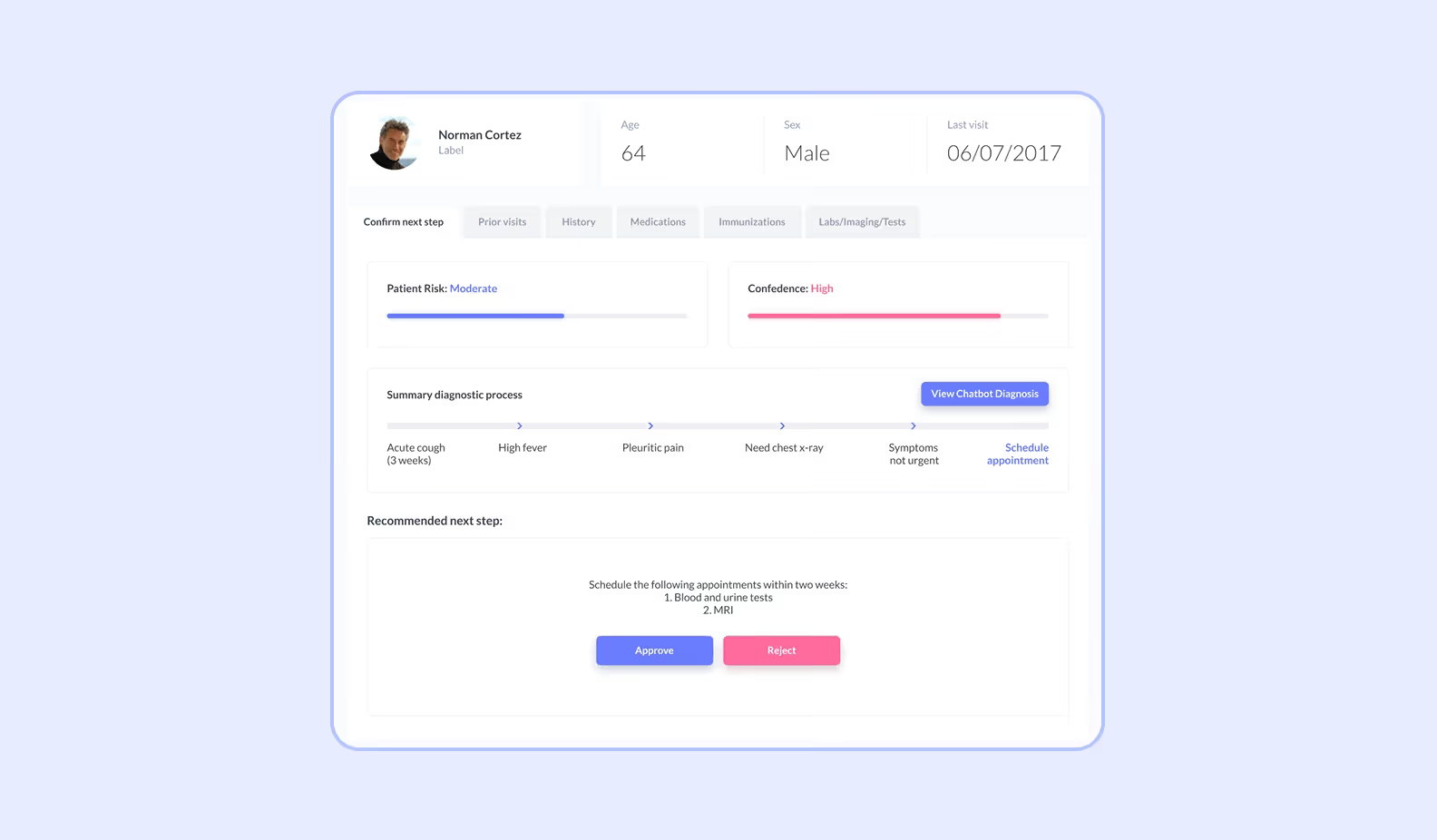
Early validation of patient and doctor flows before clinical use
In a hospital, remote monitoring routes threshold alerts to assigned staff. Response time tests the handoff, while alert fatigue can overwhelm it. The integration of digital devices depends on maintenance, device identity, and data review. Reviewed-signal rates expose mismatches.
Artificial intelligence in healthcare needs human review and escalation. Turnaround time tests the process, while unchecked output remains the risk. Healthcare management teams need defined source data and exception paths for administrative automation and population-health analytics. Completed outreach is measurable, but stale data can target the wrong cohort.
The benefits of digital transformations become decision-grade only when they have a documented baseline and an accountable owner.
It also needs an early KPI, a lagging KPI, a source system, and a review cadence that can support a scale, redirect, or stop decision.
The impact of digital transformation cannot be inferred from technology deployment. The potential of digital technology does not automatically reduce costs, improve outcomes, or guarantee return on investment (ROI). It must change a healthcare workflow and produce evidence against the baseline.
| Outcome | Leading KPI | Lagging KPI | Data source | Review cadence | Owner |
| Patient access and experience | Digital intake forms completed | Average wait time or missed appointment rate | Patient portal and appointment scheduling records | Weekly | Patient access lead |
| Clinical quality and safety | Alerts reviewed before their due time | Safety incidents or repeated manual work | Electronic health record and incident-report log | Monthly | Clinical quality lead |
| Workforce productivity | Staff using the redesigned process | Average task time or overtime hours | Workflow activity records and staffing data | Weekly | Operations lead |
| Operational and financial performance | Exceptions resolved within the service window | Backlog volume or cost per transaction | Work queue and finance system | Monthly | Operations and finance owner |
| Adoption | Active users in each staff role | Completed tasks in the new process | Product analytics and audit log | Weekly | Product owner |
| Security and compliance | Scheduled access reviews completed | Security incidents or audit findings | Identity and security logs | Monthly or quarterly | Security and privacy owner |
Early indicators show whether digital transformation initiatives have entered daily work. They expose low usage, stalled handoffs, and missing reviews before a result appears.
Lagging indicators test whether digital transformations improve patient care or business performance. A shorter wait, fewer rework cases, or lower backlog matters only when the organization compares it with the documented baseline and considers outside changes.
A metric without a baseline and owner is decorative. Review cadence has to match the speed of the next decision. New workflows benefit from weekly checks. Operational efficiency trends suit monthly reviews. Controls that need a broader evidence window suit quarterly reviews. When a KPI fails, the evidence can justify changing or stopping work rather than forcing scale.
Major barriers to digital transformation are readiness and ownership gaps rather than missing tools. Before organizations scale digital transformations, each risk needs a concrete mitigation and named owner. Developing digital systems safely in healthcare requires dependable data, bounded clinical AI, and staff who can use the changed workflow.
Mismatched identifiers, definitions, and source data obstruct interoperability. A data and integration owner maintains mappings, reconciliation checks, and an exception queue before production.
Clinical AI needs bounded use, human review, and escalation under a clinical safety owner. Privacy and security owners govern access, logging, retention, vendor controls, and incident response. A compliance review does not replace clinical validation.
Elsevier's 2025 clinician findings on AI use and institutional support show that 48% of clinicians reported using AI tools for work. By comparison, 32% felt their institution adequately supported access to digital tools such as AI. The gap does not measure training quality or clinical safety.
An operations owner tracks accessibility and digital literacy to identify a digital divide, low active use, and unresolved workflow friction.
The implementation of digital transformation in healthcare covers eight activities grouped into seven implementation stages. Pilot and evidence review share one stage.
The sequence starts with a defined problem and baseline. It then covers workflow mapping, readiness, a delivery-path choice, real-workflow piloting, evidence review, and governed scale. Commitments are conditional, giving the program a point to redirect or stop.
Name the failing workflow and the outcome that must change. Assign a decision owner who can approve evidence, resolve scope conflicts, and stop work when the Value gate fails.
Map handoffs, delays, rework, exceptions, and baseline KPIs before redesign. Link each measure to a source system so the pilot has a stable comparison.
Identify the patients, clinicians, administrators, and support teams affected by the change. Map data movement, consent, accessibility, operational limits, and interoperability dependencies.
Check data quality, integration, clinical safety, governance, privacy, security, and staff readiness for the adoption of healthcare information technology. The Safety gate pauses work until each unresolved risk has an owner and treatment.
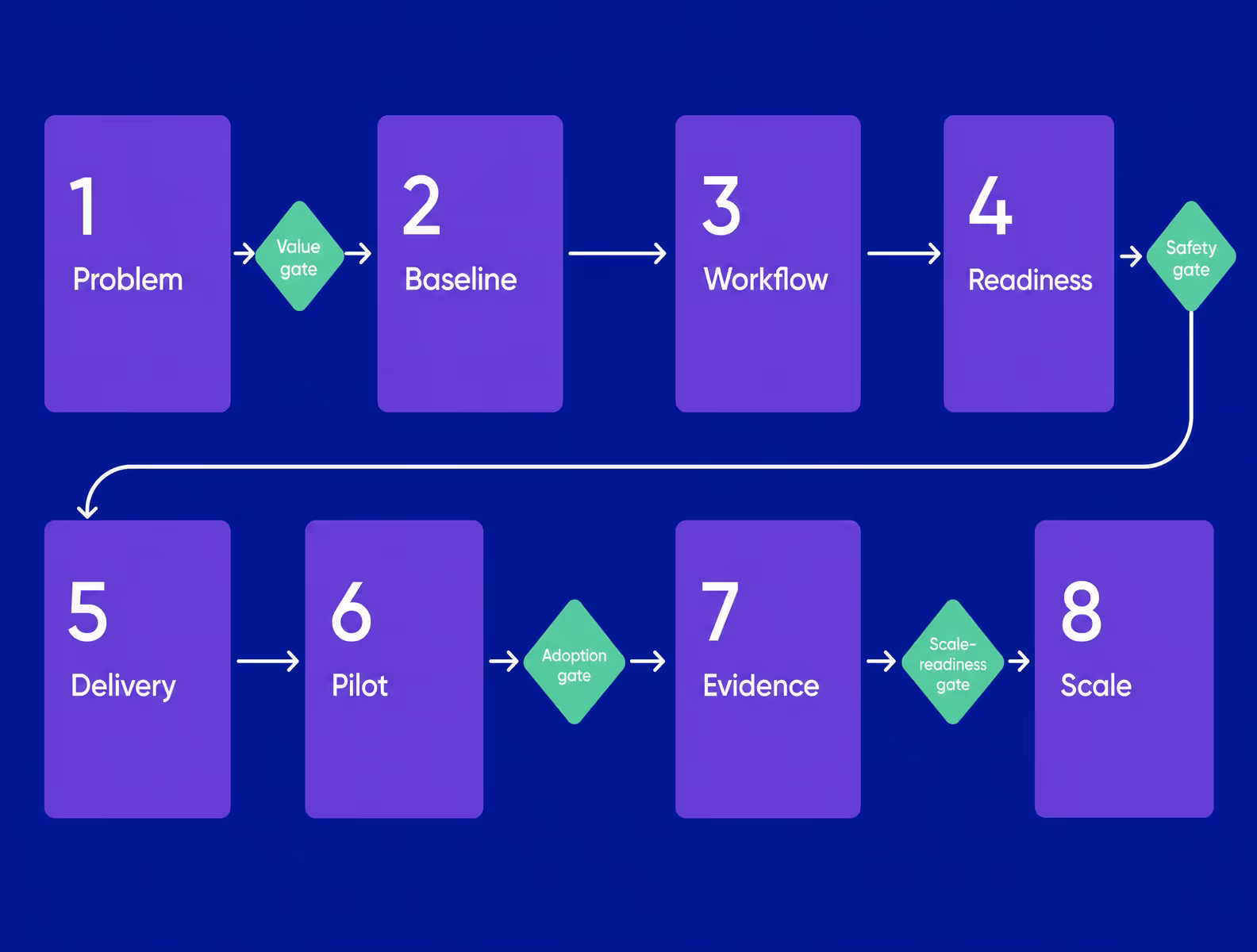
Each gate can redirect or stop a commitment
To implement digital transformation, prioritize the use case by value, risk, dependencies, and testability. Compare software as a service (SaaS), platform configuration, system integration, and custom development by workflow fit, control, and support.
| Approach | Time to value | Integration and control | Main trade-off | Appropriate when |
| Buy SaaS | Usually shortest | Vendor-defined | Workflow mismatch | Standard process fits product |
| Configure a platform | Short to medium | Within platform limits | Customization debt | Process fits platform model |
| Integrate existing systems | Medium | Shared across systems | Legacy coordination | Core systems still fit |
| Custom-build | Usually longest | Tailored and controlled | Delivery and support burden | No existing option fits |
The medical software development guide covers lifecycle detail.
Pilot with representative users, healthcare data, and real handoffs. Instrument adoption, exceptions, and escalation so the Adoption gate measures workflow use rather than logins.
⭐ Our experience
We built the Medico remote patient monitoring platform as a patient mobile app and doctor web app for surveys, uploaded test results, routed alerts, dashboards, and time-zone-aware reminders.
For the first version, medication and survey administration stayed in external Excel editing rather than real-time in-app controls. That choice reduced MVP scope while preserving patient input and doctor review. Dashboards kept survey data visible. The case claims neither cancer outcomes nor reduced clinician workload.
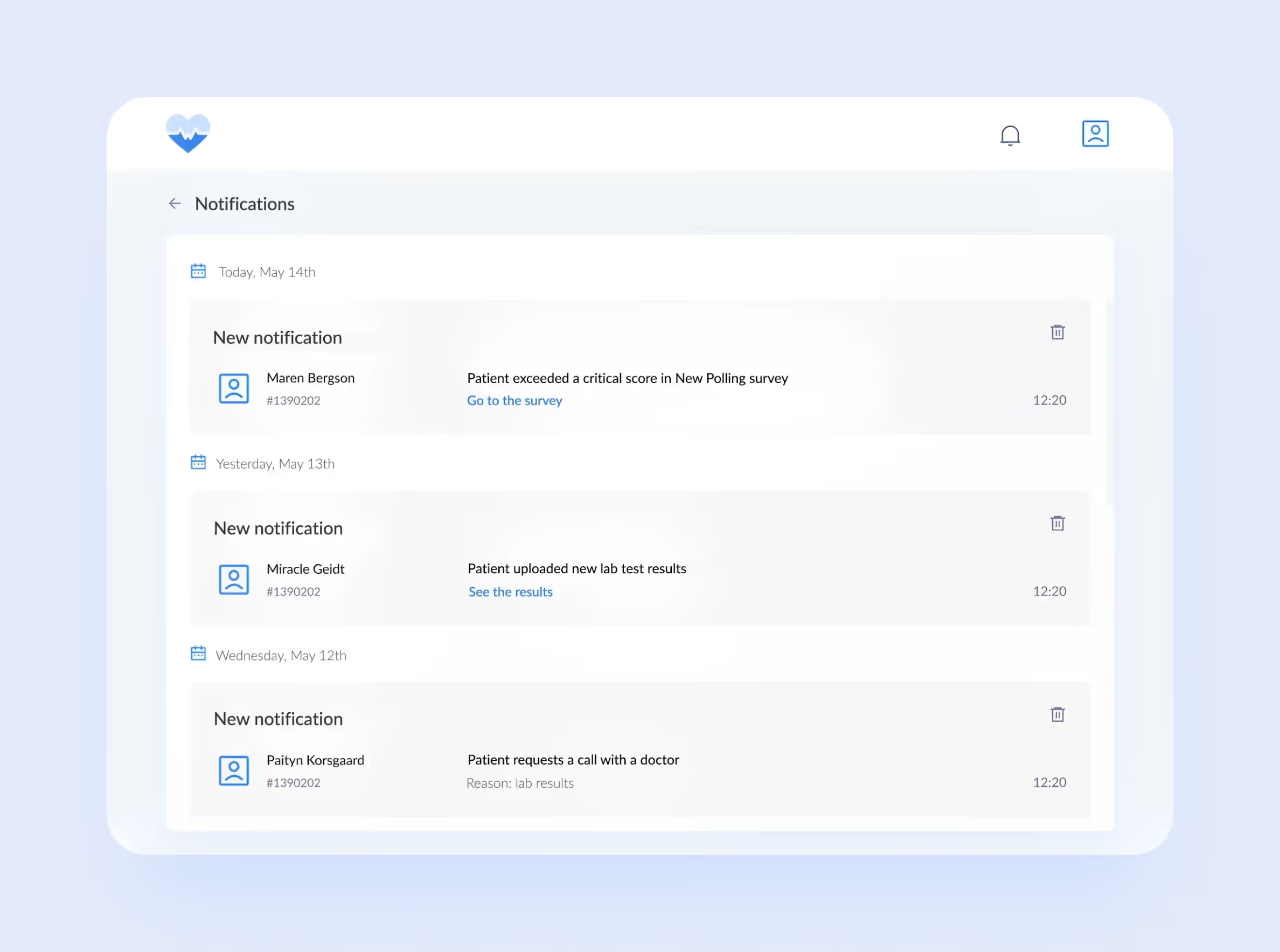
External editing focused Medico's first release
Compare value, safety, and adoption with baseline. Distinguish implementation failure from a weak use case, then redirect or stop when evidence fails.
Scale digital transformations only when ownership and support continue beyond the pilot. The Scale-readiness gate requires monitored controls, scheduled KPI review, and response paths for incidents or exceptions.
The next phase of the digital transformation of healthcare is less about launching more tools. It focuses on moving governed artificial intelligence and automation into routine workflows. Across health care, interoperability must support operational handoffs, while proactive care depends on reliable data, clear ownership, and privacy and security controls.
Progress will be judged by workflow adoption, safety, and care or business outcomes, not by pilot count.
Healthcare digital transformation starts with a defined problem, baseline, and decision owner. It connects workflow redesign with interoperable data, integration, staff adoption, privacy, computer security, and governance. Technology choices then follow the required level of workflow fit, control, and support rather than defaulting to custom development.
A real-workflow pilot tests whether the change enters daily work and produces evidence against the baseline. Value, safety, adoption, and scale-readiness gates give the organization four options: continue, redirect, stop, or scale. This sequence keeps a growing pilot count from becoming a substitute for measurable care or business change.
➡️ Tell us about your healthcare product or integration. We will map the workflow, delivery path, and evidence gates for the next decision.
Digital transformation in healthcare is the coordinated redesign of care delivery, operations, data use, and patient interactions with digital technology. It is broader than digitizing a single form or buying new software. A successful transformation changes workflows, connects systems, assigns ownership, trains users, protects health data, and measures whether the change improves clinical or business outcomes.
The main areas are patient experience, clinical workflows, data and interoperability, technology architecture, workforce enablement, and governance. These areas depend on one another. For example, a patient portal creates limited value if it cannot exchange data with the EHR, staff do not incorporate it into workflows, or the organization does not track adoption and service outcomes.
Common examples include patient portals, telehealth, remote patient monitoring, interoperable health records, AI-assisted documentation or diagnostics, automated administrative workflows, and population-health analytics. The technology alone is not the transformation. Each initiative must change a real workflow and improve a measurable result such as access, turnaround time, safety, staff workload, or patient engagement.
The biggest challenges are fragmented legacy systems, poor data quality, limited interoperability, cybersecurity and privacy risk, weak governance, staff resistance, and low patient adoption. Many organizations also struggle to move beyond pilots. They can reduce these risks by defining ownership, involving clinicians and patients early, setting baseline metrics, testing integrations, and scaling only after value and safety are demonstrated.
Start with a specific clinical or business problem, not a preferred technology. Establish baseline metrics, map the current workflow, assess data and integration readiness, and prioritize a use case with meaningful value and manageable risk. Then choose whether to buy, configure, integrate, or build, run the solution in a real workflow, and evaluate adoption, safety, and outcomes before scaling.
Measure success across patient access and experience, clinical quality and safety, workforce productivity, operational performance, adoption, and compliance. Pair leading indicators, such as active usage or turnaround time, with lagging outcomes, such as no-show rates, error rates, clinician time saved, cost per case, or patient satisfaction. Compare results with a documented baseline and assign an owner to every KPI.


.svg)