Explore

Need help with your project?

Oops! Something went wrong while submitting the form.
Having a Customer Relationship Management (CRM) system can significantly improve your business operations, but it often comes with concerns about cost.
This guide breaks down what can influence custom CRM development cost and how to optimize it.

Custom CRM development costs $30,000–$200,000 depending on the number of users, integrations, and automation features. A basic CRM for a small sales team (contact management, pipeline, reporting) runs $30,000–$60,000. An enterprise CRM with AI-driven insights, custom workflows, and ERP integration costs $100,000–$200,000+.
Understanding what drives custom CRM software costs helps make informed decisions and allocate resources. Let's look at 6 primary factors.
The scope of a CRM system is the thing that will impact development costs the most. Basic features are relatively straightforward to implement, but more advanced functionality will increase the overall cost.
Here are the factors that add complexity:
This table breaks down how complexity levels affect cost, timeline, and feature scope:
| CRM complexity | Estimated cost range | Development time | Key features |
| Simple | $75,000–$98,000 | 4–6 months | Basic contact management Simple sales pipeline Email integration Basic reporting |
| Medium | $98,000–$140,000 | 6–9 months | Advanced contact management Complex sales pipeline Marketing automation tools Custom integrations Advanced reporting and analytics |
| Advanced | $140,000– $180,000+ | 9–12+ months | AI-driven insights Predictive analytics Complex workflow automation Multiple third-party integrations Advanced security features Scalable architecture |
While web-based CRMs are the traditional choice, mobile CRM applications are becoming popular for on-the-go sales teams and field operations.
⭐ Our experience
A company dealing with agricultural machinery was drowning in paperwork. Their field reps were lugging around heavy folders, scribbling notes on paper, and playing phone tag with the office.
To address these issues, the company decided they needed their own CRM system and came to Purrweb.
By prioritizing essential features and leveraging React Native for cross-platform compatibility, it took us just about 3 months to complete the project. The client's investment of $50,000 resulted in a mobile application for field representatives and a web dashboard for office managers.
Key features of the custom CRM software included:
– mobile access to client information,
– offline functionality for remote areas,
– real-time data synchronization,
– route planning capabilities,
– quick report generation,
– photo and file attachment to client profiles.
The custom CRM system reduced paperwork and manual data entry, making operations more efficient. Communication between field and office teams became smoother. The system improved data accuracy and made information easier to access, leading to better decision-making.
One of the standout features was the ability to work offline, crucial for representatives operating in areas with poor internet connectivity. The CRM also incorporated route optimization and resource allocation tools, boosting overall productivity and cost-effectiveness.
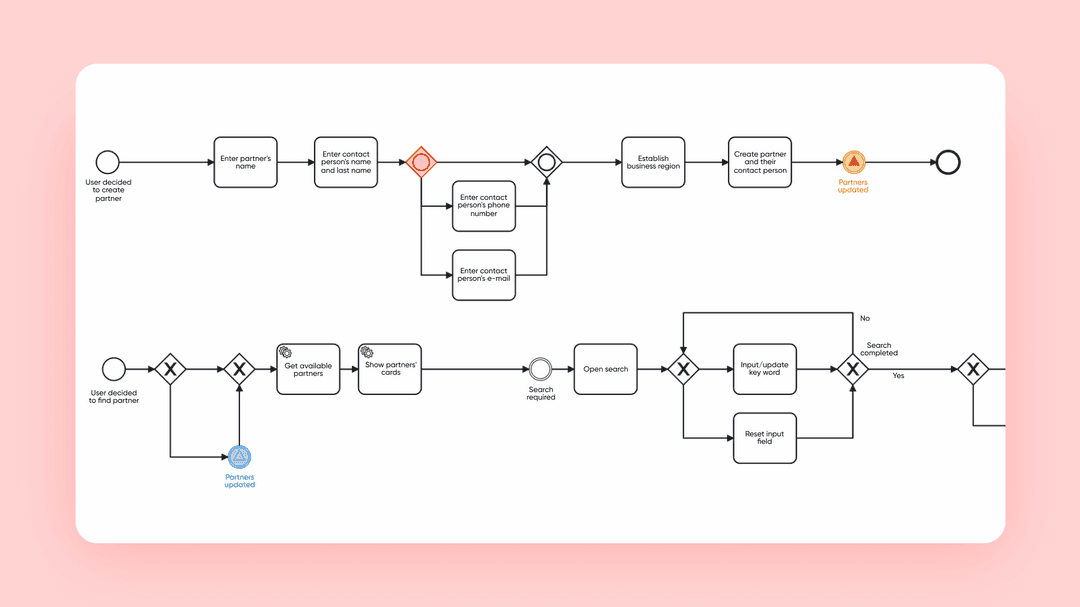
However, mobile CRM development typically requires a higher budget compared to web-only solutions.
Integration with existing business systems maximizes the value of a custom CRM. The complexity and number of integrations will significantly affect development costs.
| Integration complexity | Estimated cost range | Development time | Examples |
| Basic | $1,500–$2,500 | 1–2 weeks | Simple email marketing tools |
| Moderate | $4,000–$6,000 | 2–4 weeks | E-commerce platforms |
| Complex | $6,000–$10,000+ | 4–6 weeks | ERP systems |
Data migration and security measures are often underestimated in their complexity and impact on overall costs.
A scalable architecture that allows your CRM to grow with your business may require a higher upfront investment but will lead to substantial savings over time.
The choice of development team is another thing to look into when calculating a custom CRM project's cost. While offshore development can offer substantial cost savings, you need to consider the full financial picture.
Here are the approximate hourly developer rates worldwide:
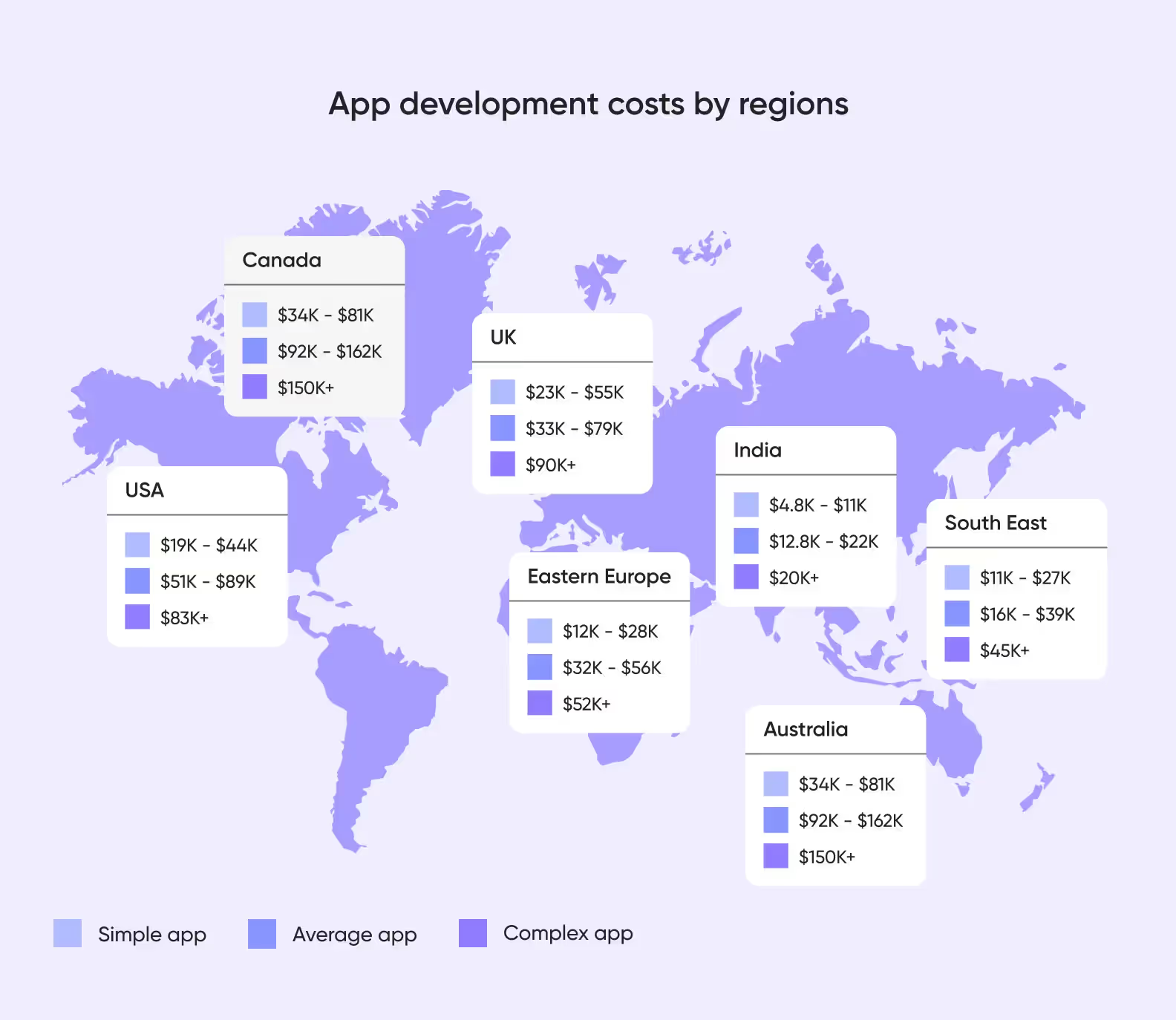
Estimating custom CRM development cost requires a detailed assessment of each phase of the project.
The design team created wireframes, developed the UI/UX design for CRM systems, and produced interactive prototypes.
When considering CRM solutions, businesses often face the choice between off-the-shelf products and custom development.
Ready-made solutions have gained popularity because of their accessibility and rapid deployment capabilities. Their popularity is evident in the widespread adoption of platforms like Salesforce, which boasts usage by over 150,000 companies worldwide.
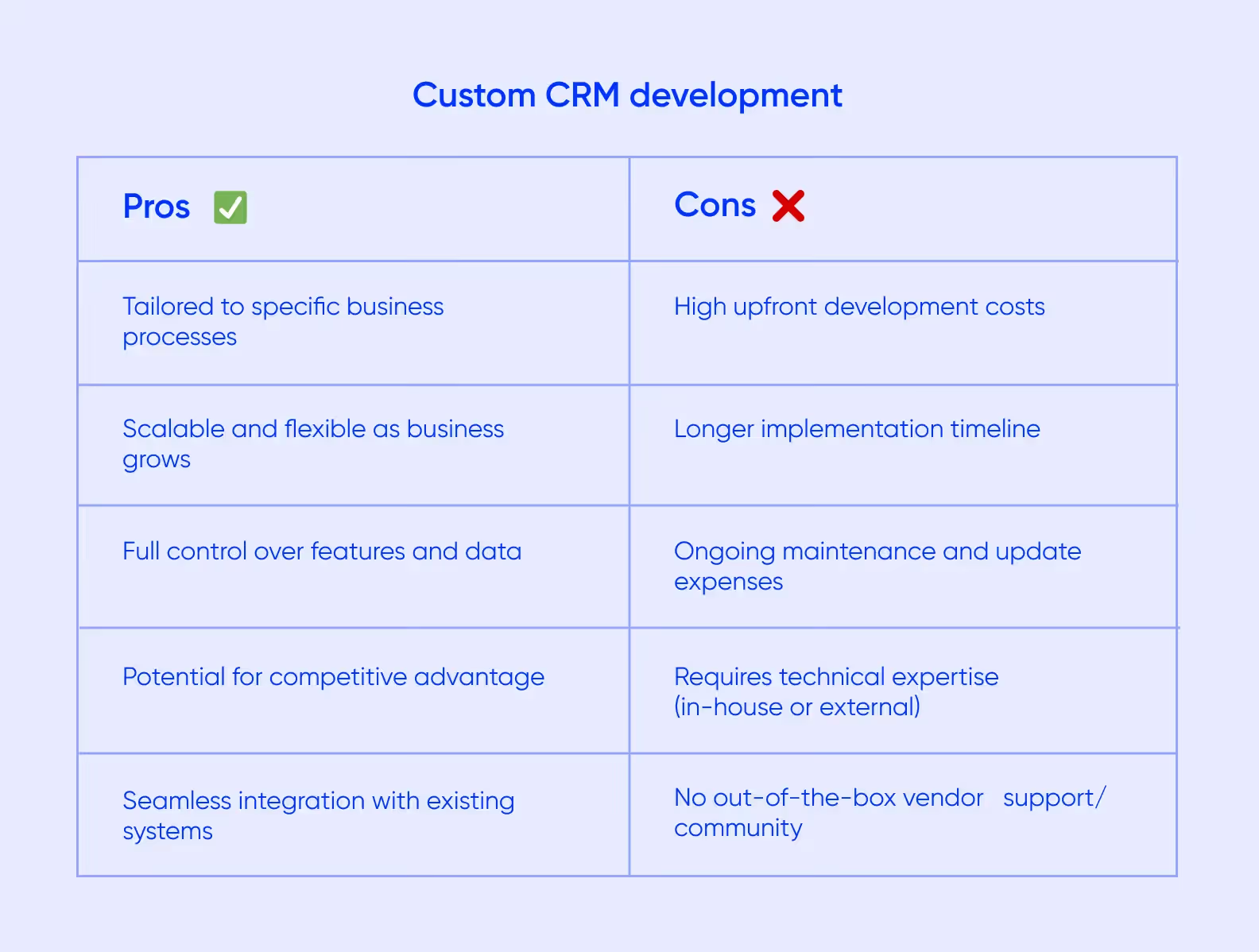
Unlike off-the-shelf options, custom CRM solutions are crafted to align with specific business needs. If your business has unique processes, or you're seeking a competitive edge, the investment in a custom CRM will show substantial long-term benefits.
Remember that the true value of a CRM lies not just in its features, but in how well it aligns with your business processes and supports your growth objectives.
➡️ Purrweb is ready to become your development partner. Fill out the form and get a free project estimation in 48 hours!
Off-the-shelf CRMs like Salesforce or HubSpot cost $25–$165 per user per month, which scales linearly with team size. Custom CRM development ranges from $30,000 for a basic system to $200,000+ for enterprise-grade builds — a one-time investment with no per-seat fees. For teams of 20+ users with specific workflows, custom development typically becomes more cost-effective within 2–3 years.
Beyond the core development quote, budget for: data migration from your existing system ($3,000–$15,000 depending on data volume and cleanliness), third-party API integrations ($1,500–$10,000 per integration), user training and documentation ($2,000–$8,000), and a contingency buffer of 15–20% for scope changes. These items are rarely included in initial quotes but represent real costs in 80% of projects.
Integration costs depend on complexity: basic integrations with REST APIs (email, calendar) run $1,500–$4,000 each; mid-tier integrations with ERP or accounting systems (SAP, QuickBooks) cost $4,000–$8,000 each; complex bidirectional integrations with legacy systems or telephony platforms range $8,000–$15,000+. A CRM requiring 3–5 integrations typically adds $15,000–$40,000 to the total project budget.
Yes — hourly rates vary substantially by region. US-based teams charge $100–$180/hr, Western European teams $80–$120/hr, Eastern European teams $40–$80/hr, and South Asian teams $20–$50/hr. A 1,000-hour CRM project costs $40,000–$80,000 with an Eastern European team versus $100,000–$180,000 with a US team for equivalent output. Region affects cost, not necessarily quality — assess portfolio and communication practices independently.
Data migration from a legacy CRM or spreadsheet system adds $3,000–$15,000 and 2–6 weeks depending on data volume, duplication rate, and the source format. Clean, structured data migrates faster; inconsistent or duplicate records require manual cleanup that inflates both cost and timeline. Auditing your existing data quality before development starts is the single most effective way to control migration costs.
The highest-leverage cost control is a phased build: develop only contact management, deal pipeline, and basic reporting in phase 1 ($30,000–$60,000), validate with real users, then add automation and integrations in phase 2. This avoids spending on features that never get used — a common pattern in 40–50% of enterprise CRM projects. Defining user roles and must-have workflows before scoping is equally critical for keeping phase 1 costs accurate.
GDPR compliance, SOC 2 readiness, or industry-specific requirements (HIPAA for healthcare CRMs, PCI DSS for payment handling) add $10,000–$30,000 to base development cost. This covers role-based access controls, data encryption at rest and in transit, audit logging, and secure API design. Skipping these measures upfront typically costs 2–3× more to retrofit post-launch when the business faces an audit or enters a regulated market.


.svg)