Explore

Need help with your project?

Oops! Something went wrong while submitting the form.
A crowdfunding website is a two-sided platform that connects project creators with backers and handles pledges, payments, and payouts from end to end. You can launch one on white-label software you rent, or build it custom and own the code. That one decision sets your budget, your timeline, and how much of the product is actually yours.

This guide covers the crowdfunding types, must-have features, tech stack, and step-by-step build process, plus payments and compliance, monetization models, and what it really costs to build a crowdfunding platform in 2026.
According to Grand View Research, the global crowdfunding market was worth about $2.46 billion in 2025 and is on track to reach $5.53 billion by 2030, a 17.6% annual growth rate. That figure tracks the platform market itself, not the total money raised through it.
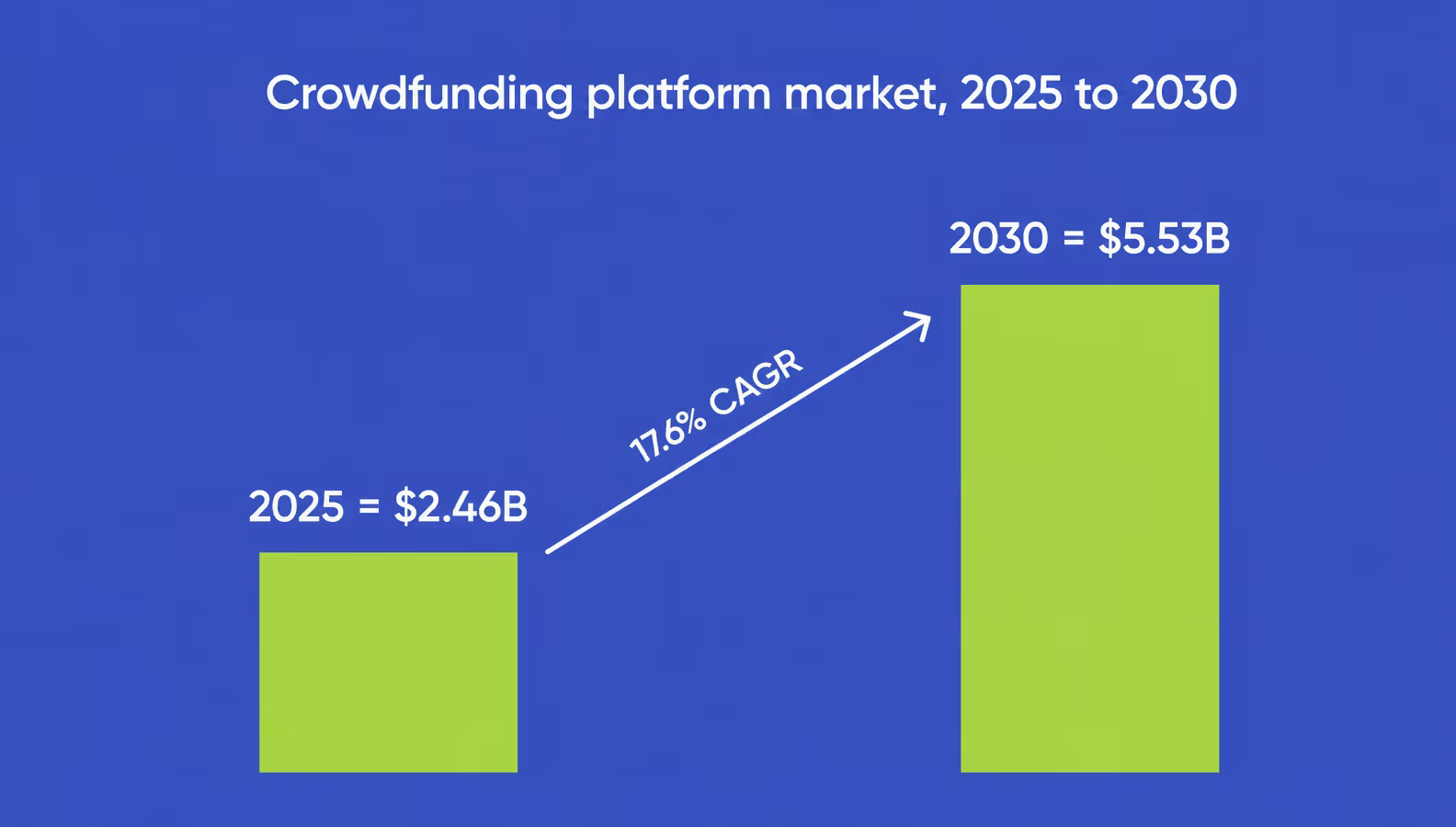
The platform market alone is set to more than double by 2030, before counting the funds raised on top
A crowdfunding website pools small amounts from many people to fund a project, a company, or a cause. A creator launches a campaign with a funding goal, backers pledge money, and the platform holds those funds and releases them on success or returns them if the goal falls short. That escrow-and-payout logic in the middle is what separates a real platform from a simple donation form. It sits inside the wider alternative finance market, giving startups and creators a way to raise funds without a bank's terms.
The crowdfunding model underneath shapes almost everything else: who your users are, how heavy your compliance is, and how you earn revenue. Five types cover most of the market.
| Type | Who funds it | What the backer gets | Regulatory load | Example |
| Reward-based | Backers pre-ordering | A product or perk | Light | Kickstarter, Indiegogo |
| Equity | Investors | Shares in the company | Heavy (securities law) | Seedrs, Wefunder |
| Donation-based | Donors | Goodwill, no tangible return | Light | GoFundMe |
| Debt / P2P lending | Lenders | Repayment plus interest | Heavy | Peer-to-peer lending sites |
| Real estate | Investors | Rental income or equity | Heavy | Fundrise |
Reward-based and donation-based platforms carry the lightest legal load, so most founders start there to raise money for creative projects. Kickstarter and Indiegogo are the best-known examples of crowdfunding, and most crowdfunding projects still launch on that reward model. Equity powers business crowdfunding, while real estate platforms back property developments and other real estate projects, and all three move real financial returns that pull in securities regulators. Platforms also pick between two funding models: fixed funding, where a campaign only pays out if it hits its goal, or flexible funding, where creators keep whatever they raise. We've worked on the donation side of this ourselves, building a fundraising website that matched non-profits with corporate sponsors instead of collecting one-off pledges.
Before any feature list, crowdfunding platform development comes down to a build path. Rent a white-label crowdfunding platform and rebrand it, or build a custom crowdfunding platform from scratch. The trade-off is speed and price against ownership and control.
| Factor | White-label crowdfunding software | Custom build |
| Time to launch | Weeks | 4–6 months or more |
| Upfront cost | Low — setup plus license | High |
| Ongoing cost | Revenue share or subscription | Hosting and maintenance |
| Customization | Vendor's preset options | Anything you can design |
| IP ownership | Vendor owns the code | You own the code |
| Compliance | Locked to the vendor's model | Any model you need |
White-label crowdfunding solutions win when you want a fast MVP on a standard reward or donation model and you're an early-stage startup still testing whether the market shows up. You trade a slice of revenue and control of your roadmap for a launch in weeks.
Custom wins when your model is niche, your UX has to stand apart, or you're running equity or lending flows for startups and SMEs where compliance can't bend to someone else's setup. Custom crowdfunding platforms cost more upfront, but the code, the data, and the product decisions stay yours. A custom crowdfunding platform is really a payment-heavy fintech build, which is where a dedicated custom fintech development team earns its keep.
Not every feature belongs in version one. The fastest way to blow a budget is to build live-streaming and advanced analytics before a single campaign has gone live. Group the build by who touches it, and a lean MVP comes into focus.
Creator side: a campaign builder for media and story upload, a funding goal with a live progress bar, reward tiers that map pledges to perks, and an updates feed to keep backers posted.
Backer side: discovery through search, categories, and filters so projects actually surface. A pledge flow that takes two taps — pick a tier, pay, get a confirmation. Here the user experience has to feel effortless, since social sharing and comments are the reach and trust signals that move pledges.
Payments: payment gateways, escrow to hold pledges until a campaign succeeds, refunds when it doesn't, and multi-party payouts that split money between creators and your platform fees.
Trust and compliance: KYC (know-your-customer identity checks) on creators, plus investor verification and investor communication once you touch equity or lending. This is where fraud gets stopped before it reaches your backers.
Admin: a back-office dashboard for moderation, monitoring crowdfunding campaigns, analytics, fund management, and automation for routine tasks.
Most guides hand you one flat feature list. Grouping by role tells you what to cut: an early reward-based MVP can ship without investor verification, while an equity platform can't ship without it. The core features you keep should follow the model you picked, not a generic checklist.
A crowdfunding platform is a payment system with a social layer on top, so the technology stack leans on proven, boring choices rather than anything exotic. Here's a lean setup that covers web and mobile without over-engineering the first release.
Mobile is the piece most guides skip. Per Business Research Insights, more than 67% of crowdfunding campaigns in 2025 launched on mobile-enabled platforms, so a payment integration for platforms that works cleanly on a phone isn't optional. Building the mobile app in React Native from the start keeps crowdfunding app development on one codebase, rather than turning it into a second project.
We built Broex, a React Native crypto wallet for people buying digital currency for the first time. Users sign in, set a PIN, and then buy, exchange, and withdraw currency, with card support for cashing in and out.
Two problems shaped the build. Off-the-shelf UI libraries couldn't handle a crypto currency list, so the standard selectors broke, and crypto apps tend to scare newcomers with dense interfaces. We built a custom currency selector, modeled the layout on familiar retail-banking apps, and shipped in phases so the client could launch fast.
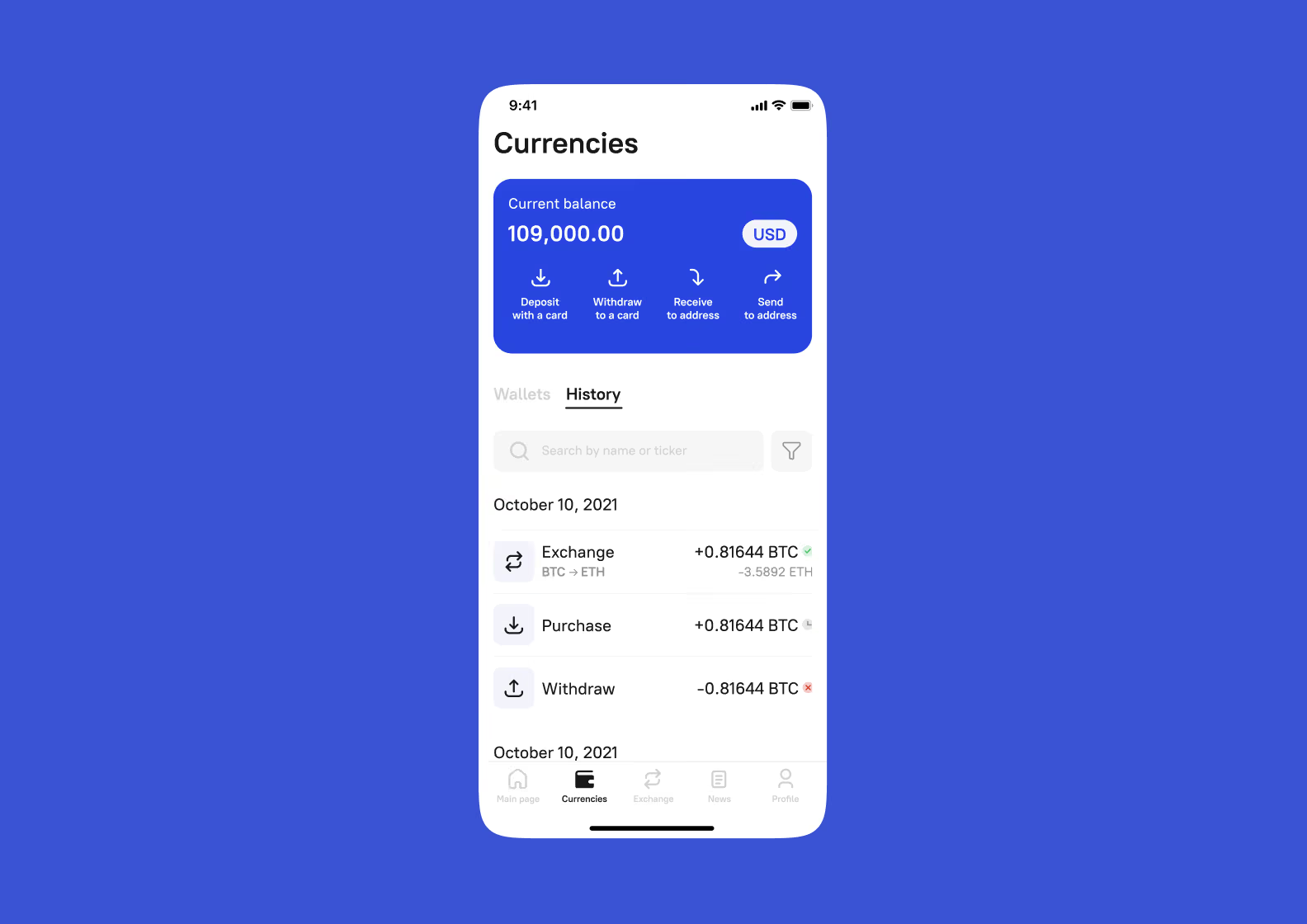
Broex onboarding built in React Native, one codebase serving iOS and Android
The build breaks into eight phases, and several overlap. A realistic lean minimum viable product (MVP) runs four to six months, not the vague "several months" most guides wave at. Here's the development process with honest timelines.
The steps that sink timelines are compliance and payments, which is why they start in parallel on week one instead of waiting for the backend.
We built Accelerist, an online fundraising platform that matches non-profits with corporate sponsors instead of collecting one-off donations. Non-profits register, and a scoring algorithm pairs them with companies whose goals line up.
The hard part was the empty-marketplace problem. Sponsors had no reason to sign up first, so the platform risked launching with nothing on the supply side. We inverted the flow and sourced company data from third-party providers, then surfaced it as ready-made sponsor cards. When that data API turned out to be too slow and tripped over name mismatches, we switched to bulk database exports and wrote custom parsing scripts to load clean records into PostgreSQL.
We shipped it in five months on a $49,400 budget with a team of seven.
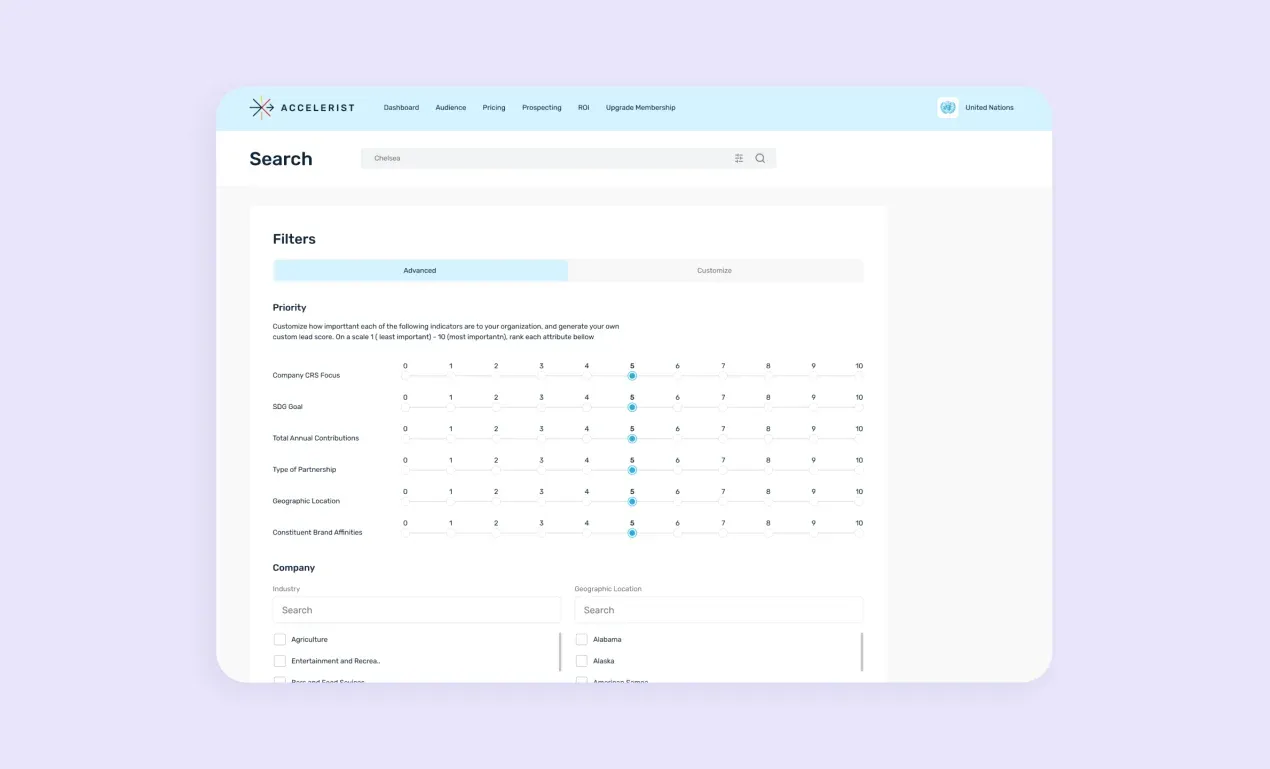
Accelerist matched non-profits to sponsors through a scoring algorithm, not a donation form
This is the layer that turns a website into a financial product, and it's where four out of six guides go quiet. Two things live here: how money moves, and what the law wants before it can move.
The flow is straightforward, once you integrate secure payment gateways and an escrow layer. A backer pledges, the payment gateway charges the card, escrow holds the funds, and the platform pays out to the creator on success or refunds backers if the goal misses. Escrow matters because you're holding other people's money in between, and multi-party payouts (Stripe Connect or MangoPay) handle the split to creator and platform without you touching the funds directly. KYC and AML (anti-money-laundering) checks run through tools like Sumsub, Onfido, or Persona, which verify identities before money changes hands.
Regulatory requirements scale with your model. Donation crowdfunding and reward platforms are light: KYC on creators and clean tax handling. Equity is heavy. In the US, raising investment falls under the JOBS Act, through Reg CF, Reg A+, or Reg D, each with its own limits and accredited-investor checks, all under the SEC and FINRA. In the EU, the ECSP regulation sets the bar. Investor verification and AML onboarding take weeks to integrate, so they belong in week one of the build, not the final sprint. The costly mistake is writing equity-platform code before the regulatory path is settled, because the rules decide your architecture, not the other way around.
We built Look4Pro, a B2B marketplace where a paid subscription unlocks access to counterparties' contact details, billed through Stripe.
Recurring card payments broke in a subtle way. Stripe's 3D Secure flow cached the security code, so once a user's first attempt to attach a card failed, every retry failed too. We rewrote the component to generate a fresh 3D Secure code server-side on each attempt instead of reusing the cached one, which unblocked subscription setup. That class of edge case shows up on any platform charging cards on a schedule.
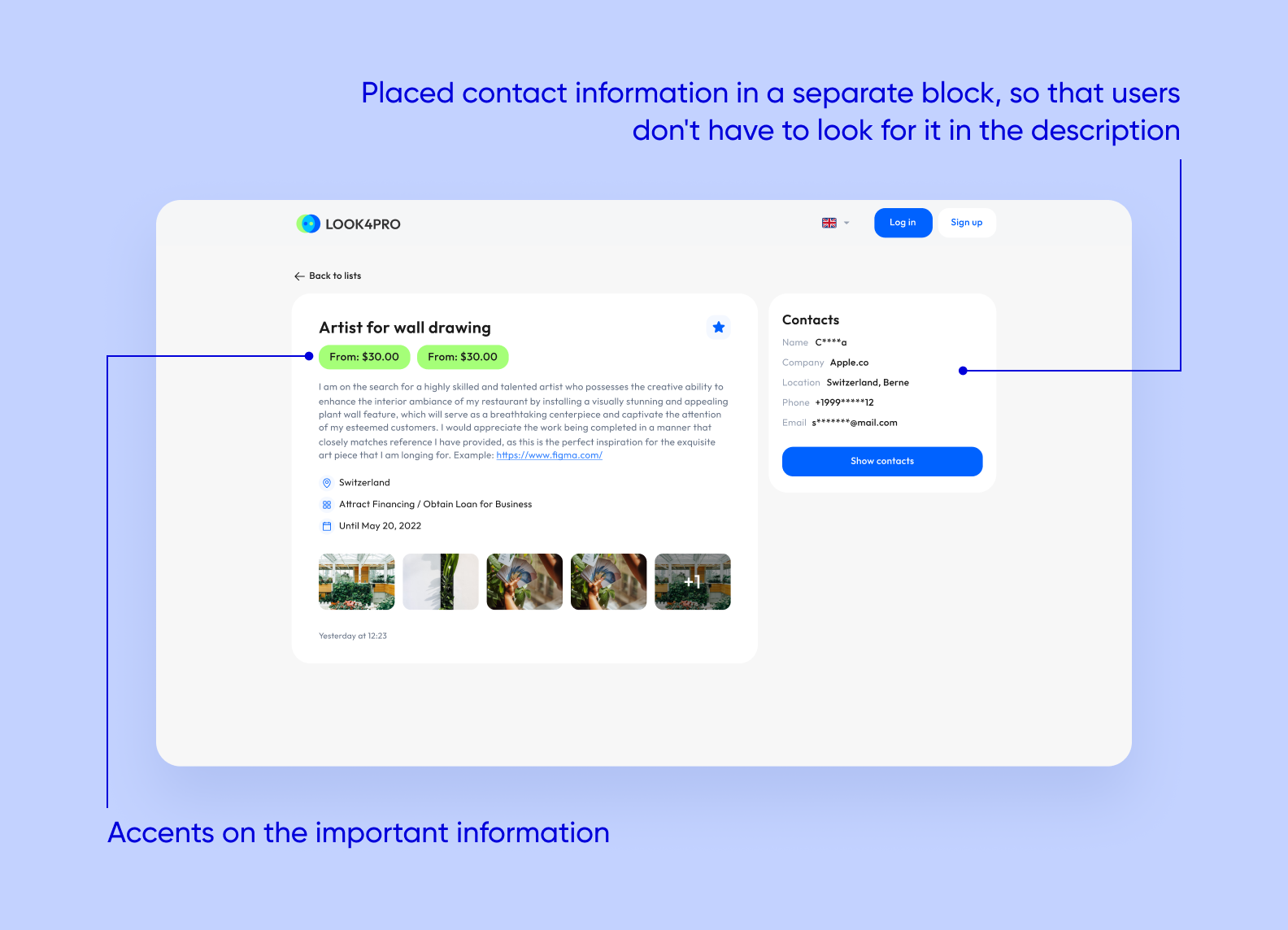
Look4Pro gates counterparty contacts behind a Stripe subscription
Revenue defines the payment architecture, so pick the model before the build, not after. Most platforms stack two or three of these streams rather than living on one.
The workhorse is the success fee, a cut of what a campaign raises, usually 3–5% and the default for reward and donation sites.
On top of it sits a payment processing fee to cover the card networks, which platforms often pass straight to the backer.
A listing or featured fee lets creators pay to launch or to sit higher in discovery, turning visibility into revenue.
A subscription suits creators who run campaigns often enough to want ongoing access rather than paying per project.
Equity platforms play a different game with a carry or equity fee, taking a percentage of the raise or a stake in the upside, because the sums are larger and the relationship runs longer.
Add-on services like marketing, promotion, and analytics round out the mix.
Whichever platform fees you pick, they shape the escrow and payout logic, which is why monetization can't be an afterthought. These are the same mechanics behind any two-sided marketplace, and for the wider view, our breakdown of marketplace monetization models maps how the fee structures play out.
For a startup budgeting a crowdfunding business, the honest answer is a range, and it moves with the model, the mobile scope, and how heavy your compliance runs. Here's a module-by-module breakdown of crowdfunding platform development at Eastern European rates, the detail most guides skip in favor of one vague number.
| Component | Effort | Cost |
| Discovery & UX/UI design (web + mobile) | 150–220 h | $9k–$14k |
| Campaign & funding engine | 180–260 h | $11k–$16k |
| Payments, escrow, payouts | 160–240 h | $10k–$15k |
| KYC/AML & investor verification | 90–140 h | $6k–$9k |
| Web frontend | 150–220 h | $9k–$14k |
| Mobile app (React Native, iOS + Android) | 180–260 h | $11k–$16k |
| Admin panel & analytics | 90–130 h | $6k–$8k |
| QA + security audit | 90–130 h | $6k–$9k |
| Custom MVP total | ~1,090–1,600 h | ~$68k–$100k |
A custom MVP runs roughly $70k–$100k. A lean reward-only build with a lighter compliance layer can land closer to $50k, in line with the $49,400 Accelerist project above. Go equity-heavy, with investor verification and securities compliance, and it climbs past six figures.
The white-label route trades that upfront cost for a setup fee in the low five figures plus revenue share. You go live in weeks, but hand a slice of every campaign to the vendor for as long as you run on their software.
Either way, plan for ongoing costs. Payment and escrow fees hit every transaction, compliance renewals come due each year, and hosting scales with traffic. Budget for continued development services as you add new features, too. The build is the down payment, not the whole bill.
Most crowdfunding platforms don't fail on code quality. They fail on decisions made before the first sprint.
The most expensive one is building an equity platform before the regulatory path is set, because the rules rewrite your architecture and you end up redoing what you already shipped. Payments are the next trap. Refunds, chargebacks, and multi-party payouts are far harder than the happy-path pledge, and they're where money actually goes wrong. Underestimate that layer and it surfaces in production, not in the demo.
Then there's the empty room. A platform with no campaigns and no backers looks dead on arrival, so seed one side before you open both, the way we sourced sponsors for Accelerist instead of waiting for them to sign up. Campaigns only get successfully funded once there's a crowd to fund them, so early fundraising success hinges on solving that cold start. Shipping web-only is a quieter version of the same mistake, since most campaigns launch on mobile and a missing app hands the bulk of activity to competitors.
The last two are about trust and money. Weak KYC and no moderation invite fraud, and a single publicized scam can end a young platform. A fee set too high pushes creators to rivals before you build any momentum. None of these are coding problems. They're the calls you make before anyone opens an editor.
Building a crowdfunding website comes down to a handful of early calls: the model, the build path, and how seriously you take payments and compliance. Get those right and the rest is execution. A lean, mobile-first MVP is a four-to-six-month project, and a successful crowdfunding platform is one that seeded demand and earned trust before it scaled.
➡️ Planning a crowdfunding or fundraising platform? Tell us about your model and we'll come back with a scoped estimate and a realistic timeline.
A crowdfunding website, or crowdfunding site, is a two-sided platform that connects project creators with backers. A creator launches a campaign with a funding goal, backers pledge money, and the platform holds those funds in escrow. It releases them to the creator if the goal is met and refunds backers if it isn't. The platform earns a fee on what's raised and handles payments, payouts, and identity checks in between.
A custom MVP typically runs $70,000 to $100,000 at Eastern European rates, depending on the model, mobile scope, and compliance load. A lean reward-only build can land closer to $50,000, while an equity platform with investor verification climbs past six figures. White-label software is cheaper up front, usually a setup fee plus revenue share, but you trade ownership and control.
A lean MVP takes about four to six months. Discovery and design run four to seven weeks, the core backend with campaigns, payments, escrow, and KYC takes eight to twelve, and the React Native mobile app is built in parallel. Compliance and payment onboarding start in week one, because approvals take weeks and block launch if left late.
Group them by role. Creators need a campaign builder, funding goal, and reward tiers. Backers need discovery, a pledge flow, and social sharing. The payment layer needs a gateway, escrow, refunds, and multi-party payouts. Trust needs KYC and, for equity, investor verification. Admins need a dashboard for moderation, analytics, and fees. A reward-based MVP can skip investor verification, an equity one can't.
Five cover most of the market. A rewards-based platform gives backers a product or perk. A donation-based crowdfunding platform collects gifts with no return. Equity platforms sell shares. Debt or peer-to-peer lending pays lenders back with interest. Real estate platforms give investors property income or equity. Reward and donation models carry a light regulatory load, while the rest pull in securities regulators.
Mostly through a success fee, a 3–5% cut of what each campaign raises. On top of that, platforms add a payment processing fee, listing or featured fees for visibility, and subscriptions for frequent creators. Equity platforms take a carry or equity fee instead. Add-on services like marketing and analytics round out the revenue. Most platforms combine two or three of these.
Yes. In the US, raising investment falls under the JOBS Act, through Reg CF, Reg A+, or Reg D, each with its own limits and accredited-investor checks, overseen by the SEC and FINRA. In the EU, the ECSP regulation applies. Donation and reward platforms are far lighter, needing mainly KYC on creators and clean tax handling. Settle the regulatory path before writing code.
White-label wins when you want a fast MVP on a standard reward or donation model and you're testing the market. You launch in weeks but rent the vendor's roadmap and share revenue. Custom wins when your model is niche, your UX has to stand apart, or equity compliance can't bend to someone else's setup. It costs more up front, but the code and product decisions stay yours.