Explore

Need help with your project?

Oops! Something went wrong while submitting the form.
P2P lending software is a two-sided platform that connects borrowers directly with investors, cutting the bank out as the middleman. One system handles borrower onboarding, credit scoring, loan matching, funding, and repayment servicing. For an MVP, building one takes roughly four to six months.

The hard part is rarely the code. It's the compliance, the two-sided mechanics, and the integrations that decide whether a launch stays on schedule.
This guide walks through how peer-to-peer lending platforms actually work and the business models you can pick from. Then the features each side needs, the tech stack, compliance, a step-by-step build, and realistic cost and timeline ranges.
P2P lending software runs a marketplace where borrowers request loans and investors fund them directly. The platform handles scoring, matching, payments, and servicing instead of a bank.
That single sentence hides the whole business. You are not building a loan app. You are building a two-sided market where two very different users have to trust the same system.
The flow is straightforward once you see it end to end. A borrower signs up, passes identity checks, and applies for a loan. The platform scores their risk and publishes the request as a listing.
Then the money side kicks in. One investor, or several splitting the amount, fund the listing. From there the platform handles loan servicing: it collects each loan repayment, pays investors their share, and handles anything that goes wrong. The platform earns a fee on top.
This is where a marketplace parts ways with a single-lender product.
A consumer loan app lends its own money to one borrower. A peer-to-peer lending platform never lends its own funds. It matches borrowers and lenders, the debtor on one side and the creditor on the other, and keeps the machinery running between them.
That difference is the whole build. Real peer-to-peer lending software means loan matching, a full investor side, and a money flow a single-lender app never has to touch. Want the single-lender model instead? We covered that build in our guide to money lending app development.
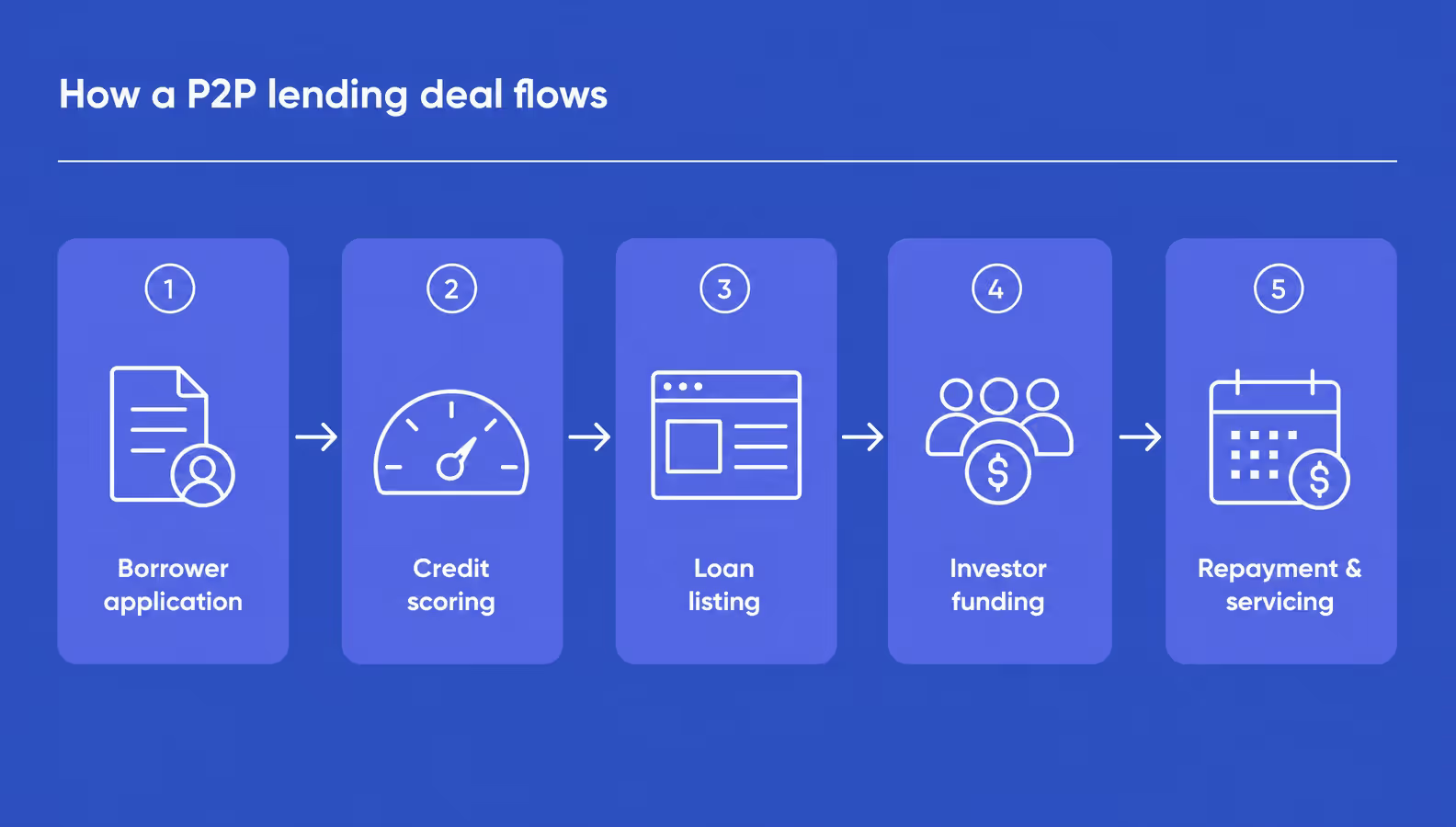
The platform never lends its own money — it scores, lists, matches, and services the loan between the two sides
The business case starts with a gap. Banks are slow to approve, expensive to borrow from, and pay savers almost nothing. A P2P platform sits in that gap and gives both sides a better deal at once: a lower interest rate and faster credit for the borrower than a bank loan, and real yield for the investor.
That gap is not small, and it is widening. The US p2p lending market is projected to reach $373.6 billion by 2035, several times its size today. The global P2P lending market is climbing on the same curve. Demand for alternative lending is not a bet on the future. It is already here.
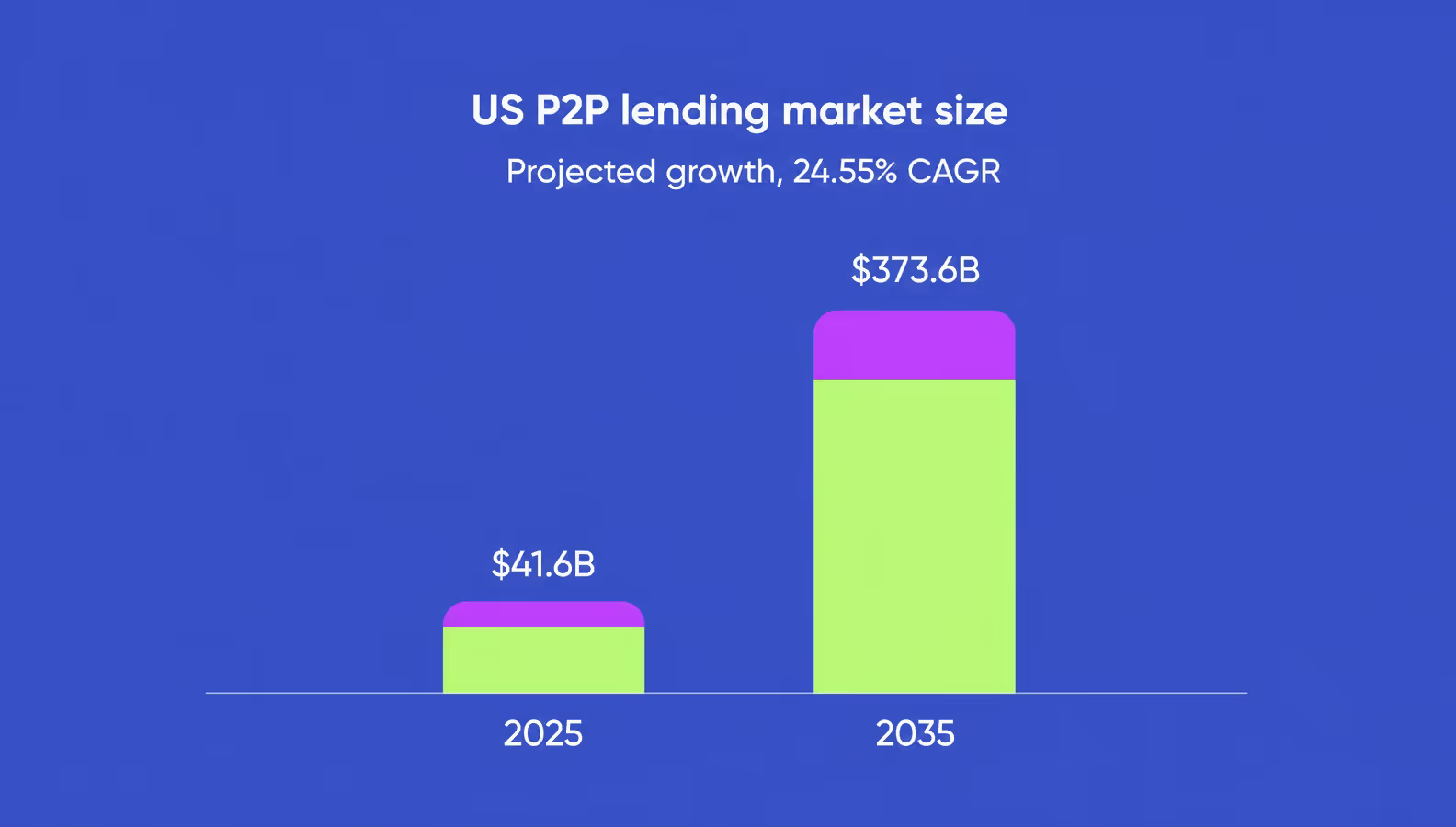
The US P2P lending market is projected to grow several times over by 2035 — the demand is already here, not a future bet
The pull is structural, not a trend. Every interest rate cycle where banks tighten, borrowers who still need money look elsewhere, and capital looking for return follows them. Digital lending platforms are where those two flows meet.
Investors get somewhere to lend money for a return, and the platform charges a small fee for funding loans and matching the two sides. That is the whole revenue model in one line.
None of that helps if the platform underneath is shaky. The value you sell is trust and speed, and both live in the software. That is why most founders here partner with a fintech custom software development team early, rather than stitching the money flow together after launch.
Your first real decision is who borrows and who lends. That single choice drives everything downstream: your risk model, your ticket sizes, and how heavy your compliance load will be. Most platforms pick one lending model and own it before expanding.
Here are the four models that make up most of the market.
| Platform type | Who borrows | Who invests | Typical use |
| Consumer / personal | Individuals | Retail investors | Personal loans, debt consolidation |
| Business (SME) | Small and medium enterprises | Retail and institutional investors | Working capital, business loans |
| Real estate / property | Developers, buyers | Retail and institutional investors | Property-backed loans |
| Invoice / receivables | Businesses | Institutional investors | Cash-flow financing against invoices |
These lending platforms all match borrowers with investors, but the loan offers on each look very different. The model changes the loan purpose, the risk, and the online lending opportunities on the table. The consumer model is the easiest to explain and the hardest to differentiate, since everyone starts there. Business and invoice lending carry more risk per loan but bigger tickets and fewer, more sophisticated investors.
Real estate sits in its own category. Loans are large and secured against property, so the platform leans less on consumer loans-style scoring and more on collateral and valuation.
One choice shapes your roadmap early: whether investors can exit before a loan matures. A secondary market where they resell their share is a strong retention feature. It also adds real complexity, so most teams ship it in a later phase.
If your model leans toward pooling many small investors into one project, you are closer to crowdfunding than classic lending. We break that build down separately in our guide to crowdfunding platform development.
Features are where the two-sided nature of the product becomes real work. A single-lender app serves one type of user. A P2P platform serves three: the borrower who needs money, the investor who supplies it, and the admin who keeps the market safe. The table below is the at-a-glance version, and the sections under it walk through what matters most on each side.
| Role | Core features |
| Borrower | Registration and KYC onboarding, loan application, credit score check, loan calculator, repayment dashboard, notifications |
| Investor | Portfolio dashboard, loan listing browse and filters, auto-invest rules, returns and analytics, secondary market for selling loans |
| Admin / platform | Loan origination and servicing, risk and underwriting rules, payments and disbursement, compliance and AML monitoring, reporting |
The borrower side has to feel like a good consumer app. Sign-up, identity check, and a clear loan application with a calculator that shows the real cost, including each loan repayment, before anyone commits. The moment a borrower decides to apply for a loan, friction is your enemy.
If that flow is slow or confusing, borrowers leave and there is nothing for investors to fund. Everything downstream depends on this side staying full.
The investor side is what most teams underbuild, and it is the real differentiator. Investors want a portfolio view, filters to pick loans by risk, and auto-invest rules so they can set a strategy and step back.
A clean user experience here is what turns a one-time lender into a repeat one. The secondary market, where investors resell loans they no longer want to hold, is the feature that keeps serious money on the platform.
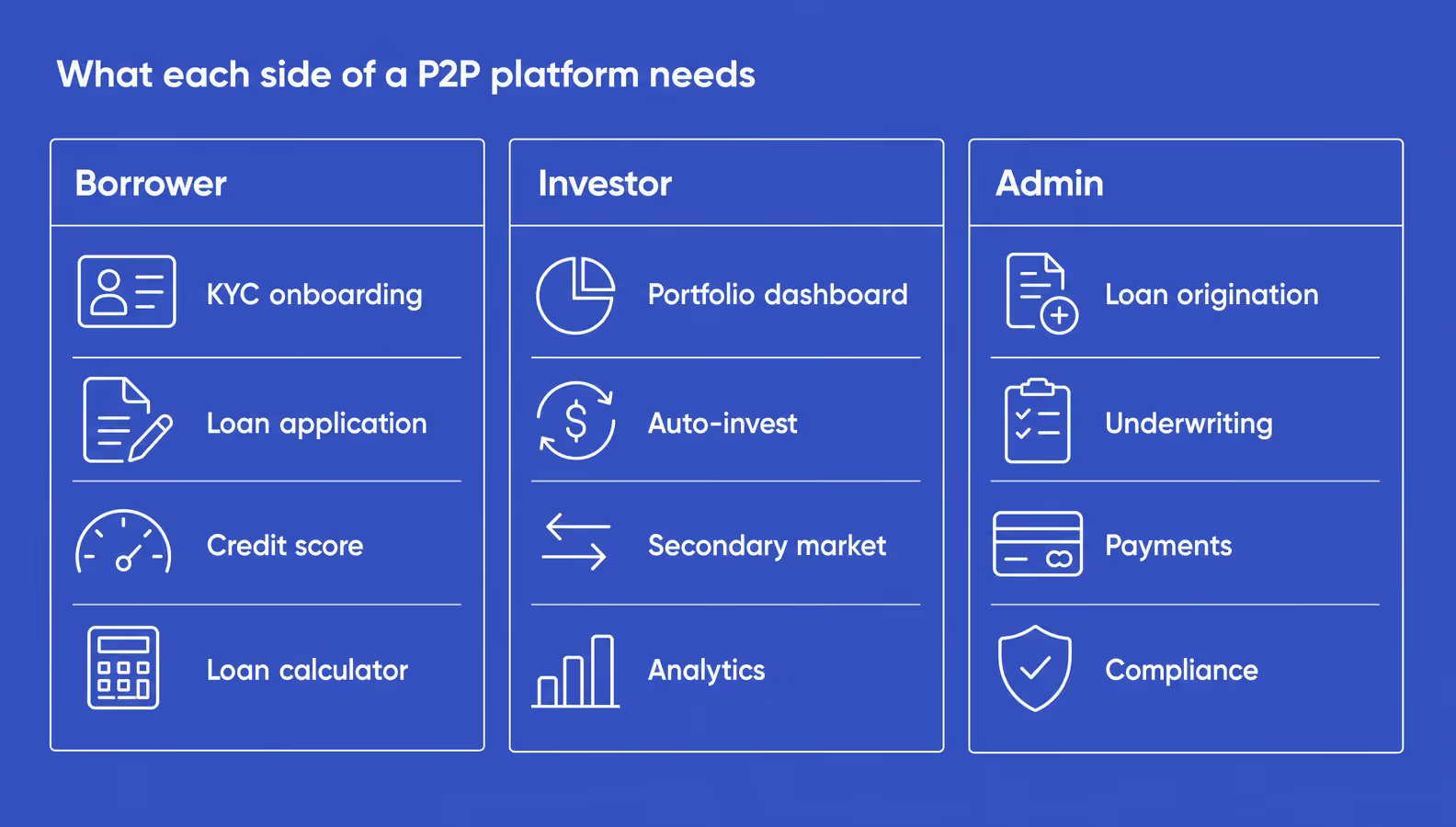
Most builds nail the borrower column and thin out the investor one — that imbalance is what kills retention
Behind both sides sits the admin. This is the least visible part of the product and the one that carries the most risk. Loan origination, servicing, disbursement, and the underwriting rules that decide who gets funded all live here. So does the compliance monitoring that keeps the whole thing legal.
Get this layer wrong and the front-end polish does not matter, because the money stops flowing correctly. Most of your engineering time will go here, not into the screens users actually see.
We built a money-movement app for a fintech client where users hold one balance across several linked bank cards and send or receive money between each other.
The hard part was not the screens. It was the ledger underneath: every transfer had to show up instantly for both people and reconcile correctly across different bank rails, so a "received" on one side always matched a "sent" on the other.
We put a reconciliation layer between the interface and the payment providers, so the app could show one trustworthy balance and a clean sent-and-received history no matter which rail actually moved the money. That same two-sided ledger problem is exactly what a lending platform faces when a borrower repays and an investor gets paid.
See the full money lending app development case.
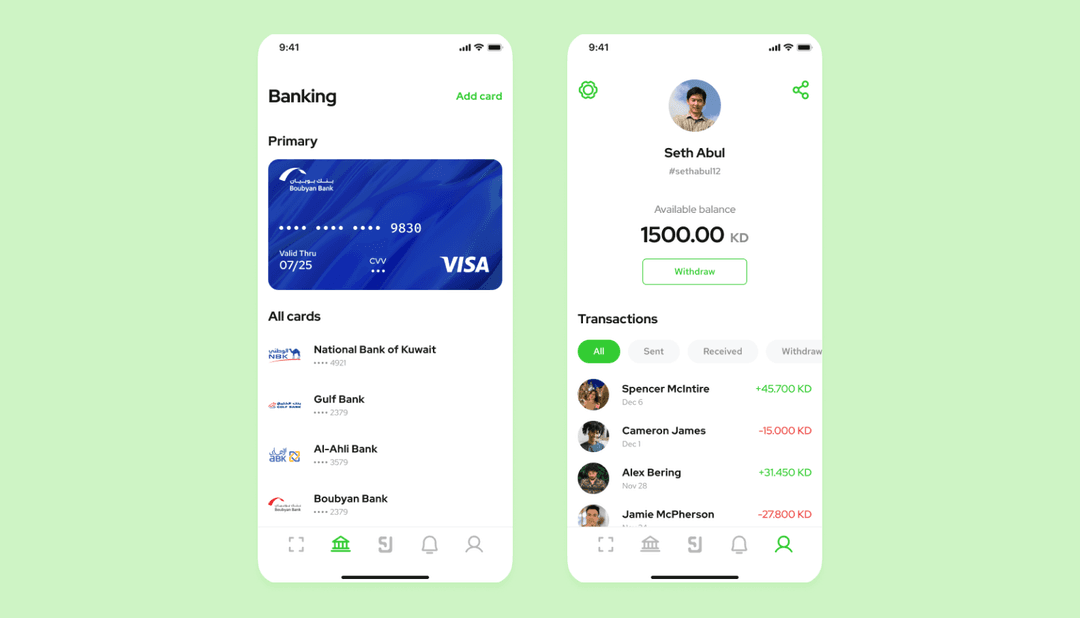
One balance on top, many bank rails underneath — the reconciliation lives in the layer users never see
The business stake here is simple. The integrations you pick decide how fast you launch and how much compliance you get out of the box. A dependable lending solution is less about a trendy framework and more about which parts of the stack for P2P lending you buy instead of build.
| Layer | What it does | Example integration type |
| KYC / identity verification | Verify borrower and investor identity | Identity verification service |
| Credit scoring | Assess borrower risk | Credit bureau / scoring API |
| Payments and disbursement | Move funds, collect repayments | Payment gateway / payment processor |
| E-signature | Sign loan agreements | E-signature API |
| Analytics / risk | Monitor defaults, portfolio health | Analytics and reporting tools |
The rule of thumb is to build what makes you different and buy everything else. Your loan matching and your investor experience are worth building. Identity checks, credit score pulls, payment gateways, and e-signatures are not.
Each of those is a solved problem with a mature provider behind it. Wiring in existing software and third-party tools also brings compliance along for the ride, since a serious KYC provider already handles the checks a regulator expects. It is faster, cheaper, and safer than reinventing any of it in-house.
More advanced platforms layer in artificial intelligence to sharpen credit scoring, and a few experiment with blockchain for tamper-proof loan records. Neither is required for a first version, but both show where lending technologies are heading.
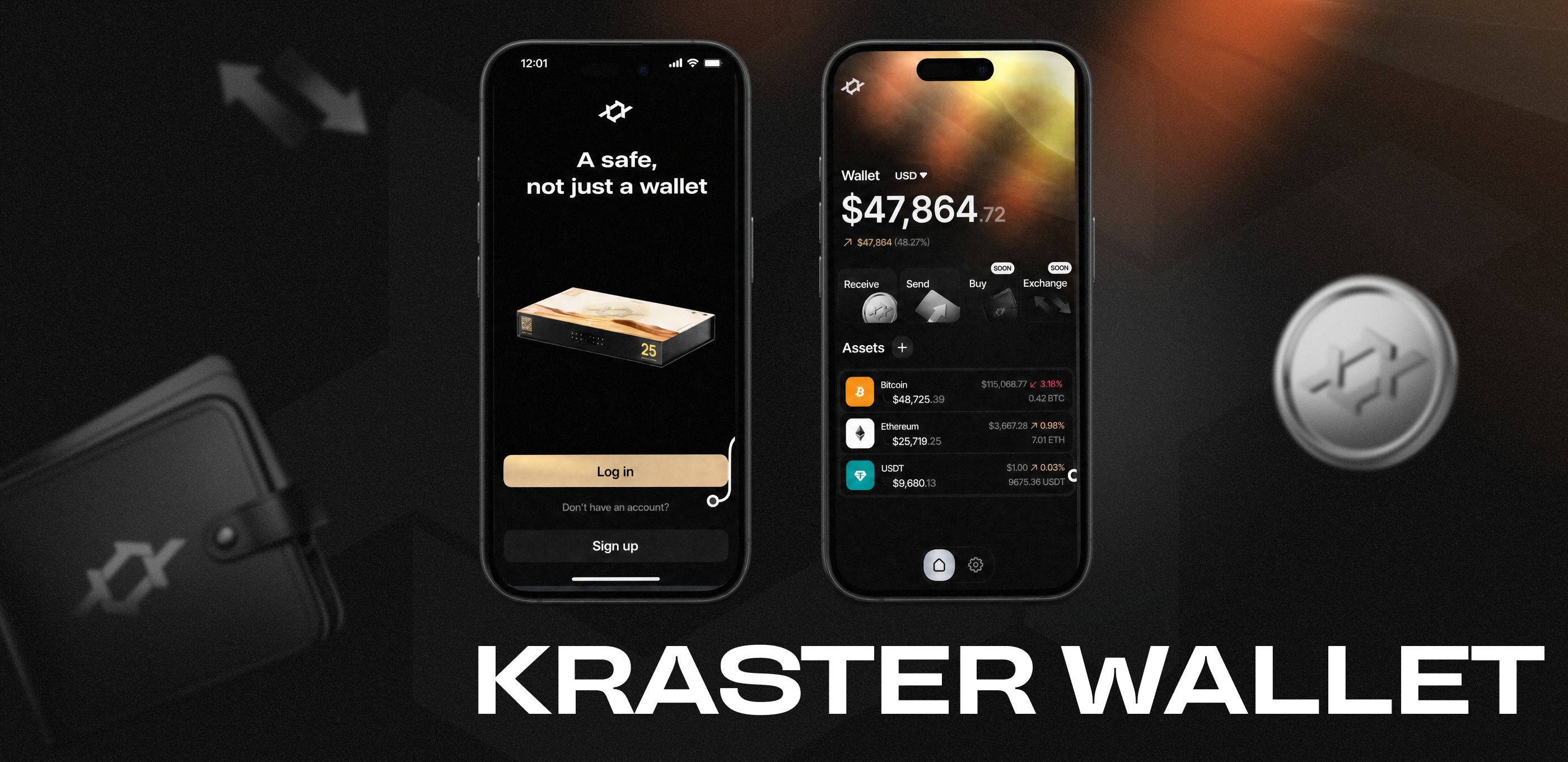
A client came to us to build a crypto wallet, but the budget could not stretch to building wallet infrastructure from scratch, and doing so would have added months to the timeline.
So we leaned on APIs. Sending, receiving, balances, and network access were each mapped to an existing service, and we wrote a thin layer to orchestrate them behind one clean interface.
The result was a working product for a fraction of the from-scratch cost, with the same coherent experience for the user. That is the exact trade-off a lending platform makes with KYC, scoring, and payment processing: pick strong providers, integrate them well, and spend your own budget where it actually sets you apart.
Read the full crypto wallet API case.
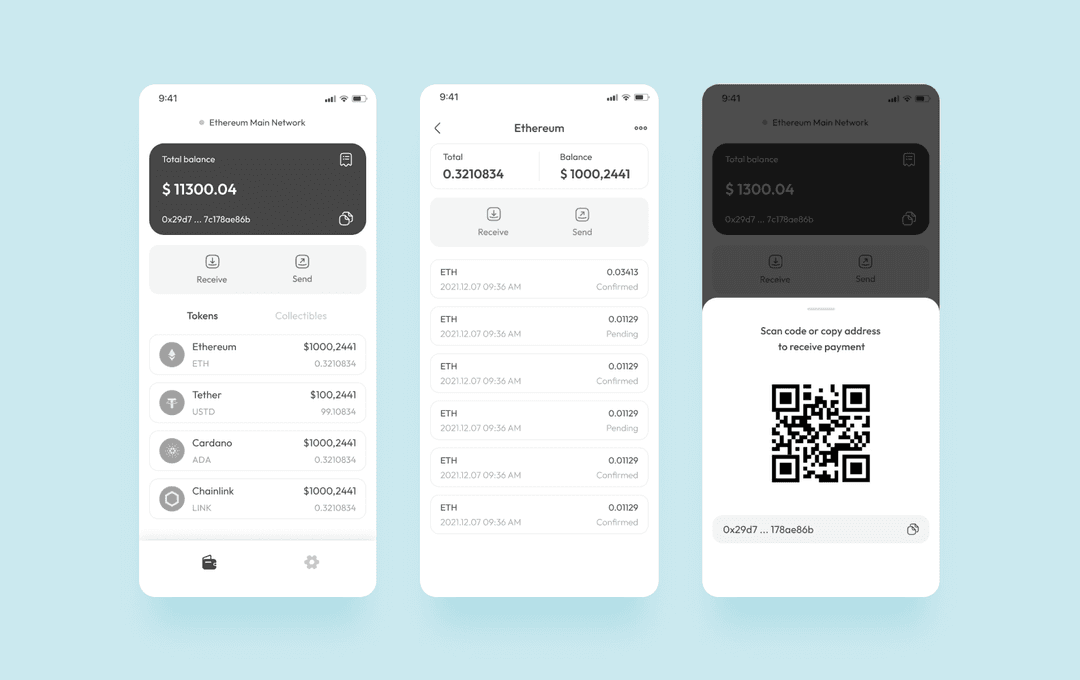
Every core action here — balances, send, receive — runs on an integrated API rather than infrastructure we built from zero
The hardest part of a P2P lending platform is not the code, it is compliance. Every platform needs KYC (know your customer) and AML (anti-money-laundering) checks, plus data protection, secure payments, and the right licensing for its market.
That last point matters and it is where blanket advice is dangerous. Licensing rules change from one country to the next. The honest answer is that your regulatory compliance scope depends on where you operate and who you lend to. Scoping it is a first-week task, not a launch-week surprise.
Here is the trap that sinks P2P startups. Compliance is not a feature you bolt on at the end. If underwriting rules, identity checks, and audit trails are designed in from day one, they slow you down a little. If they are retrofitted after the product works, they force a rebuild.
Security sits right next to it. You are holding money and sensitive financial data, so data security is not optional polish. Encrypted data, secure payment flows, and a clear record of every transaction protect both the platform and its users. We go deeper on this in our guide to fintech security.
Unlike a traditional financial institution with a compliance department down the hall, a lean startup leans on automation to run these checks at scale. That is a strength, as long as the rules behind the automation are sound.
None of this removes real-world risk. Some borrowers will hit default, and managing that credit risk is part of the model, not a bug in it. Good compliance and clear underwriting are what keep those defaults inside expected limits instead of turning into a crisis.
The development process for a P2P platform follows a familiar shape, but each step of custom P2P lending software development carries a business decision, not just an engineering task. Most founders bring in a partner with proven lending software development experience here. The money flow leaves little room for on-the-job learning.
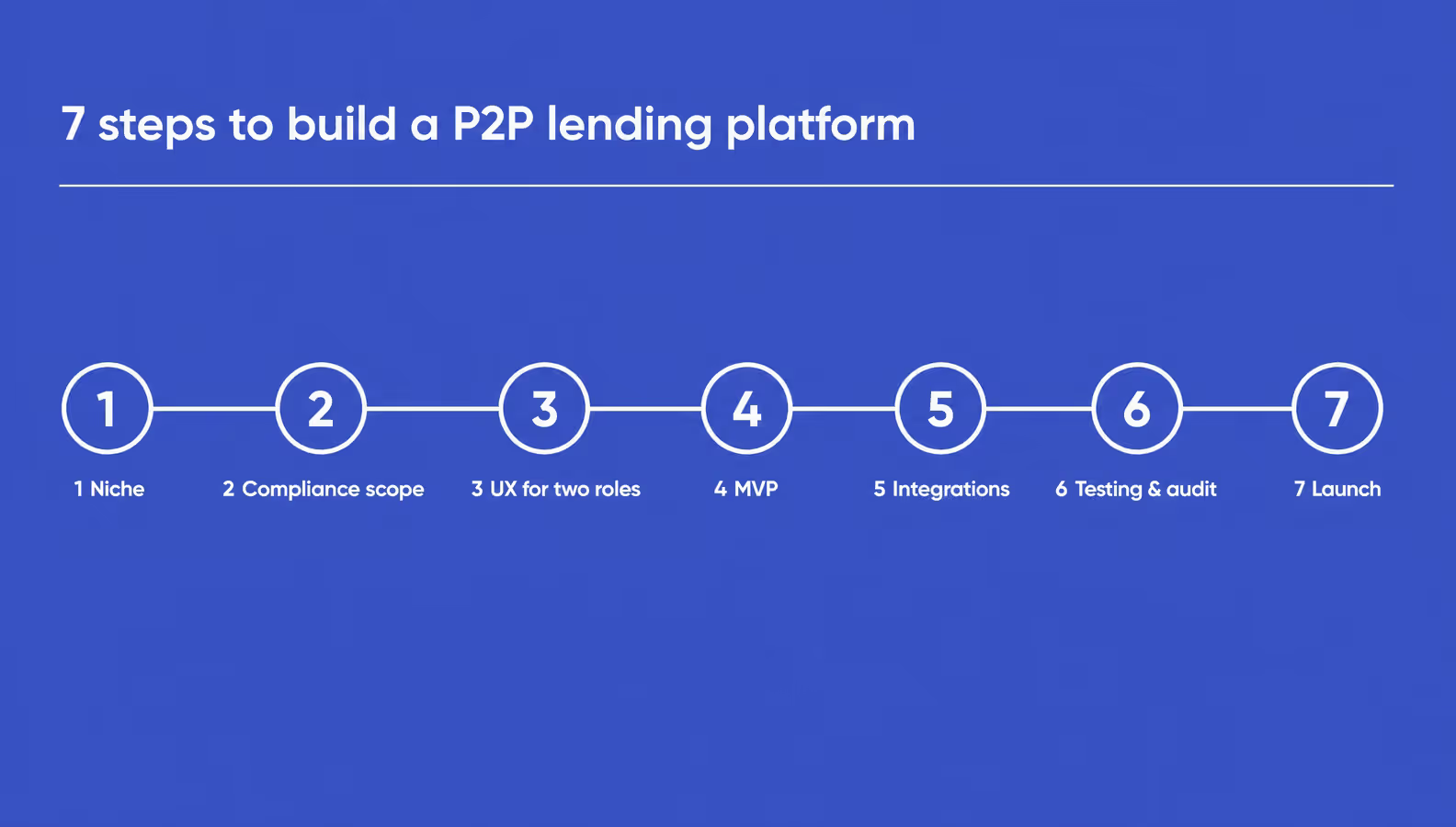
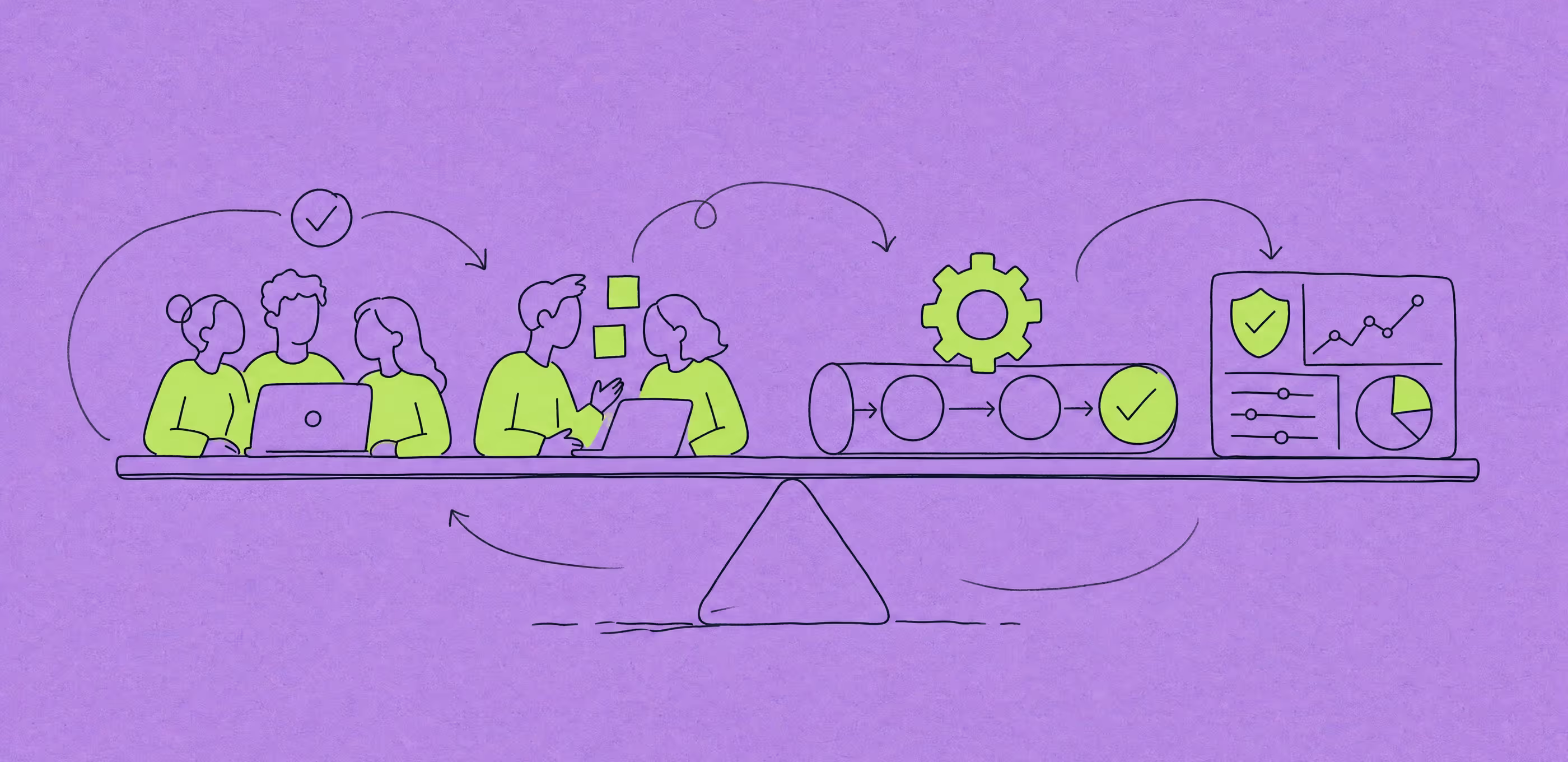
The order is the point — niche and compliance come before design, and design comes before a single line of production code
The fastest path through this is an MVP (minimum viable product) that proves the two-sided loop with as few features as possible. One loan type, core flows on both sides, real payments. A focused development team can get that live and start learning, rather than spending a year on features no borrower asked for yet.
A software development company that has run this lending process before saves you the expensive detours. It knows which p2p loan flows to ship first and which to defer.
We built an investment app where the whole product lives on the investor side: users track a portfolio, watch returns, and make decisions from one dashboard.
The challenge was making financial data feel simple for people who are not professional investors. Raw numbers scare off casual users, and a cluttered screen kills the confidence they need to put money in.
We designed the analytics down to the few things a user actually acts on, so the portfolio reads at a glance instead of like a trading terminal. That is the same bar a P2P investor dashboard has to clear, because the investor side is exactly where casual money either stays or leaves.
See the investment app development case.
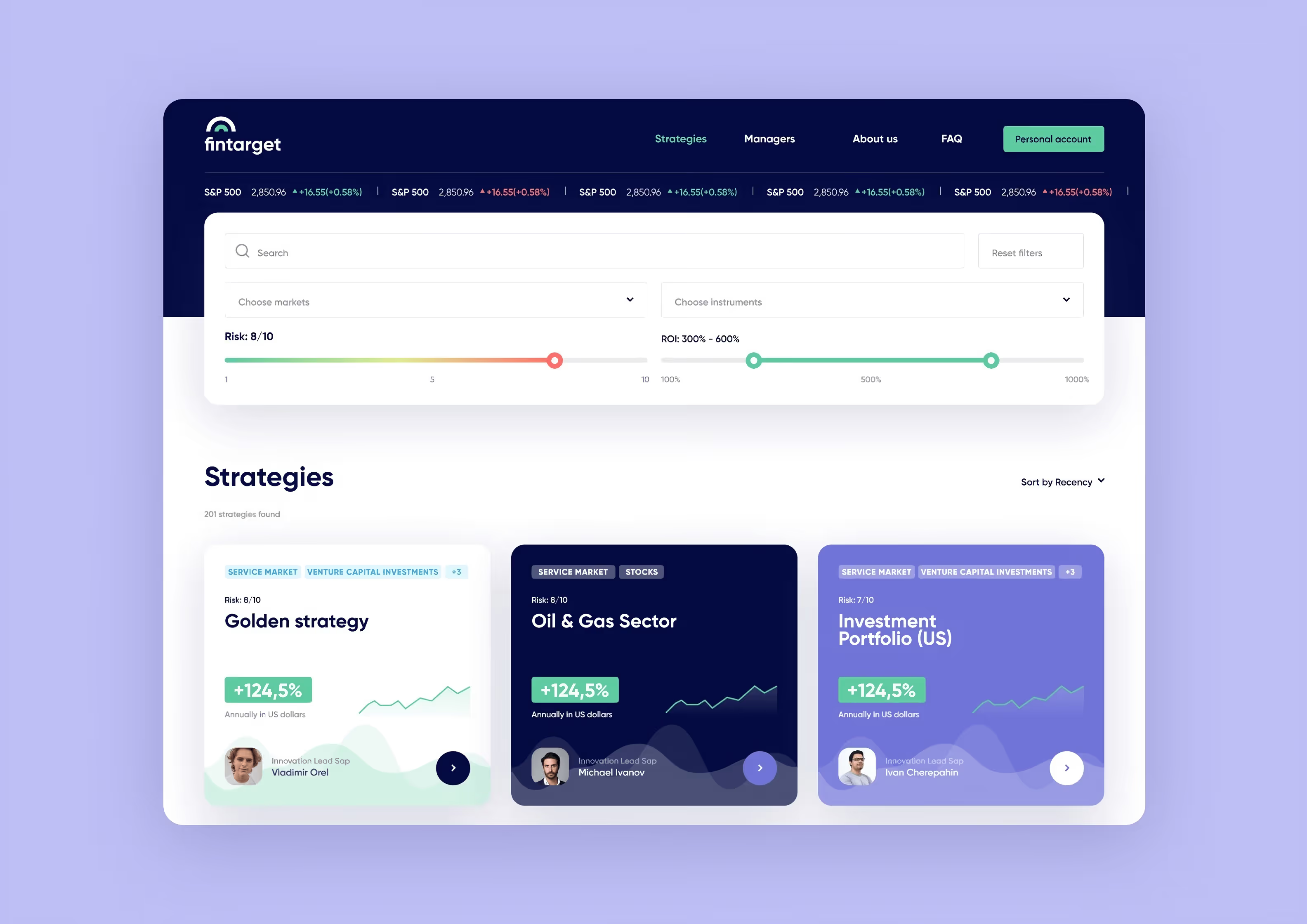
The investor side has to make a portfolio legible in one glance — the same job a P2P lending dashboard has
Now the question every founder actually opens with. What does P2P lending software development cost, and how long does it take? The honest answer is that it depends on scope, so the useful way to think about it is two brackets: an MVP and a full platform.
| Scope | What's included | Rough timeline | Cost driver notes |
| MVP | Core borrower and investor flows, KYC, payments, basic loan management software | ~4–6 months | Fewer integrations, single platform type |
| Full platform | Auto-invest, secondary market, advanced risk and underwriting, admin analytics | ~8–12+ months | More integrations, compliance depth, scale |
A focused MVP typically lands in the lower five-to-six-figure range, and a full platform runs well beyond that. Treat those as orders of magnitude, not a quote, because the real number moves with your scope.
Three things drive the development costs more than anything else. The number of third-party integrations you need, how deep your compliance obligations run, and the simple fact that you are building for two user roles instead of one. Each investor feature is a second product surface to design, build, and test. We break the numbers down further in our guide to fintech app development cost.
Timeline follows the same logic. Four to six months is realistic for an MVP with one loan type and core flows. Adding platform types, a secondary market, or heavier custom P2P lending features pushes it past a year. The right development company will tell you which features to cut from version one, not just quote the whole wishlist.
An experienced P2P lending platform development company prices your lending operations honestly. It reuses proven loan software where it can, so your budget goes to the parts that make your platform yours.
A P2P lending platform is a two-sided market before it is a piece of software. The hard parts are the ones a demo never shows. Compliance scoped from day one, an investor side strong enough to keep money on the platform, and integrations that cover everything not worth building in-house.
Get the model and the scope right, ship an MVP that proves the borrower-to-investor loop, and grow from there. That path is how a lending idea becomes a product people actually trust with their money.
➡️ If you are weighing a build, we can help you scope it and put real numbers on it. Reach out for a free estimate on your P2P lending platform within 48 hours.
Cost depends on scope. An MVP with core borrower and investor flows, KYC, payments, and basic loan management typically starts in the lower five-to-six-figure range and takes about 4–6 months. A full platform with auto-invest, a secondary market, and advanced risk tooling costs more and takes 8–12+ months. The biggest cost drivers are third-party integrations, compliance depth, and supporting two user roles.
Most platforms charge an origination fee to borrowers, a servicing or management fee to investors, and sometimes a fee on the secondary market. Some add late-payment fees or premium analytics for investors. The revenue model should be defined early because it shapes the features and the unit economics.
At minimum: borrower KYC onboarding, credit scoring, loan applications, an investor dashboard with loan listings and auto-invest, loan origination and servicing, integrated payments, and admin tools for risk and compliance. A secondary market for reselling loans is common in mature platforms.
Compliance is the hardest part, not the code. You need KYC/AML checks, data protection, secure payments, and licensing that depends on your jurisdiction and lending model. Building compliance in from the start — rather than retrofitting it — is what keeps a launch on schedule.
A focused MVP usually takes about 4–6 months: discovery and compliance scoping, UX for both roles, core development, key integrations (KYC, payments, scoring), and testing with a security review before launch. Timelines grow with more platform types, integrations, and advanced investor features.


.svg)