Explore

Need help with your project?

Oops! Something went wrong while submitting the form.
Cybersecurity in fintech is the set of controls that protect financial data and the payment flows that move it. These platforms hold exactly what attackers want: money, plus the sensitive data attached to it.

Cybersecurity in fintech is the set of controls that protect financial data and the payment flows that move it. These platforms hold exactly what attackers want: money, plus the sensitive data attached to it. That math makes a single data breach both a financial loss and a trust failure.
This guide maps the top fintech cybersecurity threats of 2026 and the compliance standards that apply: PCI DSS, GDPR, SOC 2, and PSD2. Also, we’ll give you a practical checklist for protecting financial data from day one.
Financial platforms sit near the top of every attacker’s target list, because a single breach yields both money and the sensitive financial data attached to it. For a fintech company, that raises the stakes past the usual software risk. A breach is a direct financial loss and a trust failure at the same time, and customer trust is the asset that takes longest to rebuild.
The cost numbers back the findings up. According to IBM’s Cost of a Data Breach 2025, financial services carry the second-highest breach cost of any industry at $5.56M on average, behind only healthcare. In the US the average across sectors reached $10.22M. Breaches that run past 200 days before containment cost roughly $1.14M more than those caught earlier.
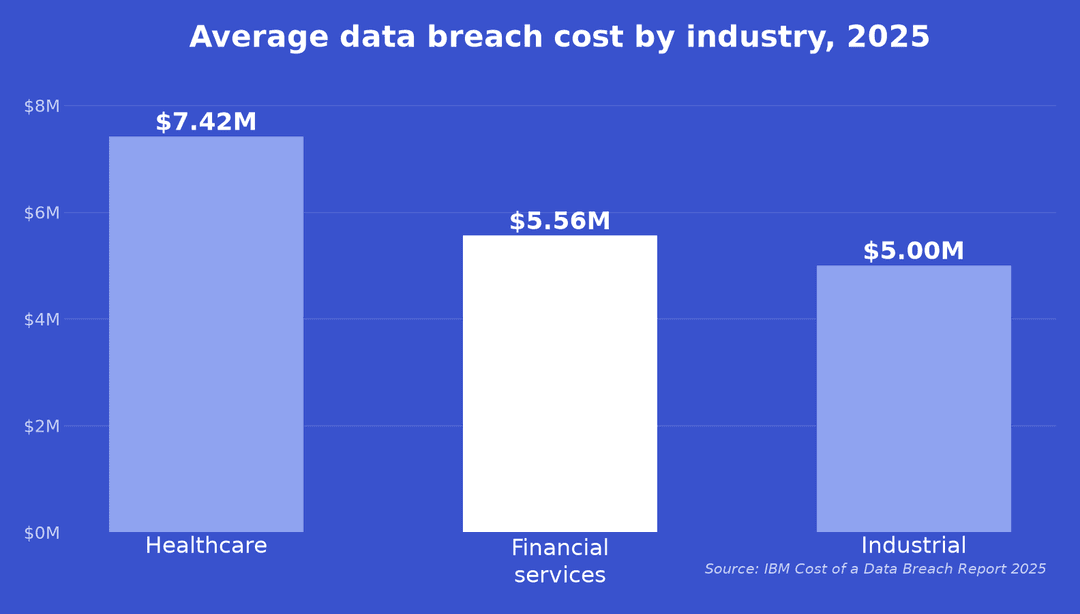
Financial services sit second only to healthcare, and a US breach now averages $10.22M across sectors
The way in is shifting, too. Verizon’s 2025 DBIR found third-party involvement in breaches doubled to 30%, while exploitation of vulnerabilities climbed 34% and credential abuse drove 22% of initial access.
For a startup, regulatory compliance and customer trust ride on the same controls. Teams that bake security into the first sprint spend far less than teams that retrofit it after an incident, which is why secure-by-default fintech software development treats it as a launch gate. This guide stays on cyber threats and defense rather than the build process, which we cover in how to build a fintech app.
The fintech threat landscape rewards attackers more than most sectors, because one foothold can reach both customer records and live payment rails. The 5 risks listed below illustrate the areas where fintech security fails in practice, ranging from the inbox to the API gateway.
Most breaches still start with a person, not a zero-day hole in the software’s security.
Attackers impersonate banks, executives, or support staff to harvest login credentials, then reach identity data, API keys, and payment functions. In fintech the target widens past employees to customers receiving fake login pages, and support teams getting talked into resetting accounts.
Prompt bombing, where a user is flooded with MFA (multi-factor authentication) requests until one is approved, shows up often enough that MFA alone becomes not enough. Behavioral signals and step-up verification on high-risk actions do more of the real work.
A fintech platform holds account details, card data, and transaction histories in one place, which is what makes a breach so costly. The root cause is rarely exotic: a misconfigured cloud bucket or an over-permissioned database exposes thousands of records before anyone notices.
Encryption at rest and in transit, tight access controls, and continuous monitoring for unusual access patterns are what hold. Tokenizing card data keeps the most sensitive fields unreadable even when a store is reached.
Fintech runs on APIs that move payments, aggregate accounts, and expose balances, which makes them the busiest attack surface in the stack.
Broken object level authorization lets an authenticated user reach another account by changing an ID, and mass-assignment flaws let attackers write fields they should never touch. Credential stuffing piles on, replaying leaked username and password pairs against login endpoints at scale.
Three controls stop most of these attacks:
Ransomware hits a fintech product twice. It locks the data, then stops settlement, onboarding and reconciliation, while systems are down.
APIs and file-upload endpoints are common entry points for the initial payload, and a compromised endpoint lets attackers exfiltrate data before encryption even begins. Tested backups, network segmentation, and input validation on every file-accepting endpoint are what keep an incident from becoming an outage.
Even though most do, not every threat comes from outside.
A careless contractor, an over-permissioned employee, or a breached vendor can open the same door an external attacker would. Verizon’s data puts third-party involvement among the fastest-growing breach factors, which sets vendor security on the same footing as your own.
Least-privilege access, vendor security reviews, and continuous monitoring of integrations all reduce this exposure. Cloud infrastructure adds its own failure modes, covered in more depth in cloud security in banking.
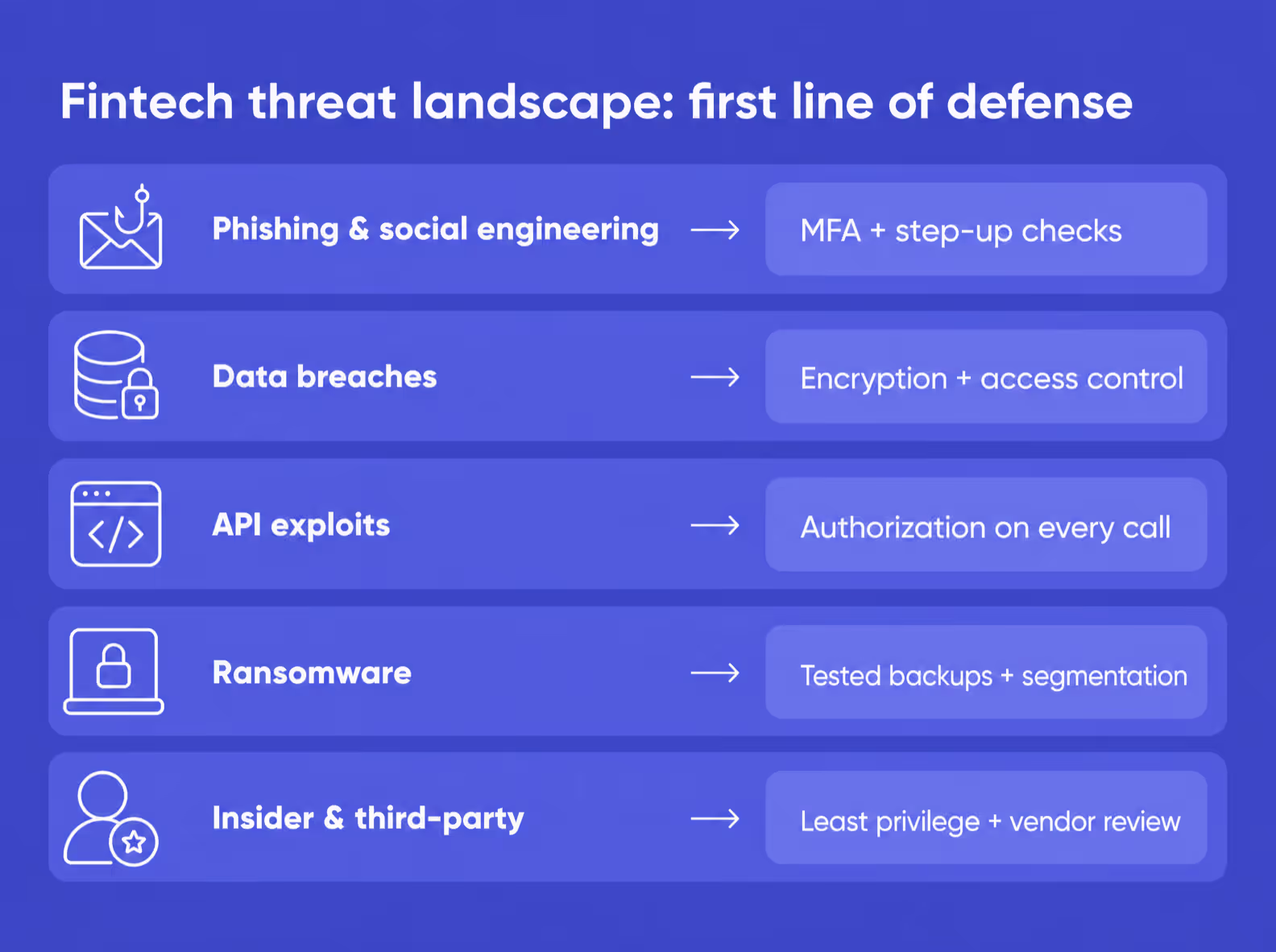
Most fintech breaches trace back to one of these five, and each has a defense that is cheap to build in early
Fintech APIs are where the real work happens, moving payments and account data between services. That also makes them the first thing attackers probe. A weakness in one endpoint can expose both the payment flows and customer data at the same time.
Most of the time the problem is in small authorization gaps, not exotic exploits. One common flaw lets a logged-in user open someone else’s account just by changing an ID in the request. Another lets a user edit data they should never control, like their own balance. Neither needs a sophisticated attacker, only an endpoint that trusts the request too much.
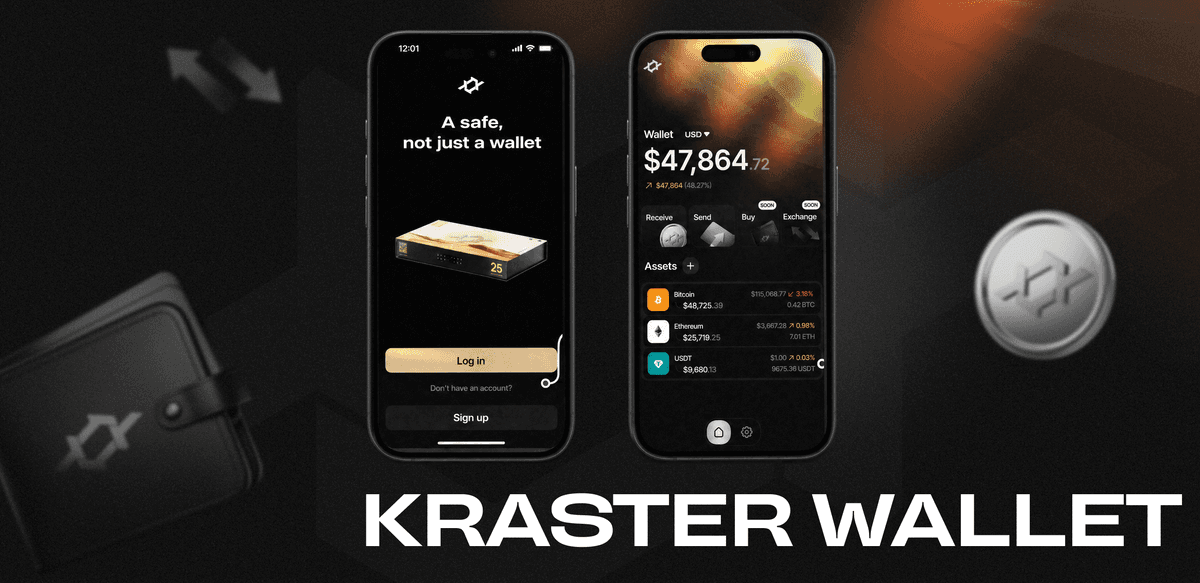
We built the crypto wallet for Kaiju Labs in Singapore, then layered a puzzle game and rewards on top to drive sign-ups. All in 2 months.
The trick was in keeping everything in one app, so users never bounce out to an external service mid-onboarding. Inside the wallet we held:
Each one is a separate integration, and holding them in a single secure flow kept the product simple without widening the risk. It launched and secured investment soon after.
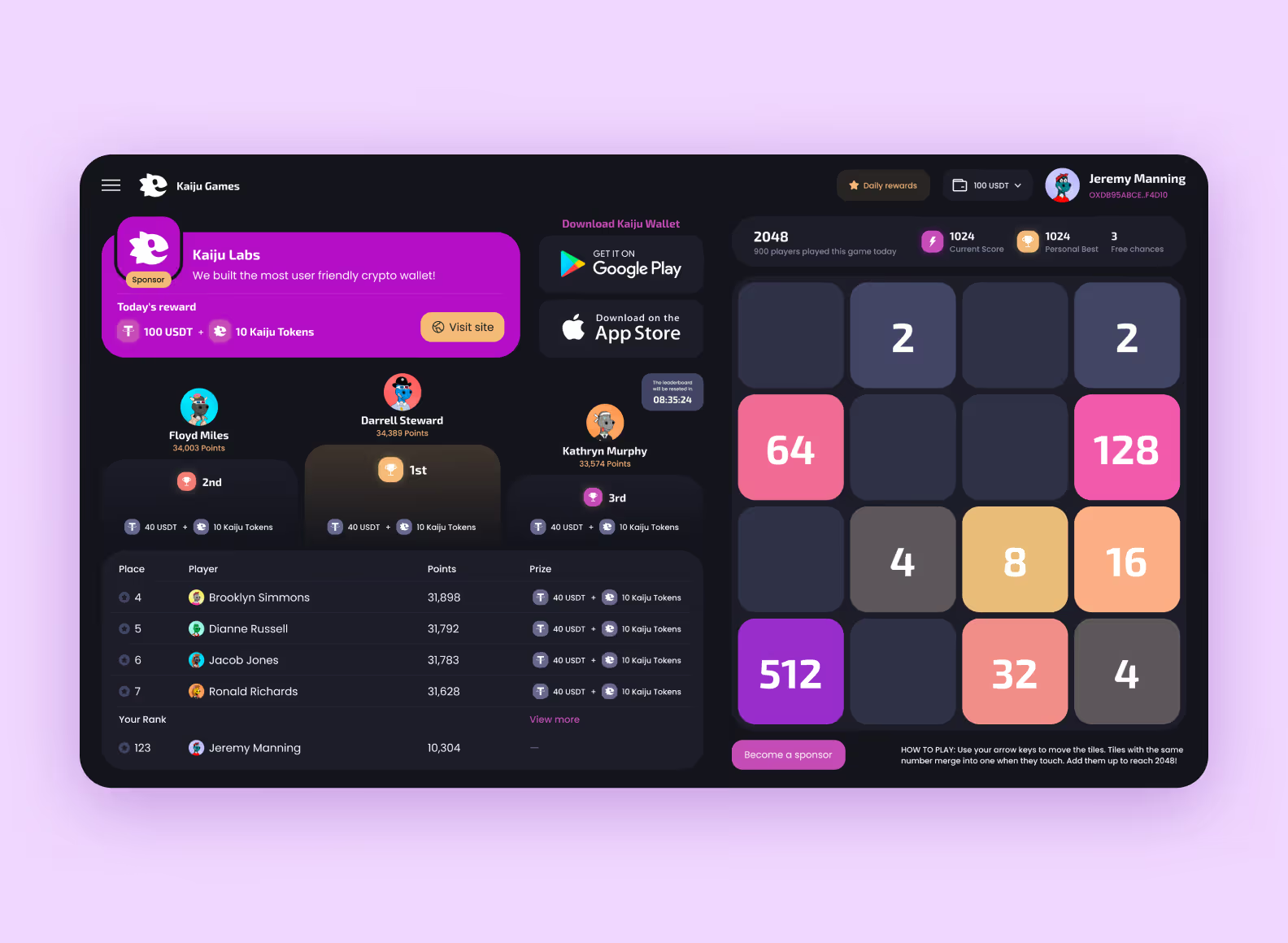
Holding every wallet integration in one flow kept onboarding simple without widening the attack surface
Rate limiting is the other guardrail. It caps how many times an endpoint will answer in a short window, so an attacker can’t hammer a login or payment route with millions of automated guesses. Payment routes get the tightest caps. And checking each request against the format it’s supposed to have, which engineers call schema validation, throws out tampered traffic before it reaches your data.
The pattern repeats across wallet products. Every integration a wallet exposes is one more door with its own lock to check. The same logic reaches the blockchain layer under crypto products, covered in blockchain in fintech.
For most users, a fintech product is a mobile app, and a phone can be lost, jailbroken, or get corrupted with malware, so the app has to defend itself even when the environment around it is hostile, which is a different problem from securing a server you own.
To avoid the most common mistakes, you can look into the OWASP Mobile Top 10, refreshed in 2024 after eight years. OWASP lists all 10, though the 3 below are the ones that hurt fintech apps the most.
This is the one that catches teams off guard most often. To save time, developers leave API keys, tokens, or passwords written directly into the app’s code, assuming nobody will look. But anyone can download the app from a store and unpack it, and those secrets are sitting there in plain sight. In a fintech app the keys often open real payment systems, which turns a shortcut into a direct line to your money.
A phone holds far more than the screen shows. If account details, balances, or session tokens are saved on the device without encryption, anyone who picks up an unlocked phone, or runs the right tool on a stolen one, can read them straight off. The safer pattern is to encrypt anything that has to stay on the device and to keep as little there as possible, so a lost phone never becomes a lost account.
Even without the source code, a determined attacker can pull an app apart to see how it works, a process called reverse engineering. They use it to find soft spots, copy logic, or build a tampered version. For an app that moves money, that reconnaissance is the first step toward an exploit, which is why payment apps add checks that make the app harder to dissect and detect when it has been modified.
Broex is a multi-currency crypto wallet we built for iOS and Android, running on a European license, so legal and security expectations were set high from day one.
Two decisions did the heavy lifting on security. We ran identity checks through the SumSub SDK, the KYC process (know your customer) that keeps fraud and money laundering out at sign-up. And we added Face ID and Touch ID, so people unlock the wallet with biometrics instead of a password they reuse everywhere. We also had to work against a backend we didn’t write, which meant validating data on the app side before trusting it.
The result was a wallet that shipped to both stores and kept its first users without a security rewrite later. See the crypto wallet for Broex.
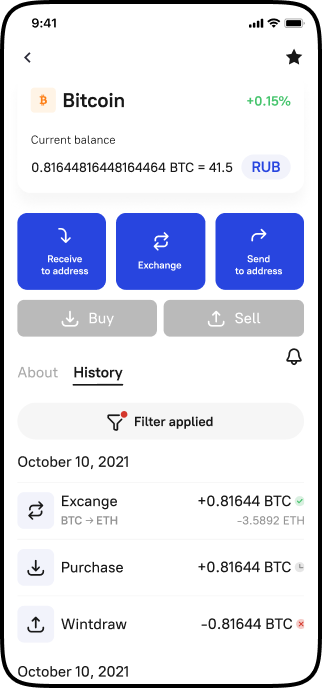
Biometric login and SumSub verification carry most of the trust load before a user ever sees a balance
The takeaway is that mobile security is a design choice, not a final-stage audit. Encrypting storage and verifying identity cost little when planned upfront, and a fortune to retrofit after launch.
For a fintech startup, compliance is not one box to tick but, at the very least, four separate standards, and they don’t all work the same way. Two are law and two are not.
The GDPR (General Data Protection Regulation) and PSD2 (the EU’s revised Payment Services Directive) are EU laws with real fines attached.
PCI DSS (Payment Card Industry Data Security Standard) is different. It comes from the card networks like Visa and Mastercard rather than a government, but you can’t process card payments without meeting it.
SOC 2 (System and Organization Controls) is a voluntary audit. An outside firm verifies that your security controls run day to day, and banks or enterprise customers ask for that proof before they sign. Here’s a quick comparison:
| Standard | What it requires | Who it applies to |
| PCI DSS | Protecting card data everywhere it is stored, processed, or sent | Any fintech that touches payment card numbers |
| GDPR | Lawful handling, clear consent, and deletion rights for personal data | Any product with EU users, wherever the company sits |
| SOC 2 | Audited proof that your security controls actually run day to day | Startups selling to banks or enterprises that demand it |
| PSD2 | Strong customer authentication and rules for open-banking API access | Payment and account services operating in the EU |
The point to keep in mind is that these, while not the same, still overlap. Encryption, access control, and identity verification satisfy parts of all four at once, so the work compounds rather than multiplying. Teams that design for the strictest of them from the first sprint tend to shrink their PCI DSS scope and pass a SOC 2 audit without rebuilding the stack later.
Most of what protects a fintech app is decided during the build, not after it. The two habits below cover the bulk of it: a security checklist you clear before launch, and a lightweight way to keep checking once you ship. Neither needs an enterprise budget.
Think of this as the list nobody should skip before the app reaches a store.
That last idea underpins zero trust, where no request is trusted by default just because it came from inside the network.
Security testing has a reputation for being expensive. The entry-level version is mostly free security tools wired into your pipeline.
Static analysis scans your own code for known mistakes before it ever runs. Dynamic testing then attacks the running app the way an outsider would, probing login and payment routes.
Dependency scanning watches the open-source libraries you pulled in, flagging any with a published vulnerability. Run all three on every release, and most issues surface while they are still cheap to fix.
We built KEM, a peer-to-peer payment app, as an MVP for a team that needed to prove itself to banking partners.
Those partners wouldn’t move forward until they saw a working product that handled money safely. Security wasn’t a later phase here. It was the gate to the partnership.
So the payment flows and account handling had to hold up to outside scrutiny from the first release. We shipped on a tight timeline, and it cleared that bar.
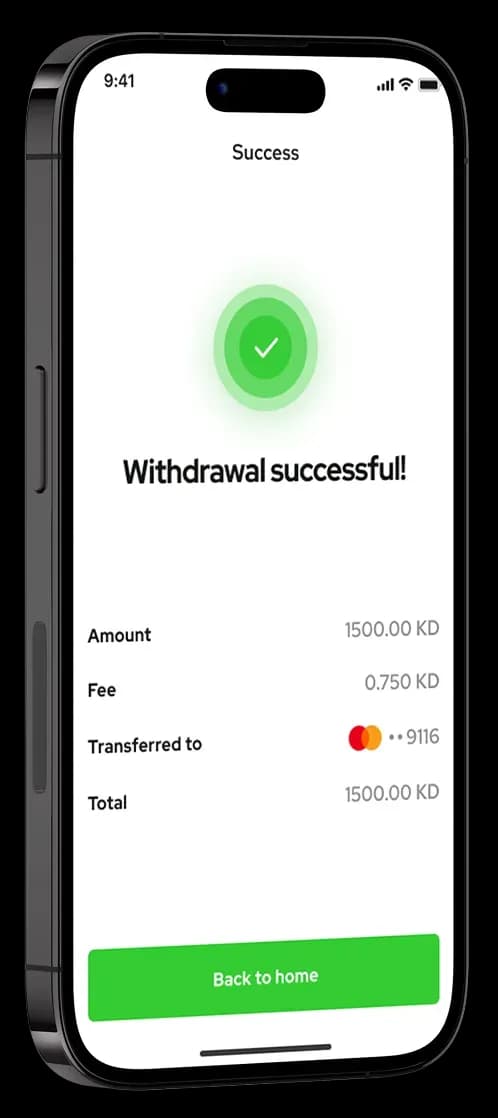
For KEM, passing a banking partner’s review was the real launch milestone, not the app store
Here’s a useful way to frame all of this. Security work done during the build is cheap insurance. The same work after a breach is damage control, and quite costly.
The earlier it lands in the schedule, the less it costs. Retrofitting encryption, access rules, or auth into a shipped product means unpicking decisions that have already spread across the codebase, which is slow and expensive.
On the attack side, the same tools that write the security precautions now write convincing phishing at a massive scale. Voice and video deepfakes can impersonate an executive well enough to authorize a transfer, and machine learning helps attackers find weak accounts faster than before.
On the defense side, the same technology reads patterns no human team could keep up with. AI-driven systems watch transactions in real time, flag threats the moment a login or payment looks off, and cut the noise so analysts chase real threats instead of false alarms.
The honest read is that neither side gets a permanent edge. Teams that pair machine learning with human review tend to catch what either would miss alone, which is where the practical advantage sits for a fintech defending real money.
Fintech security isn’t a thing you bolt on before launch. It’s a set of choices spread across the build: encrypted data, locked-down APIs, a hardened mobile app, and compliance designed in rather than retrofitted. The threats keep shifting, and AI now arms both attackers and defenders, but the fundamentals hold. Teams that treat security as a launch gate, the way a banking partner or a SOC 2 auditor would, spend far less than teams cleaning up after an incident. The earlier these decisions land in the schedule, the more they protect and the less they cost.
➡️ Planning a fintech product that has to stand up to a security or compliance review? We build payment and banking apps with PCI DSS, GDPR, and SOC 2 designed in from day one. Contact us for a free project estimation in 48 hours.
A fintech platform concentrates money and sensitive financial data in one place, which makes a single breach both a direct loss and a trust failure. Financial services carry the second-highest breach cost of any industry. Customer trust is also the slowest asset to rebuild, so the stakes run past the immediate cleanup.
The recurring ones are phishing and social engineering, data breaches from exposed records, API exploits paired with credential stuffing, ransomware that halts operations, and insider or third-party risk. Most start with stolen credentials or a misconfiguration rather than an exotic exploit, which is why fundamentals matter more than any single tool.
Four come up most. PCI DSS governs card data, GDPR governs personal data for EU users, PSD2 governs payment and open-banking services in the EU, and SOC 2 is a voluntary audit that banks and enterprise customers often require before signing. Their controls overlap, so the work compounds.
Check authorization on every object reference, so a user can't reach another account by changing an ID. Validate every input against a strict format, and apply tiered rate limiting with the tightest caps on payment routes. Together these blunt the authorization gaps and credential stuffing that hit APIs hardest.
Mobile adds device-side risks the server never faces. Keep secrets out of the app's code, encrypt anything stored on the device, and add binary protection so the app resists reverse engineering. Biometric login and strong identity checks at sign-up carry much of the trust load before a balance ever loads.
Built in during development, security is a modest share of the budget, mostly free testing tools and disciplined design choices. Retrofitting it after a breach costs far more once regulatory fines, lost customers, and downtime are counted. The earlier it lands in the schedule, the cheaper it stays.


.svg)