Explore

Need help with your project?

Oops! Something went wrong while submitting the form.
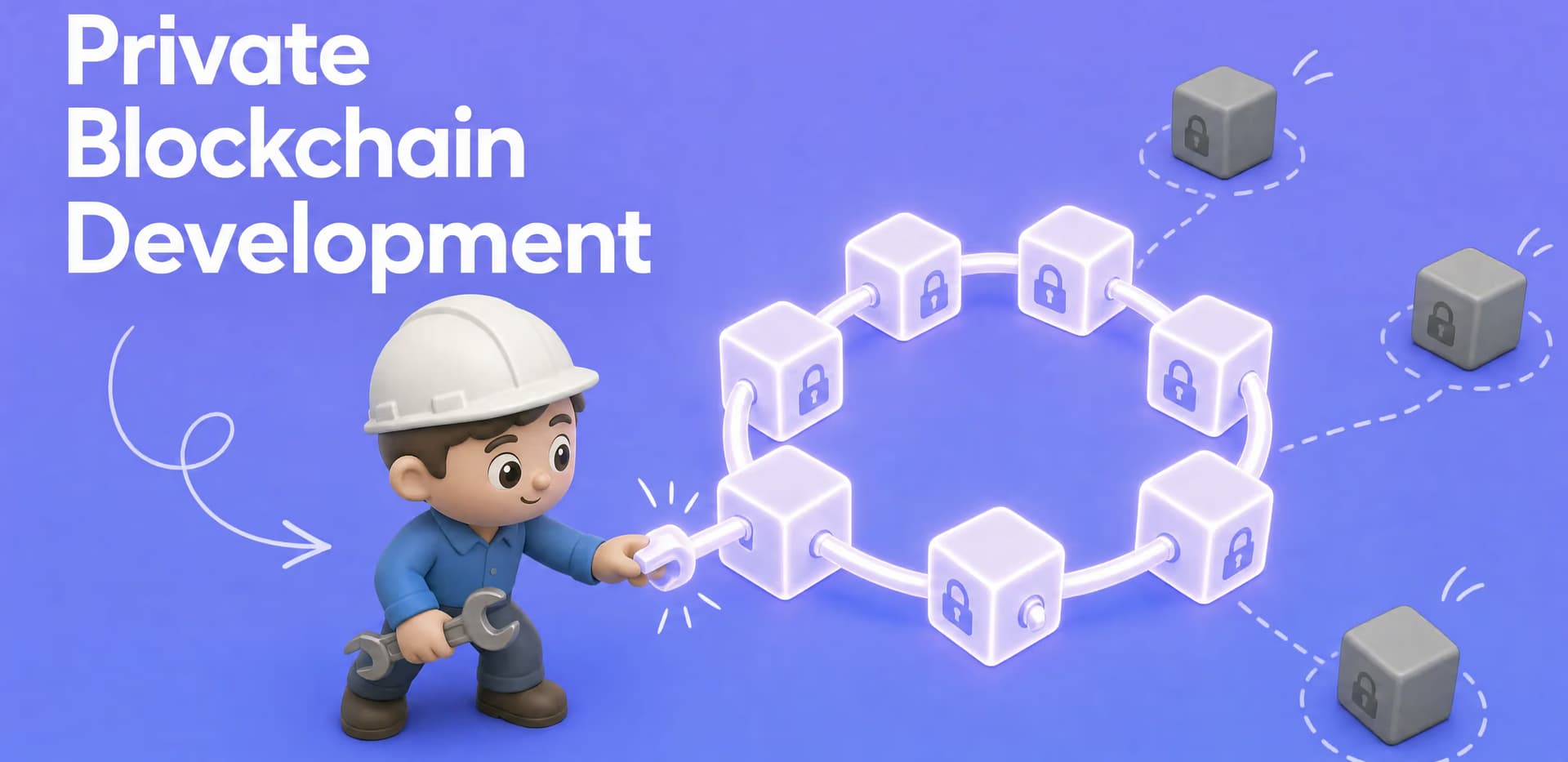
Private blockchain development means building a restricted-access network. Only approved participants can validate transactions or read the ledger. Unlike a public chain, a private blockchain puts a known operator or consortium in charge of who joins and what each member can do.
This guide covers what a permissioned network is, how it compares to public and consortium chains, and when it earns its place. Then we get into platforms, a seven-step build process, compliance, and honest ranges on cost and timeline.
A private blockchain is a distributed ledger that runs behind a gate. Every node that joins, signs a block, or queries data has to be approved first, usually by a single operating company or a small group of partners. That gate is the whole point. It turns a technology built for open, anonymous participation into something a regulated business can actually run.
The "permissioned" label describes how that gate works. In a permissioned blockchain, identity is known before access is granted, and rights are assigned per participant. One member might submit transactions, another might only read, and a third might validate. This access control is what public networks like Bitcoin deliberately give up in exchange for openness.
Underneath, the core machinery is familiar. Transactions are grouped into blocks, cryptographically linked, and replicated across nodes so no single party can quietly rewrite history. What changes is the trust model.
Because participants are vetted, a private network can skip the expensive anonymous consensus that public chains rely on. Lighter agreement methods work instead, which is why permissioned ledgers tend to be faster and cheaper to run.
Two other traits carry the business value. The ledger stays immutable, so records cannot be quietly edited after the fact. And every approved member gets the same transparency into what happened, without trusting a central bookkeeper.

Every node is approved before it can join, sign, or read, and that gate is the whole design
The pull toward this model is not niche. The blockchain technology market reached about $29.8 billion in 2025, and much of that spend now goes to controlled enterprise deployments rather than open public chains.
If you are weighing whether the broader category fits your problem at all, our guide to enterprise blockchain solutions covers the concept end to end. Here we stay focused on the private, permissioned build itself.
The three network types differ mainly in one question: who is allowed to participate, and who ultimately decides. Public chains answer "anyone." Private chains answer "one company." Consortium chains sit between them, sharing control across a defined group of organizations. That single axis drives most of the practical differences in speed, privacy, and governance.
| Property | Public blockchain | Private (permissioned) | Consortium |
| Access | Open to anyone | Approved participants only | Members of a defined group |
| Control | Fully decentralized, no central authority | One operating company | Shared across partner organizations |
| Speed | Lower (anonymous consensus) | High | High |
| Privacy | Transactions public | Data restricted to members | Data restricted to consortium |
| Best fit | Open assets, public trust | Internal enterprise systems | Industry networks, shared standards |
| Examples | Bitcoin, Ethereum | Supply-chain ledger for one firm | Interbank settlement network |
A public blockchain removes the central authority entirely. Thousands of unknown nodes validate every transaction, which buys censorship resistance at the cost of throughput and confidentiality. That trade is right for cryptocurrency and public assets, where anyone with a wallet can take part. Public blockchains also host decentralized applications, or dapps, that anyone can use.
It rarely fits a business that needs to keep contract terms or patient records off the open internet.
A consortium blockchain is worth calling out as its own type. It solves a common enterprise problem: several companies that do not fully trust each other still need one shared source of truth. No single member owns the network.
Validation and governance are split across the group, which suits banking settlement, logistics alliances, and industry data-sharing where neutrality matters. A pure private chain keeps that authority with one operator instead. Simpler to run, but trust is concentrated.
A private blockchain earns its place in a narrow band of problems. The test is simple. Do several parties need to share one trusted record, and does that record hold data you cannot put on a public chain? If yes, a permissioned network fits. If not, cheaper tools usually win.
Three conditions tend to show up together:
When all three hold, private networks and other private blockchain solutions offer a level of security and control that a public chain cannot match.
Miss those conditions and the honest answer is often "not yet." A single company with no external partners can usually get the same result from an ordinary database. Good access control does the job. A public chain covers cases where openness is the feature, not the risk. Reaching for a private blockchain when a plain database would do is a common and expensive mistake.
The demand signal is still strong. In a recent survey, 23% of finance chiefs said their treasury teams will use digital assets within two years. At companies above $10 billion in revenue, that figure rises to about 40%. The enterprise interest is real, but it rewards teams that match the tool to the actual business needs and their data privacy constraints.
The companies that use blockchain well here start from the problem, not the technology.
Most private blockchain use cases share a shape. Several parties, shared records, and a need for tamper-evidence. These are the ones that come up most often in practice.
Two threads run through all of these. One is a shared record several organizations can trust. The other is selective disclosure, where tokenization and per-member permissions decide who sees what. Whether the buyer is an enterprise linking partners or a startup validating a regulated idea, those needs line up the same way.
Our fintech work sits right next to these use cases. For KEM, a peer-to-peer payment app for the Kuwaiti market, the client hit a regulatory wall before a single transfer could be tested.
Kuwaiti banks only grant live banking-API access to developers physically located in the country, which the client could not get remotely. Our idea was to build the payment API against simulated data instead. That let the MVP demonstrate the full transaction flow without any live bank connection.
We used it to get the product presentation-ready for investors. KEM raised a $1M seed round, and we handed the codebase to the client's in-house team to carry into real integrations.
KEM is a payment app rather than a permissioned ledger, but the lesson transfers directly. In regulated finance, the gating factor is often access to the real integration, and designing around it early is what keeps a build moving.
See the full KEM case.
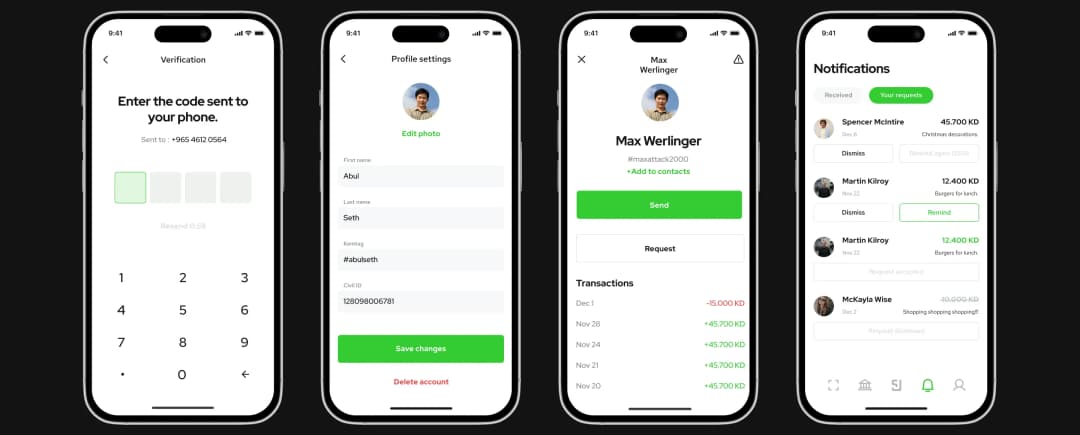
Regulated fintech builds live or die on integration access, not on the ledger itself
Platform choice follows the use case, not the other way around. Before shortlisting anything, pin down four things. Your consensus needs, your privacy model, the smart-contract language your team can maintain, and the scale you expect. The table below maps the main permissioned blockchain platforms against those criteria. No single one wins every time.
| Platform | Consensus | Privacy model | Best fit | Smart-contract language |
| Hyperledger Fabric | Pluggable (Raft) | Channels and private data collections | Enterprise, supply chain | Go, JavaScript (chaincode) |
| R3 Corda | Notary-based | Point-to-point, need-to-know | Banking, finance | Kotlin, Java |
| Quorum | Raft or IBFT | Private transactions | Ethereum-compatible fintech | Solidity |
| Polygon Edge | IBFT | Permissioned deployment | Custom EVM networks | Solidity |
| Substrate / Polkadot | Configurable | Per-chain | Custom app-chains | Rust |
Hyperledger Fabric is the default for broad enterprise and supply-chain work. Its channels let subsets of members transact privately on the same network. Corda is narrower by design and built for finance, where each deal is shared only with the parties involved rather than broadcast to everyone.
Quorum and Polygon Edge both keep the Ethereum blockchain toolchain, so a team that already writes Solidity can move to a permissioned setup without relearning the stack. Substrate is the most flexible and the most demanding. You build a purpose-made chain in Rust, which pays off for a bespoke blockchain architecture and rarely for a first project.
Whatever platform you pick, smart contract quality decides how safe the network is. On a permissioned chain the code has a smaller blast radius than on a public one. A flawed contract still moves real value, though. Treat the chosen blockchain software as critical infrastructure and make smart contract security a first-class requirement, not a launch-week audit.
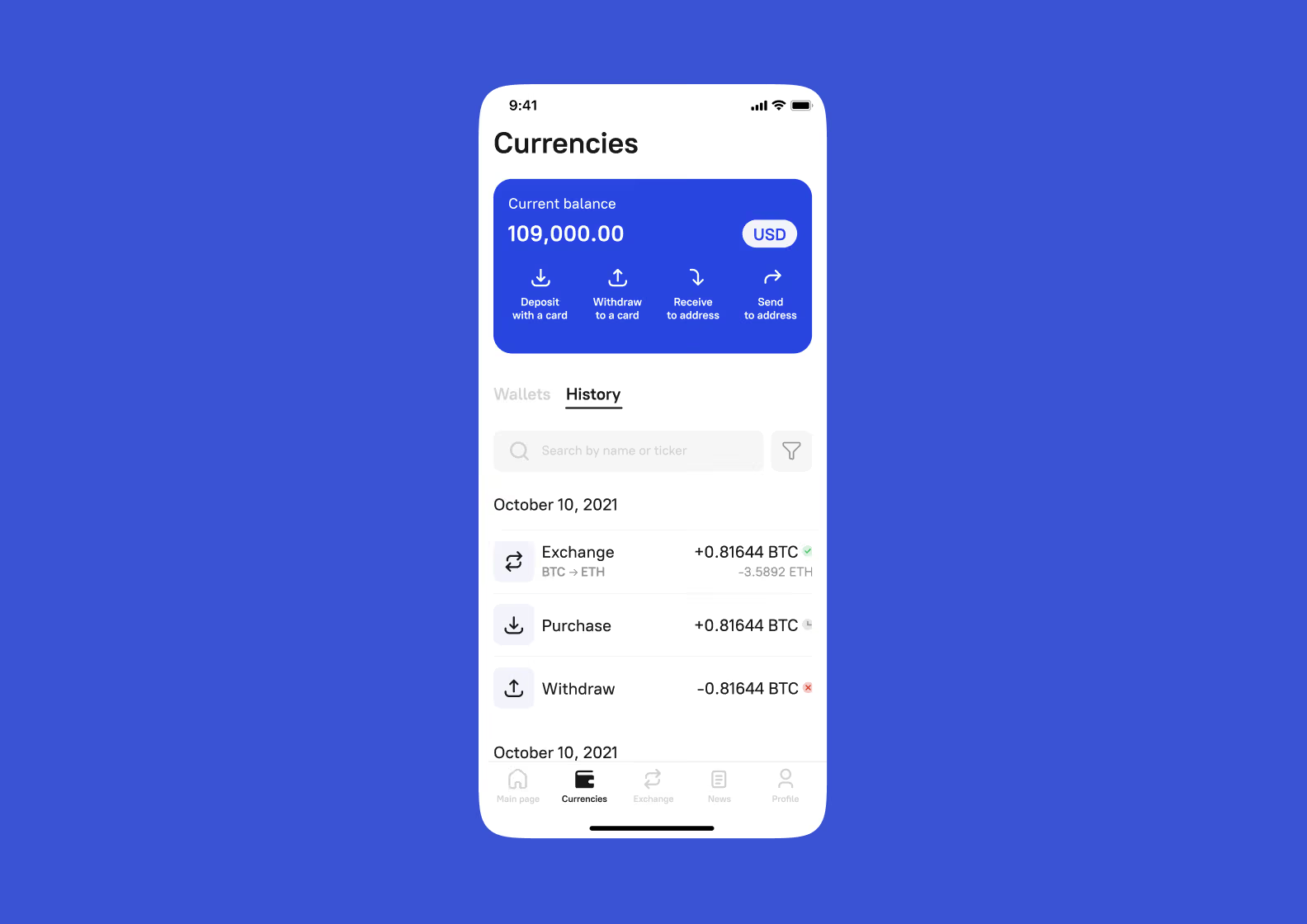
Platform and tooling choices rarely fail on the big decisions. They fail on the small components nobody scoped. On Broex, a React Native crypto wallet aimed at first-time users, the blocker was the currency selector.
Every off-the-shelf selector we tried assumed a short, fixed list of fiat currencies. A wallet needs a long, changing set of crypto assets with icons and search, and the generic components kept breaking the flow. We built a custom selector instead, backed by a GraphQL API, and paired it with biometric login on iOS.
The takeaway for platform selection is that the stack you name in a proposal is the easy part. The components you have to build yourself are where the timeline actually goes.
See the full Broex case.
The off-the-shelf parts save weeks, and the custom ones you did not plan for cost them back
The path from idea to a running blockchain network follows seven stages. Each one narrows the decisions of the last, so skipping ahead usually means redoing work. Most companies bring in a blockchain development company and its blockchain experts rather than building an in-house development team of private blockchain developers.
Our general blockchain app development process covers the app layer in more depth. Here the focus is the network itself.

Skip a stage and it usually comes back as expensive rework
Start with the business problem and the parties involved. Nail down what data lives on-chain, who reads and writes it, and what "success" looks like in numbers. Weak requirements here surface later as expensive rework.
Match the platform to the use case using the criteria from the section above. The consensus method matters most. A small trusted group can run Raft, while a multi-party network with weaker trust leans toward IBFT or a notary model.
Map the nodes, the channels or private data paths, and the exact rights of each member. This blockchain architecture step is where privacy is won or lost, so you customize per-participant permissions now, not patch them later.
Write the logic that enforces the rules of the network. Smart contract development on a permissioned chain still demands the same rigor as a public one, because a bug here moves real assets between real parties. Reusable, audited libraries beat writing every contract from scratch.
Provision the nodes, configure the consensus, and stand up the network in a test environment first. Deployment to production follows only after the network holds up under realistic load and failure conditions.
Connect the network to the ERP, payment rails, identity providers, and any existing blockchain systems it has to talk to. This is where most timelines slip, because each external system brings its own access rules and rate limits.
Run functional tests, then a dedicated security audit of every smart contract. After launch, a permissioned network still needs monitoring, key rotation, and upgrades, so plan for ongoing maintenance from day one.
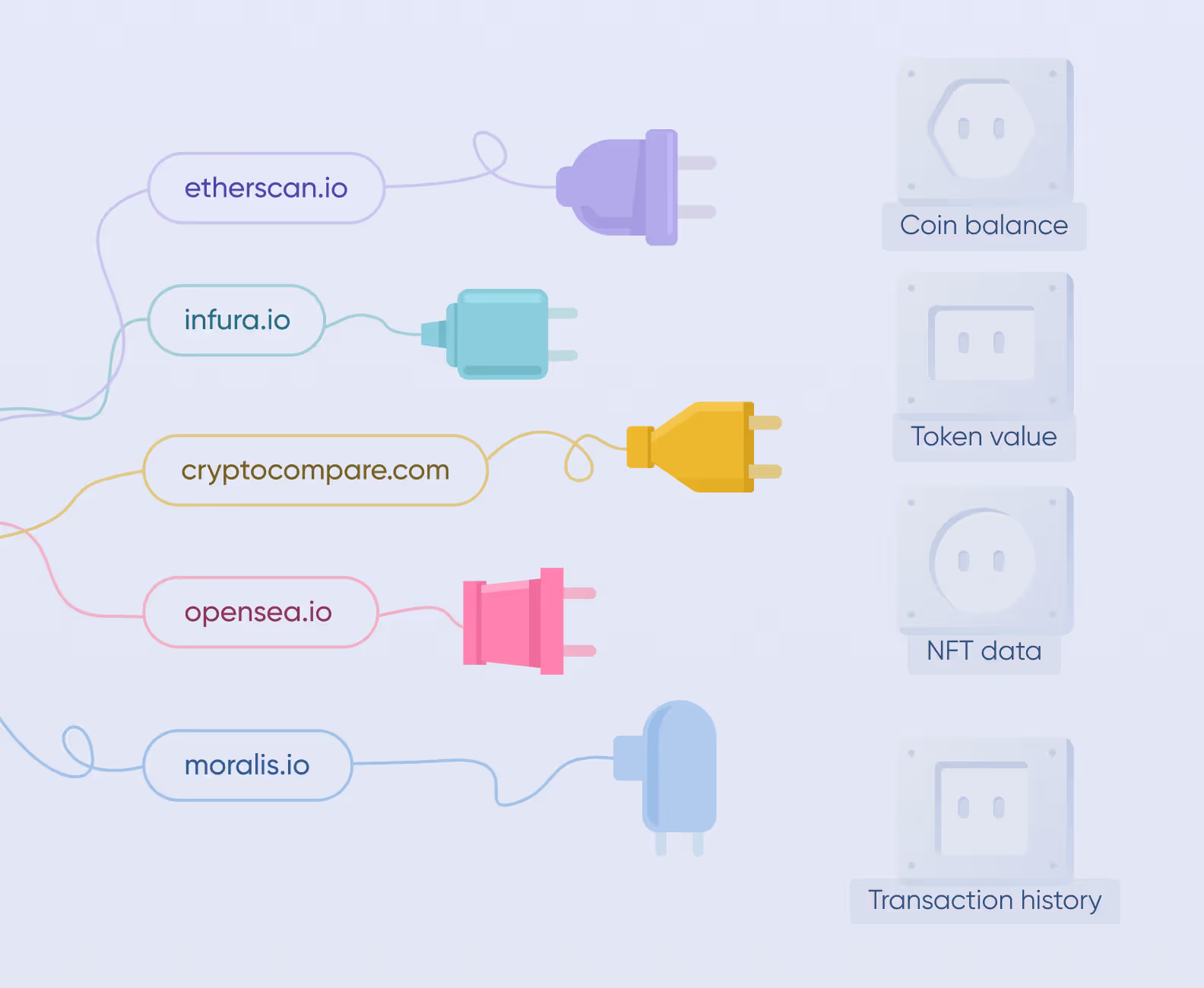
Integration is where a schedule quietly breaks. On a non-custodial crypto wallet, we had to pull balances, transaction history, prices, and NFTs with no backend server of our own.
Free crypto APIs made that hard. Etherscan caps around five requests per second, and CryptoCompare allows 50,000 per month, so the thousandth active user would start hitting errors. We solved it by orchestrating several providers per function, with Etherscan and Infura failing over for balances and Moralis handling history.
The other trick was counting requests per device rather than per user, which kept the whole app under the free-tier ceilings. The build shipped in 1,268 hours with zero backend infrastructure cost.
See the full crypto wallet case.
Integration limits, not the ledger, are what usually set the real timeline
Compliance is often the real reason a business chooses a permissioned network, so it belongs in the design, not the final review. A private chain narrows who can see data, which makes several regulations easier to satisfy than they would be on an open ledger. Three areas come up on almost every project.
The first is the tension between an immutable ledger and the right to be forgotten. GDPR lets people demand erasure, but a blockchain is built never to delete. The common fix is to keep personal data off-chain in encrypted storage and put only a hash on the ledger. Deleting the off-chain record breaks the link, which satisfies the request without rewriting history.
Healthcare adds HIPAA, which governs how protected records move between providers. Finance adds KYC and AML checks, where every participant is identified before they transact. In all three, strong encryption and disciplined handling of sensitive data are what keep the data privacy promise credible.
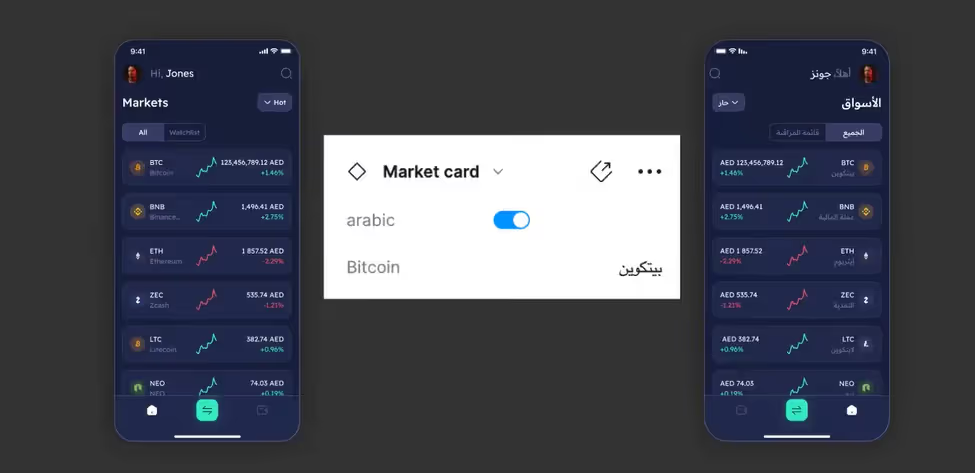
Compliance flows are where good products lose users. On a cryptocurrency exchange for the Middle East, mandatory identity checks required a 95-screen KYC flow, and a wall that long risks mass drop-off before the first trade.
We cut the friction without breaking the rules. A warning screen and a progress bar set expectations up front, a Guest Mode let people explore before committing, and a two-click core path kept buying and selling fast. The compliance requirement stayed fully intact.
Regulation is a design input, not an afterthought. Building the compliant flow to be usable is what protects conversion.
See the full cryptocurrency exchange case.
A compliant onboarding flow only works if people finish it
There is no single figure for private blockchain cost. It scales with the number of nodes, the depth of compliance, and how many external systems you integrate. The table below gives realistic ranges by stage rather than one headline number.
| Stage | Typical scope | Ballpark range |
| Proof of concept | One flow, 1–2 nodes, simulated data | $8,000–$30,000 |
| Pilot / MVP | Core use case, few nodes, one integration | $30,000–$120,000 |
| Production network | Multi-party, compliance, audits, integrations | $150,000–$300,000+ |
The biggest cost drivers are rarely the ledger itself. Compliance work, security audits, and custom integrations do most of the spending. That is why a supply-chain network and a regulated finance network at the same node count can differ by a wide margin.
Timelines follow the same curve. A proof of concept takes a few weeks, a pilot runs three to five months, and a production network with audits and integrations usually needs six to twelve. Scalability planning belongs at the start, because retrofitting throughput onto a live custom blockchain development effort costs far more than designing for it early.
One more line item is easy to forget. Running the network is not free after launch. Nodes, monitoring, and periodic re-audits are recurring costs, so build them into the budget from the start rather than treating the launch as the finish line.
Private blockchain development pays off in a specific situation. Several vetted parties, shared records, and data that cannot live on a public chain. Get that fit right and the network does what a plain database and a public chain cannot.
The rest is execution. Match the platform to the use case, design permissions early, and treat compliance and integration as inputs to the build rather than problems to fix at the end. That is the difference between a permissioned network that ships and one that stalls in a pilot.
Building a private blockchain network is rarely just ledger work. The right software development company brings blockchain consulting up front. It then pairs blockchain services with the software development that ships the blockchain applications around the ledger.
➡️ Thinking about a permissioned network for your business? We offer blockchain app development services and a free project estimate within 48 hours. Tell us the use case and we will scope it with you.
Private blockchain development usually ranges from about $8,000 for a simple proof of concept to $300,000 and up for a production-grade permissioned network. The cost depends on scope, the chosen platform, compliance requirements, integrations, and node count. The ledger itself is rarely the expensive part. Security audits and custom integrations drive most of the total.
Building a private blockchain runs through seven stages. First you define the use case and requirements, then choose a platform and consensus mechanism. Next you design the network architecture and permissions, develop the smart contracts, deploy the nodes, and integrate with existing systems. A security audit and ongoing maintenance close it out. Each stage narrows the decisions of the last, so the order matters.
Private blockchains are commonly built on Hyperledger Fabric, R3 Corda, or Quorum. A typical example is a supply-chain network where several companies log each handoff to one shared, tamper-evident record. Other examples include interbank settlement systems and healthcare platforms that share patient data across providers. In each one, access stays limited to approved participants rather than open to anyone.
A public blockchain is open and fully decentralized, so anyone can join, hold a wallet, and validate transactions. A private, permissioned blockchain restricts access to approved participants and is governed by a central authority or a consortium. That gives businesses stronger privacy, faster transactions, and clear governance, while a public network offers openness and censorship resistance.
The most widely used platforms for private blockchain development are Hyperledger Fabric, R3 Corda, Quorum, Polygon Edge, and Substrate. Fabric is the common default for enterprise and supply-chain networks, while Corda is built for finance. Quorum and Polygon Edge keep the Ethereum toolchain, and Substrate suits fully custom chains. The right choice depends on your use case, consensus needs, and privacy model.
Yes. Enterprise demand for permissioned blockchains keeps growing in 2026. The drivers are supply chain, finance, and data-integrity use cases where several parties need one shared, trustworthy record. The broader blockchain market is expanding at double-digit annual rates. Much of that spending goes to controlled, private deployments rather than open public chains.


.svg)