Explore

Need help with your project?

Oops! Something went wrong while submitting the form.
Buyers comparing mobile app developers in Toronto see similar iOS, Android, cross-platform, and design claims on service pages, yet delivery detail varies. Does the team own discovery and quality assurance or only implementation? Can platform-specific requirements limit shared-code suitability enough to favor native development? The real question is which partner fits the product and backs its claims with public evidence.
In this guide, we'll look at ten mobile app development companies through the same evidence standard, not as an objective winner's circle. The comparison separates supported capabilities from missing public details and tests whether architecture, delivery ownership, and commercial scope fit the product. That gives readers a clearer basis for judging each vendor than rank or headline price alone.
These Toronto mobile app development companies and app development firms follow editorial order, not an objective ranking. Searches for app development services in Toronto define buyer context, not an office claim for every app developer. For these technology companies, each profile uses official service or case evidence. Missing budgets, team details, stacks, and local connections stay unverified.
| Company | Best for | Key technologies | Minimum budget | Team size |
| Purrweb | Full-cycle cross-platform mobile apps | React Native, Flutter, iOS, Android | Not publicly verified | 200+ people company-wide |
| ELEKS | Integrated enterprise mobile apps | iOS, Android, cross-platform, backend, IoT | Not publicly verified | 2,000+ specialists company-wide |
| Goji Labs | Strategy, design, and embedded delivery | Swift, Kotlin, React Native | Not publicly verified | 70+ people company-wide |
| Zazz | UI/UX-heavy mobile apps | Swift, Kotlin, React Native, Flutter | Not publicly verified | 275+ engineers and designers company-wide |
| MindSea | Health and research applications | Native iOS, native Android, React Native, wearables | Not publicly verified | Not publicly verified |
| Apptunix | Enterprise, marketplace, and AI-enabled mobile apps | Swift, Kotlin, Flutter, React Native | Not publicly verified | 300+ staff company-wide |
| Guaraná Technologies | Data, geolocation, IoT, and AI integrations | Swift, Kotlin, React Native, Flutter | Not publicly verified | 20 mobile and web developers |
| Mobcoder | Broad mobile delivery and staff augmentation | Objective-C, Swift, Kotlin, Flutter, Xamarin, React Native | Not publicly verified | 200+ professionals company-wide |
| Digia Technology | Custom software, websites, and UI/UX | Mobile stack not publicly verified | Not publicly verified | Not publicly verified |
| Blocktunix | Blockchain-integrated mobile apps | Swift, Kotlin, React Native, Node.js, MongoDB | Not publicly verified | 200+ professionals company-wide, mobile allocation not public |
Purrweb fits teams looking for a custom mobile app development company to take an app from discovery and app design through development. Its mobile app development services also cover quality assurance, App Store submission, and post-launch support.
Its app development services cover iOS app development, Android app development, React Native, and Flutter.
React Native is a practical fit when iOS and Android share most app behavior. Platform testing still remains part of delivery. The published 200+ figure describes the company rather than a standard project squad.
For development projects, its estimator presents scope-dependent scenarios. It does not establish a universal minimum engagement. The case below shows one constraint that a cross-platform mobile app can face: a real integration boundary and a workflow that had to work outside a test environment.
It is useful evidence of one delivery pattern, not a claim that every mobile app built with React Native has the same constraints.
Cargo was a white-label courier product. We built its React Native frontend around barcode pickup, an ordered route list, navigation, and delivery confirmation.
The client’s separate team built the backend, so we used a frontend-driven approach to make requests and response structures explicit while keeping the core courier flow first.
Mapbox navigation required real-world checks. We assigned extra testing capacity because the route had to work while a courier moved through the city.
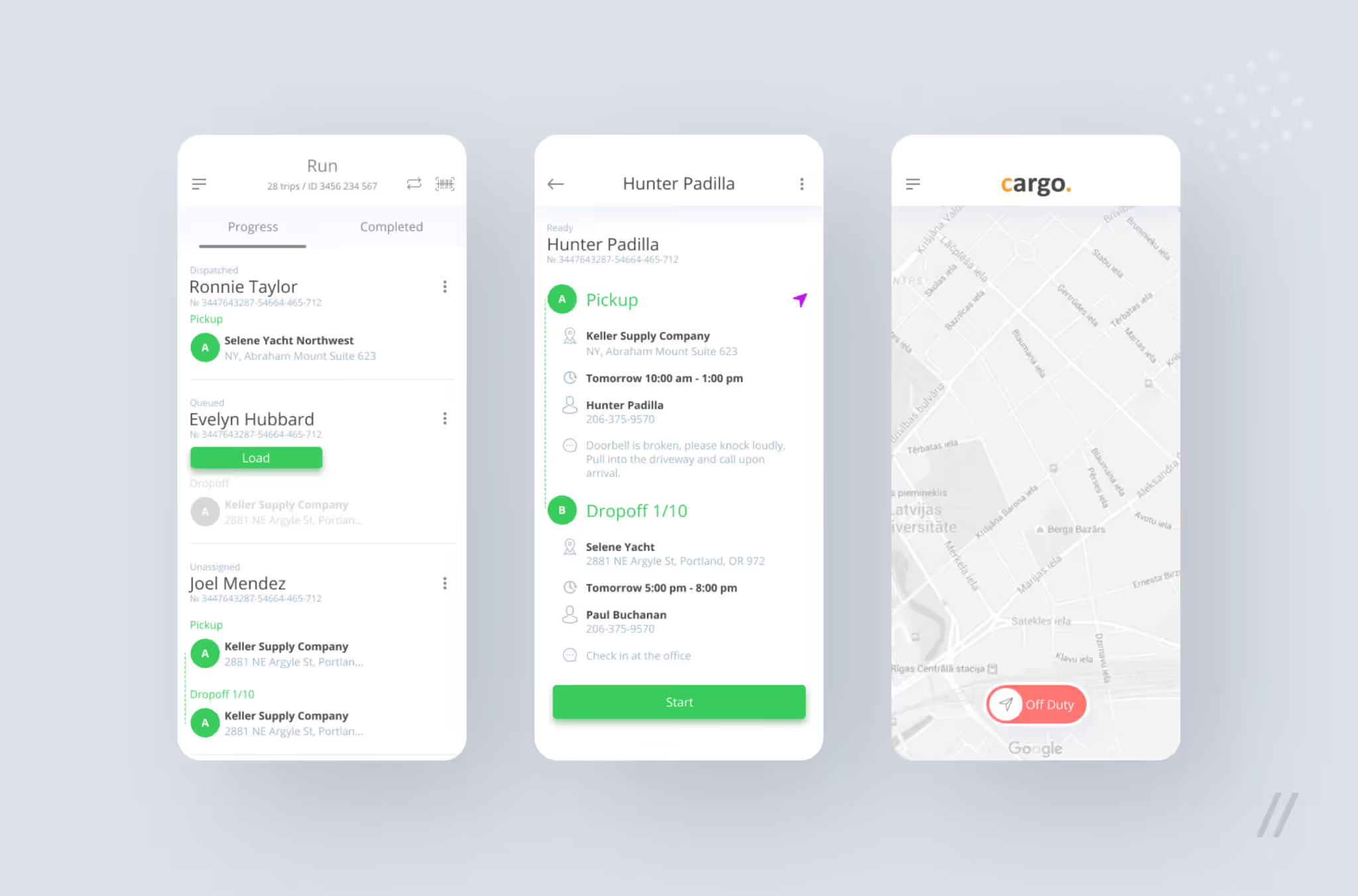
The project shows where a shared codebase still depends on field testing
ELEKS is a defensible fit for enterprise mobile app development where a mobile app connects to systems and workflows already used across an organization. Its public material covers product design, native and cross-platform delivery, backend development, and IoT integrations.
That combination matters when mobile screens are only one part of the operating model. It also creates a useful distinction between client-side work and the systems the client uses.
Its eTracks Sustainable Recovery Platform example is a progressive web app for desktop and mobile use, not a native mobile app. ELEKS re-engineered data-management workflows and added computer vision with OCR, which extracts text from an image.
The case also mentions signature and photo validation. It supports an integration-heavy fit. It does not disclose a standard app development team or minimum budget, and the 2,000+ figure is company-wide.
For a broader comparison across Canada, see mobile app development companies in Canada. That list covers mobile app developers in Canada and is separate from the evidence standard used here.
A company-wide headcount does not reveal which people would work on a particular app. The same caution applies to case studies, which show a documented engagement rather than a default delivery model.
Goji Labs suits a custom app that still needs strategy, UI/UX design and development decisions in one delivery stream. Its mobile app development material lists Swift for iOS, Kotlin for Android, and React Native for shared-code work.
It also describes a development process with discovery, real-device quality assurance, store submission, and post-launch support. That gives the profile more product context than a build-only engagement.
The Root Insurance project is the public example. It used safe-driving challenges, progress tracking, and rewards, plus an Elo-based leaderboard.
Goji Labs separates a defined app development project from a dedicated team that extends an internal organization over time. Its 70+ employee figure is company-wide, and no published minimum mobile budget was found.
Zazz is relevant when mobile application development needs a design system plus substantial user interface and user experience design.
Its public pages name Swift, Kotlin, React Native, and Flutter.
They also describe interface design, accessibility, prototyping, developer handoff, integrations, testing, deployment, and support. The profile is useful when interface consistency depends on both design and engineering decisions.
EV Everywhere offers project-specific evidence rather than a broad service claim. Zazz describes frontend engineering and project management for web and mobile applications connected to existing backend and data systems.
The case connects React Native with native software development kit integrations, charging-station APIs, and trip planning. It also names accessibility work, automated quality assurance, and continuous delivery. The 275+ headcount is company-wide. Project budget and team size are not public.
For interface work beyond mobile delivery, compare web design companies in Toronto.
That comparison focuses on web design. It is different from selecting a team accountable for a mobile release.
MindSea has a focused fit for digital health, research, wellness, and mobile apps connected to wearable technology.
Its official services include native iOS and Android development, React Native, app strategy, design, dedicated teams, and wearable or IoT integrations.
Its Blueprint planning phase produces prototypes, technical recommendations, a roadmap, and cost estimates before a mobile app project enters implementation. That can make planning material more useful before development starts.
The BEAM Program shows why that planning focus is relevant in a care context. MindSea built a platform for parents and caregivers with educational videos, peer coaching, a private forum, and access to mental-health and parenting experts.
The case states that project data remained in Canada and that maintenance continued after launch. It does not name the framework, so React Native should not be assigned to this case. Team size and a fixed minimum budget are not publicly verified.
Apptunix publishes broad application development services for enterprise, marketplace, AI-enabled, and cross-platform mobile apps. Its official material lists Swift, SwiftUI, Kotlin, Kotlin Multiplatform, Flutter, and React Native.
It also lists custom iOS and Android work, modernization, cloud, and AI capabilities. This makes it a candidate when a mobile app has more than a standalone mobile client.
TutorHail illustrates that wider app surface. The platform includes parent and tutor accounts, subject and proximity matching, and scheduling.
It also has messaging, calendar integration, payouts, an admin panel, mobile apps, and a web platform.
The example supports a fit for mobile app solutions with connected operational features. Published category estimates are not a universal engagement minimum. The 300+ staff figure is company-wide.
The profile gives a reason to ask about connected product surfaces. It does not establish which roles, integrations, or release responsibilities would appear in a new application development proposal.
Guaraná Technologies offers mobile app development across native and cross-platform delivery, including Swift, Kotlin, Kotlin Multiplatform, React Native, and Flutter. Its public material also covers user interface and user experience design, testing, launch, maintenance, IoT, artificial intelligence, and web application development.
This fit is strongest for mobile apps where geolocation, public-service data, connected devices, or AI integrations shape what the app does. It is a capability fit, not a claim about a fixed project sequence.
Toronto Waste Wizard provides a concrete public-service example. Guaraná says it developed the City of Toronto’s iOS and Android app, which lets residents search disposal instructions and check collection schedules.
It also provides reminders and locates depots or donation centers through city data. The case does not name a programming language or framework, so its general technology list should not be transferred to the project.
The published 20-person figure refers to a team of mobile app developers and web specialists. A universal minimum budget is not public. Its Toronto project reference supports app relevance.
That relevance is separate from any claim about a local office or a fixed delivery configuration.

Mobcoder covers broad web and mobile app development as well as staff augmentation. Its public pages list iOS, Android, Flutter, React Native, IoT, and software as a service.
They also list augmented reality, mobile and web applications, data analytics, AI, UI/UX design, maintenance, and support. The named mobile technologies include Objective-C, Swift, Kotlin, Flutter, Xamarin, and React Native.
That range describes company capabilities, not one prescribed stack.
For project-specific evidence, the Baker India product for General Mills is more useful than the full capability list. Mobcoder describes a business-to-business app for vendors with recipes, chef guidance, registration, and rewards functions, built with React Native and Node.js.
This supports its fit for a mobile app product with a connected backend. It does not make that stack universal. The published 200+ figure is company-wide, and hourly rate language does not establish a minimum project budget.
A buyer comparing this mobile app development agency with a narrower specialist can separate general capacity from the proposed team's experience. The assigned technical lead is another useful point of comparison.
Digia Technology needs a narrower reading than the other entries because its official source is digia.co, not digia.com. Its indexed pages list website development, custom software development, UI/UX design, and AI-assisted software development and testing. They do not publicly name Swift, Kotlin, React Native, Flutter, iOS, or Android.
The fair comparison is with a software development company for custom software, web development, and design work, not a verified mobile specialist. Patient Advisors Network appears in its project list as a Canadian community for patient and caregiver partners. That is a portfolio reference, not proof of mobile scope, technologies, budget, or outcome. Both minimum budget and team size remain Not publicly verified.
For broader non-mobile delivery options, see software development companies in Canada.
The right next question for this development firm is direct evidence that matches the intended mobile app.
Blocktunix is a capability-only comparator for blockchain-integrated mobile products. Its official pages cover native and cross-platform mobile app development, crypto wallets, mobile game development, embedded systems, and industry applications.
It is a narrower fit than a general mobile development agency. Toronto or Canada relevance was not publicly verified in the supplied research.
Celloux is the project-specific reference. Blocktunix describes it as a custom app for cryptocurrency deposits, withdrawals, buying, selling, and trading.
Its portfolio associates Swift, Kotlin, Angular, Node.js, and MongoDB with that app. React Native appears among broader company capabilities, not as a verified Celloux technology.
The 200+ figure is not a mobile-team number. Minimum budget and mobile allocation are also not public.
These profiles identify plausible fits, but they do not make proposals comparable. The next step is to examine discovery, delivery ownership, quality assurance, release work, and support.
Only then do headline prices describe comparable work.
Several plausible app development agencies can still return proposals built on different assumptions. To choose the right development partner, ask each team for the same evidence, ownership boundaries, and delivery detail. That reveals whether the development partner fits the mobile app before totals, framework labels, or polished sales presentations shape the decision.
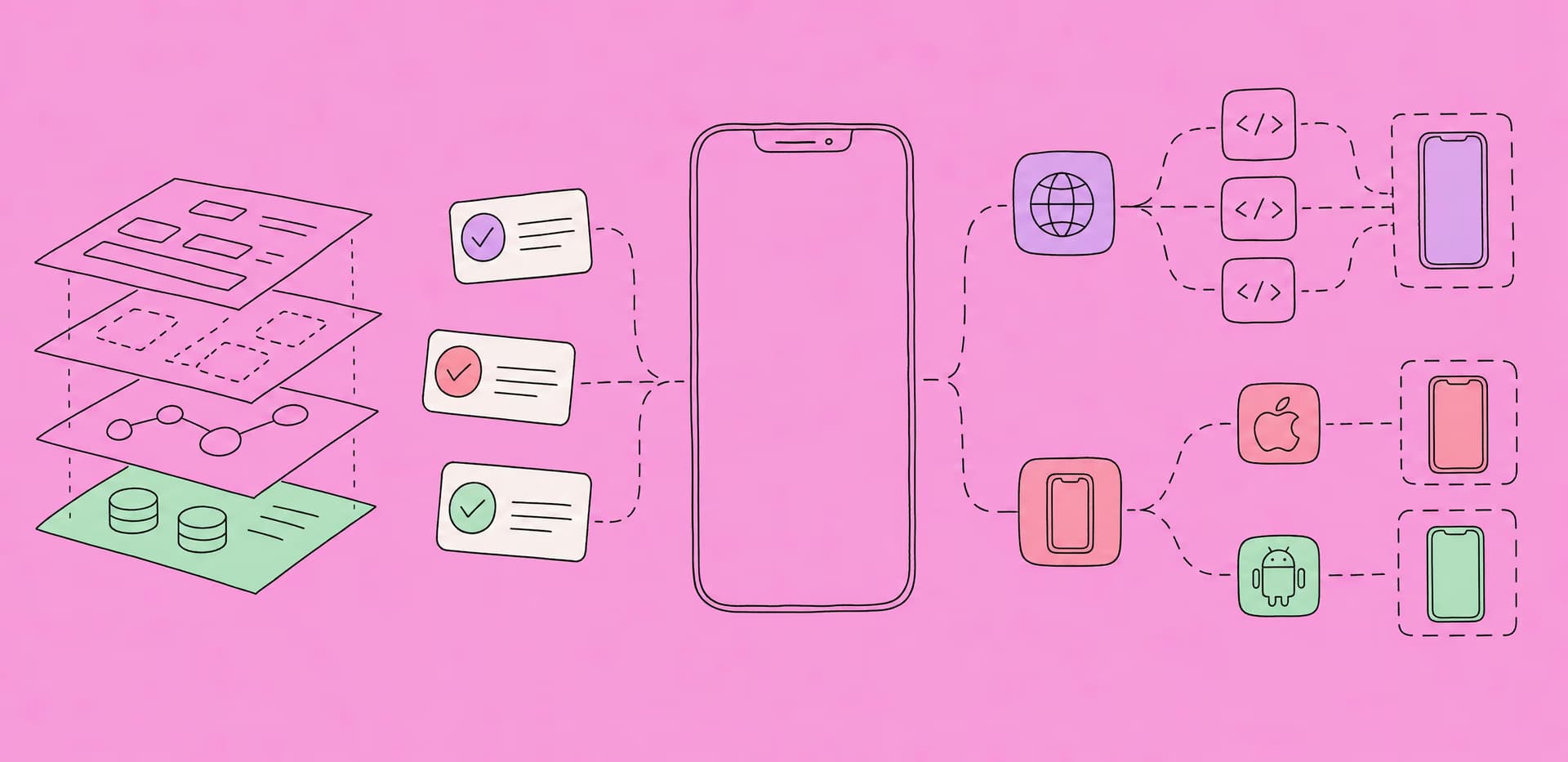
The development approach starts with app constraints, not a preferred framework. A cross-platform mobile app built with React Native fits when both platforms share most behavior and the team can explain the remaining platform-specific code.
A Flutter app fits when one interface and app logic suit both mobile platforms, with native integrations identified upfront. Native development is stronger when specialized hardware, OS-specific behavior, or deep platform UI control drives the app.
A relevant mobile app development case shows more than an app category or a familiar client logo. Useful evidence identifies what the proposed team delivered and which integrations it owned.
It names who recommended the architecture, built the mobile app, connected it to the backend, and handled release. A vendor’s mobile app development services can frame its capabilities, but the proposal still has to connect them to the current app and assigned team.
Proposal totals align only when their boundaries align. Compare whether each one includes discovery and UI/UX design, then identify who delivers the mobile apps and backend integrations. Legal ownership is separate: the contract states who receives the source code and intellectual property rights.
Quality assurance, store release, and post-launch operations remain delivery responsibilities. A phased estimate with assumptions, exclusions, and change handling makes one app development scope comparable with another.
QA evidence gets specific about device and OS coverage, acceptance criteria, defect ownership, crash monitoring, and store submission. A credible security scope names sensitive-data storage, authentication, and network communication.
OWASP MASVS is a mobile application security verification baseline for those checks. Naming it in the proposal defines the software testing and security boundary and helps distinguish full release ownership from a build-only handoff.
Communication becomes comparable when proposals name the product lead, technical lead, decision cadence, decision rights, and escalation path. Post-launch terms clarify who handles monitoring, fixes, and OS updates after handover, plus how knowledge transfer works. Once these assumptions match, the final choice returns to product evidence and architecture fit rather than headline rank or an incomplete price.
Selecting the right development partner is defensible when an app developer’s evidence matches the mobile app being built. A case matters when it shows comparable architecture, integrations, delivery ownership, and release responsibility. A company-wide service list only establishes possible capacity.
Technology follows the same logic. Shared behavior across platforms can support React Native or Flutter, while platform-specific requirements can make native app development the better fit.
Price becomes useful after proposals describe the same work. Discovery, UI/UX design, backend integrations, quality assurance, and store submission need matching boundaries. The same applies to source-code ownership, change handling, and post-launch support before totals describe comparable scope.
➡️ If Purrweb's delivery model fits the product, Contact Purrweb to discuss the architecture, responsibilities, and scope behind it.
A reliable Toronto market price is not established by the public evidence used here. A useful estimate separates discovery and UI/UX design from mobile apps, backend integrations, quality assurance, store release, and post-launch support. The total becomes comparable only after proposals state the same assumptions, exclusions, ownership terms, and change-handling rules.
A mobile app development schedule depends on delivery scope and dependencies rather than a universal benchmark. Discovery, design, implementation, testing, and store release each add work. Platform count, backend integrations, security requirements, and scope changes affect sequencing. A useful proposal names these dependencies and assigns responsibility for resolving them.
Cross-platform mobile apps fit when both platforms share most app behavior and the team identifies platform-specific work upfront. React Native or Flutter can reduce duplicated product logic, but they do not remove native integrations or platform testing. Native development fits better when specialized hardware, OS-specific behavior, or deep platform UI control is central to the app.
A Toronto app developer chooses a stack based on app constraints. React Native and Flutter support cross-platform mobile apps, while Swift and Kotlin support native iOS and Android development. A proposal may also include backend services, data storage, API integrations, analytics, or additional testing layers based on scope. A useful proposal connects each technology to the app instead of a generic stack list.
Comparable evidence verifies an app developer’s expertise better than broad capability claims. Useful material identifies the team's role, architecture rationale, and owned integrations. It also sets out the quality assurance approach, security scope, release responsibility, and post-launch support. An architecture discussion tests app fit, while contract terms clarify source-code and intellectual-property ownership.


.svg)