Explore

Need help with your project?

Oops! Something went wrong while submitting the form.
Choosing among web development companies in Toronto gets difficult once every agency promises custom work, reliable delivery, and ongoing support. The real question is which team fits the product you are building, the technical depth it requires, and the way your stakeholders prefer to work.
In this guide, we'll look at ten companies through that practical lens. The comparison focuses on project fit rather than promotional claims. It also examines the tradeoffs between a Toronto agency and a remote product team with experience delivering for North American businesses.
The right Toronto web development company matches its portfolio, technical depth, estimation process, communication model, and support terms to the product at hand. Buyers can compare web development agencies that offer services in Toronto. Geography matters less than relevant delivery evidence and a working rhythm that fits the people responsible for decisions.
The market for web development in Toronto gives buyers many providers to compare. The city's technology sector includes about 289,000 workers, but a large talent pool also means agencies can look similar at first glance. A useful evaluation of a web development agency in Toronto separates surface-level capability lists from evidence that applies to the planned website or web application.
These five areas reveal most of the practical differences:
Whether a team is based in Toronto or works remotely changes the tradeoffs, not the quality bar. A local agency suits projects where frequent in-person workshops or market-specific relationships carry real value.
A remote team with North American delivery experience often provides the same discovery, design, engineering, and QA coverage with a leaner cost structure. The better signal is how the team runs its web development services, not the distance between offices.
An experienced freelance web developer remains practical for a small content management system site. An agency makes sense when the work requires custom functionality, several specialists, or continuing support. If interface direction matters more than engineering depth, give a web design agency more weight. Our Toronto web design companies comparison covers web design services and how web designers approach UX design.
The ten companies cover different project types, from startup platforms to corporate content systems and commerce builds. The table keeps the comparison inside the ranking block, while the profiles that follow explain the first-party evidence behind each fit label. The order does not represent a universal quality score.
| Company | Best for | Key specialization | Delivery approach |
| Purrweb | Startup and small-business web products | Minimum viable products, custom platforms, React, Node.js | Remote full-cycle product team |
| Azuro Digital | Conversion-focused small-business websites | Custom development, WordPress, search engine optimization | Integrated web and search team |
| ThrillX | B2B website redesigns | User experience, full-stack development, conversion optimization | Research and optimization-led agency |
| Pixelcarve | Premium brand websites | Custom web development, branding, content | Brand and web production team |
| Parachute Design | Corporate WordPress projects | Custom themes, user experience, branding | Custom WordPress agency |
| Shift8 Web | E-commerce and integration work | WordPress, Shopify, custom development | Development and support agency |
| Inorbital | Accessible enterprise and nonprofit sites | Web Content Accessibility Guidelines 2.2, content systems, portals | Specialist web and content-system team |
| Kinex Media | Commerce platforms with marketing support | Magento, Adobe Commerce, Shopify Plus | Commerce and marketing agency |
| Casa Media House | Website and acquisition work in one engagement | Web development, content, automation | Integrated digital agency |
| BridgeWeb | Small-business content-managed websites | Custom web development, WordPress, Joomla, maintenance | Small-business web agency |
The table is a starting point rather than a substitute for due diligence. Each profile below focuses on services and operating details stated on the company's own website.

Purrweb works as a remote product team for startups and small businesses building minimum viable products and custom web platforms. The company reports more than 550 released projects and over 11 years in the market.
Its web process covers analysis, interface design, development, quality assurance, and post-launch support. Purrweb identifies React.js and Node.js as its standard web stack. This setup fits teams that want one partner to carry a product from early scope through release instead of coordinating separate design and engineering vendors.
One example is Contentplace, a video marketplace connecting creators, advertisers, and distributors. The product needed to support different user roles while keeping private content discoverable inside the platform.
We built the minimum viable product around content search, uploads, subscriptions, payments, calendars, and an administration panel. The first version was delivered in three months, giving the startup a working marketplace rather than a static proof of concept.
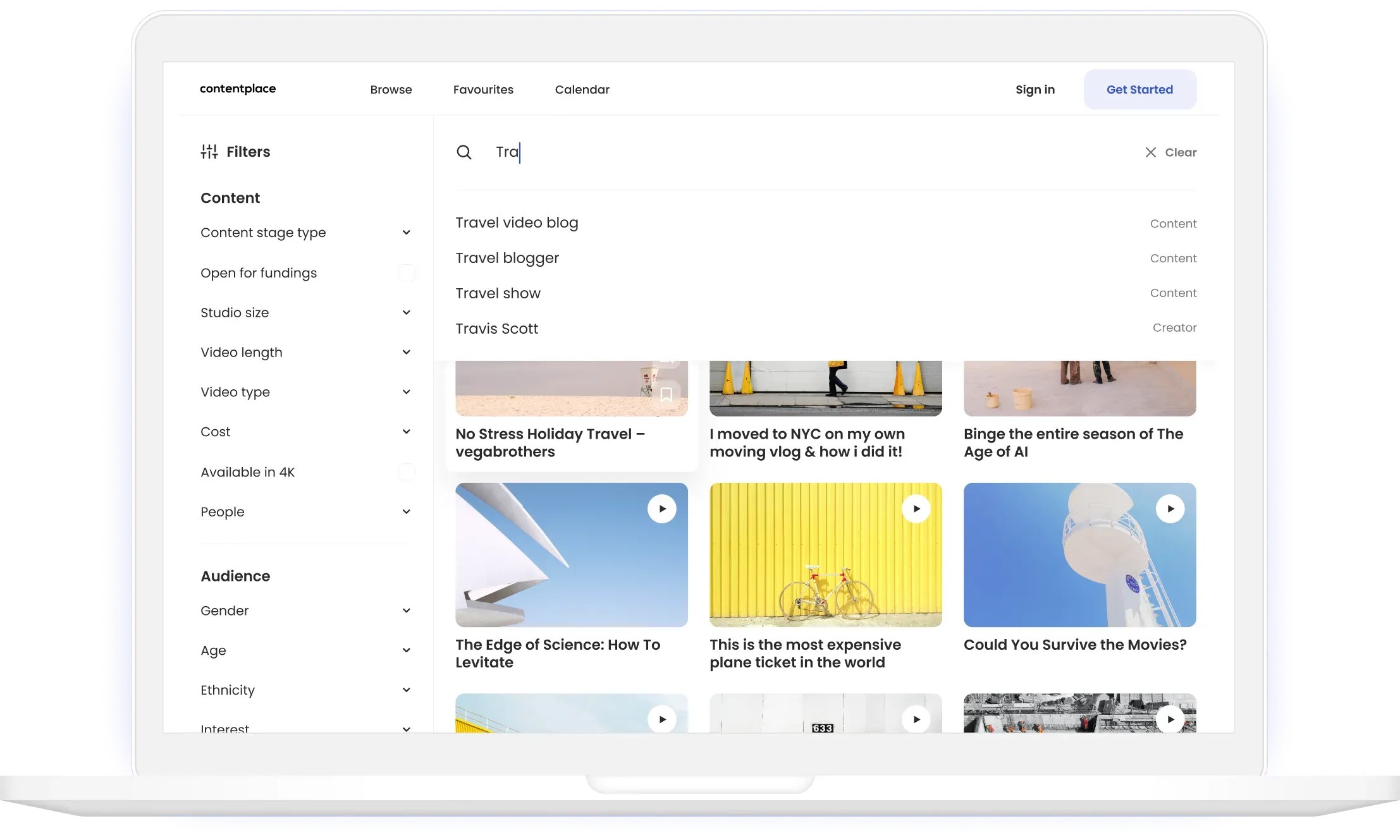
Contentplace lets buyers narrow video searches without exposing private files outside the platform

Azuro Digital combines custom website design with conversion and search work. Its website development services span web design and development, WordPress development, accessibility, content, branding, and digital marketing. This mix suits small businesses treating the website as an acquisition channel rather than a standalone technical project.
The company also documents a modern custom-development stack that includes Astro, Tailwind CSS, Cloudflare, and headless WordPress. The stack supports projects that need stronger performance or content flexibility than a conventional page-builder site. Search visibility remains part of the same engagement.

ThrillX approaches website projects through customer research and conversion performance. The company combines strategy, user experience design, copywriting, full-stack development, and search work instead of treating a redesign as a visual refresh alone.
Its conversion services include analytics reviews, customer interviews, usability research, A/B testing, and landing-page optimization. That process fits business-to-business (B2B) teams that already have traffic but need to understand why visitors do not become leads. ThrillX is less about launching a broad software platform and more about improving how a marketing website supports revenue.

Pixelcarve is a web design company that has operated since 1998 and focuses on custom website development where brand presentation carries substantial weight. Its service range covers web development, e-commerce, branding, content creation, search work, and visual production.
The company also provides hosting, maintenance, and managed services after launch. Pixelcarve therefore fits established organizations that want a highly produced website. It also keeps brand, content, technical delivery, and continuing support with one team. A product that depends on complex application logic would require a closer technical review beyond the agency's brand-led positioning.

Parachute Design has worked on custom web design projects since 2003. The agency specializes in WordPress web development, user experience strategy, e-commerce, branding, accessibility, search work, and ongoing maintenance.
Its development pages state that the team builds custom WordPress themes rather than relying on purchased themes or page builders. This makes Parachute a practical fit for corporate and professional-services websites that need editorial control without a generic template. The model is narrower than a broad software-product team, but the WordPress focus gives buyers a clear view of the delivery approach.
Shift8 Web is a web design and development agency covering strategy, branding, e-commerce, and technology consulting. Its documented technical range includes WordPress, Shopify, Drupal, Laravel, React, PHP, and Python.
The agency also handles custom integrations, performance optimization, technical search work, hosting guidance, and continuing support. That combination fits organizations with an existing website or commerce platform that needs deeper engineering than a visual redesign. It also reduces the handoff between launch and maintenance, since support remains part of the same service range.

Inorbital builds websites and web applications, including web portal projects, intranets, integrations, and content-management upgrades. Its service pages focus on associations, healthcare organizations, nonprofits, and enterprises where accessibility or privacy requirements shape the build.
The company applies Web Content Accessibility Guidelines (WCAG) 2.2 and describes manual checks for keyboard navigation, contrast ratios, and key user journeys. Security work includes penetration testing, code review, Azure hosting, backups, and maintenance. Inorbital fits projects where compliance and operational safeguards carry as much weight as interface design.

Kinex Media combines website development with e-commerce engineering and digital marketing. Its platform experience includes Magento, Adobe Commerce, Shopify Plus, Hyvä, and headless commerce.
The company's commerce services cover migrations, checkout optimization, integrations, automation, security, and performance. This range fits retail teams that need more than a standard storefront. It also keeps acquisition and conversion considerations close to development after launch.
Buyers planning a non-commerce web application would need to check whether Kinex's commerce-centered portfolio matches the product's architecture.
Casa Media House treats website development as part of a wider acquisition system. Its services cover custom websites, web applications, e-commerce, WordPress, Wix/Velo, interface design, and mobile app development.
The same team combines web design and digital marketing. Its services include content, search optimization, paid advertising, social media, branding, customer-relationship management, and marketing automation. Casa fits businesses that want one provider for the website and its acquisition campaigns. Buyers should still confirm which specialists will handle development.

BridgeWeb focuses on custom websites and digital services for small businesses. Its web offering includes front-end and back-end development, content-managed sites, e-commerce, hosting, search work, branding, and mobile applications.
The company names WordPress and Joomla among its content-management platforms. It also provides maintenance covering updates, backup management, malware checks, performance work, and content changes.
BridgeWeb fits a smaller organization that wants a straightforward website with continuing technical care from the same provider. Larger custom platforms would require a closer review of engineering depth and delivery capacity.
A simple marketing website from a Toronto agency commonly starts in the CA$5,000 to CA$15,000 range. Custom e-commerce and web development projects cost more because engineering, integrations, and testing replace the predictable scope of a standard content site.
For a custom platform, a practical starting estimate is CA$25,000. Complex permissions, external systems, and continuing product development can move the budget well beyond that point.
GoodFirms found that 63% of surveyed agencies place fixed-price websites in its two lowest pricing bands. The result shows how strongly project type shapes the headline number.
A remote product team can lower the estimate by roughly 30% to 50% when its rates are lower and the scope remains comparable. That gap is not automatic. Seniority, discovery work, communication overhead, and unclear requirements can remove the apparent saving.
Four cost drivers usually carry more weight than the agency's rate card:
Our guide to web app development cost breaks these variables into a more detailed estimating model. For this company comparison, the useful question is whether every proposal covers the same responsibilities. A lower quote often reflects a narrower scope rather than a more efficient team.
Current trends matter when they change delivery decisions. AI-assisted development can speed up repetitive coding, but senior review, testing, and engineering best practices determine whether generated code is safe to release. Core Web Vitals keep performance measurable during design and development.
A composable or headless architecture separates the content system from the interface. This helps products that publish the same content across several channels. It also adds infrastructure and integration work, so a conventional setup remains cheaper for many business websites.
There is no single best web development partner for every project. A useful final comparison puts every proposal against the same scope, team responsibilities, integration work, and support expectations. That makes differences in price and delivery model easier to interpret.
A Toronto agency earns its premium when in-person work or local market relationships affect the project. A remote product team becomes more attractive when product experience and cost efficiency matter more than physical proximity. The same criteria apply when choosing a software development company in Canada. Our guide to software development companies in Canada provides a wider comparison for businesses across Canada.
➡️ Have a web product to scope? Tell us what you're building, and we'll prepare a practical delivery estimate.
A simple marketing site from a local studio commonly starts around CA$5,000 to CA$15,000.
Custom web platforms and e-commerce builds often begin around CA$25,000. The final budget depends on product logic, design depth, integrations, infrastructure, and post-launch support. A remote team may quote less, but only equivalent scope produces a useful comparison.
Look for a portfolio that matches the product type, a stack suited to the expected architecture, and an estimate that names assumptions and exclusions. Independent reviews add context, while support terms show what happens after launch. The proposed communication rhythm also needs to fit the people making product decisions.
Many agencies serve small and mid-sized businesses, but the right delivery model depends on scope. A company with a budget below CA$5,000 may get better value from a stable content-management template and an experienced freelancer. An agency becomes easier to justify when the project needs custom functionality, integrations, or continuing technical support.
A landing page or brochure site commonly takes four to eight weeks.
A custom content-managed website often takes eight to sixteen weeks.
A web application starts at roughly three months. Content readiness, integration complexity, and the number of review cycles can extend any of these timelines.
A Toronto agency suits projects where in-person workshops and market-specific relationships carry practical value. A remote product team can provide the same design, engineering, and quality-assurance roles with a different rate structure. The decision works better when based on project complexity and collaboration needs rather than geography alone.


.svg)