Explore

Need help with your project?

Oops! Something went wrong while submitting the form.
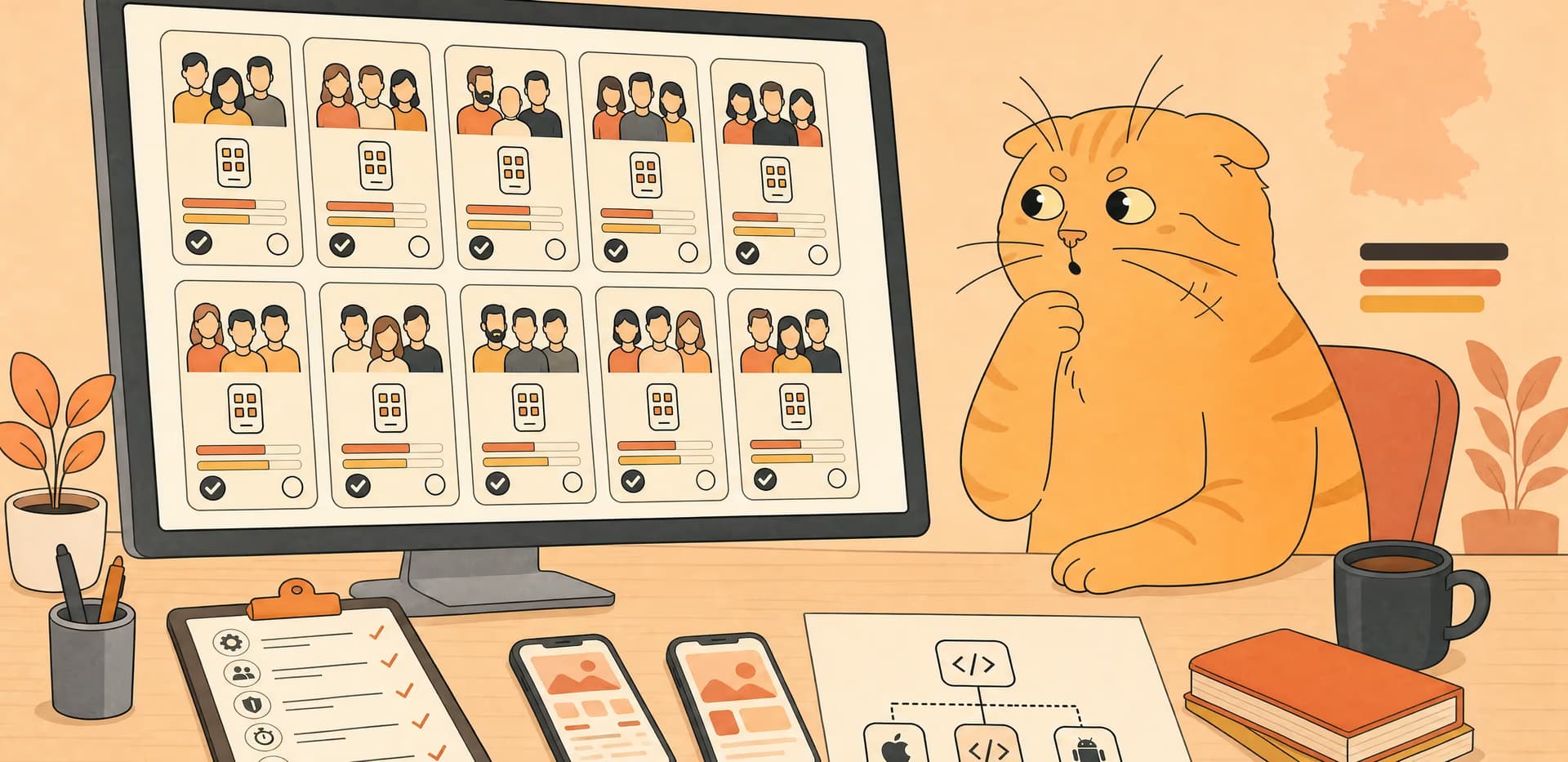
Once a mobile product has a clear direction, selecting a partner is less about whether a team mentions iOS, Android, or cross-platform work. Ten plausible vendors offer similar service pages but differ in delivery ownership, technical judgment, and proof. Which evidence distinguishes a partner that fits the product from one that merely names expected technologies?
In this guide, we'll look at how mobile app development companies in Germany compare beyond familiar service lists. Readers can use the ranking to match delivery evidence with product constraints. That makes vendor conversations more focused from the start.
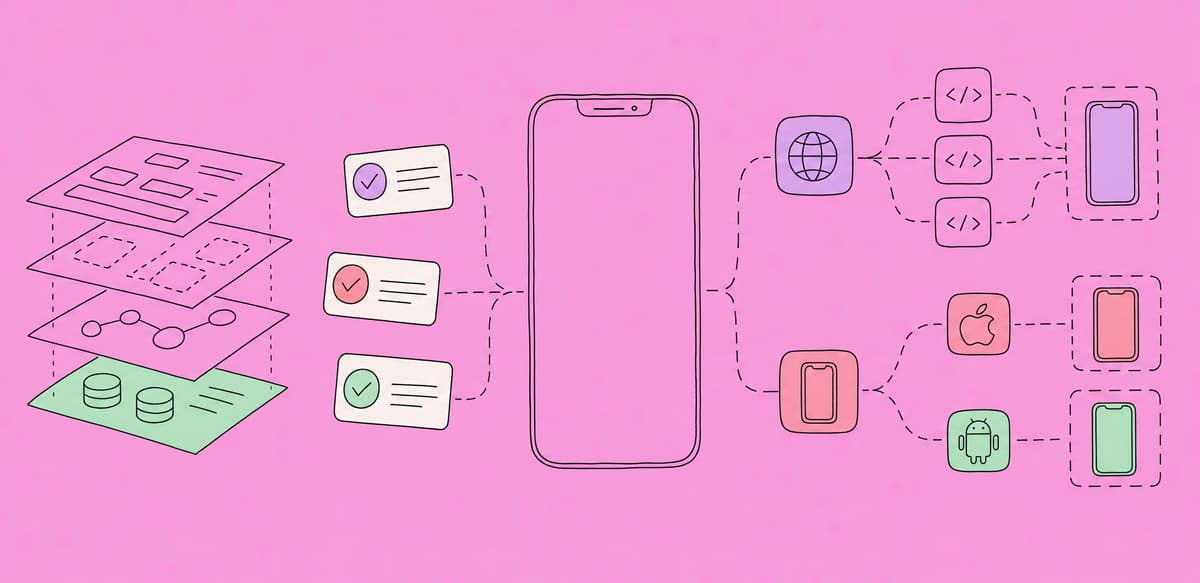
Software development proposals rarely show who owns decisions between an idea and a released app. Mobile application development connects product definition, engineering, release work, and handoff after launch.
A partner’s mobile app development services in Germany turn an uncertain brief into a sequence with clear owners:
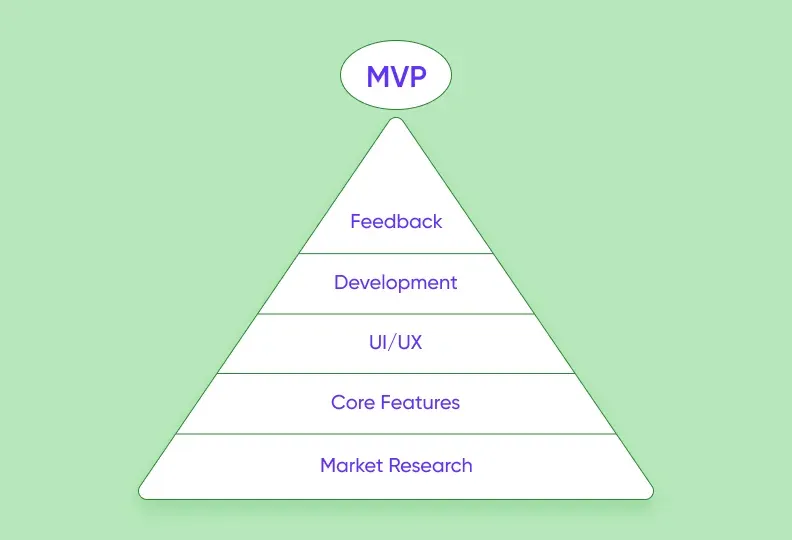
An MVP process makes delivery responsibilities visible before development starts
Android development and native iOS use separate codebases. A cross-platform app shares code through React Native or Flutter. App functionality and release constraints determine the fit. This guide to cross-platform or native development explains the trade-offs.
Quality assurance tests mobile apps through store release. Ownership includes documentation, source-code access, and handoff, so the development team can change the product.
When comparing mobile app development companies, a delivery model shows who owns the work. Public evidence shows whether ownership extends beyond building screens. These filters separate a full product partner from build-only staffing.
Compare proposals by delivery ownership, architecture fit, and estimate assumptions. These criteria turn similar sales pages into evidence.
Product stage sets the engagement: discovery, focused build, or existing-team support. Mobile app developers still shaping the concept can use app ideas worth testing before development to make the brief more concrete. This framework for evaluating an app development partner separates delivery ownership from a developer roster.
Native suits products needing separate Android and iOS decisions. Cross-platform suits shared mobile apps with proven integrations and a release plan.
Visible scope, app development costs, acceptance, and support assumptions make terms clear. EvTrip shows why architecture affects the estimate.
EvTrip had under a month before an investor report. Its web product had core flows, but the mobile release needed registration, authorization, and push notifications.
A full React Native rebuild would take about two months. With under one month, rebuilding working functionality would consume the deadline without improving the investor demo.
We kept the web product in WebView. A React Native shell handled registration, authorization, and push notifications, with access-token exchange connecting the layers. The release reached the App Store and Google Play.
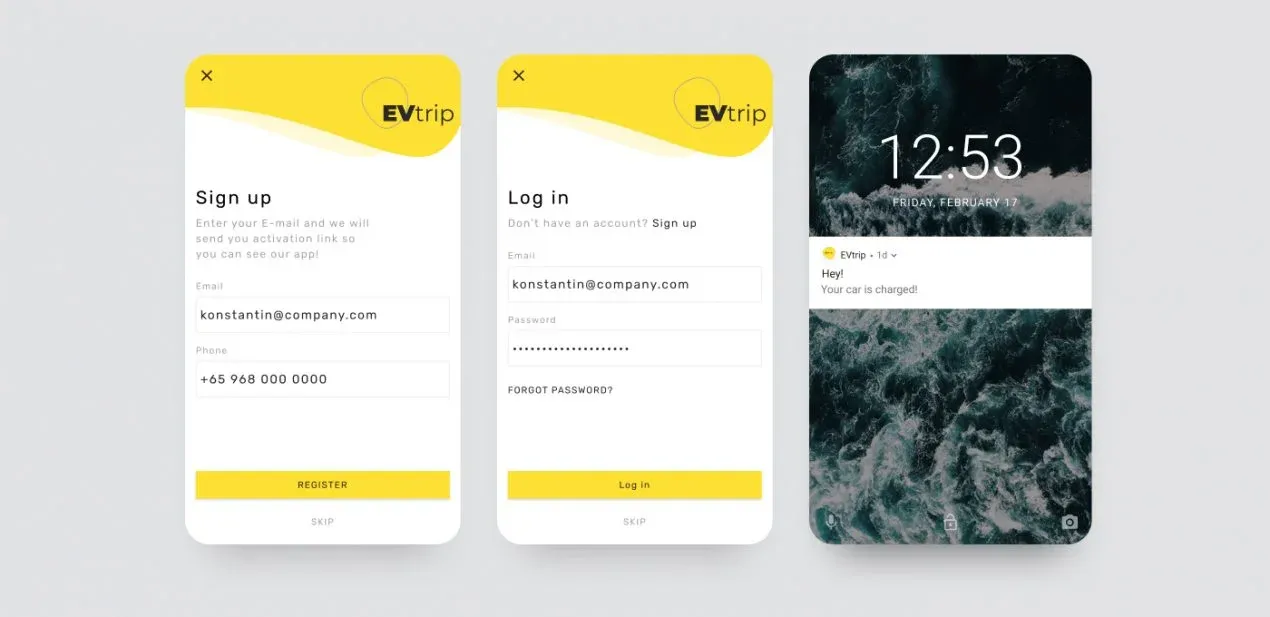
The hybrid architecture preserved EvTrip’s web product while adding mobile functions for store release
A “GDPR-compliant” label is not evidence. The GDPR consolidated text frames due diligence around privacy by design, processor commitments, and risk-based security. These are procurement checks, not legal advice or vendor certification. Evidence includes data flows, subprocessor terms, security tests, and incident handling.
This ranking compares each mobile app development firm by delivery model and named project evidence. Missing evidence stays visible instead of becoming an assumption. Each profile maps product fit to development expertise worth checking during procurement.
| Company | Best for | Mobile architecture | Delivery model | Evidence to verify |
| Purrweb | Minimum viable product (MVP) | React Native with Node.js or Python backends | Two-week sprints, fixed estimate after discovery, or time and materials | Settler build, four-month MVP, and technical handoff |
| Zazz | Product engineering or embedded teams | Native Swift and Kotlin, plus React Native and Flutter | Full-cycle delivery or selected developers added to a client team | Cascade PBS/KCTS9 native streaming apps |
| Tech-Stack | Mobile apps with cloud backends | Native iOS and Android, React Native, Flutter, Ionic, and AWS serverless backends | Time and materials for full delivery or team augmentation | Iliad React Native app and serverless architecture |
| Sapphire Software Solutions | Flexible staffing for connected products | Native Swift and Kotlin, plus Flutter, React Native, Ionic, and NativeScript | Fixed price, time and materials, dedicated team, or bucket model | WayMark Maps mobile and backend stack |
| Appleute | MVP validation and release support | Native iOS and Android, React Native, and Flutter | Two-week sprints from analysis through maintenance | PUMA CATchup React Native rebuild |
| Encrypted Infoweb | Cross-platform delivery with structured collaboration | Native Swift and Kotlin, React Native, and Flutter | Agile sprints, shared workspaces, written updates, calls, and post-launch support | Collaboration process and physical-device testing, with no named case |
| Apptunix Germany | Artificial intelligence | Swift/Kotlin, React Native, Flutter, and Internet of Things | Agile delivery from discovery through maintenance | Expo City Eats customer and operations applications |
| Lean Apps | Discovery-led MVP delivery | React Native and native iOS and Android, with Java backend capability | Fixed-price Design Sprint and two-week DevUnit packages | Bayer Digitrial and its centralized record synchronization |
| YND | Product definition or team extension | Native Swift and Kotlin, plus React Native | End-to-end product work or added mobile engineering capacity | St. Oberholz payment and loyalty MVP |
| Infinum | Complex products with quality assurance | Native Swift and Kotlin, plus Flutter, React Native, and Kotlin Multiplatform | Agile dedicated teams or team augmentation with maintenance | Hrvatski Telekom espots Flutter application |
Purrweb covers custom software development, app design, quality assurance, store release, and support. Shared mobile apps combine React Native frontend and backend development with Node.js or Python. Teams work in two-week sprints, with a fixed estimate after discovery or time and materials for unsettled scope.
Its iOS app development services support platform-specific work. For Settler, Purrweb delivered a React Native app, React admin panel, and Node.js/NestJS backend in four months, then transferred the code and documentation. The model links design and development work with handoff.
We built KEM, a peer-to-peer payment MVP in React Native. It lets users send money to contacts, request payments, and review transaction history. At the time, Kuwaiti banks had not opened their production APIs to external developers, so live banking integrations were unavailable. We used mocked banking and transaction data to make the MVP demo-ready for banking partners. When API access became available, we transferred source code and credentials to the client’s engineering team and supported the handoff for one month.
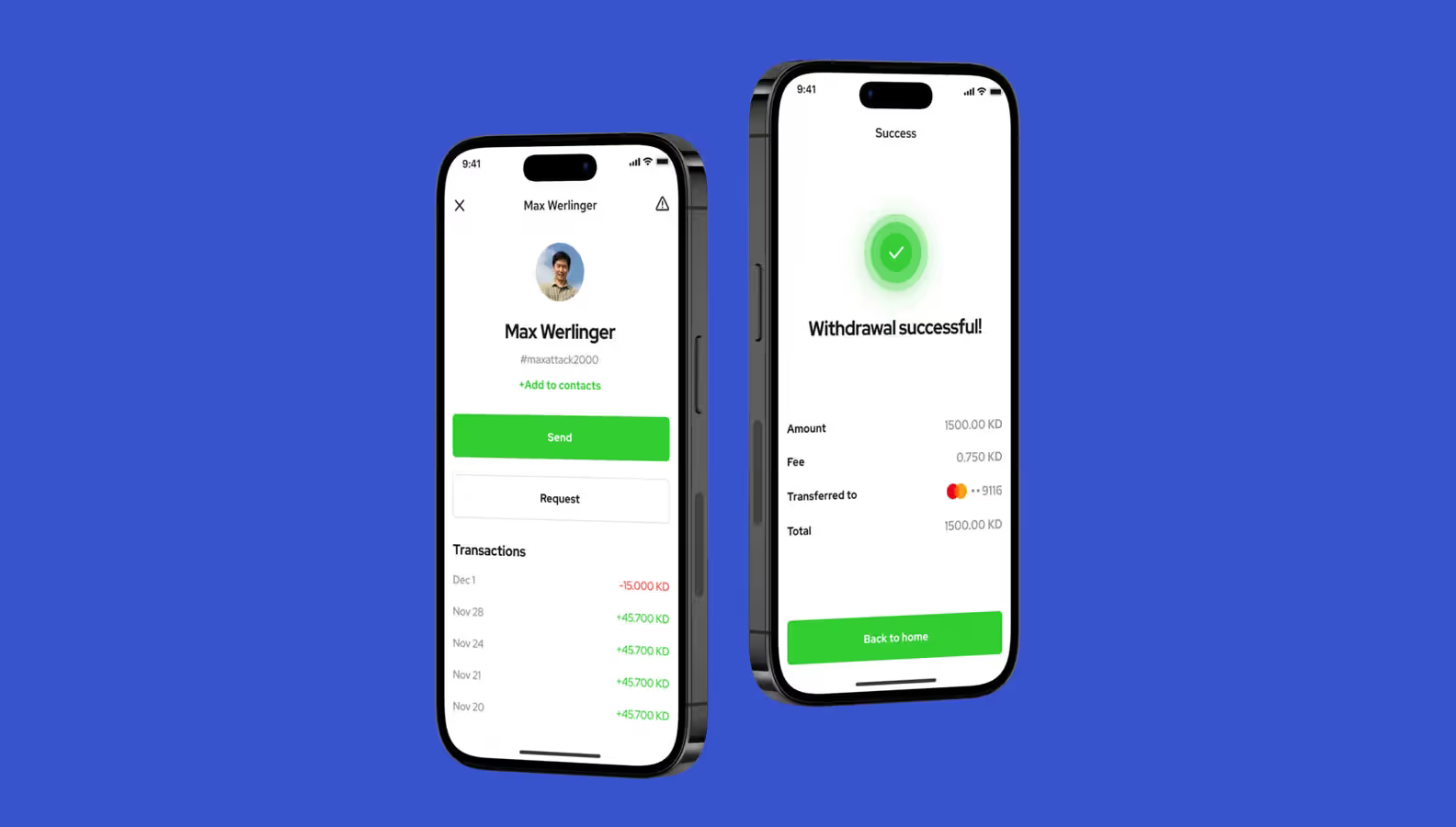
Mocked transaction data let KEM demonstrate the product before bank APIs opened

.svg)

Zazz handles discovery, architecture, design, engineering, quality assurance, store release, and later enhancements. Its mobile options include Swift and SwiftUI for iOS, Kotlin for Android, React Native, and Flutter. Buyers can choose full delivery or app developers through an embedded-team model.
For Cascade PBS/KCTS9, an embedded Zazz team built streaming mobile apps in Swift and Kotlin for iOS and Android. The apps included offline access, accessibility work, and matching functionality across both platforms. Its service model also covers stabilization and continued enhancement after release.
Tech-Stack takes mobile solutions from discovery and architecture through launch and support. Its mobile stack covers native iOS and Android plus React Native, Flutter, and Ionic, while AWS services support backend work. Engagements use time and materials for full delivery or team augmentation. This supports evolving product requirements.
For Iliad, the company built a React Native social-reading app with an AWS serverless backend. Amazon SQS handles messages, OAuth 2.0 handles authentication, and the product includes an animated virtual bookshelf. The documented MVP took about six months.
Sapphire Software Solutions combines native iOS and Android work with Flutter, React Native, Ionic, and NativeScript. Its scope includes interface design, testing, deployment, maintenance, and connected products. Buyers can choose fixed price, time and materials, dedicated teams, or a bucket model.
WayMark Maps provides the clearest product evidence: a web and mobile navigation system with a Flutter frontend and Node.js backend. It also uses MySQL, mapping APIs, and AWS infrastructure. The case documents connected mobile and backend delivery without unsupported outcome claims. The scope extends beyond a standalone mobile interface.
Appleute offers web development services alongside custom mobile apps, APIs, and MVPs. Its stack includes Swift and Objective-C, Kotlin and Java, React Native, and Flutter. Delivery moves from analysis and app design into milestone planning, two-week sprints, quality assurance, store submission, and maintenance.
For PUMA CATchup, Appleute rebuilt an employee-news app in React Native for iOS and Android. The case documents a WordPress API, push notifications, analytics, and more than 1,500 articles. It connects the sprint-based process to a maintained internal product.
Encrypted Infoweb offers Android app development and native iOS work alongside React Native and Flutter. Its scope covers store deployment, monitoring, maintenance, physical-device testing, and framework or security updates. Agile sprints, shared workspaces, written progress, scheduled calls, and asynchronous communication form its collaboration model.
The company describes its architecture as GDPR-conscious, which is a due-diligence claim rather than proof of compliance. Official-domain research found no clearly attributable named mobile project, so this assessment rests on documented process and support evidence. The process supports visible remote collaboration after release.
Apptunix Germany works with native Swift and Kotlin plus React Native and Flutter. Its scope includes artificial intelligence and Internet of Things integrations, discovery, prototyping, engineering, quality assurance, deployment, and maintenance.
Expo City Eats provides the public example. Apptunix documents native customer mobile apps for iOS and Android alongside merchant, driver, dispatcher, and administration systems. The case shows coordination across several applications and user roles without relying on promotional outcome metrics. This fits mobile apps coordinating customer journeys with several operational workflows.
Lean Apps combines product discovery, user experience design, prototyping, mobile engineering, and deployment support. Its evidence includes React Native, native iOS and Android work, Java backends, and continuous-integration tooling. Engagements start with a Design Sprint and continue through two-week DevUnit packages that clients can stop after each sprint.
For Bayer Digitrial, Lean Apps built a React Native app for iOS and Android. It synchronized clinical-study records with a centralized system, demonstrating framework choice and backend integration. The model funds implementation in short, stoppable increments.
YND combines product design, technology strategy, mobile engineering, web app development, and team extension. Its mobile stack uses Swift, Kotlin, and React Native. Discovery workshops and product strategy connect early definition with implementation, testing, design systems, and engineering handoff. It supports a mobile app development process.
For the St. Oberholz loyalty and payment MVP, YND built React Native customer apps for iOS and Android. The system also included point-of-sale extensions and a Java and Kotlin payment-terminal app. A Ruby on Rails backend linked mobile delivery with payments and hospitality hardware.
Infinum works across product strategy, interface design, mobile engineering, quality assurance, deployment, maintenance, and support. Its options include native Swift and Kotlin plus Flutter, React Native, and Kotlin Multiplatform. Dedicated teams and team augmentation use an agile development model.
For Hrvatski Telekom, Infinum redesigned and developed the espots electric-vehicle charging app in Flutter. Its shared iOS and Android codebase supports station discovery, connector filtering, QR-based charging, live session information, and digital-wallet payments. This directly evidences connected cross-platform delivery.
AI, accessibility, privacy, or connected-device requirements can still change vendor fit.
Current mobile technology trends matter when they change the questions asked before a contract is signed. For a German-market product, that means identifying which features alter regulatory assessment, shared-code boundaries, data measurement, or hardware dependencies. Each point needs evidence for the planned mobile application.
Mobile apps using AI face function- and context-dependent obligations under the European Commission’s AI Act framework, not an “AI app” label. Vendor evaluation covers governance, transparency, testing, monitoring, and documentation.
Kotlin Multiplatform is a shared-code option, not a default upgrade from React Native, Flutter, or native development. Proposals need evidence for platform-specific behavior, release ownership, and quality assurance.
We built Lytic Health, pairing a patient mobile journey with a doctor web app. Patients search and tag multiple symptoms, answer clarifying chatbot questions, receive a preliminary assessment, and schedule an appointment.
Doctors need patient lists, profiles, messages, statistics, and critical health information. Product definition covered what patients enter and clinicians see.
In about 1.5 weeks, we turned these flows into a clickable prototype. It made both journeys testable before a full build, clarified the product, and did not prove regulatory compliance.

The prototype connects patient symptom entry with the information doctors review
GDPR-friendly analytics starts with data-flow decisions, not a tool label. Discovery defines instrumentation, consent, retention, and event recipients. Within the European Accessibility Act’s scope, acceptance criteria and testing belong in the delivery plan. That scope excludes some mobile apps.
Connected mobile solutions move architecture beyond the phone. Infinum’s espots work links a Flutter app to charger discovery, connector filtering, QR-started sessions, and live session data. Apptunix’s Expo City Eats case coordinates customer and operational applications.
Vendor evidence should cover device and operator states, unstable connectivity, backend ownership, and tests for interrupted sessions or delayed updates.
A defensible selection starts with product stage and the responsibilities a partner will own. The candidate list gets smaller when each proposal is tested against architecture, release needs, commercial assumptions, and public delivery evidence.
AI features, accessibility, privacy, and connected hardware belong in discovery only when they affect planned mobile apps. Compare teams that explain decisions, make dependencies visible, and leave the client with usable code and documentation.
➡️ For a scoped discovery conversation and a free estimate, tell us what you're building.
Purrweb’s planning ranges are €30k–€80k for an MVP, €80k–€200k for a mid-market app, and €200k+ for an enterprise product. Scope, stack, team size, integrations, QA, compliance, schedule, and support shape cost. The app development cost calculator gives a starting range, while discovery tests assumptions before setting the budget, timeline, and release plan.
A focused Purrweb MVP takes roughly four months as a planning range, not a guarantee. Broader product-grade work often takes 6–12 months when it includes complex integrations, several user roles, longer QA, regulated flows, or staged releases. Discovery makes the schedule more reliable by defining core flows, architecture, external dependencies, review cycles, and acceptance criteria.
No country is universally best for mobile app development. Germany offers market proximity and knowledge of local procurement and regulatory needs. Eastern Europe often provides a different cost-quality balance and broad engineering talent. The US has a large product and investment ecosystem, often at higher delivery cost. The better fit depends on product evidence, communication, delivery ownership, and market context.
App developers in Germany often cover discovery, UX/UI design, native or cross-platform app development, backend work, and integrations. Work may continue through quality assurance, store release, maintenance, and updates. Some teams also handle artificial intelligence or Internet of Things work when needed. Application development services may cover full delivery or selected work within a client team.