Explore

Need help with your project?

Oops! Something went wrong while submitting the form.
Finance teams don’t run short on work. They run short on hours. Month-end close, invoice matching, reconciliations, and compliance checks pile up every quarter, but the deadlines never move. Robotic process automation in finance (RPA) is the response most teams reach for: software “bots” that handle the repetitive, rules-based steps a person would otherwise do by hand.
Used well, RPA in finance cuts manual data entry, shrinks error rates, and gives your team back the hours that analysis actually needs. This guide covers where RPA fits in finance operations, the use of robotic process automation cases that pay off first, honest cost ranges, and an eight-step path to putting it in place. We build these systems for clients, so we’ll also point out where projects tend to stall in real life, not just where they shine.

RPA sounds technical, but the idea is simple: a bot does the clicking, copying, and typing a person would otherwise do across your finance systems. Before the use cases, it helps to see how one of these bots actually works, and why it isn’t the same thing as ordinary workflow automation.
An RPA bot works on top of the software your team already uses, whether that’s the accounting system, the ERP, or the bank portal. It reads what’s on the screen, pulls the right numbers, and enters them where they belong, the same way a person would. For documents like invoices, it uses OCR (optical character recognition), which turns a scanned page into text the bot can read. The rules are fixed, so it repeats the task the same way every time, without the typos that creep in during manual data entry.
Traditional workflow automation rebuilds a process from the inside, which usually means backend development and access to APIs (the connectors that let software talk to other software). RPA skips that. It mimics a user, so it can link systems that were never designed to work together, without touching their code. That makes it quicker to launch, and it’s often the practical first step before deeper automation. It’s the same layer we work in on fintech software development projects, where legacy tools rarely offer a clean integration path.
The pull toward automation isn’t hype, it’s volume. Finance runs on high-frequency, repeatable work, and that’s exactly what bots handle well. The market shows where this is heading. The global RPA market is projected to grow from $35.27 billion in 2026 to $247.34 billion by 2035, a 24.2% compound annual growth rate, and banking, financial services, and insurance already form the single largest share of that demand.
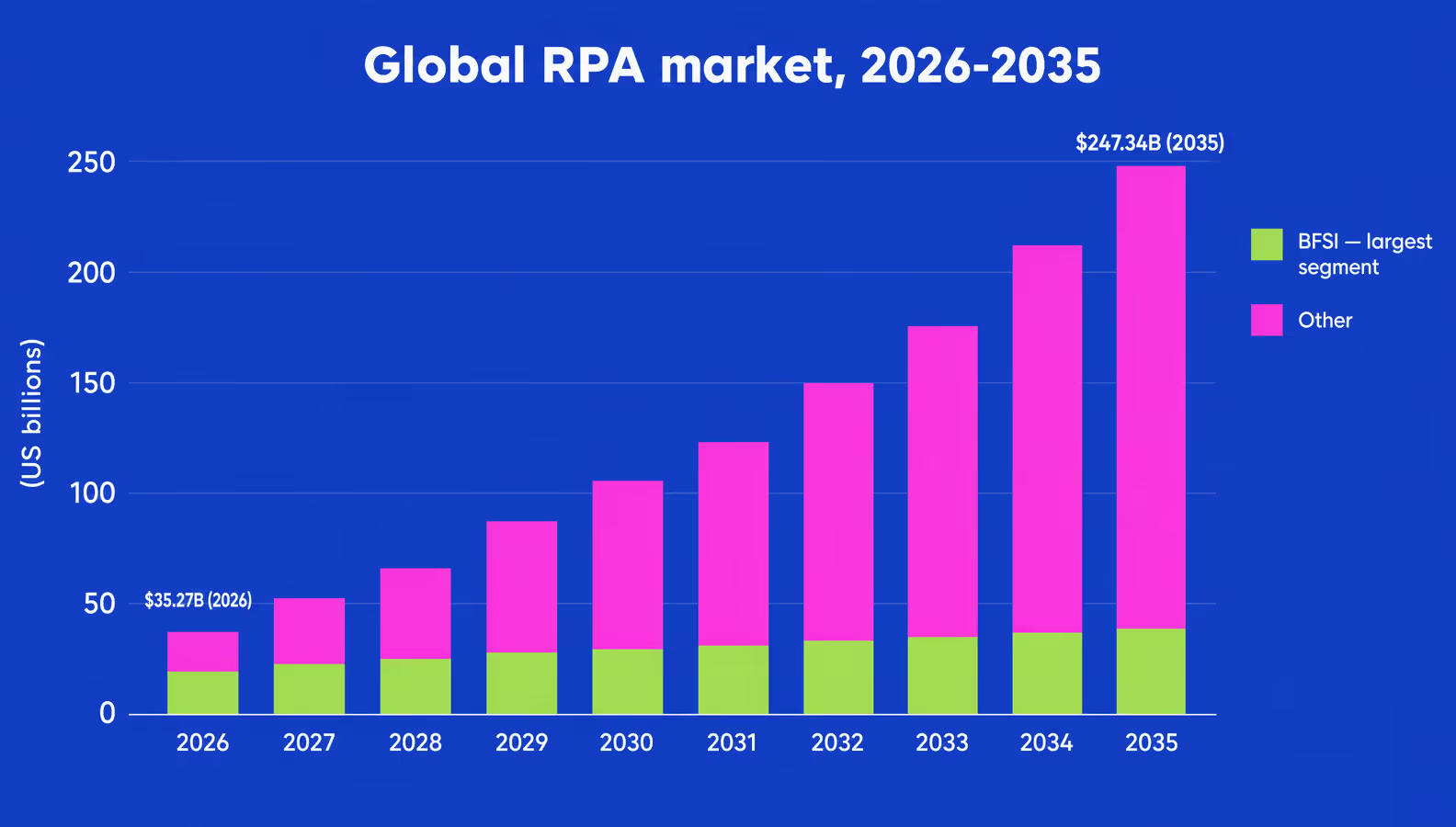
The RPA market is set to grow roughly sevenfold by 2035, with finance and banking leading demand
The reason is closer to home than the market charts suggest. A controller who loses the first week of every month keying figures between systems isn’t slow, the process is. Manual reconciliation, invoice matching, and report assembly quietly eat senior time that’s worth far more on forecasting and analysis. Automation moves that work off the calendar, so the team’s judgment lands where it actually pays off.
Most finance automation starts in the same few places: the tasks that are high-volume, rules-based, and painfully manual today. The table below is a quick scan of where bots earn their keep, and the four groups that follow explain each in plain terms, from payables through onboarding.
| Process | What the bot does | Effect |
| Invoice processing | Reads invoices, matches them to purchase orders, posts to the ledger | Fewer keying errors, faster approvals |
| Accounts payable / receivable | Schedules payments, sends reminders, applies incoming funds | Steadier cash flow |
| Reconciliation | Compares records across systems, flags mismatches | Cleaner books, less month-end scramble |
| Financial close & reporting | Pulls figures, assembles recurring reports | Shorter close cycle |
| Fraud detection | Screens transactions against rules, flags anomalies for review | Faster first-pass checks |
| AML / KYC onboarding | Extracts and verifies customer documents | Quicker, more consistent onboarding |
| Expense management | Checks receipts against policy, routes for approval | Less manual review |
| Tax & compliance | Gathers records, builds audit-ready trails | Lighter reporting load |
A first-pass map of finance processes bots handle well, ordered roughly by how quickly teams see returns
Payables and receivables are where the volume lives, so they’re usually first. On the payable side, a bot captures invoice data, matches it against the purchase order, and posts the entry, which cuts the typos that manual data entry introduces. On the receivable side, it applies incoming payments and sends reminders on schedule, so collections don’t drift. The same logic runs under most accounting software automation work.
Reconciliation is comparison at scale: line by line, system against system. A bot does that matching in the background and surfaces only the mismatches a person needs to judge. Extend it to the close, and the same approach pulls figures and assembles recurring reports, so the first week of the month stops disappearing into spreadsheets. This overlaps with broader financial software development, covered in the callout below.
Here the bot handles the first pass, not the final call. It screens transactions against known rules and checks records for anti-money-laundering (AML) requirements, which are the checks that stop dirty money moving through the system. Anything unusual gets flagged for a human reviewer. Paired with machine learning, the screening sharpens over time as it sees more patterns.
Onboarding runs on know-your-customer (KYC) checks, meaning the verification of who a new client actually is. A bot reads the submitted documents, cross-checks the details, and files them, trimming a slow process to minutes. Expense management follows the same shape: receipts checked against policy, routed for approval, with only the exceptions reaching a person.
Kaiju Labs, a Singapore Web3 studio, had a familiar onboarding problem. Players had to install a separate crypto wallet before they could pay in-game, and most dropped off before they finished. We designed the wallet directly into the game flow, with sign-up, top-up, and transfers in one place, so nobody got bounced to a second app. Finance onboarding runs on the same logic. Every extra manual step in a know-your-customer check is a place to lose someone, which is exactly what RPA removes when it reads and verifies documents automatically. Kaiju launched in two months and pulled in its first users and investment. See the full Kaiju case.

Cutting a separate install out of onboarding is what kept users from dropping off
RPA on its own is literal. It follows fixed rules and handles structured data, the kind that sits in neat rows and fields. The moment a task needs judgment or messy inputs, it needs help. That help comes in two layers, and knowing which one a task calls for saves a lot of wasted effort.
The first layer is AI, usually as intelligent document processing (IDP), which reads unstructured files like scanned contracts or emailed PDFs and turns them into data the bot can use. The second is machine learning, which studies past cases to spot what a rulebook would miss, most often in fraud detection, where patterns shift faster than any fixed rule keeps up. Above both sits agentic automation, where an AI “agent” decides the next step itself instead of following a script.
| Task type | Best fit | Why |
| Repetitive, rule-based, structured data | RPA | Fast, predictable, no judgment needed |
| Reading messy documents | RPA + AI (IDP) | Turns unstructured files into usable data |
| Spotting shifting fraud patterns | RPA + machine learning | Learns from past cases, not fixed rules |
| Multi-step decisions that change by case | Agentic automation | An agent chooses the next action itself |
Not every process is worth automating, and picking the wrong one is how pilots stall. Before scoping a bot, it helps to run the candidate process through five quick checks. The more boxes it ticks, the stronger the case, and a process that misses several is usually better fixed by hand first.
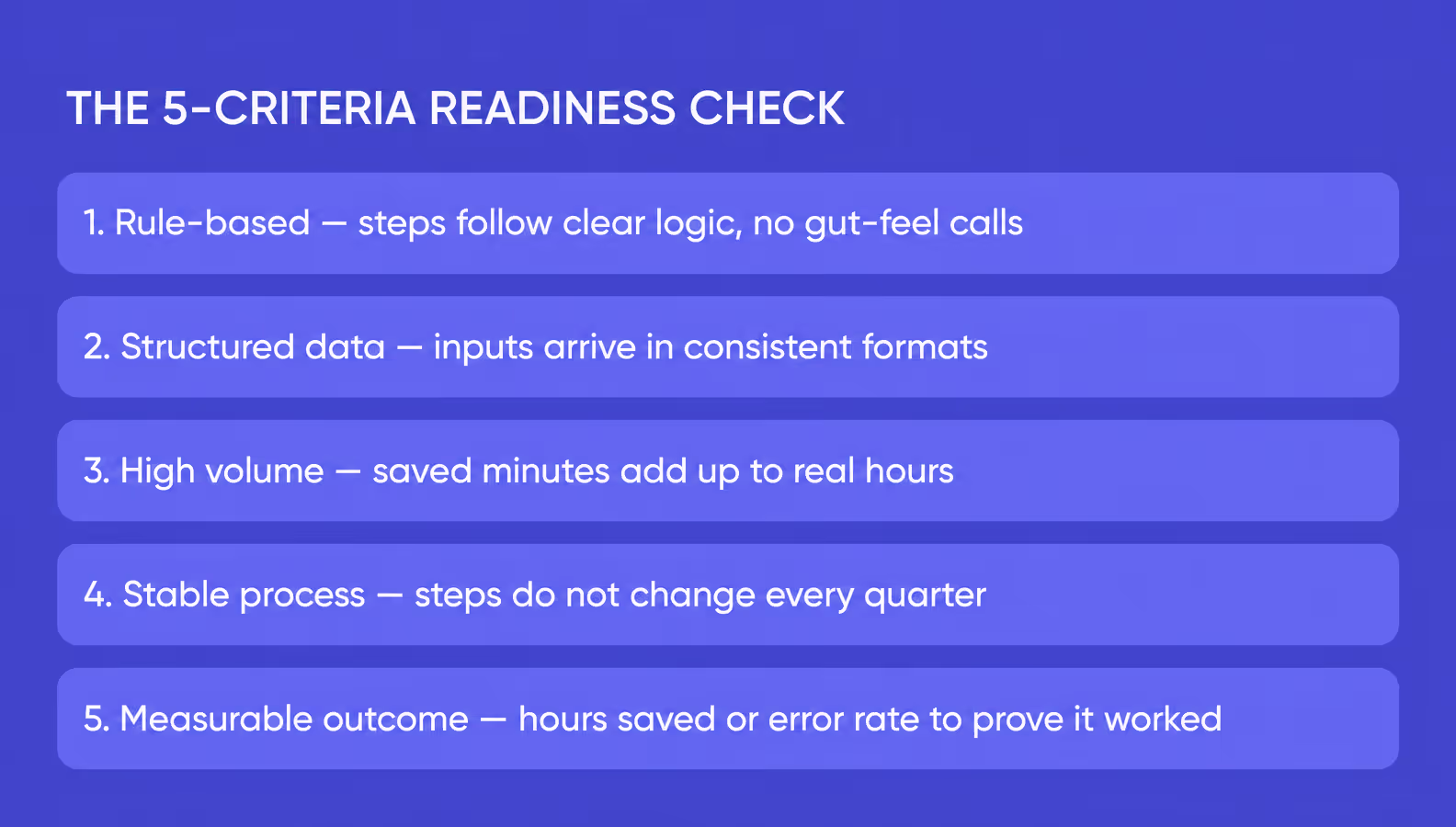
That last point about stability matters more than it looks. A process someone tweaks every close cycle will keep breaking the bot, so the honest move is to settle the steps first, then automate what’s finally holding still.
The case for RPA holds up in outcomes, not adjectives. Four benefits show up on nearly every finance build.
There’s a strategic payoff too, and it’s measurable. In a 2025 Deloitte survey of 542 financial-services leaders, 47% of AI “pioneers” said returns already beat expectations, against just 17% of slower movers. The gap tracks a simple pattern: teams that automate early compound the gains while others are still keying by hand.
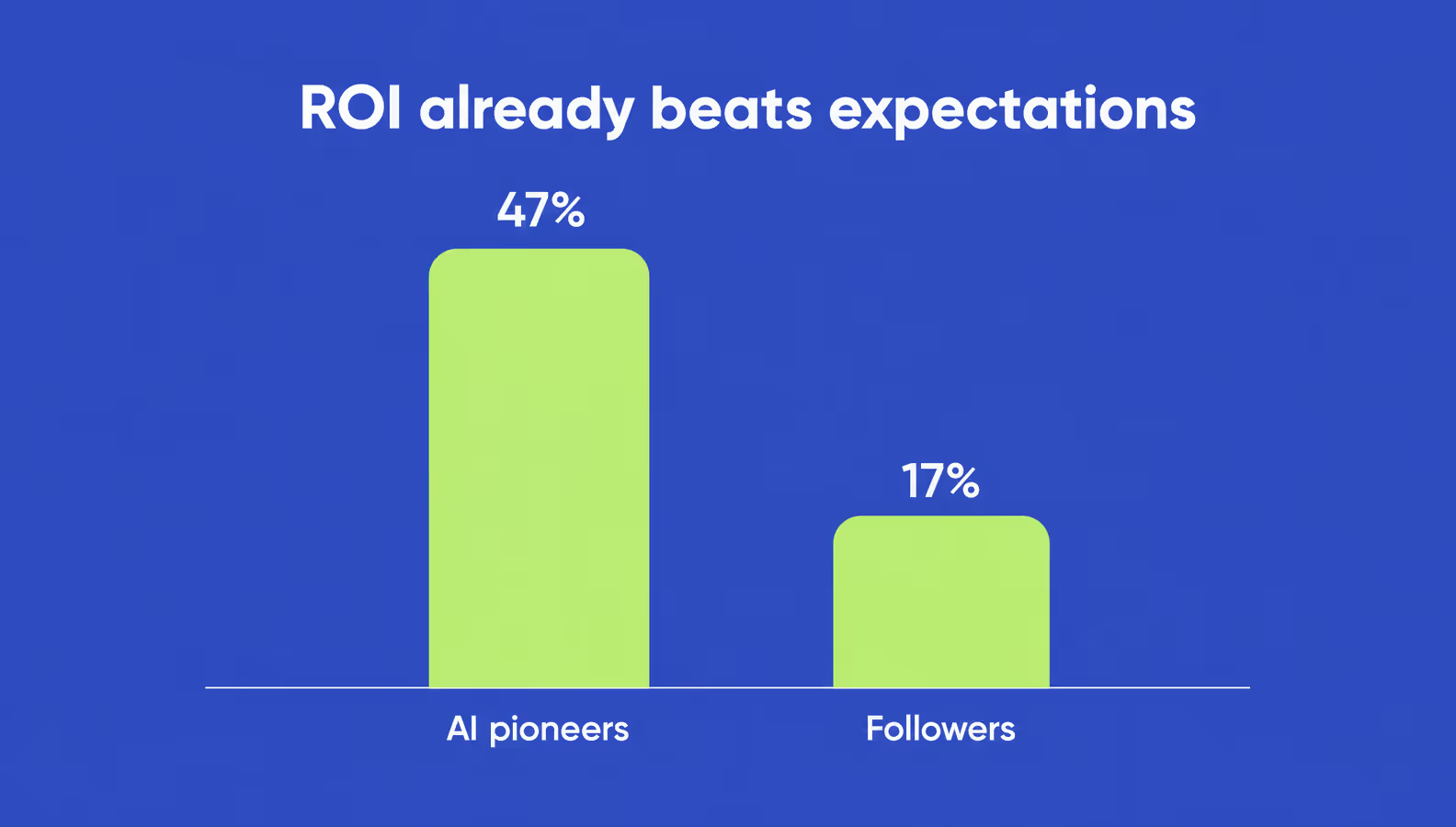
Early movers report exceeded ROI nearly three times as often as slower adopters
There’s no single sticker price, and anyone who quotes one before seeing your processes is guessing. Cost splits into two parts, the software license and the implementation work, and the ratio between them shifts with how many systems the bot has to touch.
The license is the ongoing platform fee, usually billed per bot or per year. Implementation is the one-time build: scoping the process, connecting the systems, and testing. For a focused finance workflow, implementation typically runs $25,000 to $80,000, and it’s where most of the first-year spend actually sits. The heavier the integration, the more that number climbs.
Three things move the estimate more than anything else. How many systems the bot connects to, how clean their data is, and whether any run on legacy tools without a proper connector. A single bot over one tidy system is cheap. The same bot spanning an old ledger, a bank portal, and a CRM is a different project.
Well-scoped finance bots tend to pay back inside 6 to 12 months, faster for high-volume tasks like invoice processing, slower where volumes are thin. Gartner has put RPA at roughly one-fifth the cost of an onshore finance employee for the work it covers.
For KEM, a P2P payment app in Kuwait, the hard part was never the app. It was the banks. Kuwaiti banks keep their APIs closed for security, so we built the MVP on mock banking data, enough for the founders to demo the product and win real API access. That maps straight onto RPA finance work. The bot logic is rarely the expense. Reaching into closed or legacy banking systems is, and that’s where timelines stretch. KEM cleared that hurdle and raised $1 million in seed funding on the strength of the MVP.
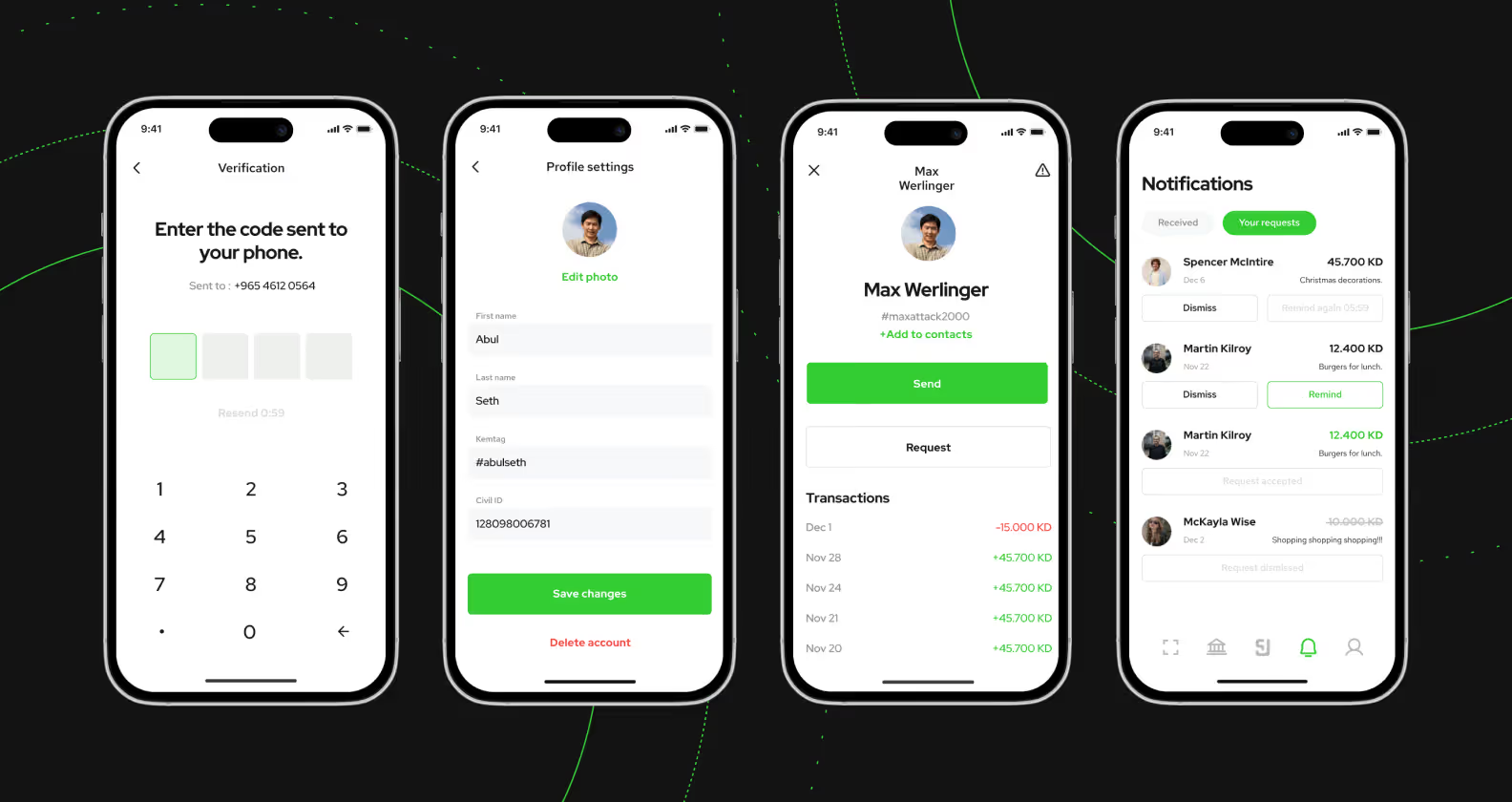
The banking-API layer, not the app logic, is what set the timeline on this build
Rollouts that work tend to follow the same arc, from picking the right process to watching it run in production. The eight steps below are the path we walk on finance builds, and skipping the early ones is usually what forces expensive rework later.
Steps five and six are where most timelines live or die, and they’re the same pressure points we flag on any how to build a fintech app project, where integration, not interface, sets the pace.
Large institutions have run finance bots for years, and the results are on the record. The three below show the range, from receivables to onboarding to the back office, before we get to a build of our own.
KeyBank handed its accounts receivable to bots that generate the invoices and purchase orders which once tied up a team every billing cycle. The payoff was fewer errors and a smoother path from invoice to payment.
JPMorgan Chase runs RPA behind onboarding and reconciliation at scale, and reported cutting its KYC unit cost by roughly 98% since 2022. A saving that size only opens up once automation covers the full transaction volume.
Societe Generale moved repetitive back-office and customer-service steps onto bots. The predictable requests get handled automatically, and the team keeps the ones that need judgment.
None of this is unique to giant banks, though. The same integration puzzle shows up on a startup budget, usually with far messier data to wrangle, and that’s where our own builds live.
Not every finance build is a bank. For a Japanese team, we designed a crypto wallet with no backend of its own, so the app pulled everything it needed straight from outside sources. We stitched together four independent services, one for balances, one for prices, one for NFTs, and the blockchain itself, into a single clean interface. That orchestration is the real lesson for RPA. The hard part isn’t the logic, it’s making separate systems hand over clean data on cue. The build reached a working, investor-ready version.
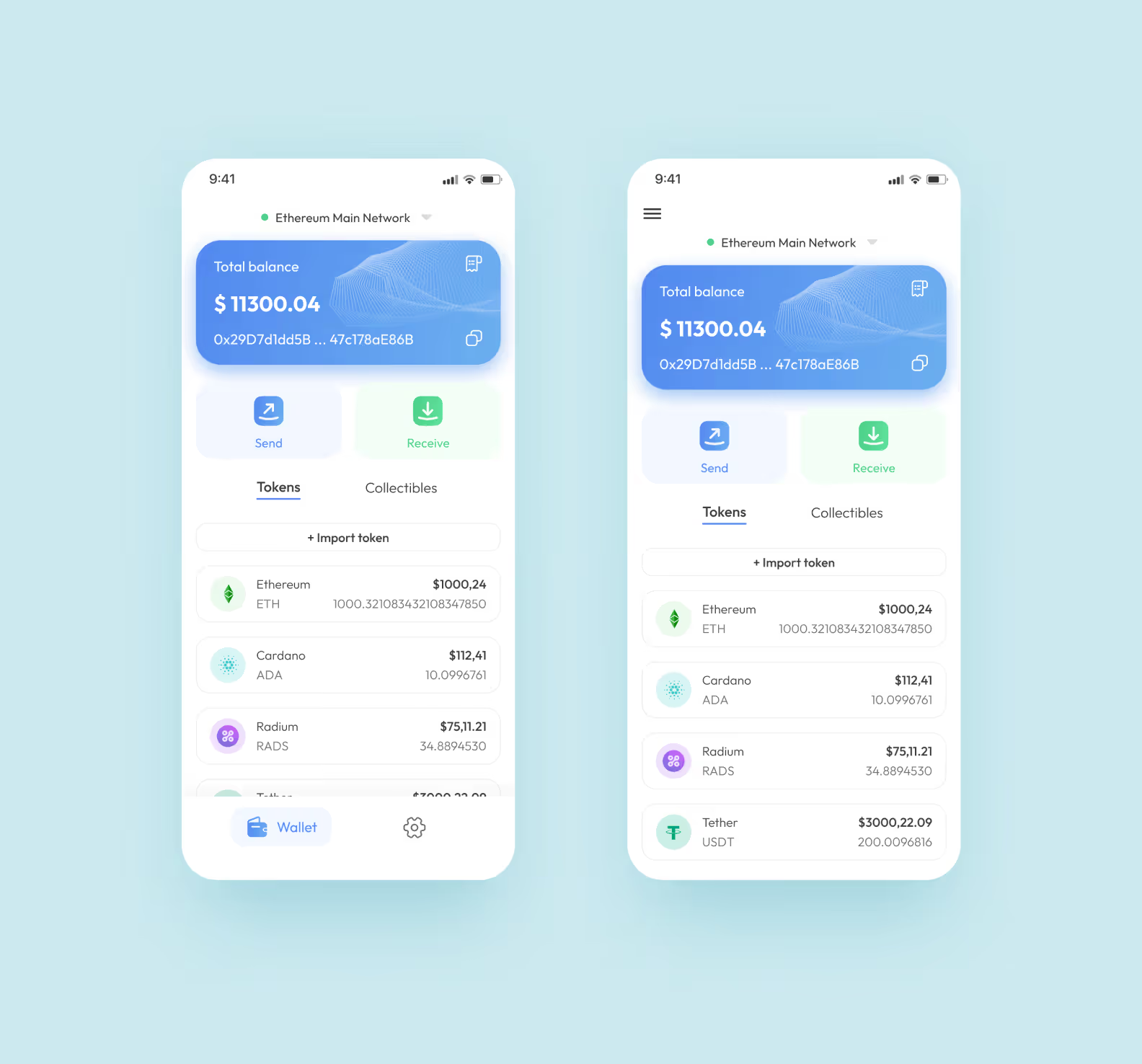
When a product has no backend, the integration layer is the product
RPA pays off, but the road there has known potholes. Most of them are predictable, which is the good news.
The next shift is already visible. Plain RPA follows fixed rules, but the newer wave, agentic automation, lets an AI agent decide the next step on its own instead of waiting for a script. In finance that means a system that can read an unusual invoice, reason about where it belongs, and route it without a human writing a rule for that exact case.
This is the move toward hyperautomation, where bots, AI, and machine learning work as one layer rather than separate tools. The likely path is gradual. Most teams start with rule-based bots on the safe, repetitive work, then hand more judgment to AI as trust builds. The same trajectory is reshaping neighboring areas of finance too, from lending to blockchain in fintech, where automation and settlement keep pulling closer together.
RPA earns its place in finance by taking the repetitive volume off the calendar, so the team’s judgment goes where it actually counts. The strongest starting points are the high-volume, rules-based processes: payables, reconciliation, onboarding, and reporting. The RPA technology is proven at every scale, from global banks to lean startups.
What separates a smooth rollout from a stalled one is rarely the bot itself. It’s the discovery work upfront and the integration underneath, which is exactly where an experienced build partner pays for itself.
➡️ If you’re wondering where automation would pay off in your finance process, we can scope it and build it. Talk to us about fintech software development and get a free project estimation in 48 hours.
RPA in finance and accounting is the use of software bots to handle repetitive, rules-based tasks such as invoice processing, data entry, reconciliation, and compliance reporting. The bots work on top of existing finance systems, reading and entering data the way a person would, which cuts manual effort and errors.
It depends on how many systems the bot touches and how clean their data is. Implementation for a focused finance workflow typically runs $25,000 to $80,000, separate from the ongoing software license. Well-scoped projects often pay back within 6 to 12 months.
RPA follows fixed rules and handles structured data, so it repeats a defined task exactly. AI adds judgment: it reads messy documents and learns from past cases, which is why fraud detection and document processing usually pair RPA with machine learning rather than using bots alone.
No. RPA takes over the repetitive, rules-based steps like data entry and matching, but it doesn’t replace analysis, judgment, or client relationships. In practice it shifts accountants toward higher-value work such as forecasting and planning, rather than removing the role.
There’s no single best tool. Commonly used platforms include UiPath, Microsoft Power Automate, Automation Anywhere, and Blue Prism. The right fit depends on the systems you run, your volume, and how much AI you need, which is why many teams choose a custom-built RPA solution over a fixed platform.
The best candidates are rule-based, high-volume, and built on structured data, with a stable process and a measurable outcome. Accounts payable and receivable, reconciliation, and know-your-customer onboarding tick every box, which is why teams usually automate those first.


.svg)