Explore
Need help with your project?
This field is required
Incorrect phone number
Incorrect Email
This field is required
Please fill in all fields
Next
Next
Your role in the project
Services
Budget
Please select one option in each category
Submit
Submit
several colorful figures
Request sent
Our manager will contact you shortly.
Oops! Something went wrong while submitting the form.

Medical Imaging Software Development

Purrweb designs, develops, integrates, and modernizes software for medical image data across the clinical lifecycle. We build DICOM and DICOMweb viewers, connect PACS or VNA archives with RIS and EHR systems, and create image processing and AI-assisted workflows. Radiologists and clinicians get faster access to medical images, connected reporting, secure image sharing, and interfaces designed around their daily tasks without disrupting existing clinical systems. Tell us about your imaging workflow, integrations, and compliance scope.

550+ projects released10 years on the market4.9 average rating across 224 reviews

Some facts about us

44
reviews on Clutch
19
reviews on GoodFirms
200
IT experts in our talent pool
48h
to get a free project estimation

Medical Imaging Software Development Services

A medical imaging product may require a new application, an integration layer, or modernization of software already in use. Our medical software development guide explains the wider delivery context. For custom medical imaging work, we define the scope around users, systems, data, and clinical constraints.

DICOM viewer development

We design browser, desktop, and mobile viewers for opening DICOM studies, comparing series, taking measurements, adding annotations, and loading large files progressively. Multiplanar reconstruction enters the scope when the workflow requires it.

PACS, VNA, and medical image management software

We build or extend archive modules that store, route, retrieve, and retain studies across sites. The architecture may connect PACS and VNA repositories while preserving access rules, lifecycle policies, and existing clinical operations.

RIS and radiology workflow software

We map worklists, scheduling, reporting, collaboration, and status tracking into role-based interfaces. Teleradiology products may also connect image access with remote consultations through our telemedicine app development capabilities.

Medical image analysis and processing

Medical image processing software may cover segmentation, registration, structured measurements, image comparison, and 2D or 3D visualization. Our work on healthcare data visualization informs how complex clinical data becomes readable without hiding important detail.

AI-assisted medical image analysis software

For medical imaging analysis, we integrate model services for triage support, segmentation, measurements, anomaly highlighting, or quality checks. Our AI development services and machine learning development cover inference pipelines, monitoring, dataset lineage, and mandatory human review.

Legacy modernization and integrations

We move desktop workflows to the web, add API layers, improve performance, and connect clinical records. Related work may include EHR/EMR development, EHR/EMR consulting, or broader custom software development.
A new product is not always the right first step. Teams choose a new viewer when current tools block a core workflow, an integration layer when data is trapped between systems, and modernization when a working platform has performance or usability limits. Broader patient and clinician products belong within our healthcare app development services scope.

Medical Imaging Technology and Integrations We Build

CT / MRI / X-ray / Ultrasound / PET / Mammography / Pathology DICOM or DICOMweb PACS / VNA RIS / EHR Web viewer / Reporting / AI service

Imaging modalities

CT, MRI, X-ray, ultrasound, PET, mammography, and pathology systems create studies and supply data to the imaging workflow.

DICOM and DICOMweb

DICOM carries imaging data, while QIDO-RS, WADO-RS, and STOW-RS support search, retrieval, and storage across web-based services.

PACS and VNA

Archive systems store, route, retain, and retrieve studies across sites while preserving lifecycle and access policies.

RIS and EHR integrations

HL7 v2 and FHIR connect orders, patient context, modality worklists, reports, and results with the wider clinical workflow.

Imaging informatics, viewers, and AI services

REST APIs, event queues, and SSO/OIDC connect viewers, reporting, and AI services across cloud or on-premise infrastructure. See cloud computing in healthcare and IoT software solutions.

Security and Compliance for Medical Imaging Software

These decisions start at architecture, not after development. We define controls for protected health information, medical data, large imaging studies, interoperability, research data, and the client’s regulatory path.
Risk or requirement
What we design
PHI exposure
Encryption in transit and at rest, least-privilege RBAC, SSO/MFA, audit trails, retention rules, and secure sharing
Large imaging studies
Progressive loading, caching, compression, background processing, and bandwidth-aware delivery
Interoperability
Conformance checks, interface contracts, mappings, test environments, retry logic, and failure handling
Research and AI data
De-identification, pseudonymization, dataset lineage, consent boundaries, and access controls
Regulated product path
Requirements traceability, risk controls, verification evidence, and documentation aligned with intended use
Controls depend on the product and deployment model. We account for HIPAA, GDPR, an applicable FDA or SaMD pathway, IEC 62304, ISO 14971, and ISO 13485 requirements where relevant. These are engineering and documentation inputs, not claims that Purrweb certifies or clears the finished product.

Types of Medical Imaging Software We Develop

Radiology departments and imaging centers

Study lists, diagnostic viewers, medical image visualization software, measurements, reporting, and archive access within one working environment.

Hospitals and multi-site clinic networks

Medical imaging solutions for multi-site clinics combine shared workflows, role-based access, routing rules, and access across departments or locations.

Teleradiology providers

Remote study distribution, prioritization, collaboration, reporting, and secure image sharing between specialists.

MedTech startups and medical device companies

Viewer, device, and platform software designed around product requirements and the applicable regulatory path.

Clinical research and imaging AI teams

De-identified datasets, annotation workflows, model integration, human review, monitoring, and research tools.

Specialty imaging workflows

Focused applications for oncology, cardiology, neurology, orthopedics, dentistry, and pathology, including 3D medical imaging software for surgical planning.

Why Choose Purrweb as a Medical Imaging Software Company

Adjacent healthcare product experience

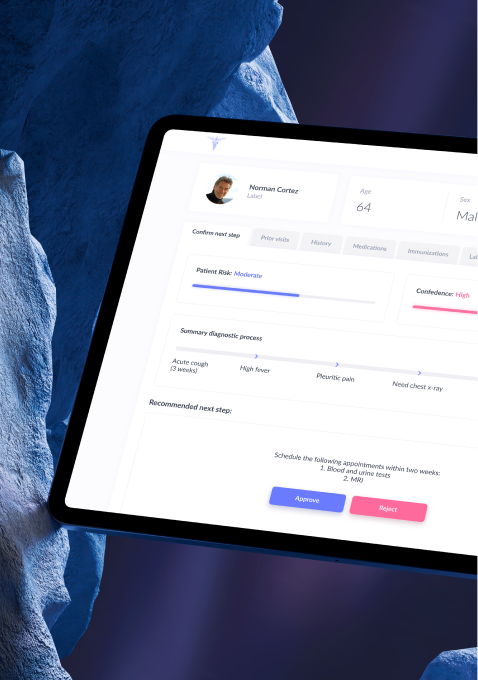
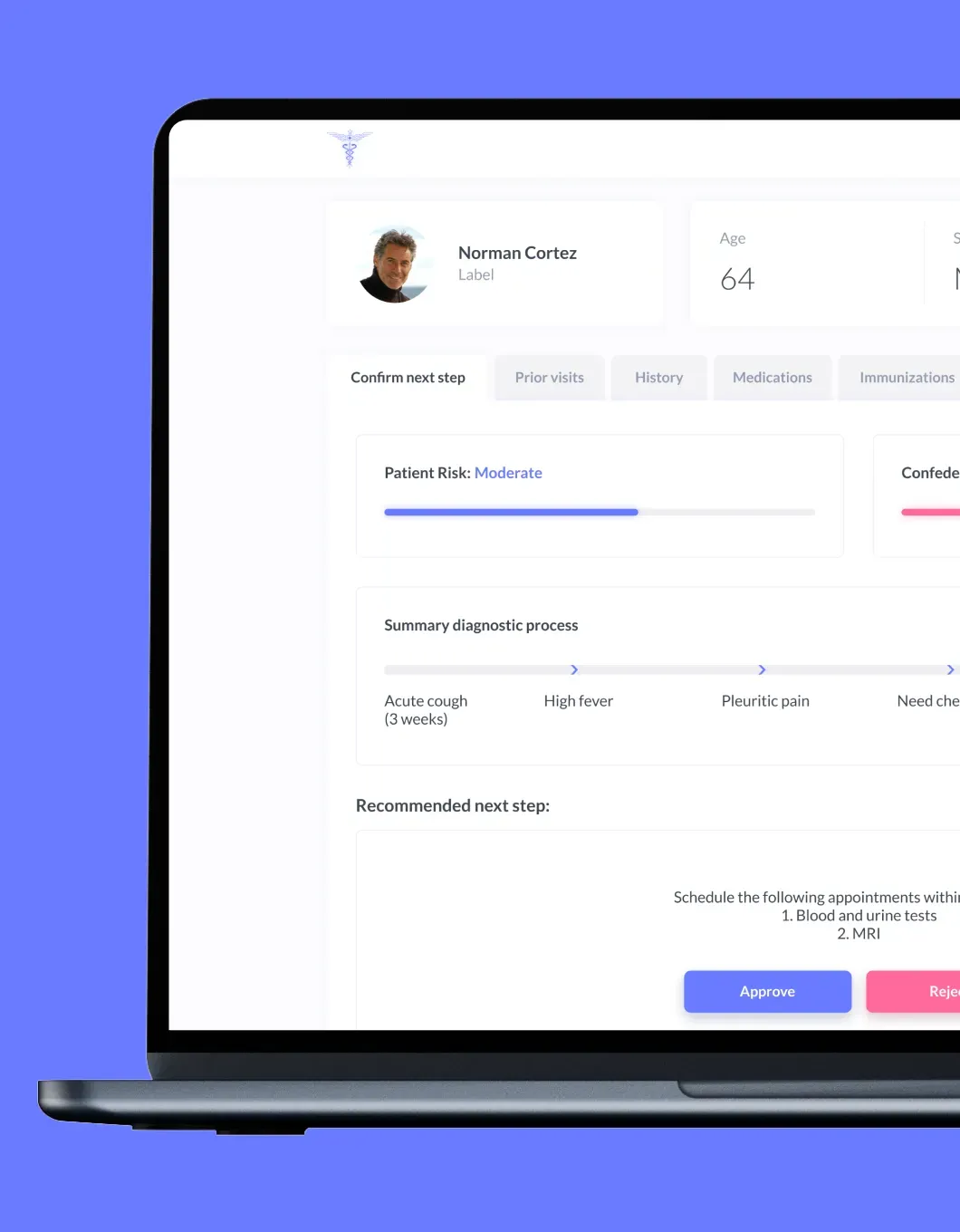
Biogeek, Clearstep/Lytic Health, and Lytic Health show our work with healthcare data and patient-clinician workflows. We do not present them as PACS or DICOM projects.

Product and UX focus

We design interfaces around the different tasks and cognitive load of radiologists, clinicians, technicians, administrators, researchers, and patients.

Cross-functional delivery

Our healthcare software development services combine product discovery, UX/UI, engineering, QA, project management, and optional post-release support within one delivery process.

Integration-first architecture

We map existing systems, imaging modalities, data flows, user roles, and constraints before choosing a new build, modernization, or custom software development path.

Transparent scope and milestones

Working increments, regular demos, a risk log, an integration test plan, and documented handoff keep delivery visible. AI-assisted coding and testing reduce routine work, while specialists own architecture and verification.
Discuss your project
Share the modalities, integrations, user roles, and regulatory scope. We’ll outline the first delivery stage with clear priorities.
This field is required
Incorrect number
Incorrect Email
This field is required
Please fill in all fields
Discuss your project
Share the modalities, integrations, user roles, and regulatory scope. We’ll outline the first delivery stage with clear priorities.
Your role in the project
Service of interest
Budget
Please select one option in each category
Request sent
Our manager will contact you shortly.
Oops! Something went wrong while submitting the form.

Our Medical Imaging Development Process

Our development team organizes delivery around a clinical workflow. Discovery defines users, modalities, data flows, integrations, performance limits, and the compliance path. Each stage produces a testable deliverable, from an interface prototype and architecture plan to integrated software, validation evidence, rollout support, and a 9-month full-product plan.
1

Workflow discovery and requirements

Map users, modalities, integrations, risks, and acceptance criteria.
Duration: 2 weeks
2

UX prototype

Prototype study lists, viewers, measurements, reporting, and role-based journeys.
Duration: 4 weeks
3

Architecture and integration plan

Define DICOMweb and imaging interfaces, infrastructure, security controls, and test environments.
Duration: 3 weeks
4

Iterative development

Deliver working increments with regular demos and observability.
Duration: 20 weeks
5

QA and validation support

Run functional, integration, performance, security, traceability, and UAT checks.
Duration: 6 weeks in parallel
6

Pilot, rollout, and support setup

Deploy, monitor, migrate data, and establish the support backlog.
Duration: 4 weeks

Medical Imaging Software Development Cost

Medical imaging software development cost depends on the number of imaging modalities, viewer complexity, integrations, deployment model, AI scope, and required regulatory evidence. The figures below are planning estimates before discovery, not fixed quotes.

DICOM viewer or focused imaging MVP

$40K–$80K · 6 months

Integrated PACS/RIS/EHR imaging product

$100K–$250K · 12 months

AI-assisted or enterprise multi-site imaging platform

$250K–$500K+ · 18 months

What affects the estimate

✓ Number and type of imaging modalities
✓ Viewer, measurement, and 3D capabilities
✓ PACS, RIS, EHR, and device integrations
✓ Cloud, on-premise, and migration requirements
✓ AI validation and regulatory evidence scope
Our guide to healthcare software cost factors explains how integrations, security, infrastructure, and product complexity shape the wider development budget. Discovery turns these inputs into a scoped estimate and delivery plan.

Frequently Asked Questions

What is medical imaging software?

Digital Imaging and Communications in Medicine defines a common format for image data. Medical imaging software supports diagnostic medical imaging through acquisition, storage, retrieval, viewing, processing, analysis, and sharing. The category includes DICOM viewers, PACS and VNA archives, RIS workflows, visualization and measurement tools, teleradiology portals, and AI-assisted services. Different products cover one part of this lifecycle or connect several parts into one clinical workflow.

What types of medical imaging software can Purrweb develop?

Purrweb can design DICOM/DICOMweb viewers, image archive and routing modules, RIS and reporting workflows, teleradiology portals, medical image processing and visualization tools, research software, and AI integrations. We also modernize existing desktop products, build web interfaces, and connect imaging software with PACS, VNA, EHR, or other clinical systems after discovery confirms the required interfaces.

How much does medical imaging software cost to develop?

Current planning estimates start at $40K–$80K for a focused viewer or imaging MVP, $100K–$250K for an integrated PACS/RIS/EHR product, and $250K–$500K+ for an AI-assisted or enterprise multi-site platform. The final estimate depends on modalities, viewer features, integrations, deployment, migration, data readiness, and the regulatory evidence required for the intended use.

How long does it take to develop medical imaging software?

A focused DICOM viewer or imaging MVP is planned around 6 months. An integrated PACS/RIS/EHR platform is planned around 12 months, while an AI-assisted or enterprise multi-site system is planned around 18 months. Actual development time depends on interface access, data preparation, validation, migration, deployment constraints, and decisions made during workflow discovery.

What is the difference between a DICOM viewer and a PACS?

A DICOM viewer displays and manipulates medical images. It may support series comparison, measurements, annotations, multiplanar reconstruction, or 3D visualization. A PACS supports retrieving and sharing medical images, as well as storing and routing studies across users and locations. One product may contain both functions, or a viewer may connect to an existing PACS through standard imaging interfaces or DICOMweb services.

Can you integrate imaging software with PACS, RIS, or EHR systems?

Yes. We design integrations around DICOM and DICOMweb for image exchange, HL7 v2 for established clinical messages, FHIR for structured health data, and APIs for product-specific services. Discovery maps interface versions, data ownership, authentication, mappings, test environments, retries, and failure handling. Support for a specific vendor system is confirmed only after its interfaces are reviewed.

Can AI be added to existing medical imaging software?

Yes. An existing product can connect to a model service or inference pipeline for triage support, segmentation, measurements, anomaly highlighting, or quality checks. The scope also covers data preparation, de-identification, dataset lineage, monitoring, and change control. Clinical review remains part of the workflow, and model performance must be validated for the product’s intended use.

Will medical imaging software need FDA approval?

Sometimes. Regulatory requirements depend on the product’s intended use, users, claims, and whether the software performs a medical-device function. We help structure architecture, requirements traceability, risk controls, testing, and evidence-ready documentation around the selected path. Formal classification, submissions, and clearance decisions require qualified regulatory and legal specialists in the target market.
Get a free project estimate
Tell us whether users need to view or analyze medical images, store studies, or share medical images, and which systems the product must connect to.
This field is required
Incorrect number
Incorrect Email
This field is required
Please fill in all fields
Get a free project estimate
Tell us whether users need to view or analyze medical images, store studies, or share medical images, and which systems the product must connect to.
Your role in the project
Service of interest
Budget
Please select one option in each category
Request sent
Our manager will contact you shortly.
Oops! Something went wrong while submitting the form.