Explore

Need help with your project?

Oops! Something went wrong while submitting the form.
AI software development is a significant investment that requires careful planning and strategic decision-making. Many underestimate the true costs involved and overlook critical factors that influence both development expenses and potential returns.
In this article, we’ll break down what really affects AI development costs — from team composition and data requirements to technology choices and hidden expenses.
We’ll also explore how different AI technologies impact investments and examine monetization models that can transform an AI application.
.avif)
How much does it cost to build an AI app? A typical AI app cost ranges from $10,000 to $300,000+, and AI app development cost depends on app complexity, data needs, model strategy, and integrations. A focused tool built around a pre-trained API sits at the lower end. The cost of building a complex app rises when it needs custom pipelines, multiple AI features, and strict compliance controls.
Before setting a budget, an ai development services team can translate these ranges into a feature list, delivery plan, and infrastructure estimate.
Complexity level | Description | Cost range | Timeline |
Simple AI app | Basic chatbot, pre-trained API, no custom models | $10,000–$50,000 | 2–3 months |
Medium complexity | Custom fine-tuning, 2–3 AI features, integrations | $50,000–$150,000 | 4–6 months |
Complex enterprise AI | Custom model training, multi-model orchestration, enterprise integrations | $150,000–$300,000+ | 6–12 months |
Custom AI research | Novel model architecture, proprietary datasets | $300,000–$1,000,000+ | 12–24 months |
These are planning ranges, not fixed quotes. Mobile app development cost follows different drivers than AI product cost. Android app development cost is shaped largely by product scope and device support. Blockchain app development cost depends more on protocol, security, and smart-contract complexity.
The cost of artificial intelligence development depends on solution complexity, team structure, data readiness, technology choices, integrations, and support. Projects built on pre-trained models and clean data stay closer to the lower end of the budget. Custom training, legacy integrations, compliance work, and continuous model monitoring move costs upward.
Factor | Lower-cost scenario | Higher-cost scenario | Main budget impact |
Solution complexity | Pre-trained API and one focused feature | Custom or multi-model system | Development time and compute |
Team structure | Small cross-functional team | Multiple AI, data, and infrastructure specialists | Labor cost |
Data readiness | Clean and labeled data | Collection, cleaning, and expert annotation | Preparation time |
Technology stack | Managed services | Custom infrastructure and model stack | Build and operating cost |
Integrations | Standard APIs | Legacy or real-time systems | Engineering and testing |
Maintenance | Periodic review | Continuous monitoring and retraining | Ongoing budget |
A basic AI tool built on a pre-trained AI model keeps the initial scope smaller. A focused chatbot or recommendation engine can start with one predictable task. Teams that build an AI system to classify feedback, write responses, and route cases need more logic, testing, and integrations.
For conversational products, our chatbot development services show how these choices translate into a concrete feature scope.
Team cost depends on how many roles the project needs and how senior they must be. A focused product may use a product manager, AI engineers, a designer, and QA. Data-heavy work adds data science, MLOps, security, user experience design, and domain specialists, increasing both time and cost.
An AI development company that provides ai development services can assemble these roles without requiring a permanent in-house AI department.
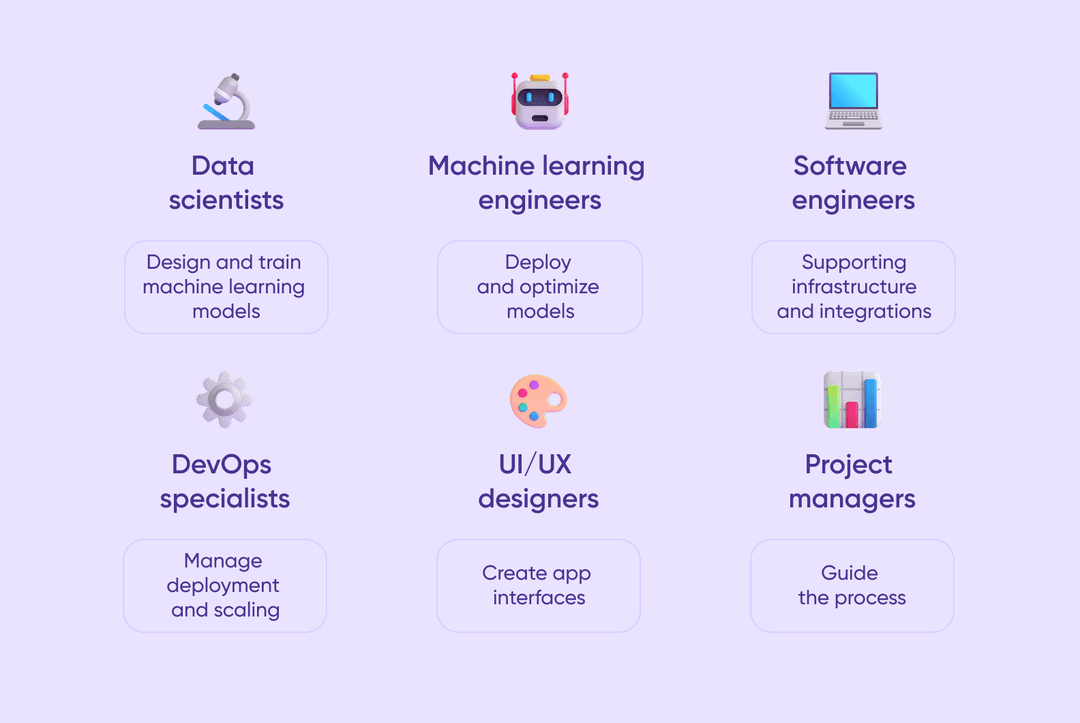
Rates vary by seniority, location, and engagement model, but team size usually has a larger effect on the total budget than any single hourly rate. The calculator later in this guide compares team structures for common project scopes.
For an AI project, clean, relevant, labeled data keeps preparation work manageable. If a data set must be collected, deduplicated, normalized, or annotated by domain experts, the budget increases before model work begins. Medical, financial, and industrial projects can be especially costly because labels may require specialist review.
Data quality also affects later costs. Weak datasets cause more training cycles, testing, and rework.
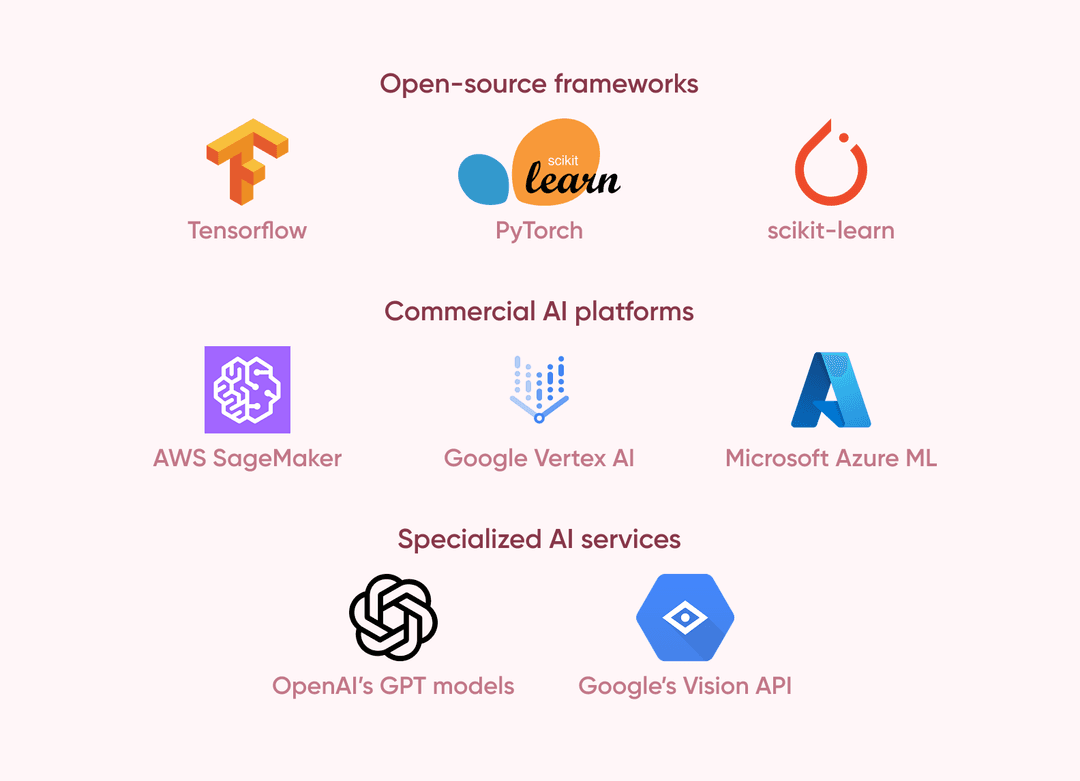
Managed APIs and cloud AI services reduce setup time but create usage-based operating costs. Open-source tools can lower licensing expense, yet they may require more engineering and infrastructure work. The right choice depends on expected traffic, privacy requirements, customization, and whether the team needs control of the model stack.
Standard APIs are usually cheaper to connect than legacy databases, proprietary systems, or real-time data streams. Complex integrations require front end and back end changes, custom connectors, security controls, data transformations, and broader testing. Each dependency creates a failure point, while user interface behavior and scalability also need testing.
An AI system needs model monitoring, infrastructure updates, bug fixes, and periodic retraining. Maintenance cost rises with traffic, data volume, and the number of models. Regulated systems may also require recurring security reviews, audit evidence, and controlled release processes.
Hidden costs of AI app development usually come from model training, cloud usage, compliance, rework, and post-launch monitoring. These expenses may not appear in the first development estimate, yet they can raise both launch and operating budgets. Teams should model them separately instead of treating the initial build price as the total cost of ownership.
Training and fine-tuning an AI model consume compute, engineering time, and repeated evaluation cycles. The cost rises with model size, dataset volume, experiment count, and the accuracy and precision targets the product must meet.
Training and serving those models is central to machine learning development, where a reliable data pipeline and infrastructure can matter as much as model code.
Cloud computing platforms charge for compute, storage, data transfer, and API usage. A prototype may have modest AI infrastructure needs, but costs rise with traffic, context size, model frequency, and latency requirements. Real-time or high-throughput features often need more expensive capacity and monitoring.
Regulatory compliance adds audits, encryption, access controls, documentation, and testing. Products handling health, financial, or personal data may need evidence for the General Data Protection Regulation (GDPR), HIPAA, or industry-specific rules. These requirements affect architecture and delivery from the start, not only the final compliance review.
⭐ Our experience
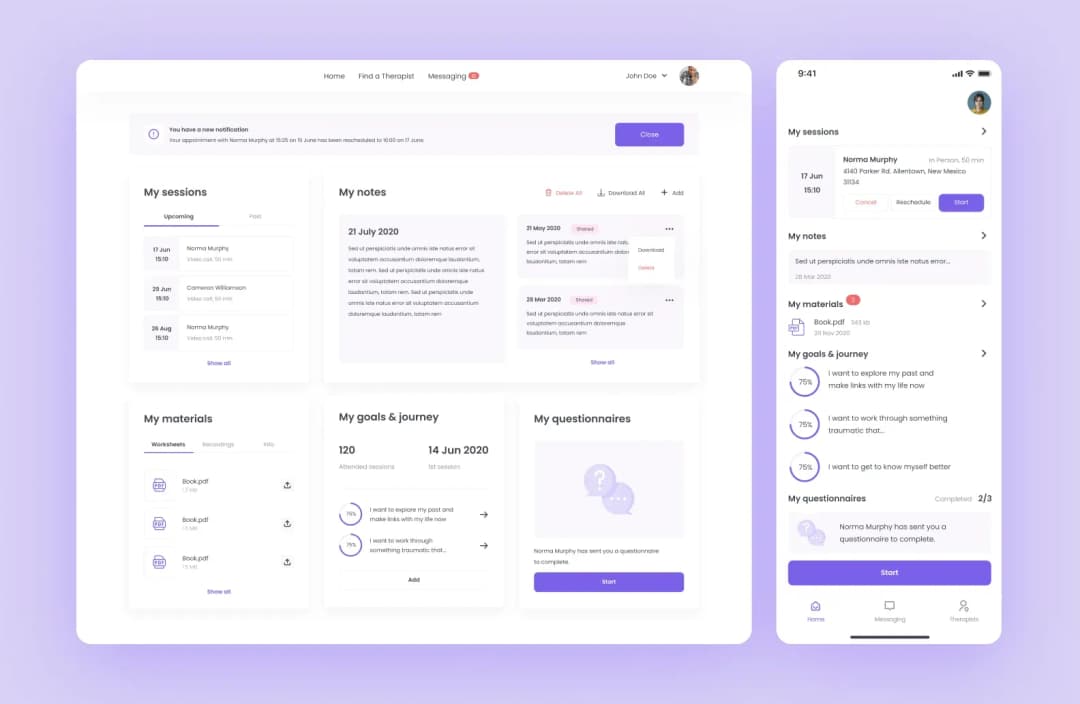
My Therapy Assistant is an online psychotherapy platform that we developed for our client. To ensure healthcare data protection regulations compliance, we set up secure authentication protocols via Auth0 and SendGrid for user verification.
The app’s administrative dashboard allows proper monitoring of patient data while maintaining confidentiality standards required by both HIPAA and GDPR frameworks.
Despite technical challenges with third-party integrations, we prioritized security compliance throughout the development process.
AI models often behave differently with production data than they did during testing. Fixing poor accuracy, edge cases, or workflow failures adds new data work, development, validation, and release cycles. A contingency budget helps absorb these iterations without cutting core scope.
Model performance can decline as user behavior, inputs, or business conditions change. Detecting drift requires monitoring, evaluation data, alert thresholds, and scheduled retraining. Human review may also be necessary when errors carry financial, safety, or compliance consequences.
Different applications of artificial intelligence require different expertise, compute, data, and development time. The table compares common AI technologies used in mobile app development and the main cost factors behind each one.
|
AI technology |
Data requirements |
Cost range |
Common applications |
|
Natural language processing |
Large text corpora |
$40,000–$250,000 |
Chatbots, content analysis, sentiment analysis |
|
Computer vision |
Thousands of labeled images |
$60,000–$300,000+ |
Object detection, facial recognition, quality control |
|
Generative AI |
Massive datasets |
$80,000–$500,000+ |
Content creation, image generation, design assistance |
|
Predictive analytics |
Historical structured data |
$30,000–$150,000 |
Sales forecasting, risk assessment, maintenance prediction |
|
Recommendation systems |
User behavior data |
$40,000–$200,000 |
Product recommendations, content personalization |
|
Speech recognition |
Audio samples with transcriptions |
$50,000–$250,000 |
Voice assistants, transcription services, accessibility |
|
Anomaly detection |
Normal behavior patterns |
$35,000–$180,000 |
Fraud detection, equipment monitoring, security |
NLP enables applications to understand, interpret, and generate human language. Development complexity varies significantly based on the specific capabilities needed:
|
AI feature |
Cost range |
|
Basic text classification and sentiment analysis |
$40,000–$80,000 |
|
Chatbots with domain-specific knowledge |
$60,000–$150,000 |
|
Advanced language understanding with contextual awareness |
$200,000+ |
The main cost drivers are training, validation, and test data sets, algorithm work, and integration. Each additional language needs its own quality checks and tuning. For an AI chatbot, a chatbot development cost estimate should also include domain data, evaluation, and integration.
Computer vision applications process and interpret visual information from the world, requiring specialized expertise and substantial computing resources:
|
AI feature |
Cost range |
|
Image classification |
$60,000–$120,000 |
|
Object detection and tracking |
$80,000–$200,000 |
|
Advanced real-time image recognition |
$300,000+ |
Computer vision projects need labeled images, annotation workflows, and substantial compute. Real-time use cases add latency, testing, and sometimes specialized computer hardware.
Generative AI creates new content like text, images, code, or audio, representing one of the most resource-intensive AI technologies:
|
AI feature |
Cost range |
|
Text generation |
$80,000–$200,000 |
|
Image generation |
$100,000–$300,000 |
|
Multimodal generation |
$500,000+ |
Generative AI cost depends on the model strategy. Most product teams integrate or fine-tune a large language model, then budget for evaluation, safety controls, inference, and data handling.
Predictive analytics uses historical data to forecast outcomes such as demand, risk, and predictive maintenance needs:
|
AI feature |
Cost range |
|
Basic forecasting |
$30,000–$80,000 |
|
Industry-specific prediction |
$60,000–$120,000 |
|
Enterprise-wide prediction |
$150,000+ |
These applications generally require less computational power than technologies like computer vision or NLP but demand more domain expertise and data preparation.
A recommender system suggests relevant items or content to users based on behavior patterns:
|
AI feature |
Cost range |
|
Basic collaborative filtering |
$40,000–$90,000 |
|
Hybrid recommendations |
$80,000–$150,000 |
|
Advanced contextual recommendations |
$200,000+ |
Development costs vary based on the sophistication of the recommendation algorithm and the volume of user data processed. Recommendation systems require continuous refinement based on user feedback. This makes ongoing improvement costs a significant consideration beyond initial development.
Speech recognition converts spoken language to text, while a virtual assistant interprets commands and responds:
|
AI feature |
Cost range |
|
Basic speech-to-text apps |
$50,000–$100,000 |
|
Domain-specific voice systems |
$80,000–$180,000 |
|
Comprehensive voice assistants |
$250,000+ |
These applications require extensive audio training data covering different accents, speaking styles, and acoustic environments. Achieving high accuracy in noisy environments or with domain-specific terminology significantly increases development costs.
Anomaly detection identifies unusual patterns that deviate from expected behavior:
|
AI feature |
Cost range |
|
Basic anomaly detection |
$35,000–$80,000 |
|
Industry-specific detection |
$70,000–$130,000 |
|
Real-time, multi-source anomaly detection |
$180,000+ |
These systems generally require less training data than other AI technologies but demand significant domain expertise to correctly identify meaningful anomalies versus acceptable variations.
False positives and false negatives both carry costs, making extensive testing and validation a substantial portion of the development budget.
AI app development costs fall when the team removes uncertainty and unnecessary custom work before scaling. The strongest levers are a focused business goal, existing models, flexible staffing, phased delivery, simple architecture, and maintenance planning.
Strategy | Cost reduced | Main trade-off |
Define the business goal | Low-value features and rework | Requires early research |
Use pre-trained models | Model training and data work | Provider limits and usage fees |
Outsource strategically | Recruitment and permanent staffing | Requires careful vendor selection |
Deliver in phases | Upfront scope and investment | Full rollout takes longer |
Keep models simple | Compute, testing, and maintenance | May limit advanced use cases |
Plan maintenance early | Retrofitting and emergency fixes | Adds monitoring work during development |
Define the business result and minimum AI capability before choosing a model. A proper discovery phase tests demand and risky assumptions before engineering begins.
⭐ Our experience
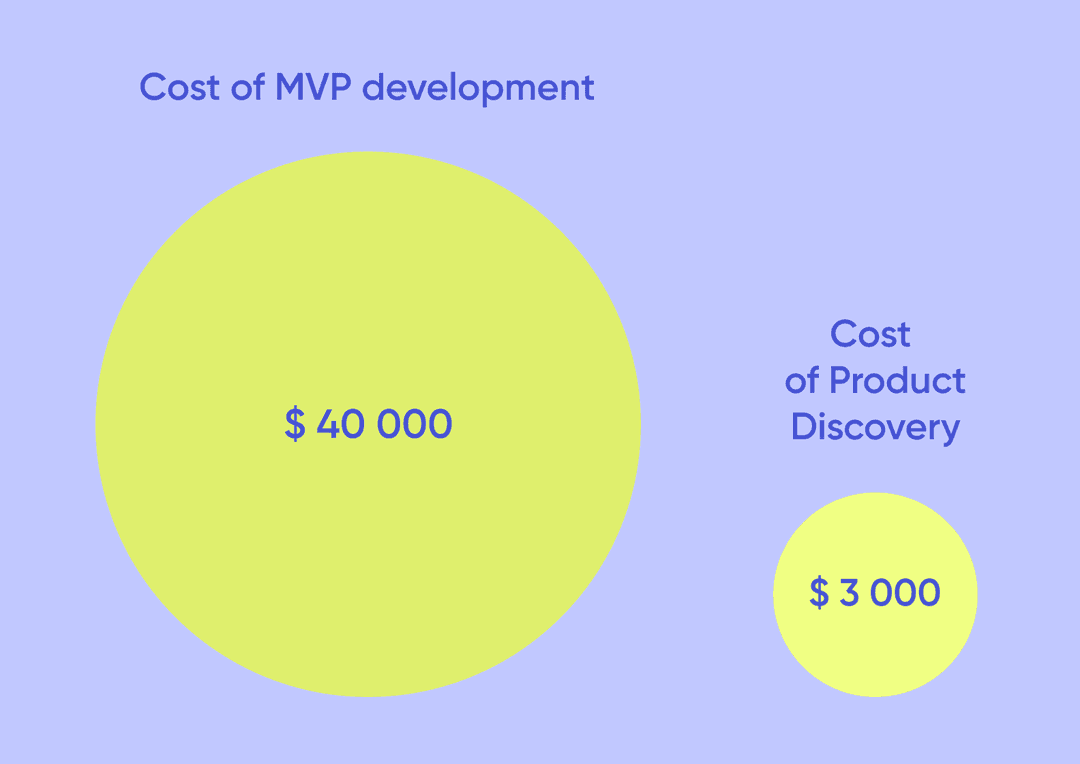
We ran a $3,000 discovery phase for a client considering an AI dating app before they committed to full development. The goal was to identify which AI features were worth funding and which assumptions needed evidence.
Through interviews and surveys, we tested demand for messaging and match-improvement features. The research gave the client a clearer feature scope and showed which ideas did not justify development. By narrowing the product before engineering, the client avoided about $40,000 in unnecessary work. The remaining budget could go to features backed by stronger user evidence.
Use pre-trained models when they meet accuracy, privacy, and latency needs. This shifts spending from model training to integration, evaluation, and guardrails.
An outsourcing team reduces hiring lead time and can adjust staffing by phase without making every specialist a permanent internal role.
Start with a minimum viable product that proves the main workflow. Usage data shows which features deserve more investment before scaling models and infrastructure.
Choose the simplest model that meets accuracy, latency, and safety requirements. Improve data and evaluation before moving to a more complex architecture.
Plan monitoring, logging, and retraining during the initial build. This prevents expensive retrofits and supports controlled model replacement after launch.
Return on investment for AI app development depends on the value the product creates after launch, not on a universal percentage. Revenue growth, labor savings, error reduction, and faster processing can all count as benefits. Payback period shows how long those net monthly benefits need to recover the initial build cost.
Use three inputs for a basic calculation:
The table shows illustrative scenarios, not market benchmarks.
Example use case | Build cost | Monthly benefit | Monthly operating cost | Payback period | Three-year ROI |
Customer support chatbot | $60,000 | $6,000 | $1,500 | 13.3 months | 170% |
Predictive analytics app | $120,000 | $12,000 | $2,000 | 12 months | 200% |
Process automation system | $180,000 | $20,000 | $5,000 | 12 months | 200% |
Replace each input with project data. Count realistic labor savings or revenue, then include inference, monitoring, retraining, storage, and support in the ongoing cost.
The same discipline applies when evaluating CRM development cost for a customer relationship management system. A higher build price may still produce a shorter payback period when it removes more manual work or supports more revenue.
AI development team size usually ranges from four or five people for a focused chatbot to ten or more specialists for an enterprise platform or custom model program. Team cost depends on delivery time, seniority, data work, infrastructure, and the number of roles that must work in parallel.
Use this table as a starting point for scope planning:
Project scope | Typical team size | Core roles | Delivery window | Planning range |
Simple AI chatbot | 3–5 | Product manager, 2 AI developers, QA | 2–4 months | $40,000–$80,000 |
MVP AI app | 5–7 | Product manager, 3 AI developers, designer, QA | 4–6 months | $80,000–$150,000 |
Enterprise AI platform | 8–12 | Product manager, AI developers, data engineers, designer, QA, DevOps | 6–12 months | $200,000–$400,000+ |
Custom model program | 6–10 | Product manager, ML engineers, data scientists, DevOps, QA | 9–18 months | $300,000–$600,000+ |
These ranges are planning estimates, not fixed quotes. A team may also need a security specialist, domain expert, or compliance lead. Data collection, legacy integrations, and real-time infrastructure can increase the budget even when the headcount stays the same.
Use this cost estimation formula for project-specific cost estimates:
Team budget = role hours × role rates + data work + infrastructure + contingency.
Estimate role effort across the development timeline instead of staffing every position full-time. Discovery, design, model work, integration, and QA peak at different phases, so phase-based planning is more useful than one blended team rate.
The right monetization strategy can make a business app profitable. The approach depends on the product, audience, and value its AI features deliver. Here are four common ways to generate income from an AI app:
Monthly or annual subscription models provide predictable recurring revenue for AI applications. This approach works particularly well for business tools and productivity applications where users derive ongoing value.
Subscriptions typically offer tiered pricing based on features, user count, or usage limits, allowing customers to select options matching their needs while providing multiple revenue levels.
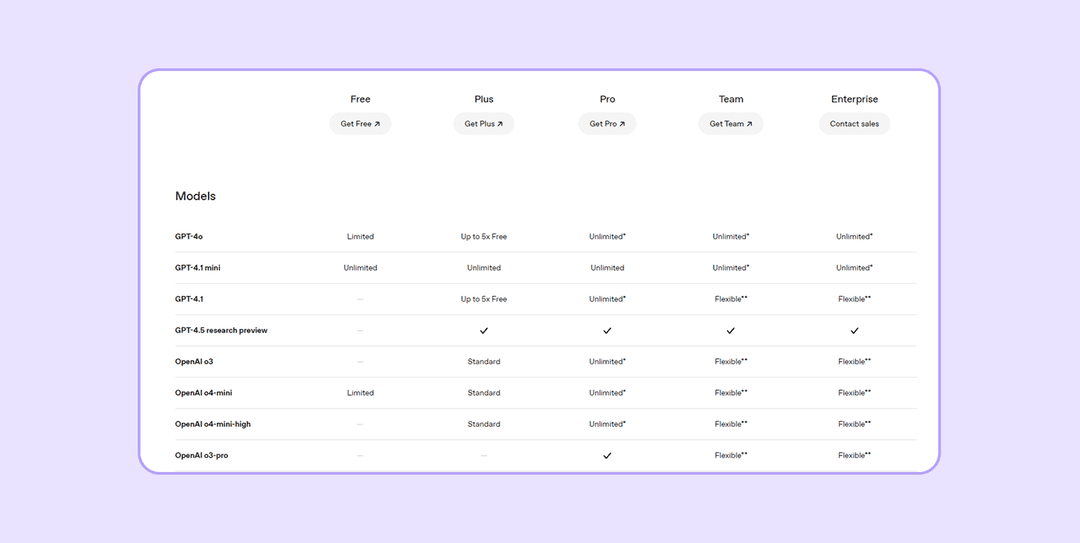
A freemium product offers a useful core workflow for free, then charges for higher limits, advanced AI capabilities, automation, or team features.
The free tier lowers the barrier to trial, while paid tiers should match what the app needs to cover inference and support costs.
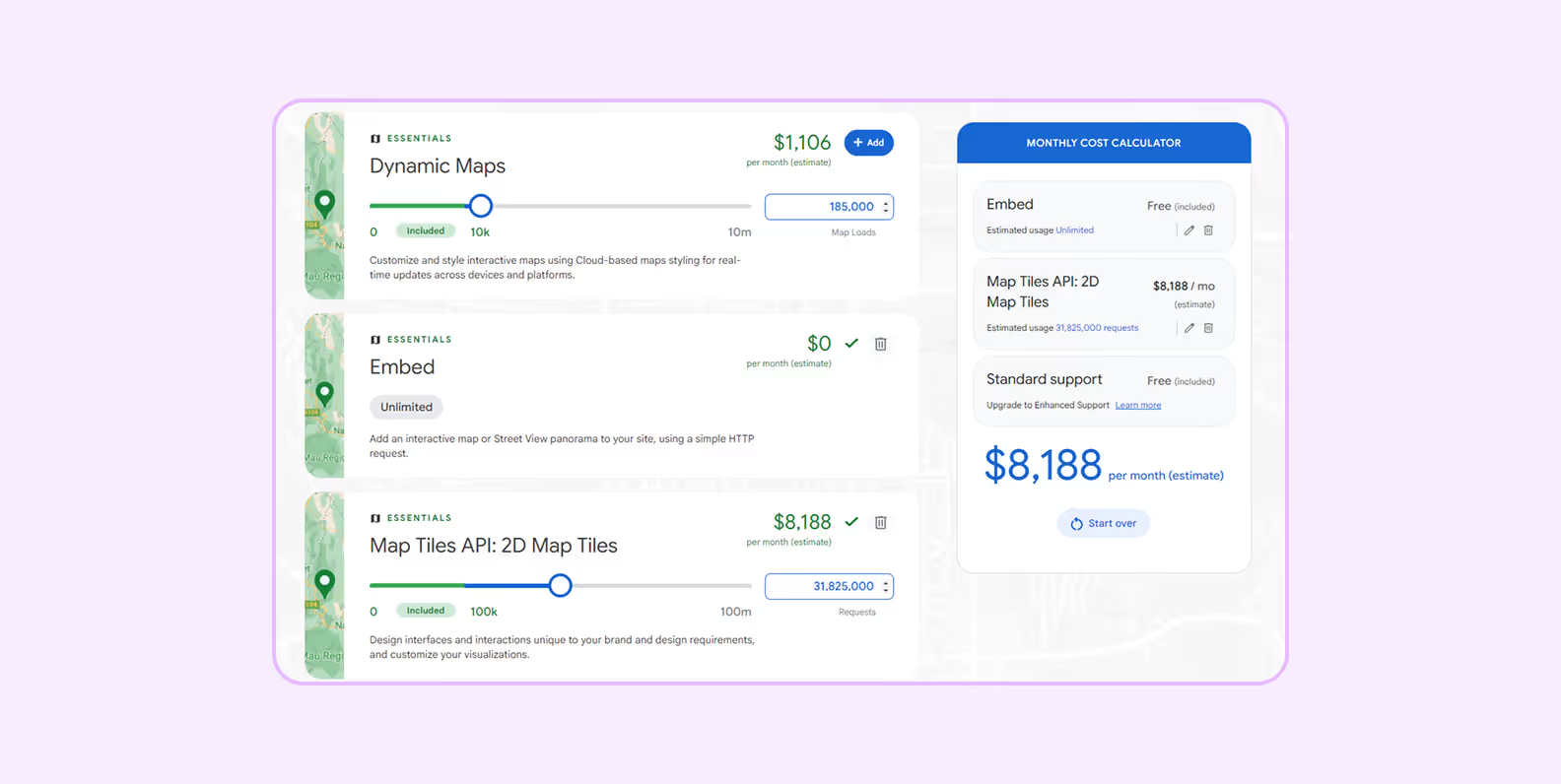
Charging based on consumption (API calls, processing time, or data volume) aligns costs directly with the value users extract.
This model works well for AI services integrated into other applications or platforms. It allows customers to start with minimal investment and scale costs with their success, reducing adoption barriers.
Some AI applications generate revenue by recommending relevant products or services and earning commissions on resulting transactions. This approach works particularly well for consumer-facing AI that influences purchasing decisions or identifies user needs.
Strategic partnerships with complementary service providers can create win-win monetization opportunities without directly charging users.
The real cost of AI development includes the initial build, infrastructure, maintenance, and model updates. AI investments make sense when the product creates measurable revenue, savings, or operational efficiency. A focused scope, realistic cost estimates, and a clear monetization model help teams judge whether the long-term value justifies the budget.
➡️ Purrweb is ready to turn your AI app idea into a reality. Contact us via the form, and get a project estimation in 48 hours!
The cost to develop an AI app in 2026 usually ranges from $10,000 for a focused API-based tool to $300,000+ for an enterprise platform. Many startup MVPs fall between $50,000 and $150,000.
The ongoing cost can be significant because AI products need inference infrastructure, monitoring, security updates, bug fixes, and retraining. Costs rise with traffic, model count, data volume, and compliance requirements.
You can use AI through a managed API or no-code tool to build an app prototype. A production product may cost more because it needs professional engineering for data handling, evaluation, security, integrations, monitoring, and failure recovery.
The cheapest approach is a focused MVP using a pre-trained model and one valuable workflow. Limit integrations, validate demand early, and scale only after users prove the core feature.


.svg)