Explore

Need help with your project?

Oops! Something went wrong while submitting the form.
Building an app in the UK comes with higher costs, but it gives access to experienced developers. From MVPs to full-scale apps, understanding expenses helps plan the app development project and avoid surprises.
This guide breaks down typical UK app development costs, main factors that affect pricing &hidden expenses, and explains how to make decisions about platforms, teams, and project scope.
%20(1)%20(1)%20(1)%20(1)%20(1)%20(1)%20(1)%20(1)%20(1).avif)
Understanding what it costs to build an app in the UK is essential for businesses planning a digital product in 2026. With increasing demand for mobile solutions, companies need a clear view of budgets before starting development. Without this, costs can quickly exceed expectations as the project grows in scope and complexity.
The UK app development market is known for its high standards and experienced teams. This results in higher pricing compared to other regions, but also ensures better product quality, reliability, and compliance with local requirements. For many businesses, this balance between cost and expertise is a main consideration.
On average, the cost to build an app in the UK ranges from $25,000 for simple apps to $190,000+. The final cost depends on features, design, platform choice, and the level of customization.
It is also important to understand that mobile app development costs are not fixed. As the product evolves, requirements may change, affecting the overall budget and timeline.
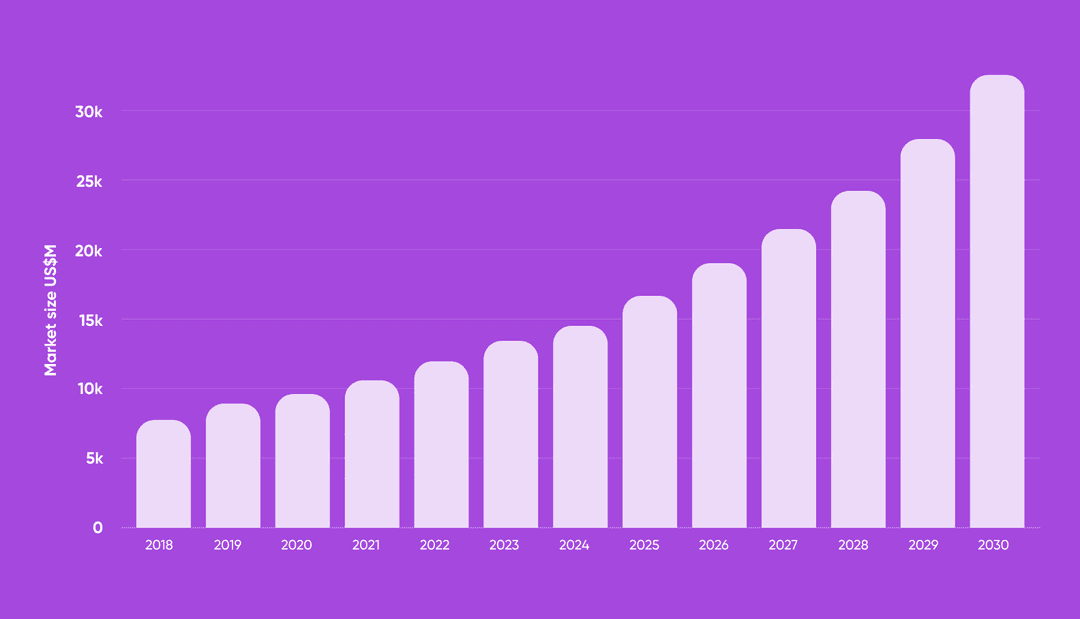
A breakdown of costs helps to see which areas have the biggest impact and make informed decisions about features, platforms, and development approach. It also allows companies to plan for ongoing maintenance and updates. Below are the major factors that shape app development costs.
App complexity is a determining factor. Simple apps usually cost between $25,000 and $50,000. These include basic features such as user registration, simple navigation, and standard screens. Such apps are often built as MVPs to test ideas with minimal investment.
Medium-complexity apps range from $50,000 to $125,000. They include features like payment systems, third-party integrations, push notifications, and more advanced UI/UX. These projects require both front-end and back-end development, as well as thorough testing.
Complex apps start at $125,000 and can exceed $187,000. They include custom backend systems, scalable architecture, multiple integrations, and advanced features like AI, real-time data, or analytics dashboards. Building these apps takes longer and requires larger teams.
Each stage contributes differently to the total cost. Understanding the breakdown helps businesses plan budgets accurately and decide where to focus resources.
Discovery |
At this stage, product goals, target audience, and technical requirements are defined. The development team analyzes what features are essential, what integrations are needed, and what constraints may affect development. The goal is to create a clear roadmap, prioritize requirements, and identify potential risks early, which saves time and resources later. Average duration: 1–3 weeks Deliverables: project brief, defined goals and features, initial roadmap, prioritized requirements |
UI/UX design |
Design ensures the app is both usable and visually appealing. The team creates wireframes to map out the structure, interactive prototypes to test user flows, and final visual designs that reflect your brand. The complexity of screens, animations, and interactions is addressed to ensure a smooth and engaging user experience. Average duration: 2–5 weeks Deliverables: wireframes, clickable prototypes, final screens, style guide, and user flow diagrams. |
Front-end development |
Front-end development brings your designs to life. This includes implementing navigation, buttons, screens, animations, and other interactive elements. The choice of platform — iOS, Android, or both — determines how the interface is built and optimized. Frontend development ensures the app is responsive, visually consistent, and functional across devices. Average duration: 4–12 weeks Deliverables: fully functional user interface, responsive screens, interactive elements, platform-specific optimizations |
Back-end development |
Backend development handles the logic behind the app. This involves server setup, databases, APIs, authentication, and business rules. Apps with real-time features, high loads, or multiple integrations require careful planning and scalable architecture. The backend ensures data is secure, reliable, and efficiently processed. Average duration: 6–16 weeks Deliverables: server setup, database schema, API documentation, authentication and authorization logic, integration with external app development services |
Testing and quality assurance |
QA ensures the app performs as intended on all devices and platforms. This stage includes manual and automated testing, bug fixing, performance checks, and security testing. Rigorous quality assurance minimizes the risk of issues after launch and reduces long-term maintenance needs. Average duration: 2–4 weeks
|
Deployment and maintenance |
Deployment makes your app live — whether on app stores or enterprise servers. It includes server configuration, compliance checks, and ensuring smooth launch. Maintenance involves regular updates, bug fixes, and feature improvements. A structured maintenance plan keeps the app secure, up-to-date, and continuously improving based on user feedback. Average duration: 1–2 weeks (deployment), ongoing for maintenance Deliverables: live app, server configuration, compliance checks, and an ongoing support plan |
App development costs for each stage can vary depending on the team’s location, as UK-based developers generally charge higher rates than remote development teams from other regions.
Estimated timelines and costs of developing an app in the UK and remotely:
|
Development stage |
Cost range (UK) |
Cost range (remote) |
Average duration |
|
Discovery |
$5,000–$15,000 |
$3,000–$10,000 |
1–3 weeks |
|
UI/UX design |
$10,000–$25,000 |
$6,000–$15,000 |
2–5 weeks |
|
Frontend development |
$15,000–$50,000 |
$10,000–$35,000 |
4–12 weeks |
|
Backend development |
$20,000–$70,000 |
$12,000–$50,000 |
6–16 weeks |
|
Testing and QA |
$5,000–$15,000 |
$3,000–$10,000 |
2–4 weeks |
|
Deployment and maintenance |
$5,000–$20,000 |
$3,000–$15,000 |
1–2 weeks |
iOS, Android, and cross-platform apps have different requirements, which affects timelines, development effort, and budget.
iOS apps provide a consistent ecosystem, smooth performance, and access to Apple-specific features like Apple Pay, ARKit, and Face ID. They target iPhones (iPhone 11–15, iPhone SE) and iPads. Developers must ensure responsive design across devices. The App Store’s strict review process also requires careful QA, which can add time and cost.
Android apps must support a wider range of devices and OS versions, including Samsung Galaxy S22–S23, Google Pixel 7–8, and OnePlus 10–11 on Android 12–14. Testing across different screen sizes, resolutions, and manufacturers adds complexity. Android mobile app development process is ideal for apps targeting the UK, European, and global markets.
Cross-platform apps use frameworks like React Native, Flutter, or Xamarin to run on both iOS and Android. This approach can reduce development time for apps with standard UI and moderate functionality. However, high-performance apps or those needing AR, Face ID, NFC, or custom animations may still require platform-specific adjustments.
Average app development costs by platform and complexity:
|
Platform type |
Simple |
Moderate |
Complex |
|
iOS |
$10,000–$25,000 |
$25,000–$50,000 |
$50,000–$90,000 |
|
Android |
$9,000–$22,000 |
$22,000–$45,000 |
$45,000–$85,000 |
|
Cross-platform |
$12,000–$28,000 |
$28,000–$55,000 |
$55,000–$100,000 |
App development costs in the UK vary depending on the city. London, Manchester, Edinburgh, Birmingham, and Leeds offer different balances of cost, talent, and expertise. Choosing the right location can help businesses optimize budget while accessing the skills needed for their project.
London is the UK’s technology epicenter, hosting top-tier developers and established agencies. It is ideal for premium or complex projects requiring advanced features, fintech integrations, or enterprise-level solutions. Costs are higher, with simple apps ranging $32,500–$58,500, moderate complexity apps $65,000–$130,000, and complex projects $117,000–$260,000+.
Manchester offers strong technical skills at more competitive rates. Moderate apps typically cost $39,000–$78,000, and complex projects $78,000–$130,000+. The city is popular with SMEs and startups, with growing specialization in fintech, healthcare, and retail.
Edinburgh is a competitive tech hub, particularly for fintech and health tech startups. Moderate apps cost $32,500–$71,500, while complex apps range $71,500–$117,000+. Edinburgh offers quality development at lower rates, supported by strong university partnerships and government incentives.
Birmingham provides a balanced market with moderate costs and good talent availability. Moderate apps are $32,500–$65,000, complex apps $65,000–$110,500+. Birmingham has a growing tech scene, especially in enterprise software, e-commerce, and fintech. Its central location makes it easy to reach other parts of the UK. Universities provide skilled developers, and local tech hubs support startups and small businesses.
Leeds is an emerging digital hub with affordable rates and a growing tech community. Moderate apps cost $26,000–$65,000, complex projects are $65,000–$110,500+. The city is ideal for startups and cost-conscious enterprises, with strong university talent pipelines and innovation hubs, though highly specialized developers for advanced tech are limited.
When planning app development, you need to choose between a UK-based team and an offshore team. This choice affects cost, timeline, and how the project is managed. UK developers usually charge higher rates because of local salaries, office costs, and high demand for skilled talent. In major UK cities, hourly rates range from $52 to $195.
UK teams are best for complex apps that need advanced features, strict compliance, and close collaboration. Working with local developers makes communication easier. You can supervise the project directly and access experienced agencies without delays.
Offshore development is cheaper and still delivers quality work. Countries in Eastern Europe, Asia, or Latin America have skilled developers at 30–60% lower rates than UK teams. Offshore teams work well for standard or moderately complex apps, MVPs, or long-term maintenance.
Remote collaboration can be challenging, but tools, regular updates, and clear documentation help. Many companies use a hybrid approach, with UK teams handling critical parts and offshore teams doing scalable development. This strategy balances cost, speed, and quality.
|
Region |
Simple apps |
Moderate complexity |
Complex apps |
|
UK |
$32,000–$70,000 |
$65,000–$130,000 |
$120,000–$260,000+ |
|
Eastern Europe |
$6,000–$12,000 |
$15,000–$30,000 |
$30,000–$60,000+ |
|
Asia |
$5,000–$10,000 |
$12,000–$25,000 |
$25,000–$50,000+ |
|
Latin America |
$5,500–$11,000 |
$13,000–$28,000 |
$28,000–$55,000+ |
Costs depend on the app’s complexity, design, platforms, integrations, and the team behind it. Understanding these factors helps plan a realistic budget and avoid surprises.
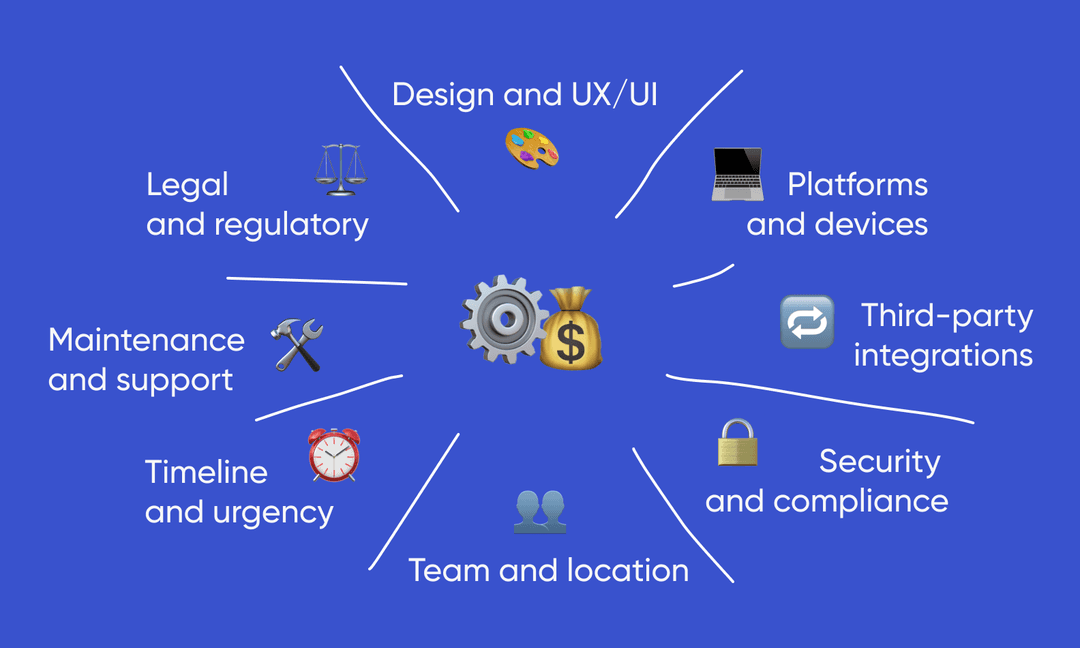
A simple template-based design may cost $5,000–$15,000. Custom interfaces with animations, interactive dashboards, or onboarding flows can reach $25,000–$60,000. Well-crafted UX improves retention and conversions. For example, a fintech app with step-by-step payments and analytics dashboards requires more design effort than a basic informational app.
Developing for iOS only may cost $40,000–$100,000 depending on complexity. Adding Android can increase cost by 30–50%, even with cross-platform frameworks like Flutter or React Native. Performance-heavy features like AR filters or live streaming often require native adjustments, adding more time and cost.
Integrating apps with payment systems, CRMs, or analytics platforms varies in cost. Simple API integration can be $2,000–$5,000 per service. Complex integrations, such as banking APIs or multi-region payment processing, may reach $15,000–$30,000. Real-time sync or multi-service orchestration further increases development hours.
Apps handling sensitive data — finance, healthcare, or enterprise — require encryption, secure authentication, and GDPR or PCI DSS compliance. Security features can add $5,000–$20,000, depending on scope. Multi-factor authentication and encrypted cloud storage are standard for financial apps and require additional development effort.
Senior UK developers charge $70–$150/hour, while mid-level developers are $50–$90/hour. Offshore developers cost $20–$60/hour. A hybrid approach can use senior UK developers for critical components and offshore teams for standard modules, optimizing cost without sacrificing quality.
Tight deadlines increase cost. Rushed projects may require extra developers or overtime, raising the total cost by 20–40%. Realistic scheduling helps maintain quality and control app development expenses.
Ongoing updates, bug fixes, server maintenance costs, and feature improvements typically add 15–25% to initial development annually. Skipping maintenance can create technical debt, making future updates more expensive.
Some apps require licenses, patents, or industry approvals. Legal and compliance checks may add $2,000–$10,000, depending on sector and complexity. Fintech or health apps benefit from budgeting these costs upfront to avoid delays or fines.
Estimating app development cost starts with clearly defining what you want the app to do. Identify the core features, target platforms, and user interactions. Simple apps with basic screens and limited functionality will cost significantly less than complex platforms with real-time updates, AI features, or multiple integrations.
Next, consider design requirements. Custom UI, animations, and interactive elements increase development effort. The number of platforms — iOS, Android, or both — also affects cost. Cross-platform frameworks can save money but may need native adjustments for high-performance features.
Third-party integrations, security measures, compliance requirements, and maintenance should be included in the estimate. Team composition and location matter: UK-based teams charge higher rates than offshore teams but provide closer communication and oversight.
Finally, add a buffer for unforeseen challenges, testing, and post-launch updates. Assessment of these factors allows businesses to create realistic budgets and avoid surprises.
When planning app development, choosing between an MVP and a full-scale app strongly affects cost, timeline, and resources.
An MVP focuses on core features only. It’s designed to validate ideas quickly and collect user feedback. MVPs are simpler to build, require fewer design elements, and typically target a single platform. In the UK, a basic MVP can cost $25,000–$70,000, depending on complexity, features, and team rates. Development usually takes 6–12 weeks.
A full-scale app includes all planned features, complex workflows, integrations, and high-quality design. It supports multiple platforms, incorporates advanced functionality like AI, real-time updates, or payment systems, and follows strict security and compliance standards. Full-scale apps in the UK can range from $100,000–$300,000+ and take 3–6 months or more to develop.
Choosing between MVP and full-scale depends on business goals, risk tolerance, and budget. Many companies start with an MVP to validate assumptions, then expand to a full-scale app once the concept proves successful.
Comparison of MVP and full-scale app development costs in the UK:
|
App type |
Typical features |
Platforms |
Estimated cost |
Typical development time |
|
MVP |
Core features only, simple UI, basic integrations |
1 platform (iOS or Android) |
$25,000–$70,000 |
6–12 weeks |
|
Full-scale app |
All planned features, advanced workflows, multiple integrations, high-quality UI/UX, security & compliance |
Multiple platforms (iOS + Android) |
$100,000–$300,000+ |
3–6 months+ |
When budgeting for app development, it’s easy to focus on development hours, design, and core features. However, several hidden costs can increase the total project budget.
Post-launch maintenance and updates. Apps require ongoing bug fixes, server management, security updates, and performance optimizations. Most companies allocate 15–25% of initial development costs per year for maintenance. Skipping this can create technical debt and make future updates much more expensive.
Legal, compliance, and licensing fees. Apps in regulated sectors like finance, healthcare, or education may need GDPR compliance, industry certifications, or licensing approvals. These can range from $2,000–$10,000, depending on the sector and complexity. Failing to plan for this can result in delays, fines, or even forced app removal.
Google Play and App store fees. Apple and Google charge $99/year and $25 one-time respectively for developer accounts. Additional costs may arise if you need expedited app review, in-app purchase setup, or compliance testing.
Performance and scalability considerations. If your app grows quickly, server upgrades, cloud hosting, or database optimization may be required. High-traffic apps may spend $5,000–$20,000+ annually on scalable backend infrastructure.
Design iterations and UX improvements. Initial designs often need adjustment after user testing. Each iteration can add $5,000–$15,000, depending on the complexity of screens and interactions. Ignoring design refinements may save money upfront but reduces user retention and satisfaction.
Project management and communication overhead. Even with a skilled team, managing timelines, reporting, and revisions consumes resources. For complex apps, this can add 10–15% to the overall app development budget.
Being aware of these hidden costs helps businesses plan realistic budgets and smoother development process.
Hidden app development costs in the UK with typical price ranges:
|
Hidden cost category |
Typical range |
|
Post-launch maintenance & updates |
$15,000–$65,000 per year |
|
Legal, compliance, and licensing fees |
$2,000–$10,000 |
|
Google play and App store fees |
$25–$99/year |
|
Performance and scalability |
$5,000–$20,000+ per year |
|
Design iterations and UX improvements |
$5,000–$15,000 |
|
Project management & communication overhead |
10–15% of total budget |
Developing an app in the UK can be expensive, but there are strategies to reduce costs without compromising quality.
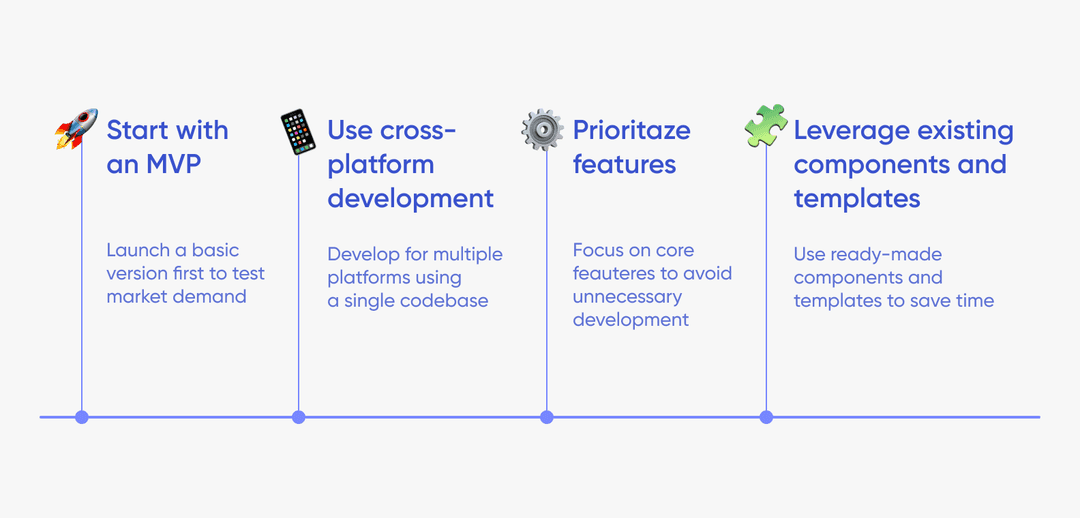
An MVP focuses on the core app features needed to validate your idea. Building an MVP reduces development time, lowers initial costs, and allows you to gather user feedback early. In the UK, an MVP typically costs $25,000–$70,000. Once the concept is proven, you can expand to a full-scale app with additional features, spreading the investment over time.
Cross-platform frameworks such as React Native or Flutter allow one codebase to run on both iOS and Android. This approach reduces development time and costs compared to building separate native apps. For moderately complex apps, cross-platform development can save 20–40% of the budget while still maintaining good performance.
Not all features are equally important. Focus on core functionality needed for launch — for example, user registration, basic navigation, and the main user flow. Avoid adding complex or “nice-to-have” features in the first version, such as advanced analytics dashboards, AI recommendations, custom animations, social features, or multi-language support.
Using pre-built components, libraries, and templates accelerates development. UI kits, design systems, and open-source modules save time and reduce coding effort. Many UK agencies and mobile app developers offer reusable components that can be adapted to your app, cutting both hours and cost.
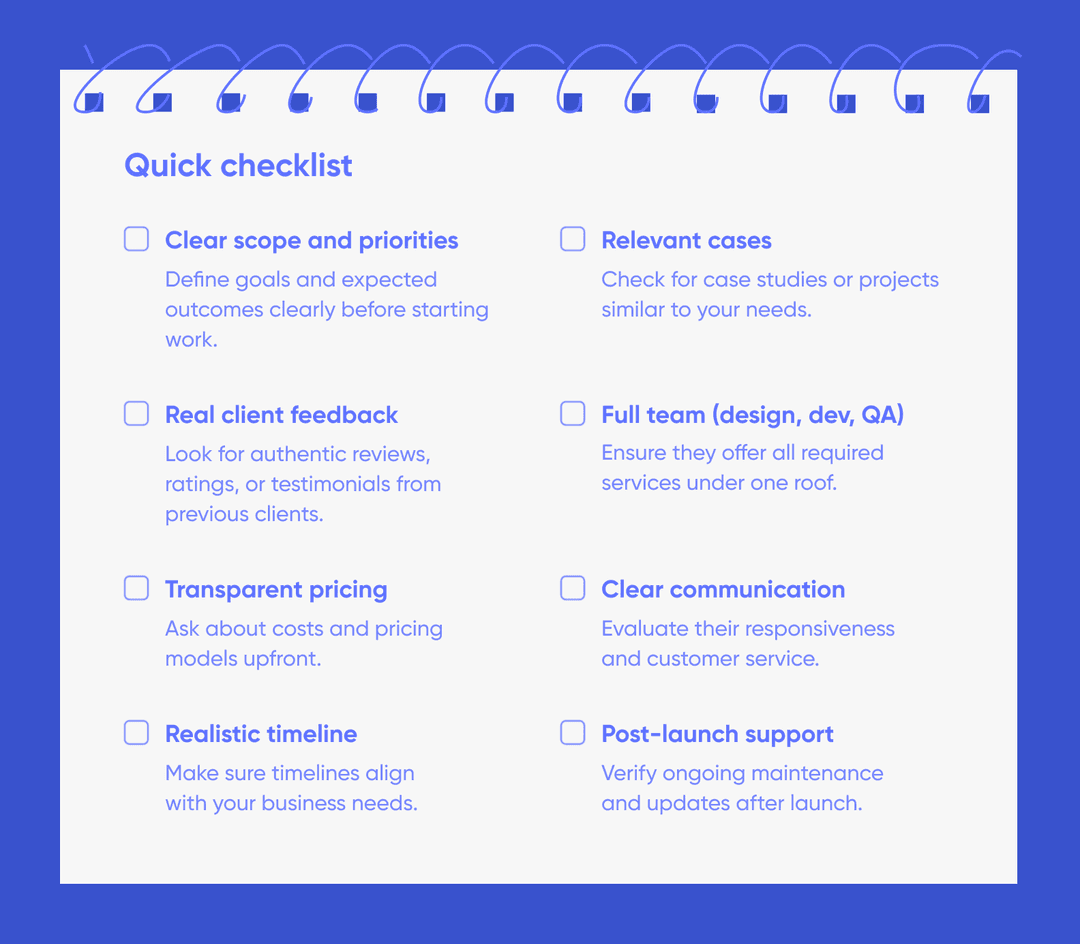
Choosing the right app development company in the UK can significantly impact your project’s success, timeline, and budget. The process starts with defining your needs. Know your target platforms, core features, and expected quality level. This helps you filter companies that match your requirements.
Look at the company’s portfolio and case studies. Experience in similar industries or app types is a strong indicator of their capability. For example, if you need a fintech app, a company with experience in secure payment systems and regulatory compliance will be more reliable.
Check reviews, references, and client feedback. UK agencies often have testimonials on websites or platforms like Clutch or LinkedIn. Direct conversations with past clients provide insight into communication, reliability, and problem-solving skills.
Consider the team composition and expertise. A strong company should have designers, developers, QA specialists, and project managers. Evaluate their approach to project management and communication. Frequent updates, clear reporting, and structured workflows reduce risks of delays or misunderstandings.
Compare pricing and value. Look for transparency in rates, estimated hours, and deliverables. Understand what is included in the cost and what may generate additional charges, such as maintenance, updates, or compliance support.
Finally, assess cultural fit and communication style. Working with a UK-based team simplifies coordination, meetings, and time zone challenges. Clear communication, shared expectations, and trust are crucial for smooth collaboration and high-quality results.
Selecting the right app development company requires market research and evaluation. Doing this upfront reduces risk, saves costs, and ensures your app meets business goals. Companies choose Purrweb when they need to launch fast and stay within budget. In the UK, where development is expensive, this matters.
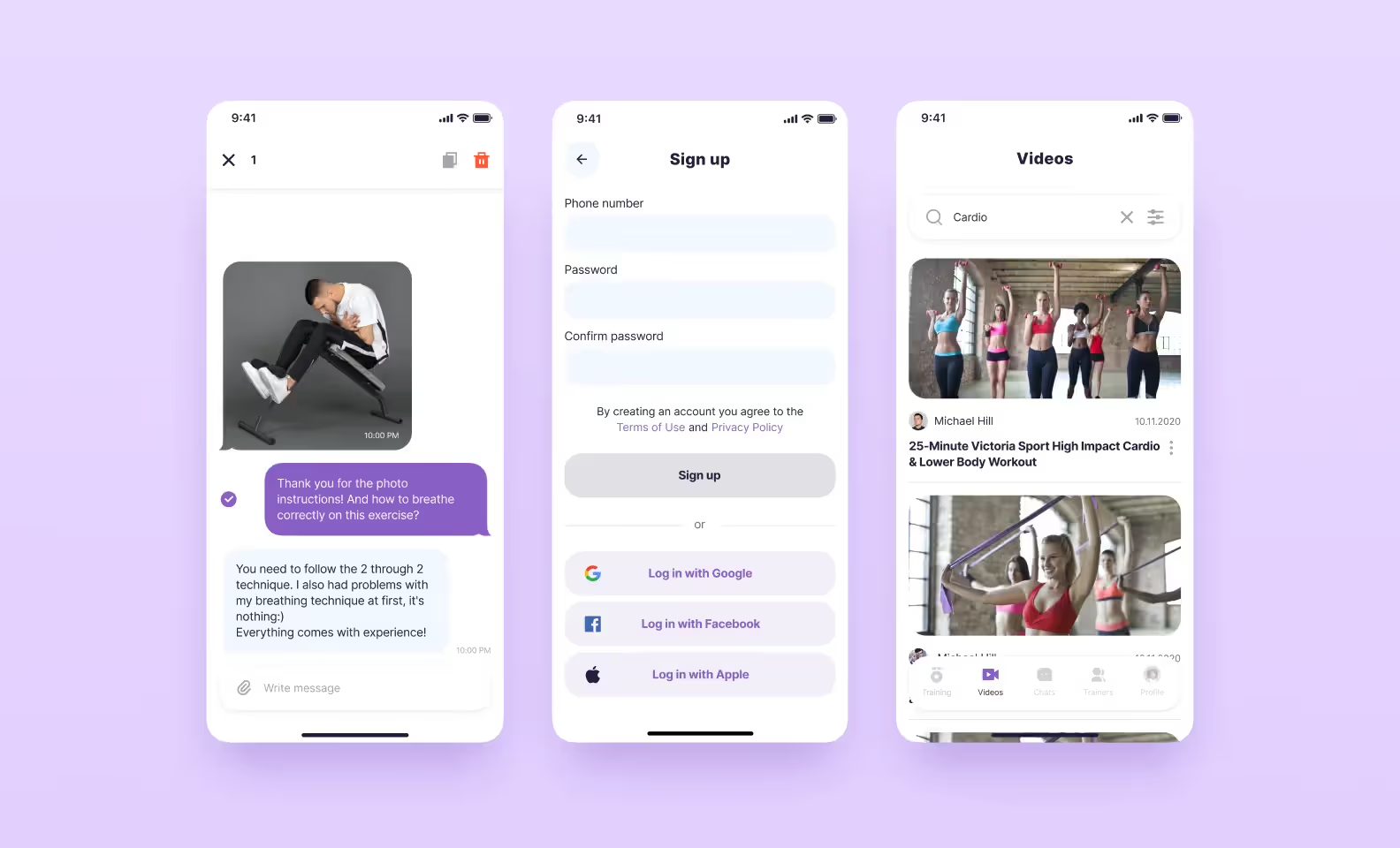
One of the main advantages Purrweb offers is a strong focus on MVP delivery. In a fitness app project, Purrweb built a web platform for coaches and a mobile app for users in just 3 months. Instead of trying to implement everything at once, the team split functionality by user roles and focused on core features. This allowed them to launch quickly without overloading the budget.
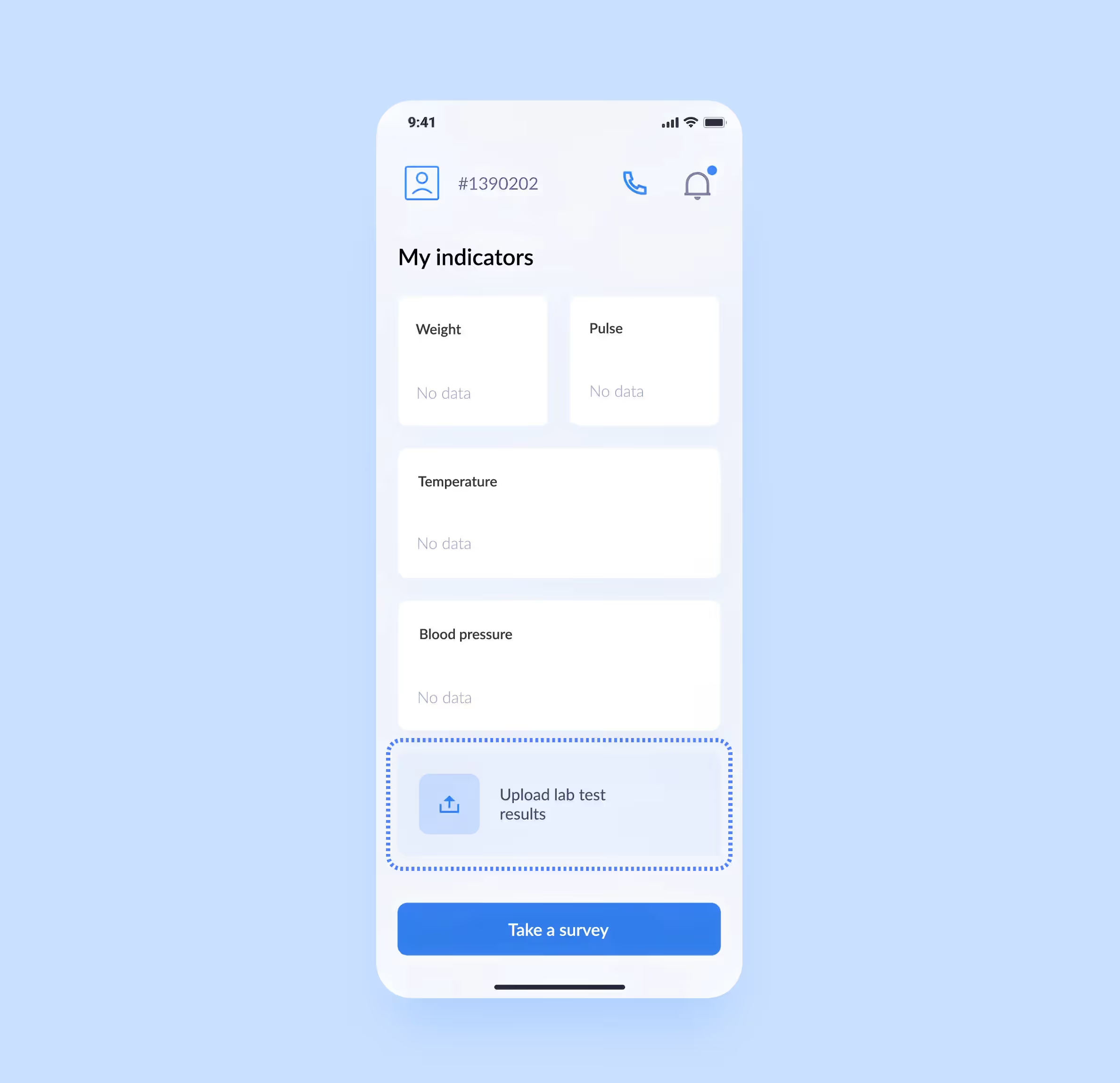
The same approach is applied to more complex domains. In Medico, a MedTech project, for oncologists, the team developed a mobile app for remote patient monitoring. Purrweb avoided building heavy infrastructure from scratch. For example, medical test results were handled as PDFs instead of a full data system. It allowed the product to launch faster and solve the core task.
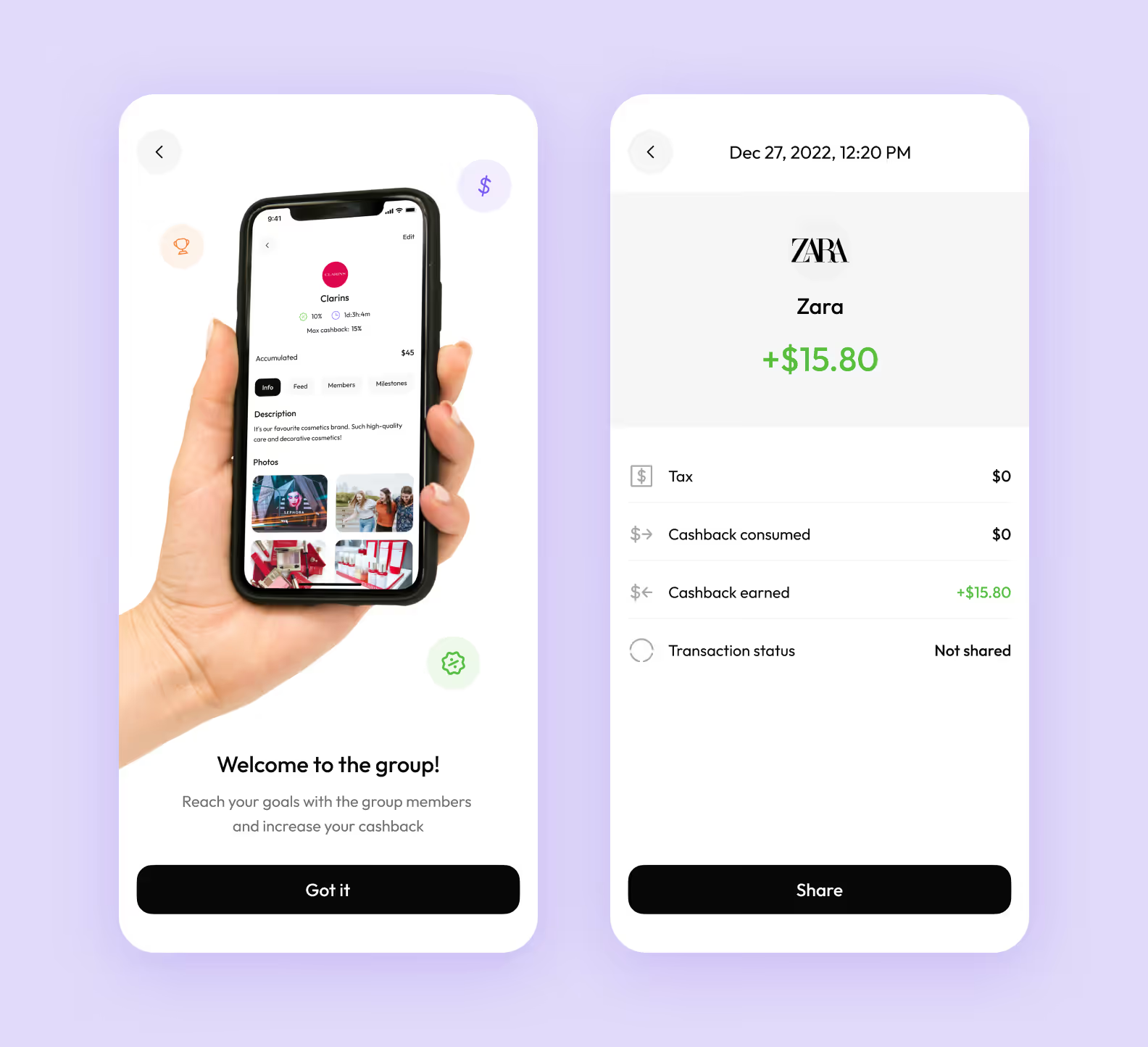
Purrweb also focuses on improving existing products. In a fintech cashback app, the client faced low conversion rates after launch. The team reviewed the app, spotted cluttered screens and confusing flows, and redesigned it. In a month, a simpler design was delivered with clearer navigation and a more trustworthy feel for financial actions.
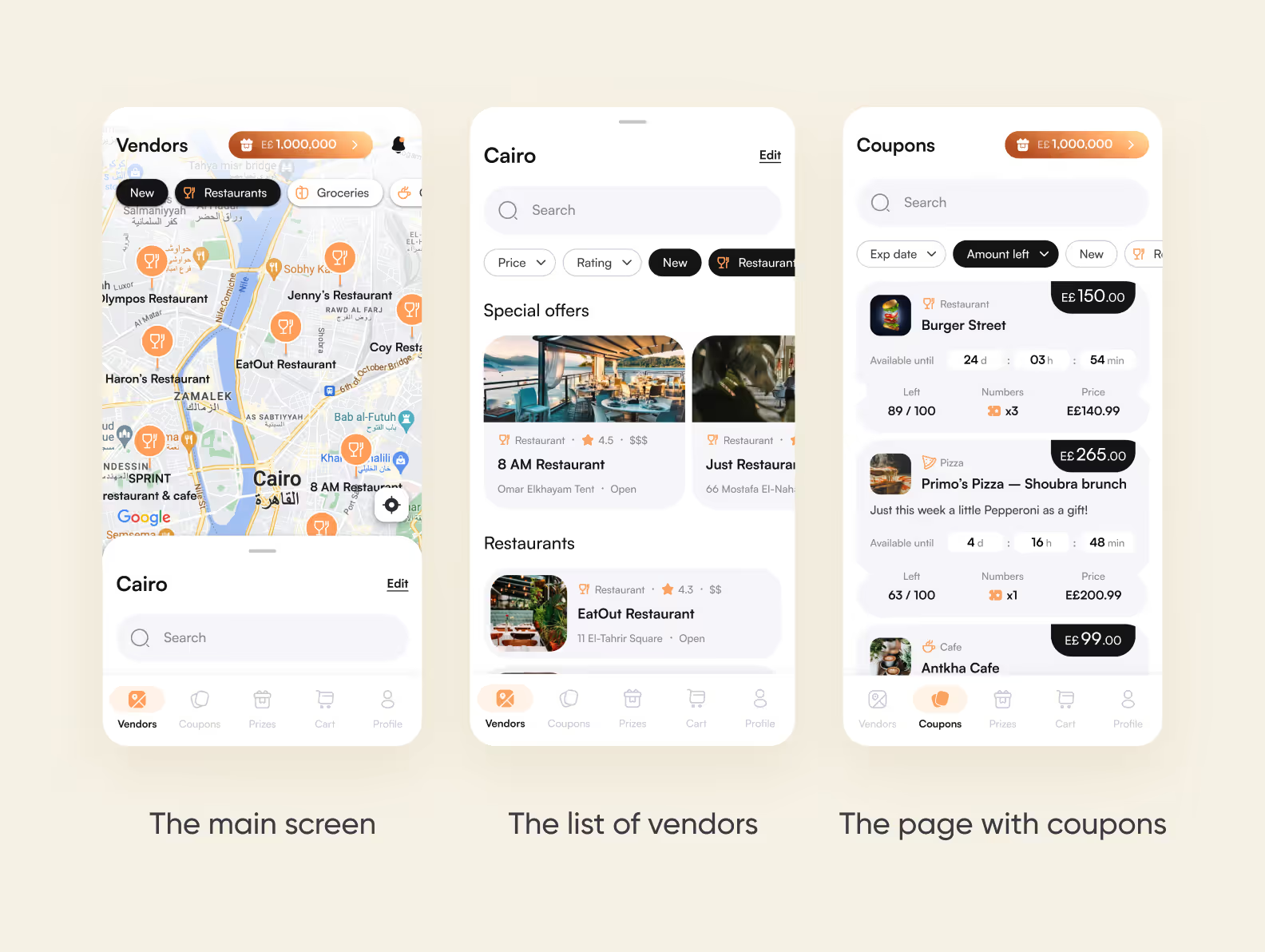
In another project, Purrweb worked on a coupon and lottery app with tight deadlines and an existing frontend. The team had to build the backend from scratch and align development with the client’s team. After launch, the app reached over 100,000 downloads and more than 130,000 users within six months, while maintaining stable performance as the load increased.
Across these projects, the common pattern is consistent: reduce scope to what matters for launch, avoid unnecessary complexity, and adapt the solution to real constraints — budget, timeline, and product goals.
Building an app in the UK is expensive — delays and wrong decisions cost even more. Purrweb helps you avoid both by focusing on fast launches, cutting unnecessary features, and keeping development predictable.
Whether you’re starting from scratch or improving an existing product, the goal is get a working app to market without overengineering. You get a clear roadmap, transparent estimates, and a team that adapts when requirements change.
➡️To get started on the right track, share your project details with us and receive a clear estimate within 48 hours.
Rates depend on experience, tech stack, and city. Junior developers charge $30–$50/hr, mid-level $60–$120/hr, and senior $120–$200/hr. London and other major cities are usually more expensive. Offshore teams from Eastern Europe, Asia, or Latin America can cost 30–60% less while still delivering quality work.
A basic MVP usually takes 6–12 weeks to build, while medium-complexity apps take 3–4 months. Complex apps with multiple platforms, advanced features, or integrations can take 6–12 months or more. Tight deadlines may increase cost if extra developers or overtime are needed.
GDPR compliance costs depend on app complexity. Simple apps need basic encryption and authentication, while complex apps with multiple integrations, real-time features, or AI require advanced security. This adds 10–20% to the budget. Apps in regulated sectors like finance or healthcare may also need extra certifications or approvals, adding $2,000–$10,000 in hidden costs.
Purrweb works with fitness, MedTech, fintech, e‑commerce, and other sectors. This experience help the team build apps with the right features, integrations, and compliance requirements.
Yes. UK developers cost more than offshore teams, but they bring local expertise and follow regulations. Starting with an MVP, focusing on core features, and using ready-made components keeps costs down and speeds up launch. This way, investing in a UK team makes sense for a solid, reliable app.



.avif)
