Explore

Need help with your project?

Oops! Something went wrong while submitting the form.
Banking software companies build the custom software that banks, credit unions, and fintechs run on, from mobile apps to core systems. But if you're hiring one, that definition isn't your problem. Your problem is that every company on your shortlist says the same three things: fintech expertise, bank-grade security, and end-to-end delivery.

This guide sorts that out. First, the handful of questions that tell a real banking software developer from a fintech-branded generalist. Then ten companies, ranked and compared, with a note on who each one is genuinely the right call for.
"Banking software" is a wide category, and which part you need decides the kind of company worth talking to.
At the base sits core banking software. It's the ledger behind every account and transaction, and it runs the rules for interest, fees, and compliance. It's the engine behind retail banking and commercial banking alike, and it rarely gets rebuilt from scratch. Most banks license a core banking platform like Temenos or FIS from established banking software providers and keep it for a decade or more.
On top of the engine sits digital banking software. This is the mobile app, the web dashboard, and the onboarding flow, the layer where a bank's financial services meet the customer. It gets rebuilt often, because that's where competition and customer expectations move fastest. It's also what most fintech startups and digital banks are: a modern front end wired into a core they license or rent.
That split matters for hiring. A company doing banking software development on a core handles slow, high-stakes integration work. One building a mobile banking app or a payments feature ships fast against a moving target. Some firms do both, but most lean one way, as does the wider field of financial software development they sit in.
It's a big, growing market too. The core banking segment alone is heading from $13.79 billion in 2025 to $35.98 billion by 2035. That's part of why there are so many banking software companies to begin with. Financial institutions from global banks to small credit unions are hiring them instead of building it all in-house.
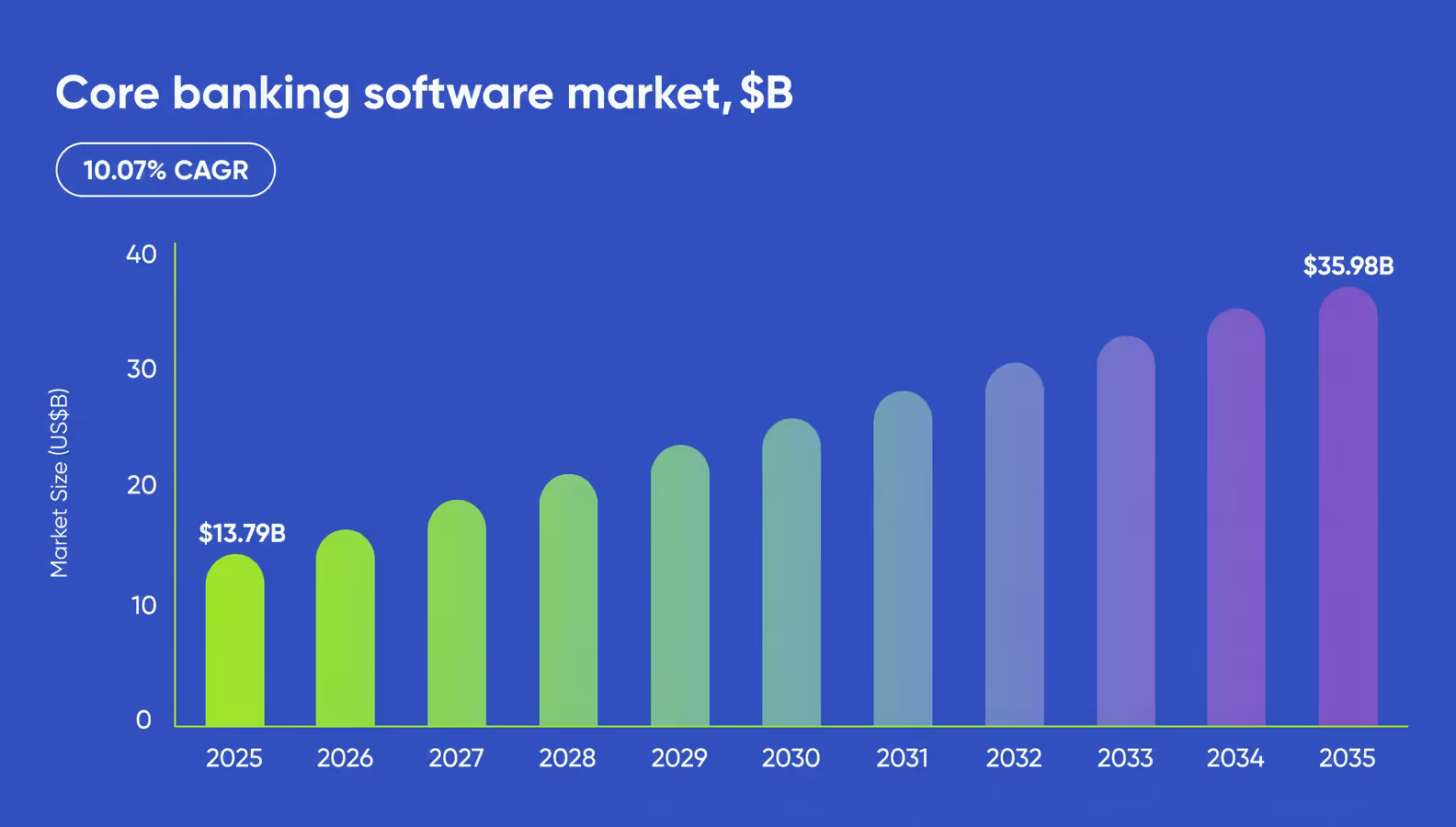
Core banking is a decade-long purchase, so most of that $36B is renewed licenses rather than fresh rebuilds
The sales decks all read the same. A handful of pointed questions don't. Below are the four that separate a banking software development company that can ship your product from one that only wants the contract. Each comes with the question that gets you a real answer.
"We do fintech" means little on its own. Regulated products fail in specific, expensive ways. A payment flow quietly breaks reconciliation. An auth step locks real users out at scale.
Teams that have shipped one know where those landmines sit. Ask for a named banking or fintech product they took all the way to launch, not a wall of industry logos. The profiles later in this guide are one way to check the claim.
Compliance isn't a feature you bolt on at the end. It shapes the architecture from day one. Card payments pull you into PCI DSS, the card-security standard. Opening accounts means KYC and AML checks, the know-your-customer and anti-money-laundering steps every financial institution runs.
Operating in Europe adds PSD2, the rules behind open banking. A partner who has built under your regime already knows what regulatory compliance forces into the design. That runs from encryption up to a cloud-native setup that survives an audit.
How a company charges tells you how it thinks. Fixed-scope suits a defined build like an MVP, a first version you ship to test the market. You agree the features and the price up front. Time-and-materials fits open-ended work where the spec will shift.
Get real numbers early. A fintech MVP usually runs $50,000 to $150,000 over three to six months. A full digital banking build climbs well past $300,000. Our fintech app development cost breakdown goes deeper.

.svg)

For most new banking products, the app is the product. Customers judge you on the phone screen, not the back office. That makes mobile-first capability a real filter, not a nice-to-have.
React Native is why it matters commercially. One codebase ships to iOS and Android at once, which cuts the timeline and the cost of a two-platform launch. If your roadmap starts with an app, weight mobile banking app development experience heavily.
We built KEM, a peer-to-peer payment app for the Kuwaiti market, where people send money to contacts and link their cards.
The problem was access. Banks in Kuwait don't grant API access on request, and live access was conditional on the whole team relocating there under data-residency rules. We had a product to prove and no real bank data to prove it with.
So we built the backend against synthetic data and made the React Native demo good enough to win the bank and investor conversation on its own merits. The live-API phase went to an in-country team hired for exactly that. KEM went on to raise $1M and pass 100K users.
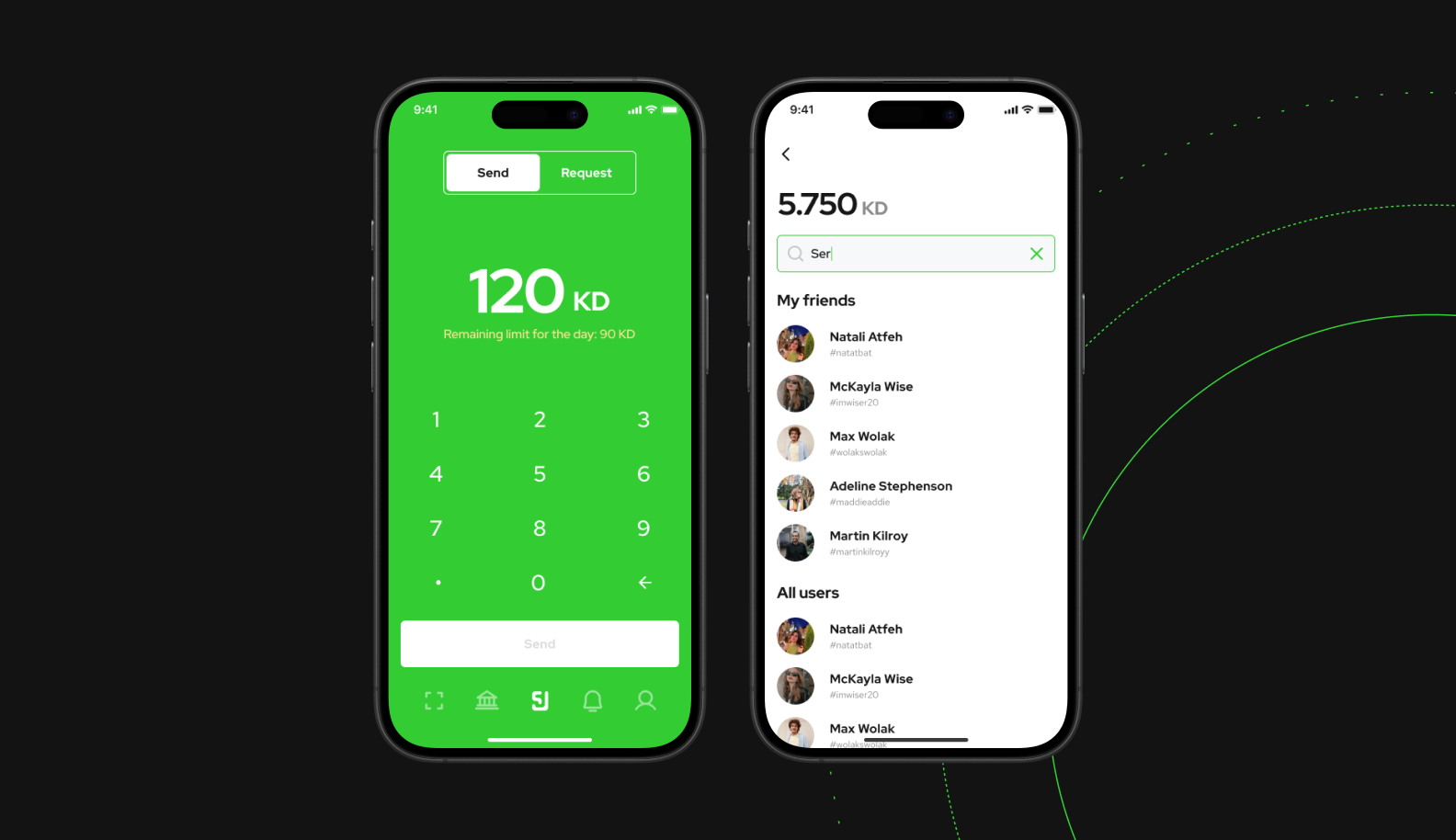
When the bank won't open its API yet, the job is proving the product without it
Here's the shortlist at a glance, then a closer look at each. The right pick depends on your stage and where your product sits, from a first mobile app to an enterprise core migration. Purrweb opens the list because this guide leans mobile-first, not because one company wins every brief.
| Company | Best for | Delivery model | Key specialization | Location |
| Purrweb | Startups & neobanks, mobile-first MVP | Fixed-scope MVP | React Native, mobile banking apps, UI/UX | Dubai / international |
| Itexus | Complex, regulated fintech products | Dedicated team | Fintech dev, AI/ML, integrations | Miami, USA |
| DjangoStars | Fintech products built from scratch | Full-cycle / team extension | Python/Django product engineering | Delaware, USA |
| DataArt | Enterprise finance | Dedicated teams | Fintech consulting & engineering | New York / London |
| SPD Technology | Mid-size banks & payments | Dedicated teams | Payments, fraud detection, lending | Europe / UK |
| DashDevs | Fast fintech and neobank launch | Product build + accelerator | Neobank, e-wallet, own core platform | London, UK |
| Sombra | Wealth & asset management | Dedicated teams | Custom fintech, post-merger integration | Denver, USA |
| Avenga | Enterprise digital transformation | Managed / enterprise | Enterprise financial software, AI | Global |
| Innowise | Custom banking & fintech at scale | Full-cycle / staff aug | Full-stack fintech, ERP/CRM | Warsaw, Poland |
| Diceus | Insurance & finance software | Custom build / staff aug | Custom finance and insurance software | Delaware, USA |

Purrweb is a Dubai-based international product studio that designs and builds mobile-first fintech and banking apps. It works mostly with startups and neobanks that need a real product fast, usually an MVP, and specializes in React Native so one codebase covers iOS and Android. Design and development sit under one roof, which suits founders without an in-house design team.
The track record is 11+ years, 550+ projects, and a 4.9 average across 224 client reviews. Fintech work spans crypto wallets, peer-to-peer payments, and investment apps. The fit is clearest when the app is the product and speed matters more than a 200-person delivery org.
Best for: startups and neobanks shipping a mobile-first product or MVP.
We built Abel, a self-custodial crypto wallet where the user holds their own keys and balances come straight from third-party APIs. The client wanted no backend at all.
That works until you read the fine print. One price provider capped us at five requests per second. Another had a hard ceiling of 100,000 calls a month, so past a point the next user got an error instead of a balance.
We rerouted the heavy lookups to providers with more headroom and a cheaper call pattern, one request per lookup instead of two. The metered one we switched to count per device rather than per user. The app shipped on deadline, 1,268 hours of work, with no backend to run.
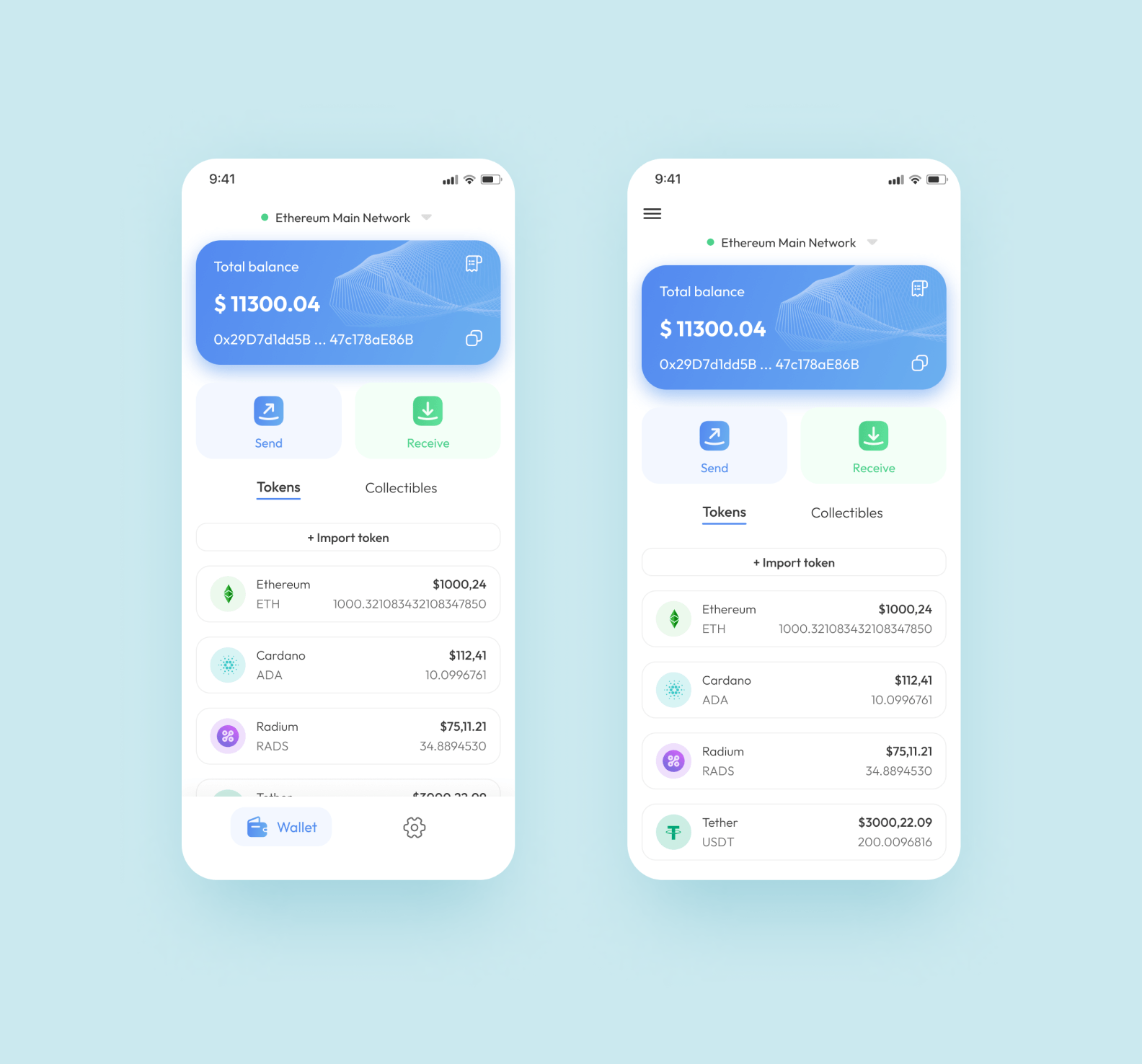
With no backend, somebody else's rate limit becomes your architecture
Itexus is a US-based fintech software development company, headquartered in Miami with a development office in Warsaw. Its 150+ engineers focus on complex, regulated products: custom fintech development, AI/ML, and heavy integrations into services like Stripe, Plaid, and Nasdaq. The stack runs broad across Java, .NET, Python, and React.
Named work spans a digital wallet ecosystem for Coinstar and projects with Standard & Poor's. Itexus is selective on early-stage startups and leans toward companies with a validated concept and a real compliance context.
Best for: complex, regulated fintech products with heavy integration needs.

DjangoStars, founded in 2008 and based in Delaware, is a product-engineering company with deep Python and Django roots. Its 100+ developers build fintech products end to end, from a discovery phase through MVP to scale, and also work in React Native for mobile.
The portfolio names real financial clients: MoneyPark and Molo Finance in mortgage lending, and the Saudi Investment Bank. If you want a partner that owns the whole build in a Python stack, it earns a shortlist spot.
Best for: fintech products built from scratch in a Python stack.
DataArt is an enterprise software engineering firm with offices in New York, London, and across Europe. In finance it works with large institutions on custom engineering, data and analytics, and AI, with a client roster that includes Nasdaq, Invesco, and Betfair.
The focus is enterprise-scale systems that integrate with existing core infrastructure, not greenfield mobile apps. It's a consulting-flavored partner, strongest when the job is modernizing or extending large financial systems rather than shipping an MVP next quarter.
Best for: enterprise finance and large-scale modernization.

SPD Technology, founded in 2006, is a payments and fintech specialist with 650+ engineers and offices across Europe and the UK. Its work centers on payment software: gateways, billing, fraud detection, mobile payments, and lending, alongside digital banking solutions.
It positions on long-term enterprise partnerships and says several of the companies it supports each generate over $4B in annual revenue. Named clients include PitchBook, Morningstar, and Blackhawk Network. The depth in payments and fraud makes it a strong pick for mid-size banks.
Best for: mid-size banks and payment platforms.

DashDevs, founded in 2011 and based in London, is a fintech development company built around speed to market. Beyond custom builds it ships its own core banking product, Fintech Core. It's a white-label platform with ledger, transaction processing, and KYC/AML built in, which can cut months off a neobank launch.
Services span neobank and e-wallet apps, payment gateways, card issuing, and open banking. Named work includes Tarabut, a MENA open banking platform, and Chip, a personal finance app.
Best for: fast fintech and neobank launches.

Sombra, founded in 2013, is a financial-services software company with 400+ engineers and offices in Denver and London. It builds custom fintech and, distinctively, handles post-merger IT integration, unifying tools and data when financial institutions combine.
Its case work includes portfolio-management software for a top-15 global bank and a payment-service MVP, alongside wealth and asset management engagements. The integration specialty fits when the hard part is joining systems, not building a new front end.
Best for: wealth management and post-merger integration.

Avenga is a large enterprise engineering firm with 6,000+ professionals across 16 delivery locations. In banking and financial services it builds mobile banking apps, payment systems, and fraud-detection tools, and names clients like Raiffeisen, UniCredit, and Fidelity.
One published case cut fraud-review cycles by 86% with automated detection. The scale and AI focus fit enterprises running multi-year digital transformation programs. For a small team shipping a first app, it's likely larger than you need.
Best for: enterprise digital transformation at scale.
Innowise, founded in 2007 and based in Warsaw, is a full-cycle software development company with 3,500+ professionals and ISO 9001 and 27001 certifications. Its finance practice spans banking, payments, lending, and insurance. It works across a broad stack, from React Native mobile to cloud and data engineering.
The company reports 100+ solutions delivered for the financial industry, with named work including Haia, an AI finance platform for fiat and crypto. It fits companies that want custom banking software at scale from a large, certified vendor.
Best for: custom banking and fintech at scale.
Diceus, founded in 2011 and based in Delaware, is a custom software development company with 250 professionals and a strong finance and insurance focus. It builds web, mobile, and enterprise software, and handles system integration and legacy modernization across a deep JavaScript, Java, and .NET stack.
Named work includes a self-service terminal proof of concept for Raiffeisen Bank and insurance-platform modernization. The finance and insurance overlap fits when your product sits at that intersection, or when an established institution needs integration work.
Best for: insurance and finance software, integration, and modernization.
Trends matter here for one practical reason. The partner you pick should already build for where banking is heading, not where it was five years ago. Four shifts are doing most of the shaping, and together they're what "digital transformation" actually means in banking now.
Embedded finance is the biggest. Payments, cards, and lending are moving inside non-bank products, so a checkout, a ride app, and a marketplace each carry their own financial layer. For a builder, that means designing banking features that live inside someone else's product.
Open banking pushes the same way. Regulated APIs let apps read account data and start payments with user consent, which turns a closed core banking system into something other products can plug into. Cloud-native architecture is what lets that scale without a data-center rebuild, and it's now the default for new systems rather than a selling point.
AI is the fourth shift. In banking it's landing first in fraud detection, support, and the document-heavy back office, where a model drafts and a human signs off. It's less a single feature than a layer spreading across the stack.
The money follows, if unevenly. Global fintech funding hit $44.7 billion across 2,216 deals in the first half of 2025, a cautious market where AI and digital assets drew the most interest. A partner worth hiring is already fluent in the trends your product actually touches.
We built Together, a payments app in Montenegro that started as cashless QR tipping and grew into a full ecosystem: user-to-user transfers, a marketplace, and a physical payment card.
The scope kept expanding mid-build, and the money had to move cleanly between euros and dollars. Our first Stripe setup double-converted the currency, quietly shaving value off every transaction.
We compared PayPal and KOMMERCE PAY, then reworked the Stripe integration so a payment converted once, not twice. The app reached 98% release-ready with the payment layer intact.
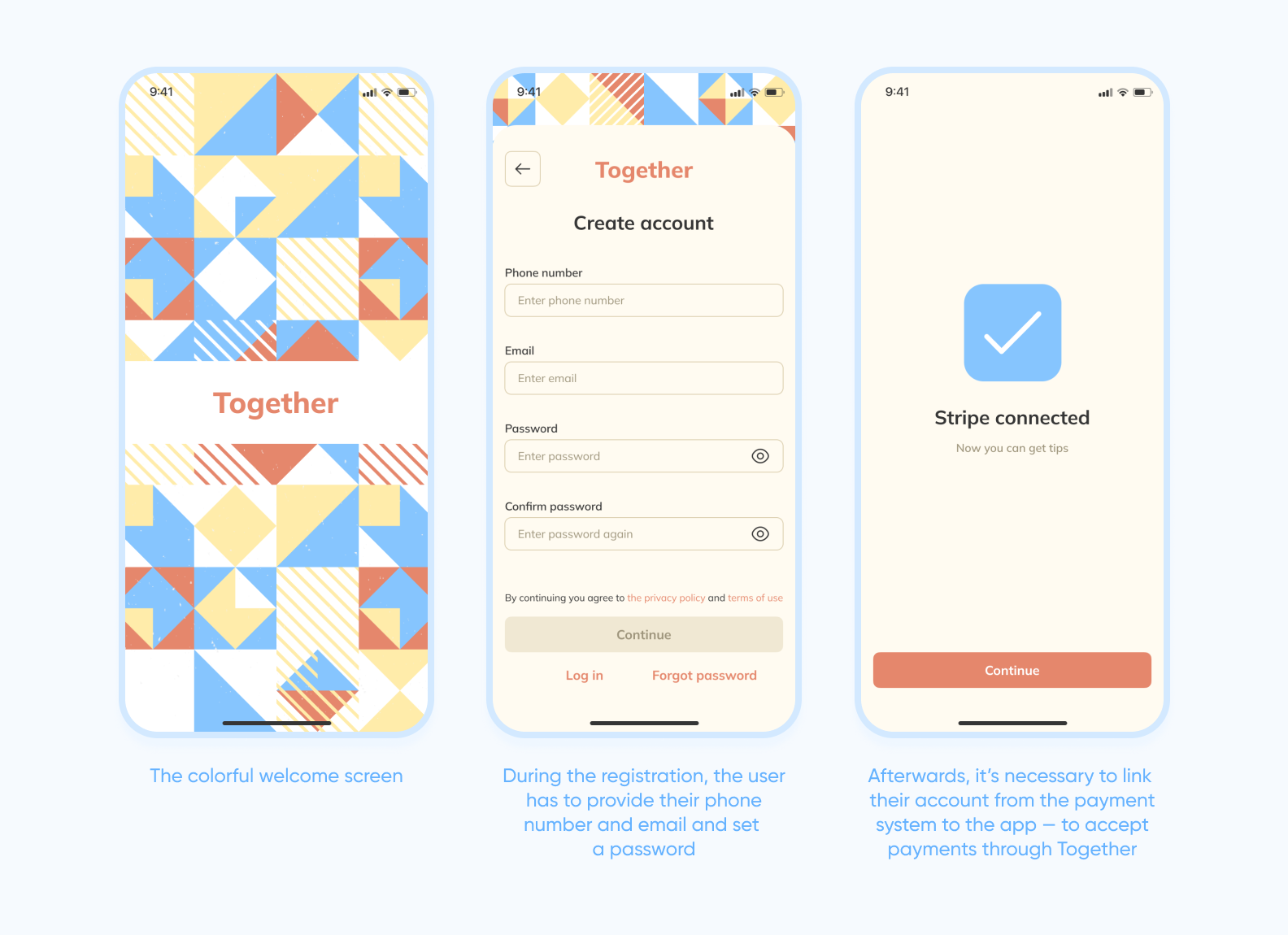
Put payments inside a product and the currency math is where you win or lose trust
The right banking software company isn't the one with the longest client list. It's the one whose strengths line up with your stage and your product. Building a customer-facing app? Weight mobile-first delivery and a team that has shipped a regulated product. Modernizing a core? Weight integration depth and scale.
Whichever way your project leans, the shortlist above is a starting point, not a verdict. Match it against your own constraints. And if a mobile-first build is where you're headed, our guide on how to create a fintech app is a useful next read.
➡️ If you're weighing a mobile-first banking or fintech build, we're happy to talk it through and send a free estimate within 48 hours.
Banking software is what banks and credit unions, plus fintechs, use to run their banking operations. It includes the core system that holds accounts and processes transactions, and the digital layer of mobile apps and web dashboards that deliver banking services to customers. It also covers payments, lending, compliance, and the integrations that connect these parts.
Core banking software is the engine. It records accounts and balances, processes every transaction, and enforces the rules for interest, fees, and compliance. Digital banking software is the layer on top: the mobile app, web portal, and onboarding a customer actually touches. The core is licensed and kept for years, while the digital layer is rebuilt often to keep pace with competition.
Check four things. Has the company shipped a regulated banking or fintech product, not just listed the industry? Does it build compliance into the architecture from day one? Do its delivery model and cost fit your scope? And can it build mobile-first if your product is app-led? Match those answers against your stage rather than the length of a client list.
It depends on scope. A fintech MVP usually runs $50,000 to $150,000 and takes three to six months. A full digital banking product with multiple integrations climbs well past $300,000, and a core migration is a different order entirely. The biggest cost drivers are compliance requirements, the number of integrations, and how much is custom versus configured.
The ten compared in this guide, starting with Purrweb for mobile-first products and MVPs. The list spans specialists in payments, enterprise finance, and core banking solutions. There is no single winner. The best banking software company is the one whose strengths match your stage and product, so use the comparison table above as a filter.
For a fintech startup, the best fit is usually a company that ships fast and builds mobile-first. Your first product is almost always an app, and speed to market matters. React Native is a practical choice: one codebase covers iOS and Android, which cuts both timeline and cost. Weight proven fintech cases and a delivery model built for MVPs.
Common ones include React Native for cross-platform mobile apps, cloud-native infrastructure on AWS, Azure, or Google Cloud, and API-first design for open banking. Back ends often run on Java, .NET, Python, or Node.js. On top sit security and compliance tools for encryption, KYC and AML, and PCI DSS, which shape the architecture as much as any framework.