Explore

Need help with your project?

Oops! Something went wrong while submitting the form.
Wondering how much it costs to build a fintech app? Whether you’re building a mobile banking app or making a digital wallet, the price depends on features, design, and compliance needs. In this guide, we’ll break down key cost factors so you know where your budget goes — and why it’s worth investing.

Let’s start with a different kind of numbers. According to Statista, the global fintech market has expanded steadily since 2008, though the pace of new company formation has slowed since 2021. As of 2025, North America leads the global fintech market with more than 12,500 fintech companies, followed by Europe with close to 10,000 and Asia-Pacific with 6,795.
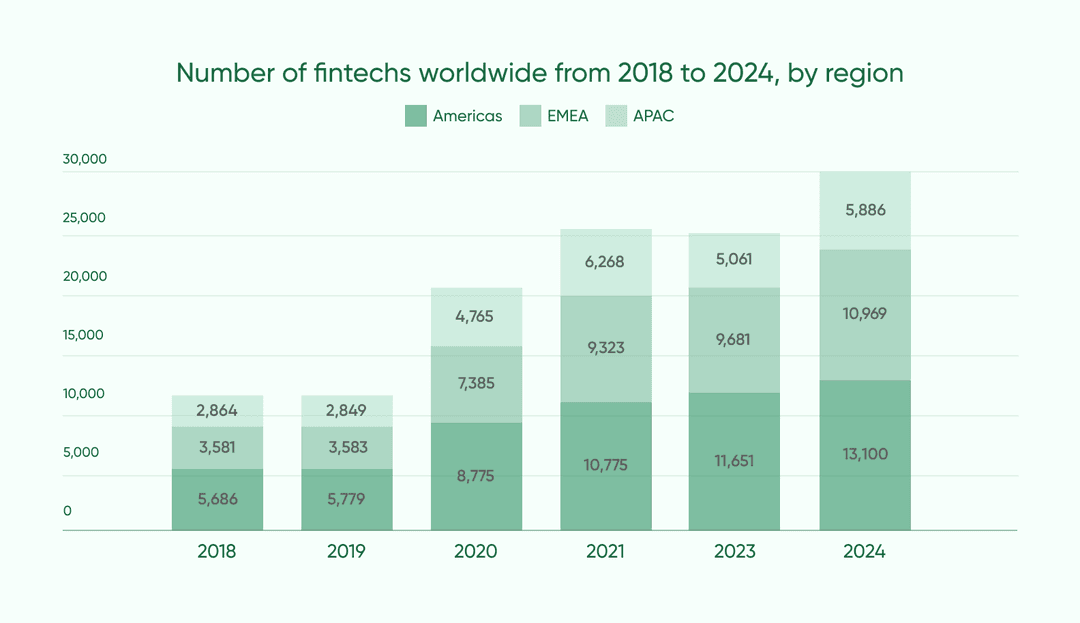
It’s only natural that the increased interest in fintech drives new opportunities for business — but how much would it cost to bring them to life?
But when it comes to financial app development, don’t expect a universal answer. So how much does a fintech app cost in 2026, and what affects fintech app development cost the most? The overall fintech app development cost depends on what type of app you’re building, which features you include, and a range of additional factors — the cost depends on scope more than anything else. Most fintech apps share the same core cost drivers, and mobile app development costs for a regulated fintech run higher than for a typical consumer mobile app.
A personal finance app will cost significantly less than a full-fledged mobile banking platform. The more complex the app type — like trading apps, digital wallets, or insurtech solutions — the more development time, compliance checks, and infrastructure are required. The type of fintech application you choose is the single biggest of the factors affecting fintech app development cost, and complex fintech apps simply take more time to build. For a closer look at what it takes to build a stock trading app, we cover the process, tech stack, and cost factors in a separate guide.
Every extra feature adds to the cost. Simple logins and dashboards are affordable, but advanced elements like biometric authentication, real-time transaction monitoring, or AI-driven analytics require specialized expertise and more development hours, raising the budget. Together, these app features make up the core components of a fintech app, and the cost by feature adds up quickly across most fintech apps.
Design complexity, tech stack, regulatory requirements, team location, and post-launch support all influence the final cost. These factors may not be as visible as features, but they impact the cost and the total cost of ownership long after launch, and they apply to nearly all fintech apps.
How exactly does the type of fintech product define the final cost? Well, it’s pretty simple: different fintech products come with different levels of complexity, and that directly impacts the budget. This cost breakdown covers the most common type of fintech app, comparing popular fintech apps on what each typically costs to build.
Here’s how the main types of fintech apps compare on cost and complexity:
| Fintech app type | Estimated cost | Complexity |
| Personal finance / budgeting app | $80,000–$150,000 | Low–medium |
| Digital wallet & payment app | $150,000–$300,000 | Medium |
| Mobile banking app | $200,000–$400,000+ | High |
| Investment & trading platform | $250,000–$500,000+ | Very high |
Estimated price: $200,000 to $400,000+
Mobile banking requires a broad feature set: account management, secure transactions, card integration, and compliance with strict regulations. It’s a major investment but also a way to build strong customer loyalty and position your business as a reliable financial service provider. Teams that don’t want to assemble this in-house often bring in dedicated mobile banking app development services.
Banking app development cost, however, can also be different. There are small platforms with a limited set of features, or superapps with gamification — naturally, the latter will be much pricier.
Estimated price: $150,000 to $300,000
Unlike banking apps, digital wallets are designed for spending and transferring your money, not managing it at the source. These apps let users pay, send, and store money seamlessly, and the challenge lies in flawless UX and airtight security.
Digital wallets may be cheaper than banking apps because no full banking services are offered, but the price still depends on features and complexity.
⭐Our experience
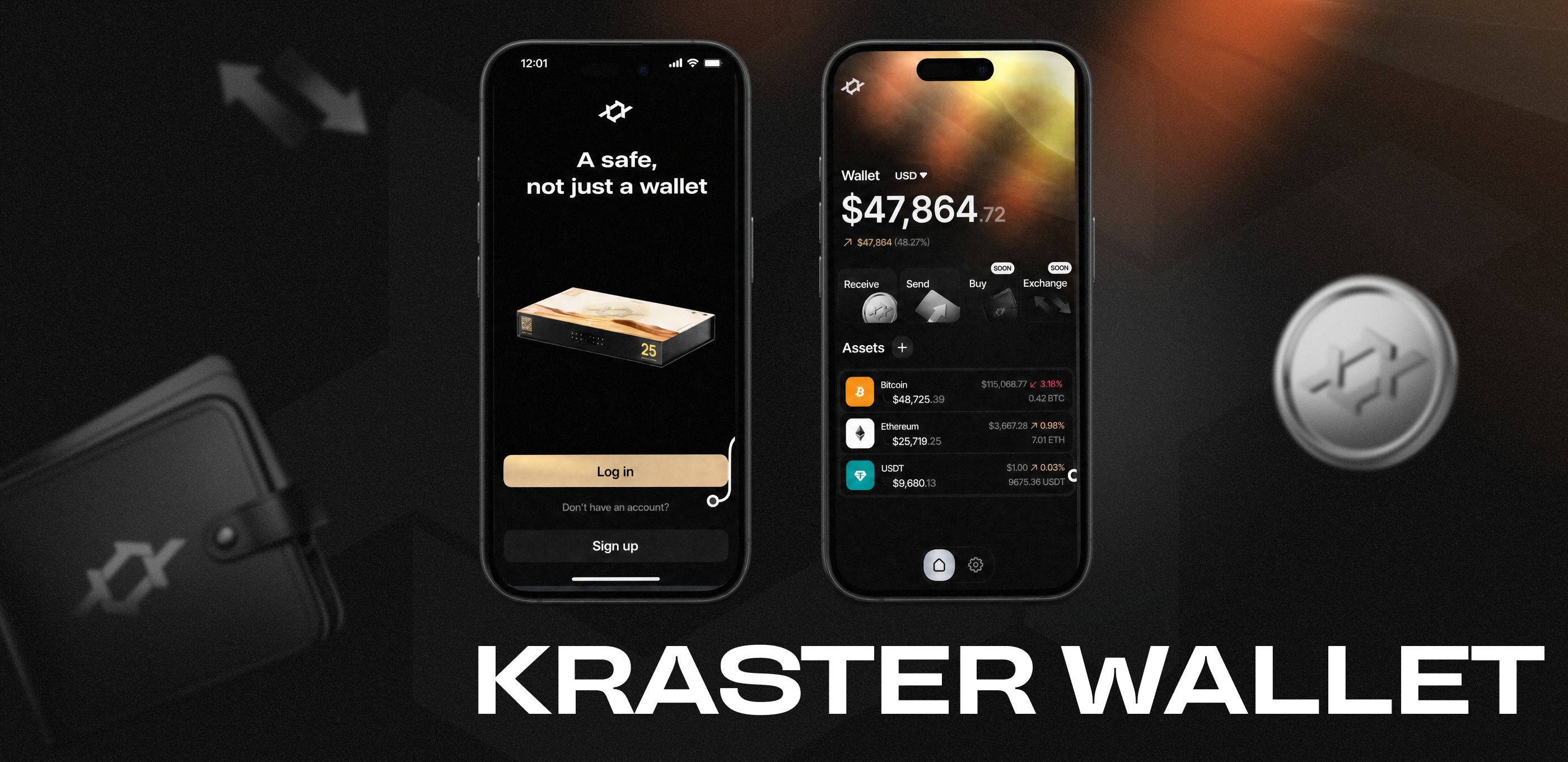
We worked on KEM, a P2P solution for Kuwait, where online banking services are not universally available.
The main principle of the app: it works like a social network, allowing customers to transfer money within their contact lists.
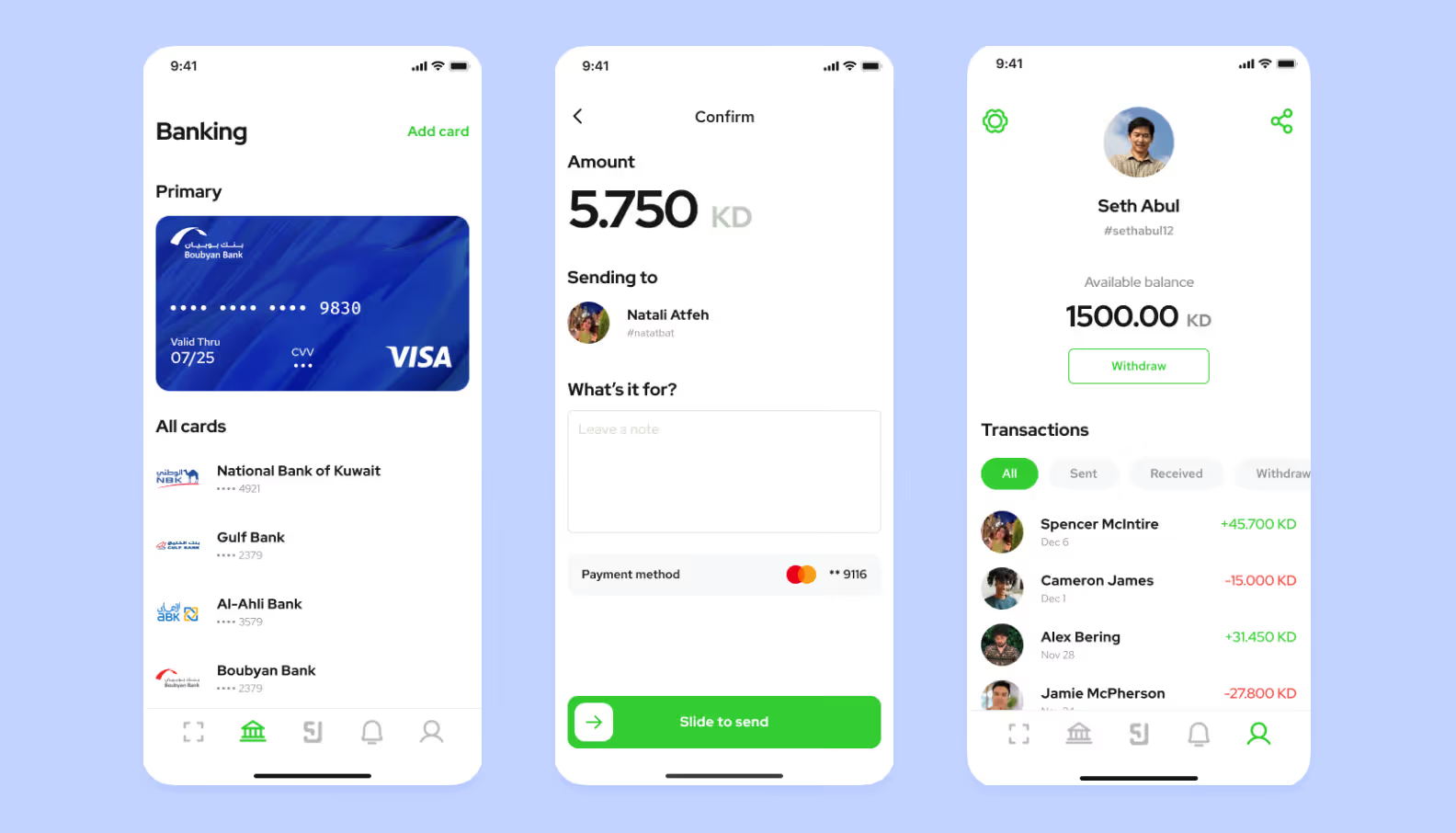
One of the big challenges was to gain access to banks’ APIs that allowed the app to make transactions. Banks have closed APIs because of sensitive financial information.
To make an MVP, we developed the entire backend with imaginary data. It worked — the team later managed to get access to local banks’ APIs on the condition that the technical team would be located in Kuwait.
We work in a way that allows seamless transition to in-house teams, so as soon as KEM assembled one, we handed over the code and the UI kit.
The result: the backend was rewritten with real APIs, and KEM entered the market. In the seed funding round, the app raised $1 million. Now, it plans to expand to the entire Gulf region.
Estimated price: $250,000 to $500,000
Whether for stocks, crypto, or robo-advisory, these apps need real-time data, analytics, and integrations with trading APIs. All of these features impact the budget, and compliance adds extra complexity.
If you are specifically looking into the decentralized side of finance, check out our guide on how much Web3 development costs for a more targeted breakdown.
⭐Our experience
Our case with Fintarget showed how a well-designed investment app can open up new revenue channels and attract a loyal user base.
BCS broker is one of the largest companies on the Russian stock market. And they offered a perfect tool to attract newbies to investing — today, we know it as copy-trading platforms. It means you don’t need to craft your own investing strategy — you can “auto-follow” a tested and reliable one instead.
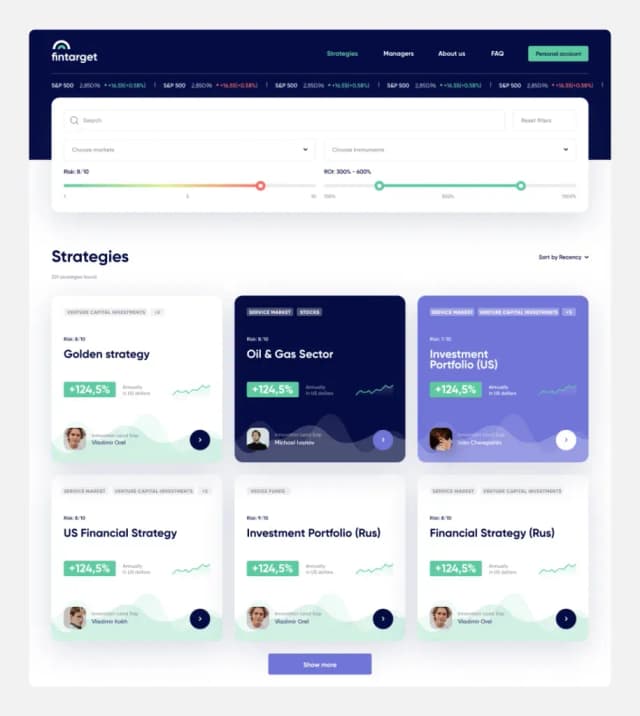
Since the product was aimed at beginners, we tried to make the interface as “game-like” as possible without losing the serious tone.
And here is how the strategy page looks:
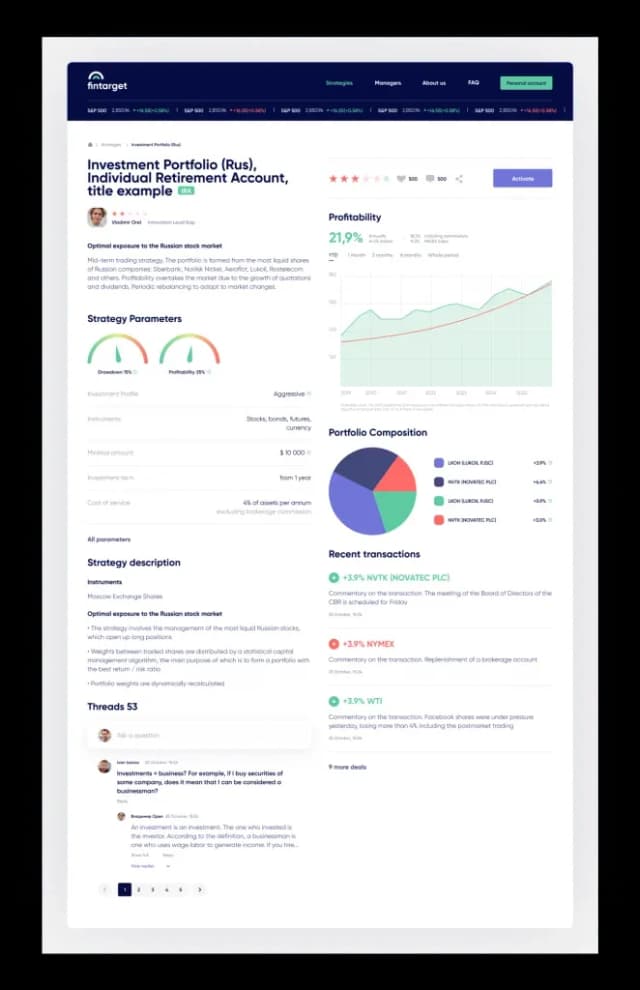
The page contains all information that is important for making a decision on linking an account to the strategy. It has a record of dealings, results, a portfolio, characteristics, and details of a strategy. Also, there’s a chat with other investors, so you can ask for advice if you need it.
We also designed the profile page, as well as the billing page for each account. Besides, we added a knowledge base — a very useful addition for the beginners who are using the platform. We divided all the questions into specific categories and sorted them in a convenient way.
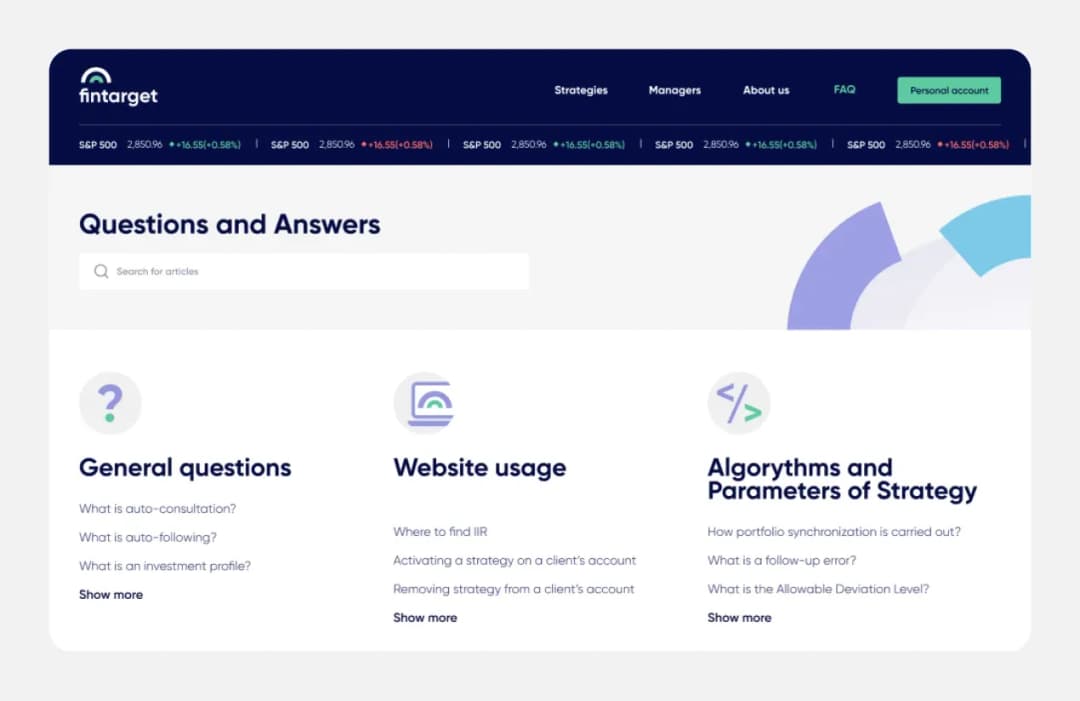
The result: the product has been launched and continues to operate to this day.
Estimated price: $120,000 to $250,000
Insurance apps simplify claims management, policy comparison, and communication with providers. They’re less complex than banking apps but still require robust security (as pretty much everything in fintech does, if we’re being honest). For businesses, they improve customer engagement and cut down operational costs.
Estimated price: $80,000 to $150,000
Budgeting tools are the most cost-effective entry into fintech. They track expenses, set savings goals, and offer simple analytics. While more lightweight, they’re powerful for building user trust and laying the foundation for scaling into larger financial products.
Now that we’ve covered how the type of app impacts your budget, let’s zoom in on the features. Each functionality adds value to the user experience — but also, extra hours to development. Here’s what the most common fintech app features typically cost, as a practical app development cost by feature breakdown.
Estimated price: $10,000 to $25,000
It’s important to ensure that the registration and onboarding are seamless and secure, so you probably don’t want to cut costs on this particular feature. However, it depends on what kind of user authentication you pick. For example, features like multifactor authentication or biometric sign-ins push costs higher, but they are usually critical for financial apps.
Estimated price: $20,000 to $50,000
Connecting to payment gateways or enabling money transfers requires rock-solid infrastructure. Sometimes, you can opt for third-party services like Stripe, but if you’re building your own custom fintech solution, this feature is essential.
⭐Our experience
We solved complex payment flows while designing Dosis — an unusual Spanish-language (!) combination of a streaming service and a fintech solution (!!).
The main idea was to build a streaming platform that allows creators to share their cinematic works and receive direct payments from viewers. The donations would be made in crypto — it’s mostly accessible worldwide, and you don’t have to pay high commissions for international money transfers.
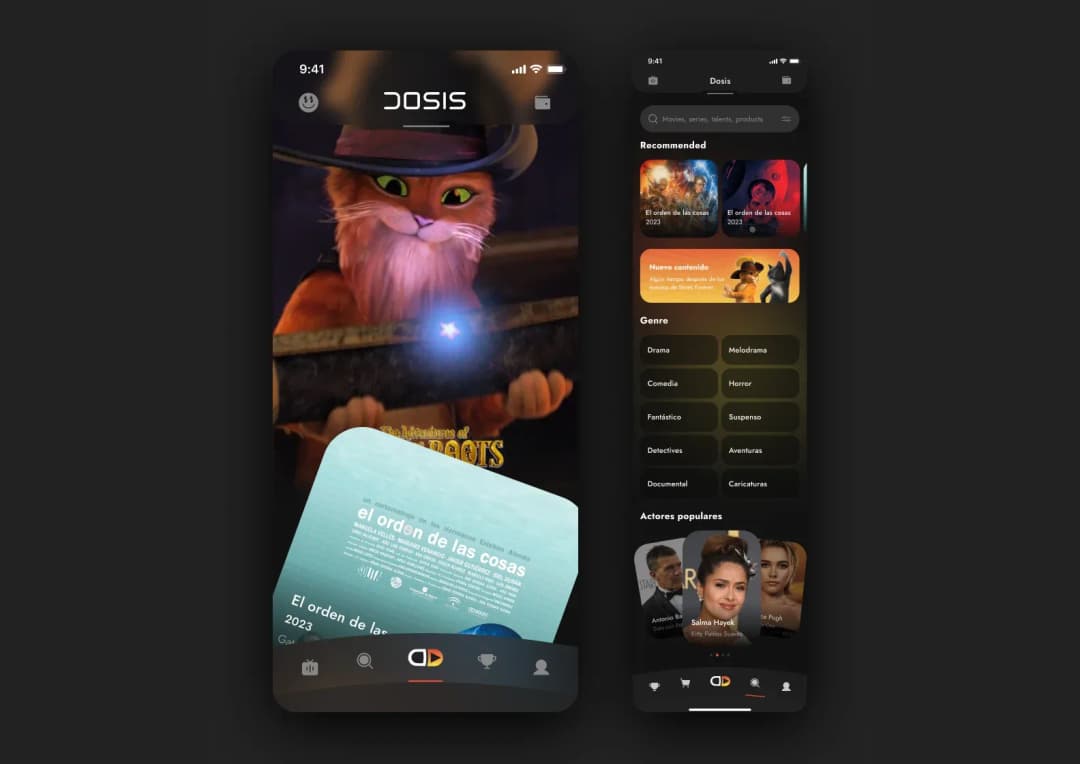
The app has a built-in player — the viewers don’t have to leave to watch the content. But they also don’t need to leave to make donations and payments! On the app, users participate in challenges and earn exclusive cryptocurrency ROLY. They can use it to donate to creators.
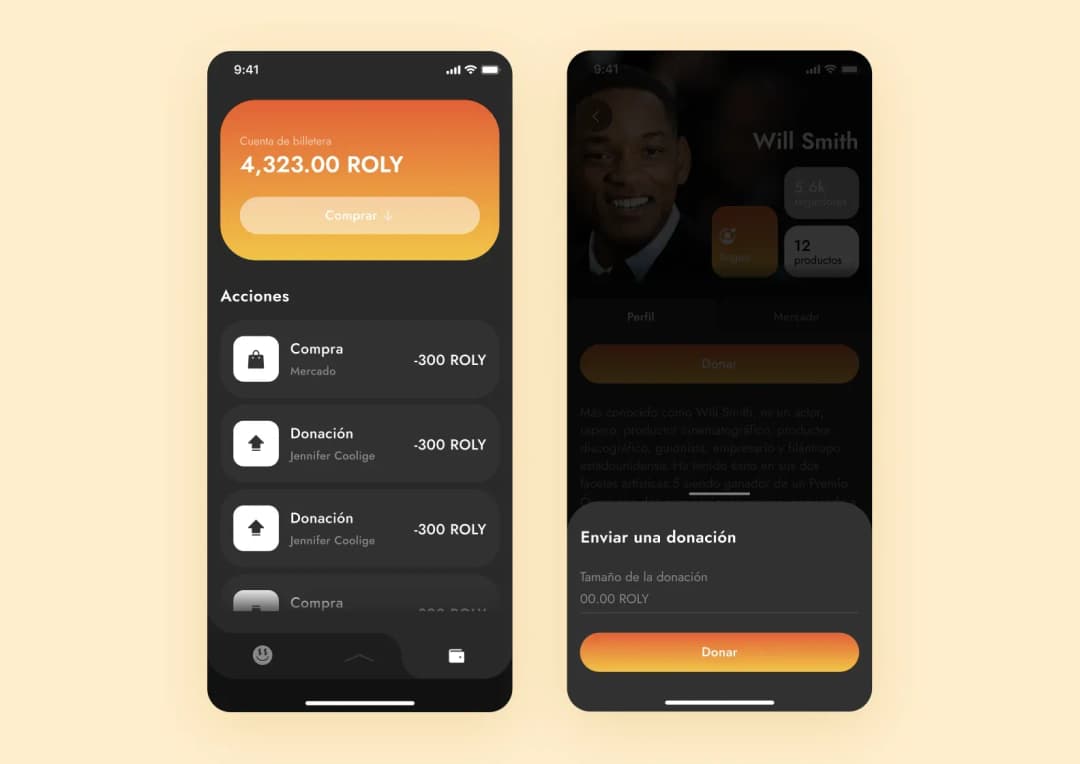
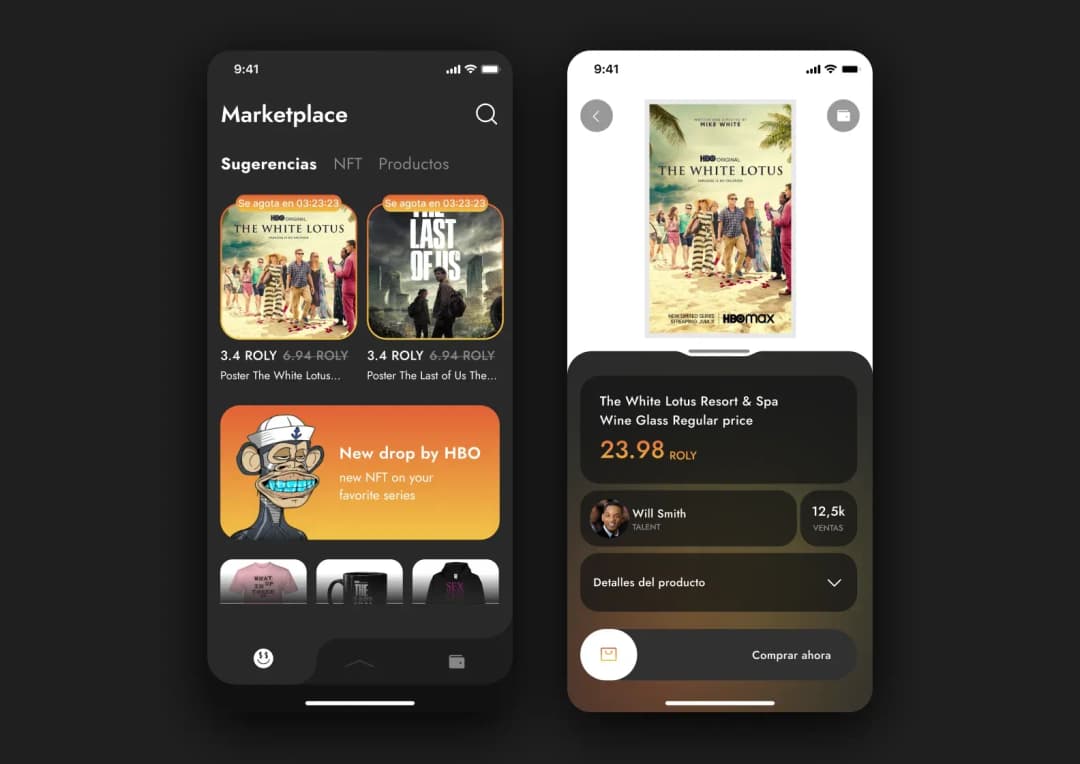
For Dosis, we combined the best UX/UI design practices from the media industry (we were inspired by Amazon Prime and Netflix), as well as from the fintech industry.
The result: We developed a simple design for the cryptocurrency wallet with familiar elements, like in banking applications. It helps beginners easily navigate and support their favorite creators without even having to know a lot about crypto.
Bonus: we added gamification and in-app challenges, allowing users to earn the currency and then use it to support their favorite creators.
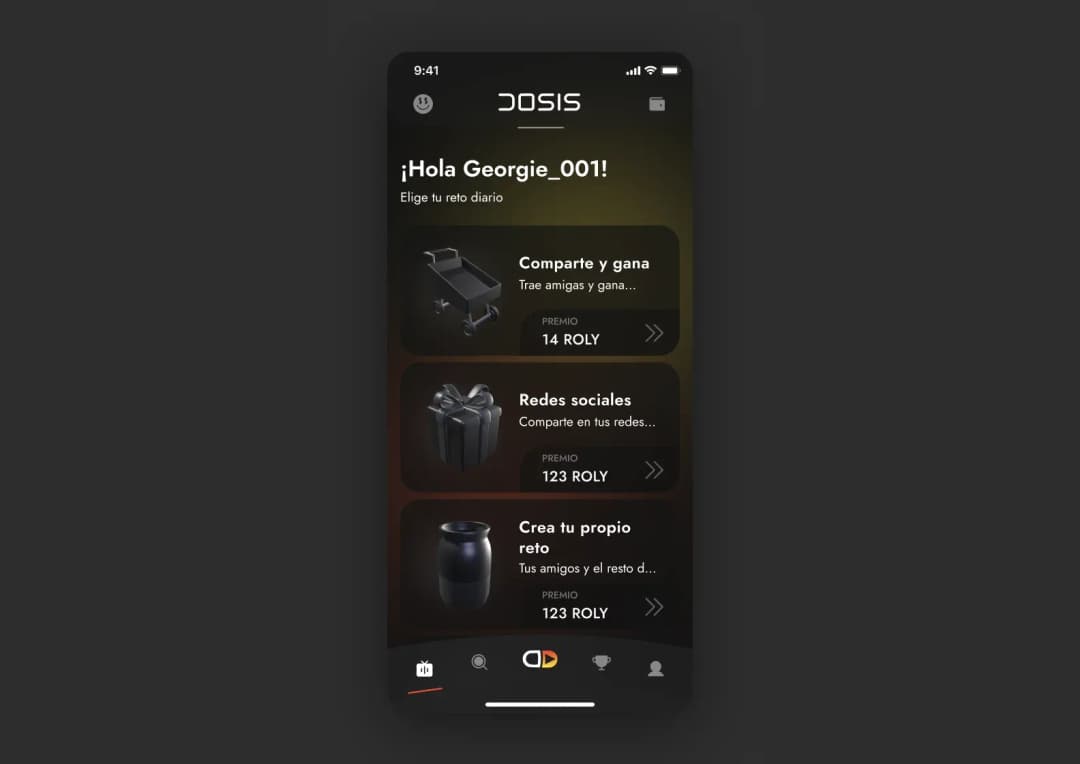
We finished the project in two months, and the client was so happy with the design that he wanted to make a web version of the app with us.
Estimated price: $15,000 to $40,000
From SSL protocols to fraud detection systems, security layers protect sensitive financial data. It’s one of the most important — and non-negotiable — cost drivers in fintech application development. Depending on how many layers of protection you need and how complex they will be, the final price may change.

Estimated price: $10,000 to $30,000
Users want clarity: expense charts, investment tracking, or savings goals. Dashboards make financial data digestible and easy to understand. However, they require additional development for accuracy and real-time updates.
Unlike security or payment integration, this part is actually negotiable — not every fintech app necessarily needs an extensive analytics system. If reporting isn’t exactly the killer feature of your project, you can even opt for third-party services to cut costs here.
Estimated price: $5,000 to $15,000
Push notifications for transactions or account updates seem simple but are key to user engagement. More advanced personalization (e.g., AI-driven alerts) increases development costs.
Even in a completely custom fintech app, you can’t always go without third-party services. Whether it’s open banking APIs, credit score providers, or analytics tools, integrations extend your app’s functionality.
⭐Our experience
With Abel, we carefully stitched together multiple APIs to deliver value while optimizing costs. In this case, it included us basically making a free backend for our client 😅
Our clients wanted us to make a secure and convenient cryptowallet that would allow them to:
We used a lean, strict design, but implemented some bright accents, such as blue and green, because the project was created as part of a future educational system about crypto. While no gamification was needed immediately, we had to keep that in mind and make the design as modern and adaptable as possible.
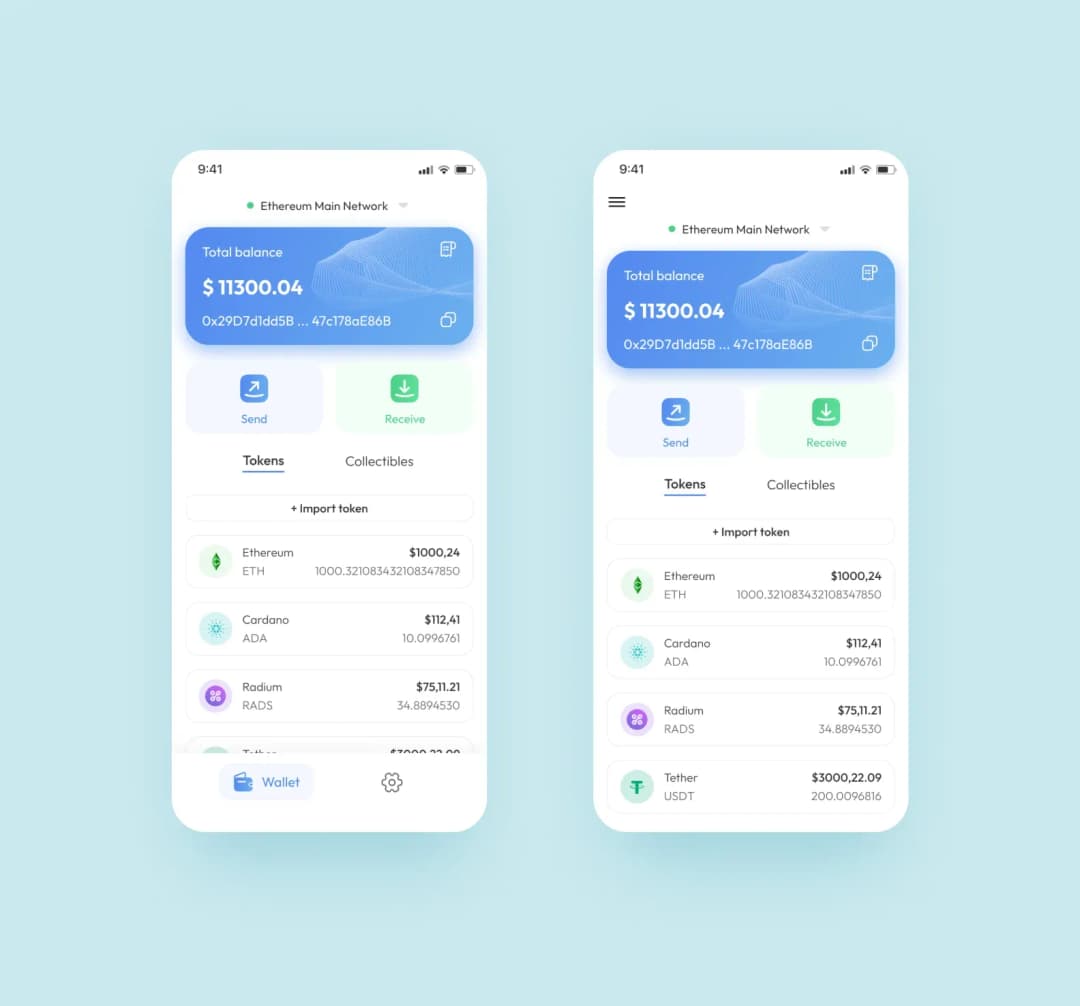
However, our main challenge was to make the app fully decentralized: all data should be stored on the user's device, not on some server. It means the app should have no backend, and blockchain data should be accessed via APIs.
To handle this, we figured out how to make a free backend, choosing several APIs for different tasks and combining them into one functional backend.
The result: the clients are using the MVP to attract investors. We spent 1268 hours on this project: 59 on design, 327 on testing, and the rest — on development.
| Feature | Estimated cost | Note |
| Authentication & onboarding | Included in MVP | Usually part of the base package |
| Payment gateway (Stripe/Braintree) | $15,000–$30,000 | Off-the-shelf integration |
| Open banking / core banking API (Plaid, Tink, Mambu) | $25,000–$60,000 | Per integration |
| Encryption & fraud detection | $15,000–$40,000 | Security layer |
| AI-driven analytics / personalization | See AI section below | Growing budget line |
When planning a fintech app, most businesses focus on app type and features. While those are the biggest drivers, there are plenty of other elements that quietly shape your budget. Some of them might not be obvious at first — but they can make the difference between a lean, efficient build and an overblown project. These are the less obvious factors affecting fintech app development, and each can affect the fintech app budget more than founders expect. Every one of them shapes what fintech apps cost to build and run.
The complexity of your app is the foundation of its cost. A lightweight budgeting app with basic charts and account connections will be far cheaper than a multi-level trading platform with real-time stock data, advanced analytics, and integrations with multiple third-party services.
The more screens, workflows, and logic your app requires, the more hours your fintech app developers, designers, and QA testers will need. It’s not just about the initial build, either: more complexity means more ongoing maintenance and support.
But a complex app doesn’t mean a better app. To determine just how complex a fintech service has to be, we lean on product discovery: a business analysis that includes market research, competitor analysis, and a deep dive into the project’s pros and cons. It helps to understand what to focus on during development and what features your users will actually need.
Do you want to build for iOS, Android, or both? Choosing one platform can cut your budget, but it also limits your audience. Many fintech startups start with a single-platform MVP to validate the idea quickly, then expand once traction is proven.
Alternatively, cross-platform frameworks like React Native can help balance cost and coverage — though certain performance-heavy features may still require native development. Each decision here comes with trade-offs in budget, timeline, and scalability.
Users need clear navigation, intuitive flows, and a polished interface to feel comfortable linking their bank accounts or investing money. A minimal design might keep costs lower, but strong app design is not a cosmetic line item — a carefully crafted UI/UX can significantly boost retention and engagement.
Remember: poor design is one of the main reasons fintech startups fail to gain traction. Investing in UI/UX design pays off in long-term user loyalty, even if it adds to the upfront budget.
This is where many first-time fintech founders underestimate costs. Financial apps handle highly sensitive data and often require compliance with standards like KYC (Know Your Customer), AML (Anti-Money Laundering), GDPR (data protection), and PCI DSS (payment security).
Ensuring compliance often means integrating third-party verification tools, implementing data storage safeguards, and going through external audits. Each of these steps requires time and expertise. Skipping them is hardly an option.
Security goes hand-in-hand with compliance, but it’s broader. Beyond meeting regulations, your app needs robust encryption, secure authentication methods, fraud detection systems, and possibly AI-driven anomaly monitoring.
Building these layers into your product can add significantly to development costs. But it’s important to remember that a single security breach can cost far more than the investment in getting it right the first time.
Where your team is located plays a massive role in budget planning. Developers in the US or Western Europe often charge between $100–$200 per hour, while equally skilled teams in Eastern Europe may cost $40–$80 per hour.
Asian teams can be even more affordable, but communication challenges or time zone differences may add hidden costs. Many fintech businesses find a balance by working with experienced teams in cost-efficient regions, combining quality with more reasonable pricing.
But this factor may turn out to be very important: remember our experience with the Kuwaiti payment system we mentioned earlier in the article!
The technologies you choose also influence cost. A modern, scalable stack — like Node.js for backend, React Native for cross-platform development, and AWS for cloud infrastructure — may have higher upfront costs but reduces technical debt and long-term headaches.
Legacy systems or outdated frameworks might look cheaper at first but can quickly become bottlenecks as your app scales. A smart tech stack decision is an investment in future-proofing your business.
Fintech development (or any other development) doesn’t end with launch. Apps require regular updates to fix bugs, improve performance, and stay compliant with changing regulations. You’ll also need ongoing server monitoring, security patches, and potentially new features based on user feedback. Post-launch support typically eats up 15–20% of your annual development budget. Treat it as part of the cost of ownership, not an afterthought.
For most fintech apps, the app type and feature list are the costs you see coming. The ones that blow up budgets tend to be the costs you don’t — the recurring and regulatory line items that only surface once development is underway. This cost breakdown covers the hidden parts of your fintech app budget as you estimate your fintech app development cost in 2026.
| Hidden cost category | Range | % of a typical budget |
| Compliance (PCI DSS, GDPR/CCPA, KYC/AML) | $15,000–$80,000 | 20–30% |
| Third-party integrations (per integration) | $20,000–$60,000 | — |
| Security & fraud detection | $15,000–$40,000 | — |
| Post-launch support / maintenance | ongoing | Estimate per contract |
Compliance is usually the biggest of these. For heavily regulated products — a lending app, a brokerage platform, anything touching customer funds — meeting PCI DSS, GDPR, and KYC/AML requirements can account for 20–30% of the total budget, and it isn’t a one-time payment. Security and fraud detection work the same way: encryption, monitoring, and audits are ongoing commitments, not a feature you ship once. If you want a closer look at that layer, we break it down in our guide to fintech cybersecurity requirements. Third-party integrations add up per connection, and post-launch maintenance runs for the life of the product. Industry cost trackers like Business of Apps show the same pattern across app categories: the build is only a fraction of the overall cost of ownership.
There’s no single answer to the cost to develop a fintech app, but fintech apps share a few honest ways to keep the cost of developing a fintech app in check without gutting the product.
Start with MVP development instead of a full build. A basic fintech app — a simple app with core auth, one payment flow, and basic reporting — will cost around $60,000–$120,000 and lets you validate demand before you build a fintech application at full scale. You don’t need to make a fintech app with every feature at once — add them once real users tell you which ones matter.
Use ready-made infrastructure where it’s safe to. Building a payment layer from scratch is rarely worth it; an established payment gateway integration with Stripe or Braintree, or open banking APIs like Plaid and Tink, covers most needs at a fraction of custom development.
Pick an experienced fintech app development company. The most expensive rework happens after an audit, when a generalist team has to retrofit KYC, encryption, or data-handling it didn’t design for. A development company that has shipped fintech before gets it right the first time — cheaper than fixing it twice.
AI features are turning up in more fintech apps every year, and they’ve become a real line item in the cost of fintech app development. The question isn’t whether to use it — it’s which app features earn their cost. For a wider view of where the technology is heading, see our overview of AI in fintech.
The most valuable AI in fintech apps falls into three areas, and they show up most often when you build a fintech app with AI features: real-time fraud detection that flags suspicious transactions as they happen, support chatbots that handle routine account questions, and personalized analytics or robo-advisory that turn raw transaction data into guidance.
What does this do to the budget? Qualitatively, AI adds development hours and demands specialized ML expertise — you’re paying for data pipelines, model training, and ongoing tuning, not just a feature toggle. The overall cost depends on how deep the integration goes, so treat it as a scoped decision rather than a fixed add-on.
“The teams that get the most out of AI don’t bolt it onto everything. They pick one high-friction problem — usually fraud or onboarding — and solve it well. That’s where the budget pays for itself. A thin AI layer spread across the whole app just adds cost without moving the metrics.”
— Sergey Nikonenko, COO at Purrweb
At Purrweb, we use the Agile approach and split fintech development into stages — so you know exactly what you’re paying for and what results to expect.
| Stage | Duration | Cost |
| Discovery & Research | 3–5 days | $4,500 |
| UI/UX Design | 10–15 days | $8,000 |
| MVP Development | 30–50 days | $60,000 |
| Testing & QA | 5–10 days | $8,000 |
| Launch & Support | ongoing | Quoted per project |
Result: clear project roadmap and feature list.
Estimated price: $4,500
We define the product vision, analyze competitors, and identify must-have features. This step ensures we’re building the right thing for the right audience.
Result: interactive prototypes ready for user and stakeholder validation.
Estimated price: $8,000
Our designers create user flows, wireframes, and a sleek interface that makes financial data easy to understand.
Result: fully functional MVP you can launch and test with real users.
Estimated price: $60,000
We build a lean version of your app with core features only — quick to market but strong enough to attract early adopters.
Result: stable, secure app that works flawlessly across devices.
Estimated price: $8,000
Every feature undergoes security checks, bug testing, and usability reviews. We test throughout our entire process, but at this stage, we do a final check to see everything works exactly as it should.
Result: market-ready fintech app with continuous improvements.
Estimated price: from $15,000
We deploy the app, monitor its performance, and roll out updates based on user feedback. Post-launch support keeps your app competitive and compliant.
The cost of building a fintech app depends on the app type, features, compliance, and many hidden factors like design, security, and team location. So what drives the cost of making a fintech app? A fintech app typically costs anywhere from a lean MVP to a full platform, and a clear cost estimation upfront keeps the overall cost of a fintech app and the total development cost predictable. Fintech apps reward a lean start and a clear plan. With the right approach, every dollar goes into creating a secure, user-friendly product that drives business growth.
➡️ At Purrweb, we know how to balance budgets with bold ideas. If you’re ready to turn your fintech vision into reality, let’s build it together.
Fintech app development costs range from $80,000 to $500,000+, depending on app type, feature set, and team location. A personal finance app typically starts at $80,000–$150,000, while a mobile banking platform with full compliance can exceed $400,000. At Purrweb, MVP-scope fintech projects commonly land between $60,000 and $120,000 for the initial release.
A fintech MVP — covering core features like user auth, one payment flow, and basic reporting — costs $60,000–$120,000 and takes 3–5 months to build. A full-featured product with multi-currency support, advanced analytics, and regulatory integrations typically costs $200,000–$500,000 and requires 9–18 months. Starting with an MVP lets you validate the product before committing the full budget.
Investment and trading platforms are the most expensive fintech apps, averaging $250,000–$500,000+. They require real-time data feeds, brokerage API integrations, strict SEC/FCA compliance, and advanced security layers. Mobile banking apps follow closely at $200,000–$400,000 due to core banking system integrations and KYC/AML requirements. Digital wallets are comparatively lower-cost, starting around $150,000.
The four main cost drivers are: (1) compliance scope — PCI DSS, PSD2, or SOC 2 certification adds $20,000–$80,000; (2) team location — US/EU teams charge $100–$200/hr vs. $40–$80/hr in Eastern Europe; (3) third-party integrations — each payment gateway or banking API adds $20,000–$60,000; and (4) security architecture — encryption, fraud detection, and penetration testing add $15,000–$40,000.
Compliance is one of the largest hidden cost factors in fintech. PCI DSS certification for payment processing adds $15,000–$50,000. GDPR or CCPA data privacy implementation runs $10,000–$30,000. KYC/AML integration via providers like Onfido or Jumio costs $15,000–$40,000 in development plus ongoing per-check fees. For heavily regulated products like lending or brokerage apps, compliance work can account for 20–30% of total project cost.
Third-party integrations typically add $20,000–$60,000 per integration to a fintech project. A Stripe or Braintree payment gateway setup costs $15,000–$30,000. Open banking or core banking API connections — Plaid, Tink, Mambu — add $25,000–$60,000. Each additional provider such as credit bureau, ID verification, or FX data compounds the budget. Projects with 3–5 integrations commonly see $80,000–$150,000 in integration costs alone.
A fintech MVP takes 3–6 months to build; a full product typically requires 9–18 months. Timeline directly drives cost: a longer project means more developer-hours, extended QA cycles, and higher management overhead. Rushed timelines require larger parallel teams, which increases hourly burn rate. Discovery and UX design upfront — typically 4–6 weeks — reduces rework and keeps the total timeline and cost lower.
AI is increasingly used in fintech for fraud detection, customer support chatbots, and personalized financial insights. Adding AI features typically extends development time and requires specialized ML expertise, which increases the budget — see the “AI features” section above for a full breakdown.


.svg)