Explore

Need help with your project?

Oops! Something went wrong while submitting the form.
Most banking products don’t fail for lack of money. Banking software development stalls on the hard parts: regulation, legacy cores, and the security that money demands.
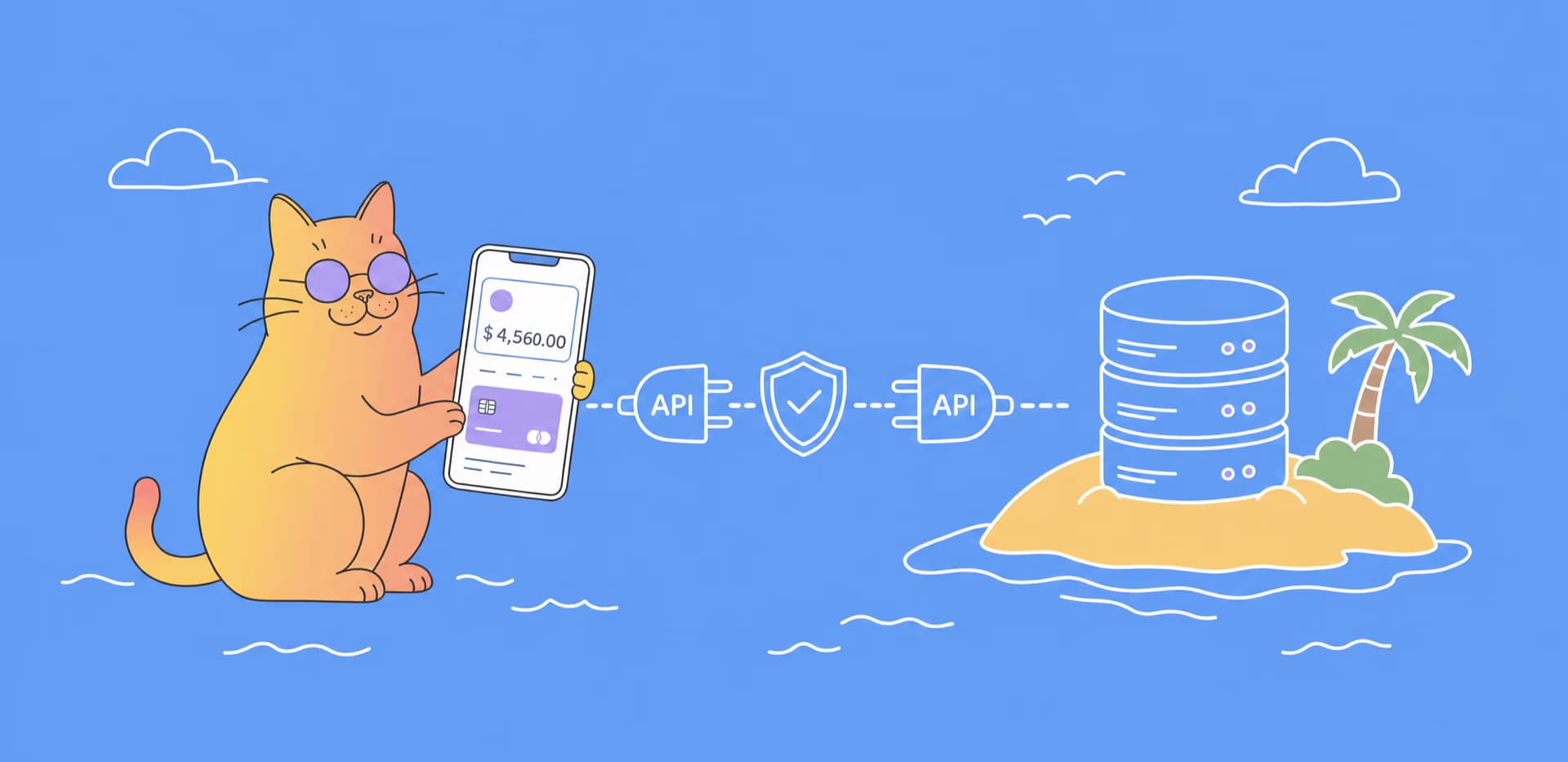
Most banking products don’t fail for lack of money. Banks and investment firms will spend $857.5 billion on IT in 2026, up 9.5% on the year, so it’s not really a problem. Banking software development stalls on the hard parts instead: regulation, legacy cores, and the security that money demands.
This guide breaks down the types of banking software, the build process step by step, the regulations you can’t skip, and what a banking product actually costs to ship. Whether the goal is a neobank from scratch or a modernized legacy core, the fundamentals are the same.
Banking software development is the work of building and maintaining the systems that run a bank, including the financial services customers see and the back-office that runs them. That spans core banking engines, customer-facing mobile and web apps, payment rails, fraud tooling, and the compliance layer that connects them. If you’re planning a mobile banking product, our mobile banking app development team handles that build end to end.
The work covers two broad systems. One is software development in banking that talks to the bank’s own ledger and account system. The other is the digital banking layer customers actually touch, where balances and transfers update in real time.
This is where the distinction between general fintech work and banking software becomes clear. A budgeting app or a standalone wallet rarely connects to a regulated ledger, while banking software always has to. That connection is the dividing line, that makes planning for a real-time settlement path and a regulatory stack essential from day one.
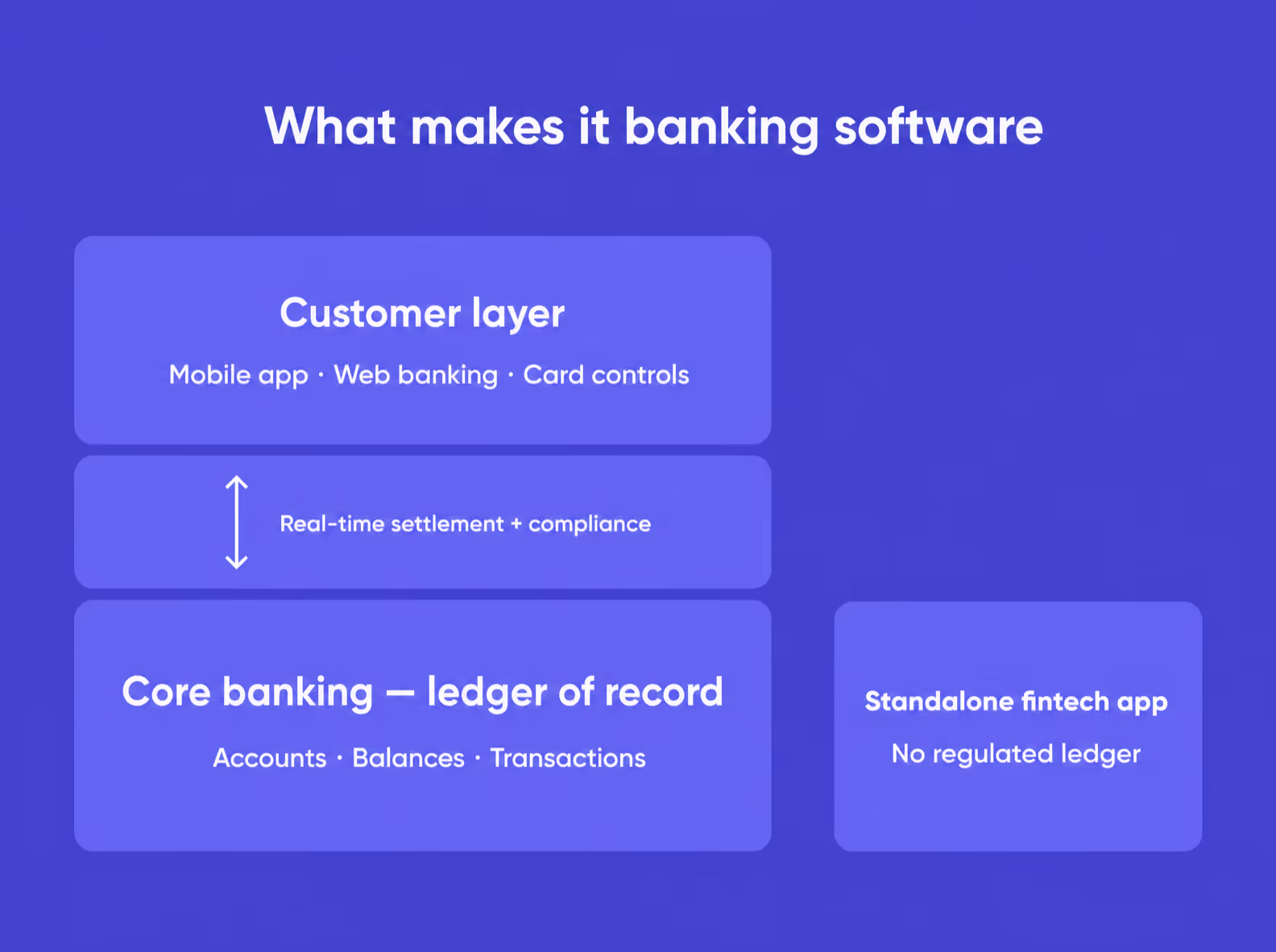
The connection between the customer layer and the regulated core is what separates banking software from a standalone fintech app
A financial institution also carries audit and licensing duties that a consumer app never sees, and modern banking products inherit all of them. The result is a higher bar for security and traceability across the banking industry. That gap shapes every decision in this guide, from architecture to budget.
Banking software isn’t just one product but a combo, and all of them sit on top of one foundation — the core banking system. That core still runs on COBOL and mainframes inside large banks, which is why a startup has to integrate with these legacy banking systems rather than rebuild them. The five banking solutions below are what you can actually choose to build on top. Each type is a separate software solution with its own scope.
The phone is where most customers go to their bank now. A mobile banking app handles balance checks, transfers, card controls, and push alerts, and it leans on biometric login and instant updates. Apps like Revolut and Monzo set the expectation: open, glance, act, done. For a startup this is usually the first build, because it ships fastest and proves the product to investors.

Revolut’s transfer screen shows the glance-and-act pattern most mobile banking apps now follow
Not everything happens on a phone. Online banking platforms serve desktop and business users who run payroll, bulk payments, and multi-user access from a browser. This is also where open banking lives, with APIs that let approved third parties read account data or start payments. A business banking platform carries far more roles and permissions than a consumer app, so access control gets heavier here.
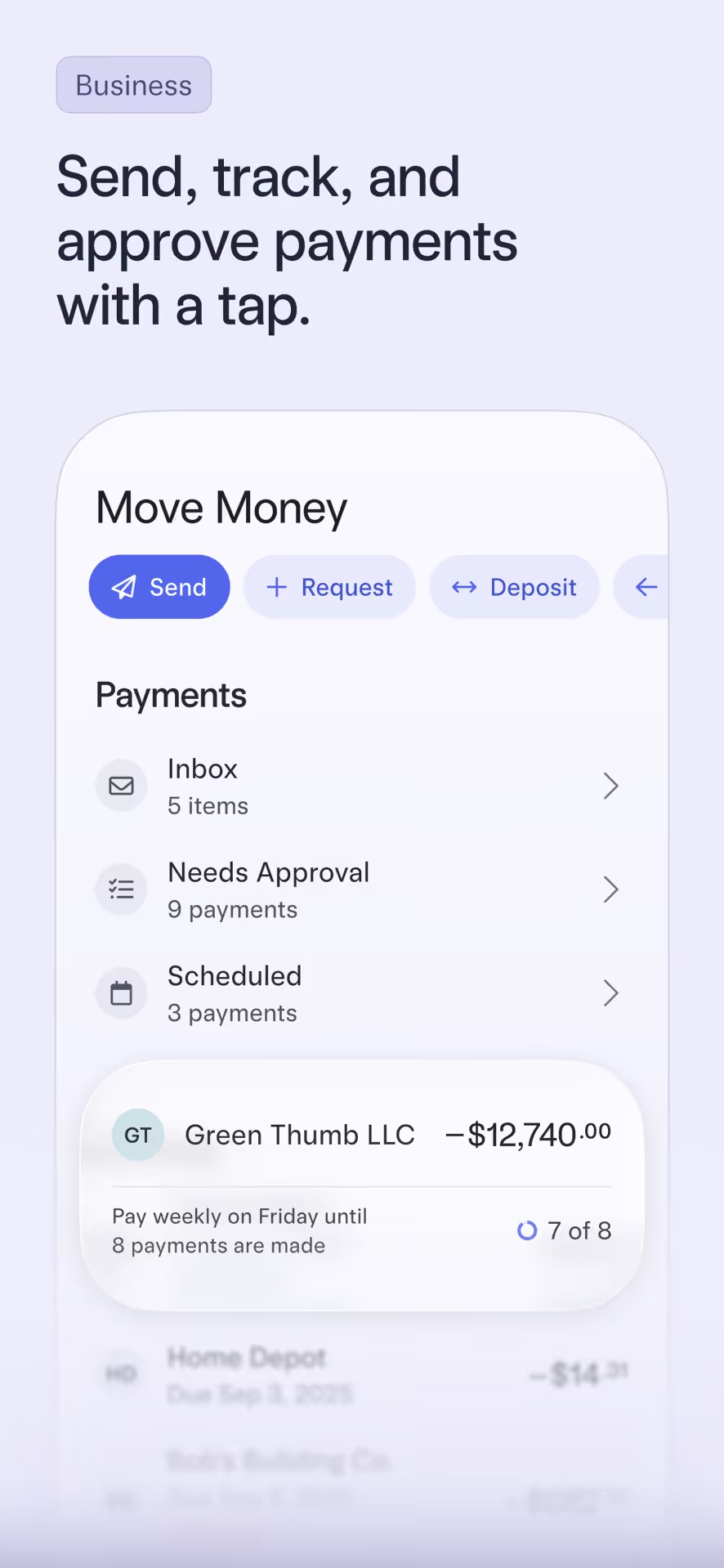
Mercury’s payments view reflects the multi-account, role-heavy nature of online banking platforms
Behind every transfer sits a system that actually moves the money. Payment processing software authorizes, clears, and reconciles transactions across card networks, ACH, and SEPA rails, and consumer payment apps sit right on top of it. It connects to gateways like Stripe or Adyen and has to stay reconciled to the cent. When a payment fails at 2 a.m., this is the layer that retries, logs, and recovers without losing a single record.
We built Kem, a P2P payment app for the Kuwaiti market, where many people had no easy access to online transfers. The product had to move money fast and stay secure on every transaction.
Time was of the essence, so we shipped the MVP in just a couple of months by doing the mock-up API with client data. Founders took it straight to the banks and requested API access with real data. That demo did its job: the project secured backing from the Kuwait Investment Fund and other investors, after which they’ve had to only swap the APIs, and the app was live.
Kuwaiti banks require the technical team to be inside the country for live API access, so we handed over the full codebase, accesses, and supported the in-house team through the switch.
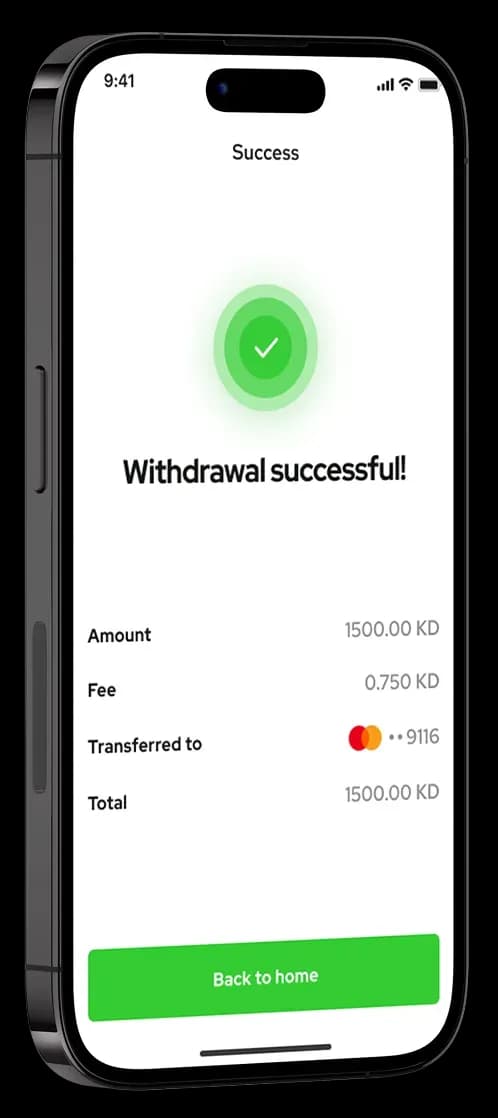
Kem’s P2P transfer flow, built as an MVP the founders used to win bank API access and early investment
A loan management system runs origination, credit scoring, disbursement, and repayment tracking in one connected flow. It pulls credit data, applies risk rules, and schedules repayments automatically. The harder part is the edge cases like early payoff, missed installments, or restructuring, where the logic has to handle everything without a human chasing spreadsheets.
At the top end of complexity is investment banking software development. These platforms handle trading, portfolio tracking, and settlement for capital-markets and wealth-management products. They demand real-time market data, sub-second updates, and the heaviest audit trails in banking. A delay that a budgeting app would shrug off can cost real money here, so performance and traceability sit at the center of the build.

Interactive Brokers packs real-time data and orders into one view, the data density investment platforms demand
Most banking applications combine two or three of these systems, and that mix is what shapes the feature list and the budget that follow.
Features in banking aren’t a wish list, they’re a survival list. A few are non-negotiable because regulators and customers will demand them from day one. Below are the ones that show up in almost every serious build, followed by one that fewer teams think about but that quietly drives retention and can become your secret weapon.
Those cover security and compliance. The next one is about keeping the customer once you have them.
Most feature lists stop at security, but the products that hold users add a reason to come back. Gamification in banking puts rewards, streaks, and progress goals into everyday banking actions, turning a simple balance check into something engaging. It works because finance is habitual, and a habit that rewards itself always sticks.
That was the philosophy when we designed Kaiju, a crypto wallet for a Singapore team that wanted retention designed into the product from the start, not bolted on later. Plain wallets are easy to download and forget, so the goal was to make people open the app daily.
To do that, we added a daily reward wheel, token-earning tasks, and a leaderboard that ranks top players. Each one gives a reason to return that has nothing to do with checking a balance.
The wallet launched, secured investment, and onboarded its first cohort of users on that engagement-first design.
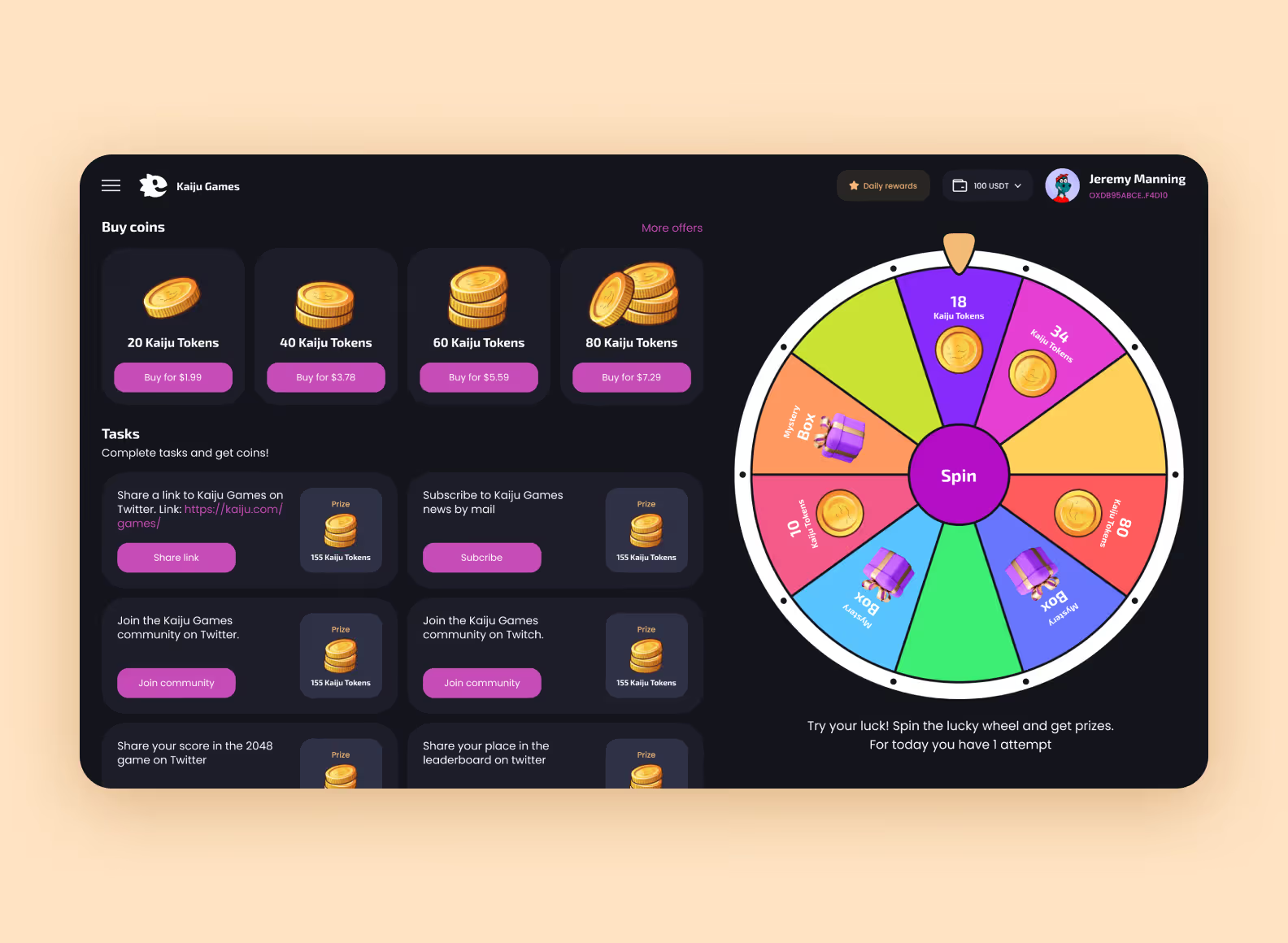
Kaiju turned routine wallet actions into daily reasons to return through a reward wheel and leaderboard
Compliance is what gets underestimated the most. All a consumer product has to worry about is how a user feels about it and bugs. Banking software answers to named regulators with audit power and the ability to fine, on top of having to care about the usual stuff.
Before a build starts, the team has to know which frameworks apply. Each one sets concrete technical requirements that shape the architecture from the first sprint. The table below maps the major ones founders run into.
| Regulation | Jurisdiction | What it governs | What it means for you |
| FFIEC | US | Bank IT examination | You’ll have to run a yearly external IT audit and document a secure build process, so plan budget and time for it every year. |
| PSD2 / PSD3 | EU | Open banking, strong customer auth | Secure open-banking APIs and two-factor login are mandatory, which makes partner access and strong authentication core scope, not add-ons. |
| Basel III | Global | Capital and risk | Risk and capital data has to report in real time, and that means heavier data pipelines and storage than a simple app. |
| GDPR | EU | Personal data | Personal data gets encrypted, consent gets captured explicitly, and EU data stays inside the EU, all as shipped features. |
| PCI DSS | Global | Card data | Card numbers are tokenized and the network segmented, which keeps raw card data out of most of the system and shrinks audit scope. |
| SOC 2 Type II | Global | Service-org controls | Proving controls run continuously for months pushes logging and monitoring to day one, rather than after launch. |
Missing one rarely surfaces in QA. It surfaces in an audit, when fixing it is slow and public.
Compliance checks should happen throughout the software development lifecycle, not just at the end. Get this layer right and partner integrations will get a clear from any review. Get it wrong and an open endpoint becomes the vulnerability an attacker can exploit and steal money.
Building banking software follows a software development lifecycle that looks familiar until compliance reshapes it. The work runs in agile development sprints, yet every stage below carries a regulatory weight a normal app never feels. The timelines shown are for a typical mobile banking MVP that we usually follow.
The team maps out what the product does, who it serves, and which regulations apply, all before even a line of code exists. Scope, integrations, and the compliance burden all get defined here, and projects that rush this stage are the ones that quietly run over budget later.
Timeline: 2–3 weeks
What you get: a documented scope, a compliance checklist, and a fixed estimate you can plan around.
Next comes the blueprint: how data flows, where it lives, and how the system connects to core banking and payment rails. Choices about scalability and data residency are expensive to reverse, so we settle them here rather than mid-build.
Timeline: 2–4 weeks
What you get: a system architecture, a tech-stack decision, and a data-residency plan that holds up to an audit.
The interface has to make regulated, complex actions feel simple, from onboarding and identity checks to transfers. Our banking app design balances clean flows against the security screens compliance requires, because a confusing consent screen is both a usability and a legal problem.
Timeline: 3–5 weeks
What you get: clickable prototypes, a full screen set, and design that already accounts for compliance steps.
Now the software developers build the product, wiring the front end to back-end services, the core ledger, and third-party APIs. This is the longest stretch of the development process, which we run in 1–2 week sprints so each piece is tested as it lands instead of all at once.
Timeline: 8–14 weeks
What you get: a working product, integrated and demoable at the end of every sprint, not just at the finish.
Beyond normal QA, which we do throughout, the build gets penetration tested, load tested, and checked against standards like PCI DSS. The point is to find the weak spot before an attacker or an auditor does, while it is still cheap to fix and doesn’t involve legal or reputational risks.
Timeline: 2–4 weeks
What you get: a penetration-test report, resolved findings, and evidence you can hand to a regulator.
This is the banking software development stage most guides skip. An independent review confirms the product meets the frameworks it falls under before it touches real customer money, and clearing it is often the gate to a banking license or a partner bank.
Timeline: 2–6 weeks
What you get: an audit sign-off that unlocks bank partnerships, processor approval, or go-live.
The product ships and the real work continues: live monitoring, incident response, and updates as regulations shift. In banking, launch day starts the maintenance window rather than closing the project.
Timeline: ongoing from launch
What you get: a monitored live product, an incident playbook, and a backlog for the next release.
Banking software has no single price, but it does have a predictable shape. A mobile banking MVP starts around $50,000, while a full core banking build runs past $100,000. What sits between those numbers is product type, compliance scope, and where the team is based.
Here’s how a typical mobile banking MVP, around $55,000–$70,000, breaks down by phase.
| Process | Explanation | Duration | Cost |
| Project estimation | Scoping the product, mapping the compliance work, and defining the build before any code. | 2–4 weeks | Free at Purrweb |
| UI/UX design | Screens and flows get designed, with identity checks and consent steps built in. | 3–5 weeks | $7,000–$9,000 |
| Core development | The product gets built and wired to the ledger, payment rails, and third-party APIs. | 8–14 weeks | $30,000–$38,000 |
| Security and QA | Penetration testing, load testing, and fixes against standards like PCI DSS. | 2–4 weeks | $8,000–$10,000 |
| Regulatory and compliance audit | An independent sign-off clears the product to handle real money. | 2–6 weeks | $4,000–$6,000 |
| Deployment and Year-1 monitoring | We launch, monitor live, respond to incidents, and ship the first year of updates. | Ongoing | $6,000–$8,000 |
Timelines follow the same logic, as a shorter development cycle lowers the cost. A mobile banking MVP ships in 4–6 months, an online banking platform in 8–14 months, and a core banking modernization runs 18–30 months. The gap is integration work, not feature count.
That last gap is usually legacy. When a new product has to talk to a bank’s COBOL core, the integration and middleware work stretches both the budget and the calendar. The older the core systems, the more of each they quietly consume.
The biggest fork a founder faces is what to build on. A traditional bank and a neobank solve the same problem with opposite foundations, and that choice shapes cost, speed, and what the product can do later. The differences might sound too technical, so here they are in plain terms.
| What differs | Traditional bank | Neobank |
| Where it runs | On-premise mainframes the bank owns and maintains | Cloud-native, rented from providers like AWS and scaled on demand |
| How it’s built | One large connected system, where a change in one place risks the whole | Microservices, small independent parts you can update without touching the rest |
| How data moves | Batch processing, where transactions settle in overnight runs | Event-driven, where each action is handled the moment it happens |
| Time to launch | Years, with heavy integration into legacy banking systems | Months, especially when core banking is rented rather than built |
There’s also a third path that skips the hardest part. Banking-as-a-Service, or BaaS, lets a startup rent a licensed bank’s core and APIs instead of building one. You get accounts, cards, and compliance rails out of the box, and you trade some control for a launch measured in months. When speed matters more than owning the full stack, how to build a neobank on top of BaaS is often the realistic route.
We built Broex, a multi-currency crypto wallet aimed at people entering crypto for the first time. The brief was a clean, modern product that wouldn’t scare off newcomers.
The front end was on React Native and connected to the client’s backend over GraphQL, a setup that keeps the app fast and the data queries lean. We borrowed familiar patterns from mainstream banking apps so the interface felt known from the first tap.
The client released early versions to real users and kept scaling features from there, the modular path a neobank build relies on.
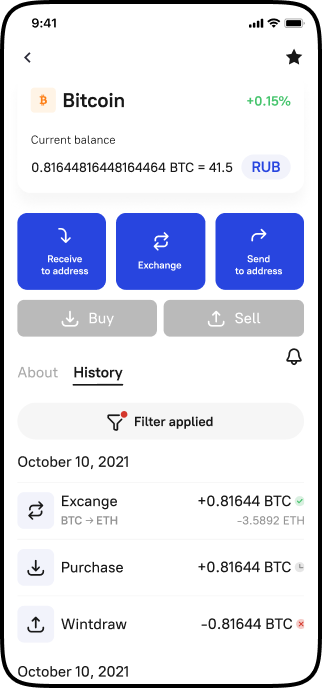
Broex leaned on a modern, modular stack so the team could ship early and expand feature by feature
The right partner is the difference between clearing a regulatory audit and discovering a gap four weeks before launch. In banking, that gap is expensive, so the vetting matters more than it does for a normal app. Five things separate a real banking software development partner from a generalist agency.
A portfolio rarely tells you these things outright, so the fastest filter is a short list of direct questions. Ask a prospective development team:
The answers separate teams that have done this from teams describing what they’d try. That difference is what you should look for.
Banking software is harder to build than a standard app for one reason — a regulated ledger, and everything else that follows from that. The compliance stack, the real-time settlement, and the integrations into decades-old core systems are what prolong the timeline and the budget, far more than the feature list does.
For a founder, the practical takeaways are:
Get those right, and the rest of the build becomes a question of execution. If you want to see where banking software is heading next, our overview of mobile banking trends covers what’s coming.
➡️ Ready to scope your banking product? Tell us what you’re building, and we’ll map the compliance work and come back with a free estimate in 48 hours.
A banking software developer builds and secures the systems that move and store money. The job covers encryption, authentication, fraud controls, and integrations with core banking and payment rails, all under regulatory requirements that a consumer app rarely faces.
Yes. Many large banks still run their core on COBOL and mainframe systems, and few replace them quickly. For a new project it shows up as extra integration work and longer timelines, especially anywhere the product touches core banking.
The build runs through seven stages: discovery and requirements, architecture design, UI/UX design, core development, security and compliance testing, an independent regulatory audit, and deployment with ongoing monitoring. The audit stage is the one most general software projects never include.
Costs range from around $50,000 for a mobile banking MVP to more than $100,000 for a full core banking build. The main drivers are the type of software, the compliance scope, and where the development team is based.
In the US, FFIEC examinations and PCI DSS for card data lead the list. In the EU, PSD2 and PSD3 govern open banking, while GDPR covers personal data. Basel III and SOC 2 Type II apply across both regions.
Both work. Banking-as-a-Service rents a licensed core and compliance rails, so a team launches in months with less control. Building a custom core takes far longer and costs more, but it gives full ownership of the product and its roadmap.


.svg)