Explore

Need help with your project?

Oops! Something went wrong while submitting the form.
Blockchain technology is transforming industries from finance and gaming to supply chain and real estate. Yet, despite its revolutionary potential, blockchain adoption often stalls because of poor UX(user experience).
This article explores why UX is critical in blockchain products, the biggest design challenges teams face, and the proven best practices for creating user-friendly Web3 experiences.
For many users, interacting with blockchain platforms still feels intimidating: cryptic interfaces, long wallet addresses, confusing transaction confirmations… all in all, not something you’d want to experience during your everyday financial routine.
That’s why user experience (UX) for blockchain products is a business-critical factor, not just a design concern.
In Web3, products compete not only on technology but also on trust and accessibility. A decentralized exchange with cutting-edge smart contracts won’t retain users if onboarding feels like solving a puzzle. And for startups, strong UX means faster user acquisition and lower churn.
Ideally, great blockchain UX bridges the gap between complex technology and real-world usability. It’s UX that helps blockchain apps feel like familiar banking platforms — thus, it’s simply less scary to engage. As blockchain technology moves from niche to mainstream, UX is among the key factors that move your Web3 product forward.
Web3 still feels relatively new, both for users and developers. Below, we’re discussing the main challenges blockchain UX faces and how to handle them with grace.
Creating a crypto wallet or connecting one to a dApp is often a user’s first roadblock — seed phrases, private keys, and network choices overwhelm newcomers. The potential solution can be to simplify onboarding through guided flows and clear language.
Use familiar patterns from Web2 apps — for example, “Sign in with Google” integrations via custodial wallets or step-by-step tooltips. It will help reduce cognitive load before overwhelming users with advanced blockchain features (boy, there are enough of them, and onboarding shouldn’t add to the list).
Terms like “gas fees,” “staking,” or “smart contracts” confuse users with non-technical backgrounds. Poor comprehension leads to mistrust and drop-offs. To prevent this, make sure everything is understandable to an average user.
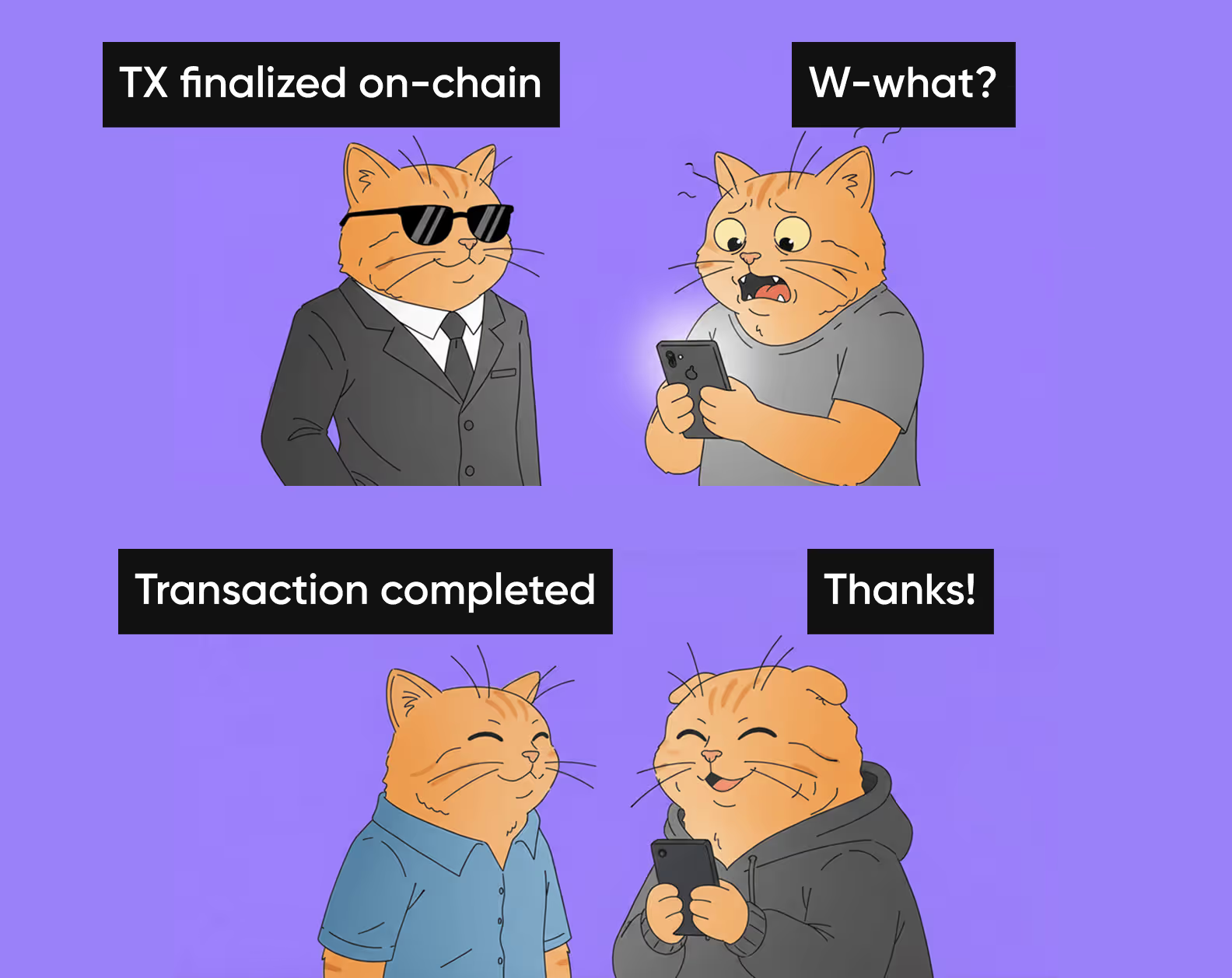
For instance, instead of “approve token allowance,” say “allow this app to use your tokens for trading.” Incorporate microcopy, visuals, and progressive disclosure to educate users without overwhelming them.
Blockchain transactions are final, which means mistakes cost money. Without clear confirmations or previews, users hesitate or abandon actions. Provide detailed transaction summaries, estimated fees, and clear risk indicators before every confirmation. Include reassuring visual feedback post-transaction (e.g., “Success” screens or blockchain explorer links).
Strong security measures — like private key storage or multistep authentication — often create friction. That’s why you need to balance safety and simplicity. Offer secure defaults while allowing advanced users to customize. Implement biometrics or encrypted local storage for passwordless yet safe authentication.
Users interact across Ethereum, Solana, and dozens of other chains — each with different rules and token standards. Switching networks confuses even experienced users. This is where chain-agnostic UX comes in handy with its automatic network detection, unified dashboards, and cross-chain compatibility. The goal is to let users interact seamlessly: they shouldn’t need to know which chain they’re on to get value.
It’s all fun and games until it’s actually time to decide what to consider “good blockchain UX design.” We’ve highlighted 6 key practices that we think should be a part of any truly lean and convenient crypto design.
Smooth onboarding does many things, but for your business, one is key: it reduces abandonment. Use step-by-step tutorials, progress indicators, and tooltips to guide users through wallet creation, network setup, or first transactions. Clear guidance turns crypto novices into confident users that will eagerly use other functions of your crypto app.
Common Web2 conventions such as e-commerce checkout flows, mobile banking interfaces, or notification banners reduce learning friction. Familiarity builds trust and shortens the time it takes for users to complete actions. It’s okay when a Web3 product implements the best features of Web2.
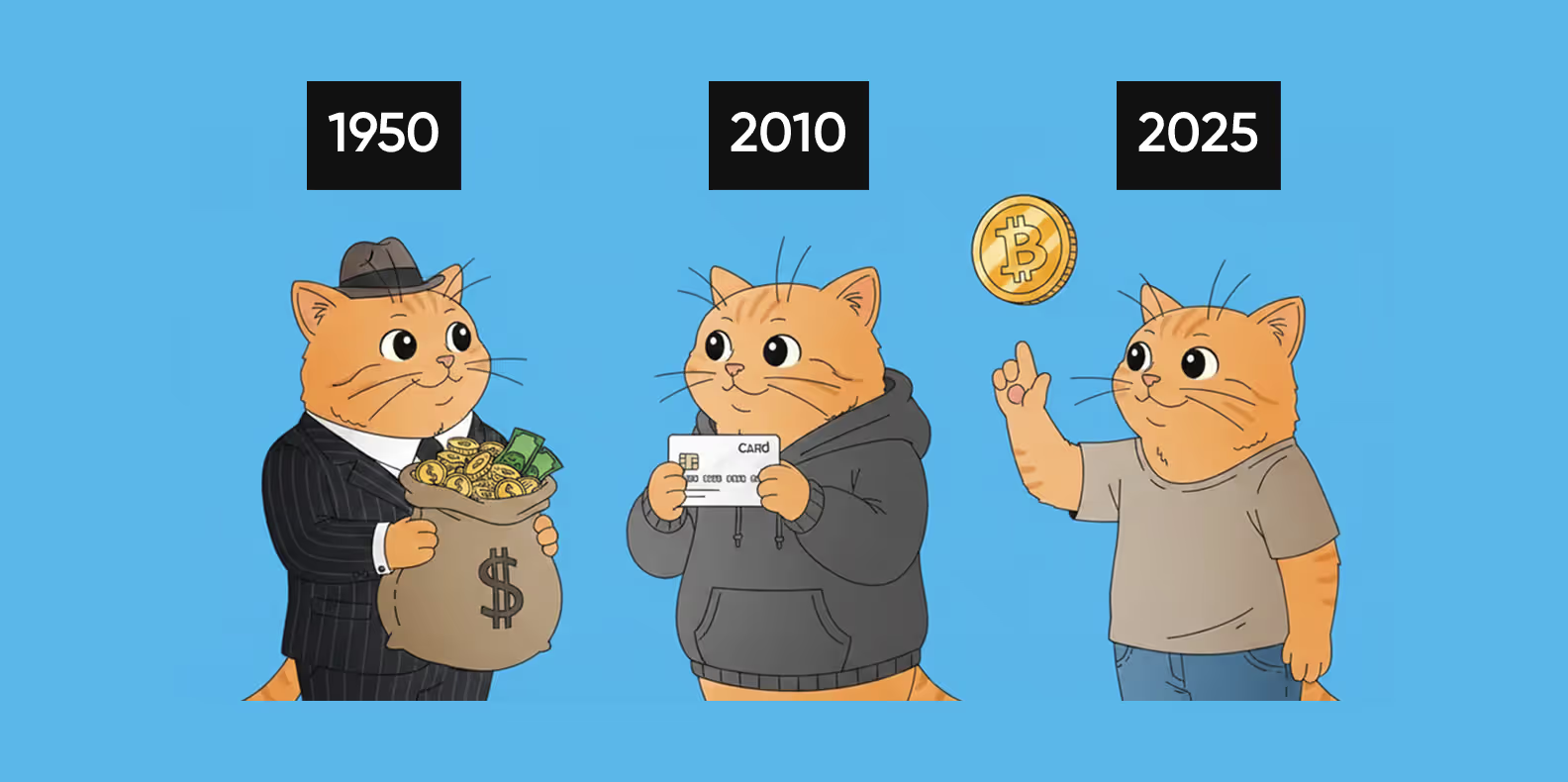
As we said already, blockchain is immutable, so users must understand the consequences of each interaction. Transaction previews, confirmations, and success/error notifications prevent mistakes — therefore, your support team isn’t buried in requests, and users don’t leave.
Strategic microcopy helps turn complex concepts into something digestible. Explaining gas fees, token allowances, or staking benefits within the workflow ensures users make informed decisions and don’t feel too overwhelmed.
Security measures are non-negotiable, but, like onboarding and everything else, they shouldn’t overwhelm users. Solutions like biometric logins or encrypted local storage balance protection with smooth interactions. Thus, your product is more trustworthy and reliable.
Advice and recommendations sound good in theory, but real-life examples always explain better. Let’s quickly look at some of the best crypto designs. Spoiler alert: you may find a Purrweb project or two in there. 😉
Metamask is one of the most popular cryptocurrency wallets and extensions. It succeeded early not only because it bridged browsers and blockchains, but also because it simplified wallet creation and transaction approval into an understandable flow. Naturally, that clarity translated directly into mass adoption.
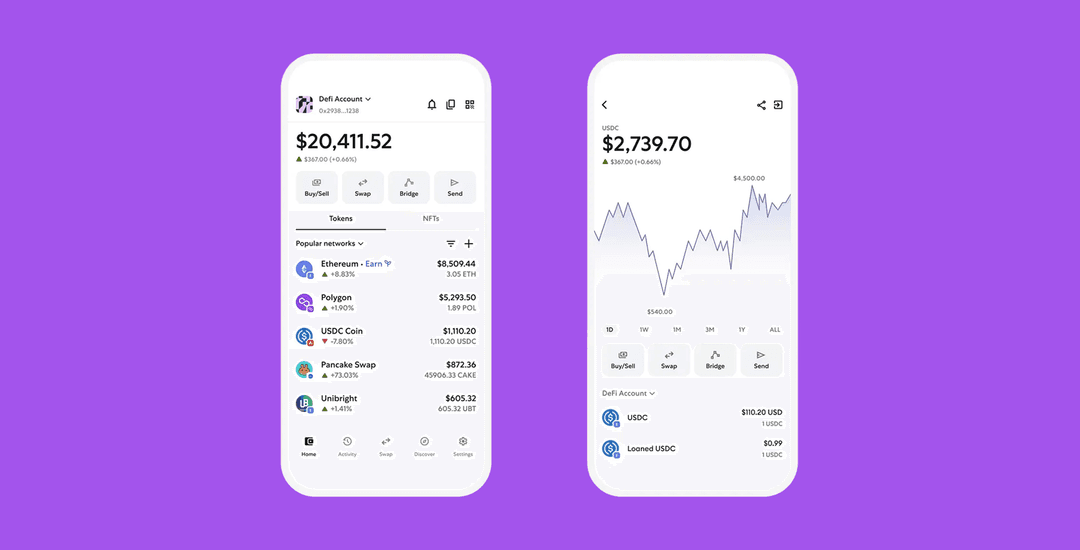
Broex is a multicurrency crypto wallet, and fun fact: it was our first blockchain project ever! Actually, to start developing, we had to study blockchain technology from scratch: the logic behind buying, exchanging, transferring, and withdrawing cryptocurrencies, as well as rounding, balance calculation, and establishing fees.
Our main goal was to make sure average users don’t puzzle over it the way we had to. We made sure everything looked familiar, friendly, and convenient.
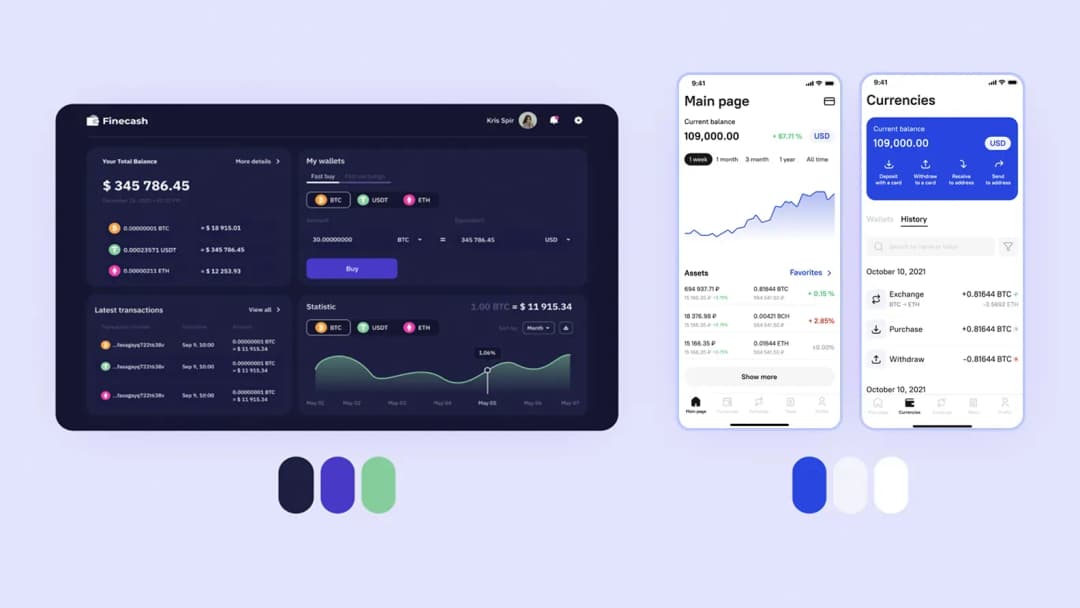
Sometimes, unexpected difficulties arise. Due to the huge amount of real-time data, the app began to slow down and heat the phone. We had to find a compromise between which data to update non-stop. We decided that everything related to currency transactions would be updated in real-time (buying, selling, and withdrawing funds). The rest (for example, exchange rates) — every three seconds.
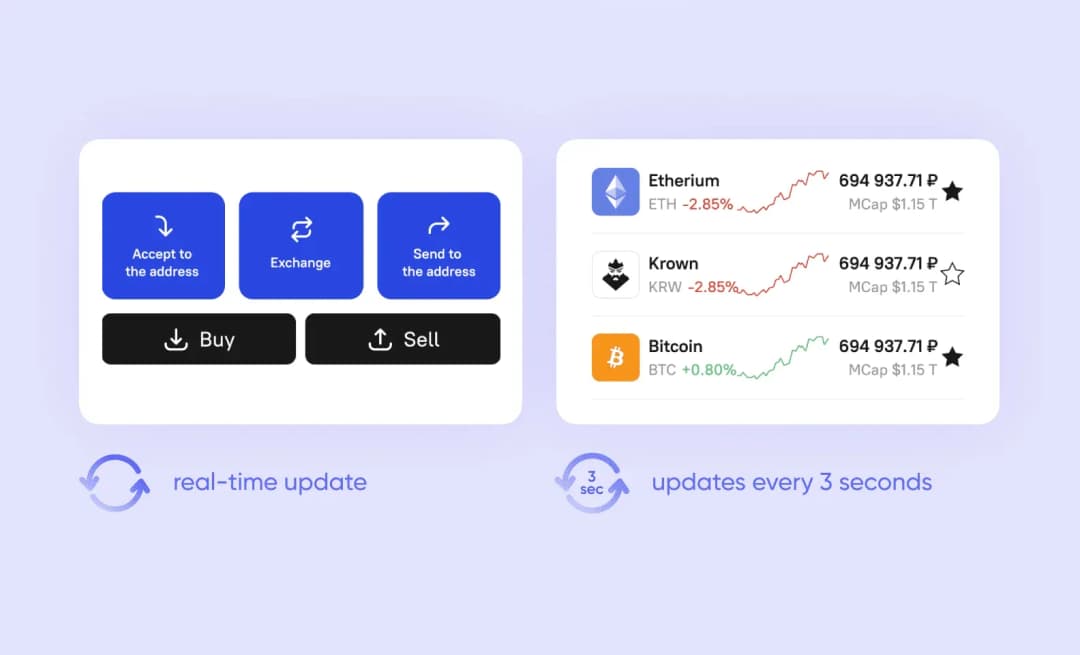
We still provide ongoing support for Broex. Among the latest updates was biometrics for iOS devices: now you can log in to the wallet using Face ID and Touch ID.
OpenSea is an NFT marketplace, and such platforms thrive because they make minting, buying, and selling NFTs feel familiar — similar to e-commerce checkout flows users already understand. Users also specifically underline OpenSea’s search engine. Its filters span categories, traits, and price ranges — discoverability at its finest.
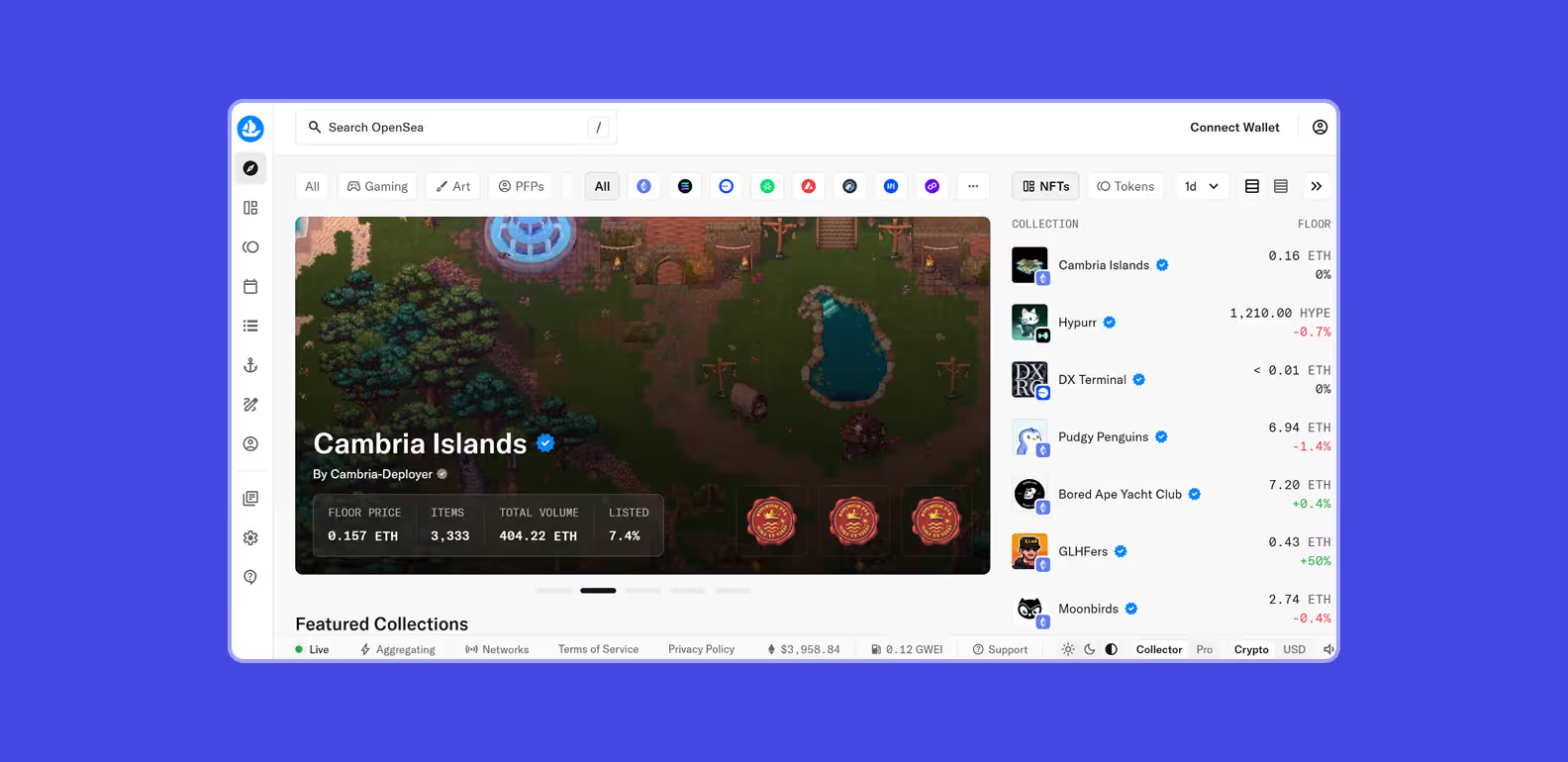
Besides, you can easily integrate a crypto wallet on the platform — or, if you already have an account on MetaMask or, say, Glyph, connect via them.
⭐Our experience
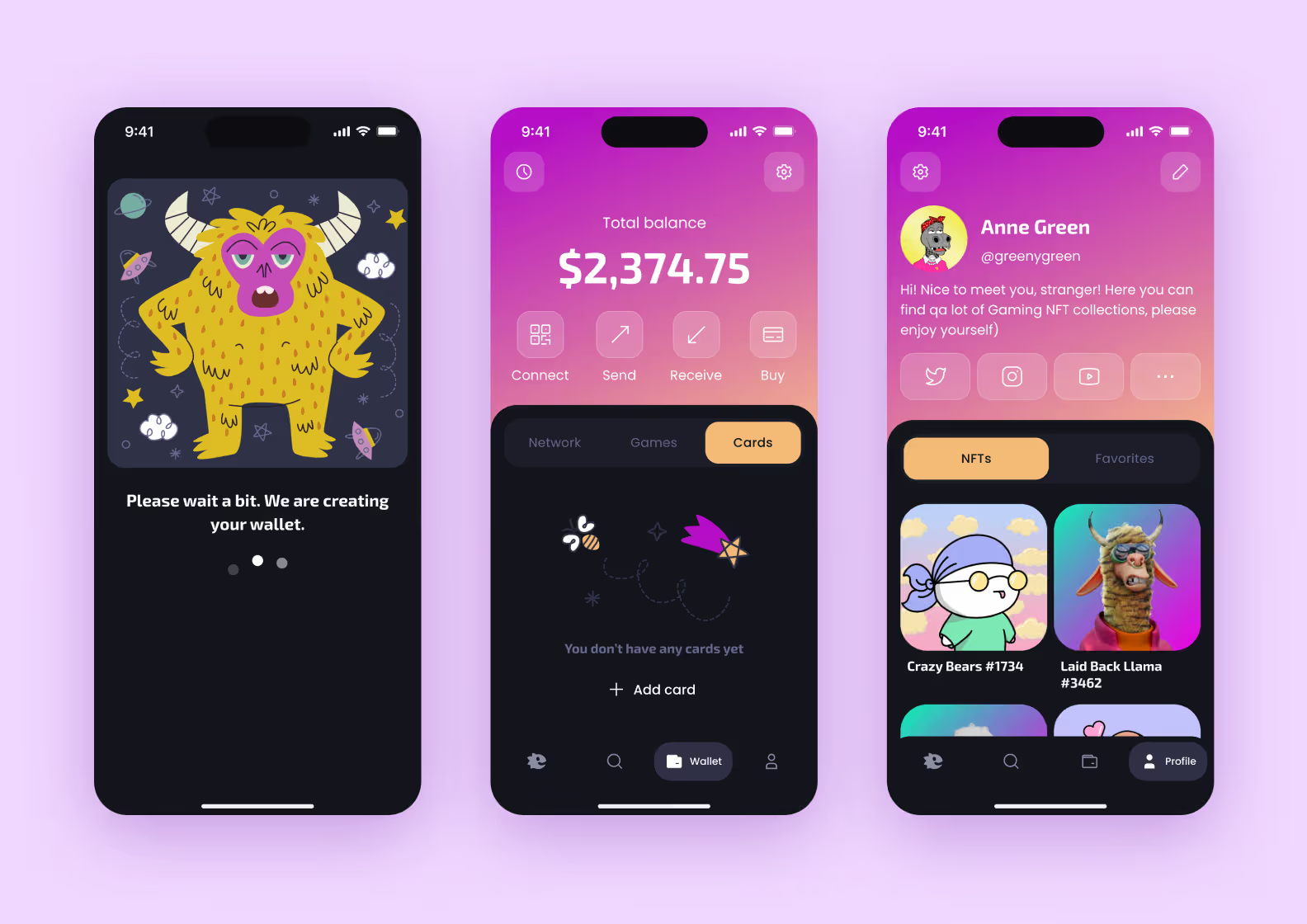
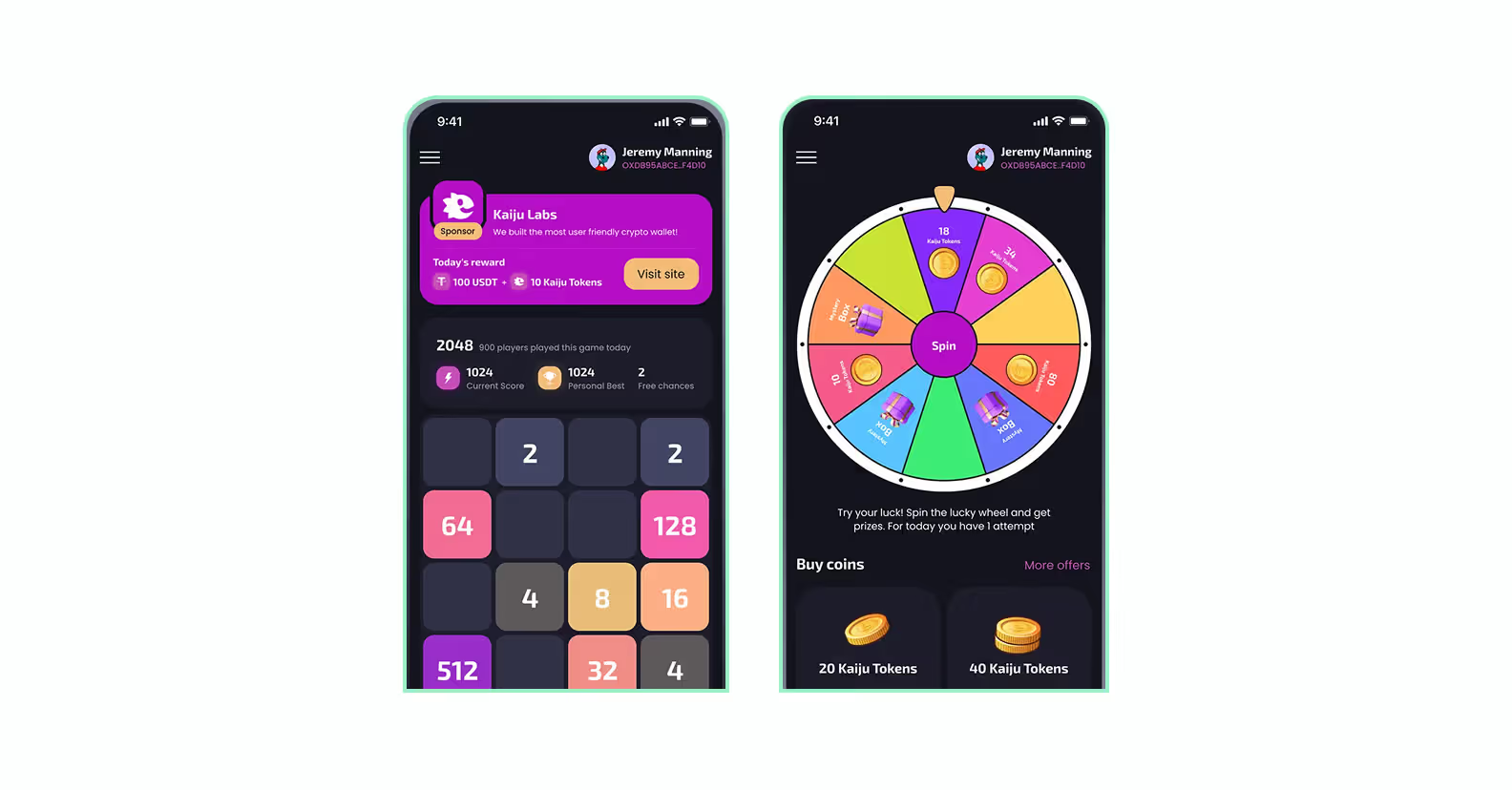
Kaiju is a crypto wallet where users can plan Web 3.0 games and buy NFTs. In most blockchain games, you have to set up a separate crypto wallet and connect it, but with Kaiju, everything is conveniently located in one place.
Our task was to develop a color palette and a logo, design the mobile crypto app (both blockchain games and NFT trading), and design the browser version of the blockchain game 2048.
The crypto wallet looks fun and friendly, but it’s also convenient and feels familiar to regular banking apps — no need to twist your brain while figuring out blockchain.
And this is how the 2048 game looks — thanks to bright accents on the dark palette, it’s lively and catches attention without overloading the user with unnecessary features.
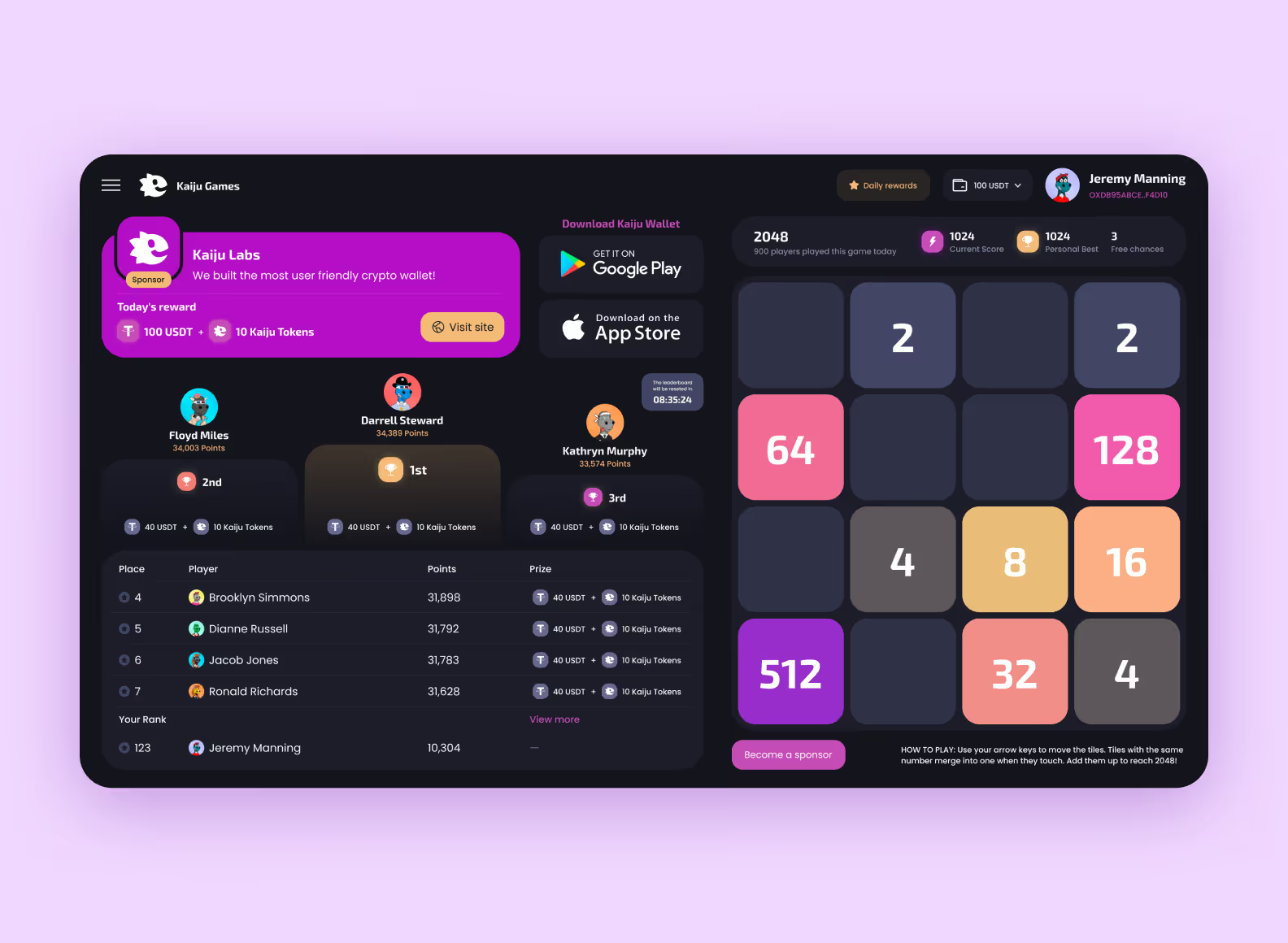
How about a quick review? Every blockchain app is unique, but we think that these are the 4 things every crypto designer needs to keep in their head if they want to deliver a UX that keeps users engaged and focuses on business goals.
Mobile users expect fast, frictionless experiences. Simplifying wallet creation and network setup through guided, step-by-step flows ensures higher retention.
Blockchain technology is already complex enough, and its UX shouldn’t make it worse. Let us demonstrate yet another example of our own work, which is PayPay — a cryptocurrency e-wallet we were asked to redesign.
Look at the first screenshot. Can you immediately understand what’s where and, most importantly, what you can and should do? It’s tough, isn’t it?
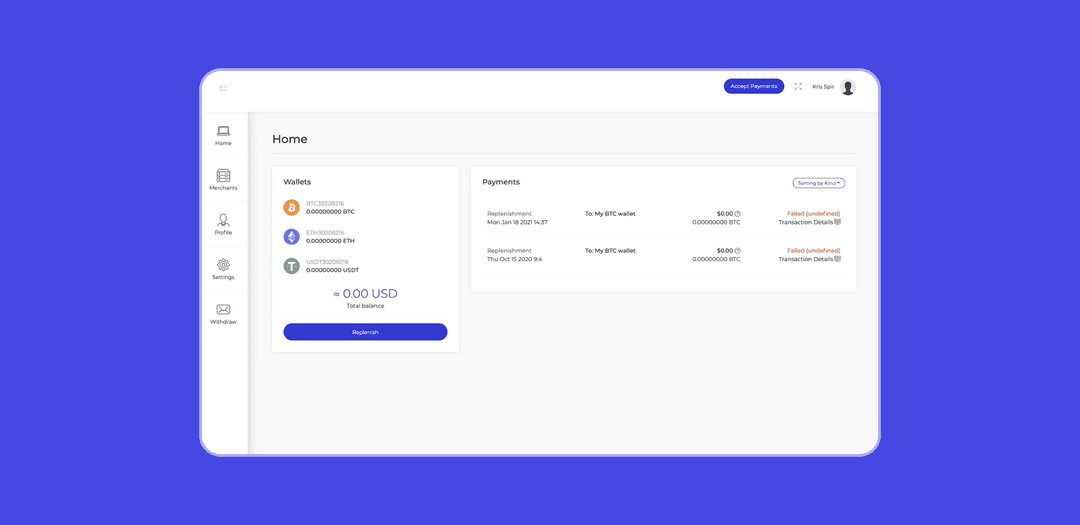
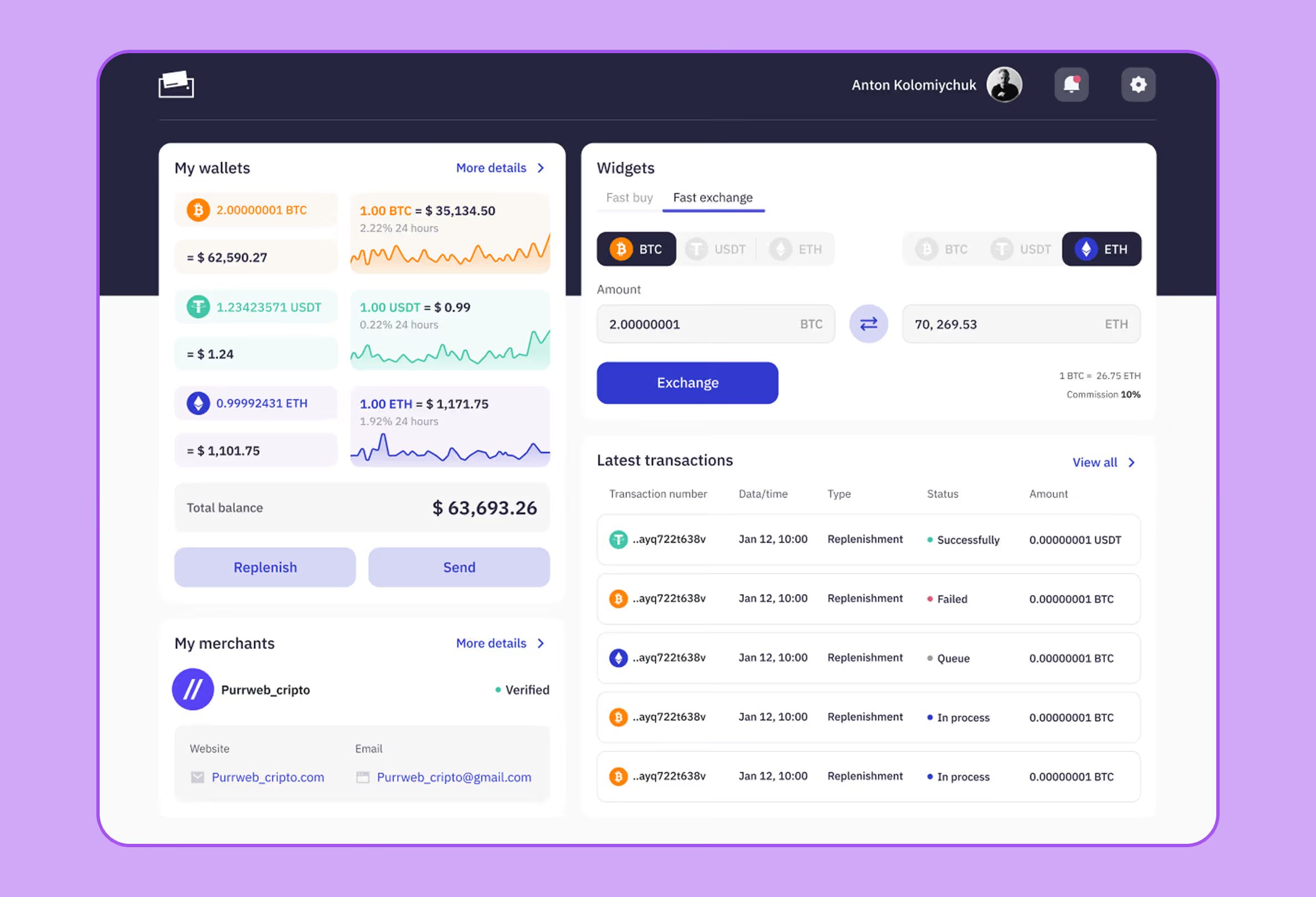
We changed that. Look at the new version: all action-buttons are available from the main screen, and users don’t have to spend time looking for features across the screens.
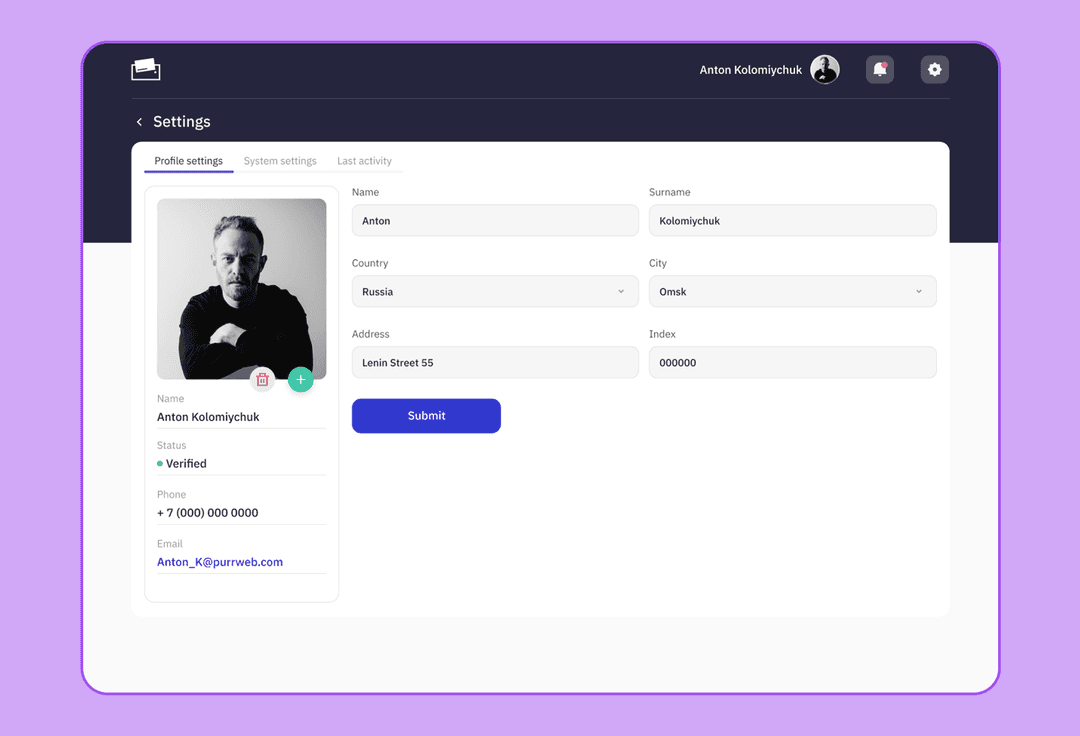
The settings were pretty complicated, too.
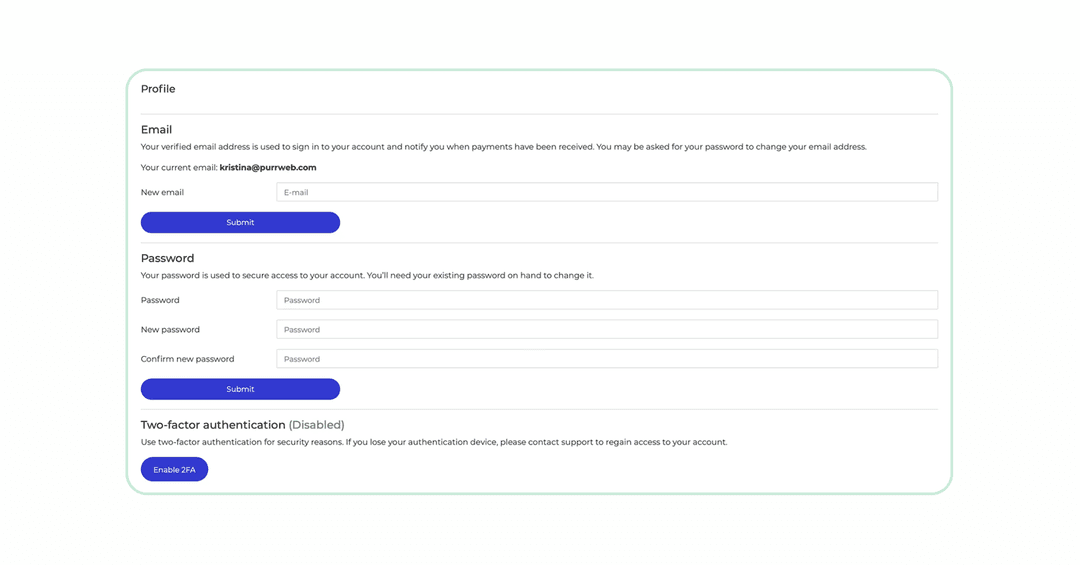
We rebuilt the screen that felt overloaded, and left everything the user needs with a single “Submit”.
Mobile blockchain apps benefit from instant updates on transactions, gas fees, and staking rewards. These things keep users engaged and increase daily active usage, which is crucial for retention in competitive crypto markets. However, make sure that real-time data updates don’t heat up your users’ phones 😉.
Blockchain apps can be resource-intensive, but mobile users often operate on slower networks. Optimizing transaction loading times and caching frequently accessed data ensures smooth operation, turning performance improvements directly into business value. Your UX can be picture-perfect, but when it freezes and stalls the entire process, everything stops making sense.
Web3 already feels like a future that’s already here, but the most beautiful thing is that it keeps evolving. We’re pretty sure blockchain has plenty of surprises up its digital sleeves — so we dared to predict some of the trends to expect. If you’re reading it in 2030, let us know if we were right 😎
Managing private keys and wallets remains a barrier for many users. We think that future UX solutions will focus on walletless experiences, where users can interact with decentralized applications (dApps) without directly handling keys.
Users are increasingly engaging with multiple blockchains, each with unique token standards and ecosystems. We are already recommending pivoting towards chain-agnostic interfaces that allow seamless transfers and transactions across networks: in the future, it will be the new standard.
“But we already have AI!”. Well, it looks like we’ll have even more in the years to come. AI-driven chatbots and contextual help will reduce cognitive load. They can also offer personalized recommendations for gas optimization, staking, or asset management.
What we did in Kaiju is only the beginning. To sustain user engagement, blockchain UX will increasingly incorporate gamification elements. Reward systems, progress tracking, and interactive tutorials will make learning and using blockchain products enjoyable. The things you do for user loyalty!
Future blockchain applications may expand beyond screens to include voice commands, gestures, and AR/VR interactions. Multimodal interfaces can simplify complex workflows, making crypto transactions more intuitive and opening new business opportunities in immersive environments.
This one is the direct result of the rise of AI. We can already see the increased number of vibe-coded apps or projects that don’t need code at all. It doesn’t mean UX will suddenly stop making a difference, but it definitely means that the user centered design principles of good blockchain design may change drastically.
Blockchain space’s future depends on usability. The most advanced protocol or secure smart contract won’t succeed if users can’t navigate it confidently.
At Purrweb, we’ve seen firsthand how thoughtful UX can turn complex blockchain ideas into intuitive, market-ready products. Whether it’s crypto wallets, NFT platforms, or DeFi solutions, our design team knows how to translate blockchain’s potential into experiences that users trust and enjoy.
➡️Ready to make your blockchain product user-friendly and business-ready? Let’s create a UX that drives adoption — and keeps your users coming back.
Blockchain UX deals with constraints that don't exist in Web2: transactions are irreversible, wallet addresses are cryptographic strings of 40+ characters, and every action carries a real-time fee. Users can't rely on "contact support" to undo a mistake. The designer's job shifts from optimizing flows to building trust infrastructure — clear confirmations, gas fee explanations, and error prevention at the input stage.
The three highest-impact mistakes: (1) exposing raw smart contract language instead of plain outcome statements ("You will receive ~0.42 ETH"); (2) gating the product behind wallet connection before showing users what it does — this alone kills conversion; (3) building one interface for beginners and power users alike, without progressive disclosure. Each mistake can reduce activation rates by 30–60% based on typical DeFi onboarding funnel data.
The three most reliable signals are: onboarding completion rate (share of users who complete their first meaningful on-chain action after connecting a wallet), transaction abandonment rate (users who reach confirmation but cancel), and time to first transaction in minutes. Secondary signals include wallet-error support ticket volume and app store review sentiment. Net Promoter Score is unreliable at early-stage Web3 scale — the user base is too small and self-selected.
Wallet UX prioritizes trust signals and key-recovery flows. NFT platform UX centers on discovery and collection display — curation is the core job, not transaction. DeFi platform UX is the most demanding: users simultaneously manage slippage, liquidity positions, and gas across multiple tokens. Each product type requires a distinct information architecture. A team that excels at wallet onboarding may need to rebuild their mental model entirely when designing a DEX.
Progressive disclosure means showing only the controls needed for the current task, revealing advanced options on demand. In blockchain products it separates a basic send flow (recipient + amount) from advanced settings (gas price, nonce, calldata). Without it, a single screen can contain 15–20 technical fields that cause new users to abandon entirely. MetaMask applied progressive disclosure to gas settings in 2022 and reported a measurable drop in transaction cancellations among non-technical users.
Beyond standard UX skills — user research, interaction design, prototyping — blockchain UX designers need functional literacy in how wallets, private keys, and transaction signing work. Not to write smart contracts, but to avoid design decisions that create security risks. Hands-on familiarity with at least one major wallet (MetaMask, Phantom, or Rabby) and a basic grasp of gas mechanics on EVM chains reduces technically impossible designs reaching engineering.
For MVP scope — wallet onboarding plus one core action (swap, send, or mint) — expect 4–8 weeks: 1–2 weeks of research and competitor audit, 2–3 weeks of wireframing and prototyping, 1–2 weeks of usability testing, 1 week of design-system handoff. A full DEX or multi-chain portfolio manager requires 3–5 months before development can begin efficiently. Cutting this phase short is the most common reason blockchain products fail usability testing after the backend is already built.