Explore

Need help with your project?

Oops! Something went wrong while submitting the form.
A fintech consulting company helps you build a financial product the right way. Beyond the code, it covers the money rules, licenses, and security that come with handling people's cash. A regular software vendor usually leaves those to you.
The hard part is picking one. Dozens of firms claim financial technology consulting expertise, and from the outside their sites look nearly identical. This guide compares 10 fintech consulting firms for 2026, with clear selection criteria, real pricing ranges, and where artificial intelligence and compliance advisory fit.

Fintech consulting is advice on building and running a financial product, delivered by people who have done it before. A fintech consultant studies your idea against your market and your tech stack. Then they map out what to build first and which rules apply along the way.
That last part is where the job differs from a regular dev team. A general software team writes the code you ask for. A fintech consultant asks the questions you didn't know you had to ask.
Do you need a license for this? Which compliance rules apply in your market? What breaks when you add a second currency? Getting these wrong is expensive, and you often find out only after launch.
In practice, a fintech advisor wears a few hats at once. They shape the product strategy so features map to a real business model. They also plan the architecture so the app scales without a costly rebuild later. On the regulatory side, they make sure payments and identity checks are handled from day one.
This kind of guidance is in higher demand than it used to be. Global fintech investment rose to $116 billion in 2025, up from $95.5 billion a year earlier, according to KPMG. More funded products mean more teams that need someone fluent in both finance and engineering.
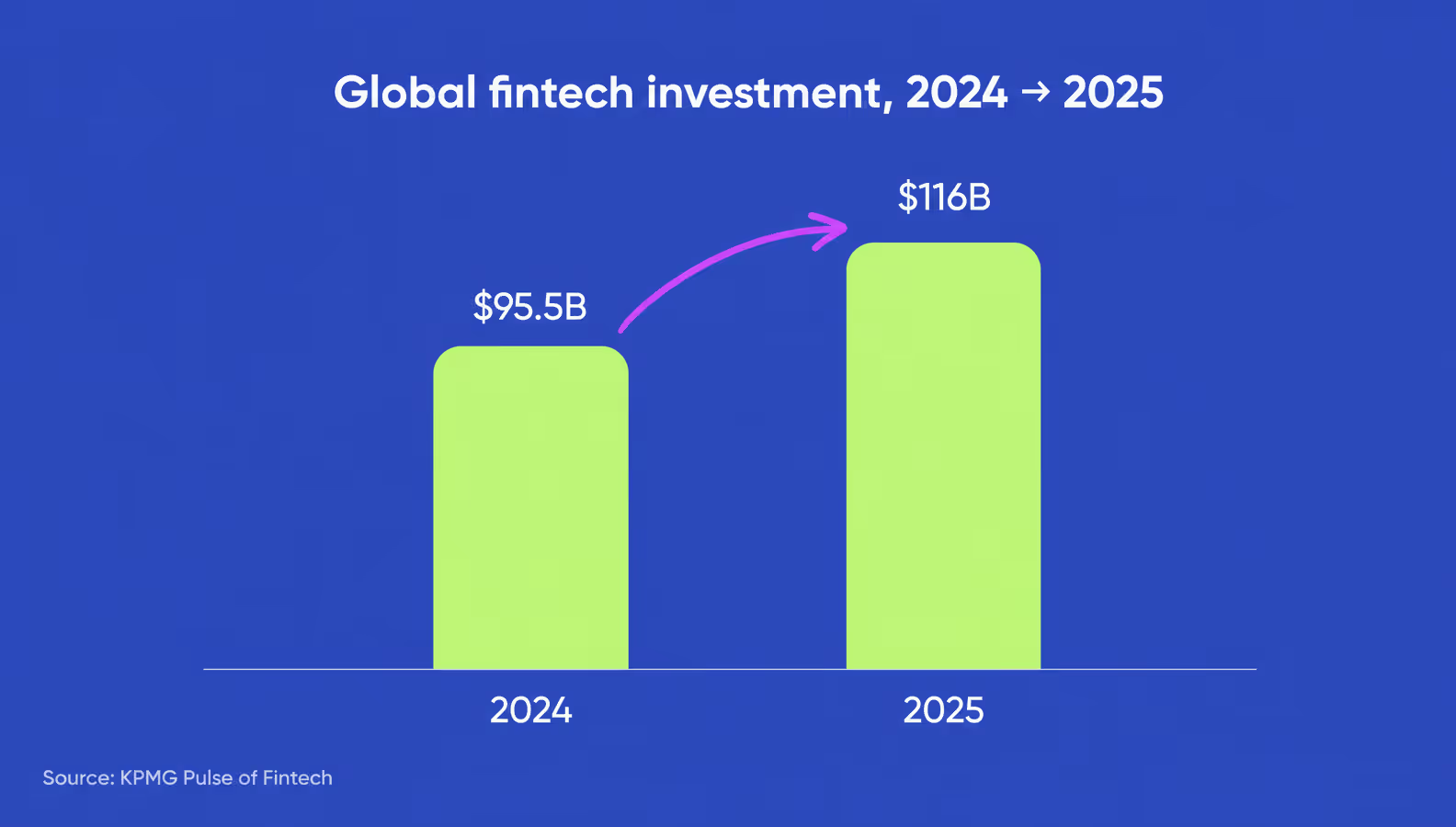
Funding rebounded in 2025 — the tailwind behind rising demand for fintech advisory
Some firms stop at advice and hand you a slide deck. Others stay through delivery and ship the product with you. The consulting services you actually need depend on how much of the work already sits inside your own team.
A funded startup with two engineers wants something different from a bank with its own IT department. If you're at the idea stage, our guide on how to start a fintech company walks through the earlier steps.
Fintech consulting services cover more ground than plain development. Most firms group their work into a handful of areas, and a strong partner offers several of them under one roof.
Together these services support the digital transformation most financial companies are working through right now. For a closer look at the build side, see our guide to financial software development.
The firms below were not ranked by size or ad budget. Each one was checked against four practical criteria that matter when you hand a financial product to an outside partner.
A firm that clears all 4, tends to fit far better than one that simply looks polished online.
Here are the ten firms that clear those four criteria. Each card follows the same shape, so you can scan them the same way, from what a firm actually does to who it suits best. Purrweb opens the list because it pairs strategic advice with hands-on delivery, which is rarer than it sounds.

Fintech runs through roughly half of the studio's 550+ shipped products
Purrweb runs a fintech practice inside a broader product studio, and fintech is close to half of its 550+ shipped projects. A React Native product team handles design and build, with KYC/AML and payment security folded in from the first sprint. Its fintech software development services page shows the delivery side.
The useful part for a founder is that the advice does not stop at a slide deck. The same team that scopes your product also ships it, so a discovery-to-MVP run takes about four months and starts around $40k. The trade-off is focus: this is a build-with-you partner, not a pure strategy shop for a bank that only wants a written roadmap.
A Kuwait-based fintech startup, KEM, came to us needing a P2P payment MVP fast. Their banking partners wanted a working product before moving ahead, so a clean, trustworthy flow mattered more than a long feature list. We built the MVP with a lean React Native team and shipped a version those partners could evaluate. The full story is in the KEM case study, and we took a similar route on Broex, a multi-currency crypto wallet delivered cross-platform.
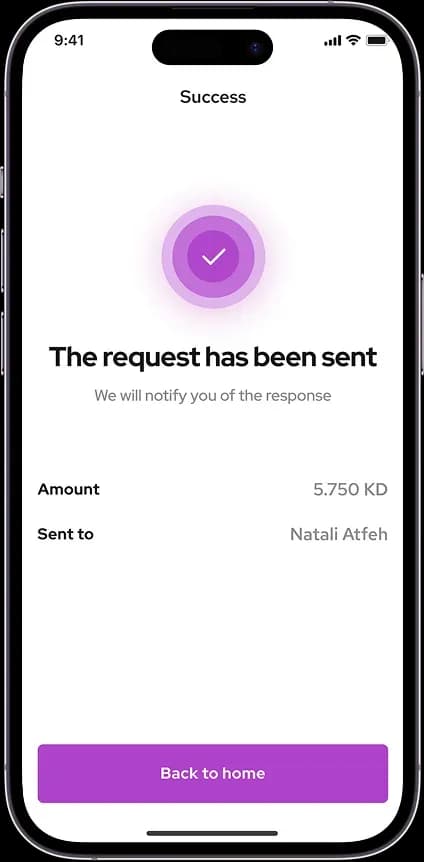
A payment MVP built to convince banking partners, not just early users

Built for fintechs that sell to banks and credit unions, not for the ones writing their first line of code
Cornerstone is a pure advisory firm, and its edge is the banking side of the table. Its experts have held leadership roles at core, payments, and lending vendors, so their advice on market sizing and positioning carries real weight with bank and credit-union buyers.
That focus is also the limit. Cornerstone advises and researches, but it does not build the product, so a founder who needs an app shipped will pair it with a separate delivery team. It fits best when the hard question is go-to-market, not engineering.

A strategy-and-research shop that thinks in propositions, not sprints
11:FS is a strategy-led consultancy known for digital-banking work and a strong research output, and it was voted Consultancy of the Year at the 2025 British Bank Awards. It advises incumbents and challengers on where a digital proposition should go and how it compares across markets.
Like Cornerstone, it lives on the advisory side rather than the build side. The fit is a bank or a funded challenger rethinking a value proposition, less so an early founder who mainly needs a first version in the App Store.
Scale and integration depth aimed at established players, not lean MVPs
Itransition is a large software and IT-consulting firm with a financial-services practice and more than two decades behind it. Its strength is breadth: complex system integration and legacy modernization on engagements that would overwhelm a smaller shop.
The trade-off is weight. That scale brings more process and coordination than a two-person startup usually wants, so Itransition suits established companies with integration-heavy roadmaps more than a first-time founder chasing a fast MVP.
Broad delivery capacity across many verticals, with fintech as one of them
Appinventiv is a large product-development agency that also offers fintech consulting, and it can carry an idea from strategy through a launched app on mobile and web. The breadth is real, and so is the delivery capacity.
That breadth is the caveat too. It is a generalist across many industries rather than a fintech-only shop, and some client reviews flag project-manager turnover on longer engagements, so it helps to lock continuity terms up front.

A dedicated-team model for multi-quarter builds, at North American rates
Vention assembles dedicated engineering teams and has worked in financial services for over two decades, with fintech clients that include large, recognizable platforms. When a program needs several concurrent workstreams staffed quickly, its bench is the selling point.
Two things to weigh. Its North American base puts rates at the higher end of this list, and the dedicated-team model fits ongoing programs better than a single fixed-scope MVP with a hard budget cap.

Financial-grade rigor on early-stage builds, without enterprise pricing
Geniusee focuses on fintech product engineering and pairs it with security credentials that matter here, including ISO 27001 and AWS and Plaid partnerships. Its fintech work spans wallets, digital banking, lending, and trading, with product design and full-cycle delivery under one roof.
The main limit is scale. It is a mid-sized firm rather than a 3,000-engineer bench, so a founder gets a top-rated, startup-friendly partner, but a bank planning a very large multi-year program may need more capacity.

Core-banking DNA that shortens the path to account and ledger systems
RNDpoint grew out of core-banking software, which shows in the work: it advises on and builds banking and payment products, with white-label pieces for digital wallets, remittance, and neobanks that shorten time to a first version.
The review base is smaller than the bigger firms here, so there is less public track record to read through. For teams building account, ledger, or neobank systems, though, the domain fit is stronger than a generalist agency's.

A long-term product-engineering partner leaning into AI work
Azilen treats fintech as a core specialization and has roughly 15 years of product-engineering behind it, with recent weight on generative AI and analytics. It positions itself as a long-term build partner rather than a one-off vendor.
That long-horizon framing is the fit signal. Azilen suits enterprises and funded startups planning a multi-year product, and matters less to someone who only needs a lean validation build and then a pause.

A platform-first route to a neobank or wallet, fast
DashDevs pairs fintech consulting experts with delivery and leans on a white-label core (FintechCore) that ships transaction processing, ledgers, KYC, and card issuing out of the box. For a team that wants a neobank or wallet live in months, that head start is the draw.
The trade-off is control. A platform-first approach trades some architectural freedom at launch for speed, so it fits speed-to-market goals better than a product that needs a bespoke architecture from day one.
Kaiju Labs, a Singapore startup, faced a problem common to Web3 games. Acquiring a user cost $4 to $5, well above a normal mobile game, and sending players out to an external wallet during signup only widened the drop-off. We designed a UX that folded the crypto wallet into the game itself, so signing up and claiming a first reward happened in one flow. The full story is in the Kaiju case study. The design took about two months, and the client secured investment and first users soon after release.

Folding the wallet into the game cut the onboarding drop-off Web3 products usually fight
The right partner depends less on a firm's size than on how well it maps to your stage and your risk management. Five key criteria separate a good fit from a polished pitch.
The stage you're on shifts what you look for. A startup usually values speed and a fixed scope, so a build-capable partner with a short discovery matters most. A scale-up leans on a dedicated team that reads as reliable across many months. An enterprise weighs integration depth and compliance rigor above raw speed.
Run the same five questions past every shortlisted firm, and the wrong options tend to fall away on their own.
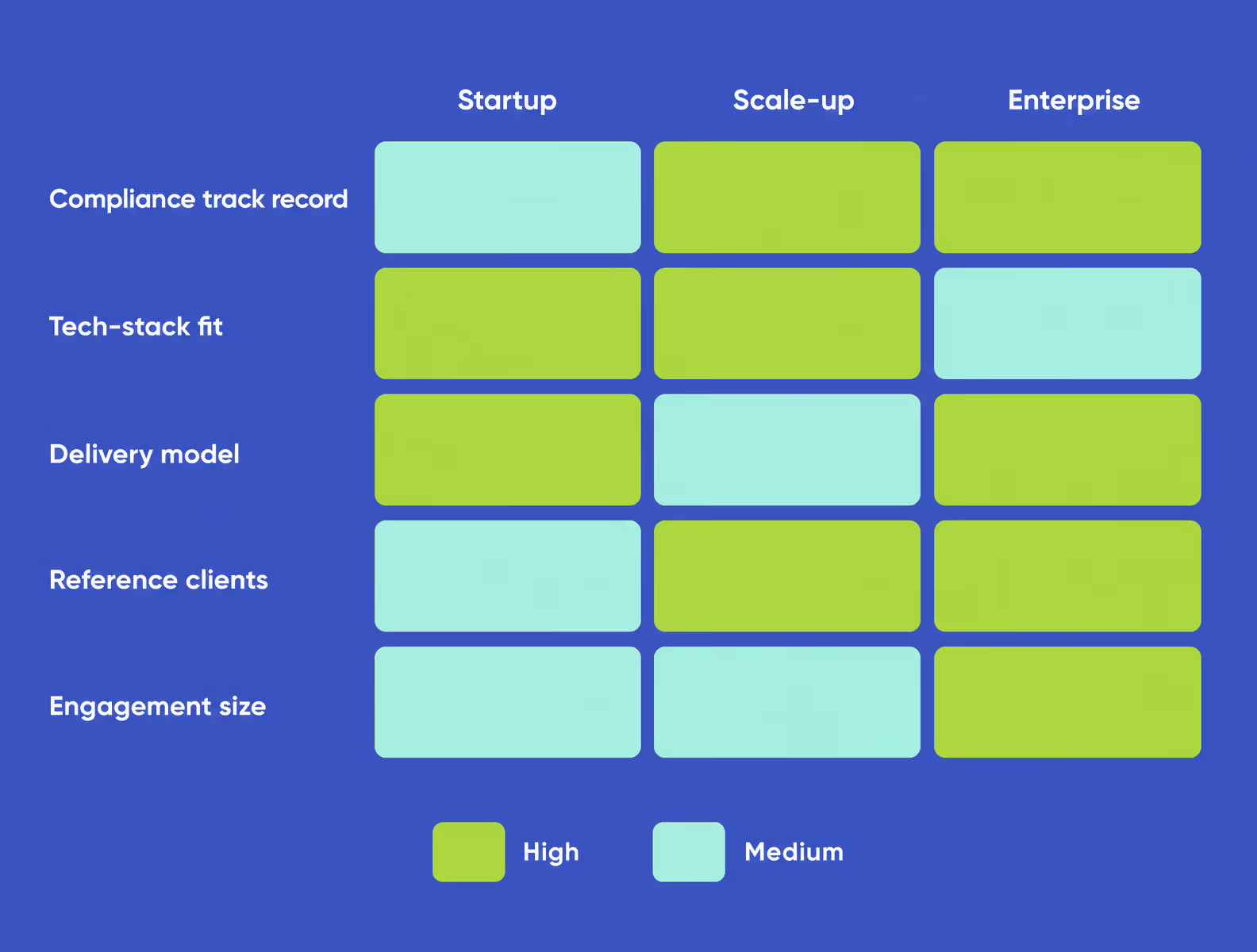
The same five criteria, weighted differently depending on your stage
There is no single sticker price, because cost tracks two things: who you hire and how you structure the work. Rates split cleanly by the type of partner.
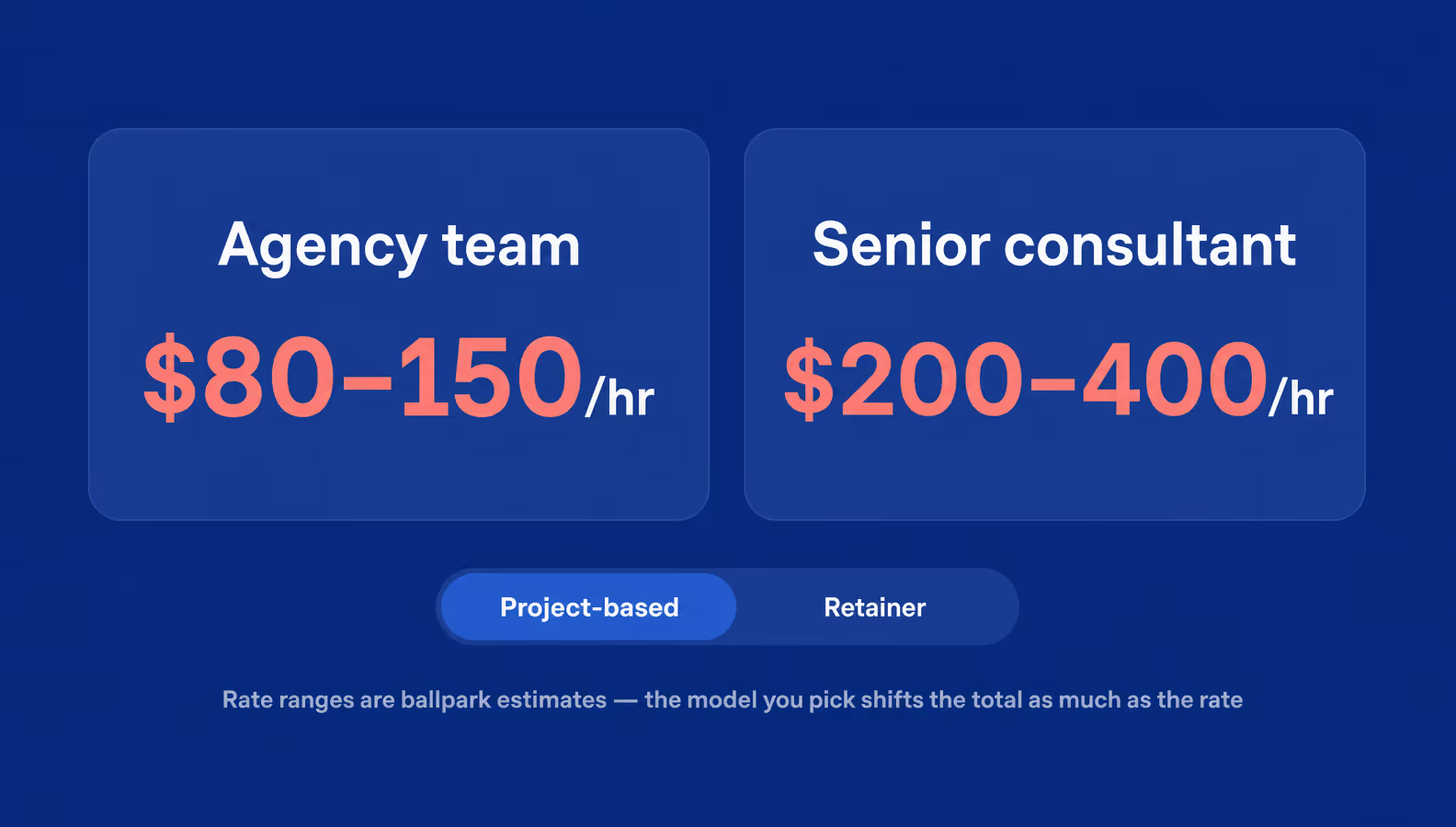
Rate ranges are ballpark estimates — the model you pick shifts the total as much as the rate
The engagement model matters just as much as the rate. Project-based pricing fixes a scope and a number up front, which suits a defined build like an MVP where you want no billing surprises. A retainer buys a set block of advisory time each month, which fits ongoing guidance once a product is live and the questions keep coming.
For a rough anchor, a focused fintech MVP with one platform and basic integrations tends to land in the low tens of thousands, while a full banking or trading platform with multi-jurisdiction compliance runs far higher. Our breakdown of fintech app development cost walks through the drivers behind those ranges.
Two advisory topics dominate the fintech ecosystem this year: where AI actually helps, and which rules a product has to clear. They overlap more than they used to.
AI strategic consulting for fintech companies tends to circle one question: which task earns its keep. Fraud detection, credit scoring, and support automation are where models usually pay off. A good advisor steers you toward one concrete use case instead of a vague "add AI." Investors lean the same way. Funding for AI-driven fintech companies climbed from $12.1 billion to $16.8 billion year over year, according to KPMG.
Regulatory compliance is the other half, and here an advisor's job is to name the rules that apply before they bite. A few surface on almost every fintech product:
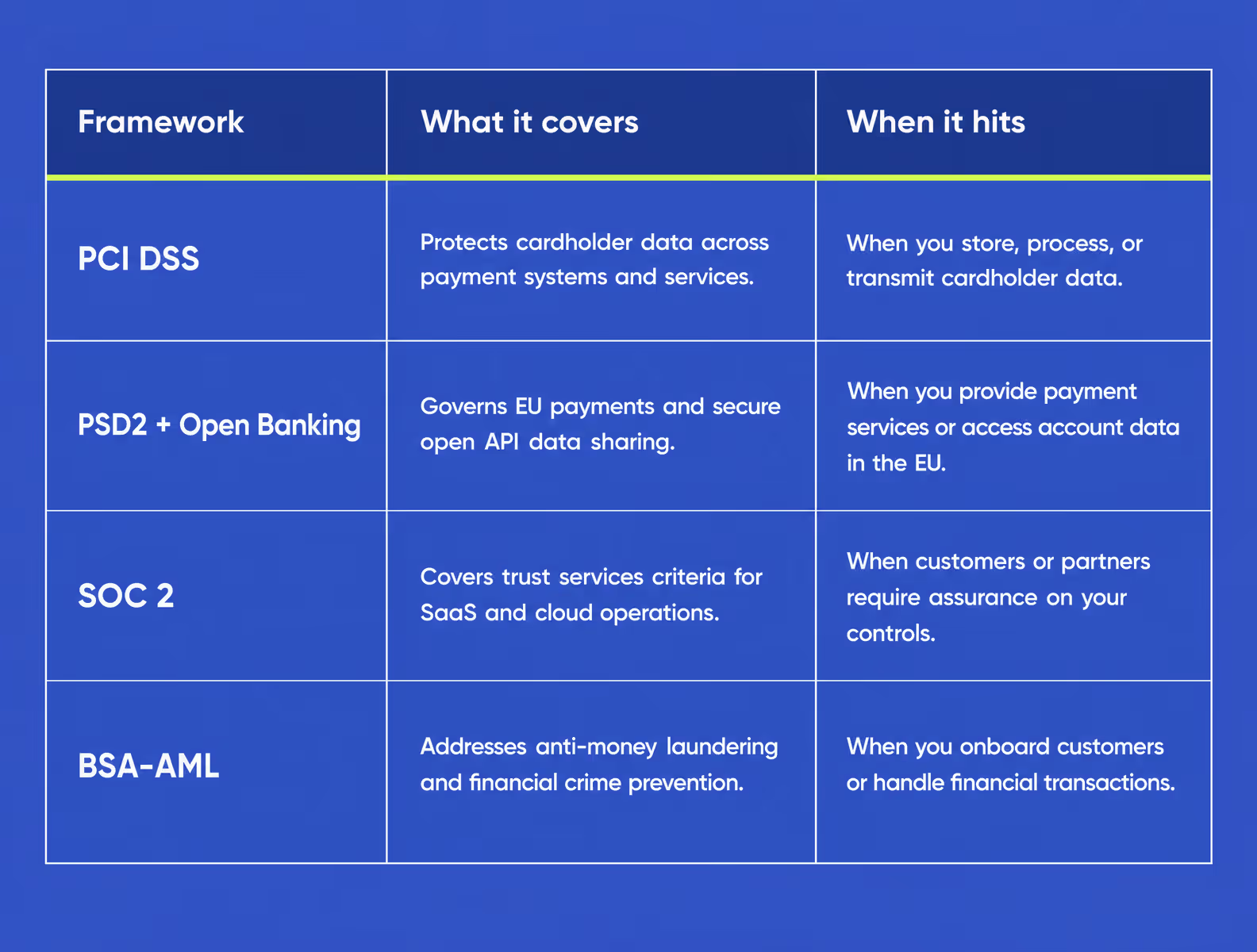
The four rules that surface on almost every fintech product, and when each one bites
Handled early, these shape the architecture. Bolted on later, they force a rebuild, which is the whole argument for advice up front.
Choosing a fintech consulting company comes down to matching a firm to your stage rather than chasing the biggest name. A funded founder who needs an MVP wants a build-capable partner with a short discovery. A bank rethinking a proposition wants deep strategy and compliance rigor.
The ten firms above cover that spread, and the five selection criteria give you a way to tell them apart. Get compliance and AI decisions on the table early, since both are cheaper to plan than to retrofit once a product is live.
➡️ Want a second opinion before you commit? Talk to our fintech consultants and get a free fintech consultation within 48 hours.
A fintech consultant is an expert who advises financial technology businesses on strategy, technology, and regulation. They study an idea against its market and tech stack, then map out what to build, which rules apply, and where the risks sit. The role is advisory: they guide decisions rather than only writing code.
They cover the work a general software vendor usually skips. That includes fintech strategy and roadmapping, regulatory and compliance guidance, product and UX design for financial tasks, system integration with payment and banking rails, and AI or data work such as fraud detection. Some firms stop at advice, while others also build and ship the product.
Weigh five things: a real regulatory and compliance track record, tech-stack fit with your own team, the delivery model (advice only or advice plus build), reference clients in your vertical, and a minimum engagement size that matches your budget. Your stage shifts the priorities, since a startup values speed where an enterprise values integration depth.
A consultant advises on what to build and which rules apply, focusing on strategy and judgment. A development company focuses on building the product itself. The line blurs when one partner does both, offering discovery and advice up front and then shipping the code, which is often the most efficient route for a startup.
It depends on the partner and the structure. Specialized fintech agencies run roughly $80–$150 per hour as a blended team rate, while senior independent consultants run roughly $200–$400 per hour for one expert's judgment. Project-based pricing fixes a scope and number up front, and a retainer buys ongoing advisory time each month.
Not always, but the compliance and architecture calls in fintech are unforgiving, and getting them wrong is expensive to undo. If your team already has financial-product and regulatory experience in house, you may not. If it does not, early advice tends to save far more than it costs, which is why many founders pair it with the build.


.svg)