Explore

Need help with your project?

Oops! Something went wrong while submitting the form.
Fintech SaaS is financial technology delivered as cloud-based, subscription software: instead of building a financial product in-house, a company rents it over the internet for a recurring fee. It sounds like any other SaaS play, and that is the trap. A SaaS fintech product moves other people’s money, so identity checks, fraud controls, and regulators sit in the critical path from day one.

This guide walks a founder through what fintech SaaS actually is, the verticals where it makes money, what a product must include, and what it really takes to build one.
Fintech SaaS is a financial product delivered through the software as a service model: hosted in the cloud, accessed through a browser or API, and paid for by subscription instead of a one-time license. The SaaS provider runs the infrastructure, ships updates, and handles uptime; the customer logs in and uses the financial services without owning any servers.
Two ideas sit inside the term. SaaS is a delivery model: cloud-based software rented per seat or per usage. Fintech is the domain: payments, lending, investing, insurance, and the financial technology underneath them. A fintech SaaS platform is where the two meet: a financial service, delivered as software, updated continuously, and billed on a recurring basis.
SaaS describes how software reaches the user. Fintech describes what the software does. A project-management tool and a payment-processing tool can both be SaaS, but only one is fintech. The distinction matters because fintech carries obligations generic SaaS never touches: handling money, verifying identity, and answering to financial regulators. Every design decision inherits those constraints.
Fintech SaaS spans most of the fintech industry, usually organized by vertical. Each vertical solves a different job, and the fintech companies below show what a mature fintech solution looks like:
Choosing a vertical is the first real decision when you plan a product; it sets your compliance load, your integrations, and your buyers, which is why fintech software development usually starts with picking one. If you’re still weighing directions, our roundup of fintech startup app ideas maps demand against build effort.
We built Fintarget for BCS Broker, a web platform where brokerage experts and independent investors publish investment strategies and users invest in them passively. It works as a two-sided marketplace: strategy search filters by portfolio, tools, and risk level, and a dashboard tracks the performance of every strategy a user has bought.
The hard part wasn’t the finance. It was making a professional brokerage product approachable for retail investors, so we simplified account setup with large guided forms, clear performance indicators, and a built-in knowledge base. Fintarget is a responsive web platform rather than a subscription SaaS, but the pattern of packaging expert financial services as self-serve software is exactly what fintech SaaS productizes.
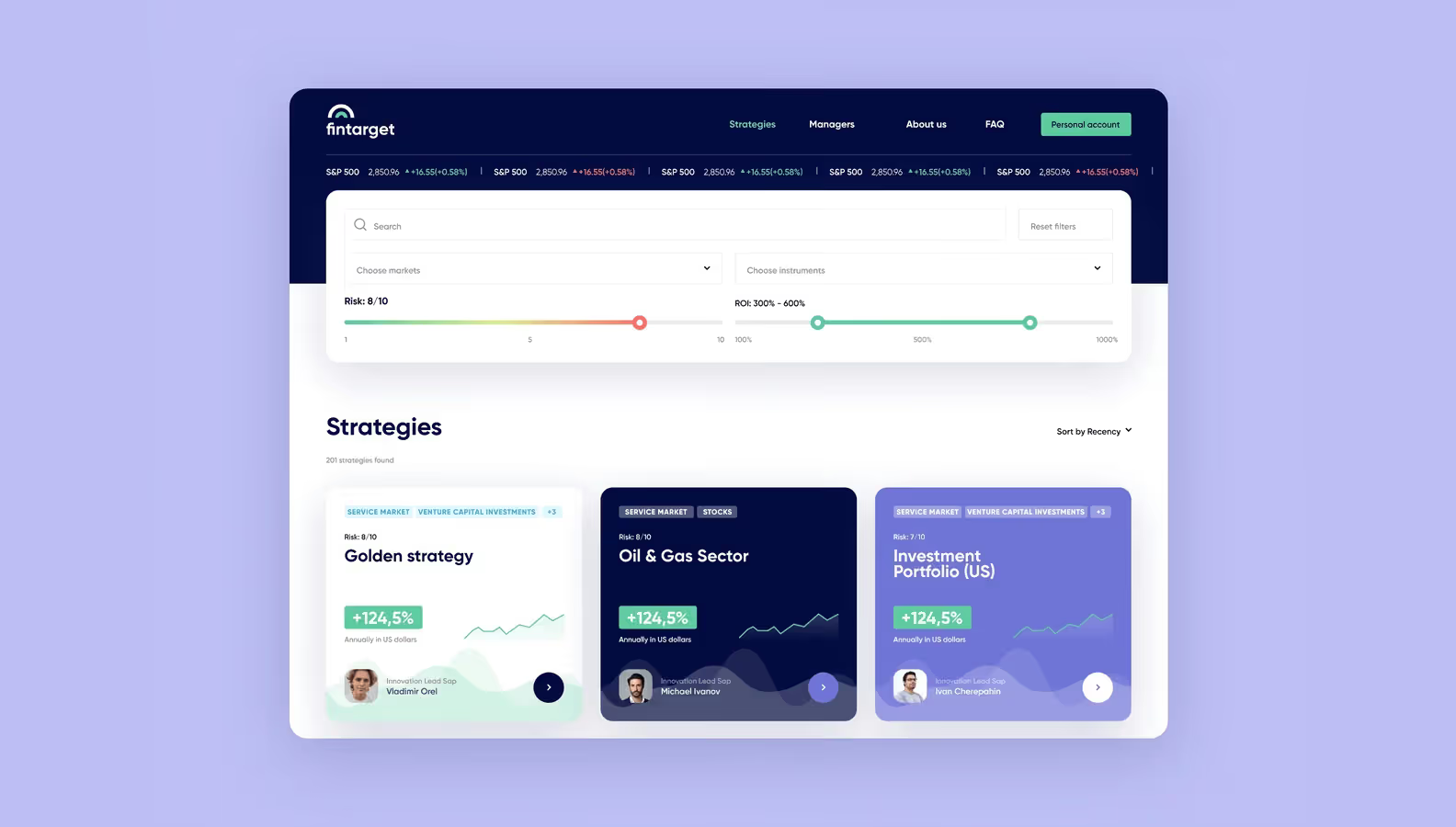
Fintarget’s strategy marketplace, built for BCS Broker.
The benefits of SaaS in fintech come down to speed, economics, and reach. For the company shipping the product, a cloud-based platform removes the cost of racking servers and the lag of shipping updates as physical releases; scalability comes built in, so a payment product can grow from a thousand to a million transactions without re-architecting.
The economics work on both sides. Predictable revenue follows from subscriptions and usage fees that create recurring revenue streams instead of one-off license sales, which is a large part of why investors favor the model, while continuous compliance means the provider patches security and regulatory changes centrally so every customer inherits them at once.
Automation compounds it: SaaS platforms automate and simplify the reconciliation, onboarding, and reporting that finance teams once did by hand, and a steadily improving product lifts customer experience and retention. For a bank, a fintech, or a non-financial company embedding finance, a SaaS solution also lowers the barrier to entry, since you rent capability that traditional financial institutions once needed a year and a licensed team to build in-house.
Must-have features of a fintech SaaS product cluster around three jobs: move money reliably, keep bad actors out, and prove both to regulators. Miss one and the product stalls, either in review or in production.
The money layer starts with transaction processing that is reliable, low-latency, and idempotent, so a retry never double-charges, backed by well-documented APIs and integrations that connect payment rails, banks, and KYC vendors. Those APIs are the connective tissue of fintech platforms.
Keeping bad actors out is a stack of its own: Know Your Customer (KYC) onboarding verifies identity at sign-up without turning users away at the door, AML monitoring screens transactions and flags suspicious activity for the reports auditors ask for, and fraud detection scores transactions and behavior in real time to block losses before they land.
Proving it to regulators runs on data analytics, dashboards on transactions, users, and risk that both drive decisions and evidence compliance, plus workflow automation so approvals and reconciliation don’t scale linearly with volume. Under all of it sits role-based access control and audit logging, so only authorized staff touch sensitive financial data and every action leaves a trace.
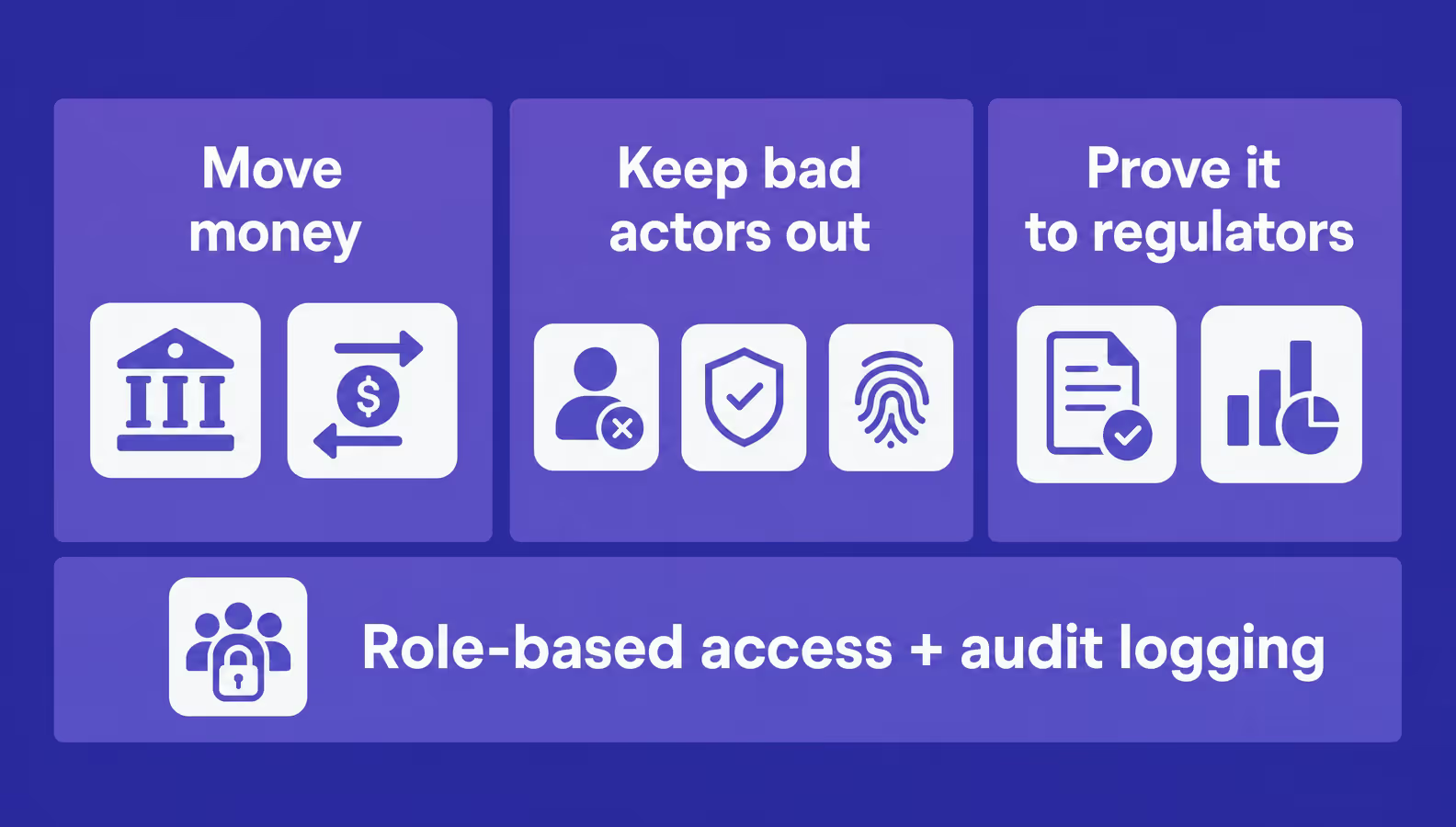
The three jobs every fintech SaaS product must do, over a shared access-control and audit layer.
In fintech, security and compliance are not a layer you add before launch; they shape the architecture from the first sprint. Getting regulatory compliance wrong doesn’t just risk a fine, it can pull your right to process payments. These are the regulatory requirements and frameworks a fintech SaaS product has to design around:
Cloud security and data security sit under all of it: encryption, key management, and audit logs that let a financial institution or auditor trace every action. None of this is optional, and retrofitting it later is far more expensive than building it in.
We built KEM, a peer-to-peer money-transfer app for the Kuwaiti market, where users register by phone number, link cards, and send or request money with full transaction history.
The compliance wall arrived before a line of production code: Kuwaiti banks expose only a closed API, and once they grant access they require the entire technical team to sit physically in Kuwait for security.
We couldn’t wait on that to prove the product, so we shipped the MVP on simulated data first. That let the client demo real flows to banks and win access on the strength of a working app. KEM is a mobile app, not a SaaS platform, but the lesson transfers directly: in fintech, access and compliance gate the build, so you design for them before you scale. After launch, the startup raised $1 million in seed funding.
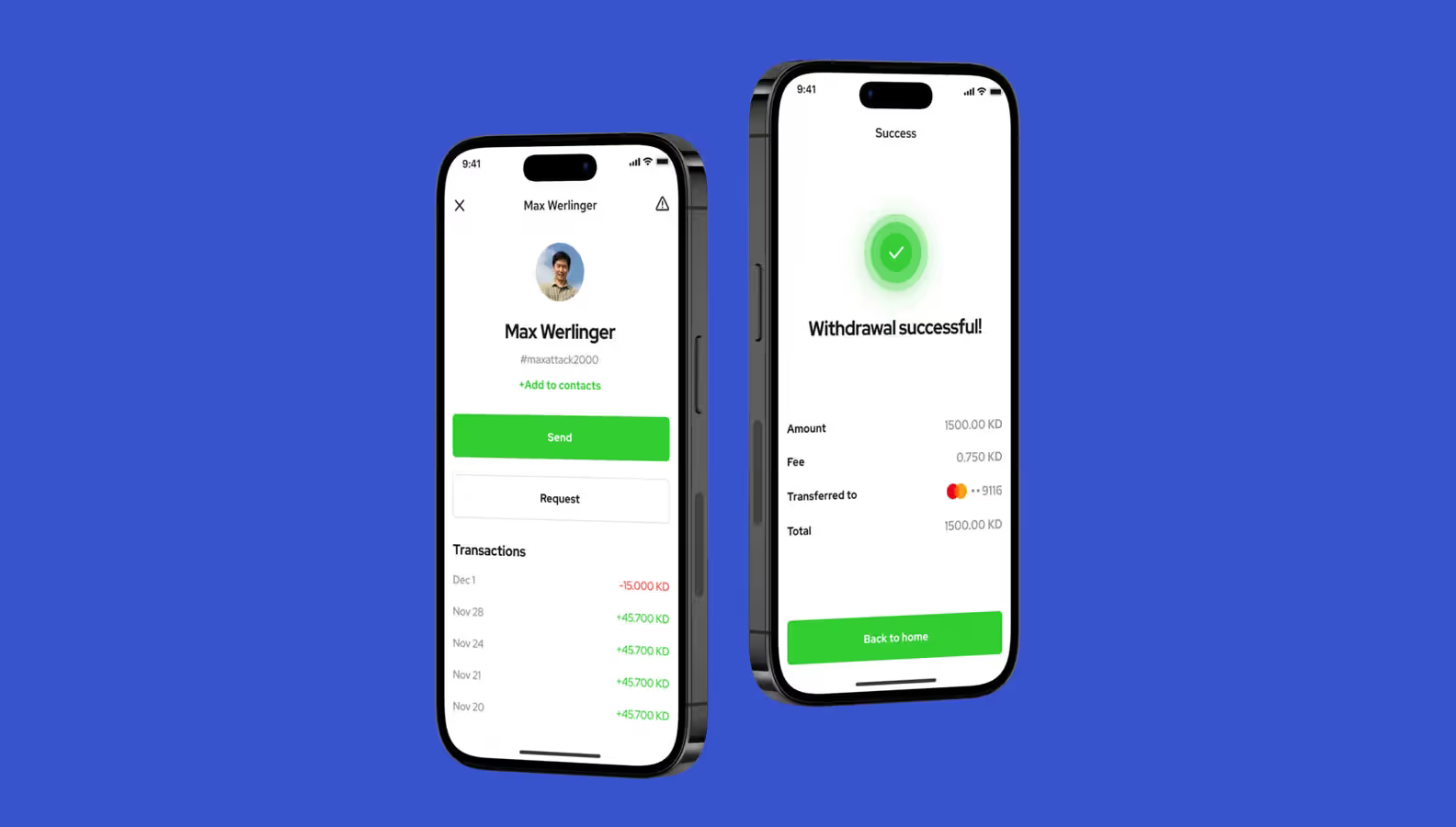
KEM: sending money and confirming a transfer in the P2P app we built.
Embedded finance is the next chapter of fintech SaaS: financial services delivered inside products that were never banks, so a checkout offers a loan, a marketplace pays out instantly, and a software tool issues a card or a digital wallet. Embedded payments and embedded lending are the fastest-moving examples.
McKinsey estimates that embedded finance already accounted for 5 to 6 percent of retail and SME lending revenue in Europe in 2023 and could reach 20 to 25 percent by 2030, when total European embedded-finance revenue may approach €100 billion. The broader fintech-as-a-service market that supplies this infrastructure was worth $266.56 billion in 2022 and is projected to reach $949.49 billion by 2030, a 17.5% CAGR, according to Grand View Research.
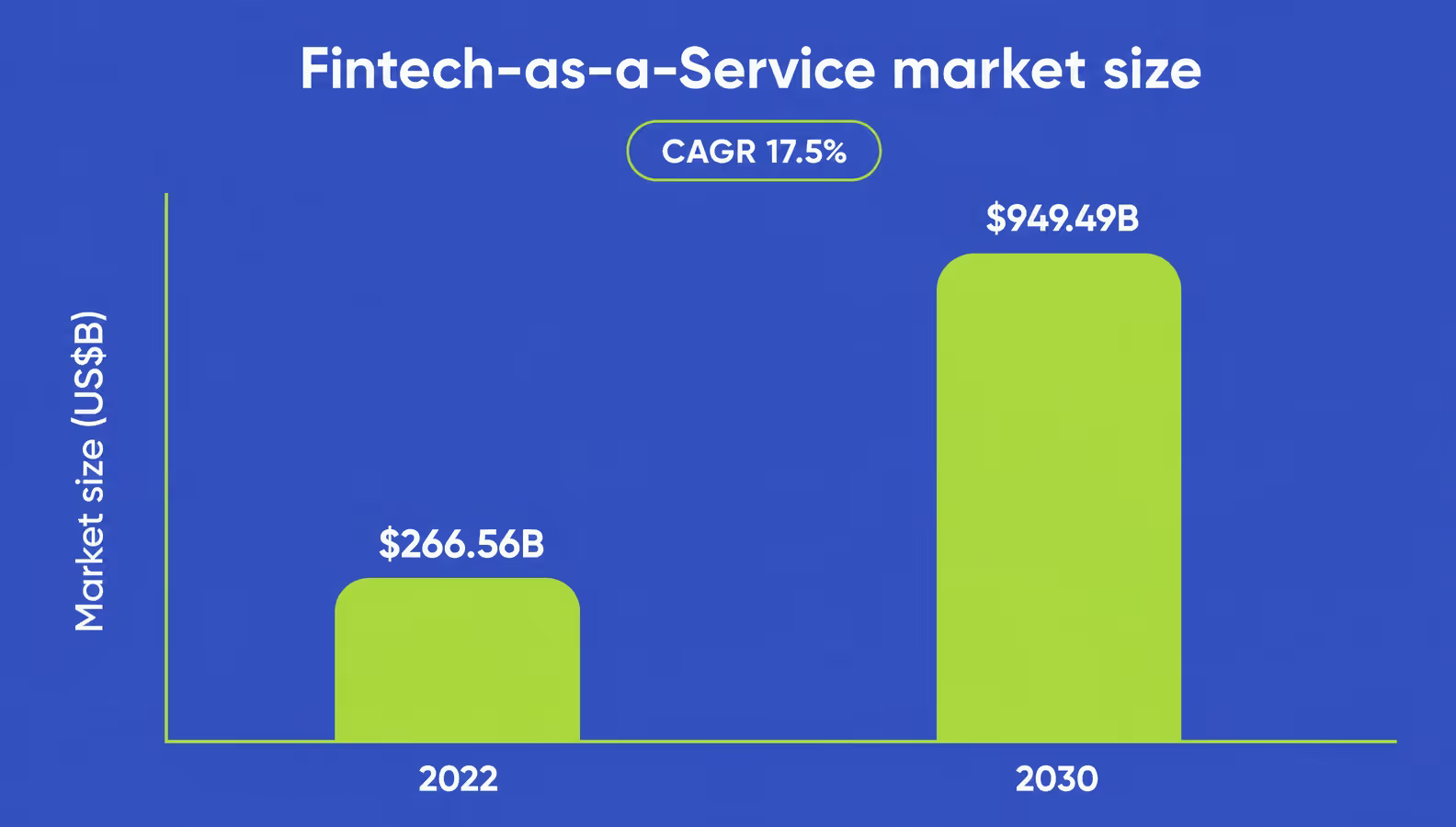
The fintech-as-a-service market is projected to nearly quadruple by 2030. Source: Grand View Research.
AI is the other force reshaping the category. Machine learning already scores transactions for fraud in real time, underwrites loans on cash-flow and alternative data rather than bureau scores, and reads identity documents to speed KYC. Artificial intelligence built on scalable cloud computing infrastructure is turning static products into ones that adapt to each user.
None of this replaces the SaaS model, despite the framing you’ll see in headlines about the rise of fintech. AI adds intelligence to the workflows; the recurring, cloud-delivered software layer, its integrations, and human oversight remain the product. Regulated decisions still need explainability and a person in the loop, which is a property of the SaaS model, not a threat to it.
How to build a fintech SaaS product follows a staged path, and in fintech SaaS development the order matters more than usual. Rush past compliance and you rebuild later; skip discovery and you build the wrong thing.
Discovery comes first: define the product, the markets, and the regulatory footprint each one carries, because compliance requirements differ by country and vertical.
Architecture follows, and this is where fintech product development diverges from ordinary software development. You design SaaS and cloud infrastructure around security, data isolation, and the APIs you will expose, so KYC, AML, and audit logging are part of the foundation rather than a later patch.
Then you build an MVP, the smallest version that proves the core flow in front of real users. Integrations connect it to payment rails, bank aggregation, and identity vendors. Launch and iteration close the loop, and the work continues after release.
On tools, a cross-platform stack keeps the build lean. We favor React Native so one team ships iOS and Android from a single codebase, with React.js on the web and Node.js on the backend, wired to services like Stripe, Plaid, and Onfido. For the full walkthrough, our guide on how to build a fintech app covers each step in detail.
We built Abel, a non-custodial crypto and NFT wallet for iOS and Android, with no backend at all: the app talks straight to the Ethereum chain and orchestrates third-party APIs like Etherscan, OpenSea, and Cryptocompare.
That architecture created one sharp constraint. Free crypto APIs throttle hard, and Etherscan caps requests at roughly five per second, which a serverless app with no accounts could blow through fast.
We counted requests per device instead of per user, which kept the product under the rate limit while supporting unlimited users at zero backend cost. Abel took around 1,268 hours to build in React Native. It is a mobile wallet, not a SaaS platform, but the takeaway is pure SaaS engineering: your architecture decides your unit economics, so make the infrastructure call before you write features.
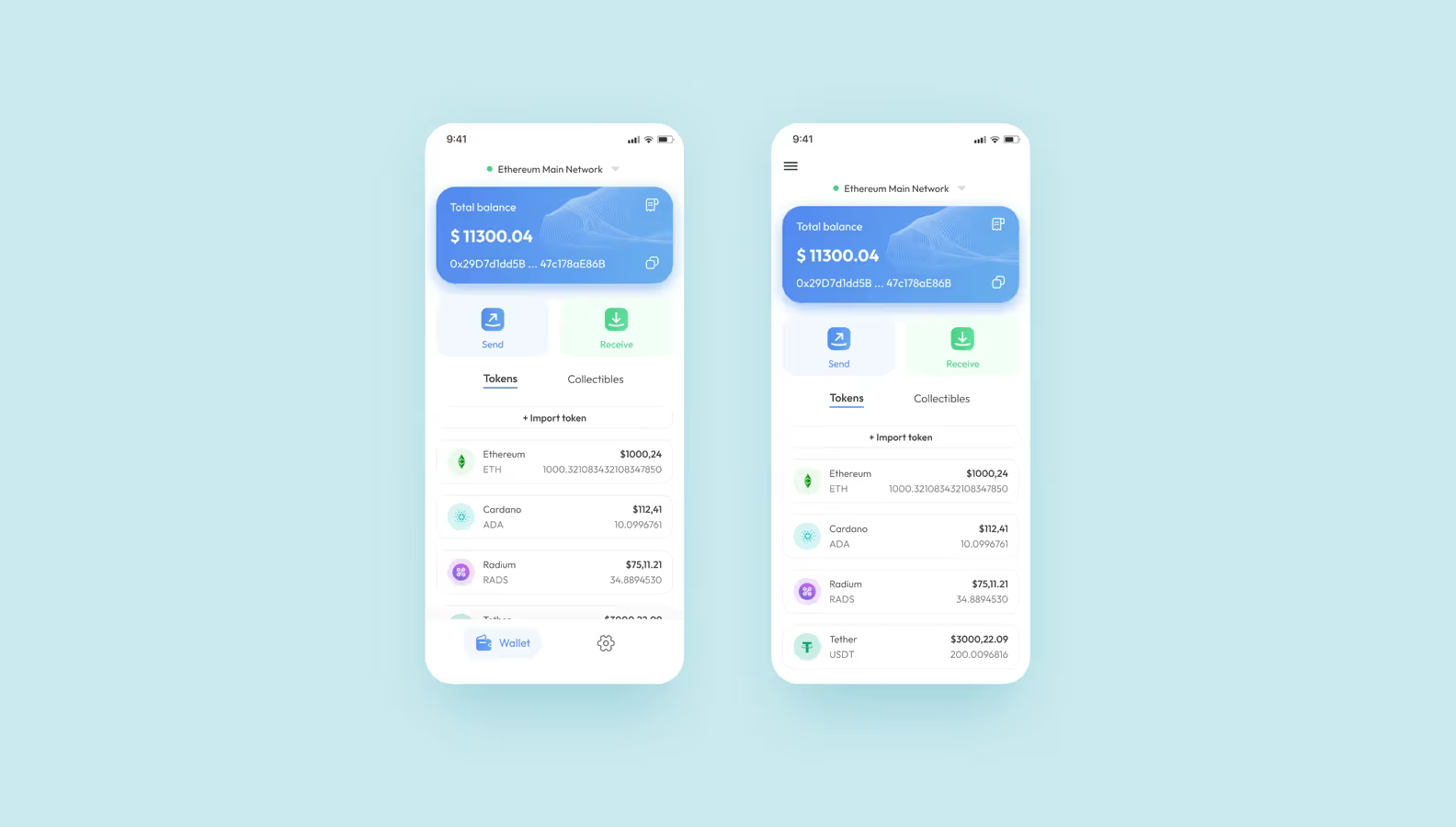
Abel’s wallet home screen: balances and tokens, served with no backend.
How much a fintech SaaS product costs depends on scope, but the fintech market runs on ranges concrete enough to plan around. A launchable MVP, with one core flow and the compliance to ship it, runs about $60,000 and 30 to 50 days of development. A full-featured product with multiple integrations and deeper compliance lands between $200,000 and $500,000 over a 9 to 18 month timeline.
What moves the number is predictable. Security work adds $15,000 to $40,000. Each third-party integration, whether a payment rail, a KYC vendor, or bank aggregation, adds $20,000 to $60,000. Compliance is a line item, not an afterthought, and team rates swing the total more than any single feature.
Budget another 15 to 20% of the build cost per year for support after launch. Our breakdown of fintech app development cost shows where each dollar goes.
Whether to build in-house or partner with a development team comes down to what you already have. An in-house team gives you full control and deep product context, but hiring fintech engineers who know KYC, payment rails, and compliance is slow and expensive, and it front-loads cost before you have validated the product.
Partnering with a fintech development company, or outsourcing to an experienced team, trades some control for speed. You get a team that has shipped regulated products for other fintech firms before, so the expensive compliance and architecture mistakes happened on an earlier project, not yours. The trade-off is coordination, and finding a partner with real fintech depth rather than general software development skills.
For most early-stage founders the honest answer is a hybrid: partner to reach a launchable MVP quickly, then bring the product in-house once it has traction and the requirements are stable. The right fintech providers build toward that handoff instead of locking you in.
Fintech SaaS is not just SaaS with a bank bolted on. The delivery model is the same, but moving other people’s money adds compliance, security, and regulatory weight that shape every decision from the first sprint.
Pick a vertical, design for KYC, AML, and audit logging early, and treat the build as a staged process rather than one long sprint. Whether you start in-house or with a partner, the products that reach launch are the ones that treat compliance as architecture rather than an afterthought. If you are scoping a fintech SaaS build, that is where to start.
➡️ If you’re planning a fintech SaaS product and want a team that has shipped regulated fintech apps, let’s talk. We’ll send a free project estimate within 48 hours.
Fintech SaaS is financial technology delivered as cloud-based, subscription software. Instead of buying or building a financial product outright, a company accesses it over the internet and pays a recurring fee. It covers payments, lending, investing, insurance, and compliance tools, all hosted by the provider and updated continuously. The model lets banks, fintechs, and non-financial companies add financial capabilities without running their own infrastructure or holding every license themselves.
A payment platform that lets any business accept cards through an API is a classic example: the business subscribes, integrates once, and the provider handles processing, security, and compliance. Other examples include robo-advisors that automate investing, lending software that runs loan origination for banks, and banking-as-a-service platforms that let companies embed accounts and cards. Each delivers a regulated financial function as subscription software rather than a one-time build.
The four pillars of fintech are most often described as payments and money transfers, lending and financing, insurance (insurtech), and wealth and investment management (wealthtech). Together they cover how money moves, how credit is issued, how risk is insured, and how assets grow. Some sources swap in digital banking or blockchain as a pillar, so the exact list varies, but the payments, lending, insurance, and wealth grouping is the one used most.
SaaS is a delivery model: software hosted in the cloud and rented by subscription. Fintech is an industry: technology that powers financial services like payments, lending, and investing. They overlap when a financial product is delivered as SaaS, which is fintech SaaS. The difference is scope. All fintech SaaS is SaaS, but plenty of SaaS has nothing to do with finance, and some fintech, like a physical card terminal, is not delivered as SaaS at all.
No. AI is changing what fintech SaaS can do, not replacing how it is delivered. Machine learning improves fraud detection, underwriting, and identity checks, but those models run inside the same cloud-based, subscription software. The recurring platform, its integrations, and human oversight remain the product, and regulated decisions still require explainability and a person in the loop. AI is a capability layered onto the SaaS model, not a substitute for it.
A launchable fintech SaaS MVP typically costs around $60,000 and takes 30 to 50 days to build. A full-featured product with multiple integrations and deeper compliance runs from $200,000 to $500,000 over 9 to 18 months. The biggest cost drivers are the number of third-party integrations, the depth of compliance your markets require, and your development team’s rates. Security and compliance alone can be a significant share of the budget, so they belong in the plan from the start.


.svg)