Explore

Need help with your project?

Oops! Something went wrong while submitting the form.
Health insurance software development covers the operating systems built for health insurance clients. These systems manage policies, claims, billing, and provider networks. Unlike consumer apps, they also handle regulated transactions and protected health information.
This guide covers the required modules and how project scope changes for different organizations. It also explains X12 and FHIR integrations, compliance, development stages, timelines, cost drivers, and delivery risks.
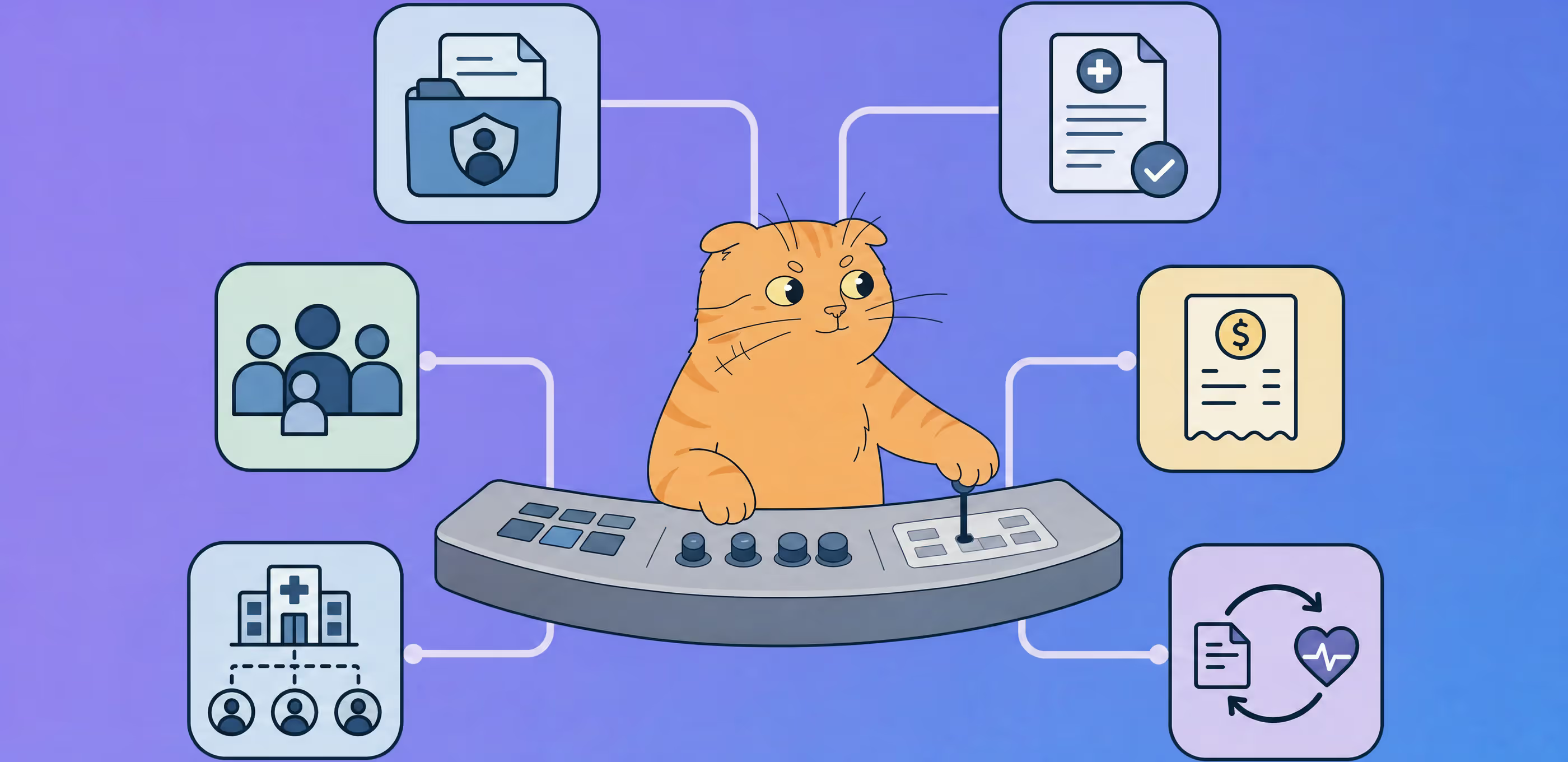
Health insurance software is the operational layer that connects plan rules with the everyday work of enrollment, claims, billing, and provider management. It stores the data behind insurance policies and moves each task through a controlled workflow, from confirming eligibility to issuing an explanation of benefits.
The exact responsibility depends on the organization using it. An insurance carrier owns the plan and usually controls benefit configuration, claims decisions, payments, and provider contracts. A third-party administrator (TPA) performs selected operations on behalf of a carrier or employer plan. An agency may work mainly with quotes, group enrollment, renewals, and client records rather than claims adjudication.
This is different from building a consumer insurance app. Health insurance app development, including mobile app development, usually focuses on consumer access. These insurance apps give people access to ID cards, claim status, plan documents, and support.
Health insurance platforms have a wider role. They have to apply benefit rules, exchange information with providers and clearinghouses, reconcile payments, and preserve an audit trail for regulated decisions.
That distinction shapes custom health insurance software development and the application software behind it. A useful first release is not a generic portal with a long feature list. It is one complete operating path for the organization that will use it. For one client, that path starts with enrollment and eligibility. For another, it starts when a claim arrives and ends when the provider receives remittance information.
The right module set distinguishes useful health insurance software solutions from broad insurance software solutions that do not complete a daily workflow. A payer may start with claims. A broker may need insurance quoting software and enrollment first. Our insurance software development services team uses that operating path to define release-one scope.
| Module | What it does | Who needs it first | Typical integration |
| Policy administration | Plan setup, benefit rules, renewals, member lifecycle | Payer, TPA | Core admin system, CRM |
| Claims adjudication | Auto-adjudication rules, pended-claim routing, payment | Payer, TPA | X12 837/835, clearinghouse |
| Enrollment & eligibility | Member onboarding, group setup, eligibility checks | Payer, broker | X12 270/271 |
| Billing & premium | Premium invoicing, reconciliation, delinquency | Payer, TPA | Payment gateway, GL |
| Provider network | Contracts, credentialing, directory, fee schedules | Payer | Provider directory API |
| Member portal & app | ID cards, EOBs, claim status, plan documents | All three | Patient Access API, FHIR |
| Quoting & CRM | Plan comparison, quotes, lead and renewal pipeline | Broker, agency | Rating engine |
| Analytics & reporting | Loss ratio, utilization, regulatory reporting | Payer | Data warehouse |
No health insurance platform needs every row in its first release. Insurance policy management and insurance billing enter scope only when the chosen workflow requires them. Each selected module should complete a daily task and pass data to the next system in the workflow.
An MVP should support one end-to-end route through the insurance process. Common release-one capabilities include:
These controls make a narrow health insurance solution usable in production. They matter more than adding shallow versions of every possible module.
We designed a clickable healthcare prototype for Clearstep in about 1.5 weeks. It gave the founders a workflow they could test and present before committing to a full build.
The prototype later supported a $400,000 raise. This was not a payer platform. The relevant lesson is scope validation: test the highest-risk workflow before investing in the complete operating system.
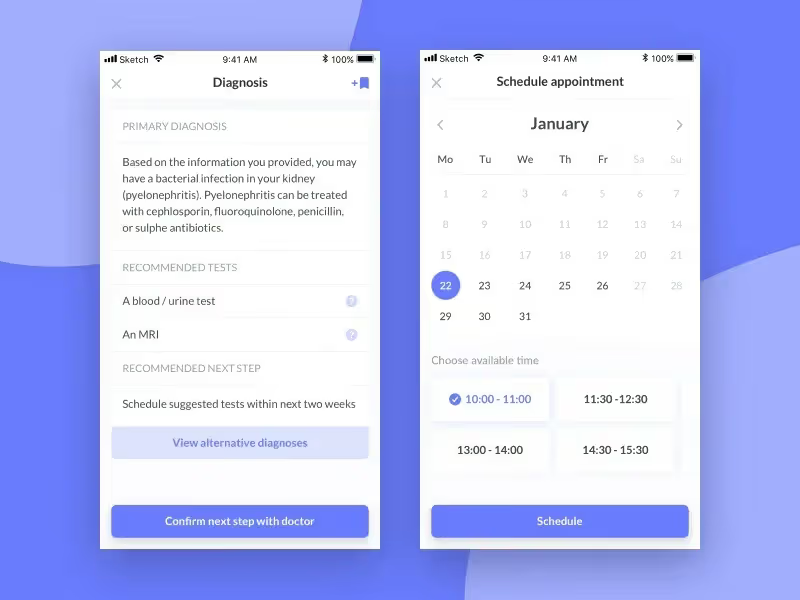
The prototype made the core healthcare workflow testable before full-scale development
Phase 2 can extend a stable core with functions that depend on mature data and operations:
Deferring these functions keeps the initial insurance platform focused. It also prevents teams from building advanced reporting on incomplete data or automating an insurance workflow that has not been proven in daily use.
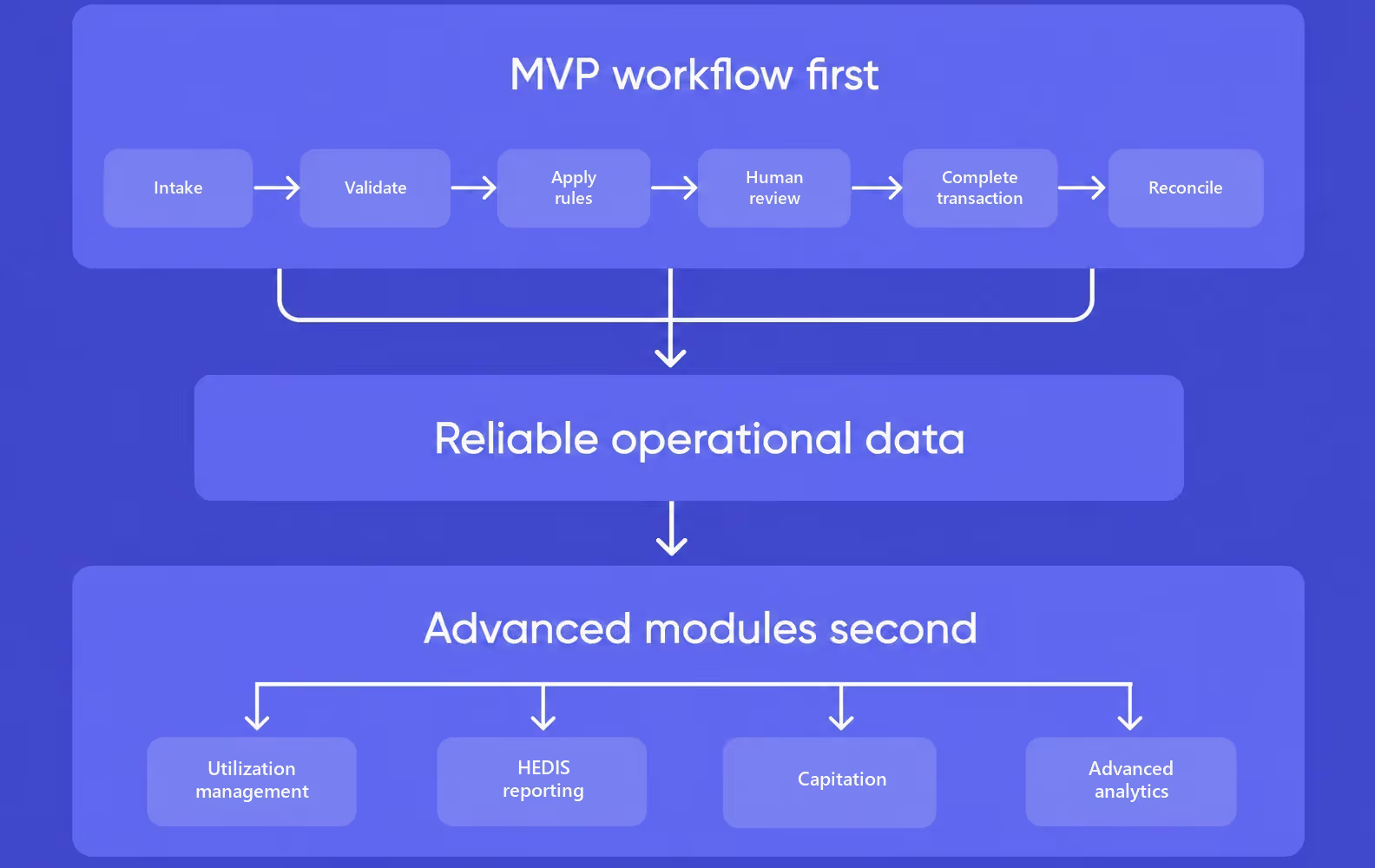
Advanced modules create value only after the core operating path produces reliable data
The same project label can describe operating systems for insurance companies, TPAs, and an insurance broker or agency. A payer or insurance carrier controls plan administration and claims decisions. A TPA executes delegated work for multiple clients. A broker or agency focuses on selling plans and managing relationships rather than adjudicating claims.
| Organization | Mandatory modules | First integration | Directional MVP range |
| Payer | Policy administration, claims, enrollment, billing | Clearinghouse and X12 837/835 | 9–15 months |
| TPA | Client-separated administration, claims workflow, billing, reporting | Client core or clearinghouse | 6–9 months |
| Broker or agency | Quoting, CRM, enrollment, renewals | Rating engine or carrier feed | 4–6 months |
These ranges assume a focused MVP rather than replacement of an entire legacy core. Data migration, partner certification, and custom benefit rules can extend any of them.
A payer build needs the deepest operational control. Release one usually covers plan configuration, member eligibility, claim intake, adjudication queues, and payment output. It also needs an auditable path for exceptions because staff must explain why a claim or authorization changed status.
The first integration often connects the claims module to a clearinghouse. Without that connection, the team can test internal rules but cannot complete the provider-to-payer transaction path.
A TPA may use similar modules, but it needs stronger separation between client accounts. Benefit rules, branding, reports, and permissions can differ for each employer plan or carrier relationship.
Delegation does not automatically transfer regulatory accountability. The regulated organization remains responsible for its obligations even when a TPA operates the workflow. The software therefore needs clear ownership, audit records, and service-level reporting across client boundaries.
A broker MVP is narrower because it typically stops before claim processing. These insurance workflows move from plan comparison to quote, enrollment, renewal, and client follow-up.
Its first integration may be a carrier feed or rating engine rather than a clearinghouse. Customer relationship management and document collection usually create more immediate value than provider-network management or automated adjudication.
The correct scope follows the operating responsibility. Starting from a generic feature list can leave every organization with a broad insurance platform that completes none of its essential workflows.
Health insurance integrations use two exchange layers for different jobs. X12 transactions move operational events such as claims and enrollment between organizations. FHIR APIs expose standardized access to healthcare and authorization data. A production insurance application may need both.
A common insurance claim route starts when a provider sends an X12 837. A clearinghouse validates and routes it to the payer. After adjudication, the payer returns an X12 835 with payment and remittance information.
| Transaction | What it carries | Direction | Where it affects the build |
| 837 | Claim submission | Provider → payer | Claims intake and validation |
| 835 | Remittance advice and payment | Payer → provider | Adjudication output and reconciliation |
| 270 / 271 | Eligibility inquiry and response | Provider → payer → provider | Real-time eligibility service |
| 834 | Enrollment and maintenance | Employer or exchange → payer | Enrollment module |
| 820 | Premium payment | Employer → payer | Billing module |
| 278 | Prior authorization request and response | Provider → payer | Utilization management workflow |
The platform has to track more than successful delivery. Duplicate files, invalid identifiers, rejected transactions, and late responses need visible exception handling. Otherwise, staff end up reconciling the insurance workflow outside the system.
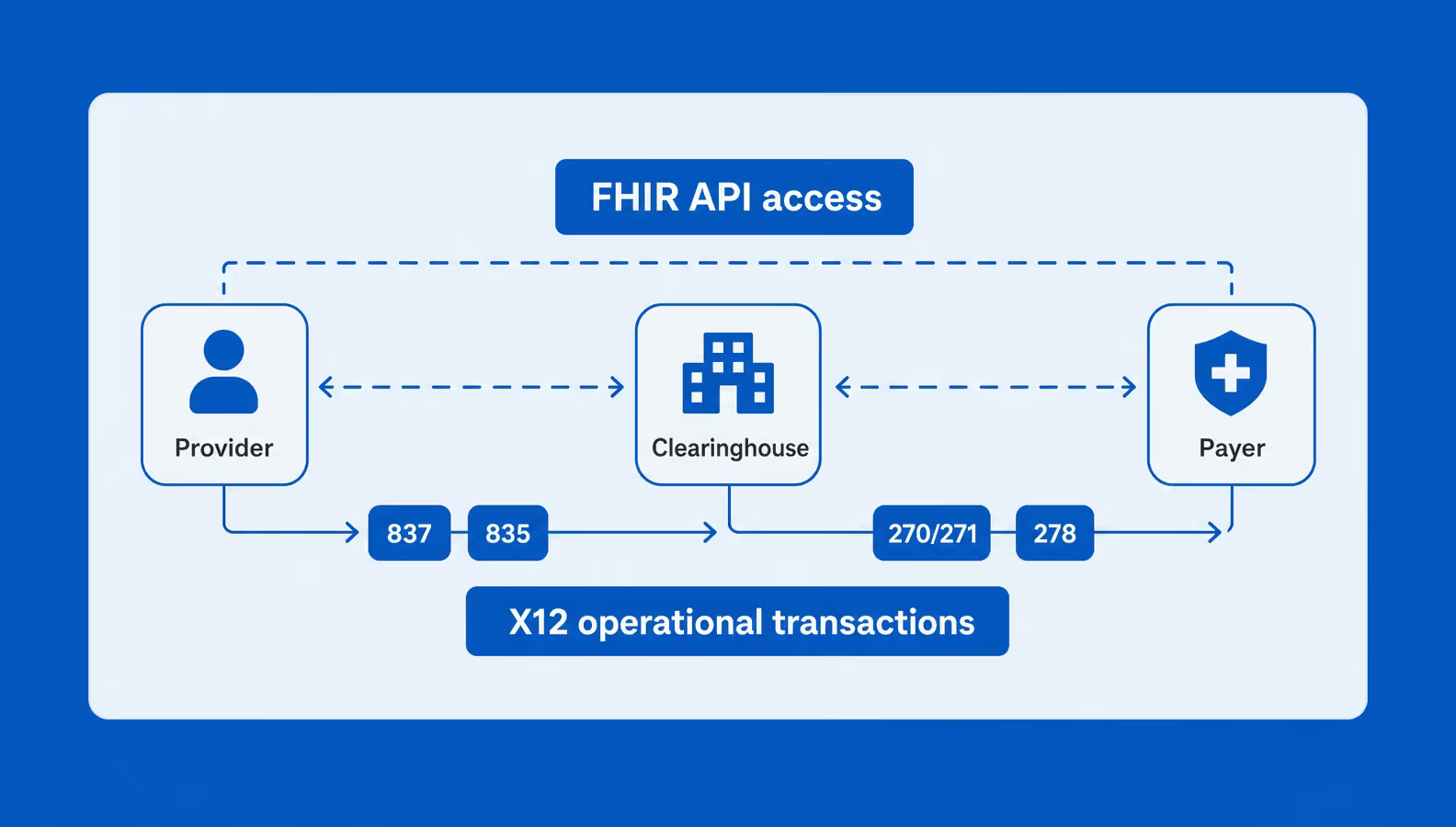
X12 moves operational transactions, while FHIR provides standardized API access to healthcare data
FHIR R4 defines API resources and exchange patterns rather than replacing the EDI transactions already used for claims and enrollment. Under CMS-0057-F, affected payers need Patient Access, Provider Access, Payer-to-Payer, and Prior Authorization API capabilities on the applicable timeline.
The HL7 Da Vinci Prior Authorization Support guide uses FHIR Claim and ClaimResponse profiles. It supports request submission, status checks, updates, and cancellation. The guide remains a Standard for Trial Use. Implementation teams should pin supported versions and test each partner's behavior.
TEFCA addresses broader exchange between health information networks. It may affect how clinical data reaches an insurance platform, but it does not remove the need for payer APIs or operational EDI.
Live integration access can determine the delivery plan. In the payments project KEM, the client could not provide live banking APIs during development. We used simulated data and prepared the product for handoff to the regulated integration team.
KEM was not an insurance implementation. The transferable lesson concerns blocked partner access: define contracts, mock realistic responses, and isolate the adapter so core development can continue without pretending the integration is complete.
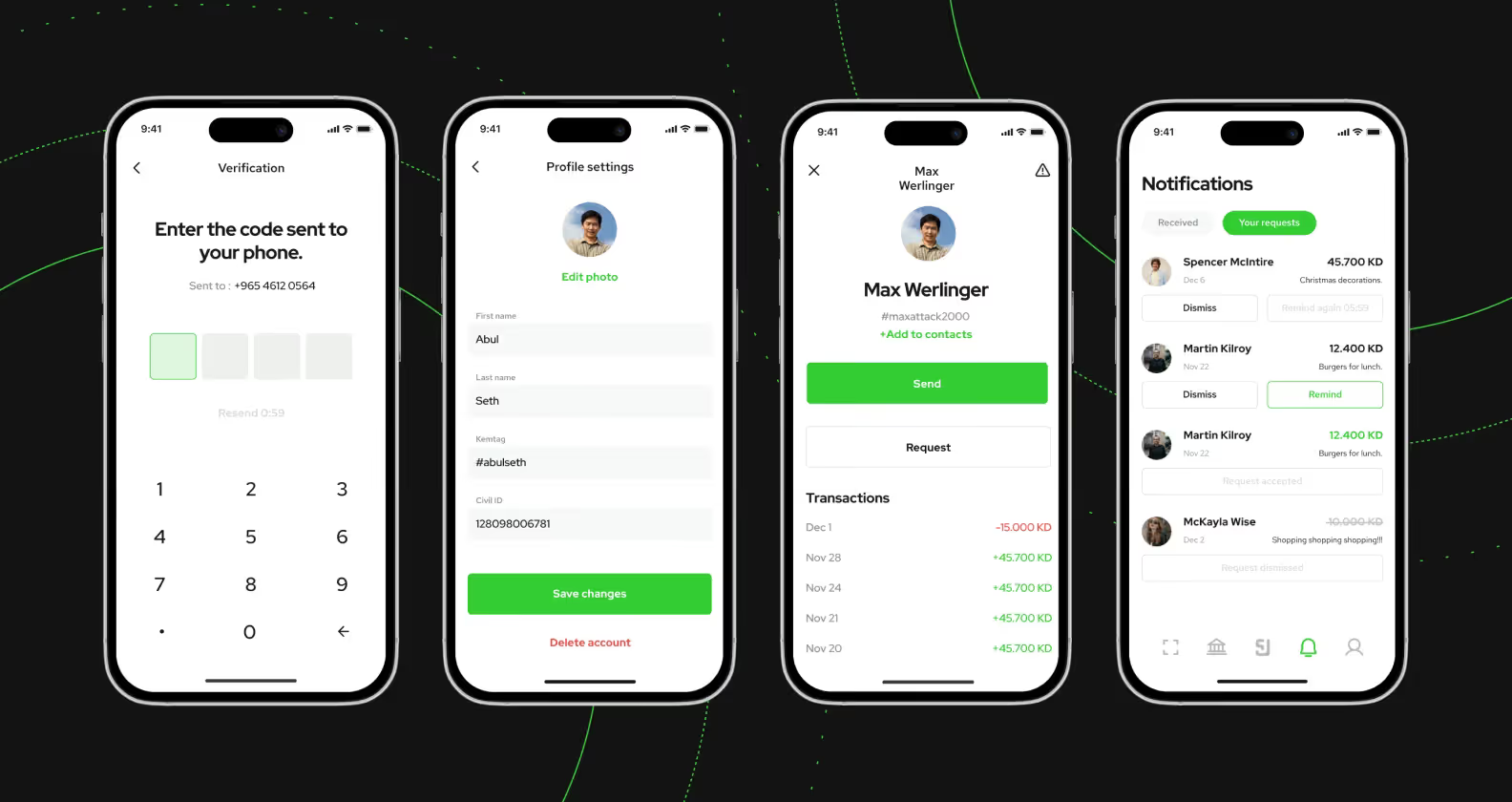
A realistic simulator keeps core development moving while access to a regulated external system is pending
X12 supports the transactions that run insurance operations. FHIR supports data access and newer authorization exchanges. A partner may use FHIR for prior authorization while the platform still receives 837 claims and answers 270 eligibility inquiries. It may also process 834 enrollment files and produce 835 remittance advice.
A practical architecture keeps transaction intake, FHIR services, and internal business rules separate. That reduces the impact of a partner-specific change and lets the team certify each interface without rewriting the claims or policy modules behind it.
In the regulated health insurance industry, a US medical insurance system must protect health information under HIPAA and support applicable payer obligations. For affected organizations, CMS-0057-F also turns prior authorization deadlines, denial reasons, reporting, and FHIR exchange into product requirements.
HIPAA is not a certification badge attached to software. The Privacy Rule governs how protected health information is used and disclosed across the organization. The Security Rule requires administrative, physical, and technical safeguards for electronic PHI.
The product supports regulatory compliance through access controls, audit logs, authentication, encryption, retention rules, and incident evidence. Policies, staff training, vendor management, and physical safeguards remain organizational responsibilities. This distinction should guide any HIPAA-compliant development plan.
| Requirement | Affected party | Deadline | Build impact |
| Expedited prior authorization decision within 72 hours | Impacted payers | January 1, 2026 | Priority queues, SLA clocks, escalation |
| Standard decision within seven calendar days | Impacted payers, excluding QHP issuers on federally facilitated exchanges for this timeframe requirement | January 1, 2026 | Due-date calculation and overdue alerts |
| Specific reason for denial | Impacted payers | January 1, 2026 | Structured reason capture and delivery through each response channel |
| Public prior authorization metrics | Impacted payers | First report due March 31, 2026 | Event history, metric calculation, publishable reporting |
| Patient Access API enhancement | Impacted payers | Generally January 1, 2027 | Prior authorization data in member-access services |
| Provider Access, Payer-to-Payer, and Prior Authorization APIs | Impacted payers | Generally January 1, 2027 | FHIR services, consent or opt-out workflows, partner testing |
The CMS requirements in this table concern prior authorization for medical items and services, not drugs. The affected categories include Medicare Advantage organizations and Medicaid or CHIP programs. Certain managed-care entities and Qualified Health Plan issuers on federally facilitated exchanges are also included, with scope and timing nuances.
A compliance backlog should translate every applicable regulation into data and evidence. A 72-hour deadline needs a reliable start event, pause rules, time-zone handling, and escalation ownership. A specific denial reason needs structured business logic and a response that staff can understand. Free-text notes alone make consistent reporting and audit review difficult.
The four API capabilities create a separate delivery track. Patient Access expands information available to members. Provider Access shares specified data with eligible providers. Payer-to-Payer supports data exchange when insurance coverage changes. The Prior Authorization API lets providers determine requirements and submit or track requests.
Companies evaluating healthcare software development services should identify which rules apply before choosing architecture. A broker CRM that does not handle PHI or regulated payer decisions has a different perimeter from a Medicare Advantage claims and authorization platform.
In Medico, we built separate patient and clinician experiences for oncology monitoring. Patients completed surveys and uploaded health data. Clinicians reviewed dashboards and alerts.
The project was not a health insurance core, and the case does not prove HIPAA compliance. It shows why sensitive workflows need explicit roles, controlled data access, and legal or privacy work included in delivery dependencies rather than left until launch.
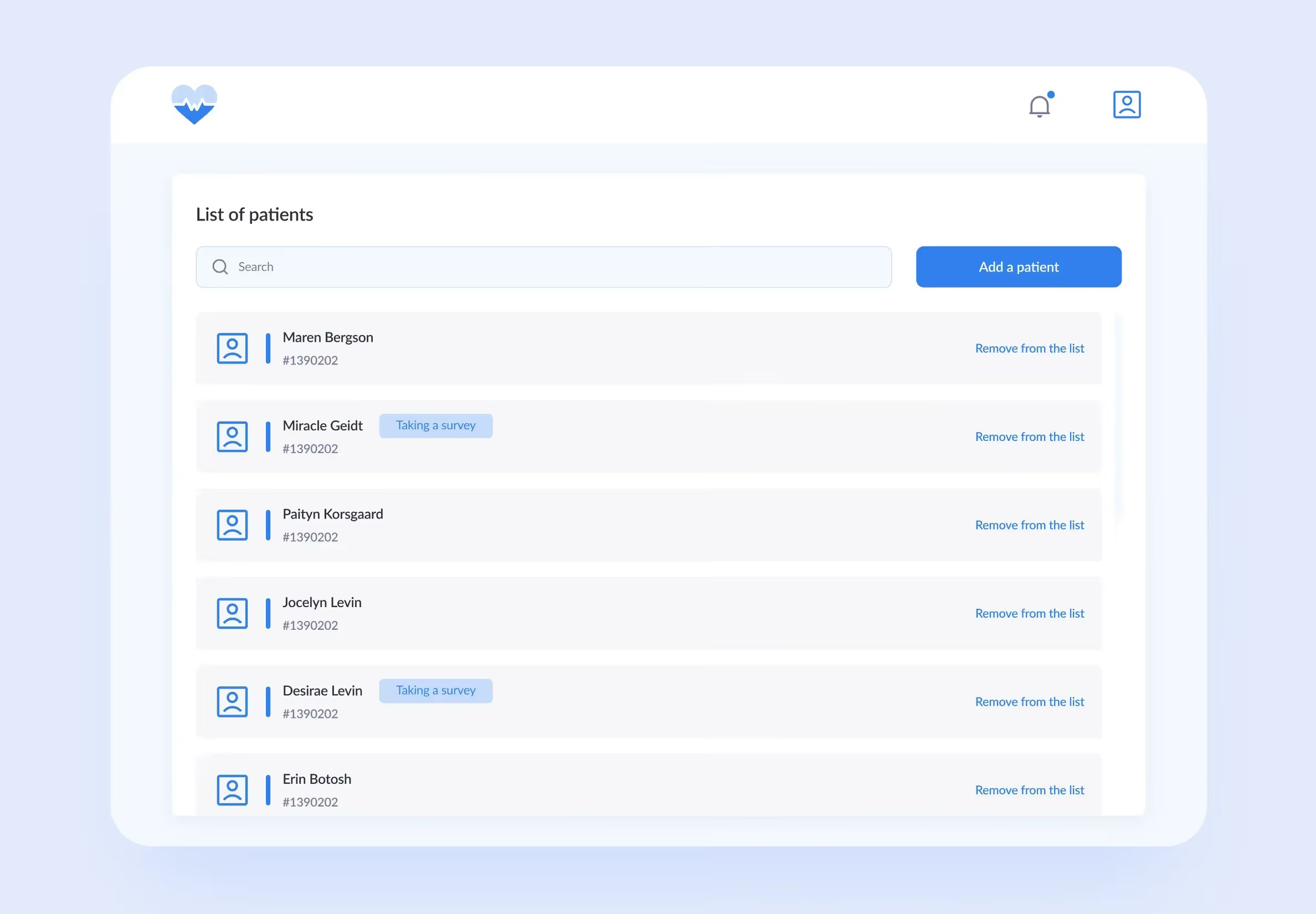
Separate patient and clinician workflows make ownership and access boundaries visible in the product
The implementation team should keep a traceability matrix from each requirement to the workflow, control, test, and monitoring signal that supports it. That makes regulatory review part of product delivery instead of a final document exercise.
The health insurance software development process should retire regulatory and integration uncertainty before the software engineering team scales product development. Core modules and external exchange layers progress together. Waiting until the end to test clearinghouse files or payer APIs can invalidate earlier architecture and workflow decisions.
Start with the client’s operating responsibility and one release-one workflow. Map the people who touch it, the decisions they make, the data it consumes, and the external response that completes it.
The same map identifies regulatory scope. The team can connect each obligation to a feature, control, test, or operating procedure. It should also document partner access and certification requirements before setting a launch date.
The architecture defines boundaries between core insurance rules, transaction adapters, FHIR services, and reporting. This separation helps the system absorb partner changes without spreading interface logic through every module.
User experience design focuses on operational queues and exceptions rather than isolated user interface screens. Staff need to know what requires attention, why an item stopped, and what action moves it forward. Role and permission design should be visible in these flows from the first prototype.
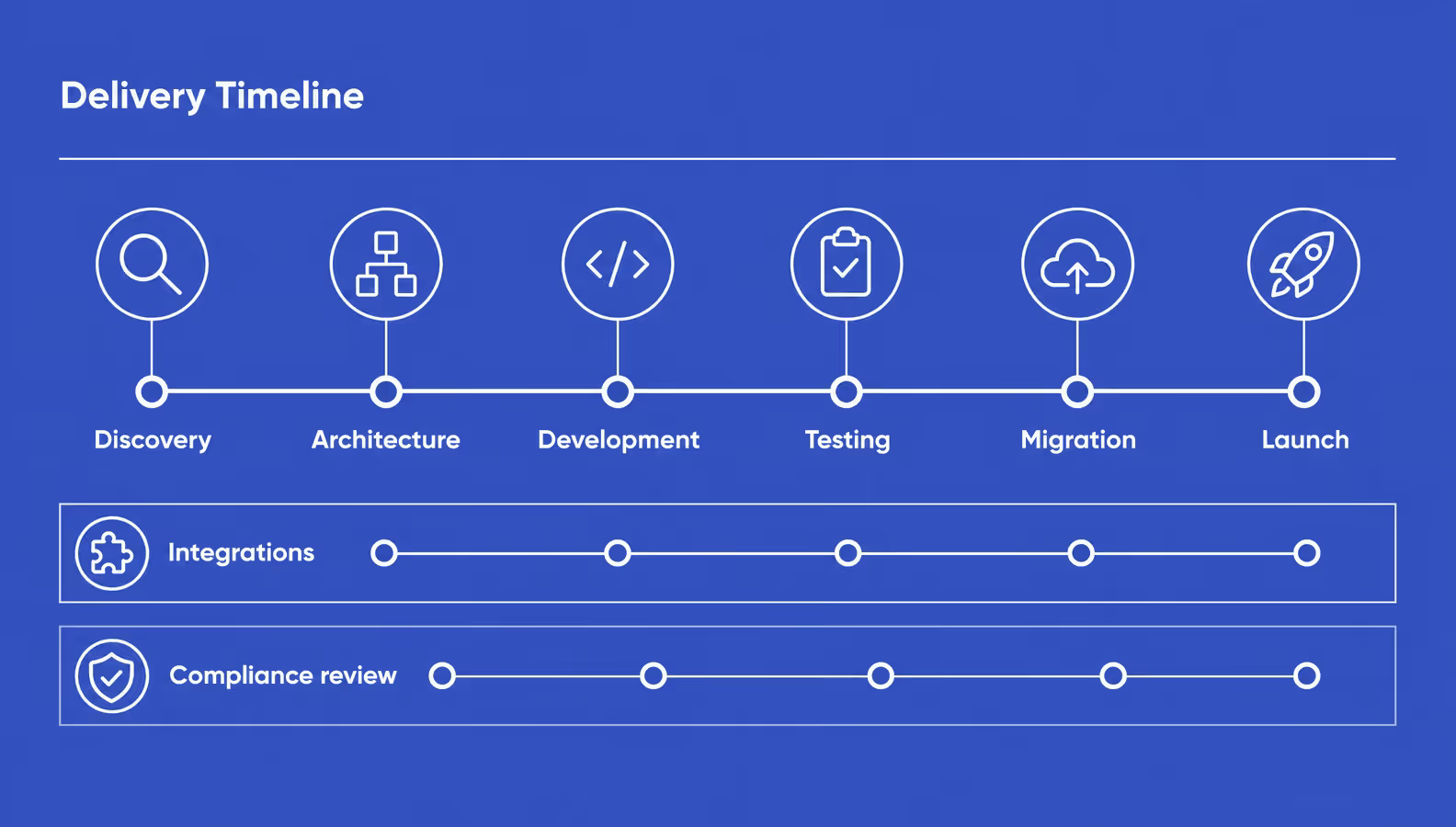
Core product work and external integrations progress together throughout delivery
Development begins with the vertical slice selected during discovery. A claims slice may cover intake, validation, an adjudication queue, a decision, and remittance output. An enrollment slice may begin with a group file and end with confirmed member eligibility.
The X12 or FHIR layer develops in parallel with the relevant core module. Contract tests and partner simulators give engineers stable inputs before live connectivity is available. Versioned adapters keep a clearinghouse change from altering the underlying claim or policy model.
Test environments should use synthetic member records and generated X12 files rather than copies of production PHI. The dataset still needs realistic edge cases such as duplicate claims, invalid subscriber identifiers, changed coverage dates, and missing authorization data.
Security testing covers authentication and role boundaries. It also checks audit events, exports, logs, and support tools for unintended data exposure. Workflow testing confirms that an exception reaches a human queue instead of disappearing after an automated failure.
Migration starts with a mapping between legacy fields and the new domain model. The team should define how it will treat incomplete histories and conflicting identifiers before the final import.
Reconciliation compares member counts, policy status, claim balances, and other operational totals. During a parallel run, old and new systems process the same controlled workload. Differences become migration or rules defects to resolve before cutover.
Launch planning sets ownership for failed transactions and claim exceptions. It also covers API errors, access anomalies, compliance events, and partner outages.
Dashboards should separate technical availability from business completion. A service can remain online while files are rejected or authorization requests miss a deadline. Monitoring therefore follows each workflow through its final outcome, not only through the application server.
A staged rollout lowers operational risk. One client group, product line, or transaction partner can move first while the team checks reconciliation and support volume. The remaining migration proceeds only after those signals stay within agreed limits.
Timeline and cost for health insurance software projects follow scope rather than the product label. A broker portal and a payer claims platform are both health insurance software. Their module depth and delivery risks differ substantially.
A focused broker or agency MVP often takes 4–6 months. This range can cover quoting, CRM, document collection, enrollment, and a carrier or rating-engine integration. Custom carrier rules and fragmented data feeds can extend the schedule.
A TPA MVP often takes 6–9 months. The extra work comes from client separation, delegated claims or administration workflows, configurable benefit rules, and reporting for several organizations.
A payer MVP often takes 9–15 months. Claims adjudication, policy administration, enrollment, billing, auditability, and clearinghouse certification create a larger operating perimeter. Replacing a legacy core or migrating long claim histories can take longer than this range.
These are directional planning estimates, not delivery quotes. The main cost drivers are:
For custom insurance software development, a phased estimate is more useful than one total number. Software design and engineering decisions also affect later scalability. Phase one can cover discovery and a tested vertical slice. The next estimate uses evidence from partner access, legacy data, and workflow testing to price the production scope.
For a deeper explanation of team composition and pricing factors, see our guide to healthcare app development cost. Its mobile examples are not a direct estimate for payer software, but the underlying cost drivers still help structure a budget.
The schedule should also include time controlled by other organizations. A team may finish an adapter while waiting for clearinghouse certification or production credentials. Treating those waits as explicit milestones makes the forecast more credible than assuming every external dependency will be available on demand.
The hardest problems usually appear at system boundaries. Legacy records meet a new data model, partner systems control test access, and automated rules face exceptions that were never documented. These risks need attention before launch planning begins.
Migration fails when teams treat it as a final import task. Duplicate members, incomplete claim histories, and conflicting identifiers should be profiled before the target model is fixed.
The team can then define reconciliation rules and rehearse the transfer. A parallel run should continue until member totals, policy status, and claim balances agree across both systems.
A finished adapter does not prove that an integration works. Clearinghouses and other partners may use different validation rules, acknowledgments, or certification steps than the available documentation suggests.
Partner access dates should enter the project plan during discovery. Simulators keep development moving, but every mocked response must remain an open dependency until it passes external testing.
Benefit exceptions often live in code, spreadsheets, and staff knowledge at the same time. This creates avoidable manual review and makes claim decisions difficult to explain.
Versioned configuration gives each rule an owner and effective date. It also lets operations staff see which rule affected a result without asking an engineer to inspect the code.
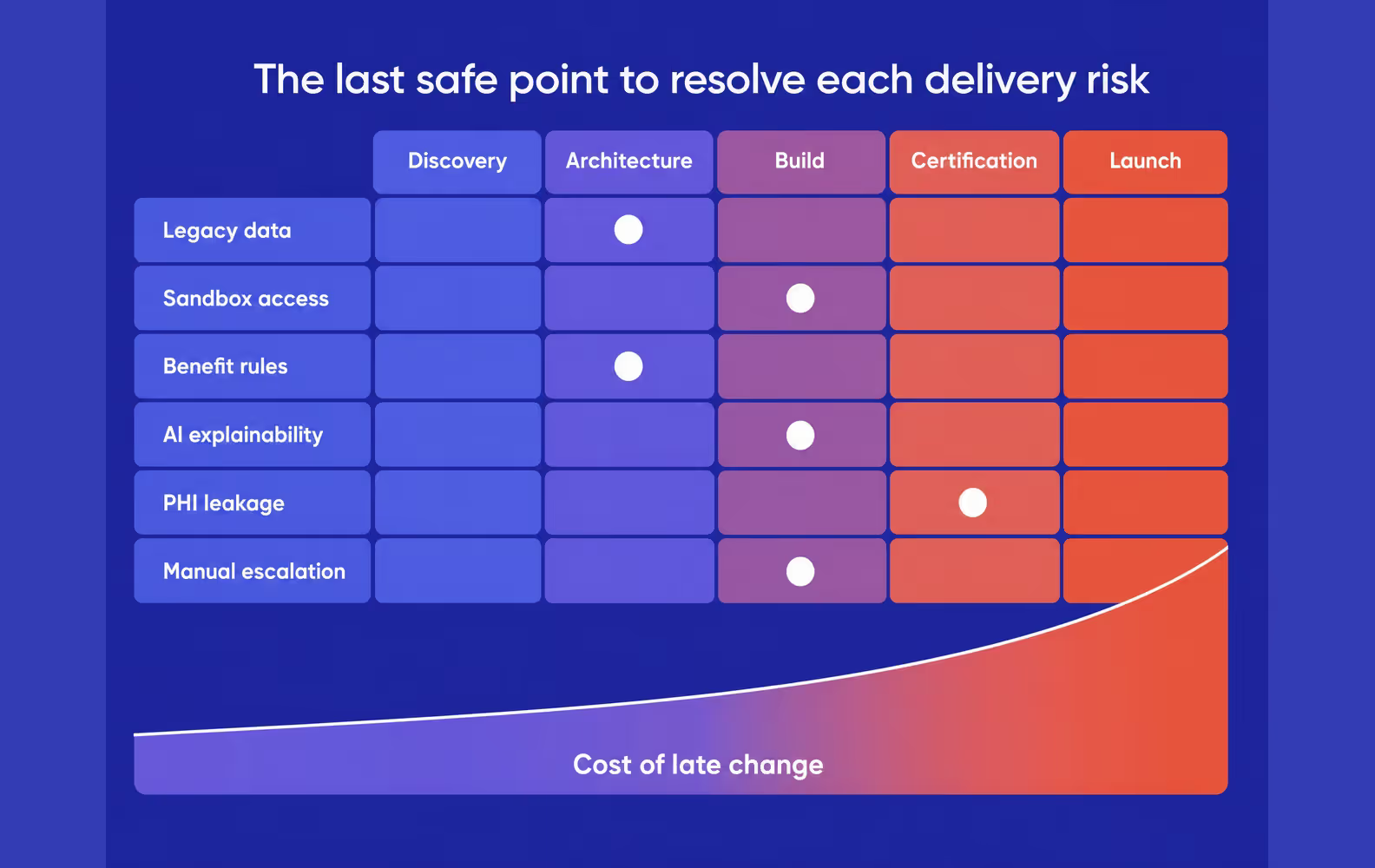
Some delivery decisions become expensive to reverse long before launch
OCR can extract document fields, while artificial intelligence models can assist claim triage and fraud detection. The reviewer still needs transparency into the evidence behind a recommendation.
Opaque automation is especially risky for denials. CMS requires affected payers to provide a specific denial reason, and a model score cannot supply that explanation on its own. Our guide to automation in the insurance industry covers other suitable workflows.
Sensitive data can escape through support tools even when the main application has strong access controls. Common paths include logs, screenshots, copied databases, and exported diagnostic files.
Synthetic test records should be the default. Logging rules need redaction and retention limits, while security testing should include observability and support systems as well as the product interface.
Software that automates adjudication becomes a liability when an unusual result has no human owner. Repeated transaction failures and benefit-rule conflicts need a visible queue rather than another silent retry.
Staff should receive the relevant context and an escalation deadline. They also need a controlled way to correct data or override a result while preserving the reason in the audit history.
Clear ownership and observable failures improve operational efficiency without removing the path for difficult cases.
Before teams develop health insurance software, four decisions shape the project before feature estimation begins. Define who will operate the system, which workflow release one must complete, which external exchanges are required, and which regulatory deadlines apply.
Insurance portals for brokers may begin with quoting and enrollment. A TPA needs delegated workflows and client separation. A payer platform can require claims adjudication, clearinghouse certification, and regulated API delivery.
The safest roadmap for custom health insurance solutions addresses partner access and data migration early. It also preserves manual ownership for exceptions that automation cannot resolve.
➡️ Need to turn these decisions into a practical delivery scope? Tell us what you are building, and we will help map the modules, integrations, and first release.
Health insurance software development creates systems for policy administration, claims, enrollment, billing, provider networks, and member access. Unlike a consumer insurance app, the platform applies plan rules and exchanges regulated data. It also preserves an audit trail for operational decisions.
A focused broker or agency MVP often takes 4–6 months. A TPA MVP commonly takes 6–9 months, while a payer MVP may take 9–15 months. Legacy migration, clearinghouse certification, and custom benefit rules can extend these ranges.
The relevant requirements depend on the organization and data handled. US projects may need HIPAA Privacy and Security Rule controls, CMS-0057-F capabilities for affected payers, and ACA-related plan obligations. Software supports compliance through controls and evidence, but organizational policies and operations remain part of the compliance program.
CMS-0057-F sets prior authorization and interoperability requirements for affected payer categories. Operational requirements began in 2026, including 72-hour expedited decisions, seven-calendar-day standard decisions, and specific denial reasons. Four FHIR API capabilities generally become required in 2027. The rule’s prior authorization provisions cover medical items and services rather than drugs.
Usually, yes. X12 transactions still support claims, remittance, eligibility, enrollment, premium payment, and health care services review. FHIR APIs provide standardized access to clinical and authorization data. A health insurance platform may use both exchange layers for different workflows.
An off-the-shelf core can suit standard plan administration and claims workflows. Custom software fits differentiated operations or unusual integrations. A hybrid approach keeps established core functions while adding custom portals, workflow services, or adapters. The decision should follow process fit, integration constraints, migration risk, and the cost of long-term configuration.


.svg)