Explore

Need help with your project?

Oops! Something went wrong while submitting the form.
mHealth app development is the process of building mobile products that collect, exchange, or act on health data. These apps serve patients, clinicians, and researchers. Unlike a general healthcare app, an mHealth product often depends on wearable data and remote monitoring. Its clinical integrations and regulatory path have to be defined before development starts.
This guide explains how to classify the product and choose its features and integrations. It also maps the compliance path, budget, timeline, and decisions from intended use to launch.
Mobile health, or mHealth, uses a mobile device to support health services, data collection, communication, or care. A mobile health application can serve patients and healthcare providers, researchers, or consumers. Its purpose can range from habit tracking to a clinical workflow.
mHealth app development creates mobile-first products that collect, exchange, or act on health data. The label describes a product's operating model, not its regulatory status. A step counter and diagnostic support tool can both be mHealth apps, but they carry different risks and oversight.
This distinction sets the starting point for healthcare app development services. A broad healthcare app can digitize administrative work without collecting data from a mobile device. A telehealth app centers on remote care delivery. Medical-device software performs or supports a clinical function that requires a separate assessment. Our guide to healthcare mobile app development covers the wider product category.
| Product label | Main purpose | Typical data | Regulatory question |
| mHealth app | Mobile collection or use of health data | Vitals, symptoms, activity, medication | Does it handle protected health information or perform a medical-device function? |
| Healthcare app | Any digital workflow in healthcare | Administrative or clinical data | Which healthcare rules apply to the workflow? |
| Telehealth app | Remote care delivery | Video, chat, files, visit records | Does it connect patients and licensed providers securely? |
| Medical-device software | Diagnosis, treatment, monitoring, or clinical decisions | Patient-specific clinical data | Does device or software-as-a-medical-device oversight apply? |
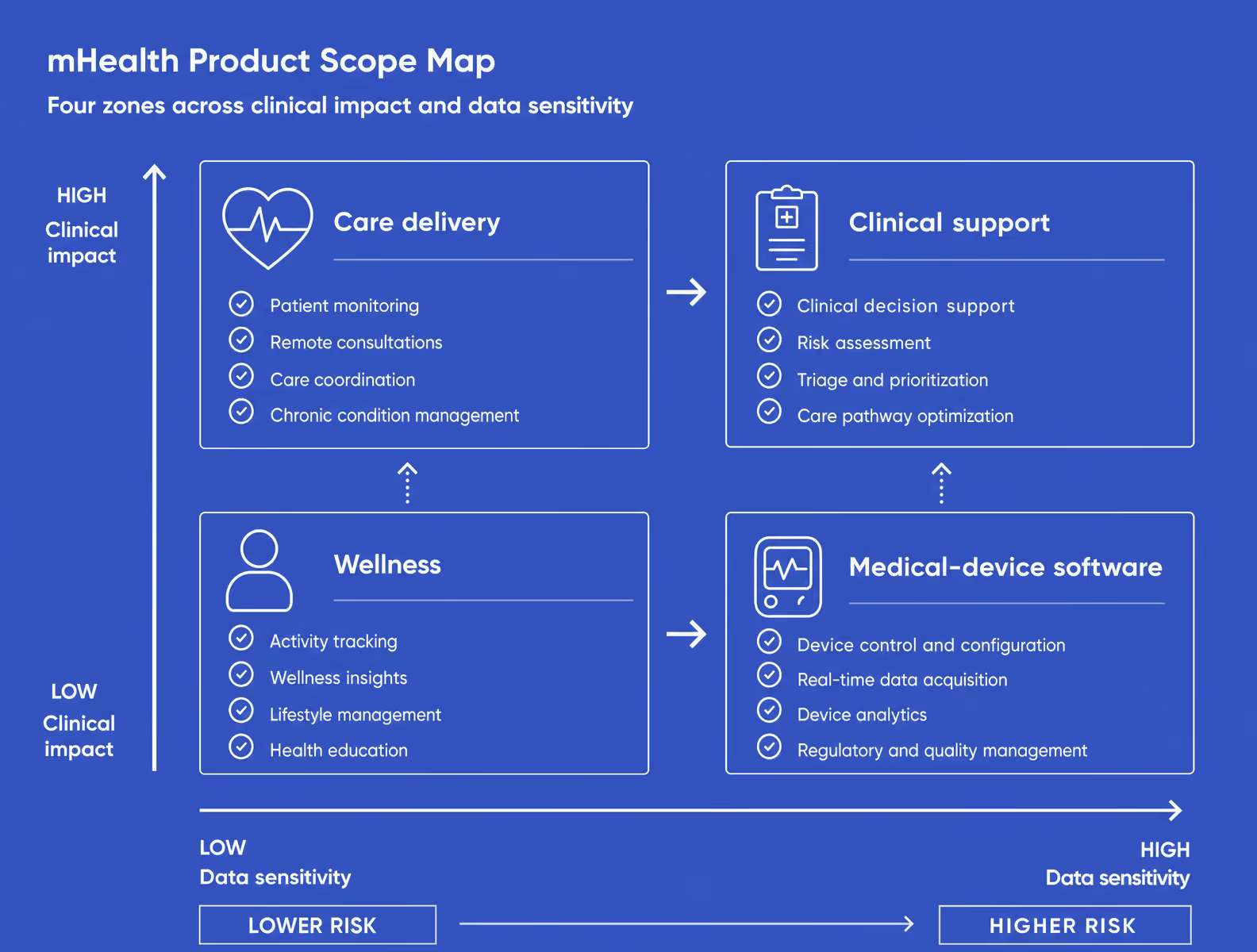
The same mobile interface can follow a very different delivery path once its claims and data use change
Types of mHealth apps differ by health workflow, primary user, data sensitivity, and clinical impact. This classification matters because products with different clinical roles do not require the same features or evidence.
Remote patient monitoring collects readings for a care team to review. Telehealth products support consultations. Medication and chronic-care apps organize treatment routines, while wellness products focus on habits.
Clinical research apps collect consented study data. Digital therapeutics deliver an evidence-based intervention through software. A mental health app can sit in several categories depending on whether it offers self-guided exercises, therapy sessions, or clinical monitoring.
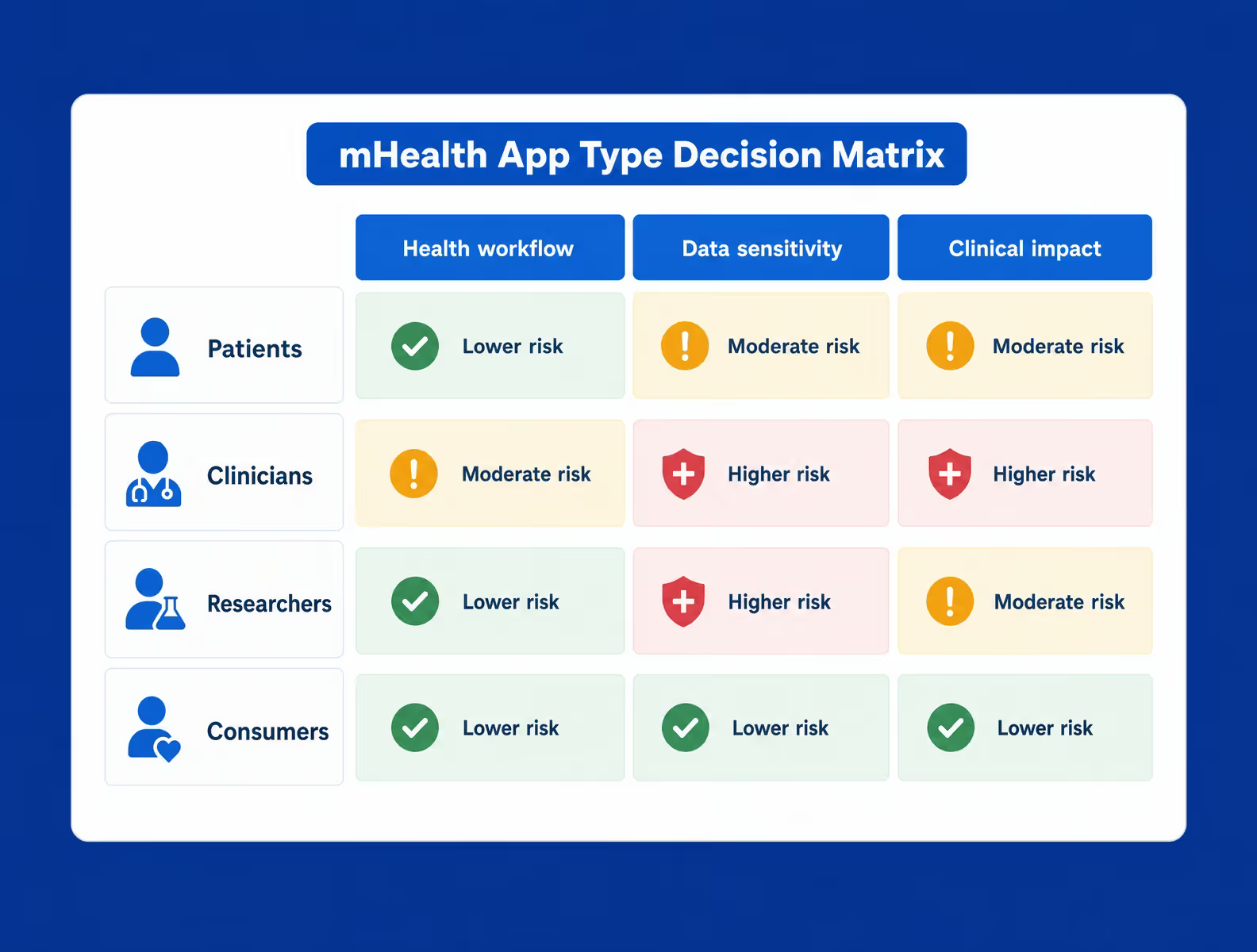
The category narrows the evidence, integration, and operating questions before a team estimates the build
| App category | Primary user | Core workflow | Typical integrations |
| Remote patient monitoring | Patients and care teams | Capture and review vitals | Wearables, Bluetooth devices, electronic health records |
| Telehealth | Patients and clinicians | Remote consultation | Video, scheduling, e-prescribing |
| Medication adherence | Patients and caregivers | Reminders and adherence tracking | Pharmacy, notifications, care portal |
| Chronic care | Patients and clinical teams | Long-term condition management | Electronic health records, labs, monitoring devices |
| Wellness | Consumers | Habit and activity tracking | Apple HealthKit, Health Connect, wearables |
| Clinical research | Participants and researchers | Consent and study data collection | Electronic clinical outcomes, sensors, research backend |
| Digital therapeutics | Patients and clinicians | Software-delivered intervention | Care portal, outcomes tracking, clinical review |
The category also shapes the commercial case. US-based digital health companies raised $6.4 billion across 245 deals in the first half of 2025. That figure signals an active app market, but it does not validate a specific product. The useful test is whether the app improves a measurable health workflow for a defined user.
Clearstep started as a healthcare concept with a $1,500 design budget. We turned it into a clickable prototype in about 1.5 weeks.
The chatbot flow collected symptoms, asked follow-up questions, suggested possible causes and tests, and moved patients toward appointment scheduling. This gave the founders something concrete to test and present before committing to full application development.
The founders used the prototype in investor meetings and reportedly raised $400,000. Read the Clearstep case.
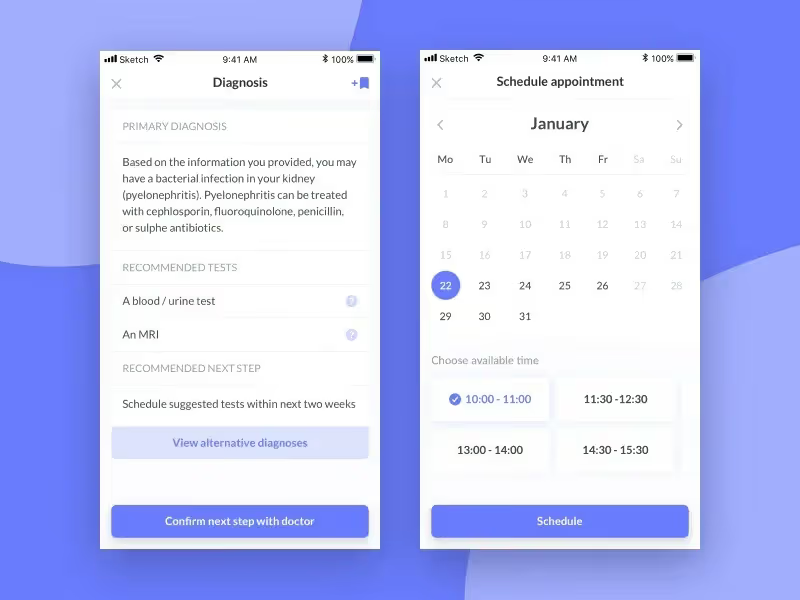
A narrow workflow and tangible prototype made the product easier to explain before a full build
Well-scoped mHealth apps give patients and healthcare professionals a shared view of information between visits. Remote patient monitoring can surface changes sooner, while telehealth and medication tools reduce avoidable coordination work. For healthcare providers, the benefit is not more data by itself. It is a traceable path from a patient event to the person responsible for acting on it.
An mHealth MVP needs a secure foundation, while workflow-specific modules belong only where they support the intended health outcome. Starting with every possible feature increases validation work and makes the first release harder to test.
The shared foundation usually includes secure onboarding and informed consent. Role-based access separates patient, clinician, caregiver, and administrator actions. Health-data capture needs clear provenance, while notifications require delivery tracking and user controls. Dashboards, audit logs, accessible interfaces, support, and incident reporting complete the operational layer.
| Module | When it is MVP-critical | Main implementation risk |
| Consent and access control | Any app handling identifiable health data | Wrong roles or unclear consent scope |
| Device data capture | Remote monitoring, wellness, and chronic care | Data quality, pairing, and duplicate readings |
| Clinical alerts | Remote monitoring and decision support | Alert fatigue and unsafe thresholds |
| Electronic health record integration | Provider workflows | Mapping, patient matching, and interoperability |
| Telehealth | Remote consultations | Call reliability, privacy, and scheduling |
| Medication management | Adherence and chronic care | Dose accuracy and notification failures |
Optional modules follow the use case. A telemedicine app needs video and scheduling, while a monitoring product needs device pairing and real-time clinical alerts. Research teams often require offline data collection. Products used by families can add caregiver access. Teams can personalize reminders or education when that change supports the treatment plan, rather than merely decorating the interface.
Medico supports oncology patients between appointments. The mobile application sends scheduled health surveys and lets patients upload lab results as a PDF or photo.
Doctors review indicators in a web dashboard. The system notifies them about abnormal results, new laboratory files, and patient requests for contact. We also accounted for time zones so surveys reached patients at the intended local time.
This workflow shaped the feature set: patient reporting, clinical review, alerts, and hospital administration were essential, while unrelated modules stayed outside the core product. See how we built Medico.
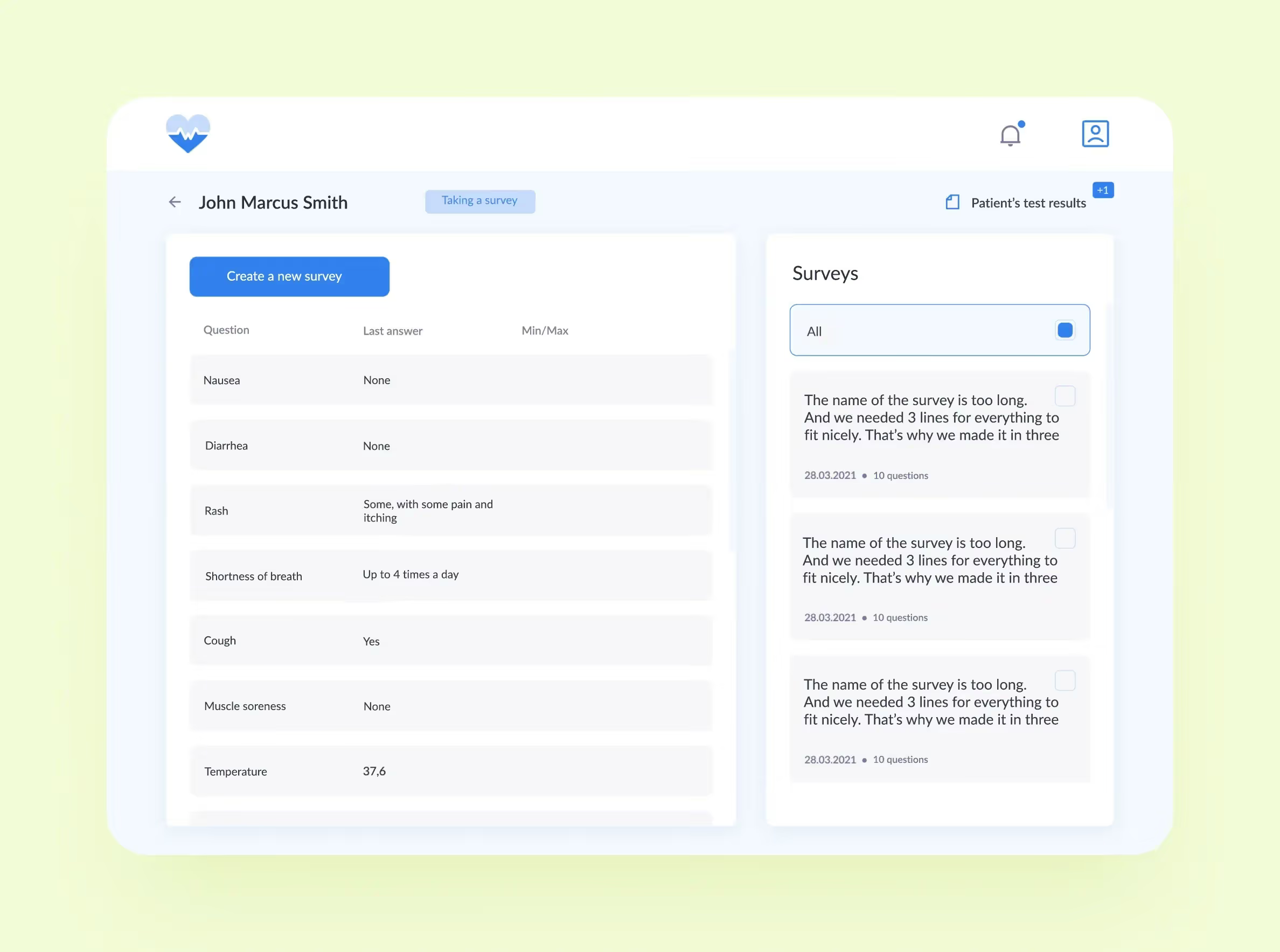
The value comes from closing the loop between a patient report and a clinical response
A secure mHealth product starts with its intended use, users, data flow, and claims. A wellness product, provider-facing workflow, and medical device can share similar screens while carrying different healthcare regulations. The assessment therefore belongs before interface design and vendor selection, not at the end of quality assurance.
Start by identifying who controls the health information and which organizations receive it. A US provider or business associate handling protected health information may bring the product under HIPAA. If an output informs diagnosis or treatment, a separate FDA software-as-a-medical-device assessment may apply. Geography, clinical research, state privacy laws, and app store medical review add further routes.
| Scenario | Likely requirement | Product decision before development |
| App handles protected health information for a US provider | HIPAA safeguards and business associate agreement controls | Hosting, vendors, access, audit logs, and incident response |
| App informs diagnosis or treatment | FDA device or SaMD assessment may apply | Intended use, product claims, risk class, and validation evidence |
| Consumer wellness only | May fall outside HIPAA and FDA oversight | Privacy, security, consent, and store rules still apply |
| EU users or health data | GDPR and local health-data rules | Legal basis, data minimization, retention, and user rights |
| Clinical research | Institutional review board or study protocol governance | Consent versioning, data quality, and withdrawal workflow |
Security architecture needs the same early treatment. The team maps identity, role-based access, encryption, audit trails, retention, and every third party that receives an event. Product analytics and crash-reporting tools deserve particular scrutiny. A convenient software development kit can expose medical data outside the approved workflow.
A 2025 study of 408 Android telehealth apps from 36 countries found that 48.09% of US-based apps potentially violated at least one applicable regulation. The researchers also found sensitive health information reaching domains not equipped to handle it. This makes privacy architecture a design input rather than a final QA checklist.
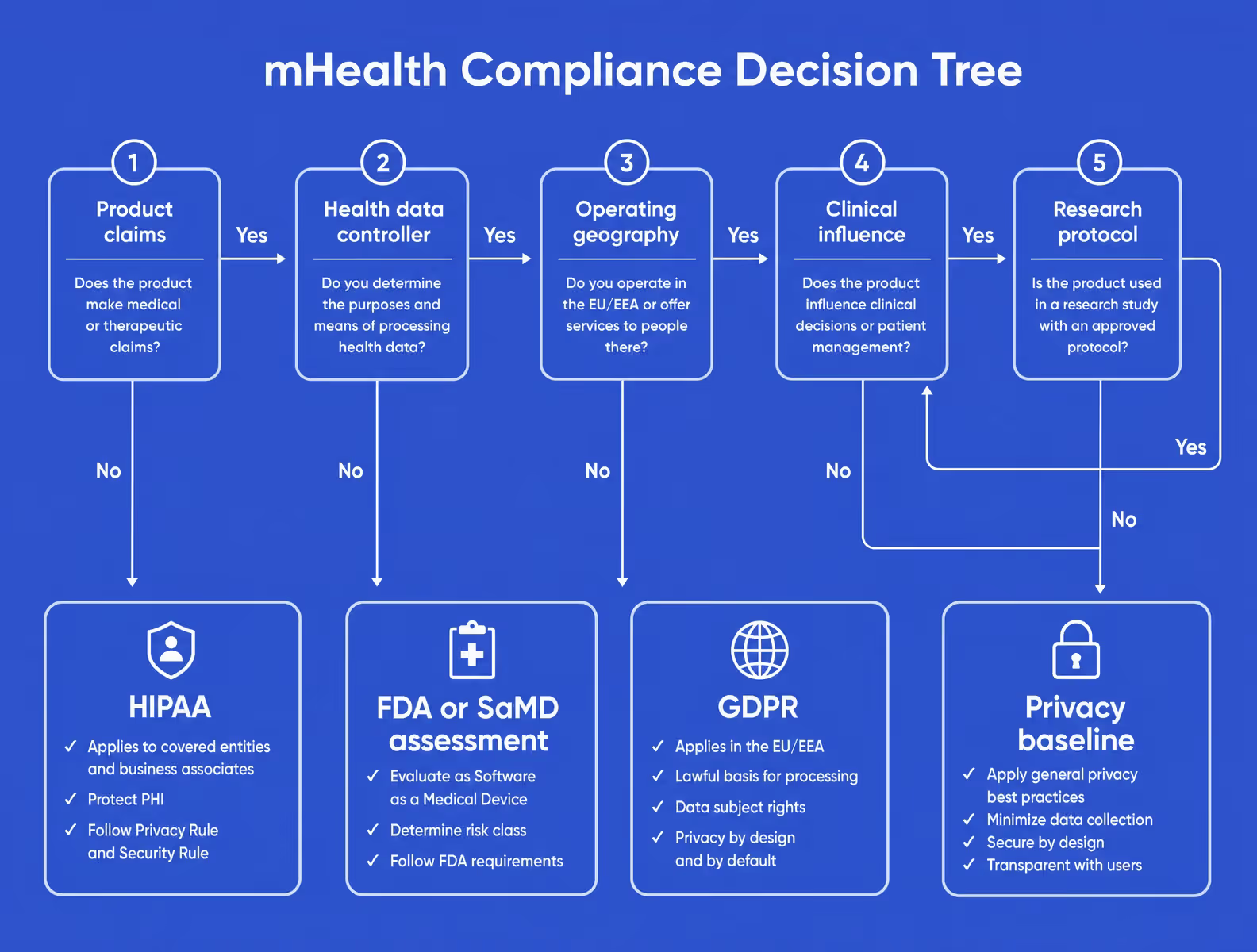
Compliance work starts with the product's actual role, while privacy controls remain necessary on every route
A detailed HIPAA-compliant mHealth app plan then translates the chosen route into technical controls and operational evidence. The exact legal and regulatory obligations require assessment by qualified counsel and relevant compliance specialists.
An mHealth architecture carries data from a patient or connected device into a clinical workflow. Each handoff has to preserve consent, identity, origin, and time. A reliable design also records failures so a missing measurement is not mistaken for a normal result.
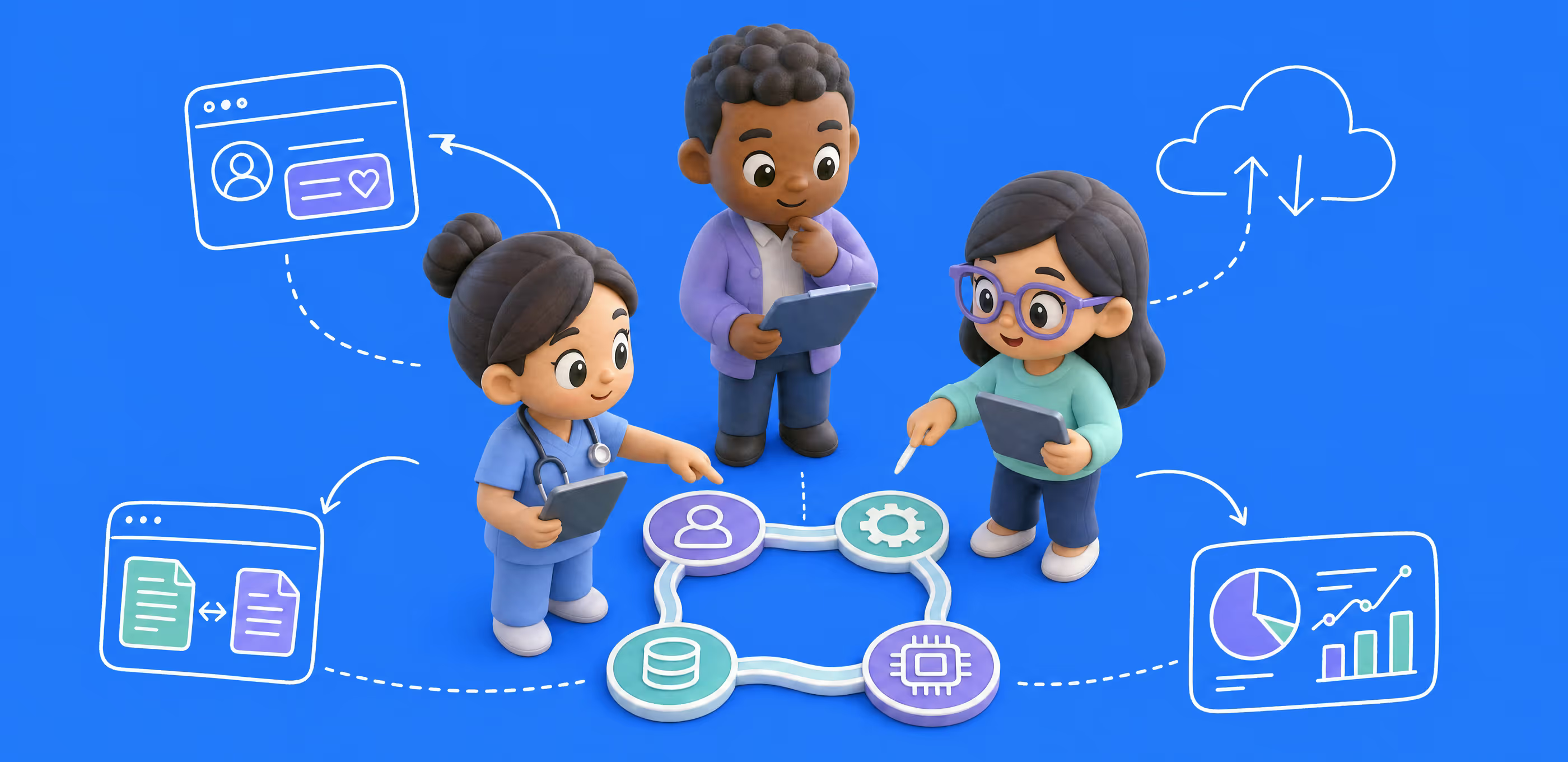
The mobile client collects data manually or through Apple HealthKit, Google Health Connect, and wearable technology. An encrypted application programming interface (API) sends it to backend services for validation and workflow rules. The backend then shares approved records with a provider dashboard or an electronic health record (EHR).
Healthcare systems often exchange data through Fast Healthcare Interoperability Resources (FHIR) or older Health Level Seven (HL7) interfaces. These standards define a common structure, but they do not solve patient matching or local field differences automatically. The development team still has to define mappings, write-back rules, and error handling for each integration.
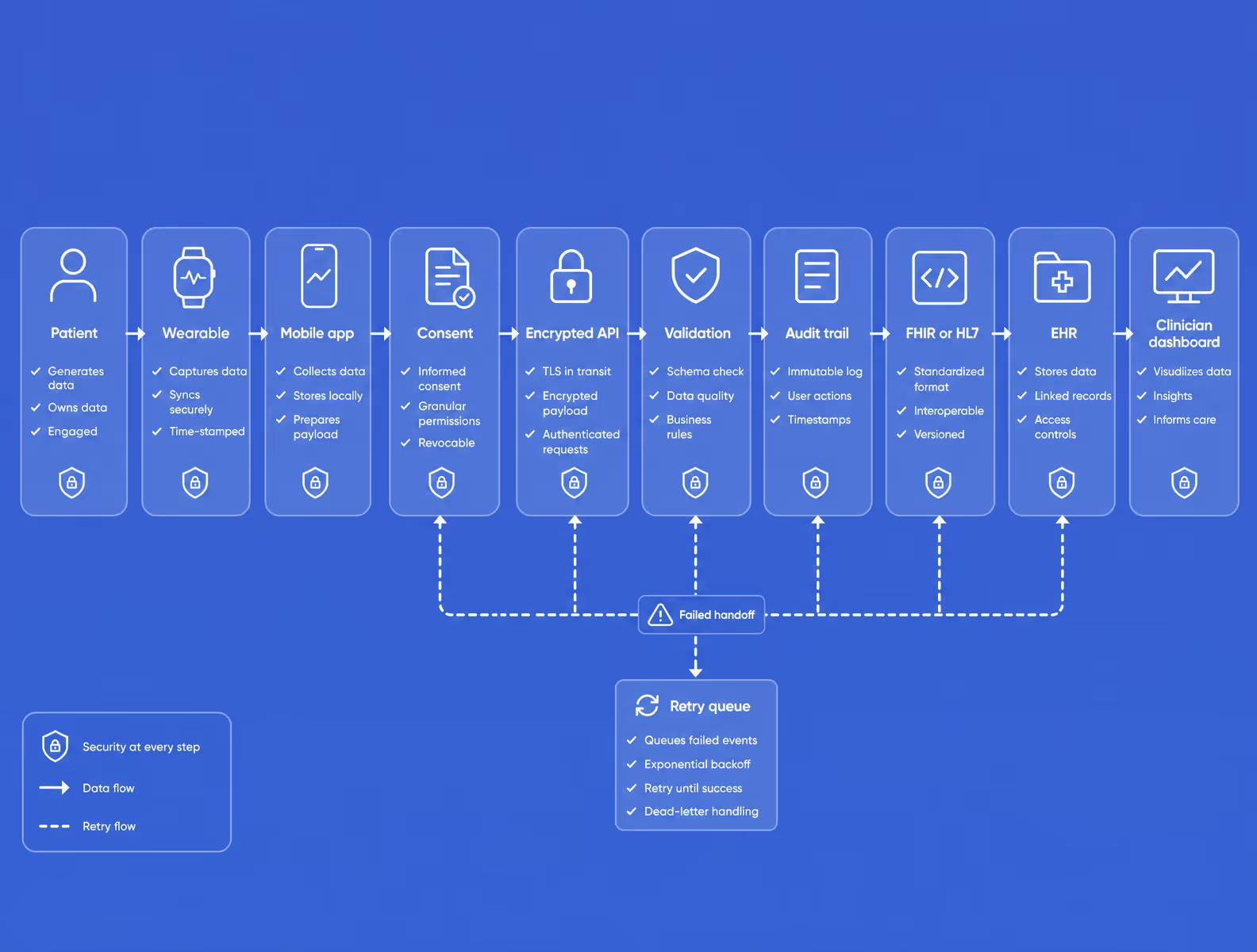
An integration is only clinically useful when the team can trace the record, its consent, and a failed handoff
| Integration | Business value | Main technical check |
| EHR through FHIR or HL7 | Clinicians see app data in their existing workflow | Patient matching, field mappings, and write-back rules |
| HealthKit or Health Connect | Faster access to device and wellness data | Permission scope, data provenance, and duplicate readings |
| Wearables or medical devices | Continuous or scheduled measurements | Pairing, calibration, offline sync, and timestamps |
| Telehealth stack | Remote care delivery | Call reliability, consent, and recording policy |
| Analytics and crash tools | Product and reliability insights | Prevent protected health information from reaching third parties |
Audit records connect these layers. They show who viewed or changed a record and which source supplied it. Encryption and key management protect data in transit and at rest. Queues and retry rules handle temporary outages, while monitoring exposes failed syncs before they affect care.
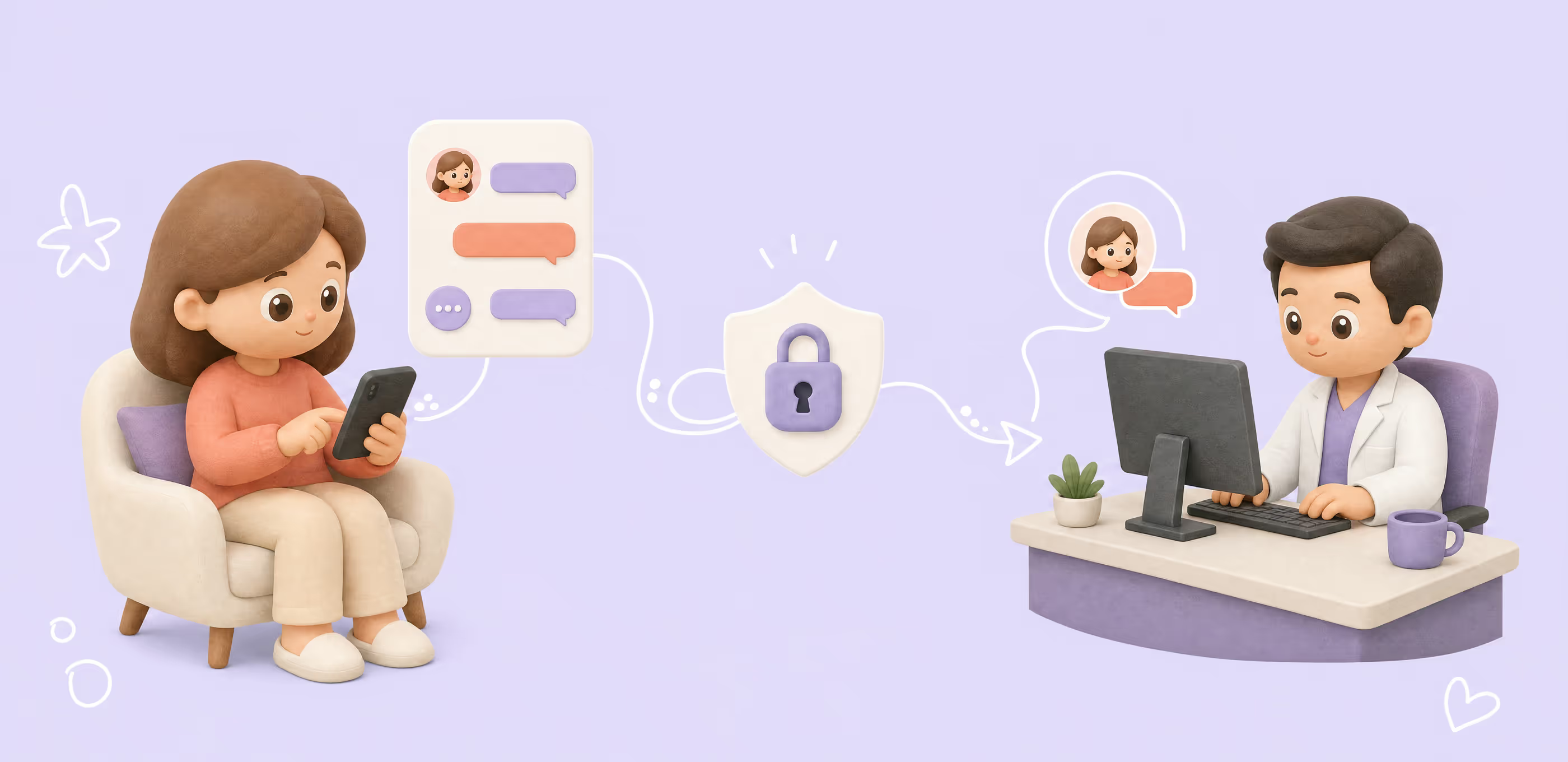
My Therapy Assistant connects patients with psychotherapists through separate patient, therapist, and administrator interfaces. The product combines scheduling, private chat, video sessions, notes, therapy materials, and progress tracking.
Insurance payments required an integration with HealthCode. Its SOAP interface used a different data format from the application's JSON-based backend, so we built a conversion layer between the two systems. HealthCode had no sandbox environment. We coordinated with its support team and verified the payment flow using real transactions. Read the My Therapy Assistant case.
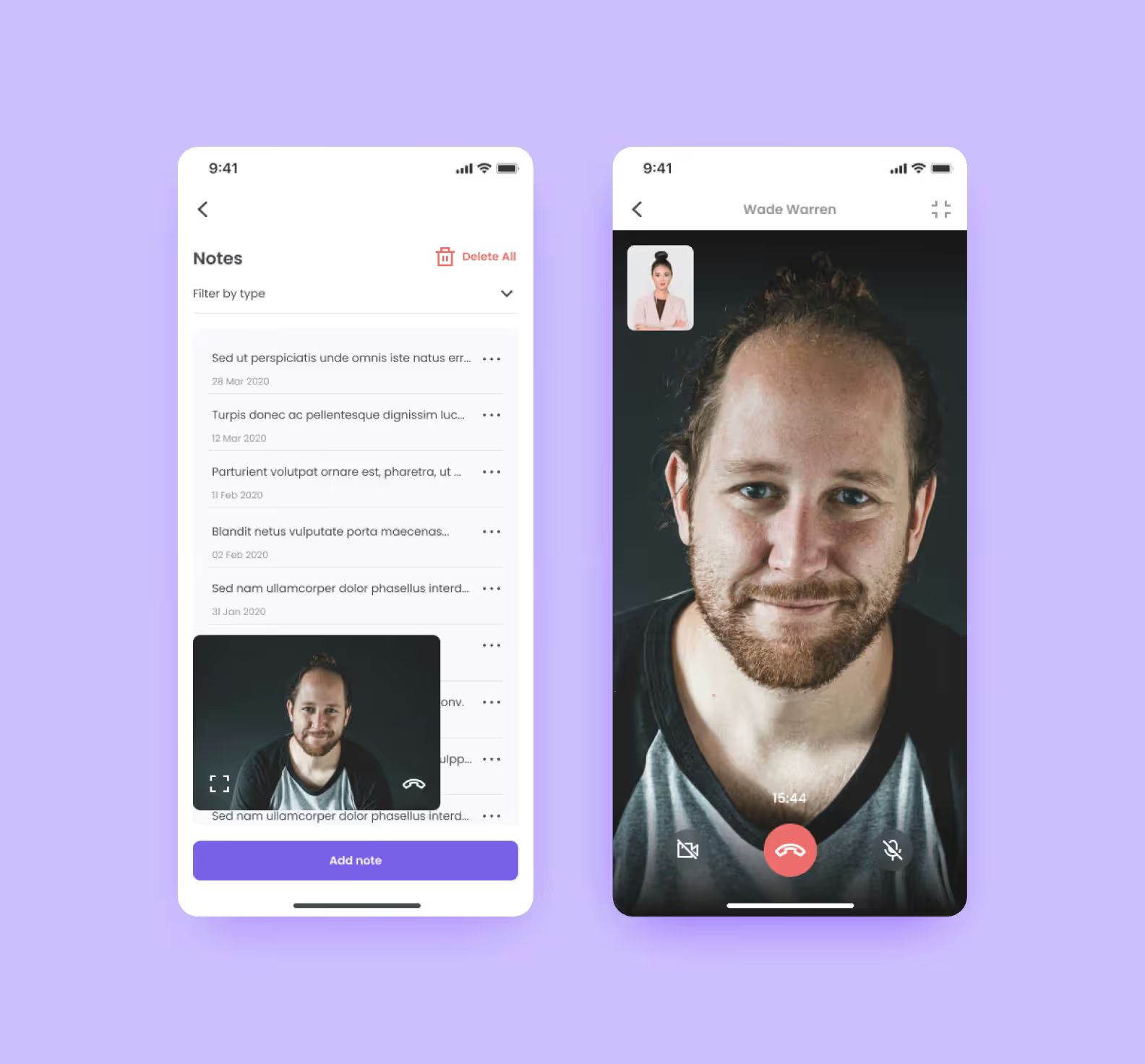
A third-party integration changes both the architecture and the testing plan when no safe sandbox exists
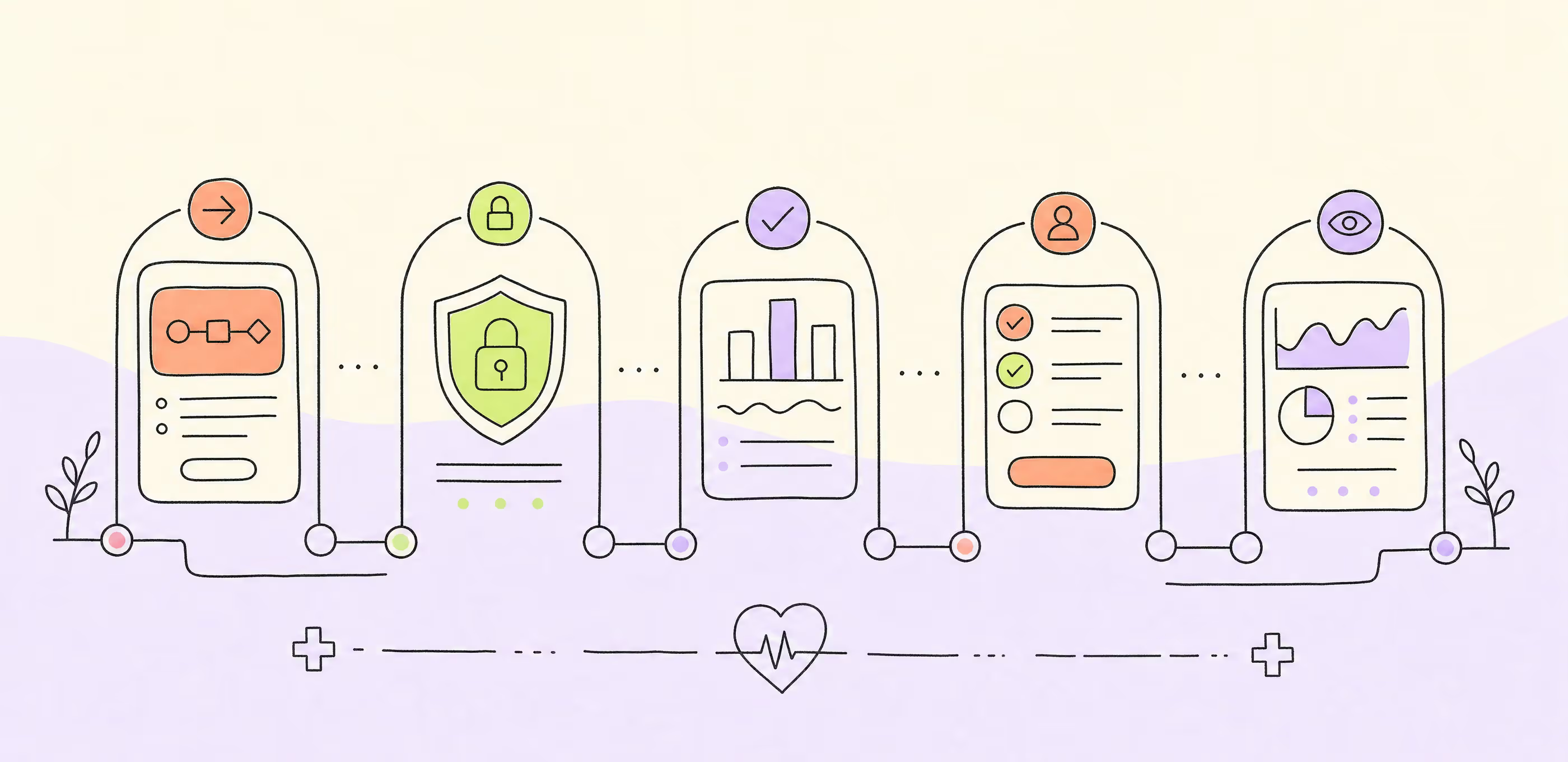
A generic software development process does not expose the decisions that carry clinical, privacy, and integration risk. An mHealth app development process works better as eight clear steps. Each step ends with a concrete document or prototype that the product owner, development team, and relevant specialists review before moving forward.
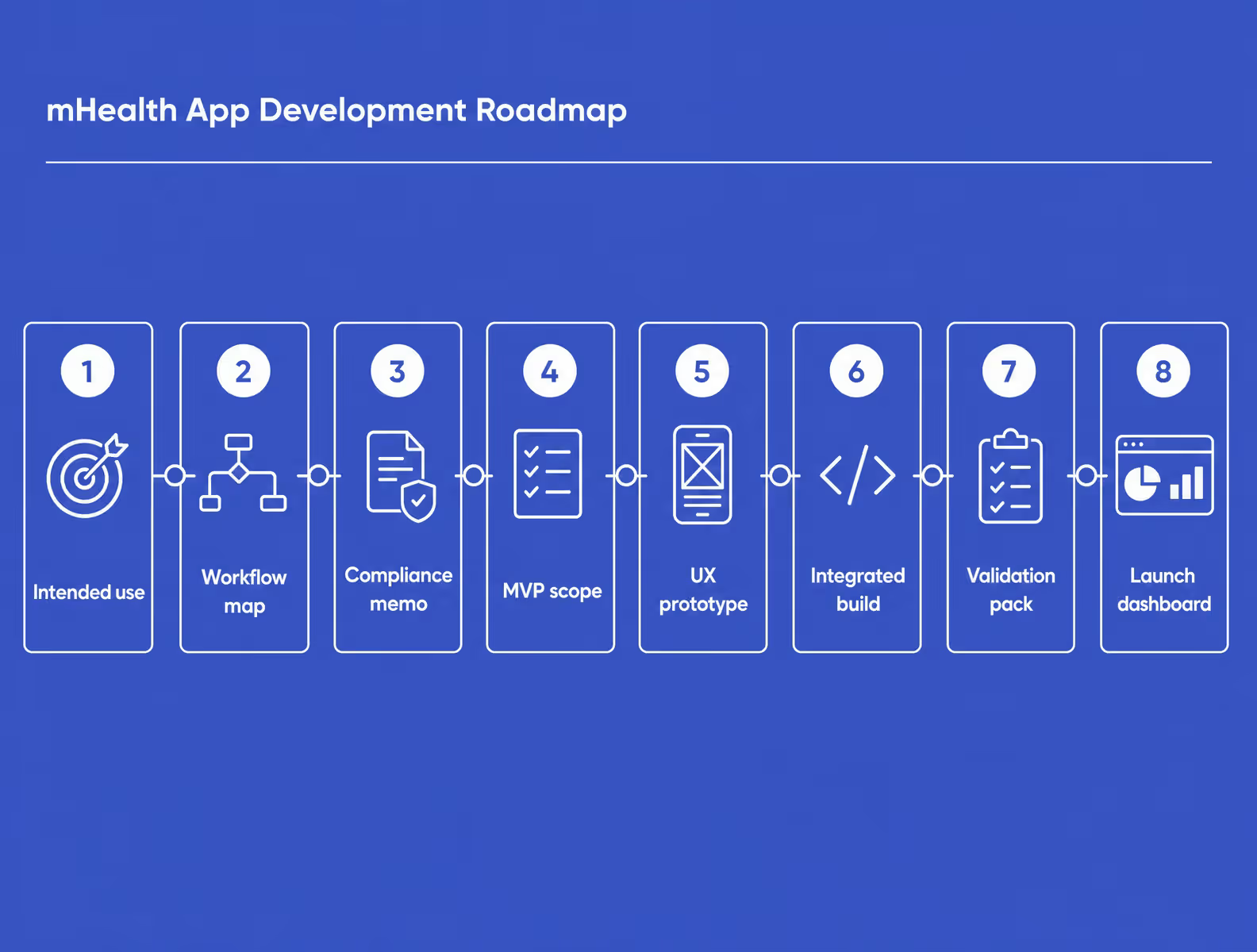
Each step produces a reviewable result before the team commits to the next stage
The first decision states whose behavior or care outcome the application changes and how its output will be used. The deliverable is an intended-use statement with clear product claims. Without it, teams cannot assess evidence, regulation, or safe feature boundaries.
The team maps each actor, action, data source, handoff, and failure point. The output is a workflow and data-flow map. Skipping this step often leaves consent gaps or creates alerts with no operational owner.
Legal, clinical, and product specialists assess applicable healthcare regulations and validation needs. They produce a compliance memo and evidence plan. This step separates privacy obligations from medical-device assessment instead of treating compliance as one checklist.
A healthcare MVP keeps only the workflow required to test the intended outcome. The output is a prioritized scope with measurable success criteria. Teams that skip this decision often validate interface activity rather than a useful health result.
Designers turn the chosen workflow into a prototype with understandable permissions and recovery paths. The team tests usability with representative users. This step produces an approved prototype and consent model before expensive integrations begin.
The development team implements the mobile application, backend, audit layer, and external connections in short Agile software development cycles. Scrum reviews help expose integration assumptions early. The output is an integrated build with traceable data movement.
Testing covers access control, failure handling, workflow comprehension, device behavior, and data exchange. Regulated functions also require clinical validation against the defined evidence plan. The deliverable is a validation pack with resolved defects and accepted residual risks.
A controlled pilot tests the product in its real operating environment. The team handles app store medical review and regulatory submission where required, then tracks safety events, reliability, adoption, and outcome metrics. The result is a launch dashboard with named owners and escalation rules.
The right tech stack follows the health workflow rather than a preferred framework. Device access, offline behavior, integration requirements, validation risk, and release cadence shape the choice. The operating model matters too because the same application has different maintenance needs under an in-house team and an external mobile app development team.
Native iOS and Android development gives direct access to platform capabilities and suits products with demanding device integrations. Cross-platform application development can reduce duplicated work when the product shares most workflows across platforms. The choice still depends on how deeply the application uses Bluetooth devices, background processing, and platform-specific health APIs.
| Layer | Typical options | Choose based on |
| Mobile client | Native iOS and Android or cross-platform | Device APIs, performance, release speed, and team skills |
| Backend | Modular API or service architecture | Data sensitivity, integrations, scale, and auditability |
| Data exchange | FHIR or HL7 adapters and vendor APIs | EHR ecosystem and write-back needs |
| Cloud | Compliant managed services | Region, agreement support, and security controls |
| Database | Relational storage with encrypted files or time-series components | Record structure, measurement volume, and retention |
| Communications | Notification, video, and messaging services | Reliability, consent, and vendor exposure |
Healthcare software development also needs separate testing environments and controlled access to production data. Continuous integration and delivery automate builds and checks, but regulated functions still require documented review. Observability tools need privacy configuration so logs and crash reports do not collect health information by default.
A practical stack is one the app developers can support after launch. The decision record should explain why each component fits the workflow, how updates are validated, and who owns vendor changes. This keeps the technology choice tied to operating risk instead of trend-driven architecture.
AI belongs in the stack only when it solves a defined task. Useful examples include summarizing patient-entered notes for review, prioritizing support queues, or detecting anomalous device data.
An AI feature needs human review rules, representative validation data, access controls, and monitoring for unsafe output. Teams should not let an AI model make an unreviewed clinical decision or place protected information into an unapproved service.
The cost of mHealth app development follows the product's clinical and technical scope. A focused mobile healthcare app MVP starts at approximately $30,000. A regulated platform with connected devices, complex integrations, and extensive validation can exceed $500,000.
The range is wide because the development team is not pricing screens alone. User roles add separate permissions and workflows. Each platform increases testing, while electronic health record integrations require patient matching and data mapping. Device connectivity introduces pairing and offline behavior. Compliance work, clinical validation, and post-launch maintenance add further effort.
| Product scope | Indicative timeline | Main cost drivers |
| Focused consumer or adherence MVP | 4–6 months | Core mobile flow, notifications, and basic analytics |
| Provider-connected mHealth product | 6–10 months | User roles, EHR or API integration, audit, and security |
| Regulated or device-connected platform | 9–18+ months | Hardware, validation, clinical evidence, and submissions |
A four-to-six-month MVP timeline assumes one primary workflow and limited integrations. A provider-connected product often takes six to ten months. Products that require device validation or regulatory submissions typically need nine to eighteen months or longer.
These figures are planning ranges rather than fixed app development services quotes. Discovery narrows the budget by confirming the intended use, data sources, integration owners, and evidence requirements. The detailed healthcare app development cost breakdown explains how design, engineering, testing, and maintenance affect the estimate.
The most expensive risks appear when product decisions are delayed until implementation. Teams reduce them by connecting each risk to an early warning and a named response. This turns a generic challenge list into an operating register that remains useful after launch.
| Risk | Early warning | Mitigation |
| Unclear health outcome | Feature list without a measurable behavior or care result | Define intended use and one primary success metric |
| Unnecessary health data | Fields have no clear workflow owner or retention reason | Minimize collection and document each data purpose |
| Weak consent | One broad permission covers unrelated uses | Use progressive consent and keep versioned records |
| Data leakage through vendors | Analytics events contain health fields | Review vendors and test event payloads |
| Unreliable device readings | Measurements are missing, duplicated, or incorrectly timed | Track provenance and test offline synchronization |
| Alert fatigue | Teams cannot explain who responds to each threshold | Validate thresholds and assign an escalation owner |
| Integration failure | EHR mapping begins late in development | Prototype the FHIR or vendor connection during discovery |
| Low adoption | Users abandon onboarding or ignore notifications | Test accessible UX during a controlled pilot |
Custom mHealth app development services should begin with questions about intended use, medical data, integrations, and post-launch ownership. When comparing app development companies, ask for relevant healthcare software development examples. Confirm the developer, designer, QA, and compliance roles assigned to the project.
A credible mHealth app development company should explain how its app development team tests access controls, integration failures, and release changes. It should not describe HIPAA as a feature that can be added at the end.
A useful first brief gives mHealth app developers enough context to estimate the work without inventing the product strategy. It also helps healthcare organizations compare an in-house app development team with an external provider of mHealth app development services on the same scope.
This checklist gives custom mHealth apps a reviewable starting point. Discovery can then test the assumptions instead of spending its first weeks reconstructing them.
A viable mHealth product begins with a defined health outcome, intended use, and path for every piece of data. Those decisions shape the MVP, compliance assessment, architecture, validation plan, budget, and team. A feature list becomes useful only after the product owner knows who acts on the information and what happens when the workflow fails.
➡️ Planning an mHealth product? Tell us what you are building, and we will map the first scope and estimation questions with you.
An mHealth application is a mobile application that collects, exchanges, or acts on health data. These mobile health apps can support patients, clinicians, caregivers, or researchers. The term describes how a mobile health app uses mobile devices and health information, not whether it is automatically a regulated medical device.
Examples of mHealth apps include remote patient monitoring, telehealth, medication adherence, and chronic-care products. The category also covers wellness, mental health, clinical research, and digital therapeutics applications. The type depends on the primary workflow and clinical impact. Two apps with similar interfaces can require different security and regulatory paths.
A focused mHealth MVP starts at approximately $30,000. A provider-connected product costs more because it adds user roles, integrations, audit controls, and security requirements. Regulated or device-connected platforms with extensive validation can exceed $500,000. Discovery is required for a project estimate.
A focused MVP often takes four to six months. A provider-connected product commonly takes six to ten months. A regulated or device-connected platform can require nine to eighteen months or longer. Integrations, clinical evidence, submissions, and controlled pilots add work beyond mobile development.
No. HIPAA depends on who handles protected health information and their role in the US healthcare system. FDA oversight depends on intended use, product claims, and whether the software performs or supports a medical-device function. Consumer wellness apps can fall outside both routes while still requiring privacy, security, consent, and app store review.
The feature set follows the health workflow. Most mHealth apps need secure onboarding, consent, role-based access, and traceable data collection. Notifications, audit records, accessibility, and support complete the common foundation.
Telehealth, device pairing, medication management, and clinical alerts belong only when the use case requires them. The same applies to offline capture, caregiver access, and EHR synchronization.


.svg)