Explore

Need help with your project?

Oops! Something went wrong while submitting the form.
Building a neobank costs between $80,000 and $500,000 for an MVP, and passes $1 million for a full-scale product. The exact figure comes down to one decision above all others: whether you launch on a Banking-as-a-Service provider or build core banking from scratch. That single choice can swing your budget by an order of magnitude before anyone writes a line of code.

This guide breaks neobank development cost down by build path, module, team, licensing, and the ongoing costs founders forget. That's the way a founder actually spends the money.
A neobank is a bank you reach entirely through a mobile app. It delivers financial services through that banking app, with no physical branches and, in most cases, no banking license of its own.
Instead, it runs on a licensed partner bank or a Banking-as-a-Service (BaaS) provider. That partner holds deposits, handles money transfers and digital wallets, and clears payments. The neobank owns the app, the product, and the customer relationship.
That is what separates it from the two things it gets confused with. A traditional bank owns its charter, its core banking system, and a branch network. A digital bank is usually a traditional bank's online-only arm. That digital bank still runs on the parent's license, so the difference between a neobank and a digital bank comes down to who owns the license.
A neobank sits one layer above regulated banking services and rents access to them, using financial technology to wrap them in a clean app. That's why it can launch in months instead of years, and why its cost structure looks nothing like a bank's.
Demand is why founders keep building them. The global neobanking market was worth around $211 billion in 2025 and is projected to grow near 62% a year through 2033, with Europe holding the largest share.
The neobank market is now one of the fastest-growing corners of digital banking services, but the practical takeaway isn't the market size. It's that the financial infrastructure to create a neobank is now mature enough that the real question is cost, not feasibility.
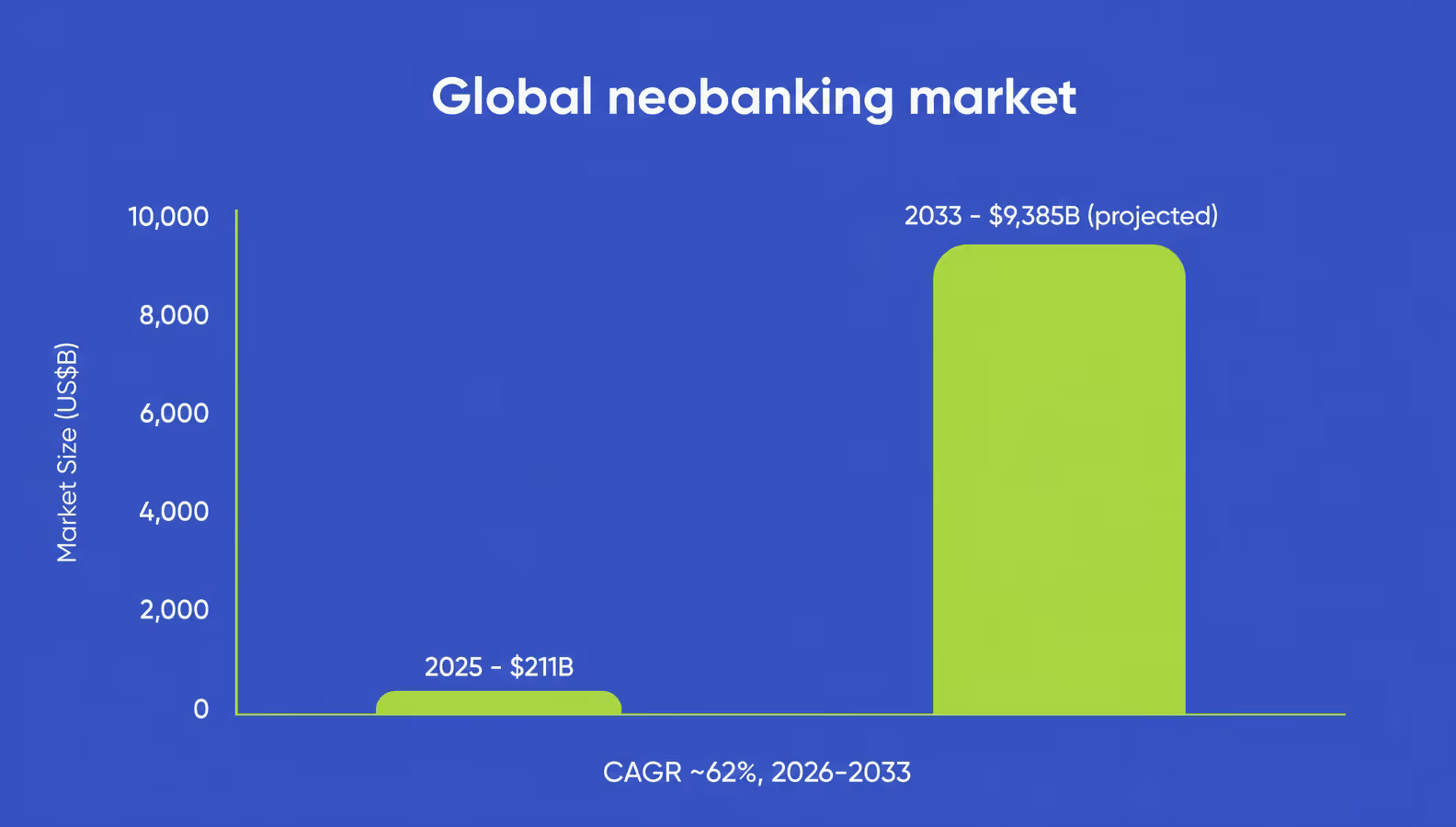
Europe holds the largest slice of that growth, which is why EU licensing shows up early in any serious budget
This guide stays on price. For the features, tech stack, and step-by-step build, our how to build a neobank guide covers what this one skips. For the wider category shift, see digital banking trends.
Every other number in this guide bends around one choice: how much of the bank you actually build yourself. There are three routes, and they sit an order of magnitude apart on cost and time. Picking the wrong one is the most expensive mistake a founder makes before the first sprint.
| Build path | Upfront cost | Time to market | Per-transaction cost | Best when |
| BaaS-first | $80k–$200k | 3–6 months | Higher — provider takes a cut | You need to launch fast and validate demand |
| Core-banking platform | $150k–$400k | 6–12 months | Medium | You have volume and want to control unit economics |
| Build from scratch | $500k–$1.5M+ | 12–24 months | Lowest at scale | You hold a license or raised serious capital |
BaaS-first means renting the banking stack. A provider like Stripe Treasury, Unit, or Solaris holds the license and the ledger, and you build the app on top. It's the fastest way to a working product, and the reason an MVP can start near $80,000. The trade-off arrives later. You pay a slice of every transaction, so at scale the cheap start turns into a running tax.
Building from scratch flips that math. You own the core banking system, the compliance stack, and usually a banking license, so the unit economics are yours to optimize. The upfront cost is where the pain lives, often $500,000 and up before launch. Most founders don't need this on day one.
A core banking platform sits between the two. You license ready-made banking software and configure it instead of writing the rails from zero. That trades some control for a faster, cheaper start than a full build.
Whichever path you pick, a custom build past the BaaS starter tier needs people who have shipped regulated fintech before. That is the point where teams bring in a custom fintech development team rather than stretch a generalist agency across banking APIs and compliance reviews.
One of our clients, KEM, took the fast route to market. We built the MVP (P2P transfers, card linking, PIN login, transaction history), and it was solid enough to demo to banks and secure API access into Kuwait's banking system.
After that launch, KEM raised $1M in seed funding and moved the product to their own in-house team, with a month of transition support from us.
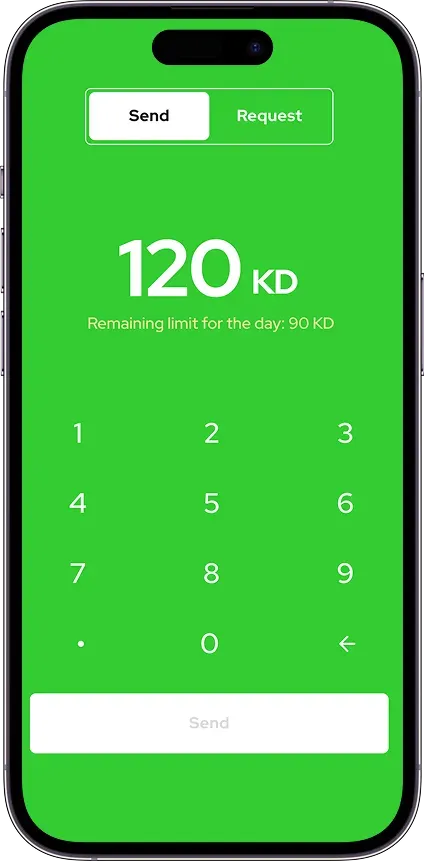
A focused payments MVP was enough to open bank API access and close a $1M seed round
This is where the estimate stops being a single number and turns into a build sheet. The neobank app development cost below splits an MVP into the modules a neobank actually needs, from account opening to payment rails.
Each line carries rough development hours and a cost range at Eastern European senior rates. You can develop a neobank app in-house or hire out, but the software development process breaks into the same modules. These are our internal estimates, not a vendor quote, so read them as a planning baseline.
| Module | Effort | Cost range |
| User onboarding + KYC/AML | 120–200 h | $6k–$14k |
| Core account management | 150–250 h | $7.5k–$17.5k |
| Card issuance & management | 100–180 h | $5k–$12.6k |
| P2P transfers + payment rails | 100–200 h | $5k–$14k |
| Push notifications + activity feed | 40–80 h | $2k–$5.6k |
| Admin / back-office panel | 120–200 h | $6k–$14k |
| UI/UX design (web + mobile) | 200–400 h | $10k–$28k |
| QA + security testing | 100–200 h | $5k–$14k |
| API integrations (BaaS, payment gateway) | 80–160 h | $4k–$11.2k |
| Deployment + DevOps | 40–80 h | $2k–$5.6k |
| Custom MVP total | ~1,050–1,950 h | ~$52k–$136k (+ licensing) |
One line on that sheet moves more than the rest: the mobile build. Native mobile app development means two separate codebases, iOS and Android, each with its own engineers.
React Native, a cross-platform software framework, collapses that into one shared codebase that ships to both platforms. That's how cross-platform development usually cuts the mobile line by 30–40% against a native pair. For a neobank, where the app is the entire product, that saving lands on the single biggest item in the budget.
We built a full payment ecosystem for a Montenegro-based fintech team: user-to-user transfers, QR-code payments, transaction history, a referral program, and physical branded cards. The hard part wasn't the features. It was integrating the payment system under local regulatory constraints.
The build ran about 10 months and reached 98% completion, with release held for regulatory sign-off. On a neobank timeline, compliance, not code, is usually the critical path.
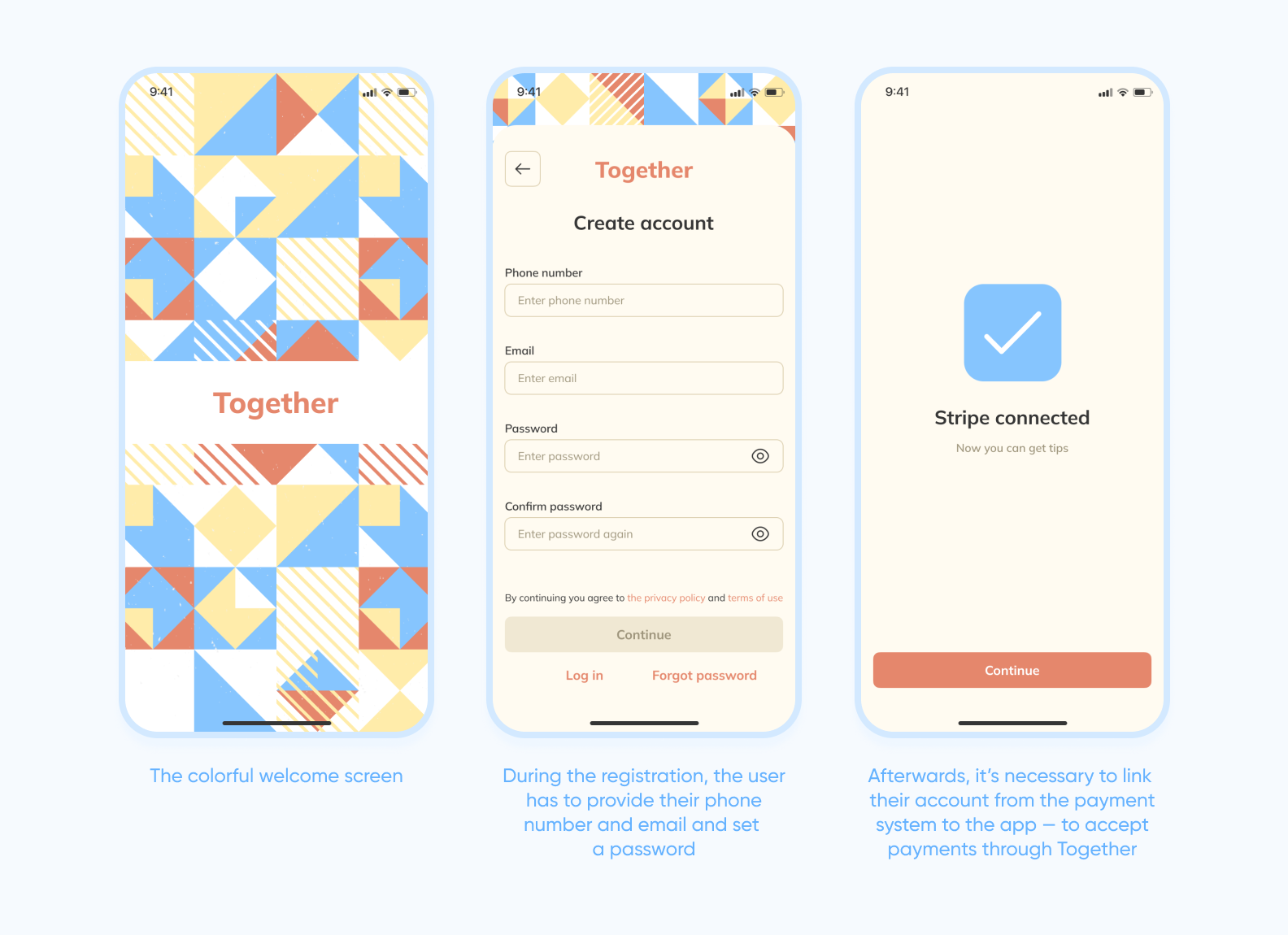
Physical cards and payment rails are where a wallet MVP turns into real banking infrastructure, and where the timeline stretches
Two teams can build the same feature list and land $150,000 apart. The build sheet gives you a baseline. These five factors are what move you above or below it, and founders tend to price the first one while forgetting the rest.
Cost depends less on the idea and more on these choices, which is why cost varies so widely between two similar-looking neobanks. Our wider fintech app development cost guide maps the same factors across other fintech products.
The build sheet covers software. It doesn't cover the right to move money, and that right is where a lot of first-year budgets quietly go. Depending on the model and the market, regulatory and licensing costs eat 20–30% of what a founder spends in year one, and most early estimates skip it entirely.
Licensing splits by jurisdiction, and the numbers matter. In the United States, most neobanks skip a full bank charter and run as a money services business (MSB), registered federally and licensed state by state. That keeps each license cheap on its own but expensive in aggregate, since you need one for every state you serve.
The European Union route is usually an Electronic Money Institution (EMI) licence. It carries a minimum capital requirement around €350,000 that has to sit in reserve, and a single licence then passports across the whole bloc.
The United Kingdom runs its own FCA (Financial Conduct Authority) regime, separate from the EU since Brexit, with its own capital and reporting rules. Lithuania has become a popular entry point because its regulator issues EMI licences relatively fast. They passport across the EU, which is why a lot of European neobanks start there.
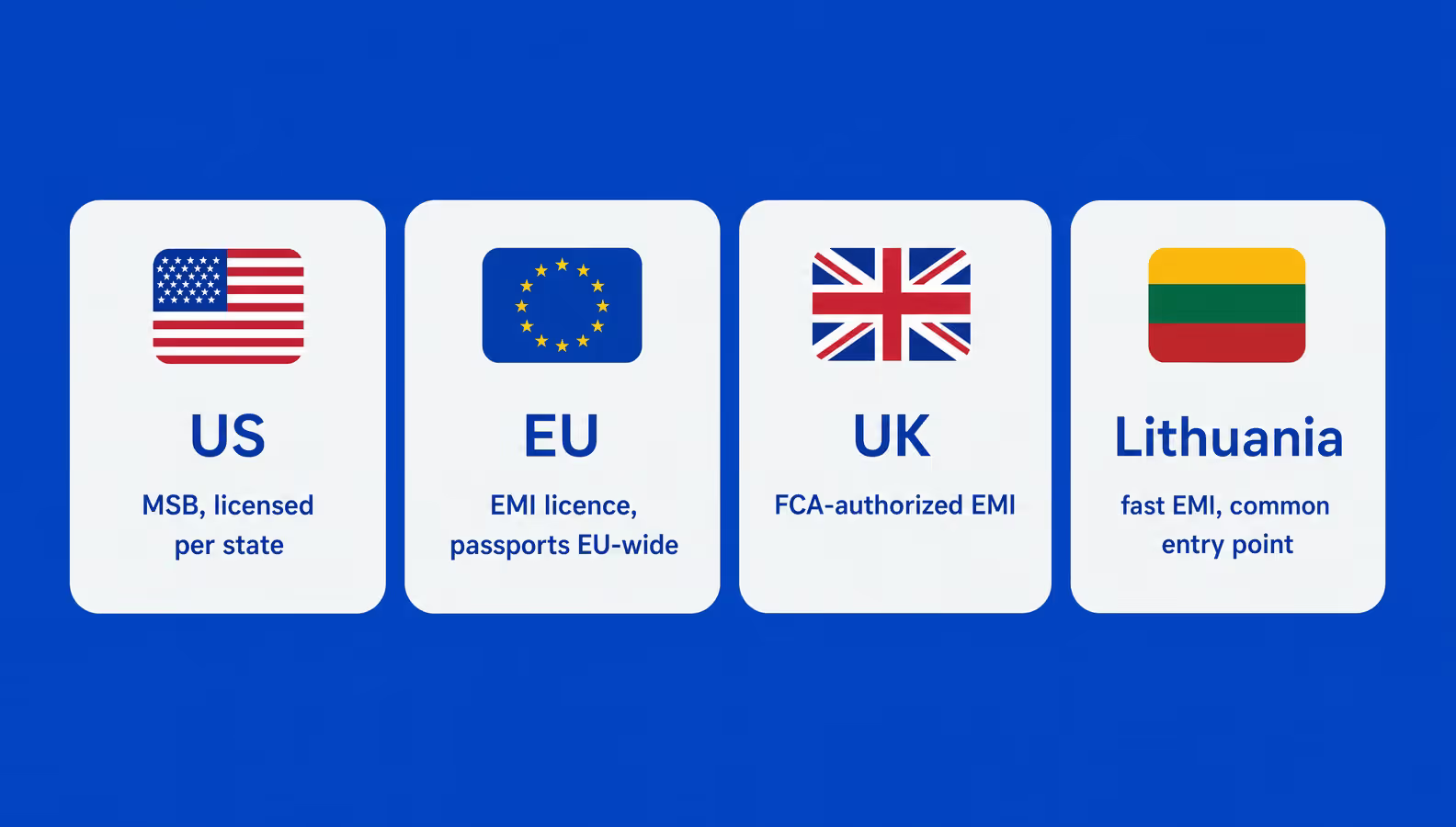
An EU EMI licence passports across the bloc, which is why Lithuania punches above its size as a launch base
Licensing is the fixed cost. Compliance is the per-user one. Every account you open runs through KYC (Know Your Customer) and AML (Anti-Money-Laundering) checks. Identity verification vendors like Jumio or Onfido charge roughly $1–$3 per verification, which at scale becomes a real line, not a rounding error.
None of this is optional, and none of it shows up in a developer's estimate. The safest move is to budget the licence and regulatory compliance as their own category from day one.
Who is developing a neobank moves the bill as much as what they build. There are three staffing models, and the right one depends on how much banking-grade engineering you already have in-house.
In-house gives you the most control and the highest fixed cost, because you carry the team between projects as well as during them. An agency or development company trades some of that control for speed and a fixed scope. Individual outsourcing is the cheapest per hour, but it moves coordination and quality risk onto you.
Rates swing hard by geography: a senior fintech engineer runs roughly $120–160/hr in the US, $80–110 in Western Europe, and $40–70 in Eastern Europe. For the same seniority, that is the widest lever in this section after the build path itself.
A typical neobank MVP development team is lean: a product manager, two mobile engineers, two backend engineers, a DevOps specialist, a QA engineer, and a designer. Strong UX design carries a banking app, and the mobile seats are where the platform choice pays off.
Build native and those two mobile seats become four, one pair for iOS and one for Android, doing the same feature twice. With React Native, two engineers cover both platforms from a single codebase. Dropping two senior mobile salaries for the length of the build is where the 30–40% cross-platform saving actually lands on the invoice.
Broex, a multi-currency crypto wallet, is a clean example of that math. We built it in React Native with a GraphQL backend and shipped it in phased releases: core wallet first, then currency transactions, then iOS biometry.
One cross-platform app on a single React Native codebase covered iOS and Android the whole way, so each release funded one build instead of two.
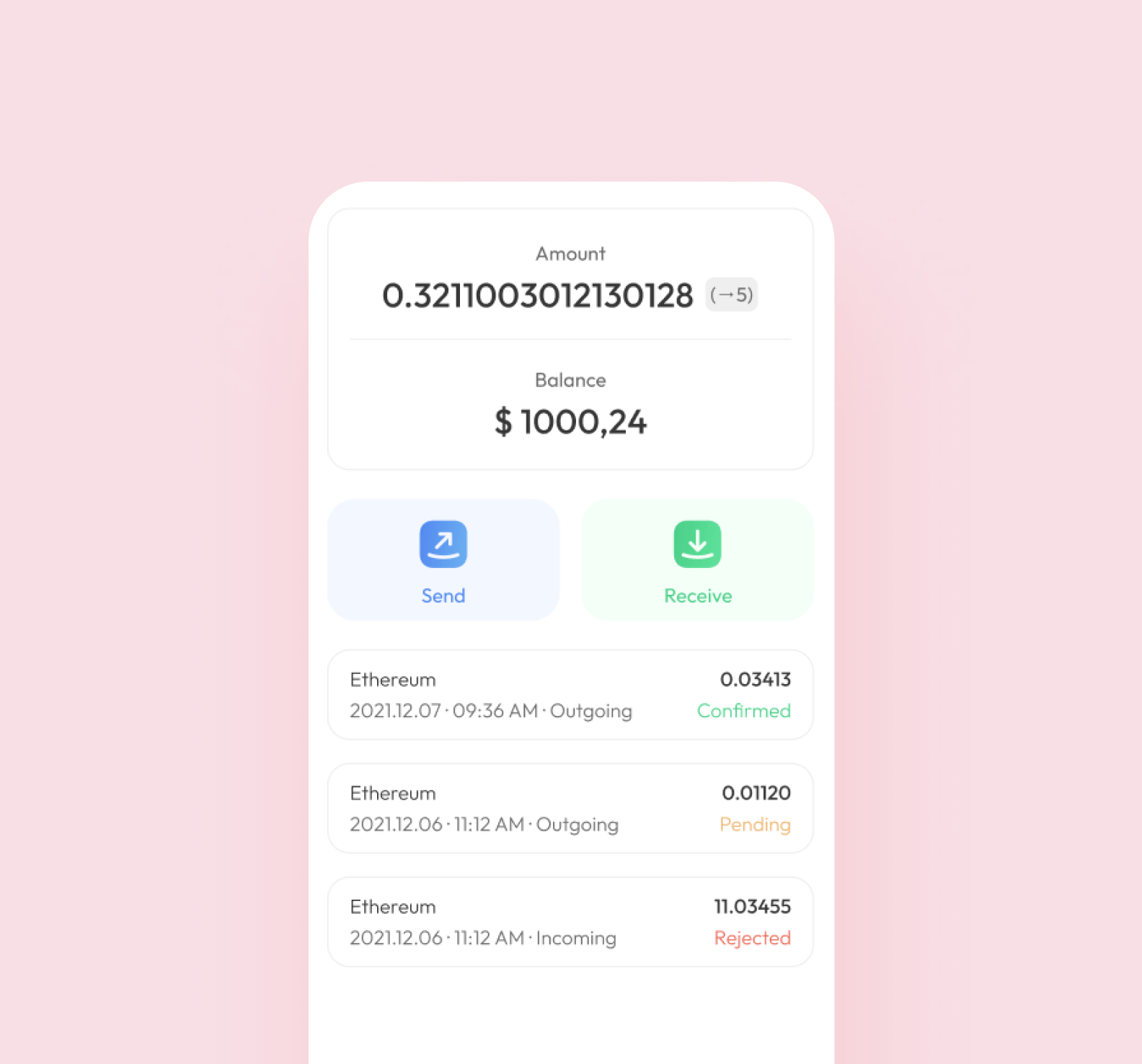
Phased releases on a single React Native codebase keep each stage funding one build, not two
The MVP budget gets you to launch. Then a second, quieter budget starts, and it runs every month for as long as the neobank exists. These are the costs that rarely show up in a first estimate, and together they decide whether the unit economics actually work.
Four of these matter most. BaaS per-transaction fees are the flip side of the cheap start. Your provider takes roughly 0.3–0.5% of transaction volume, so growth raises this line, not lowers it.
KYC and identity checks add $1–$3 per verification, so more users mean a bigger compliance bill, not a smaller one. Fraud detection through dedicated tooling runs $2k–$8k a month, which in the banking industry is a requirement, not an upgrade.
Beyond those, cloud infrastructure that was cheap at 1,000 users becomes a real line at 100,000, licences renew, and audits recur. Someone also has to answer support tickets at 2 a.m.
Add it up and ongoing costs land somewhere between $5,000 and $20,000 a month early on, scaling with users and transaction volume. The leaner your architecture, the lower that floor sits, which is exactly where an early technical decision keeps paying off.
Expanding into a new market is an ongoing cost founders rarely price in, and localization is the biggest part of it. BurjX, a crypto exchange we built for the MENA market, is a clean example of designing that cost down.
We built the Figma with master components and Arabic twins, so the whole interface switches to a right-to-left Arabic layout in one click. What is usually a costly re-layout for every new language became a near-automatic switch.
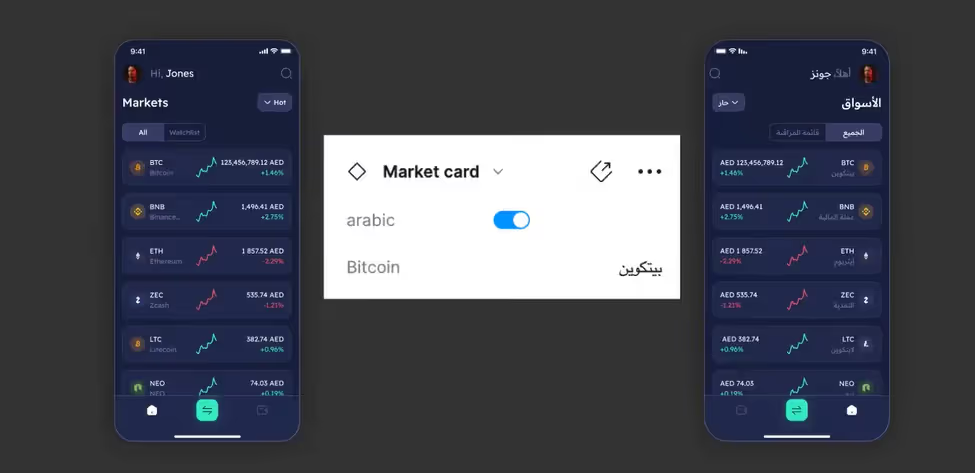
Master components let the exchange flip to a full Arabic layout in one click, instead of re-laying out every screen
Put the build path and the scope on the same grid and the overall cost of building makes sense at a glance. This is the matrix most founders actually budget against.
| Build path | MVP | Full build |
| BaaS-first | $80k–$150k | $250k–$500k |
| Core-banking platform | $150k–$300k | $400k–$800k |
| Build from scratch | $300k–$500k | $1M–$1.5M+ |
The lower tier, $80,000 to $150,000, buys a real BaaS-based MVP: onboarding with KYC, accounts, cards, transfers, and a clean app on one React Native codebase.
The upper tier, $300,000 and up, is where own-license builds, deeper compliance, and custom core banking live. Most founders launch in the lower tier and grow into the upper one.
The reason to spend it at all sits on the demand side. Neobank users worldwide are on track to reach around 350 million in 2026, up from roughly 210 million in 2022.
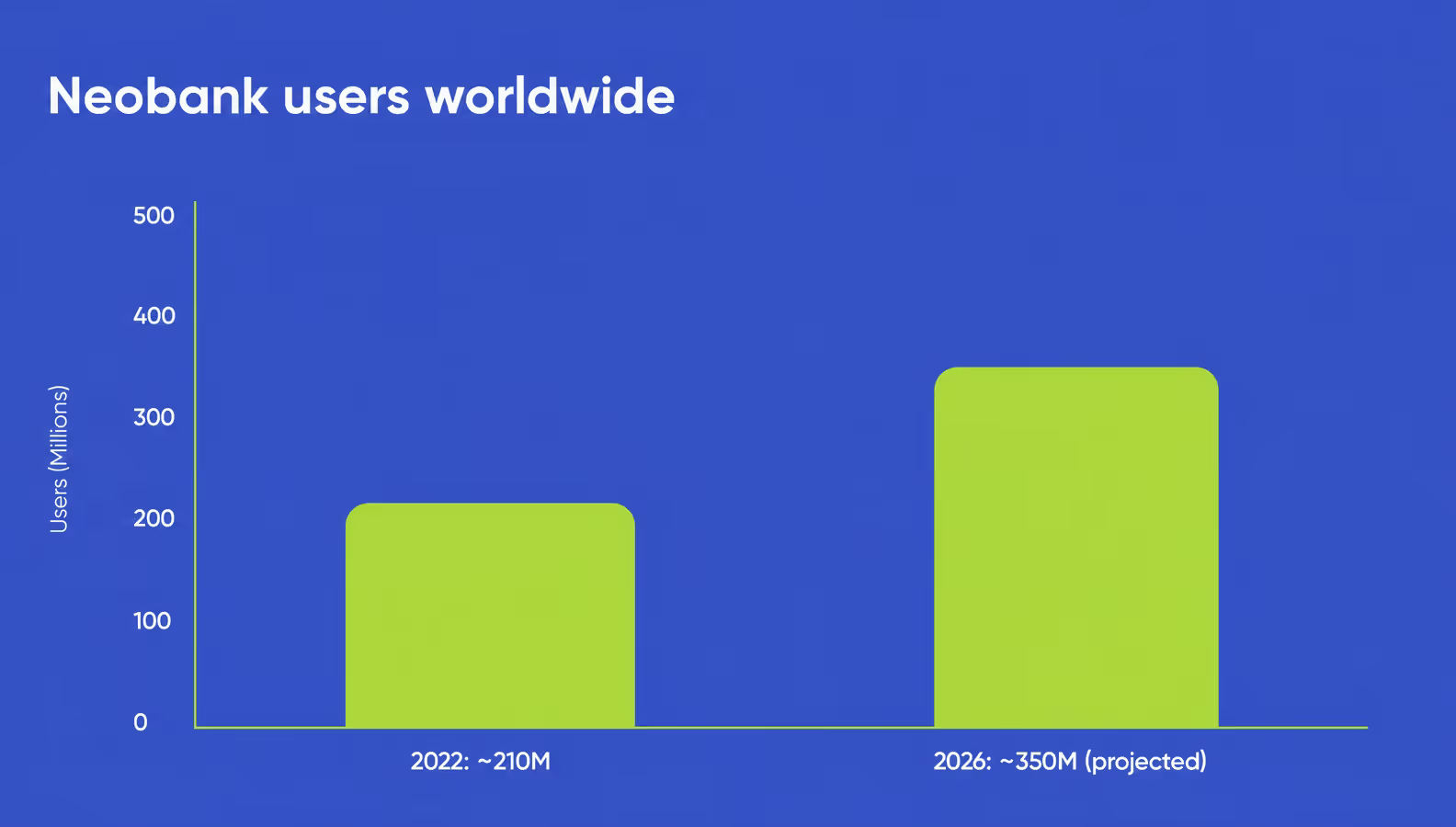
User growth is the demand case for the spend: roughly 210M in 2022 to about 350M in 2026
A few moves cut the bill without cutting the product. Ship on React Native to collapse the mobile line by 30–40%. Start on BaaS and migrate to your own license later, once volume justifies it, instead of paying for core banking on day one.
Keep the MVP scope honest: every feature that isn't core to the first version is a cost you can defer. Hire where rates are lower and pair the team with a local compliance lawyer, so you save on the build without gambling on regulation.
➡️ If you're pricing or launching a neobank and want a number grounded in real projects, we're happy to walk through your scope and send a free estimate.
Building a neobank costs roughly $80,000 to $500,000 for an MVP, and $1M or more for a full-scale product. The single biggest factor is your build path. Launching on a Banking-as-a-Service provider is far cheaper upfront than building core banking from scratch. Team location, feature scope, and licensing move the number from there.
Starting a neobank costs more than building the app, because you also budget for licensing and reserve capital. In the EU, an EMI licence carries a minimum capital requirement around €350,000. Add compliance, KYC vendors, and first-year operations, and the launch budget often runs well above the development quote alone.
The minimum realistic budget for a neobank MVP is about $80,000 to $150,000. That buys a BaaS-based product with onboarding and KYC, core accounts, card issuance, transfers, and a mobile app on one React Native codebase. Going lower usually means cutting compliance or core features you cannot ship a bank without.
A neobank MVP typically takes 3 to 6 months on a BaaS provider, and 12 months or more for a from-scratch build with its own license. Most of that development time goes to regulatory approval, not engineering. Licensing and compliance sign-off can add months that have nothing to do with writing code.
Not always. Most neobanks launch without their own licence by running on a partner bank or a Banking-as-a-Service provider that holds the licence for them. You need your own licence only if you want to own the banking core directly, which is slower and far more expensive. Jurisdiction shapes both the options and the cost.
BaaS is cheaper to start and more expensive to run. You launch fast for as little as $80,000, but pay the provider a slice of every transaction, so the cost grows with volume. Building from scratch costs far more upfront, often $500,000 and up, but gives you the best unit economics once transaction volume is high.
Five factors move the cost most: build path, team location and rates, product complexity, the number of integrations, and the depth of security and compliance work. Of these, the build path and the choice between React Native and native have the largest single effect on the final number.
Ongoing costs usually run $5,000 to $20,000 a month early on. They include BaaS per-transaction fees of about 0.3 to 0.5%, KYC checks at $1 to $3 per verification, fraud monitoring, cloud scaling, and recurring compliance audits. These scale with users and transaction volume, so success raises them rather than lowering them.
Neobanks make money through a business model built on interchange fees from card payments, subscription tiers, lending, and foreign-exchange margins. This monetization tends to work only at scale, because per-user revenue is small and fixed compliance costs are high. The model pays off once the user base is large enough to spread those costs across millions of accounts.
Yes. React Native suits a neobank well, because one codebase ships to both iOS and Android, which typically cuts the mobile build by 30 to 40% versus separate native apps. For a product where the app is the whole business, that saving lands on the biggest line in the budget without compromising the user experience.