Explore

Need help with your project?

Oops! Something went wrong while submitting the form.
As a product grows, its releases ask more of the team. Testing needs shift from one release to the next. The decision is whether to expand permanent in-house QA or bring in an external team. Product context and release control still belong with the people who own them.
The choice becomes clearer when QA outsourcing is treated as an operating-model decision for quality assurance. Comparing external capacity with permanent in-house QA reveals what an outside team can own and what the product organization still needs to control.
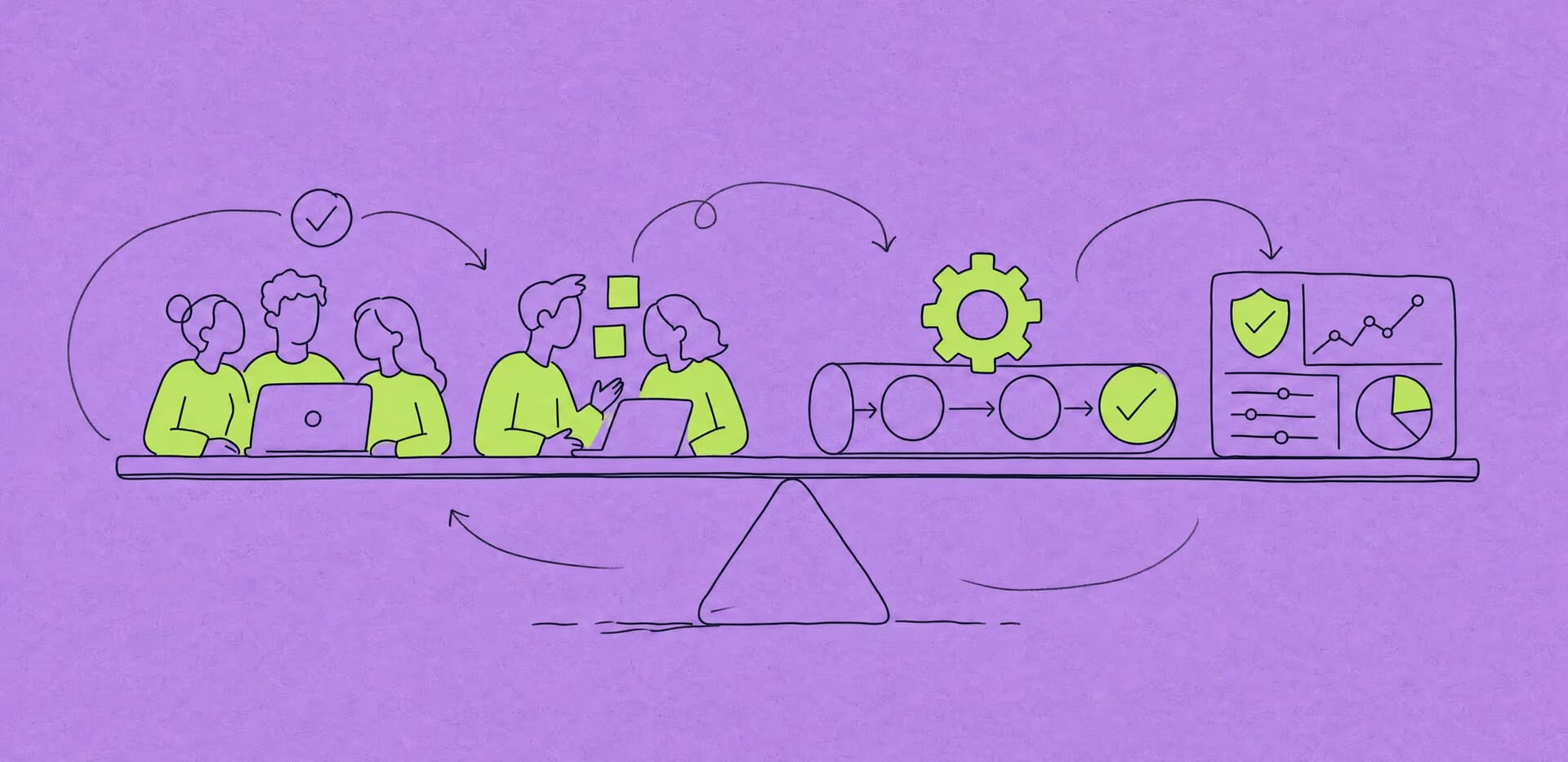
Software quality assurance outsourcing gives an external provider responsibility for an agreed software testing service. The client keeps product priorities and release decisions. The provider owns test scope, software testing process, QA tasks, specialists, and reporting.
That boundary makes IT outsourcing services more than added capacity. Managed QA assigns the agreed quality assurance process and outcome to the provider. A separate test stream gives the provider only a defined testing slice. Individual QA engineers work in the client's process under client management.
This frames the in-house, outsourced, and hybrid choice.
Outsource QA testing services when capacity or specialized QA expertise is the live constraint and product context transfers safely. Keep an in-house QA team when QA knowledge is core IP or acceptance criteria remain unsettled. Hybrid QA retains internal ownership while adding defined external scope.
Start with the live constraint.
| Signal | Outsource | Keep in-house | Hybrid | Why |
| Capacity | Peak, rare skill | Stable work | External surge | Demand changes |
| Context and review | Safe transfer, independent review | Core IP close | Internal context, external review | Knowledge boundary |
| Risk | Specialist review | Core IP, nontransferable data | Split context, review | Exposure sets split |
| Acceptance and owner | Clear criteria, owner | Criteria move | Internal owner, shared acceptance | Control stays internal |
Capacity and Expertise establish the external need through a deadline peak, variable demand, or rare skill. Transferability comes next. Nontransferable data, core IP, or changing acceptance criteria keep QA in-house.
Risk and Control select the model. A Specialist project addresses a defined risk. Managed QA fits clear scope and reporting, while Staff augmentation adds people under internal control. Hybrid QA splits context and acceptance from specialist testing. An internal owner retains release decisions.
The final choice should also state who supplies product context, who accepts defects, and who can stop a release when the evidence is incomplete.
That order frames in-house vs. outsourcing software development and each model's management load.
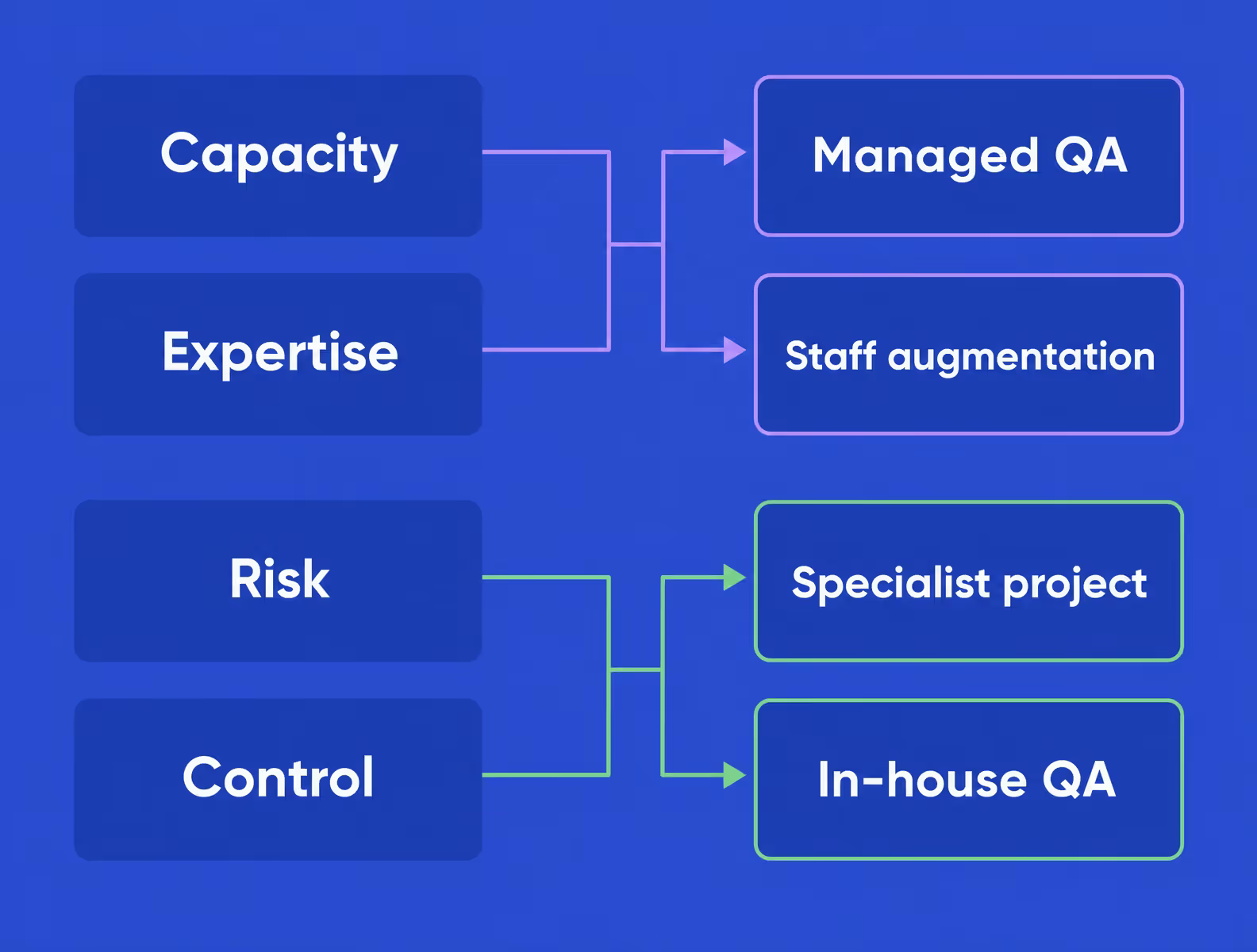
Model choice follows constraints and retained control
Once an external or hybrid route is on the table, the contract choice is what software QA outcome to delegate and how much daily management to retain. The four QA outsourcing models below separate process ownership from added capacity and narrow assignments. Geography then modifies any selected model through coordination, access, and working-hour overlap.
The provider owns the agreed QA backlog and reporting. The client buys a testing service for stable scope, but retains release decisions, unlike staff augmentation.
The responsibility boundary makes the differences comparable.
| Model | Who manages backlog | What the client buys | When it fits | Main risk |
| Managed QA service | Provider | QA process and reporting | Stable scope | Unclear acceptance |
| Dedicated QA team / staff augmentation | Client | QA capacity | Client-led work | Supervision |
| Project-based specialist testing | Client | Defined test stream | Bounded risk | Limited handoff |
| Delivery geography modifier | Model owner coordinates | Access and time overlap | After model choice | Location as proxy |
The client buys QA capacity and retains task assignment and acceptance. It fits teams that can supervise daily work, unlike a managed service.
Cubbiq shows co-managed, shared QA. It is not evidence of a dedicated-team or staff-augmentation contract.
At Cubbiq, we shared QA with the client's developers.
Their developers gave optimization advice and found bugs from their technical perspective.
After QA, major bugs still required fixes before the October release.
Purrweb fixed all major bugs, then continued with support and maintenance afterward.
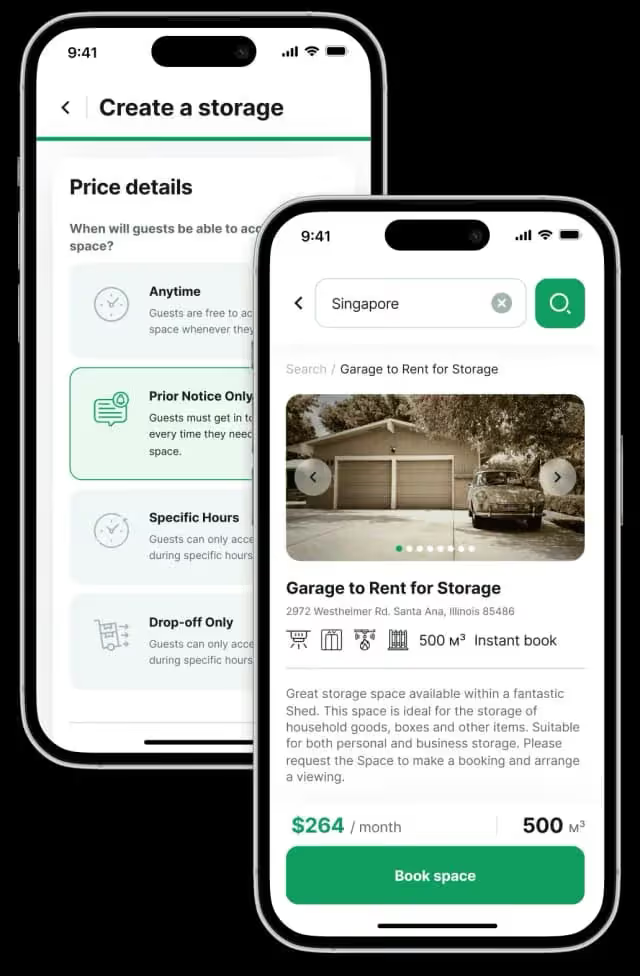
Two teams contributed to product review before release
The client buys a specialist testing service for a defined risk and retains planning. It ends with the assignment, unlike a standing QA team.
Nearshore QA and offshore outsourcing modify coordination, access, and working-hour overlap, not ownership itself. The selected owner defines testing scope by business need.
Outsourcing software testing services works when grouped by product decisions, not by a testing glossary. Release work asks whether a change is safe to ship. The remaining scope examines load, risk, and feedback speed, then selects the testing methods that answer those questions.
Release confidence: Functional testing, regression testing, API testing, and mobile app testing check changed flows and their integrations. IoT software testing shows why specialist scope can include a device-to-server connection.
Scalability and reliability: Software performance testing uses a defined load model to expose a bottleneck before it shapes a release decision.
At Smartchat, we built a representative 1,000-chats-an-hour test with up to 100 messages per chat.
The system handled that stated test load.
Testing exposed PostgreSQL degradation under high load.
We moved chat data to Scylla and added Prometheus metrics and alerts.
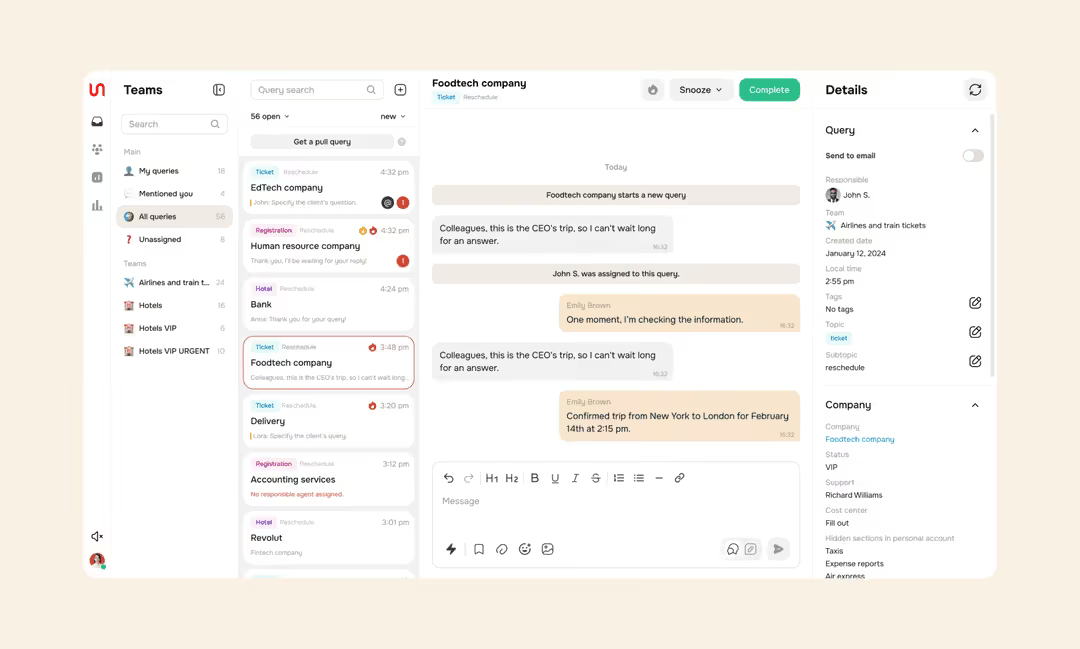
The load model revealed where the data layer required change
Risk and compliance: Security, accessibility, and usability testing examine access and interfaces for release exposure. The scope makes a risk decision explicit instead of treating compliance as a checkbox.
Faster feedback: Test automation runs each automated test sooner, but manual testing, exploratory work, and domain judgment cannot be replaced by automation testing. Quality engineering identifies risks requiring human investigation.
The benefits of outsourcing require conditions, measures, and trade-offs, not software quality promises.
| Potential benefit | Condition | How to measure | Trade-off |
| Faster feedback | Fast environment access | Feedback delay | Context transfer or communication latency |
| Flexible capacity | Named core team, replacement plan | Unplanned replacements, ramp-up gaps | Vendor dependency |
| Specialist expertise | Comparable work or scoped pilot | Agreed acceptance criteria or pilot findings | Handoff and coordination load |
| Cost control | Client management overhead counted | Total ownership cost | Retained governance work |
Because benefits depend on conditions and retained client work, vendor fees alone do not describe total ownership cost.
The cost of outsourcing your QA reflects delivery choices and product conditions, not a universal rate. Same-scope, same-assumption proposals reveal total cost of ownership.
| Cost driver | How it changes cost | Question for the proposal |
| Engagement model, seniority | Changes vendor effort and client supervision | Which model, roles, seniority mix, and client tasks are included? |
| Location, compliance | Changes coordination and control work | Where is work performed, which requirements apply, and which controls are included? |
| Environments, devices, test data | Changes setup and access work | Which assets and access are included or client-provided? |
| Release cadence, automation | Changes execution and maintenance work | What is the cadence, what is automated, and who maintains it? |
TCO = vendor fees + client management + tools and infrastructure + onboarding and knowledge transfer + rework + risk reserve. Different assumptions shift who carries gaps in access, handoffs, rework, and contingency. Those exposures need a named owner, early signal, and control.
Risk control works when an observable signal triggers one response from one accountable owner. These records keep product knowledge, access, staffing, defect handling, tools, and exit work inside the software testing outsourcing agreement.
Confidentiality, privacy, access, intellectual property, and exit terms define the boundary around those actions. The NDA covers confidentiality, while role-based access identifies who can use approved test data.
The client retains product context and release decisions. The contract defines ownership and handover of scripts, frameworks, reports, defects, and other intellectual property. The provider maintains evidence within the agreed test scope and prepares it for handover.
That boundary also shows when a problem sits outside the provider's direct control and needs a different owner. Functional testing can uncover a constraint in supplied hardware or its environment, so escalation follows the supplier's process rather than a generic QA fix.
At Energo, we checked the station-to-server connection during functional testing.
The client-supplied devices used a fixed IP address that could not change, creating a manufacturer dependency.
We followed the manufacturer's process to resolve the connection.
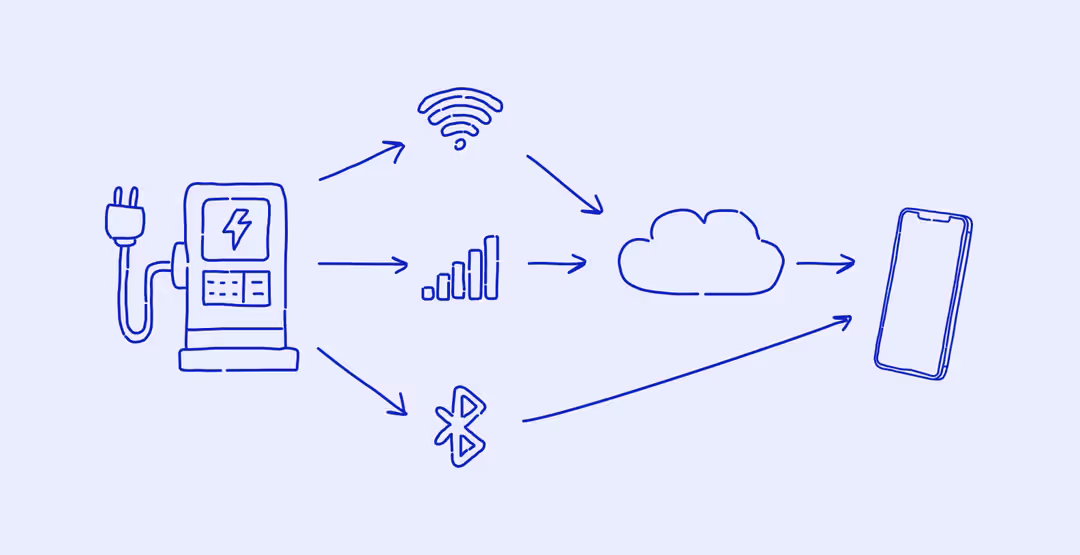
A hardware constraint changed how the team resolved the connection
Provider evaluation can focus on evidence that a team recognizes signals, works within controls, and escalates to its owner.
Software testing companies can show polished claims but little evidence mapped to product risks. A low rate covers one proposal element. Tool logos cannot prove QA experts deliver a suitable test strategy, maintainable automation, or accountable reporting.
mabl's survey of 750+ professionals reports that 23% of companies use five or more testing tools.
It also reports that 62% of companies dedicate budgets to improving automation and introducing more AI tools into testing.
Neither figure establishes provider quality or production AI use. Ask a QA partner which testing tools are in scope and whether automation or AI use is production or pilot.
A weighted scorecard turns those questions into comparable proof and extends the evaluation logic in how to outsource app development. The buyer assigns each criterion 1–5, multiplies it by the weight, and compares totals.
A 1 means no relevant evidence or an unresolved red flag, 3 means partial evidence with material gaps, and 5 means strong comparable evidence with no material gap. Scores 2 and 4 sit between those anchors.
| Criteria | Weight | Evidence to request | Red flag | Score 1–5 |
| Relevant domain and product evidence | 15% | Comparable scope and outcomes | Generic references | 1–5 |
| Test strategy | 15% | Risk-based test case and acceptance criteria | Tool-first plan | 1–5 |
| Automation maintainability | 10% | Ownership and maintenance approach | Unowned scripts | 1–5 |
| Security controls | 15% | Access, data, and incident controls | Vague access rules | 1–5 |
| Communication | 10% | Cadence and escalation path | No named owner | 1–5 |
| Staffing continuity | 10% | Core-team and replacement plan | Unplanned substitutions | 1–5 |
| Reporting and metrics | 10% | Sample report and decision metrics | Activity-only reporting | 1–5 |
| Ownership of assets | 10% | Terms for scripts and test data | Vendor-only access | 1–5 |
| Exit and knowledge-transfer plan | 5% | Handover pack and timing | No exit terms | 1–5 |
A paid pilot passes when agreed scope yields usable reporting, assets remain exportable, and controls work in the assigned environment. It exits when acceptance evidence, named ownership, or handover terms do not materialize. Those gates inform 30-day onboarding.
Selecting an external QA provider ends with an operating start, not automatic expansion. This 30-day QA onboarding sequence turns the provider's proposal into shared evidence. The team agrees its boundary, observes a pilot, and reviews results with product owners. Each phase leaves an artifact or decision gate.
Quality goals and definition of done set QA strategy and test boundaries. The access matrix records each environment owner. RACI assigns ownership, reporting, and escalation across the software development process.
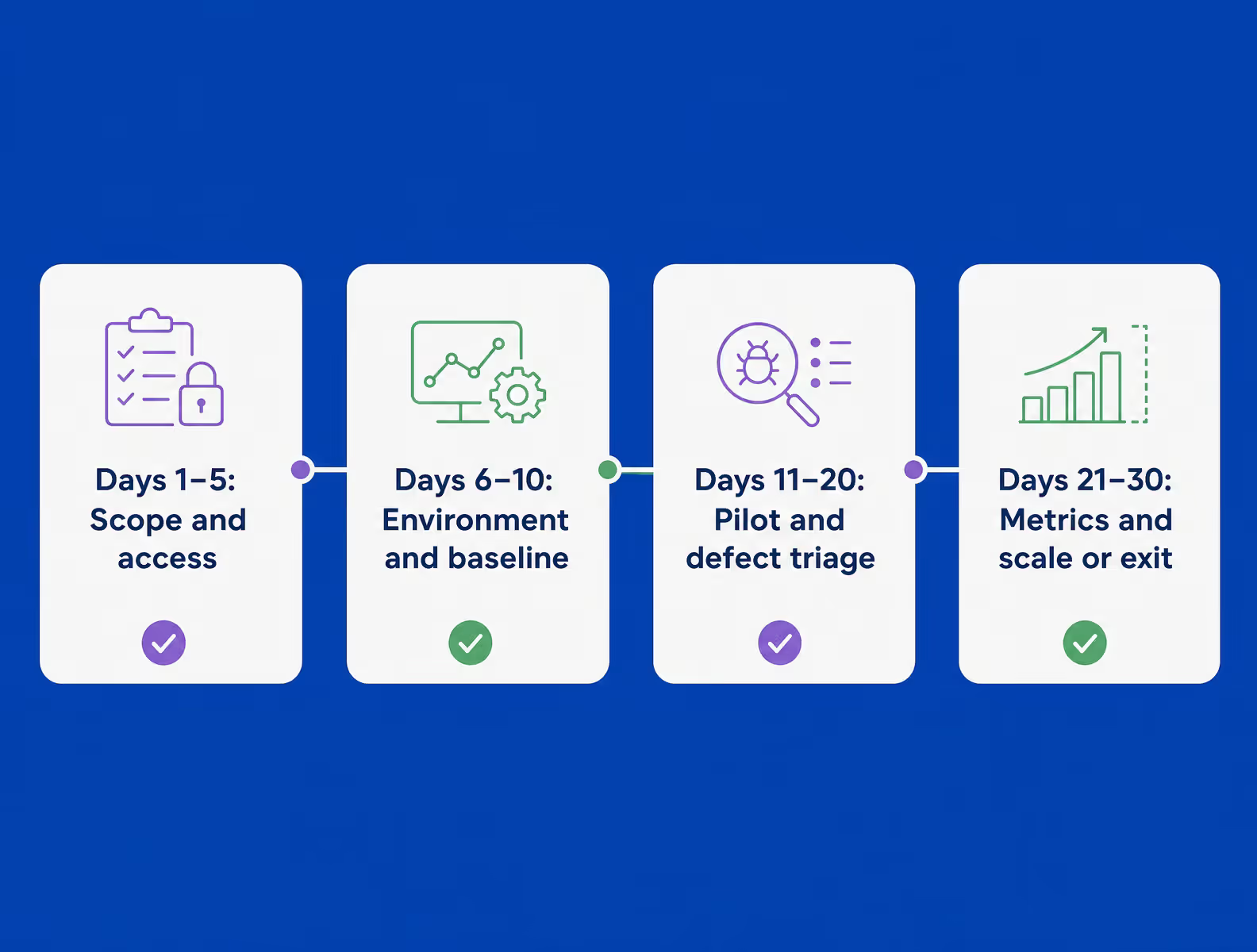
Each phase closes with evidence, not automatic expansion
Approved test data enter prepared environments. A test inventory makes the baseline repeatable.
A bounded QA test cycle feeds defect triage under the agreed definition of done. Its records prepare governance and handoff.
At PACS, the parallel team included a tester.
Early communication connected us with client specialists.
Responsibilities and risks were defined.
We deployed the app on client infrastructure.
Then we handed it off for continued in-house development.

Governance makes infrastructure handoff visible before scale
Metrics and a retrospective compare the pilot with its baseline. Scale follows when agreed checks run, reporting supports release decisions, and owners can act on defects. Exit follows when evidence, control, or handoff remains missing.
When ownership stays shared, integrating in-house and outsourced teams becomes the next operating task. The same baseline tests AI claims against maturity, controls, and measured gains.
Artificial intelligence can assist quality engineering with test design, maintenance, analysis, and reporting. It does not replace product judgment, security review, or client-owned release decisions.
Capgemini reports that 89% of responding organizations are piloting or deploying Gen AI-augmented workflows.
Only 15% report enterprise-wide implementation. These figures show implementation status, not quality, ROI, or provider capability.
Test each claim with five questions:
The provider remains accountable for its agreed QA scope. The client retains product priorities and release decisions.
Outsourced testing works when responsibility is defined and observable. The client retains product priorities and release decisions, while the provider reports against an agreed scope. Comparable reporting, risk controls, provider evidence, and pilot or onboarding gates keep the arrangement governable.
➡️ Contact Purrweb to discuss the operating model, risk controls, and project estimate for your product.
QA outsourcing is an arrangement in which an external provider takes responsibility for defined software testing activities, from a specialist test stream to the full QA process. The client still owns product priorities and release decisions, while the provider supplies people, methods, tools, and reporting under an agreed scope, service level, and governance model.
A company should consider QA outsourcing when releases are slowed by limited test capacity, the product needs specialist skills such as performance or security testing, demand fluctuates, or an independent quality review is valuable. Keep QA in-house when testing is a core proprietary capability, product knowledge cannot be transferred safely, or the team cannot define ownership and acceptance criteria.
QA outsourcing assigns an outcome or testing scope to a provider that manages delivery and reports against agreed metrics. Staff augmentation adds individual testers who work under the client’s day-to-day management. The first model reduces management load but requires clear service levels. The second gives the client more control but leaves planning, supervision, and process ownership in-house.
QA outsourcing cost depends on team size, location, engagement model, product complexity, environments, automation coverage, compliance needs, and release frequency. Compare total cost rather than hourly rates: include onboarding, test data, tools, infrastructure, management time, rework, and knowledge transfer. Ask shortlisted providers to price the same scope and assumptions so proposals are comparable.
Evaluate a QA outsourcing company on relevant domain experience, test strategy, automation capability, security controls, communication, staffing continuity, reporting, and evidence from comparable projects. Use a weighted scorecard and a paid pilot with explicit exit criteria. Check who owns test assets, how defects are prioritized, which metrics drive decisions, and how the provider transfers knowledge if the engagement ends.
Protect intellectual property and data with an NDA, role-based access, least-privilege environments, approved test data, secure credential handling, audit logs, incident procedures, and contractual data-location requirements. Confirm subcontractor rules and ownership of scripts, frameworks, reports, and defects. Start with a limited environment, review access regularly, and remove credentials immediately when people leave the project.


.svg)