Explore

Need help with your project?

Oops! Something went wrong while submitting the form.
A Dallas product team can find plenty of vendor lists, but those lists often mix local firms, remote studios, SaaS vendors, and mobile-only agencies. That makes it hard to tell which software development companies in Dallas handle a full product lifecycle and which fit only a narrow brief.

A Dallas product team can find plenty of vendor lists, but those lists often mix local firms, remote studios, SaaS vendors, and mobile-only agencies. That makes it hard to tell which software development companies in Dallas handle a full product lifecycle and which fit only a narrow brief.
In this guide, we'll look at 10 full-cycle partners serving Dallas, from companies with local offices to global remote teams. The comparison focuses on specialization, delivery model, project evidence, and practical fit, so location stays one decision factor rather than a shortcut for quality.
We evaluated each company by evidence that matters to buyers building software: full-cycle delivery, relevant project work, and engineering breadth. We also checked its engagement model, post-launch support, and account of how the team serves Dallas.
Local presence counted as delivery information rather than a quality score. A Dallas-area office supports on-site workshops and local procurement, while a remote team can still provide effective time-zone overlap and clear escalation paths. We checked those claims against current official pages instead of copying locations, awards, or team sizes from older rankings.
The remaining criteria kept the comparison tied to project fit:
The regional tech talent market adds context, not ranking points. A Texas workforce report projects 65% growth in software-developer employment within professional, scientific, and technical services by 2032.
Teams offering custom software development in Dallas cover full-cycle product development, from rapid MVP work to enterprise modernization and AI systems. Their form of Dallas presence or remote coverage varies across the Dallas–Fort Worth metroplex. The comparison therefore separates local offices from transparent remote service.
| Company | Best for | Dallas/DFW presence | Delivery model | Core specialization |
| Purrweb | Rapid MVPs and digital products | Serves Dallas remotely | Global remote | UI/UX, web, mobile, and SaaS |
| ISHIR | AI and data modernization | Dallas and Plano | Local leadership with distributed engineering | Product engineering, Data and AI, modernization |
| ScienceSoft | Complex enterprise systems | McKinney, Dallas area | Local office with global delivery | Enterprise software, analytics, managed IT |
| Ascendix Tech | CRM and real-estate software | Dallas | Dallas-based delivery | CRM, Salesforce, cloud, real-estate technology |
| Ideas2IT | AI-enabled product engineering | Dallas-headquartered, Plano office | Distributed engineering | AI, cloud, data, and custom applications |
| ENO8 | Product discovery and custom delivery | Dallas | Dallas-based studio | Discovery, UX, web, mobile, and project rescue |
| 7T | AI and cloud modernization | Addison, Dallas area | US-based delivery | AI, enterprise software, cloud, and DevOps |
| TatvaSoft | Enterprise platforms and dedicated teams | Dallas office | Local presence with global delivery | SaaS, modernization, integration, dedicated teams |
| JumpGrowth | Startups, SaaS, and scalable products | Dallas-headquartered | Dallas-led product engineering | SaaS, web, mobile, backend, and AI |
| App Maisters | Enterprise digital transformation | Dallas office | Enterprise project delivery | AI, cloud, IoT, analytics, and enterprise apps |
Dallas buyers are not limited to suppliers within city boundaries. DFW employment grew at a 2.2% annualized rate in the first quarter of 2025, while remote delivery gives local product teams access to a wider range of specializations.
Purrweb fits startups that want one team to design and engineer a digital product. Its scope includes product discovery, user experience design, web development, mobile app development, SaaS, quality assurance, and post-launch support.
The delivery model favors MVP development over long enterprise transformation programs. Purrweb fits teams validating a first release or replacing a prototype.
It also suits customer-facing products that need a consistent user interface across web and mobile. One development team brings designers and software developers together, reducing handoff gaps between approved screens and the product.
Purrweb works with Dallas product teams through global remote delivery. Buyers can evaluate time-zone overlap, documentation, meeting cadence, and ownership of the product after release. This model keeps product decisions close to the client while design and engineering move through the same delivery process.
The value of a compact product team becomes clearer when one release has to cover several connected interfaces without losing control of the budget.
We built Settler, a mobile service for managing apartment renovations remotely. We delivered a customer app, web admin panel, and landing page in four months.
Property owners could approve designs, follow renovation stages, talk to the team, and track invoices and expenses. Administrators managed layouts, updates, documents, and payment history.
The constraint was releasing a useful MVP without building costly custom features too early. We used React Native, linked external live streams, accepted uploaded bank receipts, and integrated Calendly. These choices saved about $12,450.
When the client moved development in-house, we transferred the code, documentation, UI kit, architecture notes, access details, and project knowledge.
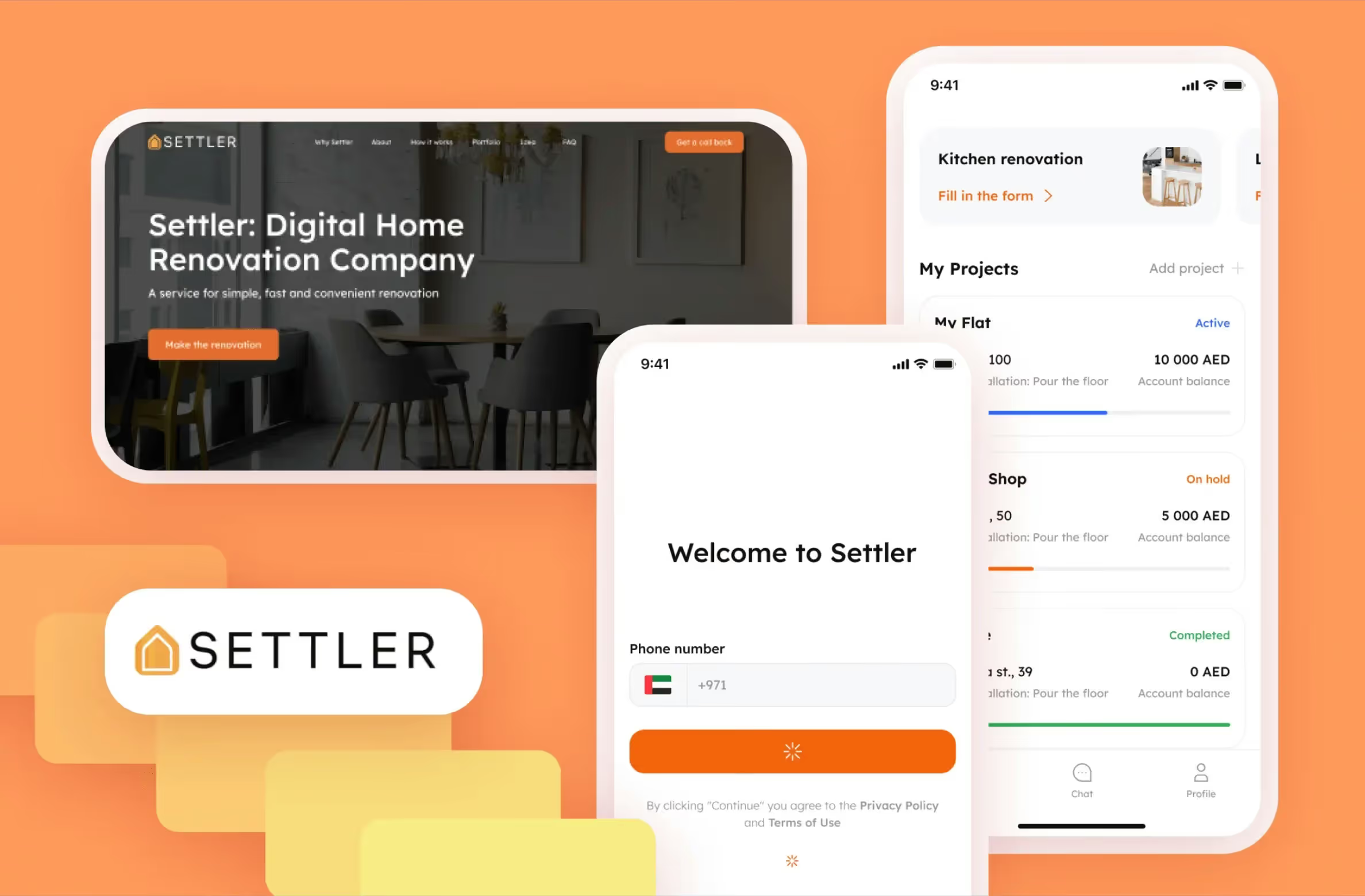
Settler kept renovation progress, design decisions, and spending visible to property owners working remotely
Settler also shows why delivery speed is only one part of a vendor comparison. The first release still needed coordinated product design, several interfaces, release planning, and a codebase the client's own team could continue.
For a Dallas buyer working with a remote partner, the same test applies to documentation, ownership, meeting cadence, and escalation paths. The proposal also needs to show who records decisions and how work transfers when the engagement changes. Those details reveal more about day-to-day collaboration than a matching city address.
ISHIR fits organizations combining product development with AI, data, or legacy modernization. Its services cover custom software development, SaaS products, rapid prototypes, Data and AI strategy, AI engineering teams, deployment, and ongoing support.
The company lists a Dallas headquarters and a Plano office, while its engineering model also uses distributed teams. This mix supports local stakeholder access without limiting delivery to one labor market. The breadth is useful for modernization programs. A narrowly scoped design engagement may not require its wider AI and systems-integration offer.
ScienceSoft handles enterprise software development when new products must connect with existing systems, data, and operational controls. Its Dallas-area services span application development, data analytics, artificial intelligence, integrations, and IoT. It also covers managed IT, infrastructure, cybersecurity, and software consulting.
ScienceSoft lists an office in McKinney and delivers through a wider global organization. That scope suits enterprise and regulated-industry programs with multiple technical dependencies. An early startup building a compact MVP may find the service range broader than the first release requires.
Ascendix Tech specializes in CRM and real-estate technology. The Dallas-based company builds software solutions on Salesforce, Microsoft Dynamics 365, and independent technology stacks. It also connects those products with existing systems and data.
Its real-estate work covers CRM products, cloud migration, APIs, mobile applications, and legacy modernization. This makes the company relevant to commercial real-estate teams or buyers whose core problem is customer and property data. Companies outside those areas can compare adjacent case evidence before treating the specialization as a direct match.
Ideas2IT spans product engineering, artificial intelligence, custom applications, cloud computing, data engineering, analytics, and quality automation. Its cloud work covers architecture, containers, observability, security, compliance, and cost control.
The company describes itself as Dallas-headquartered and lists an office in Plano. A larger distributed engineering organization supports delivery. Ideas2IT is a practical fit when AI, data, or modernization sits inside the product brief. A conventional application with little data complexity may not use the full depth of that offer.
ENO8 suits teams that still need to resolve product direction before committing to a full build. The Dallas studio offers product strategy, UX design, custom development for web and mobile, project rescue, and maintenance. Its six-week Innovation Lab covers discovery and validation.
ENO8 states that it has taken more than 200 custom and semi-custom products from concept through launch. The discovery-led model gives uncertain projects room to test assumptions. Buyers with a complete specification can confirm how much of that process remains necessary before development begins.
7T focuses on custom software solutions, AI development, enterprise applications, cloud modernization, and DevOps. Its Dallas work includes SaaS, mobile products, automation, and cloud transformation across Amazon Web Services, Azure, and Google Cloud.
The company lists its headquarters in Addison, within the Dallas area, and additional US offices. This scope fits organizations replacing legacy systems or adding AI and cloud capabilities to an existing operation. A small design-first product may not require the same modernization and infrastructure depth.
TatvaSoft offers a wide enterprise stack that includes bespoke software, SaaS development, application modernization, systems integration, and ongoing support. It also provides dedicated teams and scalable staff augmentation services.
The company lists a Dallas office and delivers through a broader global organization. This model supports projects that want local presence alongside distributed capacity. TatvaSoft can fit long-running platforms and team-extension engagements. Its wide service catalog makes a precise written scope important when buyers compare its proposal with a smaller specialist's offer.
JumpGrowth is a Dallas-headquartered software engineering company for startups and enterprises. Its services include custom software development, SaaS, full-stack development, mobile apps, AI, cloud, and product engineering.
The company also presents native and cross-platform mobile delivery plus ongoing improvement after launch. This range fits teams that expect one partner to cover product and engineering work across several surfaces. The Dallas page named in the brief is no longer surfaced in search. Current homepage and Dallas-focused service content provide the safer evidence base.
App Maisters concentrates on enterprise applications and digital-transformation programs. Its services cover AI and machine learning, cloud, IoT, analytics, enterprise mobility, web applications, and integrations with existing infrastructure.
The company lists a Dallas office and publishes Dallas-specific application-development material. Its enterprise pages also reference Salesforce work, security controls, and ISO 27001 and ISO 9001 certifications. This profile fits integration-heavy or connected-product programs. A lightweight MVP with limited enterprise dependencies may not need the governance and systems scope that shapes the company's offer.
The right custom software development company matches business needs and product constraints, not every capability on its service page. Our guide to how to find a software development partner uses the same test: compare software companies on scope, ownership, collaboration, and support.
A written brief gives competing custom software development services a common baseline. Four groups of questions usually expose the meaningful differences:
Product scope changes the process. Buyers seeking only a mobile team can use our list of app developers in Dallas. For a full-cycle partner, the software development process should clarify the development approach from discovery through estimates, milestones, testing, and release.
A useful case study shows more than a polished final interface. It exposes what the team did when product and technical constraints pulled in different directions.
We built Contentplace, a private video marketplace connecting creators with businesses and distributors. Buyers could search and save videos, while sellers managed uploads, portfolios, and subscriptions.
The difficult part was making protected pages discoverable in search without exposing private videos or authentication tokens. We used Next.js server-side rendering, secure cookies, and CloudFront access controls. Stripe Connect Express handled seller onboarding and payments.
We also reduced about 30 proposed subscription plans to three clearer options. A seven-person team delivered the MVP in three months. After testing, we added private sharing links, more categories and tags, and buyer subscriptions.
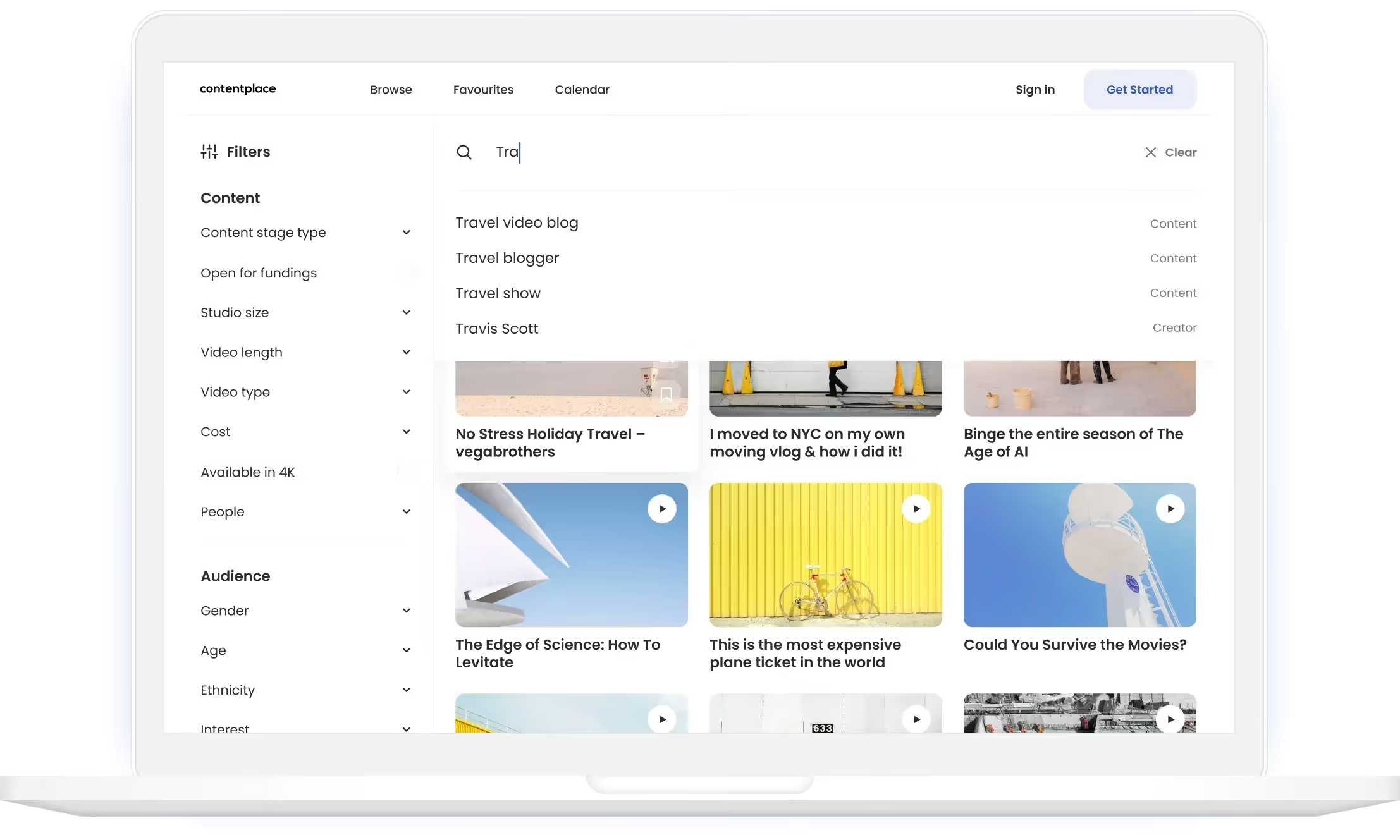
Contentplace made private video catalogs discoverable while keeping access behind registration
Cost depends on release scope, architecture, integrations, compliance, team composition, and support. The engagement model is the contract framework for priority control and budget changes.
Compare the models against the same release boundary:
| Model | Works best for | Buyer control | Main trade-off |
| Fixed scope | Stable requirements | Approves formal changes | New scope requires a revised quote |
| Time and materials | Evolving products | Reprioritizes the backlog | Final cost follows scope and scalability |
| Dedicated team or staff augmentation services | Ongoing roadmaps | Directs retained capacity | Pays for reserved team time |
Distributed software outsourcing companies can use any model, including time and materials for agile software development. Location does not determine contract structure.
A verified project shows why the first estimate and the long-term product budget are different decisions.
We built GSR, a platform for online psychologist consultations. The first release included a specialist catalog, matching questionnaire, session booking, and separate client and specialist journeys.
The client needed to validate demand without funding a complex platform upfront. We left integrated payments outside the MVP and built the core product with React.js, Nest.js, and a reusable UI kit. The release took four months and cost $40,000.
After validation, the client returned for role-based dashboards, an admin panel, and client and specialist databases. Reusing the original UI kit reduced the work required as registration flows and platform roles changed.
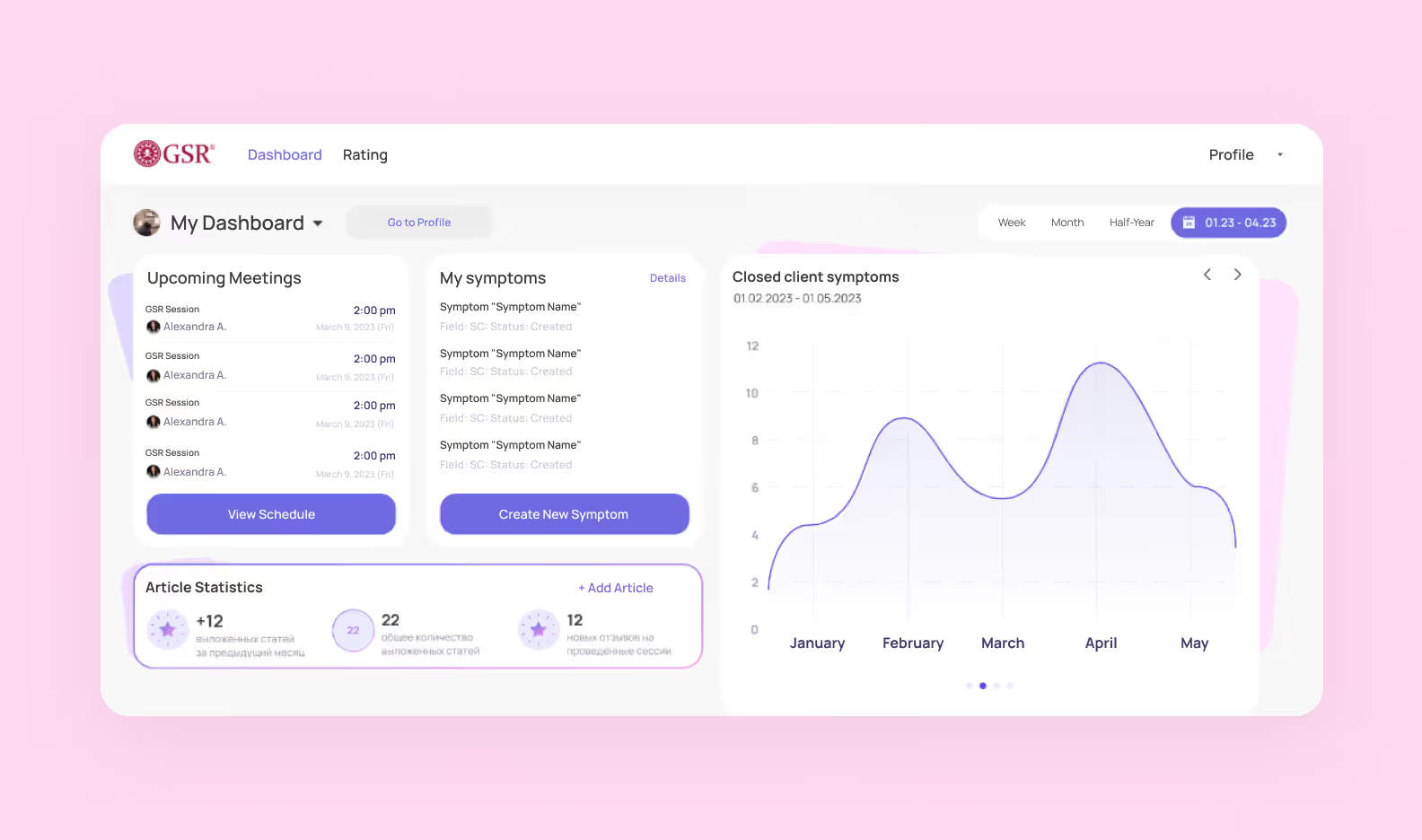
The first release tested the consultation model before the platform expanded into role-based infrastructure
A useful estimate states what the first release includes, how changes are approved, and who supports the product after launch.
A useful final comparison comes back to the product rather than the ranking position. The stronger match has relevant project evidence and a delivery model that fits the buyer's decision process. It also defines ownership and support after release. Location matters when the work requires on-site collaboration, but it does not replace those fundamentals.
The same written scope makes early conversations more productive because each company responds to the same release boundary and operating constraints.
➡️ Comparing partners for a new software product? Tell us what you're building, and we'll help define the first release and prepare an estimate.
Start with the product scope, required expertise, budget model, security needs, and whether local meetings are essential. Then compare verified case studies, team composition, discovery process, communication cadence, IP terms, and post-launch support. A strong fit is the company whose evidence and delivery model match your project, not simply the vendor with the longest service list.
There is no reliable single Dallas average because cost changes with product scope, architecture, integrations, compliance, team seniority, and support requirements. Ask shortlisted firms for the same written scope and compare assumptions, exclusions, team composition, and ownership terms. A cheaper estimate is not comparable if it omits discovery, quality assurance, deployment, or maintenance.
Yes. Many firms with Dallas or Texas offices deliver projects for clients across the United States and internationally, while remote companies also serve Dallas businesses. Confirm time-zone overlap, meeting cadence, escalation paths, and whether on-site workshops are available. Delivery transparency matters more than an address unless the project genuinely requires frequent in-person work.
Full-cycle teams can cover product discovery, UX/UI design, architecture, and web and mobile engineering. They may also handle quality assurance, DevOps, cloud deployment, data or AI features, and post-launch support. The exact scope varies by firm. Buyers should verify which capabilities are in-house, which are subcontracted, and who remains responsible after the first release.
A focused MVP can take a few months, while an enterprise platform with complex integrations, migration, or compliance work can take much longer. The most useful estimate comes after discovery and technical scoping. Ask for milestones, dependencies, decision deadlines, testing time, and launch criteria instead of relying on a single delivery date without assumptions.
Not always. A Dallas office can help when stakeholders need regular on-site workshops, local procurement, or industry relationships. For most digital products, proven expertise, communication, delivery controls, and ownership terms are more important. If a company works remotely, verify time-zone overlap and escalation procedures rather than assuming location guarantees better execution.


.svg)