Explore

Need help with your project?

Oops! Something went wrong while submitting the form.
Retailers often have more AI ideas than budget. A shopping assistant and catalog-content automation solve different problems, yet both can look like an urgent first project. The harder question is which workflow has the data and controls to justify an initial investment.

In this guide, we'll look at generative AI for retail as a set of bounded workflows. The goal is to choose a first use case that fits the available data and review process, then assess whether the results warrant a wider rollout.
Retail teams often group generative AI, recommendations, and demand forecasting because all three appear in the same discussions about applying AI to a retail operation. They can influence what shoppers see or what employees plan, so from a distance they look like one category of automation.
Generative AI for retail creates new material, such as catalog copy or answers to product questions. Human review matters because the output has to be accurate and useful. Recommendation systems select existing products or offers for a shopper, while demand forecasting estimates sales to inform inventory planning.
The distinction matters because each system depends on different data, controls, and measures of success. A retailer can treat the first project as a focused decision: improve the content a team produces, choose products for a shopper, or plan for expected demand.
The value of Gen AI depends on the retail task it is meant to support. Product discovery, content production, demand forecasting, and shopping support address different problems, so each needs its own measure.
That shift is visible in Adobe Analytics’ report of a 1,200% increase in referral traffic from generative-AI sources to U.S. retail websites between July 2024 and February 2025. The statistic identifies an emerging referral channel, not revenue from any of the four workflows, and Adobe noted that referrals remained small compared with established channels.
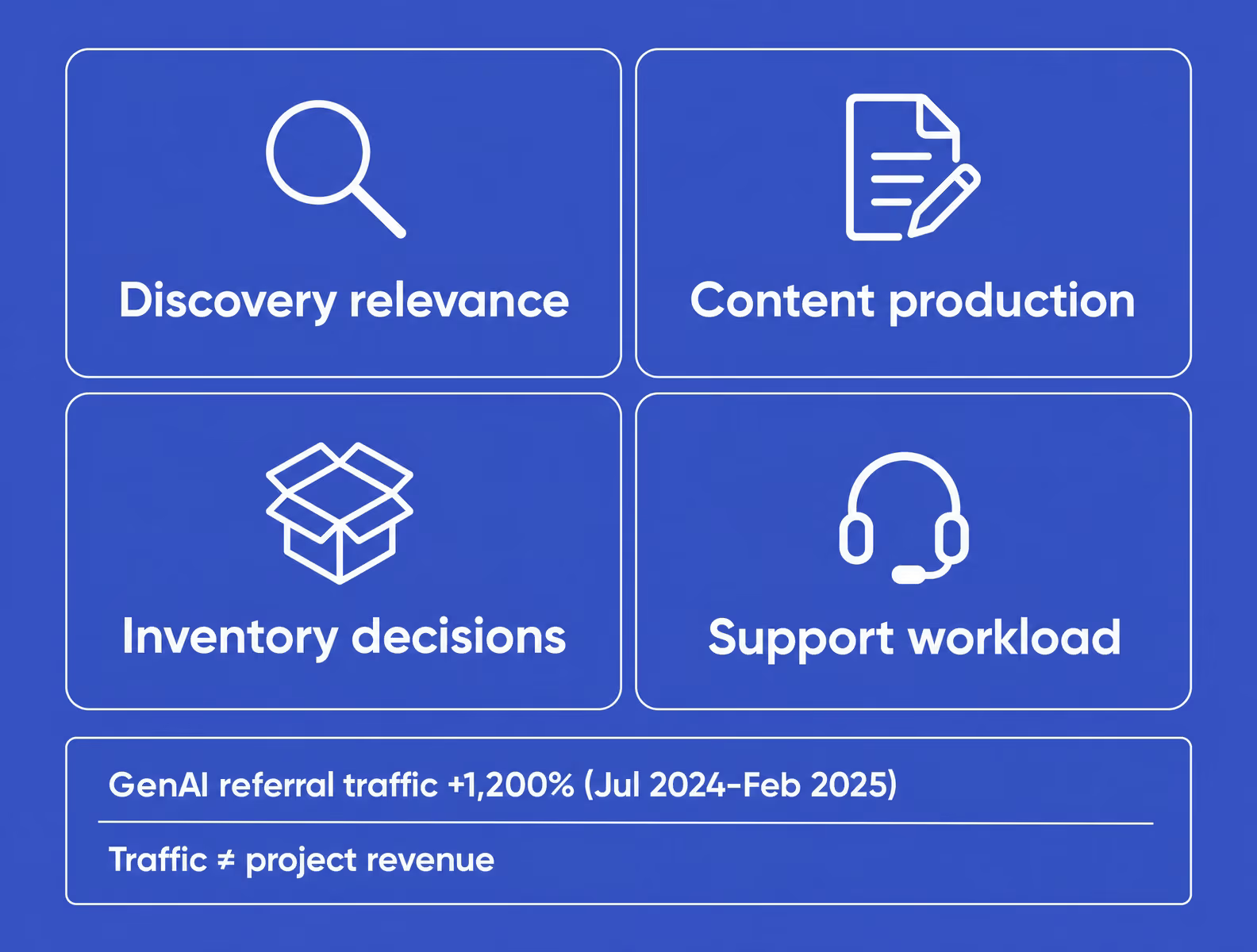
The referral surge points to a new discovery channel, not proof of revenue from a retail AI project
More relevant discovery. Recommendations can help shoppers find items that match their intent. Conversion and basket size offer a way to test whether discovery improves.
Faster content production. Content generation can reduce the work needed to produce an approved product page or campaign asset. Cost per approved deliverable shows whether it does.
Clearer demand signals. Forecasting can give inventory teams a clearer view of expected demand. Forecast accuracy and stockouts show whether allocation follows the signal.
More focused shopping support. Assistants can answer product questions and reduce support pressure. Automated-resolution share and customer satisfaction show whether the help works.
Each category becomes useful only when it is tied to a bounded workflow and the input data it requires, which is the comparison that follows.
Each retail AI workflow depends on different data, review controls, and operating assumptions. Discovery, content, stock, design, layout, support, and campaigns can sit on one roadmap, yet solve different problems with different proof standards.
Generated content, concepts, assistant responses, and campaign variants differ from recommendation and forecasting systems. Forecasting does not generate text. The seven workflows differ in their inputs, potential outcomes, and starting scope, so teams can match a use case to their data and decision.
Recommendations use browsing history, past purchases, and the product catalog. Clean event and catalog data form the boundary. They support relevant discovery and possible conversion or basket-size lift. The marketplace case below is adjacent, not a recommendation result.
At Purrweb, we validated the Nationwide eyewear chain marketplace through interviews and a clickable prototype. We designed its catalog, product, cart, and checkout flows. It was not an AI recommendation system and has no measured conversion result. It distinguishes a designed marketplace flow from a system that ranks products for individual shoppers.
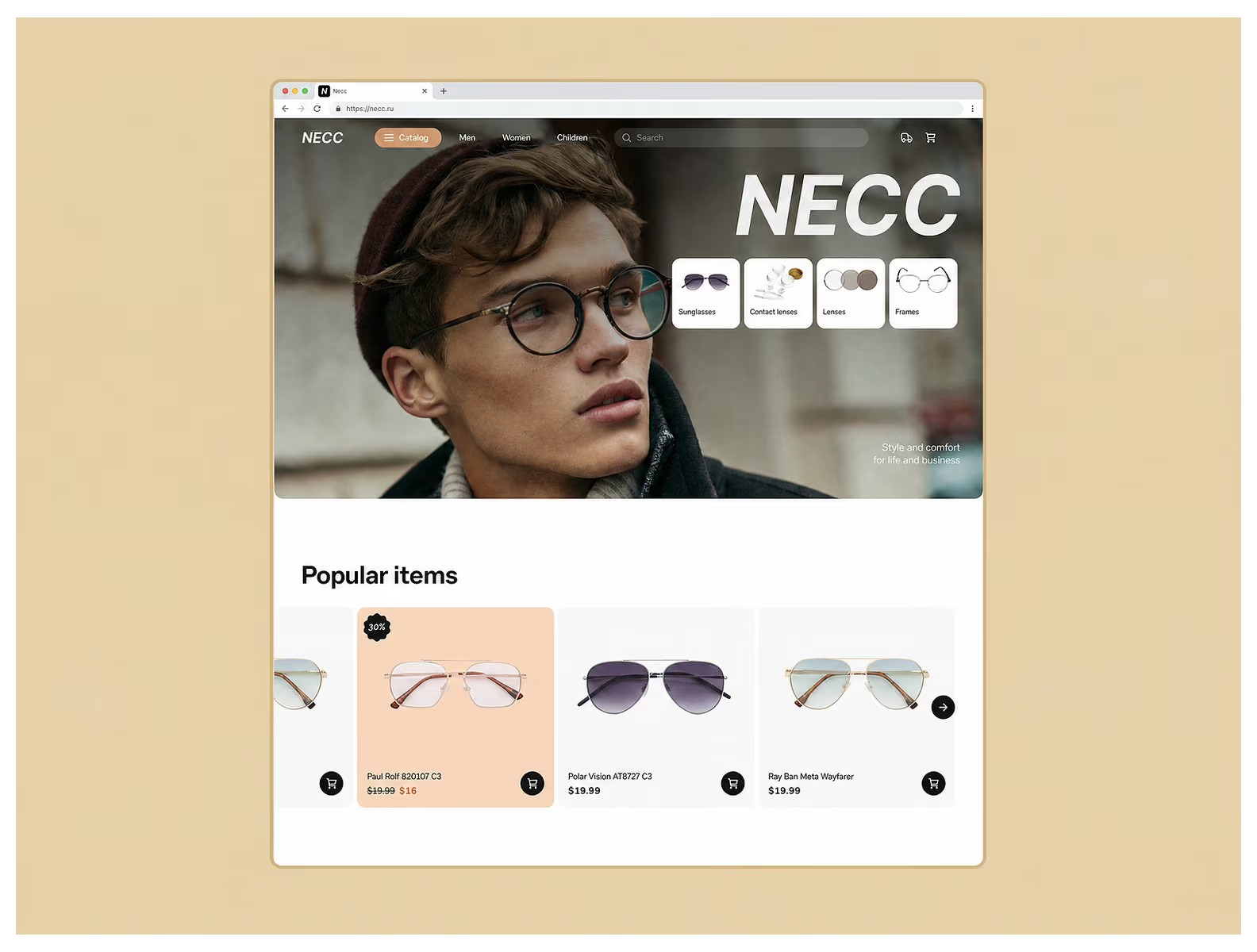
The prototype made the marketplace path visible before development
Product content generation uses product attributes, catalog taxonomy, and approved brand rules. A bounded category with review workflow is the boundary. It can speed content production and time-to-market without changing source data that describes the item.
Forecasting uses SKU-, store-, and time-level sales history with stock signals. It is not generated text. Reliable sales and inventory history define the boundary. Its potential outcome is fewer stockouts and clearer markdown decisions. IoT use cases in retail gives related context.
Vendify illustrates availability data, not forecasting. Availability in a fridge does not establish a demand model or forecast result.
At Purrweb, we built a React Native MVP for Vendify smart fridges. The app covered product availability, QR door access, Stripe payments, and backend fridge-state checks. It is operational data around availability, not a forecasting system or GenAI deployment. It claims no demand model or forecast result.
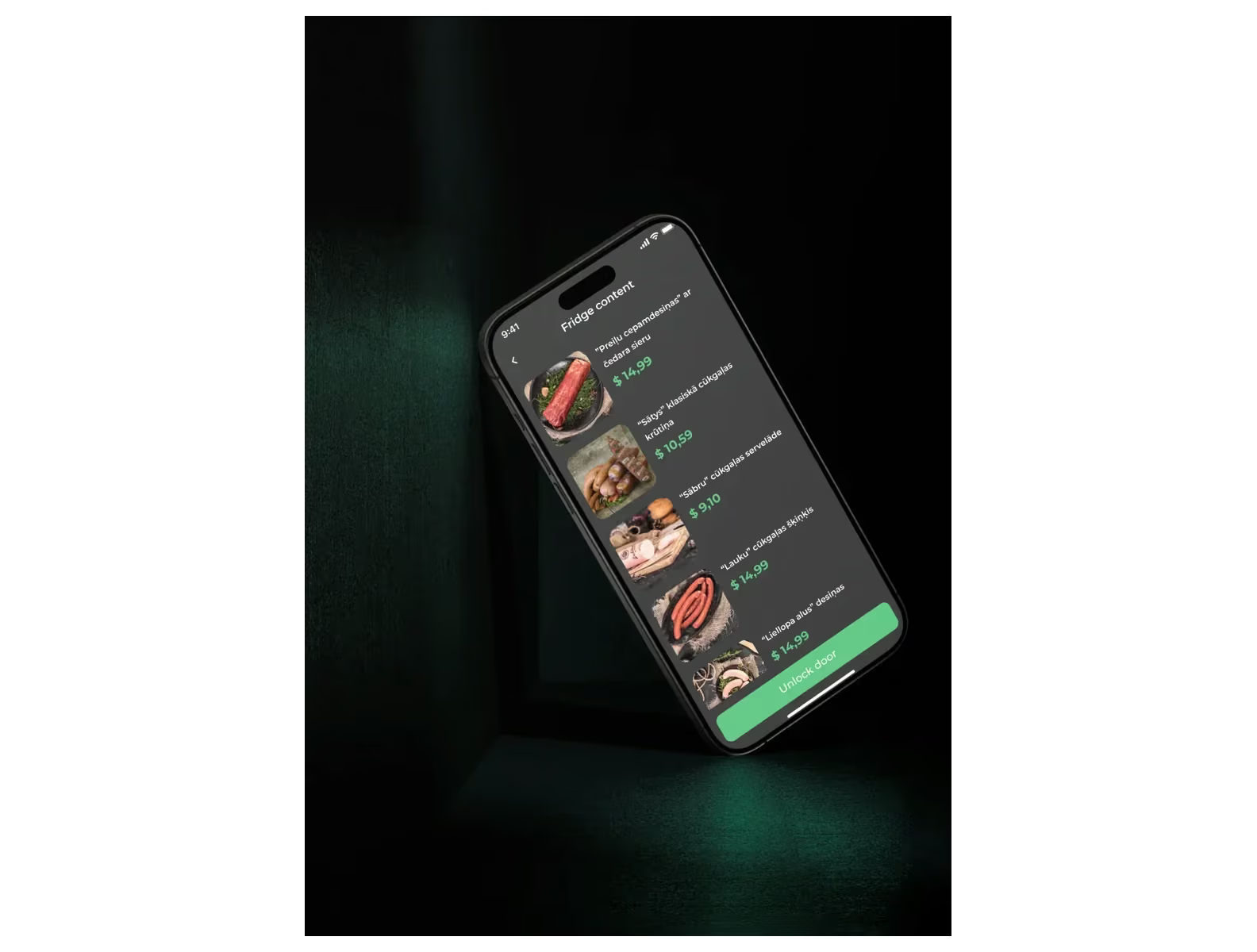
Availability signals belong to operations, even without forecasting
Product design and visualization uses design briefs, trend signals, and product constraints. Human-reviewed ideation or limited visualization forms the boundary. It can create more concepts before production without claiming fit or manufacturability.
Visual merchandising and store layout uses sales patterns, local context, and store constraints. A store format or category sets the boundary. It can inform layout and assortment decisions.
Conversational shopping assistants use the product catalog, reviews, policies, and order data. A constrained product domain with escalation is the boundary. They can support product discovery and ease support pressure within that domain.
Marketing campaigns and promotions use approved brand assets, audience segments, and offer rules. One campaign type with approval control sets the boundary. It can create more testable content variations at lower unit cost within approved campaign rules.
The next section examines verified announcements from Amazon, Walmart, and Stitch Fix. Generative AI use cases in healthcare provides related context.
Large retailers show what generative AI can do when it has access to mature catalog, customer, and operational systems. Their public descriptions are useful for mapping workflows, but they don't prescribe a first release. The capability boundary matters more than the brand behind it.
Amazon says Amazon Rufus is a conversational shopping assistant. It answers product and shopping-need questions, compares products, and makes recommendations using context from the catalog, reviews, Q&As, and the web. That description defines a broad research-and-discovery workflow, not a promise that every answer comes only from verified product data.
Walmart separates discovery from service. It says GenAI-powered search in its U.S. app lets shoppers describe a need or occasion and returns cross-category products with location and search-history context. Separately, its Customer Support Assistant identifies customers, finds orders, and manages returns. These are distinct capability sets, even when a retailer presents them in the same app.
Stitch Fix said it was integrating GenAI into design and development for several private-label brands to identify trends sooner and bring styles to clients faster. The announcement describes an internal product workflow, not an independently measured result. A narrower first project makes the boundary testable instead of copying a major retailer's system.
Big retail examples can bundle many systems, but a first pilot needs one bounded workflow and a clear operational home.
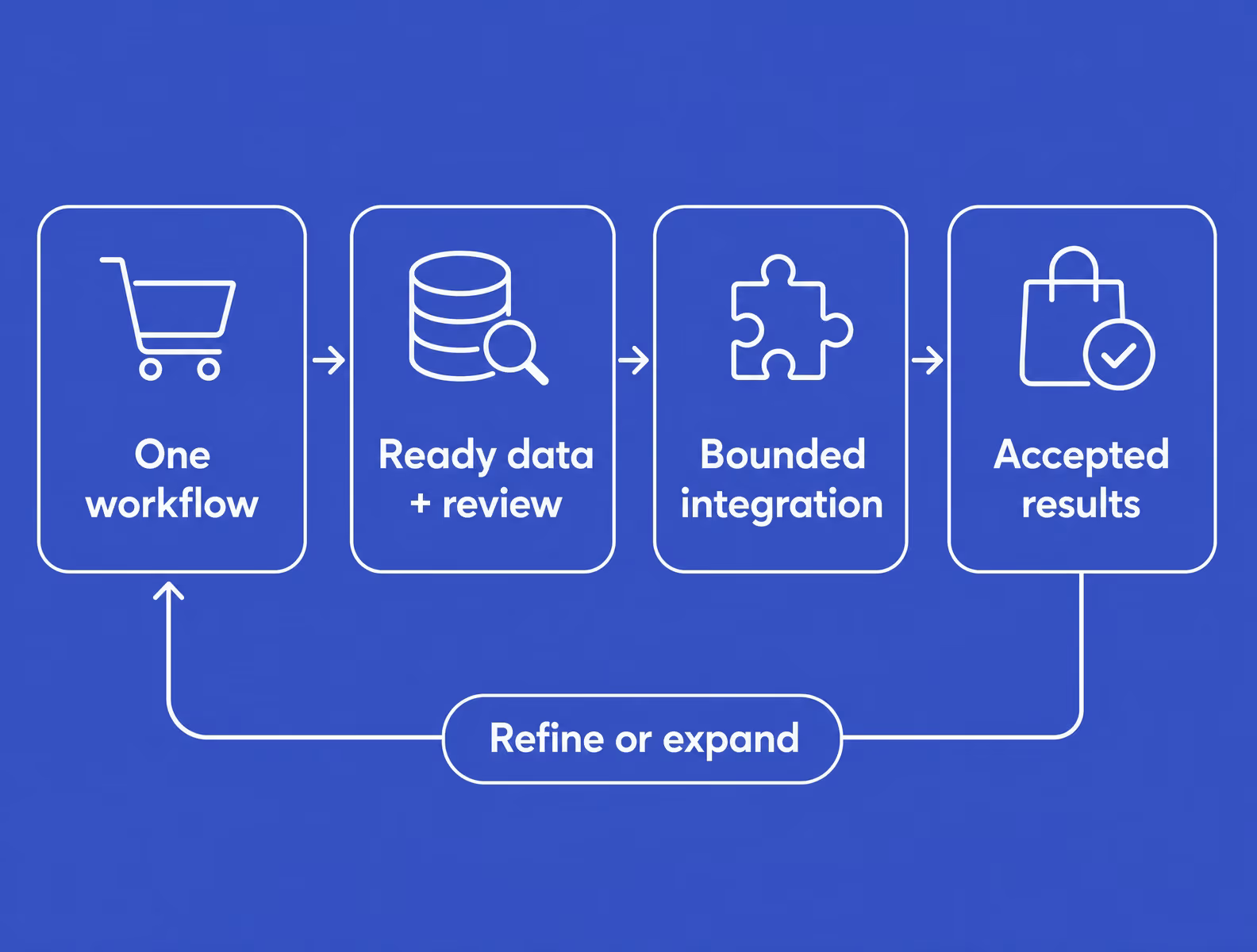
A pilot earns an expansion decision through accepted output in the workflow it is meant to support
Purrweb scoped Look4pro as a B2B listings marketplace MVP around listing creation, search filters, categories, preview and editing, and contact flows. That limited scope illustrates a bounded marketplace first version instead of a broad release. The project is not an AI or retail-performance case, so it does not validate generative AI outcomes. Its value here is narrower. A defined feature set gives a team a concrete scope to inspect before adding more marketplace functionality. It supports scope design, not commercial performance conclusions.
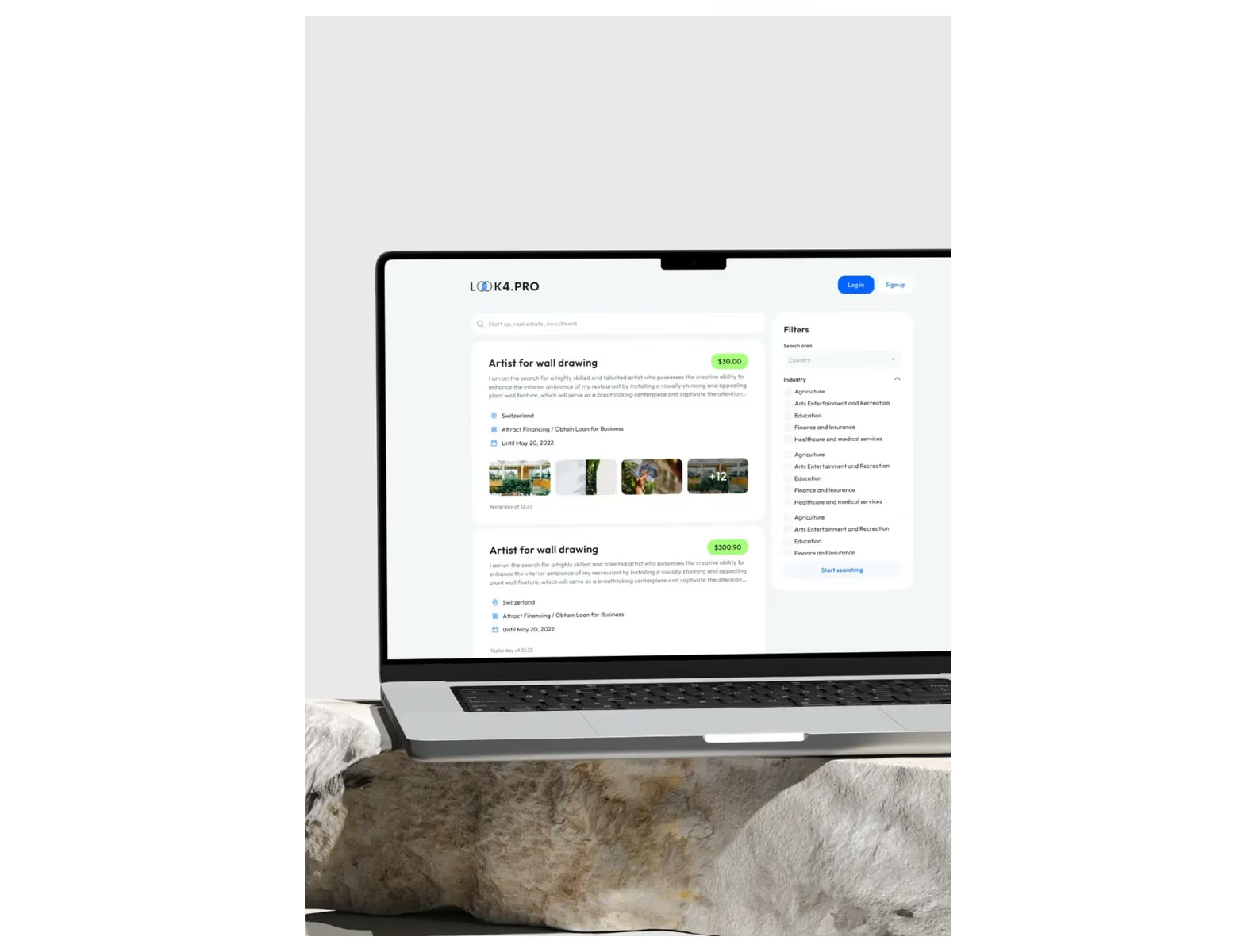
A bounded marketplace MVP concentrates on usable core interactions
The next section looks at metrics, operating costs, and observation windows used to judge whether results justify expansion.
Once a bounded retail pilot begins producing work, the next decision is whether its result warrants expansion. ROI, or return on investment, connects an accepted operational benefit to the cost of creating, operating, reviewing, and integrating the workflow. Activity around a feature alone is insufficient.
To assess recommendations, teams compare conversion rates or basket size with the work required to connect the flow to the catalog and commerce stack. Planning AI development services around one workflow keeps that comparison specific. Observation windows vary by use case. They are planning windows, not payback claims.
| Use case | Metric | Planning observation window |
| Recommendations | Conversion and basket size | 1–3 months |
| Content generation | Cost per approved content item | Weeks |
| Demand forecasting | Forecast accuracy and stockouts | A season |
| Shopping assistant | Automated-resolution share and customer satisfaction | 1–2 months |
Metrics matter only after a team defines what it will accept. A large volume of product copy does not establish value if reviewers reject it. Cost per approved content item measures material fit to publish, rather than every draft a model produces.
The same boundary applies to a shopping assistant. Automated-resolution share and customer satisfaction matter after the assistant resolves the request within its defined scope. Accepted-output quality belongs inside the ROI decision, not outside it. This keeps operational evidence tied to a result people actually use.
A non-retail Purrweb project illustrates that boundary without proving a commercial result.
Purrweb added a GPT-4 drafting feature to a business-report service. It receives related context with each report block, so its suggestions are more specific.
The mechanism illustrates context-specific drafting in a non-retail setting. It does not prove savings, adoption, quality improvement, or ROI.
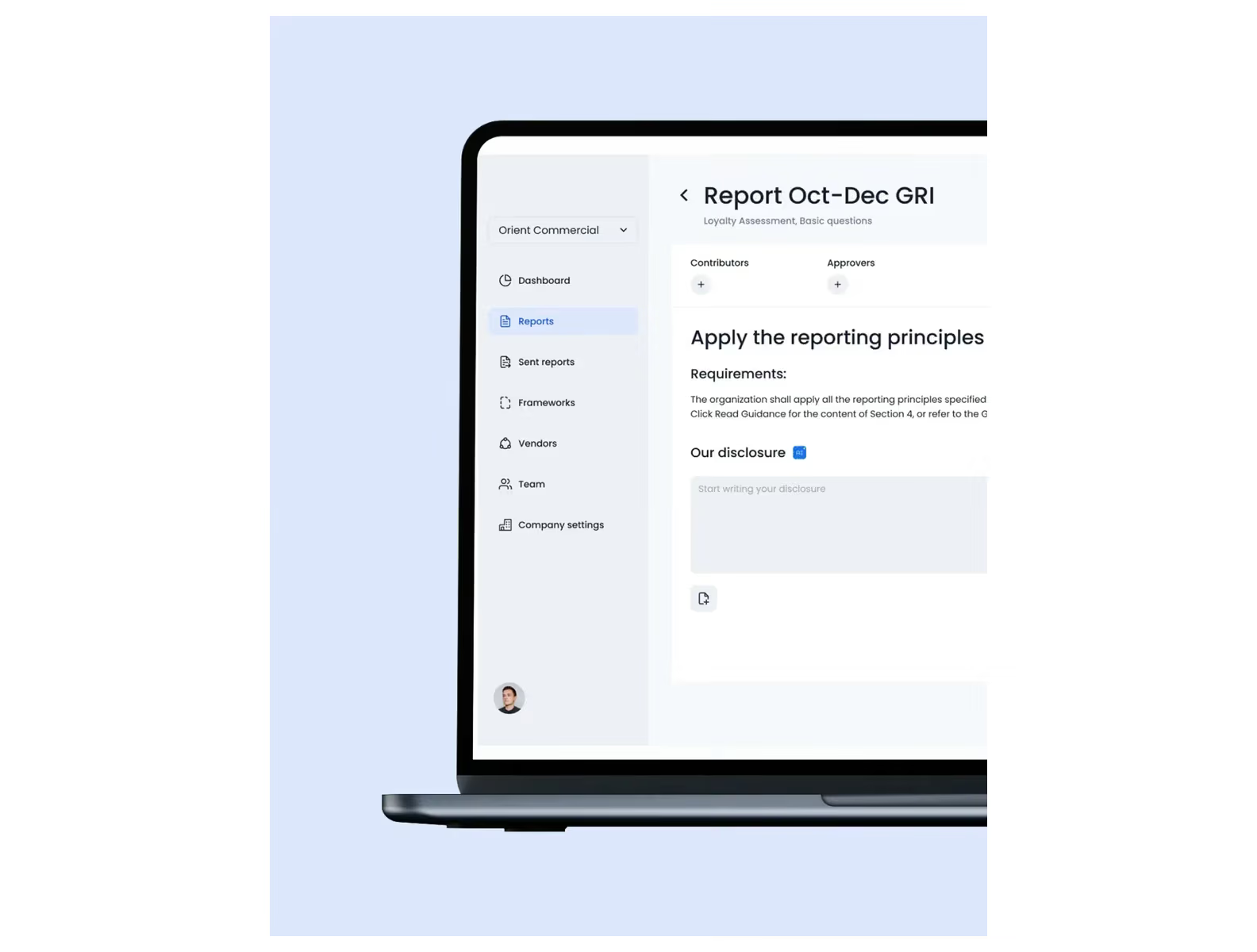
Related context gives each report block a more specific drafting prompt
The next section examines data quality, hallucinations, and privacy. These controls determine whether the workflow and its measurements remain trustworthy.
Before a retail AI pilot expands, its metric needs trustworthy inputs and output boundaries. The test is not whether a model produces plausible text. It is whether the workflow has enough control to make its measurements meaningful.
Together, these boundaries show when expansion is premature. The conclusion returns to the first workflow that fits both its measurement goal and control requirements.
No universal winner exists. Product content generation needs a reliable catalog and an established approval process, while a shopping assistant needs a constrained domain and escalation. The defensible first choice follows the available data, review capacity, and a meaningful metric.
➡️ Select and scope the first retail AI workflow. Contact Purrweb to discuss its data, review, and measurement boundaries.
Amazon Rufus is an example of generative AI in the retail industry. Amazon describes it as a conversational shopping assistant that answers product and shopping-need questions. It compares products and makes recommendations using context from its catalog, reviews, Q&As, and the web. Its broad scope differs from a bounded first pilot.
Generative AI in retail works as one bounded workflow with an operational outcome. A content pilot uses product attributes, catalog taxonomy, and approved brand rules. A shopping assistant uses a constrained product domain and an escalation path. The workflow's data, review boundary, and metric set the starting scope.
This guide does not support a 30% rule for AI. The research behind this article provides no verified definition or percentage allocation to apply across retail work. The decision rests on the workflow, its available data, review controls, and the result chosen for measurement.
No single AI tool is best for every retail business. Product content, recommendations, forecasting, and shopping assistance rely on different inputs and controls. A tool decision follows the job, available data, review capacity, and outcome chosen for measurement. This guide does not rank vendors or claim custom development is always superior.


.svg)