Explore

Need help with your project?

Oops! Something went wrong while submitting the form.
Choosing among web development companies in Los Angeles gets difficult once every portfolio starts to sound alike. A local address says little about whether a team can design the architecture, connect business systems, test the product, and support it after launch. The practical question is which partner has handled work that resembles the product and its operating constraints.
In this guide, we'll look at ten companies serving Los Angeles businesses, from local agencies to remote full-cycle teams. We'll compare web specializations, delivery models, market connection, and project fit. Each profile focuses on evidence behind the service list. The article centers on functioning websites and web applications, so product owners can weigh engineering depth, communication, and post-launch support.
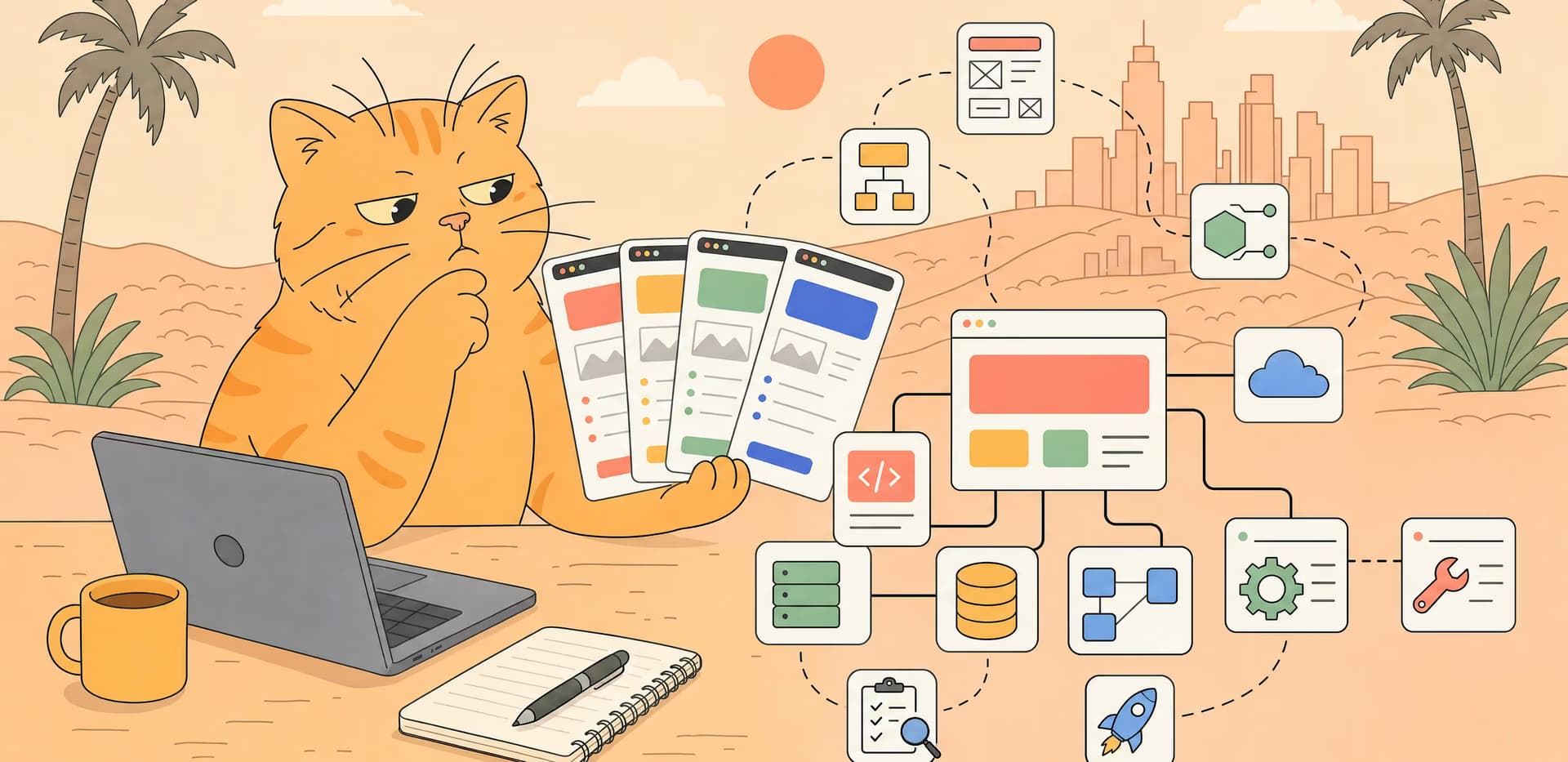
Choosing among web development companies in Los Angeles gets difficult once every portfolio starts to sound alike. A local address says little about whether a team can design the architecture, connect business systems, test the product, and support it after launch. The practical question is which partner has handled work that resembles the product and its operating constraints.
In this guide, we'll look at ten companies serving Los Angeles businesses, from local agencies to remote full-cycle teams. We'll compare web specializations, delivery models, market connection, and project fit. Each profile focuses on evidence behind the service list. The article centers on functioning websites and web applications, so product owners can weigh engineering depth, communication, and post-launch support.
We selected the companies through an evaluation framework that gives technical delivery more weight than location or design quality. It covers engineering depth, portfolio evidence, Los Angeles relevance, communication, maintenance, and project fit.
The framework isn't an independent certification, and a local office isn't proof of technical fit. We reviewed official service pages and verifiable project evidence, using the same delivery questions that shape our web application development services.
Each factor addresses a separate project risk:
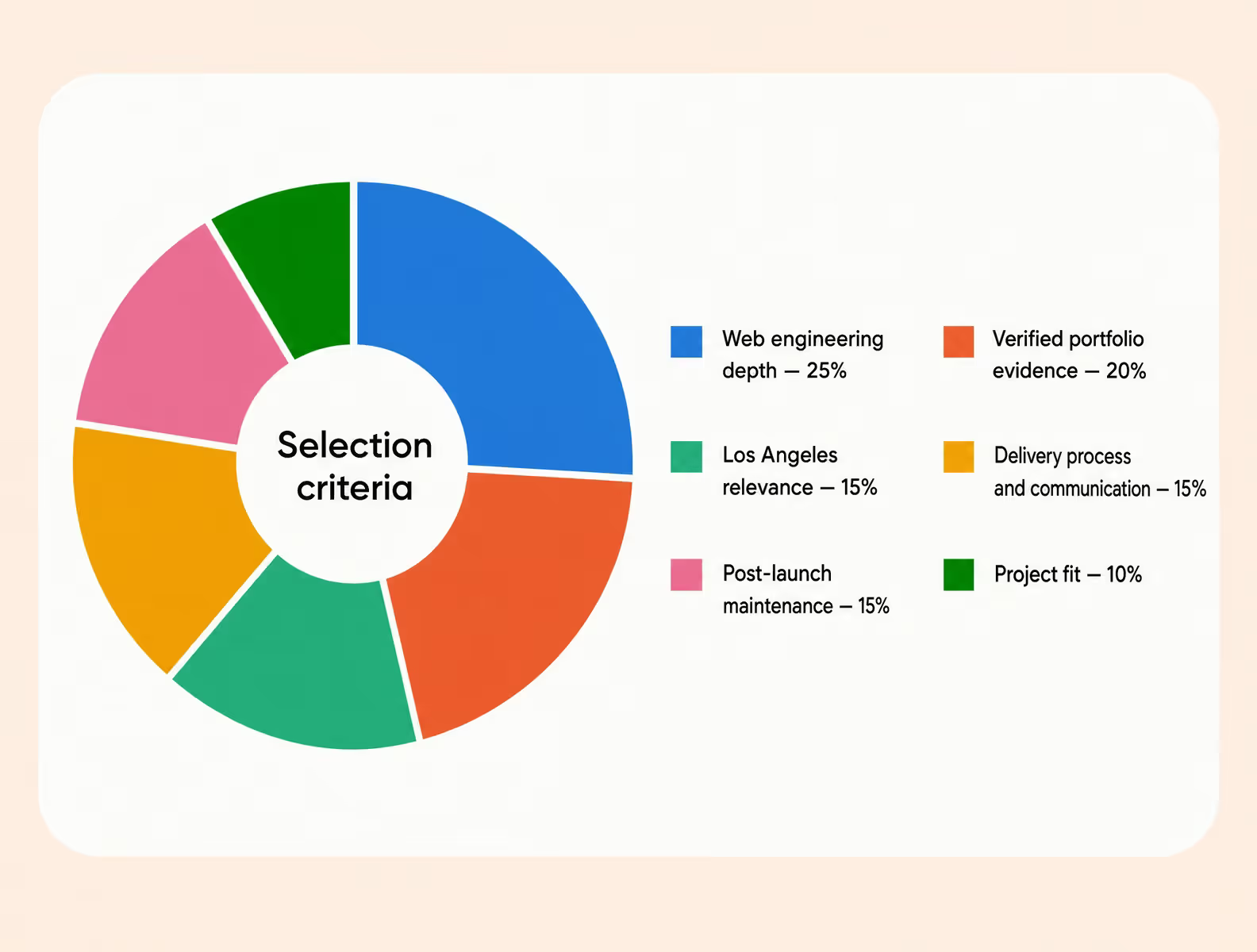
How the six selection criteria are weighted
The weights guide the editorial order rather than producing a public score for every company. A team may suit one digital product build and still be a weak match for another. The profiles connect each position to a buyer situation and a clear fit boundary.
Buyers can choose between local agencies, regional teams, companies with dedicated market pages, and remote product studios. The useful distinction is not proximity alone. It is the kind of digital product each firm is set up to deliver and the way its team works with the client.
Some companies combine strategy, a design team, and engineering under one engagement. Others concentrate on brand websites, CMS delivery, or complex business systems. The comparison maps those differences before the detailed profiles, while the LA connection column separates an office claim from broader market availability.
| Company | LA connection | Best for | Core web specialization | Delivery model |
| Purrweb | Serves Los Angeles projects | Startup web apps and MVPs | Web applications and product design | Full-cycle product team |
| Urban Insight | Local agency | Mission-driven organizations | User-focused websites and web applications | Integrated strategy, design, and development |
| Goji Labs | Local product agency | Strategy-led digital products | Custom software, AI products, and UX/UI | Product strategy through engineering |
| SPINX Digital | Local | Design-heavy brand websites | Web design and development | Integrated digital agency |
| Storm Brain | Serves Los Angeles | Brand, website, and marketing programs | Websites, branding, and performance marketing | Integrated agency delivery |
| Saritasa | Southern California | Complex business applications | Web and mobile apps, CRM, and custom software | Custom software project team |
| UPQODE | Serves the Los Angeles market | WordPress and CMS projects | Full-stack web and WordPress | CMS delivery with ongoing digital support |
| Devox Software | Dedicated Los Angeles service page | Media and ecommerce platforms | Performance-focused web development | Flexible development team |
| CodeVix | Official page claims a local office | Local custom web and AI projects | Websites, web applications, and AI solutions | Local project delivery |
| Intobi | Dedicated market service page | Scalable conversion-focused builds | Websites and custom web solutions | Custom development team |
The profiles that follow explain the evidence and trade-offs behind each fit. A company that works well for a content-led website may not be the right team for a multi-role platform, even when both service pages use similar language.

Purrweb fits a startup company or product team that wants one partner to turn an early concept or specification into a working digital product. Its delivery model combines product analysis, UI/UX design, professional web development, quality assurance, and launch support.
During discovery, the team narrows the first release, maps user flows, identifies dependencies, and checks whether the architecture supports growth. The same team then carries those decisions into detailed design and implementation.
This reduces the gaps that appear when one vendor writes the requirements, another designs the interface, and a third builds the backend. It also keeps responsibility for testing, deployment, maintenance, and later feature work in one place.
The model suits buyers who want an active product partner rather than individual developers assigned to a fixed backlog. For distributed collaboration, agreed meeting overlap, documented decisions, and clear ownership keep delivery predictable from discovery through release. A marketplace project shows how this approach connects product logic, infrastructure, and a three-month MVP timeline.
We built Contentplace, a marketplace where creators sell video-content rights and buyers find footage through filters for topic, audience, price, quality, and length. We delivered the MVP in three months.
The catalog needed to remain visible in search engine results without turning paid videos into public files. We used Next.js server-side rendering so search engines could index the pages, while secure cookies kept protected content behind authentication.
Amazon S3 stores the source files, AWS Step Functions handles video processing and compression, and CloudFront controls delivery. Stripe Connect Express manages marketplace payments. Contentplace combines a searchable storefront with controlled access to every purchased asset.
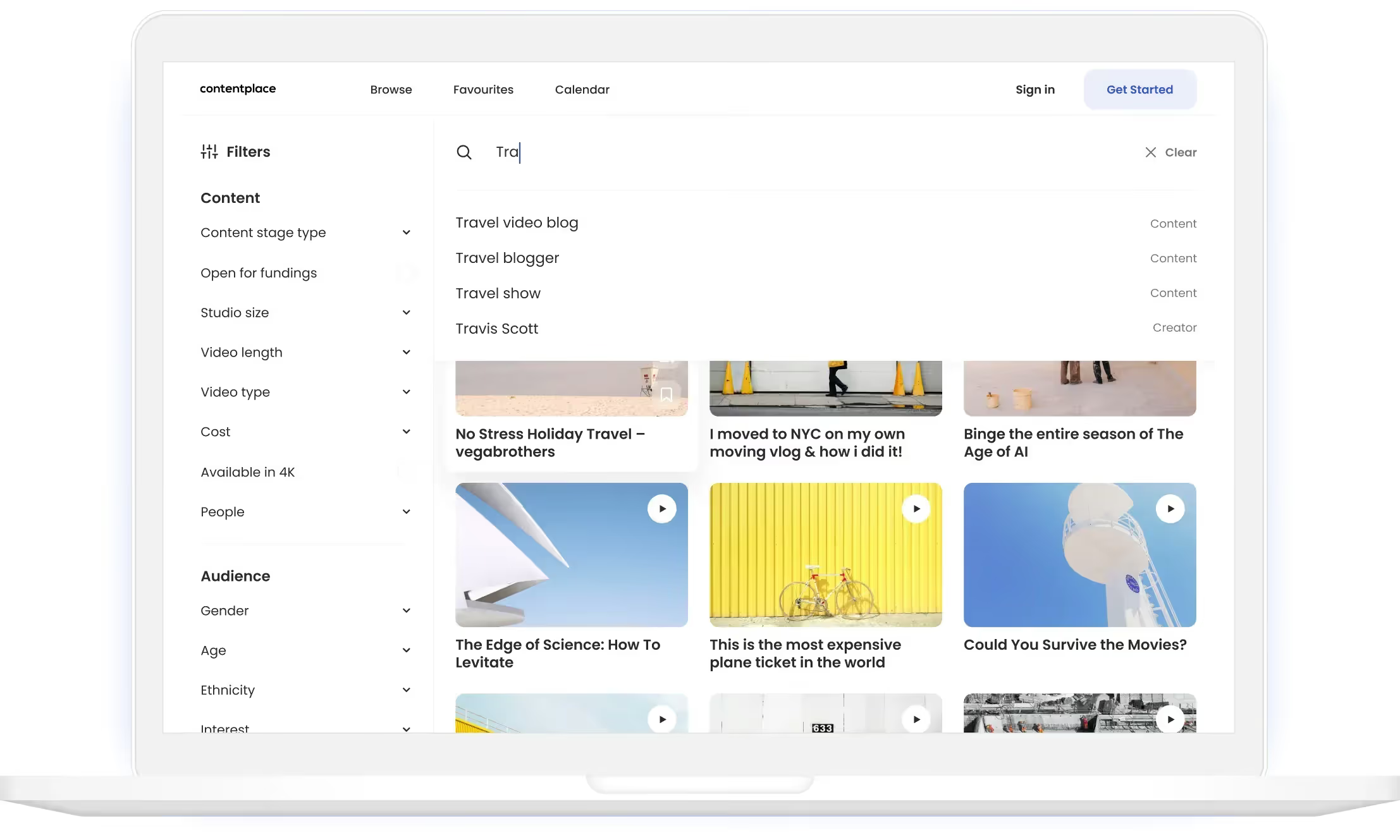
Searchable catalog pages support discovery without opening access to paid video files

.svg)


Urban Insight is a web design agency for mission-driven organizations with content-heavy websites. Its official work spans museums, associations, nonprofits, universities, public programs, and cultural institutions. It combines project leadership, digital strategy, UX, web design services, and custom development. It fits when web design projects involve many stakeholders, content libraries, or service workflows.
The scope extends beyond brochure sites to member portals, headless web platforms, online collections, ticketing, e-learning, SSO, and browser-based applications. In one association project, Urban Insight consolidated more than 40 American Library Association websites into a unified and accessible platform. That example points to experience with governance, migration, and complex content architecture.
Urban Insight is a practical fit when discovery and stakeholder alignment belong inside the delivery process. A startup running a narrow product experiment may instead prefer a team organized around shorter MVP cycles and faster hypothesis testing.
Goji Labs is a development agency that specializes in shaping one build through strategy, research, UX, and engineering. Its custom platform work includes SaaS products, internal tools, customer portals, and other workflows that do not fit an off-the-shelf system.
The agency connects user flows and product priorities to architecture before implementation begins. Its services cover product strategy, UX/UI design, custom software development, web apps, mobile app development, and AI product development. This makes the model useful when a team has a business goal but still needs to test assumptions and define the right first release.
For KCRW, Goji Labs worked on the member digital experience and supporting platform. The official case study reports a 60% increase in app-member donations and $20,000 raised within 48 hours of launch. Teams that already have validated requirements and complete designs may need a more implementation-focused engagement instead.
SPINX Digital is a web design and development company for organizations that treat the website as a major brand and communication channel. The agency combines digital strategy, UX, visual design, front-end engineering, and production. Its web development services also cover responsive web design, accessibility, performance optimization, e-commerce, and content management system delivery.
This mix is useful for a brand website that needs custom design without separating it from delivery. The agency can reorganize content, define interaction patterns, build the front end, connect the content system, and carry the work through migration and launch.
Its LAPD website project involved content restructuring, custom engineering, responsive testing, and the migration of hundreds of pages. The official case study reports a 7% reduction in bounce rate. Pages per session and average session duration also increased.
SPINX Digital is strongest when the website itself is central to the engagement. A product team building a backend-heavy platform may prefer a company whose portfolio centers more directly on application architecture.

Storm Brain is a full-service digital marketing agency for companies that want the website to support a broader brand and marketing program. Its services connect brand positioning, website design and development, content, e-commerce, and digital marketing within one agency relationship.
That combination helps when the visual system, site architecture, conversion paths, and acquisition campaigns need to reinforce the same commercial message. Storm Brain's web development and design work covers corporate and enterprise sites as well as Shopify projects. Its portfolio can be filtered across websites, branding, marketing, and content, which reflects the agency's integrated delivery model.
The company serves Los Angeles organizations through digital marketing and web services, presenting work around performance rather than the website as an isolated asset. It fits teams coordinating a brand launch, redesign, or e-commerce program across several channels.
Buyers planning a complex custom application can use discovery to confirm how much backend architecture and product engineering sit inside the proposed team.
Saritasa fits organizations whose web application must connect with existing business systems or coordinate complex internal workflows. Its custom software engineering covers enterprise apps, portals, customer relationship management, inventory tools, marketplaces, database work, and integrations.
The broader service range includes mobile app development, IoT products, and immersive AR/VR experiences. That matters when the web browser is only one interface for the product. A company can keep the web interface, connected devices, data flows, and supporting applications within one engineering relationship.
One official case study describes a centralized class-action management platform for legal and financial workflows. The system organizes case records, task dependencies, deadlines, reporting, audit trails, and role-based processes.
This type of work shows where Saritasa adds the most value: custom software tied closely to operations. A straightforward marketing website may not require the same engineering breadth or project structure.

UPQODE fits companies planning a custom website on WordPress, content management system rebuild, or e-commerce storefront. Its services combine WordPress design, web development, and search engine optimization, keeping content structure and implementation in one engagement.
The WordPress offering covers responsive design, custom web design, on-page SEO, XML sitemaps, page-speed optimization, and e-commerce implementation. This is useful when marketing teams need control over publishing after launch without giving up performance or a tailored visual system. The agency's process also includes site mapping and page-level optimization before development is complete.
UPQODE's official before-and-after portfolio includes projects for Planoly, Doodle Labs, Medical Metrics, Marcel Digital, and SignaPay. These examples show its focus on redesigning and rebuilding existing digital properties rather than applying one template across clients.
The model is a practical fit for content-led websites and WordPress platforms. A product with complex custom backend logic may require a deeper application-engineering scope than a typical CMS engagement.
Devox Software fits teams building a custom platform that needs full-stack engineering and flexible capacity. Its Los Angeles service page covers development and design services, including website design and redesign, QA, deployment, maintenance, and support.
The company offers a flexible web development team with pre-vetted engineers across technology stacks. That setup gives buyers access to web development specialists who can add capabilities or scale delivery without rebuilding the internal hiring process. Performance and maintainability stay part of the scope rather than becoming separate cleanup projects after launch.
ActivePlace is an example. Devox built a platform that combines social-media features with a marketplace for fitness and wellness communities. Businesses can promote products, services, events, and equipment across more than 30 categories.
The case shows experience connecting content, community features, and commerce within one platform. Buyers can use the estimation stage to confirm the final team composition and engagement model.
CodeVix fits companies that want custom web development services with the option to add practical AI features. Its official Los Angeles page covers custom builds, WordPress, e-commerce, maintenance, and performance optimization.
The agency's portfolio spans SaaS, real estate, ecommerce, media, and contractor services. This range is useful for organizations that need a customer-facing website connected to lead generation or another business workflow. It also gives buyers relevant examples when comparing a rebuild with a new custom implementation.
For RL Remodeling, CodeVix replaced a WordPress site with Next.js and added an AI agent for customer support and lead qualification. The case study reports that the PageSpeed score rose from below 35 to above 90. Load time and bounce rate also decreased.
This example links stack modernization, website performance, and an applied AI feature. A larger multi-role platform would require a separate review of backend architecture and product-delivery scope.

Intobi fits businesses that need a scalable website or custom platform connected to operational systems. Its Los Angeles service page covers discovery, UI/UX design, development, dynamic integrations, testing, deployment, maintenance, and optimization.
The company works with CRM and ERP connections, payment gateways, and other third-party services. This makes the model useful when a website must support transactions or internal workflows rather than only publish content. Its technology offering spans established backend frameworks and modern front-end tools, including React and Next.js.
For MyRunResults, Intobi expanded a website and admin panel into a platform for race discovery, registration, live results, tracking, and event management. The system connects Strava and Stripe. AWS Lambda supports automated personalized videos. Intobi reports the redesigned admin platform reduced administrative time by 50%.
The case shows how scalability improves customer experience and the work behind it. Simpler marketing sites may not require this level of custom platform engineering.
Buyers looking for a web development agency can assess evidence, ownership of architecture, the development process, and support for Los Angeles web development projects. Location matters only when it changes communication, access, or collaboration.
The same questions applied to every candidate make proposals easier to compare:
When visual identity matters more than engineering, a web designer or web design company may fit better, as our Los Angeles web design companies guide explains. This comparison matters when the product depends on application logic, integrations, or continued technical ownership.
The company order provides a starting point, but the final choice depends on evidence that matches the planned product. Relevant case studies reveal whether a team has handled similar users, integrations, content, and operational constraints. Discovery then tests the working model and turns those assumptions into a scoped estimate.
The strongest proposal makes ownership visible from architecture through maintenance. It identifies who makes product decisions, how quality is reviewed, what remains uncertain, and how the team will support the product after release.
➡️ Tell us what you're planning, and we'll turn the requirements into a scoped estimate for design and development.
The right company depends on the product you need to build. Compare teams using relevant web application or website case studies, a clear delivery process, strong quality assurance, and support after launch. Treat location as one factor alongside technical fit, communication overlap, security requirements, budget, and experience with projects similar to yours.
Cost depends on scope, integrations, design maturity, content, compliance, and the amount of custom backend work. A marketing website and a multi-role web platform should not be estimated the same way. Ask each company for a phase-based estimate that states assumptions, team composition, change-request rules, third-party fees, and expected post-launch costs.
Start with case studies that match your product type and complexity. Then compare discovery methods, architecture decisions, quality assurance, accessibility, security, deployment, code ownership, and maintenance. A useful proposal explains what the team will build, who will do the work, how progress is reviewed, which risks remain, and what happens after release.
Not necessarily. A local office can help with in-person workshops, but delivery quality depends more on relevant experience, communication routines, decision speed, and time-zone overlap. Remote teams can serve Los Angeles businesses effectively when responsibilities, meeting windows, documentation, escalation paths, and ownership of deliverables are agreed before development begins.
Web design defines the user experience, visual system, layouts, and interaction patterns. Web development turns those decisions into a functioning product through front-end code, backend logic, databases, integrations, testing, deployment, and maintenance. Many agencies provide both, but buyers should verify that the team has enough engineering depth for the required web application complexity.
Share the business goal, target users, required features, integrations, content needs, design assets, compliance constraints, preferred launch window, and a realistic budget range. Also identify internal decision-makers and existing systems. This information helps companies separate must-have scope from later phases and produce estimates that are easier to compare.
Timeline varies with product complexity, stakeholder availability, integrations, migration work, and approval speed. A focused website may take weeks, while a custom platform can require several months and phased releases. Ask for a roadmap with discovery, design, development, quality assurance, launch, and stabilization stages rather than relying on one unexplained delivery date.