Explore

Need help with your project?

Oops! Something went wrong while submitting the form.
Healthcare organizations use several systems to move one administrative task from start to finish. Staff may copy information between an electronic health record, a payer portal, and a billing platform even when the underlying decision follows a fixed rule. Robotic process automation (RPA) handles that repeatable work through existing software or an integration, while people retain control of cases that require judgment.
The challenge is identifying workflows stable enough to automate without creating another fragile dependency. Screen-based bots have a different maintenance profile from an application programming interface (API) or custom integration. That difference matters when payer rules or exception paths change. This guide follows the decision from process selection to a controlled pilot, with the trade-offs visible at each step.
Robotic process automation in healthcare is software that carries out predefined administrative steps across the systems an organization already uses. An RPA bot does not replace electronic health records or a billing platform. It works through them to move medical records and complete routine tasks for healthcare professionals. Decisions affecting patient care remain with people.
The bot does not understand a process as a person would. It follows a sequence: find a record, read a field, compare the value with a rule, enter the result, and move the case forward. This approach works when the input is structured and the possible exceptions are known.
An eligibility response with all required fields can continue to the billing queue, while an incomplete response goes to a staff member. Decisions that depend on clinical or operational judgment remain with people.
Scanned referrals and free-text notes create a different problem because the details a bot needs are not stored in consistent fields. AI can classify the document, while natural language processing (NLP) can extract the relevant information.
Using RPA for business process management means passing that output into a predefined workflow rather than treating it as a final decision. In this setup, AI interprets the input, RPA executes the next steps, and staff handle exceptions. Activity logs and a named process owner make those handoffs traceable.
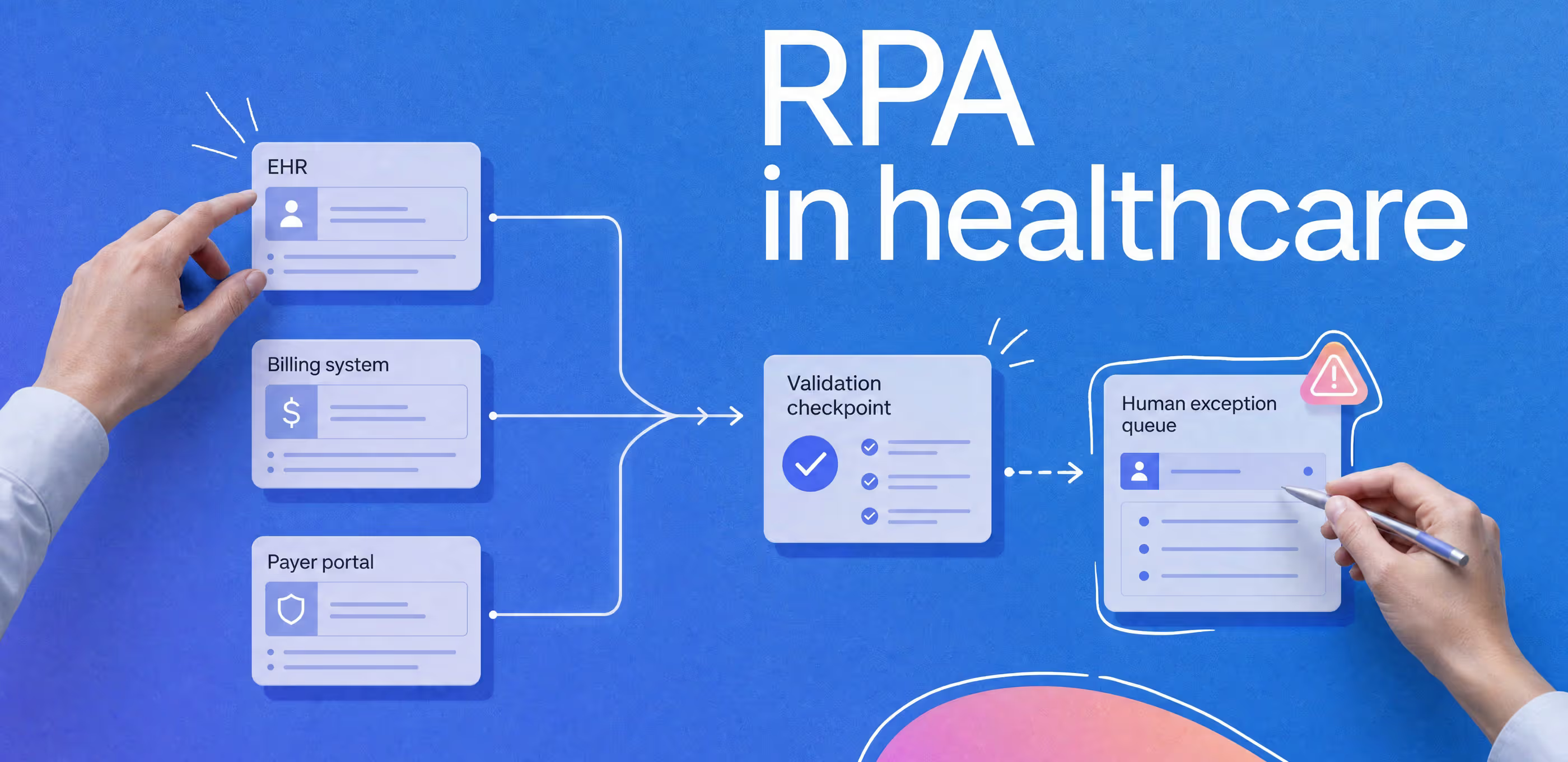
Using RPA begins with a trigger and a fixed route. These automation solutions can streamline an administrative workflow only when each exception has a defined destination. An insurance eligibility check may run like this:
The main design choice is how the bot reaches each system:
A healthcare software development team can compare both options with a custom workflow service. The same choice appears when building an EHR system. Integrating RPA with a healthcare system that depends on reliable, current data usually requires a supported connection rather than a bot tied to a screen.
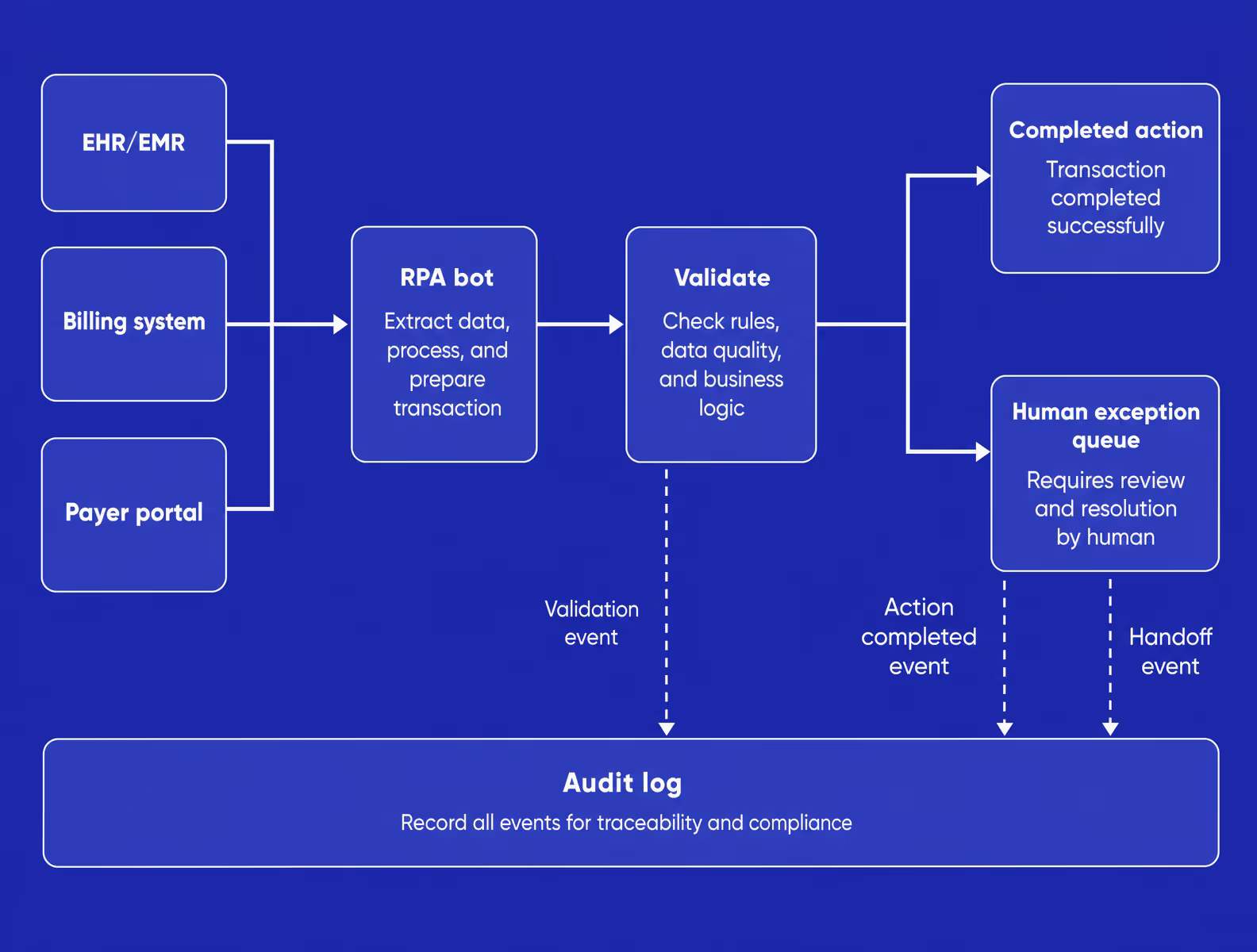
The durable part of the workflow is the validation and exception path, not the bot icon
Strong candidates combine high volume, stable rules, and a clear exception path between healthcare providers and insurance companies. Healthcare organizations can automate processes that replace manual data entry without removing accountable review. The table separates bot work from decisions that need staff.
| Use case | Routine bot work | Human boundary |
| Claims processing | Validate required fields, submit electronic claims, and route status updates. | Resolve payer-specific exceptions, disputes, and medical documentation questions. |
| Medical billing and coding | Move approved codes and billing data between systems and flag incomplete records. | Select or correct codes when the record requires interpretation. |
| Prior authorization | Check requirements, collect documents, submit structured requests, and track responses. | Determine medical necessity and review nonstandard payer decisions. |
| Appointment scheduling | Offer available slots, send reminders, and update routine cancellations. | Handle urgent requests, clinical dependencies, and unusual scheduling constraints. |
| Patient records and EHR/EMR data entry | Transfer structured patient data and check records for missing fields. | Interpret free text, reconcile conflicting information, and approve consequential changes. |
| Insurance eligibility | Send eligibility requests, read responses, and update the billing queue. | Investigate unclear coverage, coordination of benefits, and payer exceptions. |
| Regulatory compliance reporting | Collect defined fields, assemble reports, and record submission activity. | Confirm scope, interpret requirements, and approve the final report. |
CMS documents electronic Medicare claim submission and real-time HIPAA 270 eligibility requests with 271 responses. RPA can coordinate those steps across a healthcare ERP system, billing tools, payer connections, and staff queues.
Prior authorization has a stricter boundary. A bot can collect documents, submit a structured request, and track its status. Medical-necessity decisions and nonstandard payer exceptions remain with accountable staff.
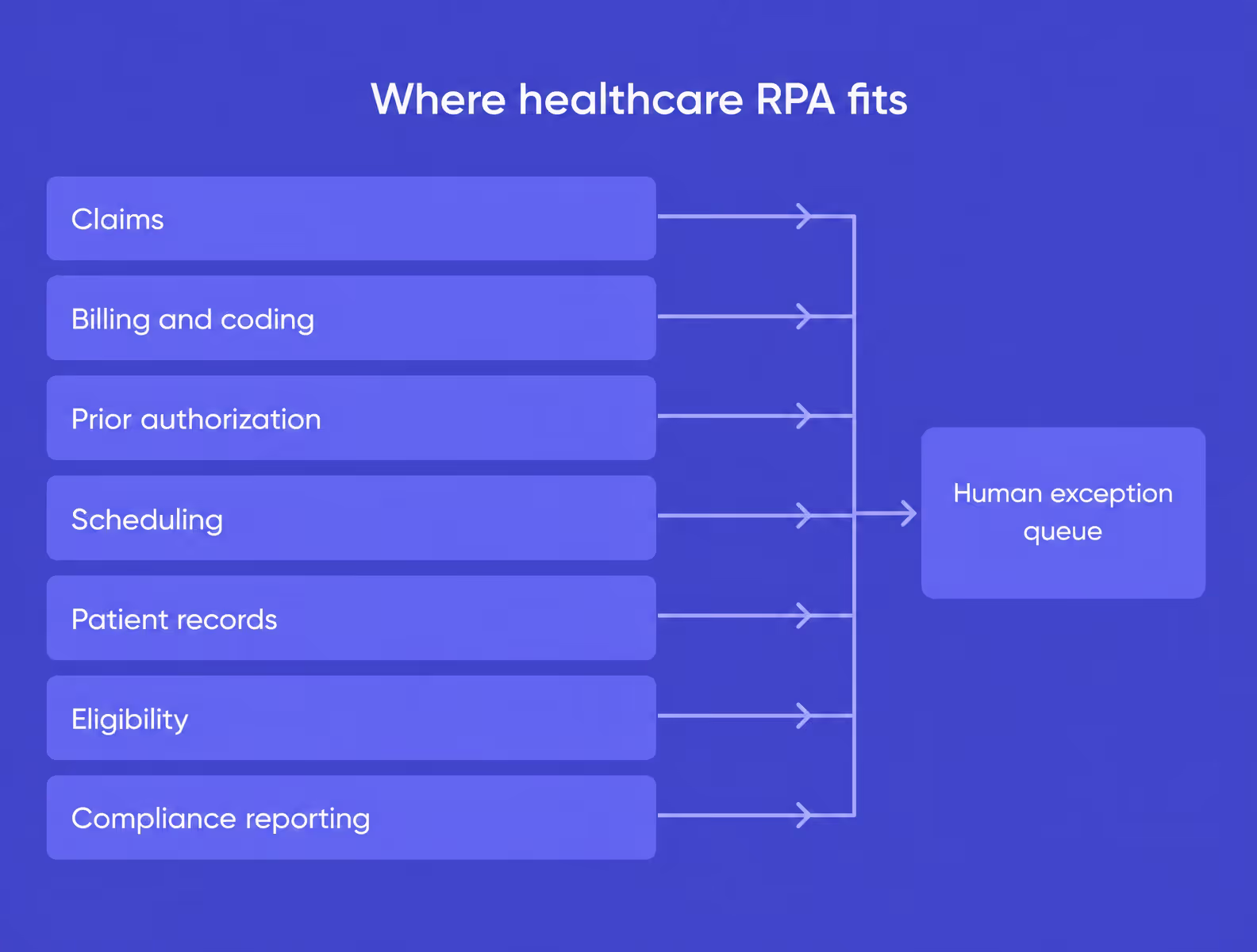
High volume supports automation only when routine cases have a defined path to human review
A workflow can look repetitive on paper and still hide branches that make automation brittle. A prototype exposes missing data, handoffs, and decisions before the team selects an RPA platform or custom integration.
For Clearstep, formerly Lytic Health, we designed a clickable prototype covering symptom entry, clarifying questions, test recommendations, and doctor-appointment scheduling.
The founders had a $1,500 budget. We built the prototype in 1.5 weeks, and the case reports that they later raised $400,000. This was not an RPA implementation. It shows how testing the steps and handoffs can inform the later automation choice.
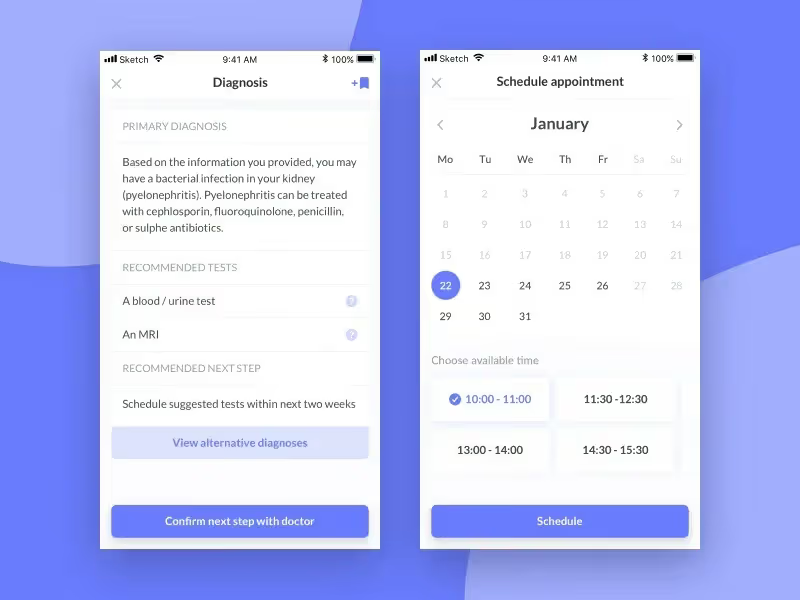
Testing the workflow first reveals where routine routing ends and product or clinical decisions begin
Frequency alone is not enough. The rules must remain stable, the source data must be readable, and every exception needs an owner. A useful pilot trace includes one routine case and one failed case from start to finish.
If either path relies on undocumented workarounds or frequent judgment calls, the process needs redesign before automation. Otherwise, the bot only relocates the bottleneck. This check reveals more than task volume because it shows whether the workflow can recover when the expected path breaks.
The benefits of RPA in the healthcare sector include greater administrative capacity and shorter routine processing time. They also include more consistent handling and traceable system activity. In a wider digital transformation program, those changes matter only when they improve the complete workflow and patient experience. The organization still needs to measure exceptions and the staff time required to resolve them.
Each expected benefit needs a baseline before the pilot:
The business case also needs the full operating cost. That includes platform licenses, integration work, monitoring, maintenance after interface or rule changes, and the people who own failed cases.
A process with many exceptions may show faster routine steps while producing little improvement in the end-to-end workflow. The useful result is not a generic savings percentage. It is a measurable change against the organization’s own starting point.
No RPA solution or RPA software is HIPAA-compliant by default. In the healthcare industry, a bot that handles electronic protected health information (ePHI) becomes part of the organization’s security boundary. This applies even to a narrow administrative task.
The main risks appear around the bot rather than in the click sequence itself:
For Medico, we built an oncology follow-up workflow with GMT-based notifications, customizable surveys, and dashboards updated after each response.
Medico did not use RPA, and the case does not prove HIPAA compliance. It shows how a purpose-built product can keep data collection, timing rules, and review ownership explicit.
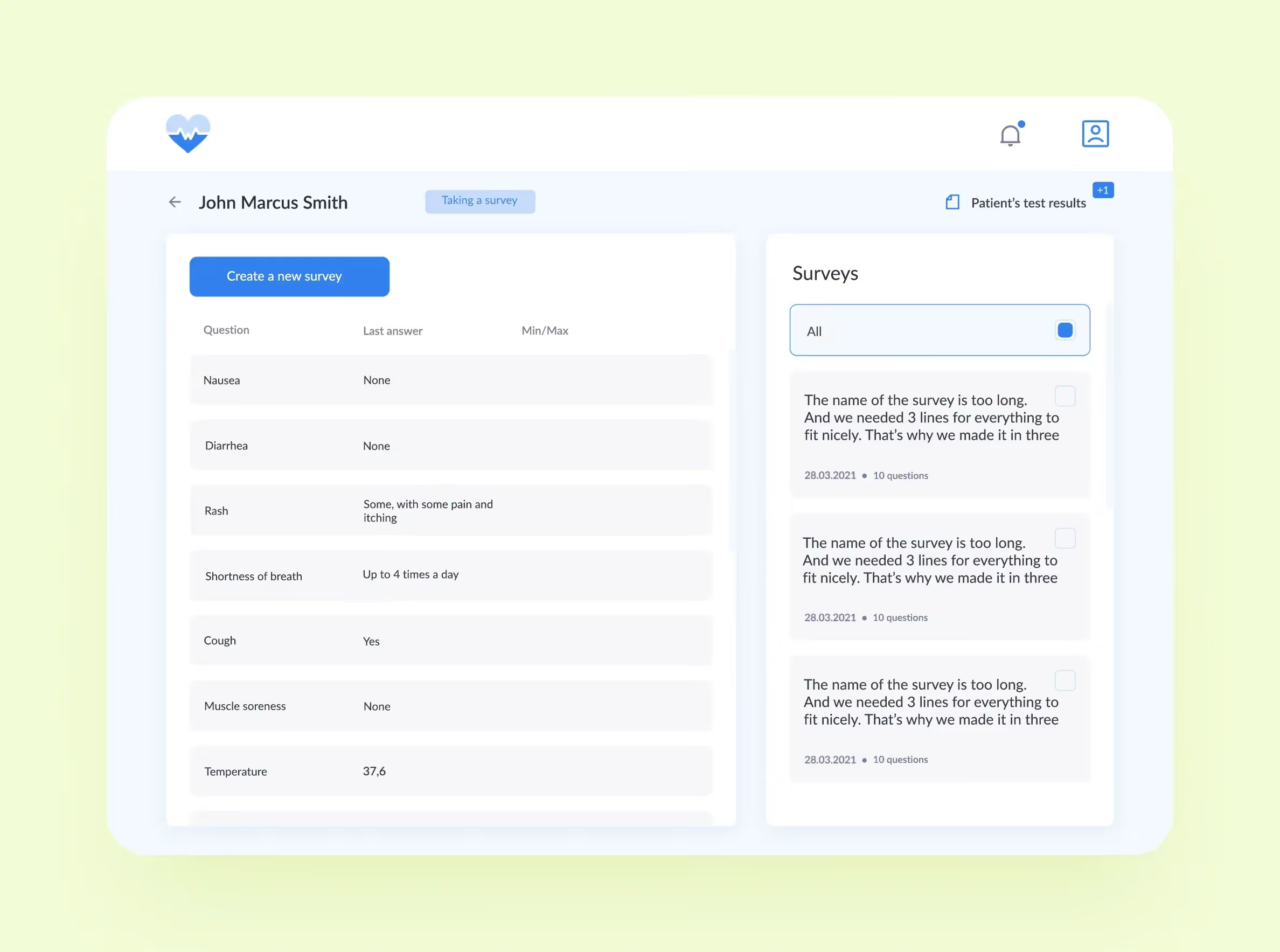
Explicit timing, survey, and review rules make recurring healthcare workflows easier to govern
Production ownership starts before the first bot runs. The team needs access reviews, failure alerts, and a manual route when an interface changes. Monitoring must cover the destination of each case, not only bot availability. A bot can stay online while filling the wrong queue or expanding an exception backlog.
Ownership also includes change control. Before an EHR update or payer portal release, the team needs a way to test the workflow against the new interface and decide whether the bot can resume. Without that step, maintenance becomes reactive.
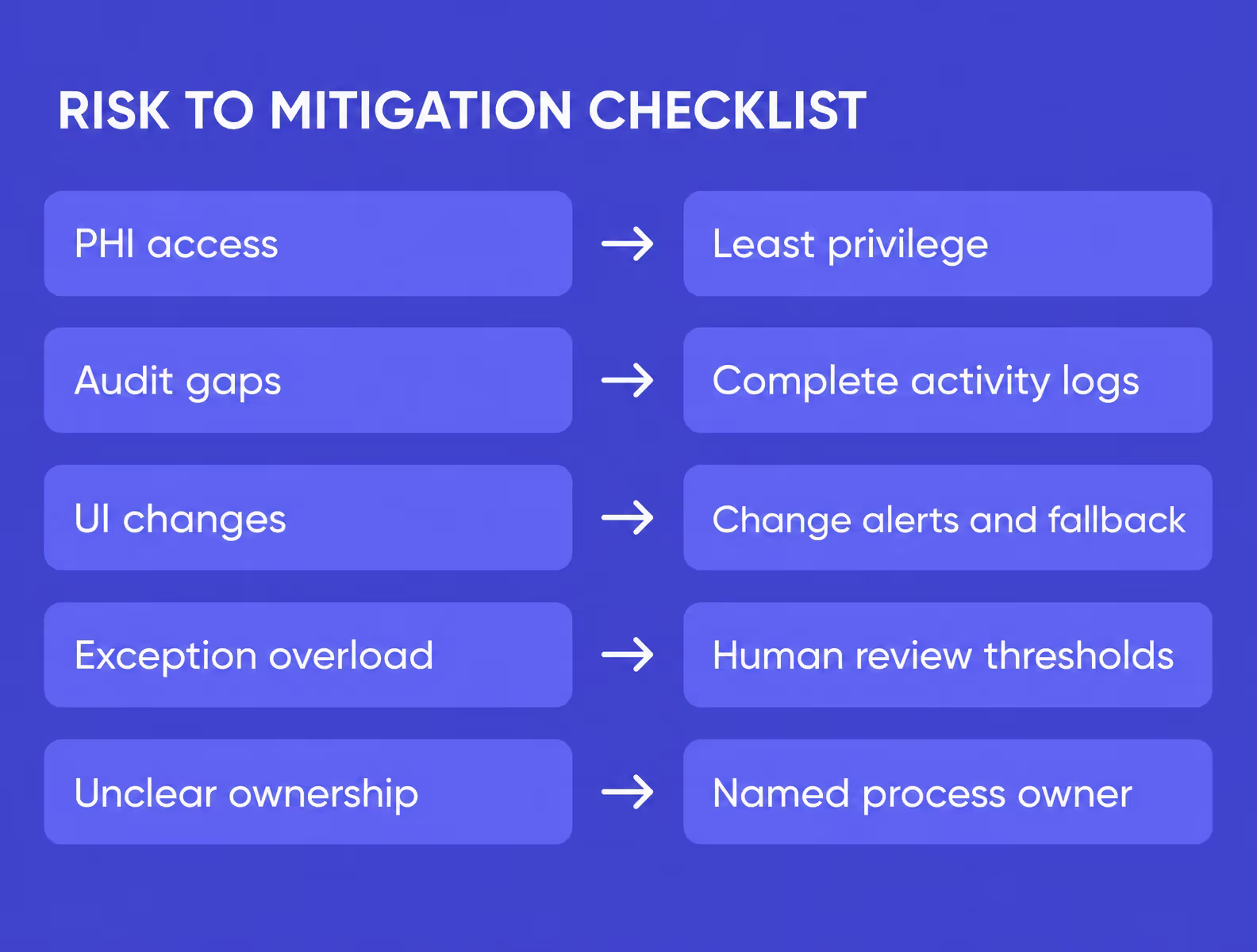
Most production failures begin with governance or change exposure, not a missed click
Implementing RPA in healthcare should produce evidence before a healthcare organization scales business process automation. The RPA technology is only one part of that controlled implementation. The sequence starts with process fit and ends with monitored production ownership.
The choice in step four depends on data access and maintenance exposure. Custom software development becomes relevant when neither a stable interface nor a supported API can own the complete workflow.
| Option | Best fit | Main limitation |
| Off-the-shelf RPA platform | Stable, repetitive work across existing screens | Interface changes and complex exceptions increase maintenance |
| Supported API integration | Structured data exchange with a documented system interface | The required endpoint or data may not be available |
| Custom workflow service | Multiple systems, product-specific rules, and controlled exception handling | Higher delivery and ownership responsibility |
For My Therapy Assistant, we delivered video calls, provider chats, notes, and an integration with HealthCode for insurance coverage. The case states that HealthCode used outdated APIs, while the product required more than 8,000 development hours overall.
This was not an RPA implementation or an eligibility-verification case. It shows why an external insurance workflow may exceed an off-the-shelf bot when the integration itself needs product-level control.
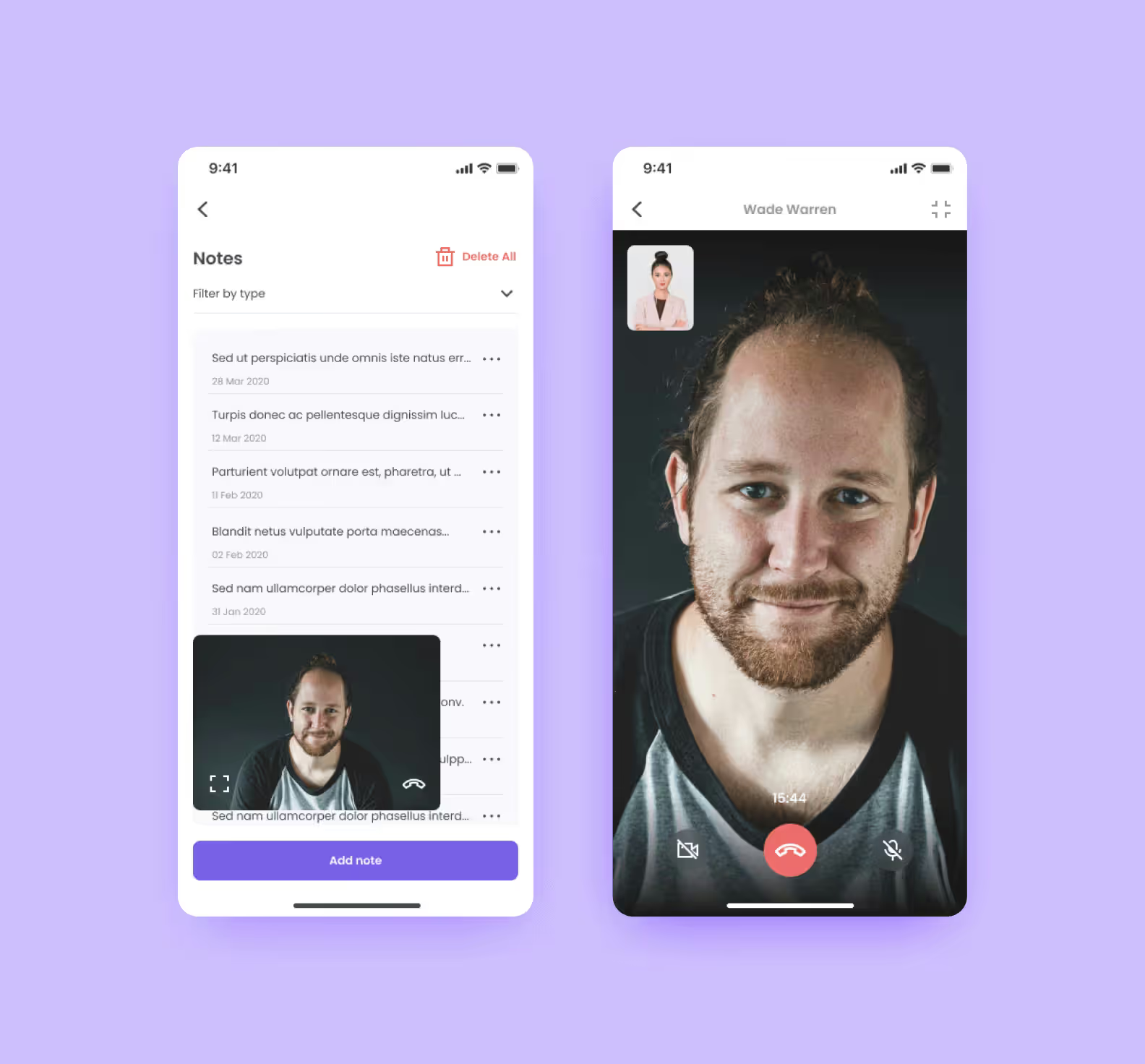
An external insurance connection can turn a routine handoff into a product integration decision
The case does not make a custom build the default. A screen bot may still fit a short, stable task, while a supported API may be enough for governed data exchange. The deciding questions are whether the interface will remain stable, whether the required data is available, and who owns exceptions when the expected route fails.
Moving from pilot to production also brings the controls expected in medical software development. These include monitored releases, access reviews, recovery paths, and named operational responsibility.
RPA and AI solve different parts of a workflow. Artificial intelligence supports data analysis when unstructured medical data does not arrive in consistent fields, while RPA executes predefined actions.
| Input or task | AI role | RPA role | Human role |
| Scanned referral | Classify the document and extract relevant details | Enter the data and route the case | Review missing or uncertain fields |
| Free-text note | Identify a code, payer name, or requested service | Retrieve the next record or start a defined step | Approve consequential changes |
| Structured form | Usually unnecessary | Validate fields and complete the workflow | Handle exceptions outside the rules |
The AI output should not pass directly into every downstream action. A confidence threshold can route clear cases forward and send uncertain ones to staff. Consequential exceptions that affect treatment or coverage require human approval.
A useful activity log preserves four elements:
Adding AI also expands the governance scope. The organization needs to test validity, safety, security, privacy, accountability, transparency, explainability, and fairness for the intended use. These controls are separate from monitoring whether the RPA bot completed its clicks or API calls.
The practical distinction is simple: use RPA when the input and rules are already structured. Add AI when the workflow first needs to interpret unstructured information. Readers comparing the same boundary in another regulated industry can see how it applies to RPA in finance.
Start with one process that has stable rules, readable inputs, and a clear owner for exceptions. Record its turnaround time, exception rate, rework, and handoffs before the pilot. Those measures show whether automation improves the complete workflow rather than one routine step.
Using RPA successfully requires choosing the implementation model after mapping the data and maintenance exposure. A screen-level RPA platform may fit a stable task. A supported API can provide more durable data exchange. Several systems and exception paths may require a custom integration.
➡️ Ready to test the first workflow? Discuss your healthcare automation project and get a free estimate within 48 hours.
Robotic process automation in healthcare uses software bots to complete predefined administrative steps across existing systems. A bot can validate fields, move data, submit routine requests, update queues, and record its actions. It works best with structured inputs and stable rules. Cases requiring clinical or operational judgment remain with staff.
Common use cases include claims, billing and coding, prior authorization, scheduling, health-record data entry, eligibility checks, and compliance reporting. The bot handles repeatable steps. Staff review missing information, payer exceptions, medical-necessity questions, and other cases outside the rules.
RPA is not HIPAA-compliant by default. Compliance depends on how the workflow is designed and governed. Bot accounts need appropriate access controls, automated actions need audit logs, and protected health information must follow the organization’s security procedures. Teams also need human exception paths, access reviews, monitoring, and named ownership.
There is no useful universal cost range. The total depends on process scope, platform licensing, connected systems, API availability, security controls, exception handling, testing, and maintenance. A screen-based pilot and a custom multi-system workflow have different cost structures. A reliable estimate requires a mapped process and integration choice.
RPA follows predefined rules and executes defined actions. AI, machine learning, and natural language processing can classify documents or extract information from unstructured text. AI can prepare an input, and RPA can carry it through the workflow. Low-confidence or consequential outcomes should still go to accountable staff for review.


.svg)