Explore

Need help with your project?

Oops! Something went wrong while submitting the form.
Early B2B SaaS scope often looks simple on a roadmap: keep the core features and postpone the rest. The harder question is whether that smaller release lets one defined user finish a valuable job and gives the team evidence worth acting on.
In this guide, we'll look at how founders shape a broad B2B SaaS idea into a focused first release that can test real value without pretending to be the finished product.

A software as a service (SaaS) MVP is the smallest working product that lets a defined user complete one valuable recurring task. It provides evidence about whether the underlying problem is worth solving.
For a startup company building a SaaS product, MVP development is more demanding than reducing a feature list. A user has to reach the service, understand the first step, access the right data, and finish the outcome the product promises. If one of those links is missing, the release tests friction rather than value.
The distinction between an MVP vs. prototype matters because each answers a different question:
This guide to SaaS MVP development uses “minimum viable product” to mean the shortest complete test, not the fewest screens. A sign-in flow or role model belongs in the first release only when the flow cannot produce trustworthy evidence without it.
Problem validation starts with one target user, one painful job, and one observable signal before the team decides to build a product. The first SaaS release covers the shortest end-to-end path that can test this hypothesis.
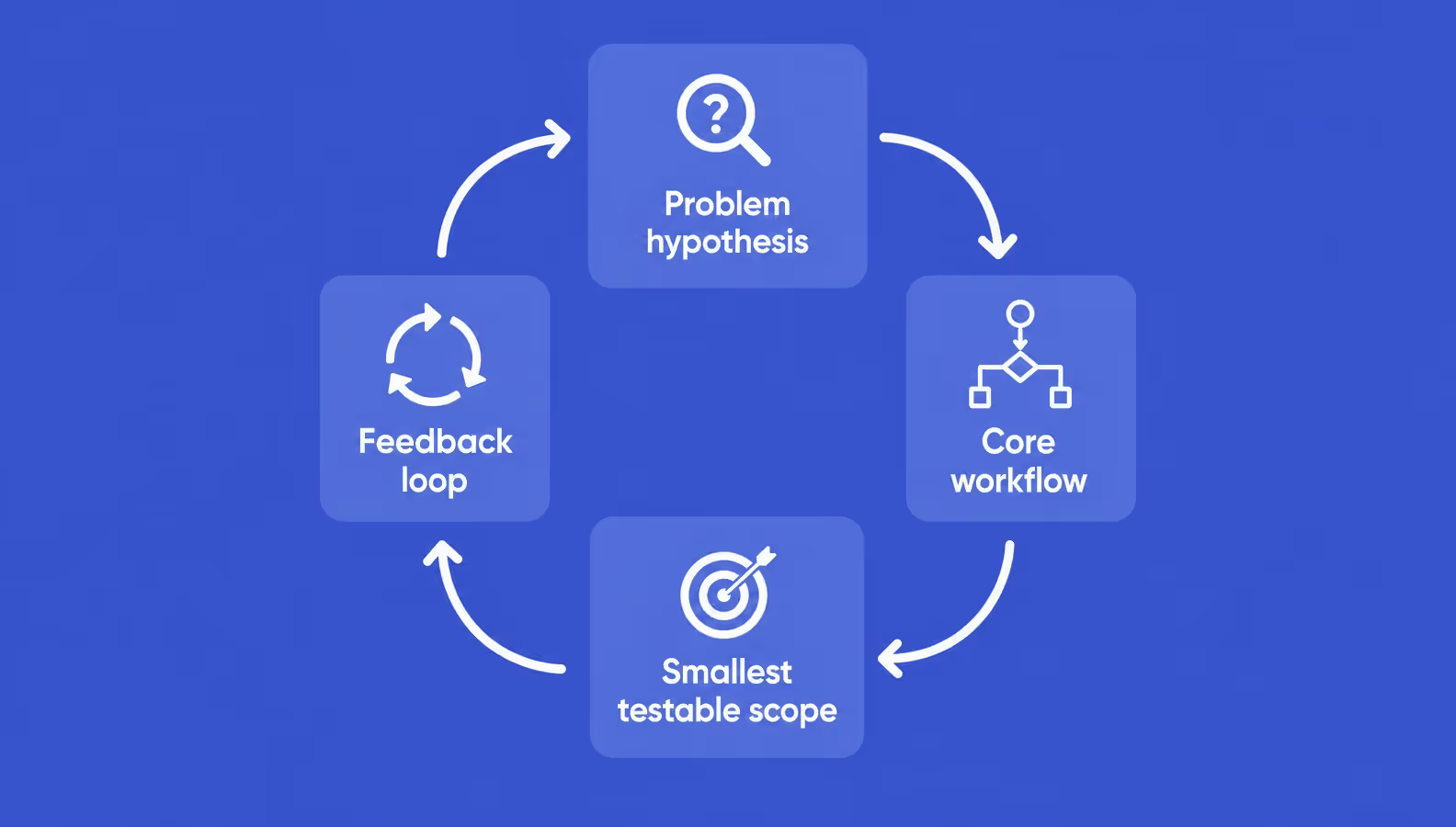
A useful scope connects a specific problem to evidence from real use
This framing turns a feature debate into an evidence debate. A large analytics dashboard has no default place in an MVP. An event that records whether a user finished the core task does, because it has a specific validation job.
Onboarding and integrations follow the same logic. A setup step stays when users cannot reach the task without it. An integration stays when a manual handoff would prevent completion or distort the result.
| Decision | Evidence to collect before build | What belongs in the first release | What to defer |
| Target user | One segment repeats the painful job | Access for that segment | Another persona or target market |
| Core workflow | Current steps and valued outcome | One complete happy path | Secondary jobs and edge cases |
| Onboarding | Context required before the first action | Minimum setup | Tours and personalization |
| Roles and permissions | Who acts, approves, or views data | Roles required by the task | Deep administrative controls |
| Integrations | An outside system is essential | Minimum connection or controlled handoff | Convenience integrations |
A feature stays when removing it would make the hypothesis impossible to test or the evidence impossible to trust. Everything else receives an explicit out-of-scope label. “Later” is a product strategy decision. An unexamined backlog still places pressure on design and product development.
The release also needs a failure signal. Low completion can point to a weak problem, the wrong target audience, or friction inside the path. That result becomes hard to interpret when one experiment mixes several jobs and user groups.
GSR shows why a narrow MVP can still be complete. The client did not need a full consultation platform to learn whether people would choose a specialist and book a session. We connected both roles: clients answered a short questionnaire, compared specialists by experience, expertise, and price, and booked in five steps.
The harder decision was what not to build around that exchange. We reused a UI kit and ready-made libraries instead of building secondary systems. Four months later, the client could test the whole path from discovery to appointment, while the product team had one clear outcome to carry into delivery.
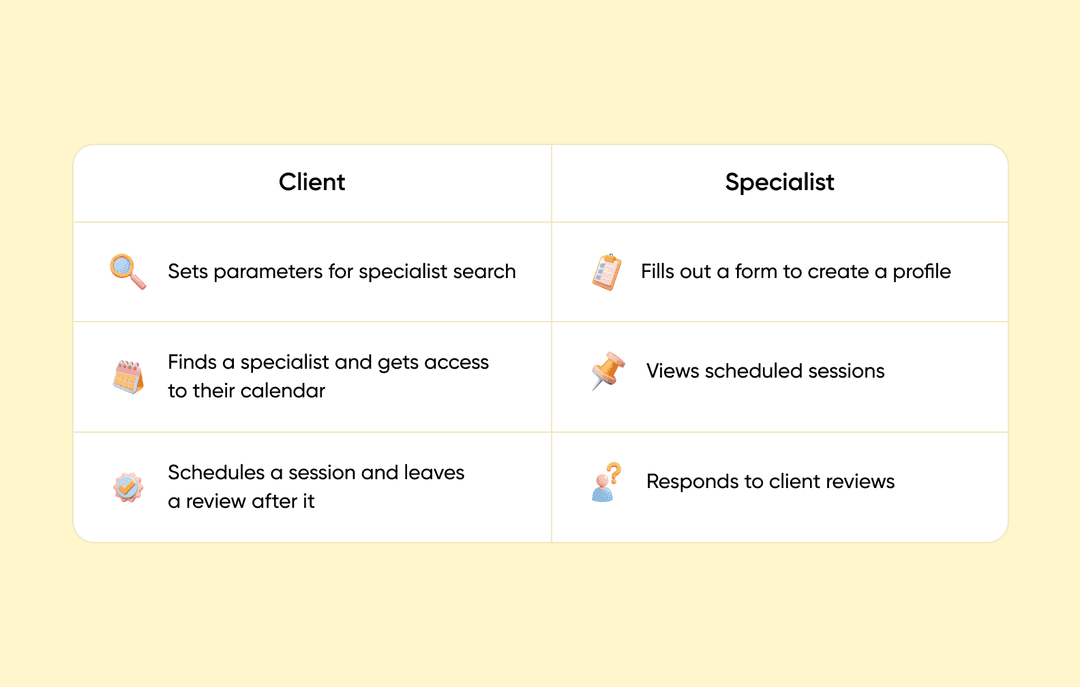
The first release connected both sides of the consultation workflow without expanding into a broad platform
Structured MVP development turns a validated path into a working release through evidence gates. When founders build a SaaS MVP, each stage ends with a decision or artifact that shows whether the product is ready for the next investment.
Once the scope has a testable boundary, implementation becomes a delivery problem rather than another feature debate. When you are ready to move from a validated SaaS MVP plan to implementation, explore our MVP development services. A broader MVP development guide covers building an MVP through the general execution sequence.
Turn the hypothesis into a product brief. Discovery fixes the target user, expected outcome, scope boundary, and evidence signal. The deliverable is a brief that lets the development team explain what the working MVP must prove without translating a loose idea into features on its own.
Test the flow before production code. During MVP design, a clickable prototype exposes missing steps, confusing decisions, and assumptions about onboarding. The founder reviews whether the flow represents the real job. Visual polish matters less here than whether a user can move from entry to outcome without invented context.
Build the MVP in vertical slices. Each slice connects the user interface, business logic, and data for part of the real user journey. This keeps the development cycle reviewable. A partially built feature layer reveals less than a narrow path that already works end to end.
Review release readiness as part of delivery. Quality assurance checks the core path, permissions, failure states, and product performance under realistic conditions. The release plan also identifies who will respond to incidents and how the team will recover data or roll back a change.
Connect the release to a learning loop. Instrumentation records the core action, while support and user feedback throughout the development process explain the behavior behind the number. The next iteration starts from that evidence instead of reopening the original backlog.
For Headcount, the payroll service had to reach Y Combinator Demo Day in two months. Its core flow covered account setup, work-hour records, bank linking, recurring payroll, and contractor transfers, so an unclear handoff could affect real money.
We froze that flow, removed the time tracker and extra payment options, and assigned five developers. Sprint-zero architecture gave the team a shared map. Two-week sprints, detailed Jira tasks, Vercel previews, automatic deployments, and bug windows shortened every feedback loop. The product launched on time because decisions and checks stayed visible, not because the team treated rapid development as fewer controls.
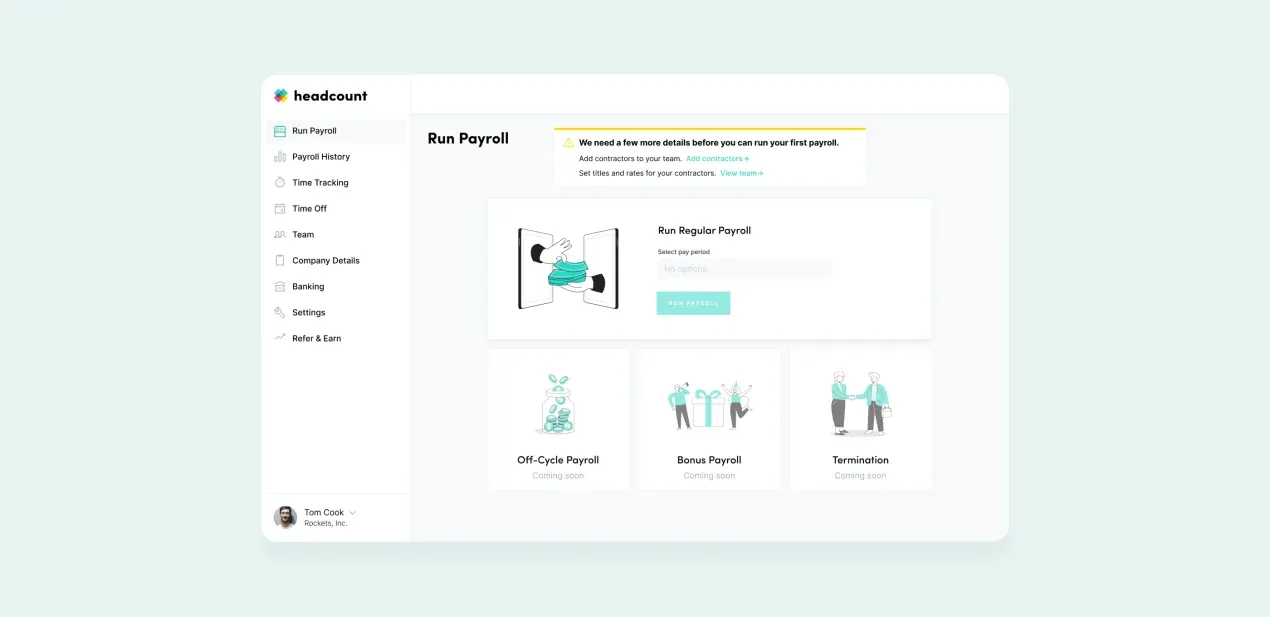
The working release came from visible delivery controls, not from treating speed as the absence of process
AI-assisted tool use does not replace this operating discipline. DORA’s research on AI-assisted software development describes AI as an amplifier of an organization’s existing strengths and weaknesses. Rapid development has limited value when decisions, review, or release practices remain unclear.
A SaaS MVP requires an architecture that protects the core path, user access, and product data without pretending to solve every future scale problem. Each technology choice needs a current reason and a clear signal for revisiting it.
The tenancy model sets the first boundary. A software product serving a small number of organizations may start with shared cloud computing infrastructure and strict tenant identifiers in every data operation. A regulated or highly customized service may justify stronger isolation earlier. The decision follows the data risk, not a default SaaS pattern.
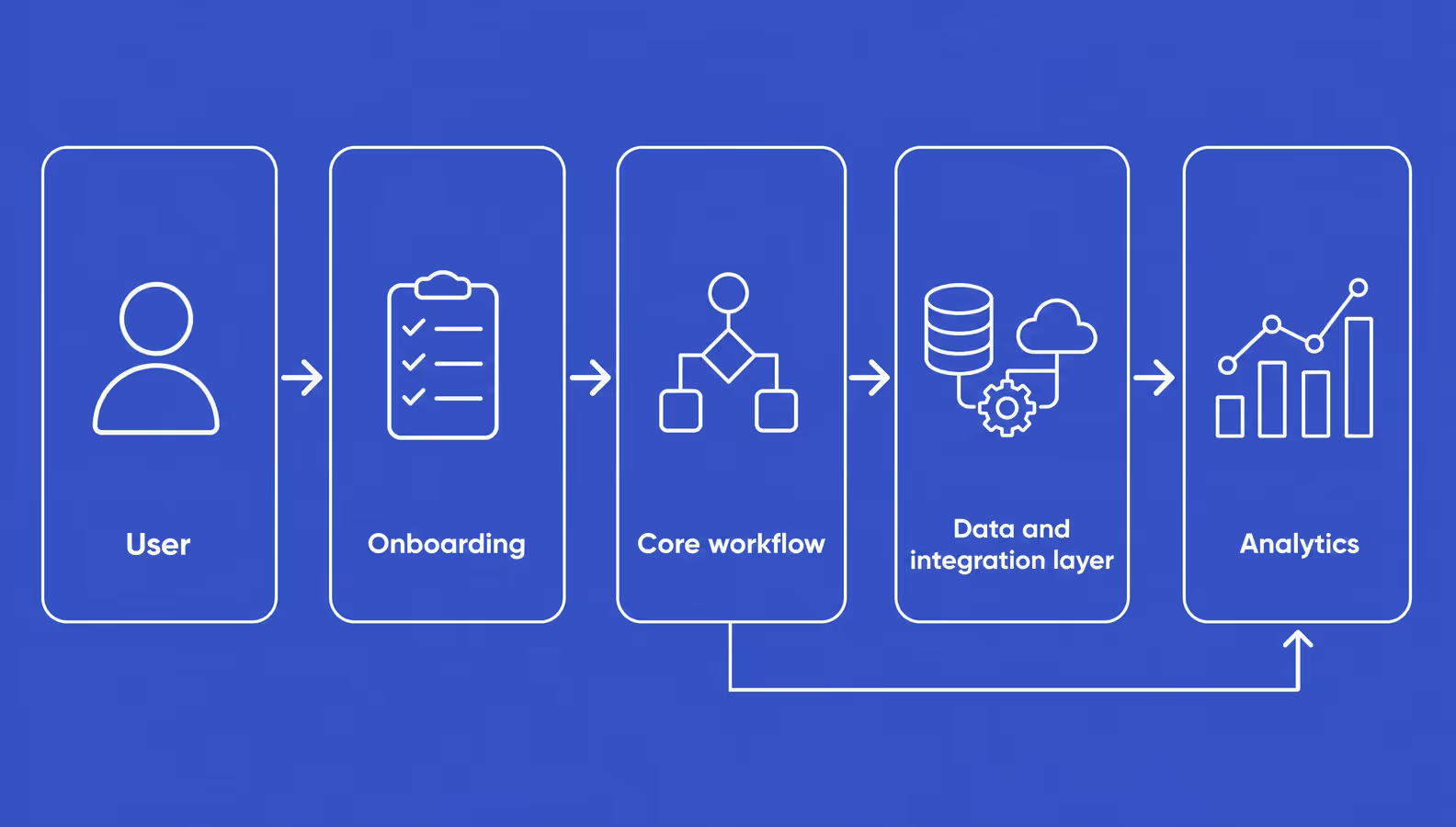
The MVP boundary follows the workflow from access to measurable evidence
Authentication and roles deserve the same test. The first release needs the identities and permissions required for the task, plus a reliable boundary around sensitive actions. It does not automatically need a configurable enterprise permission system.
Integrations belong at the edge of this boundary. A live connection is justified when a manual handoff blocks completion or changes the evidence. Otherwise, a controlled import, export, or internal operation can preserve learning without adding another failure point. The tradeoff stays visible in the architecture record.
| Decision area | MVP-level choice | Risk if skipped | Signal to revisit after launch |
| Tenancy | Explicit tenant boundary in database access | Data crosses customer accounts | Isolation or customization needs grow |
| Access control | Roles required by the task | Users reach the wrong action or data | New approval paths appear |
| Integrations | Essential connection or controlled handoff | The user journey stops outside the product | Manual work limits completion |
| Analytics | Events for the core action and major friction | The team cannot interpret usage | Decisions require deeper segmentation |
| Scalability | Known limits and basic observability | Failures arrive without context | Real load approaches those limits |
This approach gives SaaS solutions and SaaS platforms an upgrade path without building scalable SaaS infrastructure in advance. The team records assumptions, monitors the limits that matter, and revisits the solution stack when usage changes the decision.
A revisit signal also prevents temporary choices from becoming invisible constraints. The team knows which limit was accepted, what evidence would challenge it, and who owns the next decision.
Our SaaS development guide covers the broader path after an initial release has produced evidence.
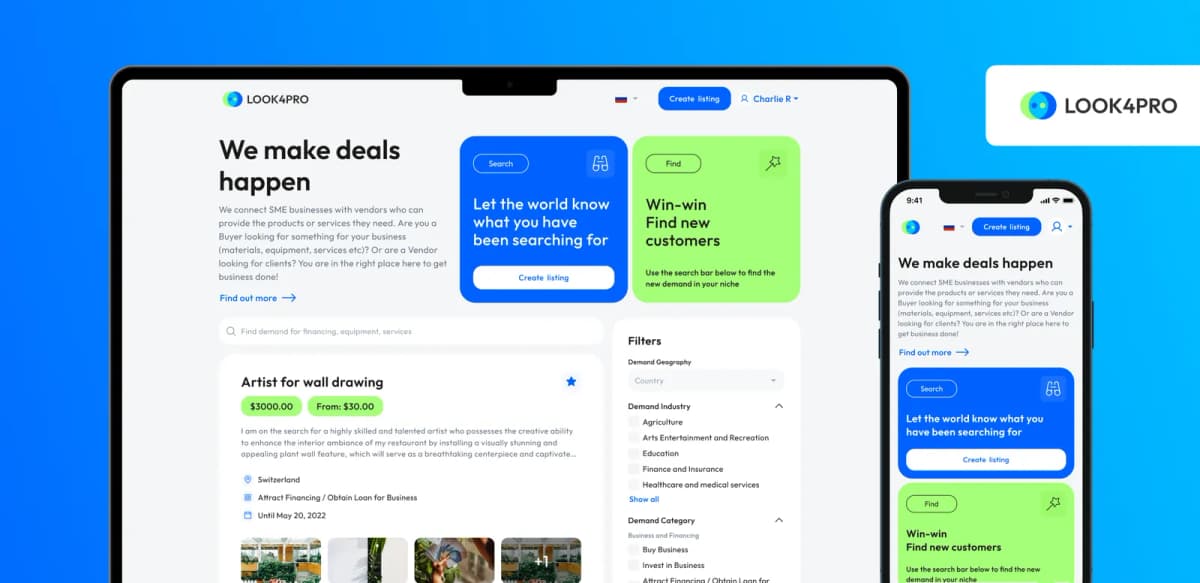
Look4Pro shows that deferring a feature is also an architecture decision. The first release let businesses and contractors register, publish listings, find offers through filters, and unlock contact details through a Stripe subscription. That was enough to test the marketplace and its monetization loop.
Separate role interfaces, chat, a blog, and ad management would have created more product areas to maintain and protect. We kept one shared account structure, reduced listing creation to three steps, and moved agreements to email or messengers. The five-month MVP preserved the central exchange while giving the team fewer systems to secure and observe at launch.
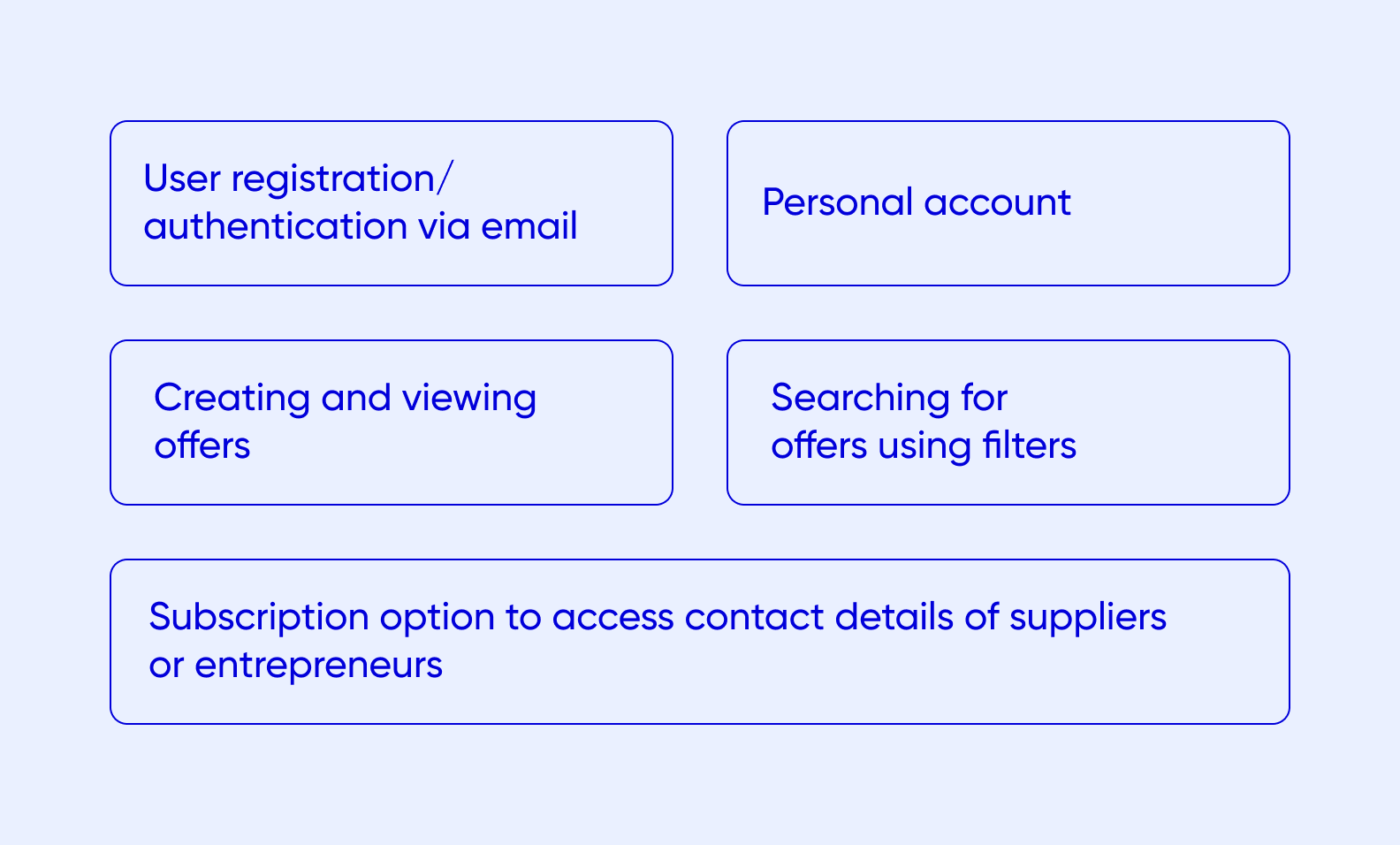
The first release supported the marketplace loop while leaving secondary communication tools for later versions
Like other product launches, launching an MVP combines controlled access, recovery options, monitoring, staged exposure, and a feedback path. Together, these elements protect the experiment and show what happened when real users entered the core task.
Launch readiness starts with the failure modes that would invalidate the test. If users cannot sign in, lose data, or reach the wrong account, low completion says little about the product idea. The team needs enough operational visibility to separate user experience friction, usability problems, and a broken release.
The same distinction applies to automation. NIST’s guidance on secure software development and operations warns that automated pipelines can propagate security risks rapidly into production. Automation shortens the path from a change to users, so review and rollback controls carry more weight rather than less.
A focused MVP needs a release-readiness checklist:
At the MVP stage, instrumentation stays narrow. The core completion event answers whether users reached the intended outcome. A few supporting events locate friction around onboarding or a critical decision. A large analytics layer adds little when the team has not agreed on the question behind each event.
This is what turns launching the MVP into a product experiment. The result is not a verdict on the full SaaS product. It is evidence about one path, collected under conditions the team understands well enough to interpret.
A SaaS MVP estimate becomes meaningful after the team defines the path, roles, integrations, data risks, and release threshold. Development costs and schedule follow those decisions, not a market-wide benchmark.
When developing a SaaS MVP, the core path carries the most weight because every exception adds logic, interface states, and tests. One clear path is easier to estimate than several jobs grouped under the “MVP” label.
The remaining factors explain where effort moves:
This is why SaaS MVP development cost begins with the smallest testable scope. Equal screen counts can hide different effort when one product has several roles or a fragile integration.
To estimate how much your MVP will cost, the team records exclusions, outside-system assumptions, and launch support. When an assumption changes, the estimate changes for a visible reason.
Our detailed MVP development cost guide covers individual drivers. For an MVP project, the useful output is a scope the team can estimate without guessing what the release must prove.
Post-launch measurement asks whether users complete the core action, where they stop, and whether they return to repeat the valuable job. These signals guide iteration, but none proves product-market fit on its own.
The first review compares behavior with the original hypothesis. Completion suggests that the release functions. Friction around onboarding or a specific decision points to a narrower product problem. Qualitative user feedback adds the reason behind either result.
A useful review also separates a repeated pattern from an isolated request. The team looks for evidence that appears across behavior, support conversations, and direct feedback before changing the product boundary.
| Signal | What it may indicate | Next decision |
| Task completion | Users reach the intended outcome | Test repeated use |
| Onboarding friction | Value is hidden behind setup | Simplify entry |
| Repeated use | The job recurs often enough | Improve reliability |
| Support requests | A step or expectation is unclear | Fix the repeated obstacle |
| Feedback themes | Users share a consistent unmet need | Test one adjacent hypothesis |
Scaling starts when several signals support the same conclusion. More infrastructure, roles, automation, or integrations then solve observed limits rather than anticipated ones. Teams preparing for that move can review our SaaS application development services.
Before committing to full-scale development, the team still needs a stated bottleneck and an expected effect. The team can then compare the result with that expectation instead of treating the next version of your product as progress by itself. Without both, the product replaces one focused experiment with a broader collection of assumptions.
Contentplace shows why a small release may need one difficult technical capability, not more features. Creators needed searchable video pages, and buyers needed a path from discovery to paid access. If pages stayed private, search could not bring demand. If files were public, the marketplace had nothing to sell.
We separated indexable page information from protected media delivery. Videos stayed in Amazon S3, Amazon CloudFront controlled access, and Stripe handled payments. In three months, the client had a working marketplace that could test whether searchable discovery led to purchases. That evidence, not a larger feature list, defined the next investment.
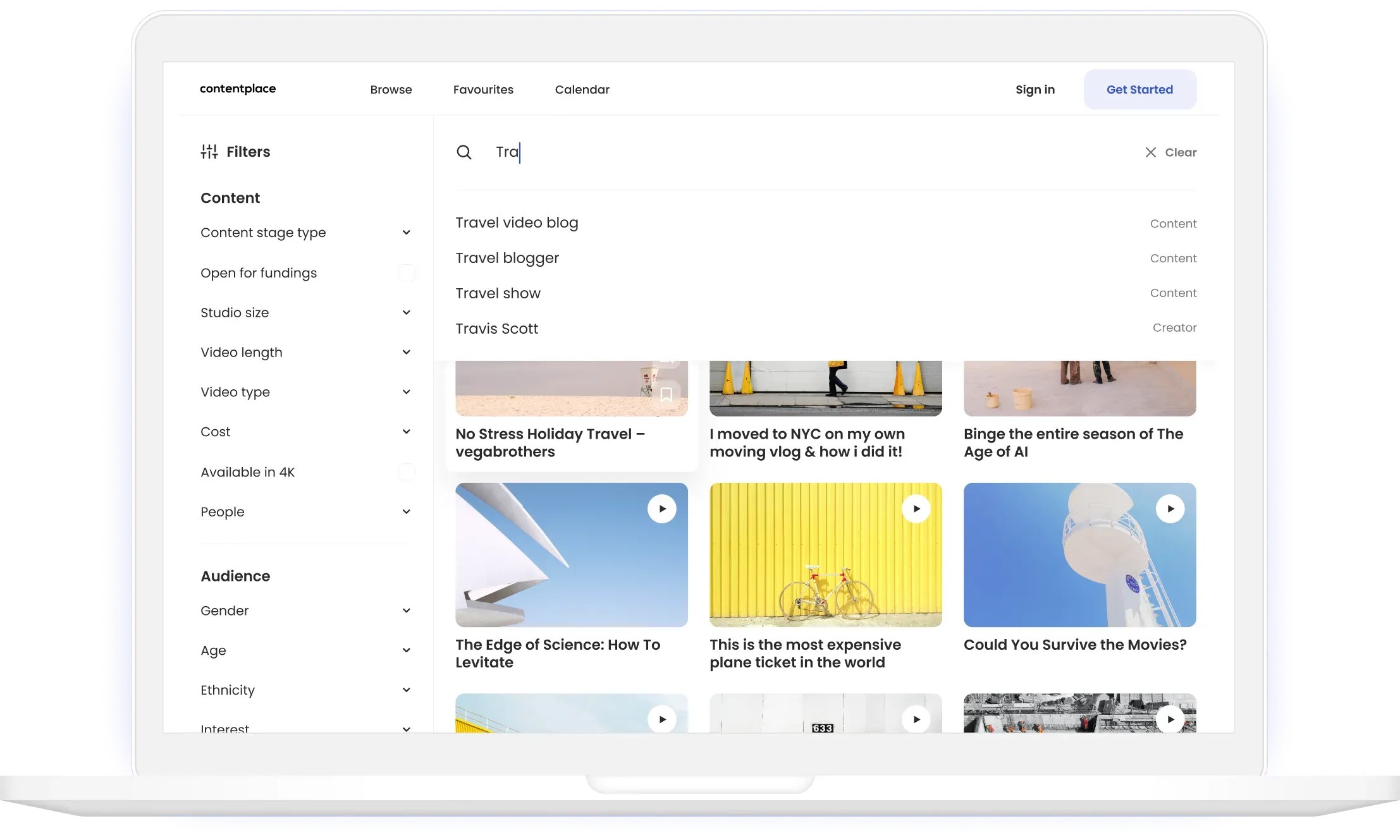
The working marketplace gave the client a concrete product hypothesis to test
A SaaS MVP earns its next investment when one user completes a valuable recurring job and the team can interpret the result. Completion, friction, repeated use, and feedback show whether to refine that product path or remove an observed limit.
➡️ Ready to build the next testable release? Tell us what you're building and get a free estimate within 48 hours.
A SaaS MVP is the smallest working product that lets a defined user complete a core task and gives the team evidence to validate the problem. It includes more than one feature: the release needs enough onboarding, access, data handling, and feedback collection to reach the outcome. Anything that does not protect or test that task can wait for an iteration.
Start with a target user and one high-value task. Keep only the core features required to complete that task and test the hypothesis. Roles, integrations, onboarding, and analytics belong in the release when the test would fail or produce unreliable evidence without them. Everything else receives an out-of-scope label until usage reveals a reason to add it.
There is no universal SaaS MVP price. Development cost depends on process complexity, roles, integrations, platform and data decisions, design depth, release safeguards, and team model. An estimate becomes useful after the team defines the smallest testable scope and records its assumptions. A detailed MVP development cost guide can then show how each factor directly changes the work and schedule.


.svg)