Explore

Need help with your project?

Oops! Something went wrong while submitting the form.
A search for software development companies Chicago often begins as a location filter, but that filter says little about delivery. This ranking covers providers serving Chicago businesses, comparing their stated services, project focus, and delivery fit. Which partner fits your product and working model?
In this guide, we’ll look at the delivery signals that separate providers and the trade-offs that matter when matching a partner to a product, team, and operating model.

We ranked these Chicago software development companies by six evidence categories covering development capabilities, not a weighted score. They cover Chicago connection, services, delivery evidence, technical readiness, delivery model, and commercial clarity. Each uses public material and focuses on service providers rather than tech companies that primarily sell their own products.
Chicago tech market data provides context for the list. The Chicago Cook Workforce Partnership reports over 300,000 tech workers, representing 7.2% of the workforce. That figure did not affect placement or stand in for vendor quality.
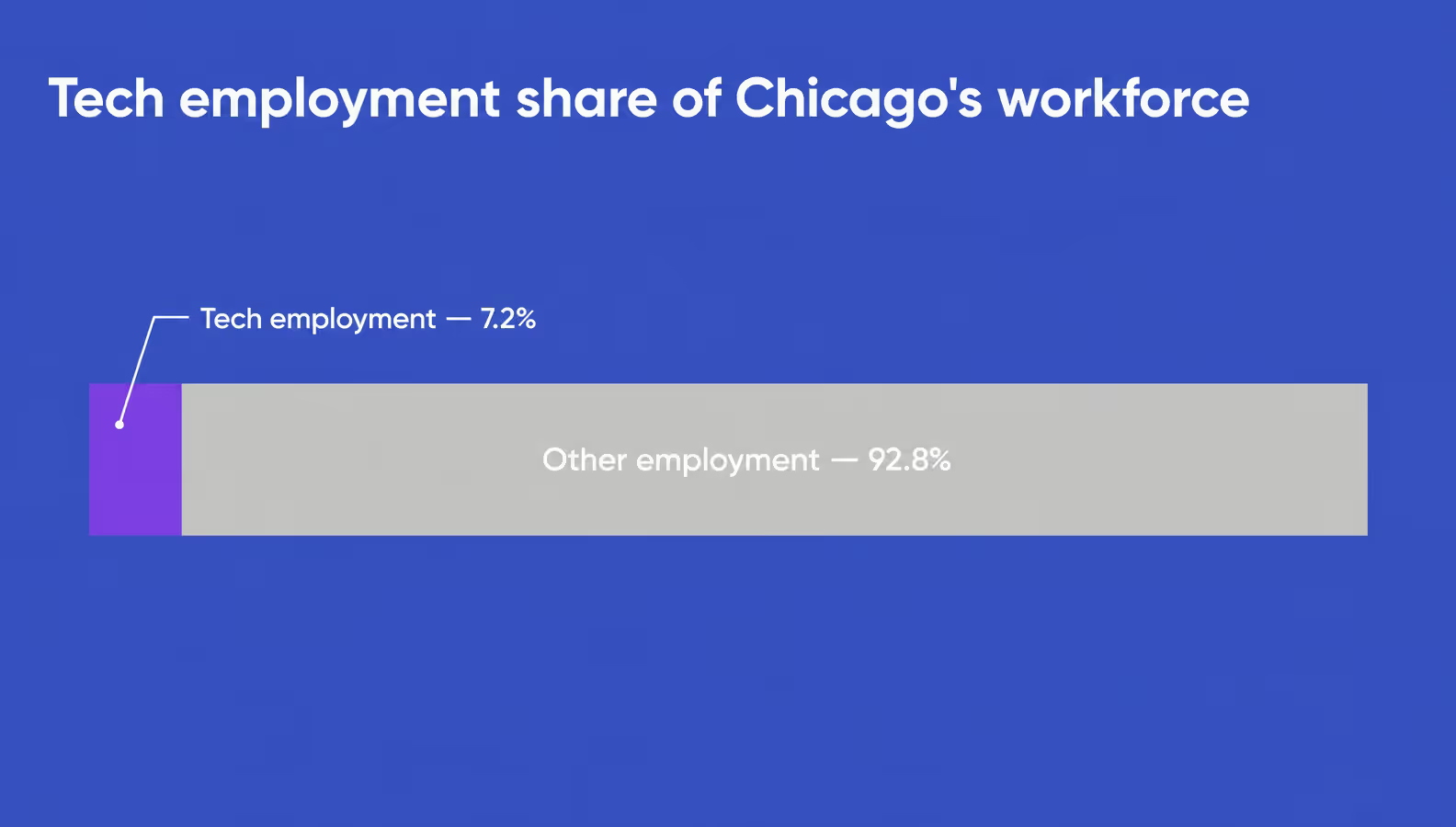
Chicago has a deep tech labor pool, but market size alone does not determine vendor fit
We used public evidence, not interviews, private data, or directory badges. The non-weighted categories explain inclusion. The numbers provide an editorial reading order, not a quality score. For a deeper service-scope check, see custom software development services.
No development firm is the right fit for every Chicago project. The comparison separates software companies serving Chicago by the work they publicly describe and the evidence they publish. It also considers how their delivery model aligns with a buyer’s product, operating constraints, and collaboration needs. The profiles make those trade-offs explicit rather than treating rank as a universal verdict.
| Company | Chicago connection | Best for | Core services | Delivery fit |
| Purrweb | Remote provider serving Chicago | Design-led MVPs and full-cycle products | Web, mobile, and product development | Remote product partner |
| Atomic Object | Local office | New products and modernization | Product development and modernization | Bespoke product engagement |
| 8th Light | Headquarters | Adaptive products and platforms | Strategy, design, engineering, DevOps | Lifecycle platform work |
| LaunchPad Lab | Chicago-based | Automation and custom products | Strategy, UX, applications, managed services | Discovery through ongoing management |
| TXI | Chicago-based | Data-rich products and automated workflows | Product strategy, web apps, data products | Remote-first delivery |
| SPR | Headquarters | Enterprise modernization programs | Software, cloud, data, integrations | Multi-discipline transformation work |
| Plego | Headquarters | Products with integrations and support needs | Web, mobile, APIs, and maintenance | Product build plus support |
| Velvetech | Local office | Enterprise automation workflows | Software, automation, data engineering | Enterprise modernization work |
| Intersog | Headquarters | Automation and dedicated teams | Software engineering and automation | End-to-end or nearshore capacity |
| Caxy | Chicago-based | Mid-market digital transformation | Technology strategy, product design, software | Strategy plus platform delivery |
Use the table to narrow the field, then read the profiles for the evidence behind each label. A local connection can shape workshops, but it does not settle product scope, engineering approach, or day-to-day delivery.
Purrweb is a remote custom software development company for Chicago buyers. It fits teams seeking design-led MVP development or a full-cycle web, mobile, or desktop product without making local presence decisive. Its service pages cover mobile app development, web development, desktop software, and cross-platform products. They also cover user interface and user experience design, product discovery, and AI development.
The startup software development offer gives early-stage teams a relevant entry point. Its Chicago-focused material describes remote work with businesses in the city. Its public case work shows delivery across interconnected product flows.
That makes Purrweb relevant where a buyer wants one partner to define the product and build software through release. Remote collaboration runs from discovery through release, with decision visibility throughout delivery. The trade-off is direct.
For teams that depend on frequent in-person workshops, communication cadence, decision ownership, and workshop arrangements become selection criteria. It is a weaker fit when local presence itself is a non-negotiable procurement requirement.
We built NoTab as four role-specific apps plus a CMS for a nightclub operation. It connected guests, servers, dancers, kitchen staff, and administrators.
After identity verification, a guest app made a QR code for orders and payments. Staff scanned it to associate service, and Stripe distributed payments between the relevant roles.
The constraint was testing five connected products together, because individual features crossed role-specific workflows. A Stripe API change left the React Native payment library outdated and interrupted the payment path.
We organized tests around complete workflows and monitored the library update that restored the required payment functions, keeping the project on schedule.
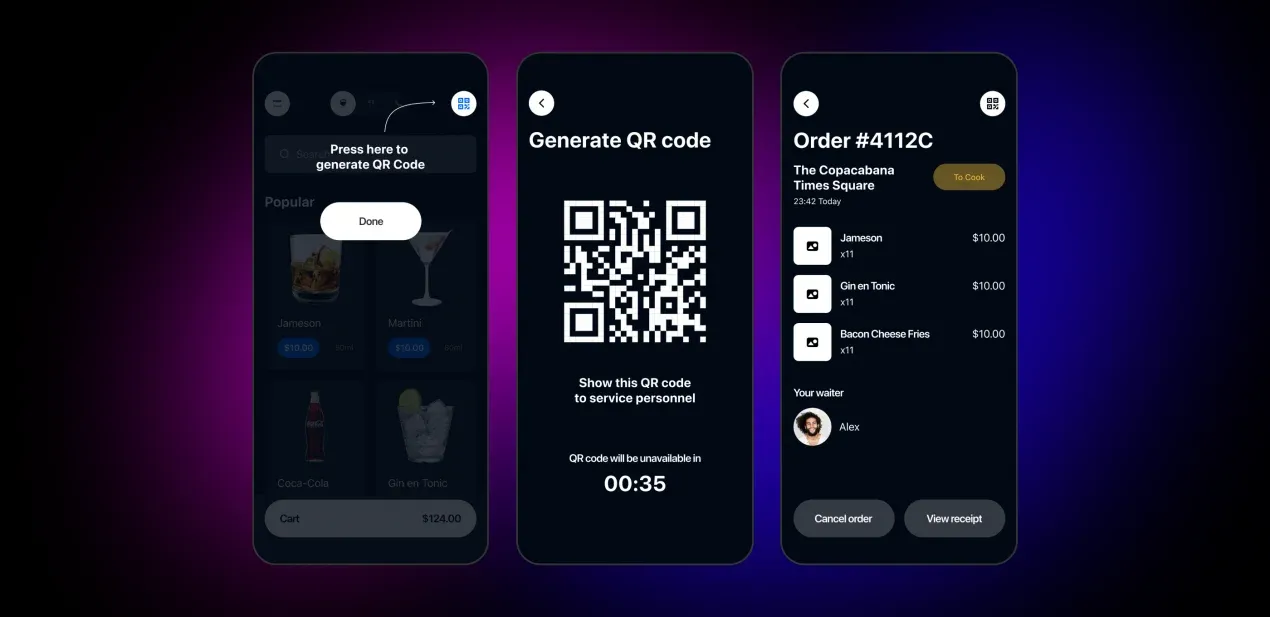
The QR code shows where guest activity moves into staff workflows
The case is relevant because a service menu alone does not show how a partner handles dependencies between products. For Chicago companies considering remote delivery, the operating model provides useful evidence. It shows who coordinates cross-team testing, how integration risks are escalated, and whether decisions stay visible across the build.
It also matters how quickly the team can resolve a blocked payment or platform dependency. Those answers indicate whether remote collaboration supports the needed pace and accountability. An office label cannot answer them on its own.

Atomic Object has a Chicago office. It fits teams evaluating a bespoke new product, an existing product enhancement, or modernization work. Its official service pages list new product development, product enhancement, product modernization, and AI software development. They also cover legacy system rewrites, cloud migration, and UX modernization.
Its published Altus Healthcare case study describes a delivery, design, and development team building a health care IoT platform. Atomic Object reports pipeline growth and client cost savings for that project. Those figures belong to the company’s own case-study account.
The public material points to a product-oriented engagement rather than a narrow staff-only offering. That matters for buyers who want discovery and implementation connected.
A team looking for a tightly commoditized service should check whether Atomic Object’s bespoke product and modernization framing matches the required scope. The Chicago office is a connection label, not proof that every delivery role works locally or in person.

8th Light has its Chicago headquarters. It is worth evaluating for an adaptive platform program that needs strategy, design, engineering, and DevOps across the product lifecycle. Its official capability pages describe AI products that automate multi-step work, platforms and adaptive systems, product strategy, and experiential design. They also cover engineering and DevOps.
Its Pfizer case study says the company worked with more than 20 teams on development, security, and operations practices. It also describes continuous integration and delivery, automated cloud work, and version control. 8th Light reports a reduction in deployment time for that project. This is published delivery evidence, not an independent benchmark.
The service mix suggests an engagement suited to teams that want platform work tied to product decisions and operations. Buyers with a narrowly defined build should compare that transformation focus with the scope they need. A Chicago headquarters does not establish how a particular team will structure workshops or communications.
LaunchPad Lab is Chicago-based. It is worth evaluating for a mission-critical product or an automation initiative. Its stated service mix combines discovery, UX design, application delivery, and ongoing management. Its official pages list automation, product strategy, applications, and managed services. They also describe blueprint workshops, user research, and prototyping.
A published healthcare insurance case study describes an AI claim-review workflow. LaunchPad Lab reports that the workflow shortened the expected review time and reached a stated accuracy range. Those remain vendor-reported project results.
The public evidence shows a provider that links product strategy with delivery rather than treating discovery as separate from the build. Its positioning puts automation near the center of the offer. For a project without either dimension, buyers can test whether that emphasis fits their needed discovery and delivery model. Chicago-based positioning does not specify which meetings or workshops take place in person.

TXI is Chicago-based and identifies its delivery model as remote-first. It fits data-rich digital products, automated operational workflows, or transformation programs that need strategy alongside experience-led web application delivery. Its public pages describe AI-powered workflows, data products, and web applications. They also cover opportunity assessment, product vision, roadmaps, and product management.
Its biopharma data case study says TXI built a centralized knowledge platform that gives researchers faster access to information. TXI also describes the platform’s scale and usage. That makes it vendor-published evidence rather than an independent benchmark.
The stated service mix connects strategy, data, and product delivery. That suits buyers who need those parts to work together across distributed teams.
The trade-off is delivery model. An office connection does not override the company’s remote-first positioning. Teams expecting frequent in-person sessions should confirm practical workshop availability and communication cadence rather than assuming a local-office engagement.

SPR has its Chicago headquarters. It is a candidate for B2B enterprise teams planning an enterprise software development and modernization program. The scope may span cloud computing, data, integration, and digital experience work. Its public B2B pages list cloud consulting, data analytics, AI, portals, integrations, and custom software.
A published logistics case study describes SPR refreshing a supply chain visibility platform with cloud-native architecture and product development. It also covers UX, microservices, and continuous integration and delivery. That case offers relevant delivery evidence for a complex modernization context. It does not prove fit for every engagement.
SPR’s public service menu is broad, which can help where several technical disciplines need to connect under one program. A buyer seeking a narrowly scoped specialist may need to confirm the assigned practice and engagement boundaries during discovery. The Chicago headquarters label does not establish team composition, onsite availability, or the support model for a specific project.

Plego has its Chicago headquarters. It fits teams building a custom software solution with web or mobile interfaces and integrations. It also suits teams considering ongoing application support. Its official service pages describe web and mobile development, full-stack work, software integration services, and APIs. They also list AI-related projects, plus support and maintenance.
Its published portfolio presents web, mobile, and software projects for several named clients. This provides visible delivery evidence. The reviewed material does not make a universal outcome claim.
The breadth of Plego’s service menu suits a project that needs one provider to deliver custom software, integration, and later support together. That same breadth creates a fair due-diligence question for procurement.
A buyer who needs a single-discipline or industry-specific specialist should confirm the exact delivery scope rather than infer depth from the service list. Chicago headquarters signals connection, not a promise about named team members or in-person working arrangements.

Velvetech has a Chicago office. It is worth evaluating for an organization modernizing an enterprise platform. It also fits work that applies machine learning, data engineering, or automation to an operating workflow. Its public pages list software, machine learning, data engineering, automation, and modernization services. They also describe AI agents, prediction, recommendations, and fraud detection.
In its Insureon call-analytics case study, Velvetech reports real-time transcription and automated guidance during sales calls. It also reports integration with RingCentral and customer relationship management systems. The reported time and conversion improvements belong to the company’s case-study account.
This delivery evidence makes the firm relevant for a workflow with operational data and automation requirements. Its Chicago office is distinct from its current headquarters. The profile does not treat it as a Chicago-headquartered company. Buyers who require headquarters-level local presence should consider that distinction alongside their delivery and collaboration needs.
Intersog has its Chicago headquarters. It fits a company implementing automation or seeking a dedicated nearshore engineering team alongside product delivery. Its official pages describe software engineering, artificial intelligence development and integration, and automation.
They also cover dedicated team engagements and uses ranging from IT process automation to customer support and supply chain workflows.
Its Pyxos case study describes a dedicated team building an AI compliance copilot with retrieval-augmented generation. This approach grounds the copilot’s answers in supplied documents. The case also includes cloud infrastructure and a vector database. That is published delivery evidence for a defined implementation. It is not a promise about every project.
The company foregrounds both end-to-end delivery and dedicated or nearshore team models. Buyers can compare whether they want embedded capacity, a fully owned product engagement, or a combination. Chicago headquarters establishes the connection label. It does not set staffing location, a fixed delivery timeline, or an engagement model.
Caxy is a Chicago-based software development company. It fits mid-market companies planning digital transformation, AI implementation, technology strategy, or custom software solutions. Its public services describe product strategy, technology assessments, product design, and custom software. Its consulting material for Chicago also refers to enterprise implementation and digital-transformation consulting.
Caxy’s case-study hub presents work across several published products. Its own examples report outcomes for specific clients. Those numbers, where used in due diligence, remain company-reported rather than independently audited.
The stated positioning makes Caxy a direct comparison for a mid-market transformation program that needs strategy as well as delivery. The trade-off concerns organization scale.
Its public messaging is specifically aimed at mid-market leaders. Buyers from a different scale should validate engagement fit rather than treating the positioning as universal. Chicago-based is a connection label, not proof of a particular staffing model, project price, or delivery duration.
Choosing among software development services in Chicago comes down to verifying how a proposed team will build, operate, and hand over your product. Local workshops matter when discovery relies on sensitive stakeholder alignment or on-site system access. For ongoing delivery, a remote team is sufficient when its cadence makes decisions, ownership, and escalation visible.
Location is one operating variable, not a quality proxy. A buyer comparing a software development partner in Chicago should look past the sales process and ask for evidence that will still matter once delivery begins. Teams that need a broader framework can evaluate a software development partner.
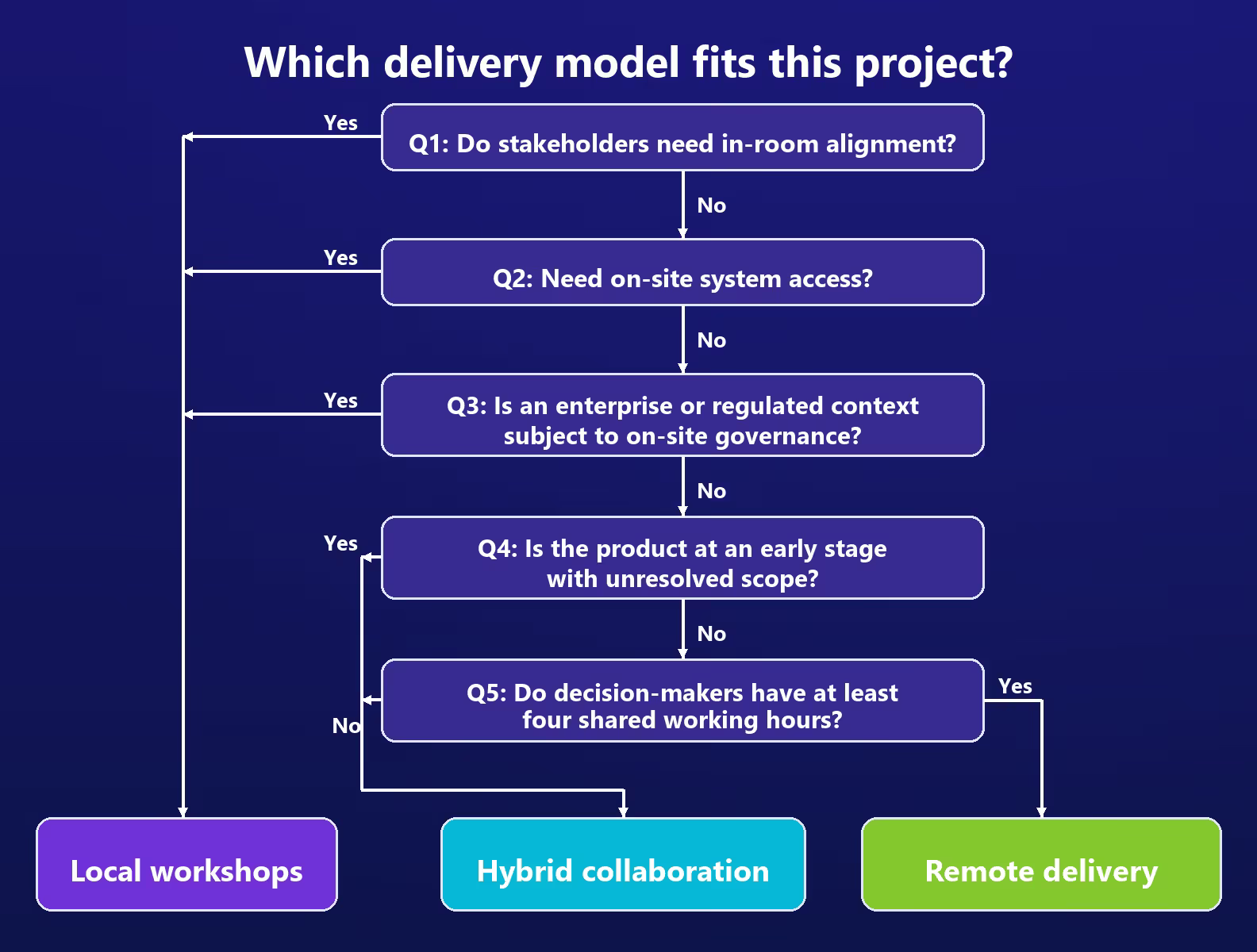
Local presence matters when it lowers the cost of stakeholder misalignment or access constraints
Six checks keep each finalist on the same evidence base.
For a mobile product, comparing Chicago mobile app developers adds platform-specific delivery questions to the same review.
Staffing capacity deserves a separate check. For US tech occupations, annual replacement demand is about 6%, or roughly 352,000 workers a year, between 2025 and 2035. This is replacement demand, not net-new job creation, and it is not Chicago-specific. The figure makes continuity, replacement terms, and knowledge transfer practical procurement questions.
Choosing a provider for software development in Chicago is less about finding a universal winner than finding an operating match. A Chicago headquarters or office helps with some workshops, while remote delivery works when communication overlap, decision access, and escalation are clear.
Selecting the right software development partner means testing the proposed team and relevant delivery evidence against the product at hand. Architecture, ownership, estimate assumptions, and support terms deserve the same scrutiny. The software development process offers a useful reference for turning those questions into delivery expectations.
➡️ Planning a software product? Tell us what you’re building, and we’ll send a free project estimate within 48 hours.
The strongest shortlist depends on the product, industry, budget, and delivery model. Compare firms by relevant case studies, seniority of the proposed team, technical depth, communication process, security requirements, and post-launch support. Use the ranking as a starting point, then validate each candidate through a discovery call, references, and a written project estimate.
A software company may build and sell its own product, while a software development agency builds custom products for clients. For an outsourcing shortlist, focus on service providers with delivery teams, client case studies, defined engagement models, and experience transferring ownership of code and documentation. Product employers and SaaS vendors belong to a different comparison category.
There is no single Chicago price because cost changes with scope, architecture, compliance, integrations, team composition, and delivery speed. Ask every candidate to separate discovery, design, development, quality assurance, launch, and maintenance in the estimate. Compare assumptions and included deliverables rather than choosing the lowest headline figure, and reserve contingency for scope changes.
Start with evidence that matches your project: similar products, relevant industries, and the required technology stack. Then assess who will work on the account, how progress is reported, how risks and changes are handled, and what happens after launch. A paid discovery phase or technical workshop can reveal delivery quality before committing to a larger build.
Not necessarily. A Chicago headquarters or office can simplify in-person workshops, but delivery quality depends more on communication overlap, ownership, technical capability, and process transparency. Include local, hybrid, and remote providers if they can support the required time zone and collaboration model. Label each company’s Chicago connection accurately instead of treating every provider as locally headquartered.
Common services include product discovery, UI and UX design, web and mobile development, enterprise platforms, cloud modernization, data engineering, artificial intelligence, integrations, quality assurance, DevOps, and maintenance. Service menus vary widely, so confirm whether the same team can cover the full lifecycle or whether specialist vendors will be needed for design, security, infrastructure, or support.
Many providers offer maintenance, monitoring, incident response, upgrades, performance work, and ongoing product development, but the terms differ. Before signing, clarify support hours, response targets, ownership of infrastructure, knowledge transfer, documentation, and the process for adding features. Make sure the contract also explains how the codebase and credentials are handed over if the partnership ends.


.svg)