Explore

Need help with your project?

Oops! Something went wrong while submitting the form.
An Estonian IT company came to Purrweb to build a domain registrar that could compete with GoDaddy, Namecheap, and NameSilo without the threefold renewal markup most providers charge.
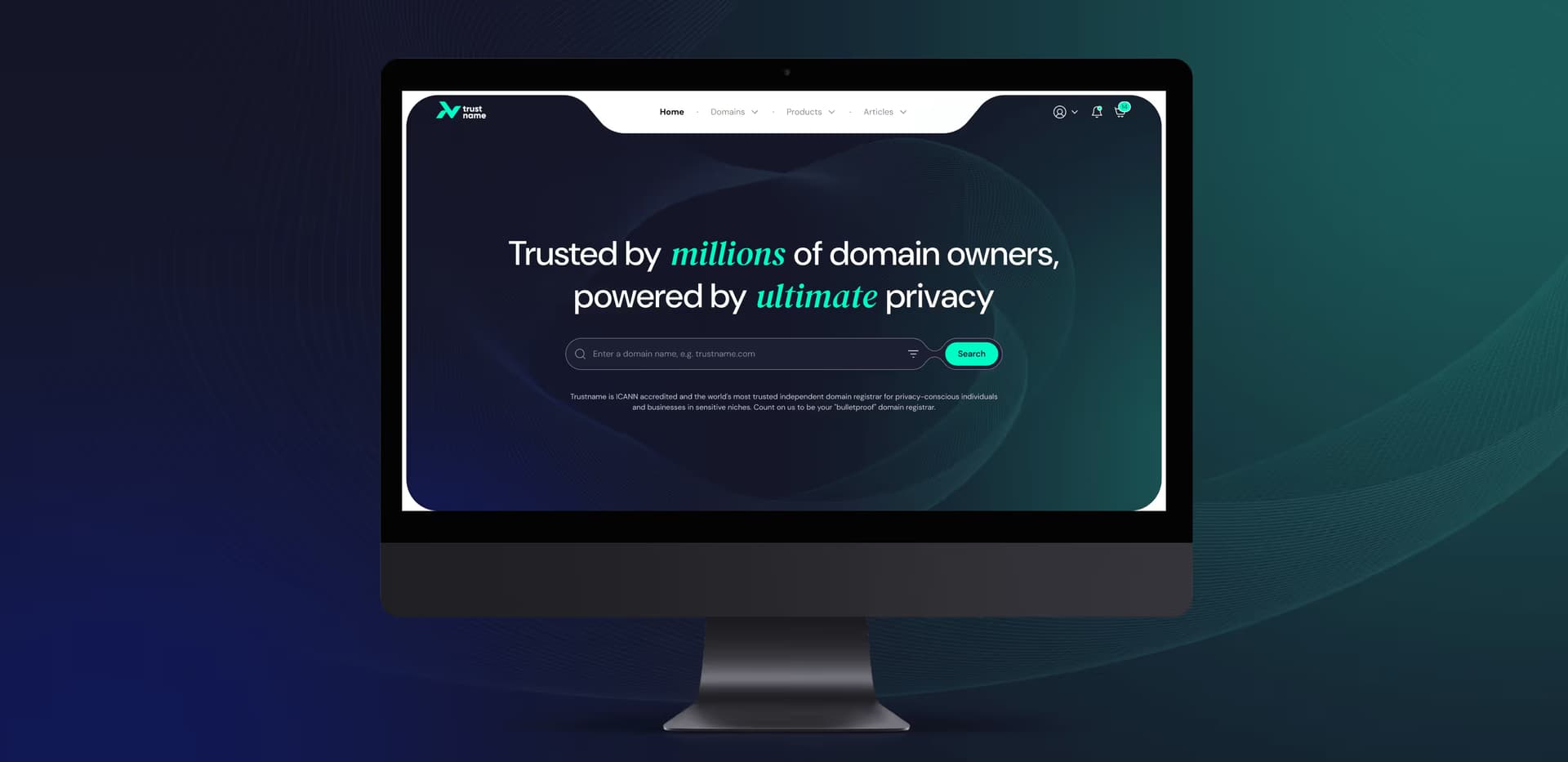
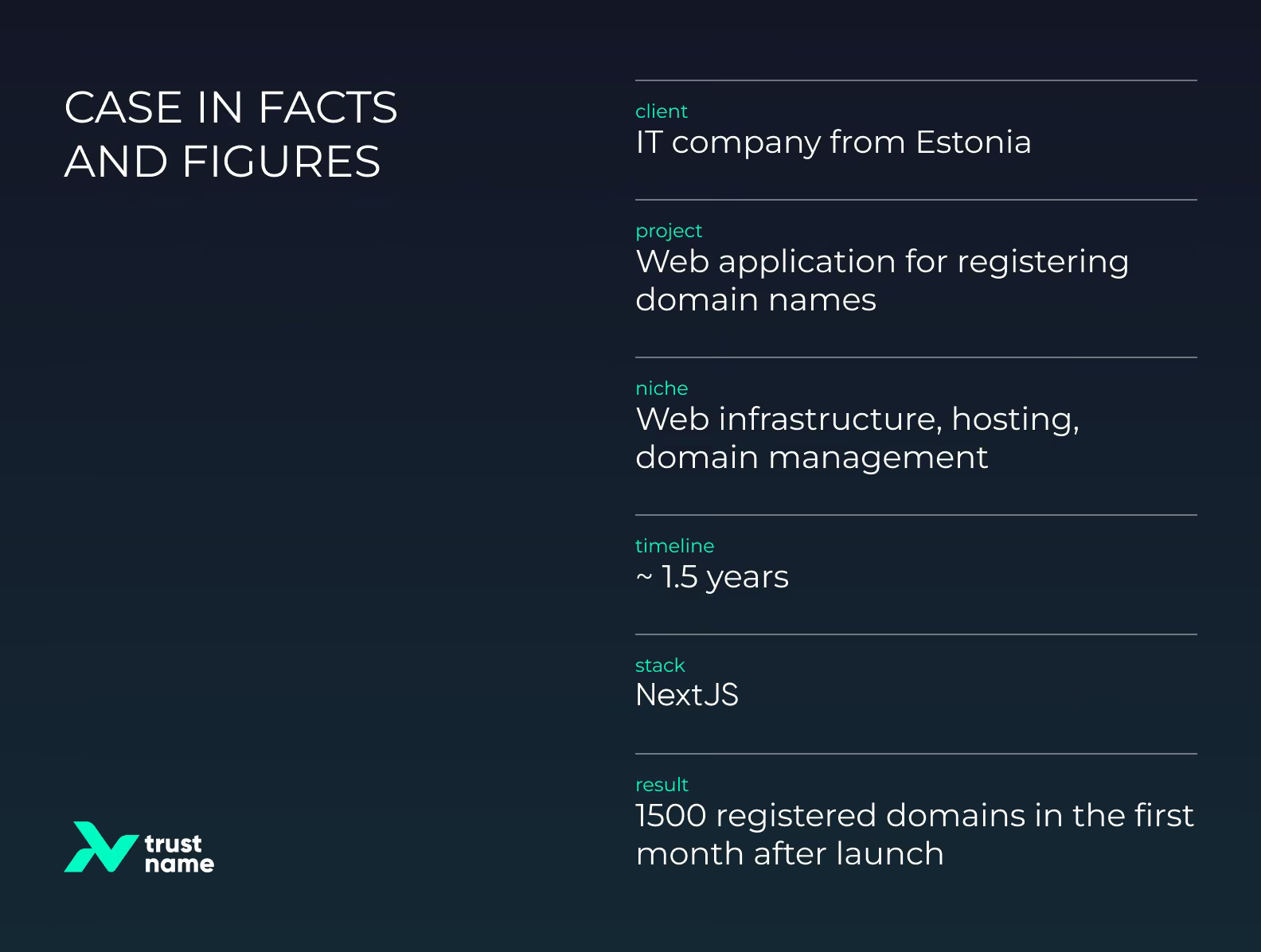
Although this was our first domain registrar, we took on the challenge. Trustname is now live, with 1,500 domains registered in its first month. In this case study, we explain how clear communication with the client helped us navigate an unfamiliar development field and helped our client enter a new business niche.

If you already know how domain registrars work, feel free to skip to the next section 😀 Otherwise, let's take a look!
Say you want to build a website. Besides design and development, you need a domain name: the address people use to find your website online. A quick reminder: a domain is not the same as a website.
Finding a short, appealing domain name isn't easy. It's 2026, and all the good ones are taken. You could get creative and invent something unusual. But with millions of websites out there, someone has probably already had that idea 🙂 To find an available domain name, you turn to a specialist company: a domain registrar.
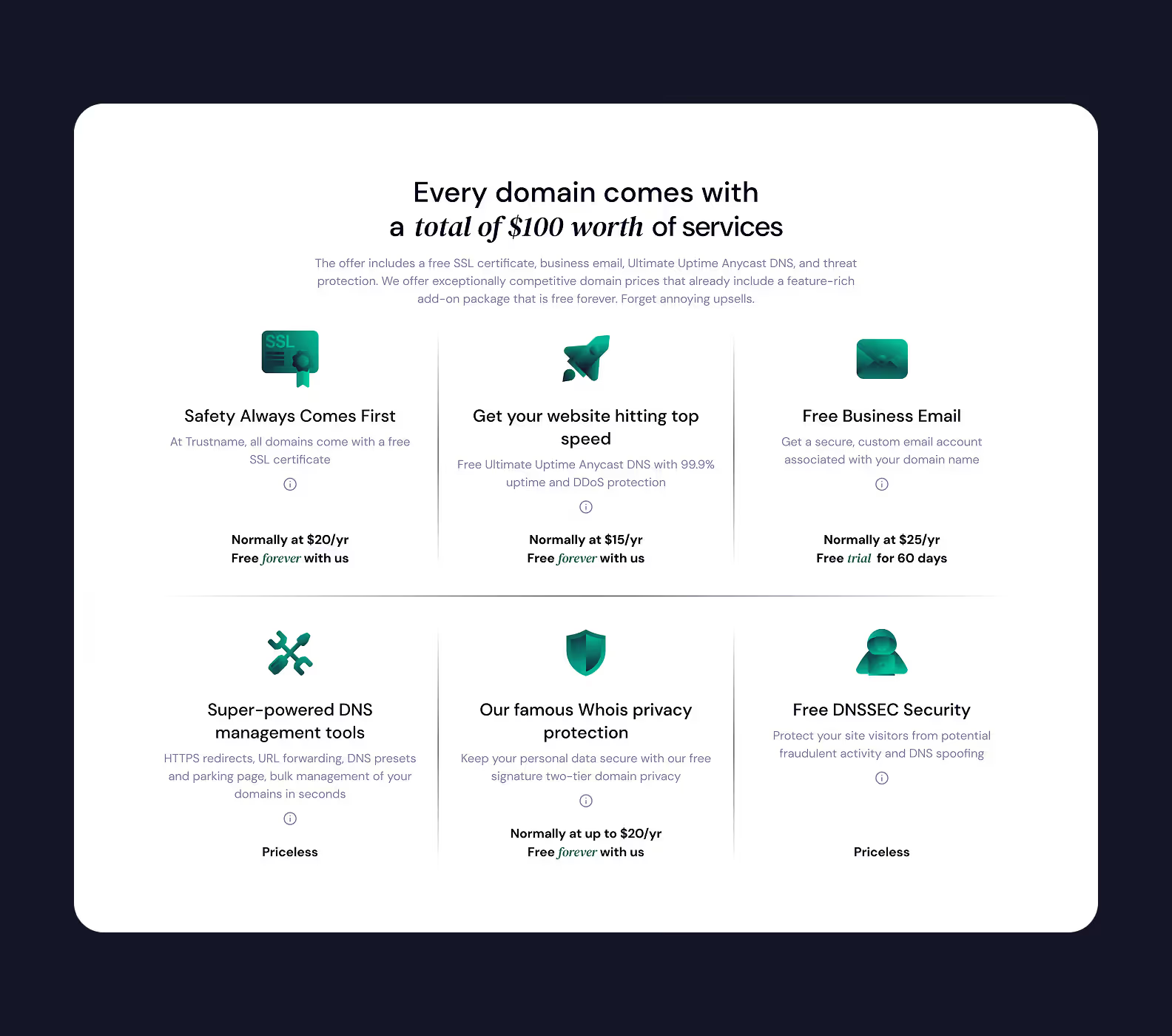
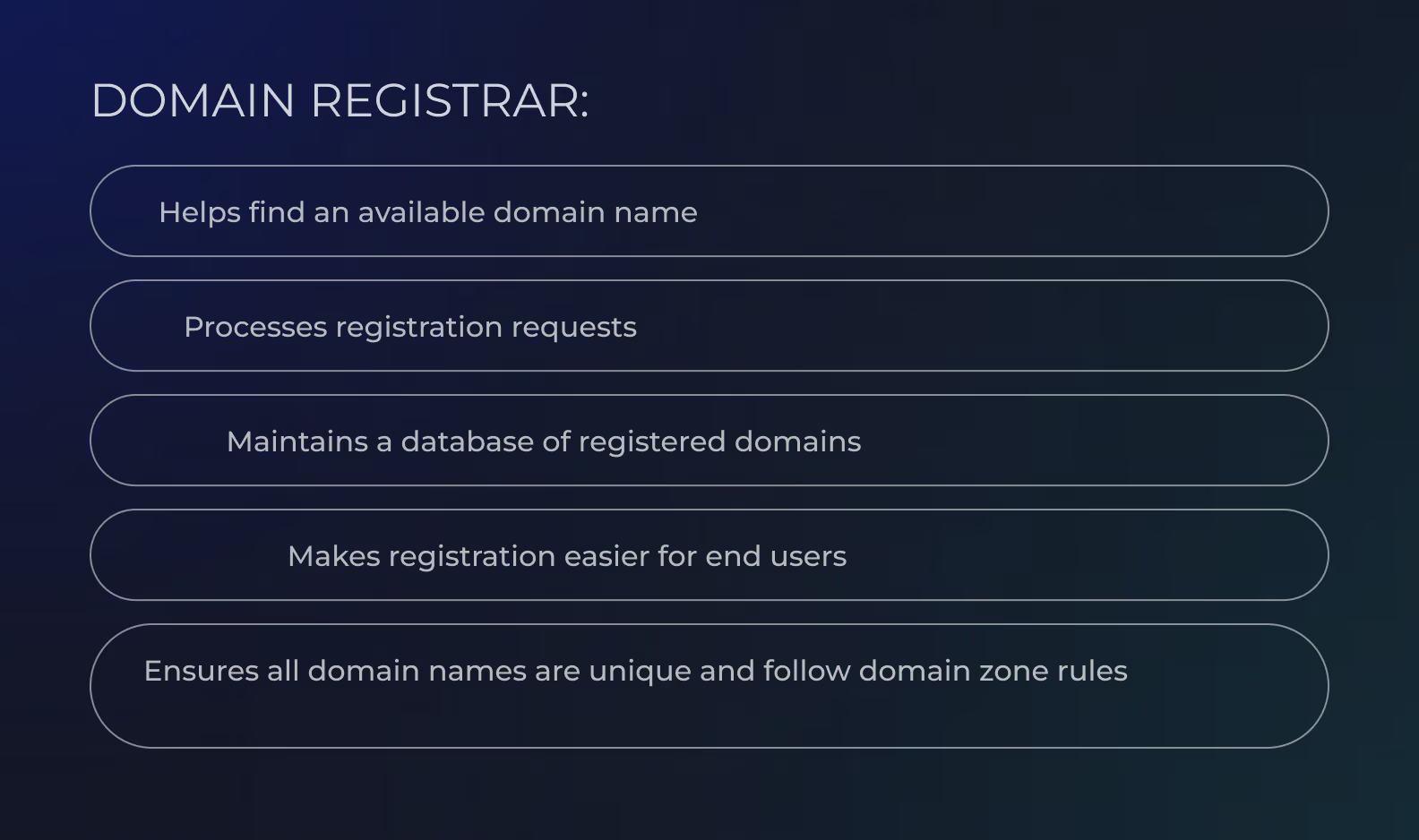
A domain registrar checks whether a name is available, then reserves it. These companies also offer a full range of domain maintenance services.
These include domain purchases, registration, and transfers between registrars or owners. Another service is managing DNS (Domain Name System) records. This means setting up and controlling the records that connect domain names to IP (Internet Protocol) addresses.
Domain registrars act as intermediaries between customers who need a domain for their website and domain extension administrators, such as those for .com, .org, and .net.
A domain registrar needs accreditation to operate fully. Entering this industry takes more than just launching a service.
The company has to pass specific technical tests before joining the list of accredited registrars.
The international organization ICANN (Internet Corporation for Assigned Names and Numbers) handles registrar accreditation. Applicants face strict legal, technical, and financial requirements. We researched the field and studied ICANN's documentation. Our main takeaway was that this would be difficult. The domain registrar market follows a system established over many years. Its rules are hard for newcomers to navigate.
The client handled the legal side. We took responsibility for the technical work: building the infrastructure that would help the registrar pass ICANN accreditation.
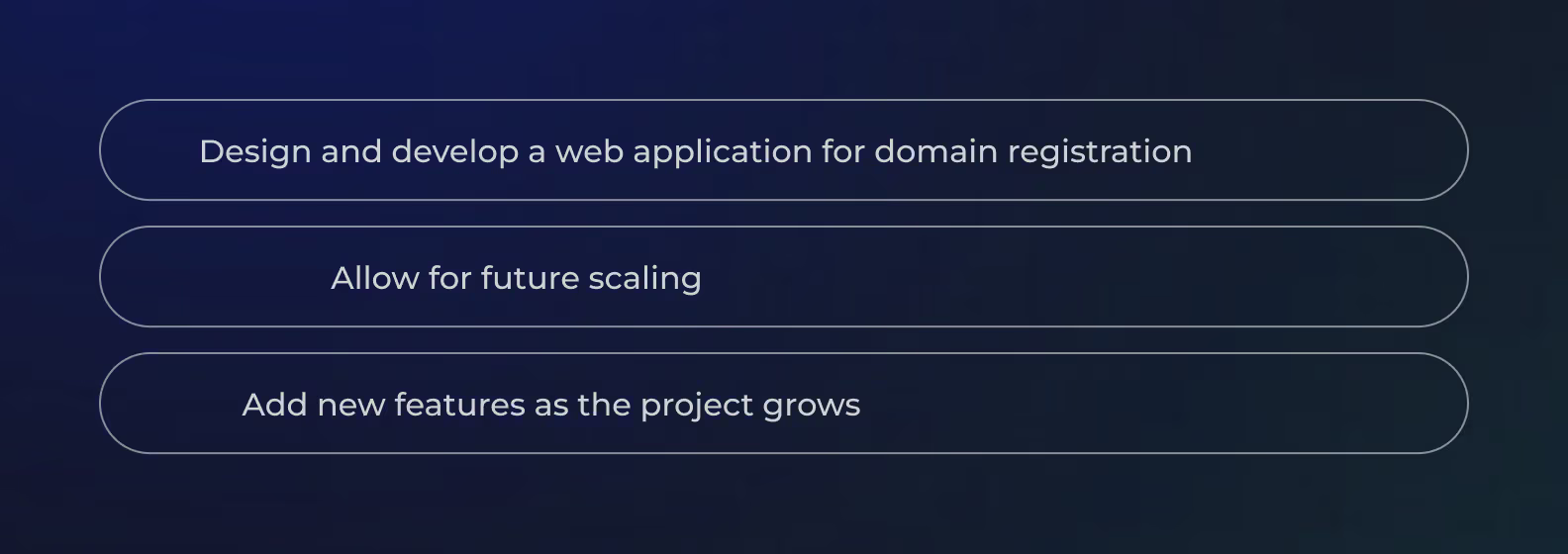
Here's what we needed to do:
On other projects, we had only encountered domain registrars as users. To understand industry practices and competitors' approaches, we first needed to learn how the domain registrar market worked.
Every project starts with gathering the client's functional and business requirements. We use these to write user stories that show features from the user's perspective. We also create BPMN (Business Process Model and Notation) diagrams to plan the system. Then we start designing.
The client entrusted the technical work entirely to us and had no functional requirements. There was just 1 condition: the registrar had to meet market standards.
We researched how a typical domain works technically. ICANN's documentation helped us understand the details. Looking back, we can say this:
The time we spent learning the fundamentals at the start paid off. We identified many risks early and understood how to work around them.
Here's a glimpse of the technical requirements. It's a little daunting. Just look at the scale! 😱
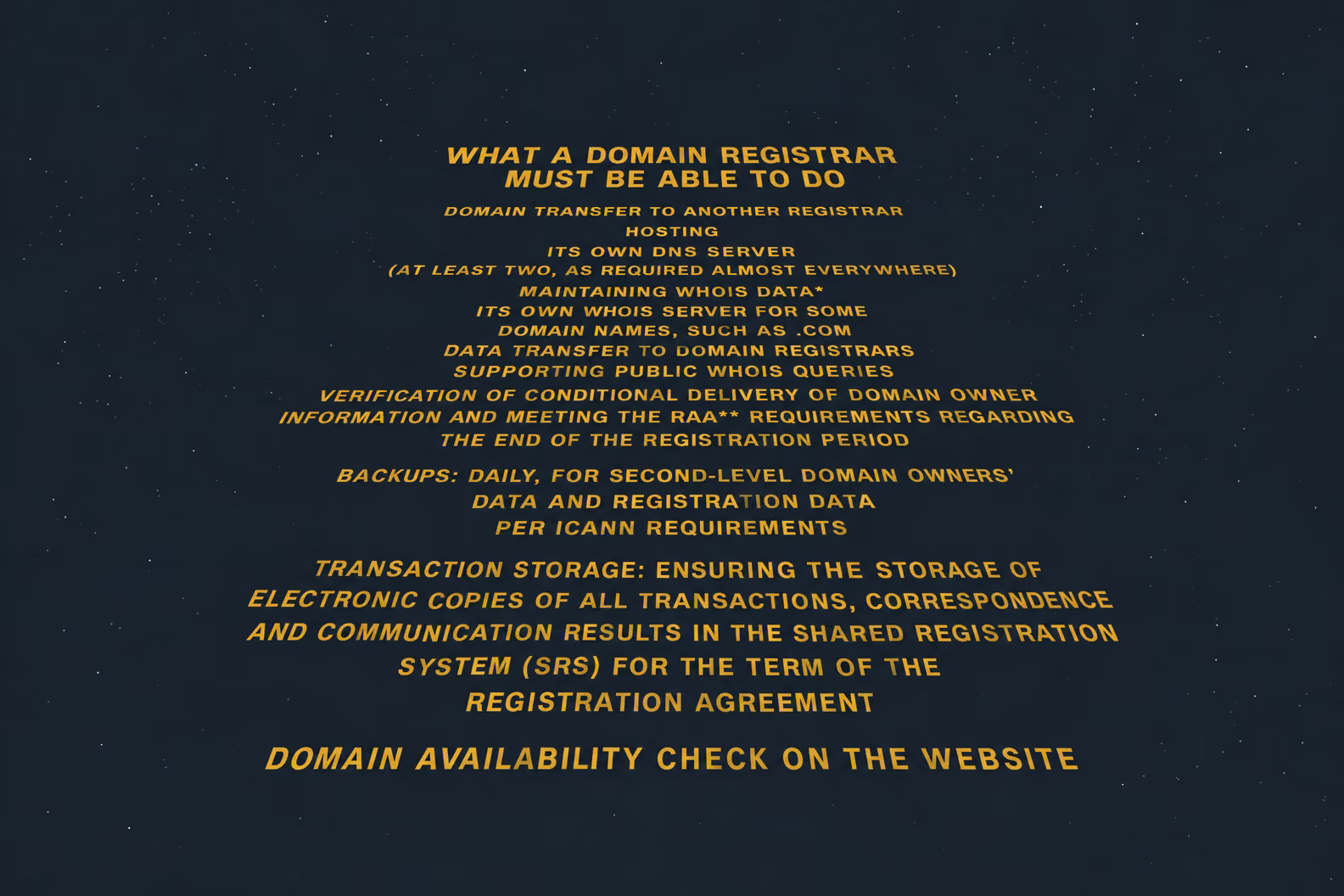
And that wasn't the full list of requirements to account for during development 🙂 We also needed to design a clear, usable interface and define the MVP scope. What did we actually need for this version, and what could wait?
The technical challenge was considerable. We had to set up extensive infrastructure from scratch while meeting ICANN's strict requirements. The deeper we went into analysis, the more questions arose. That made estimating the actual workload increasingly difficult.
We realized there was no point in continuing the analysis in isolation. We needed a conversation with the client, and that cleared things up! Once again, we saw that clear communication is essential to a project. Discussing uncertainties with the client early beats spending time on a solution that might not fit.
Here's what we agreed on, and how straightforward the answer turned out to be.
The client explained that the priority wasn't a one-of-a-kind custom solution, but a quality product that did its job.
We agreed to use an off-the-shelf solution rather than build everything from scratch. That suited both the client and our team.
An off-the-shelf solution is ready-made software. It typically provides standard features without lengthy configuration. The advantages include quick deployment and vendor support. This reduces development costs and saves the client considerable resources.
We reviewed several off-the-shelf options and chose COREhub. The company works with ICANN and is a reliable registrar infrastructure provider, one of the longest-established in the market.
COREhub only provides the backend, but that suited us. It made the task much simpler: we only needed to handle the design and frontend.

Our developers also wrote a backend integration layer to connect the ready-made backend to our frontend and keep them working together correctly.
Remember the ICANN accreditation required to operate as a domain registrar? We were very nervous about that stage.
Accreditation costs $2,000, and the fee is nonrefundable if you fail. Another attempt is only possible after 1 year.

Then the day arrived. What happened? It turned out that ICANN's specialists only checked how the backend worked. We had contacted their support team to learn more about accreditation, but ICANN hadn't shared this detail. It came as a surprise.
Since we used COREhub's off-the-shelf backend, there were no problems. Everything worked as expected, and we passed accreditation.
When designing the user experience and user interface (UX/UI) from scratch, we ask clients to complete a brief. It describes their target audience and the tasks people will use the product to solve. Our article on design briefs explains how a brief saves design time and helps avoid disappointment with the result.
The brief told us the interface needed a modern design while following proven approaches used by other market participants.
The client also clearly defined the positioning: data security and protecting personal information. The interface needed to convey reliability and privacy.
To find the right style, our designer studied competitors' websites and those of IT companies working in cybersecurity. They examined user flows, color palettes, and visual approaches. This research produced 2 different mood boards.
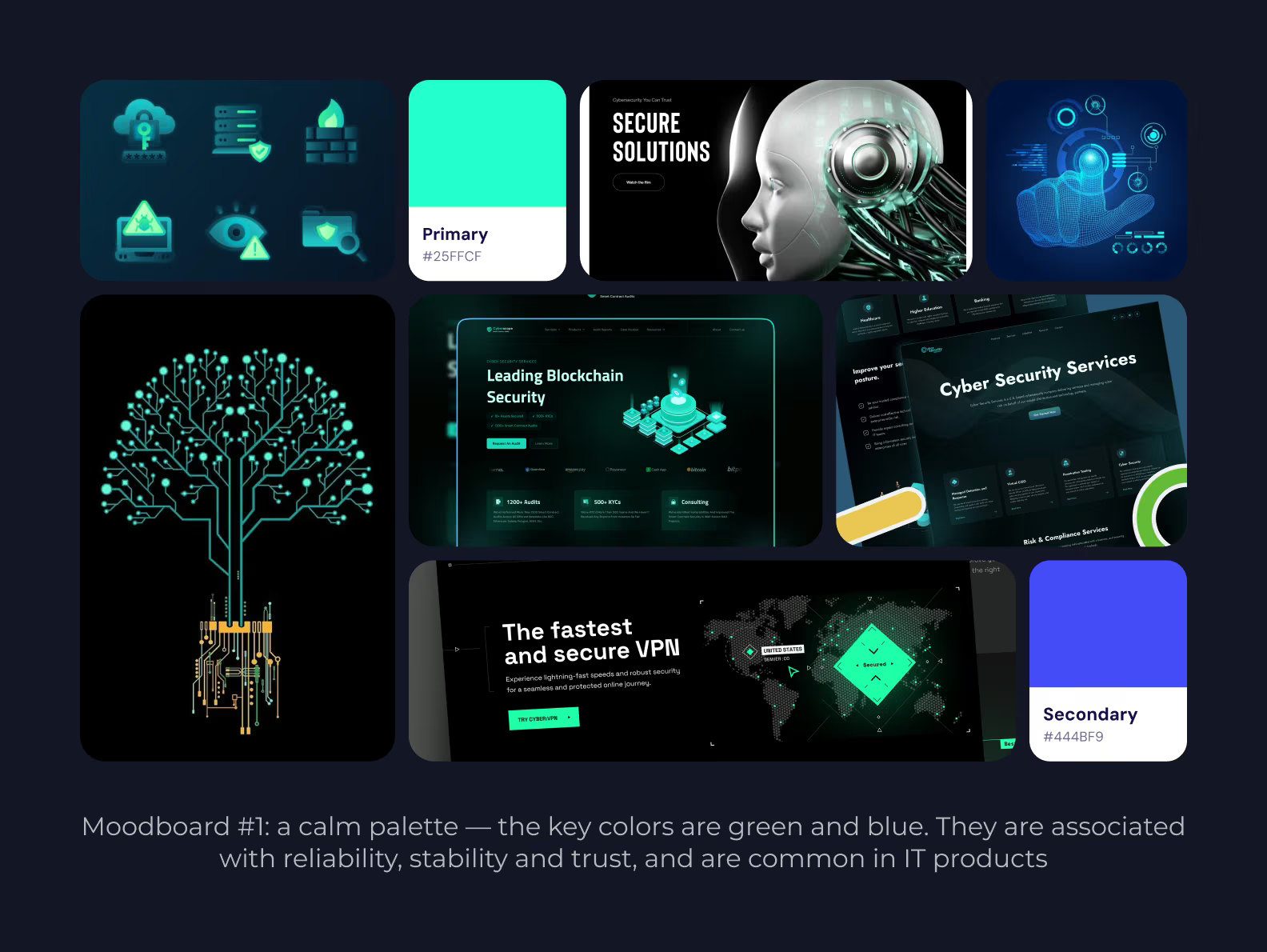
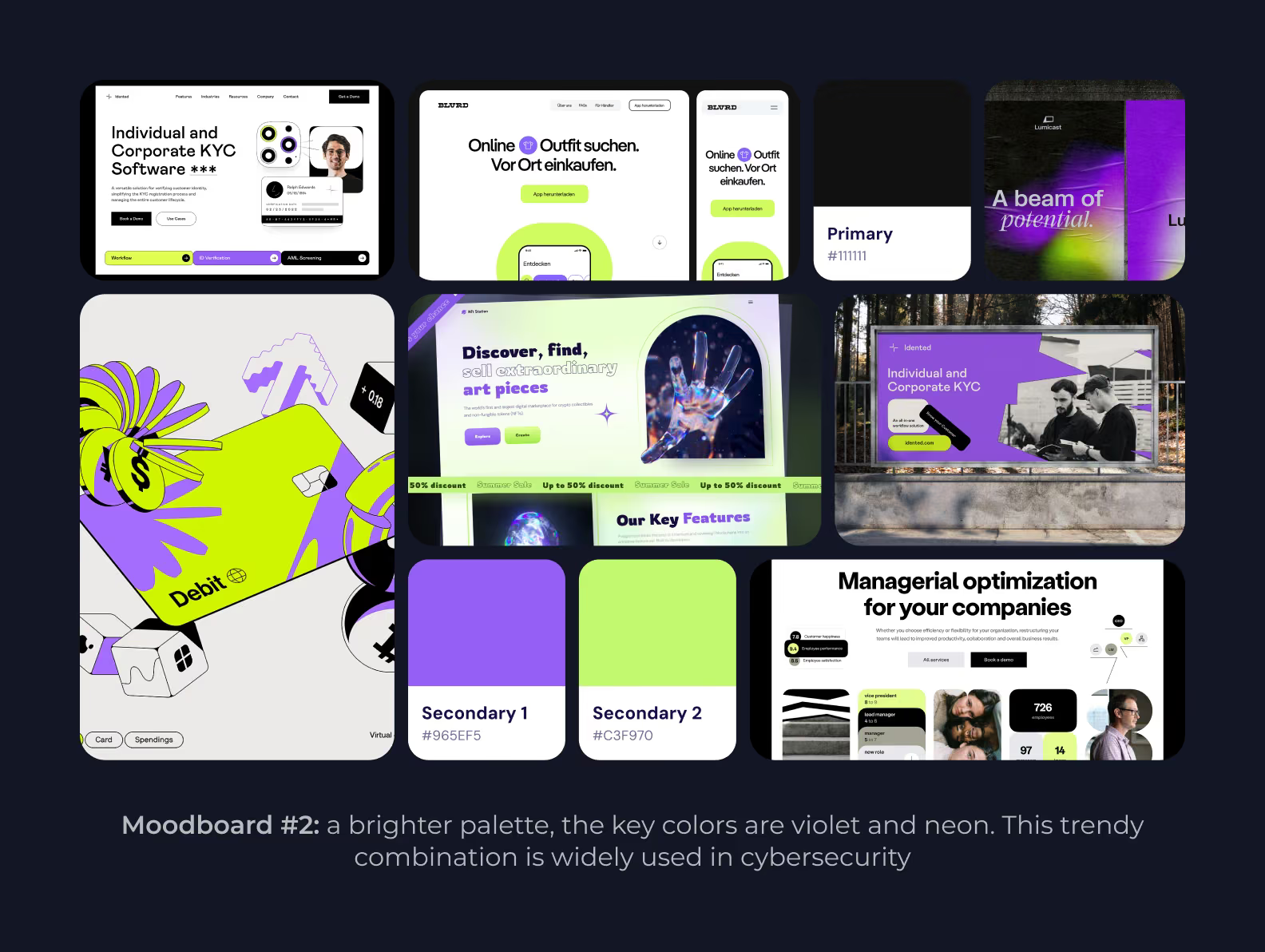
After discussing both with the client, we chose the first option: a calmer, cooler palette of blue and green. We suggested a black landing page background to stand apart from competitors, since many domain registrars use white.
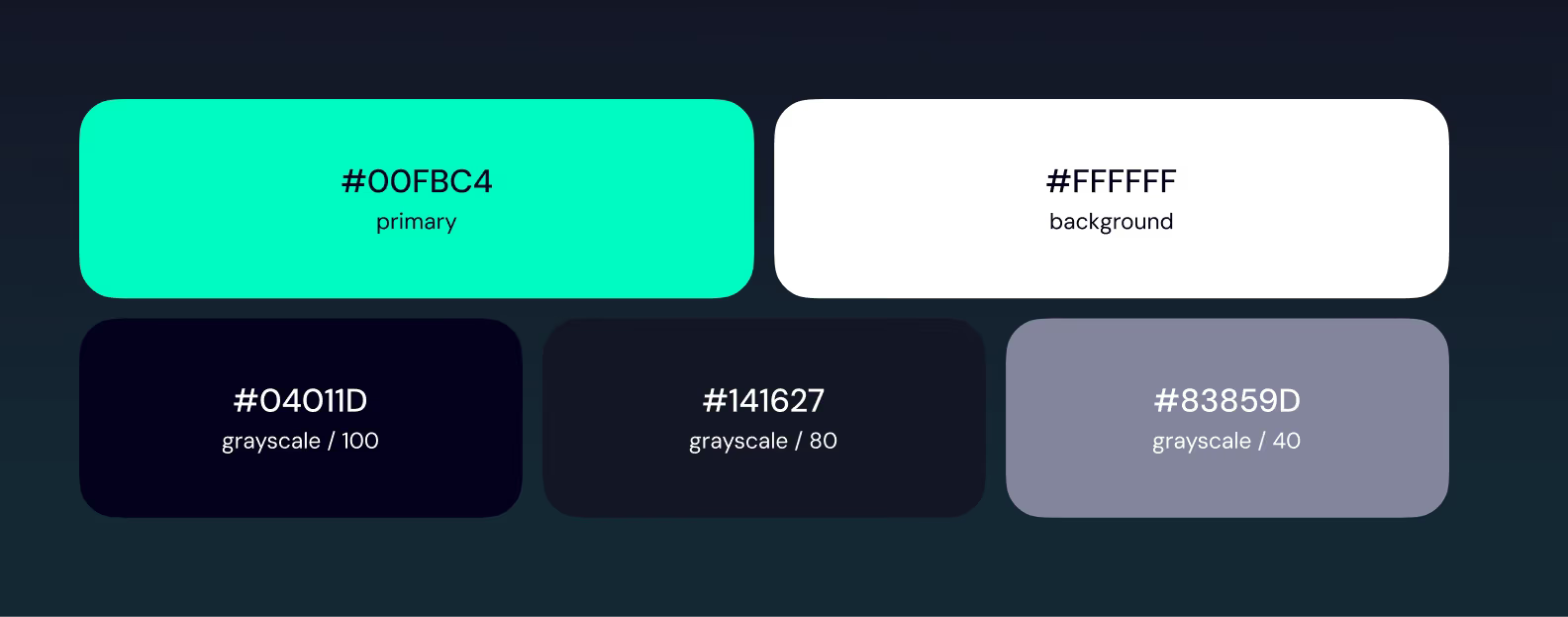
One of the intermediate versions during the design concept stage…
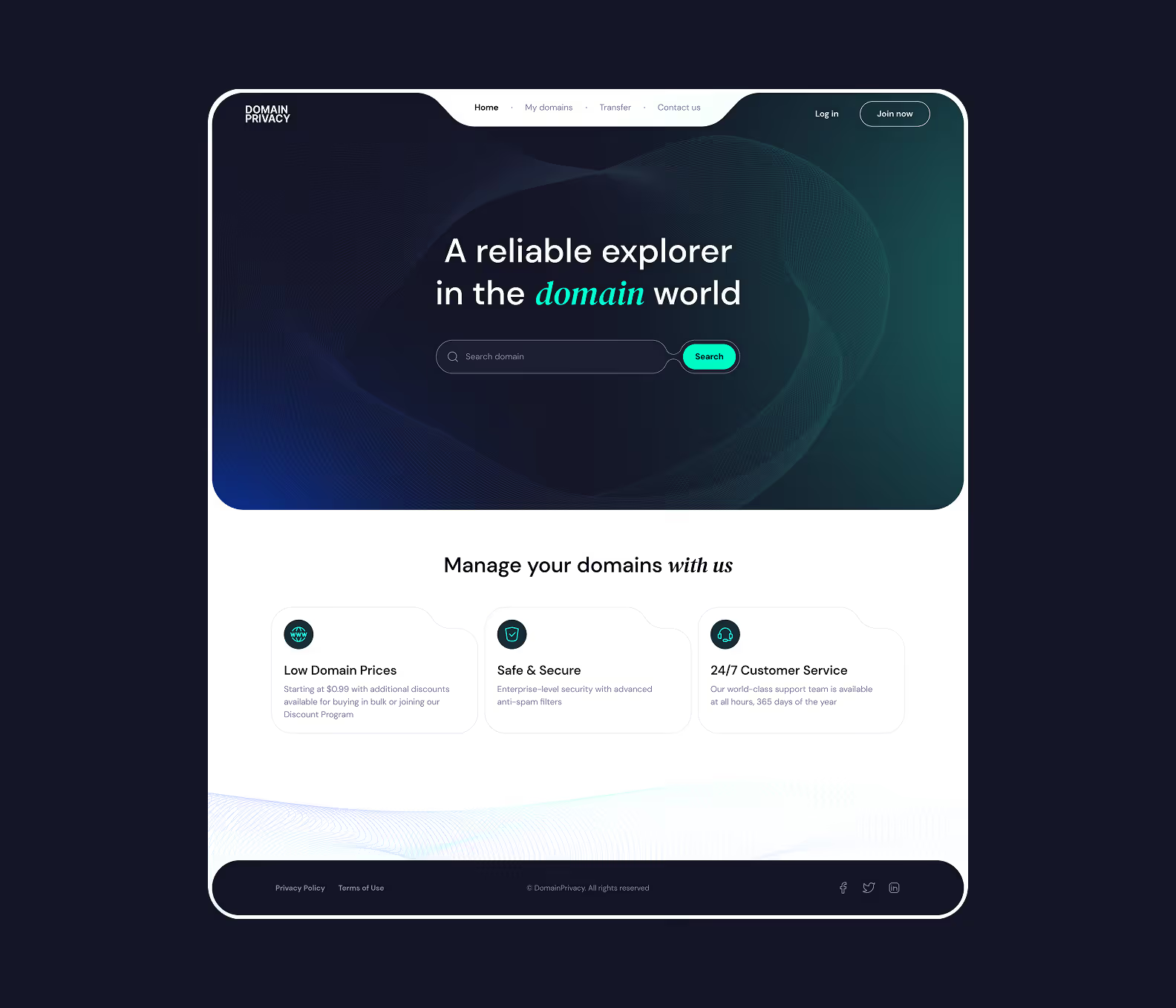
…and here's the final result:
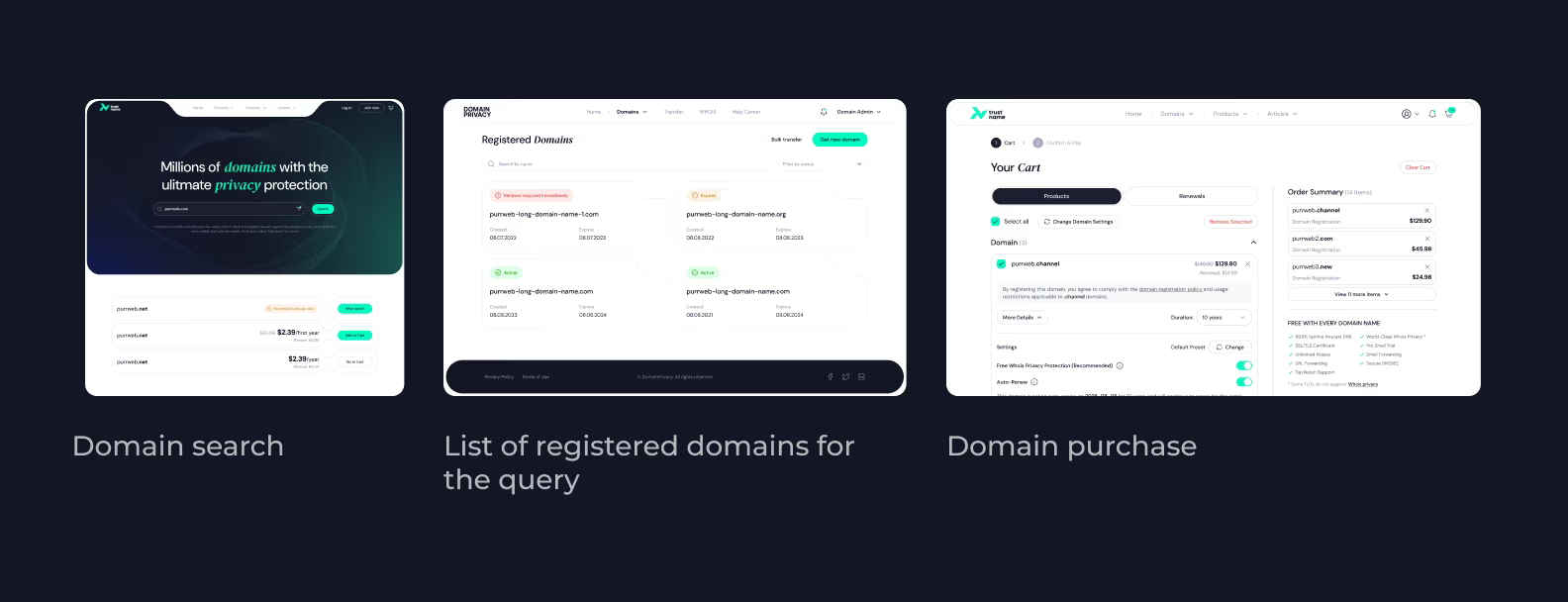
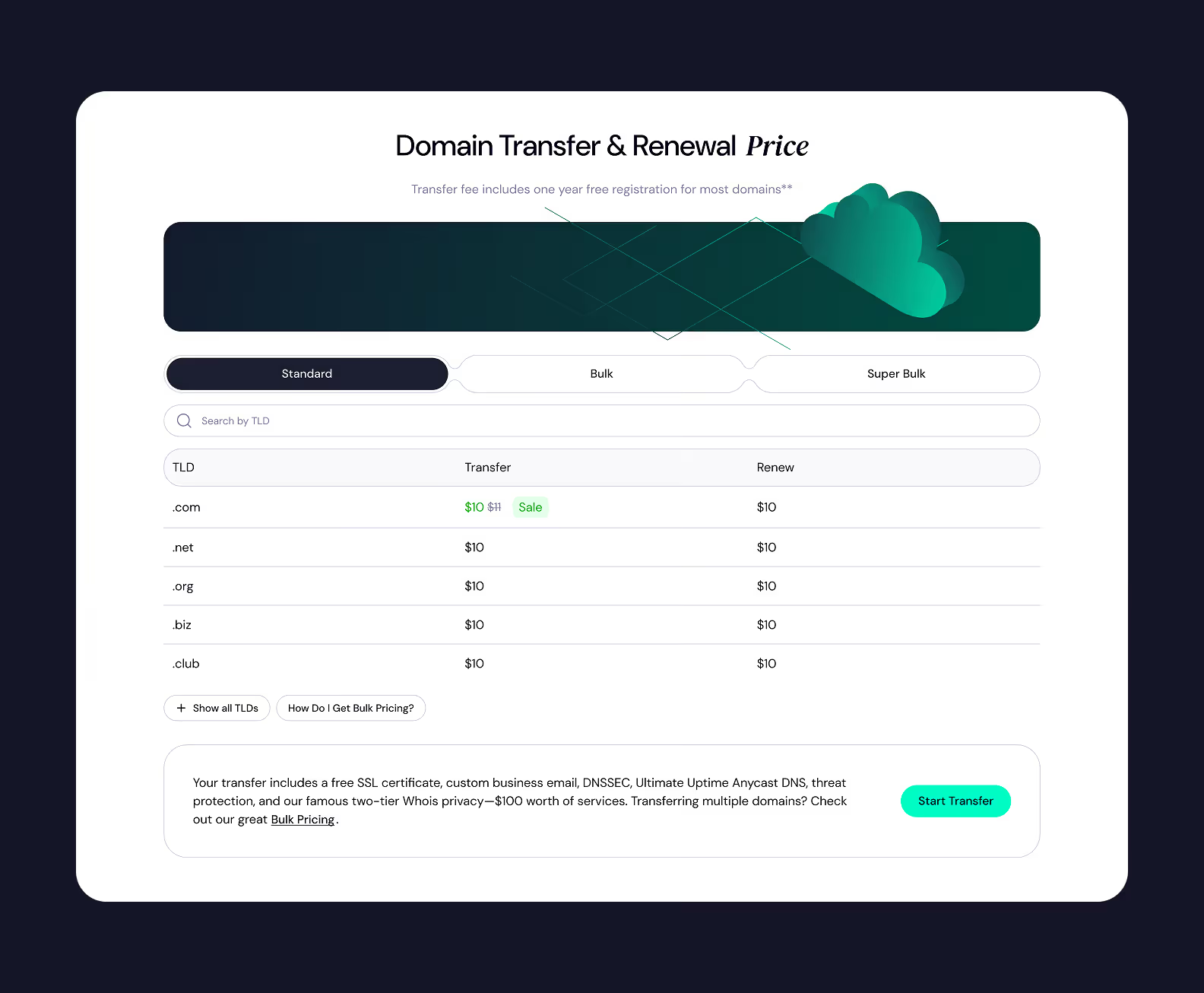
We designed separate landing pages for each service, including domain purchases, transfers, DNS management, and more.
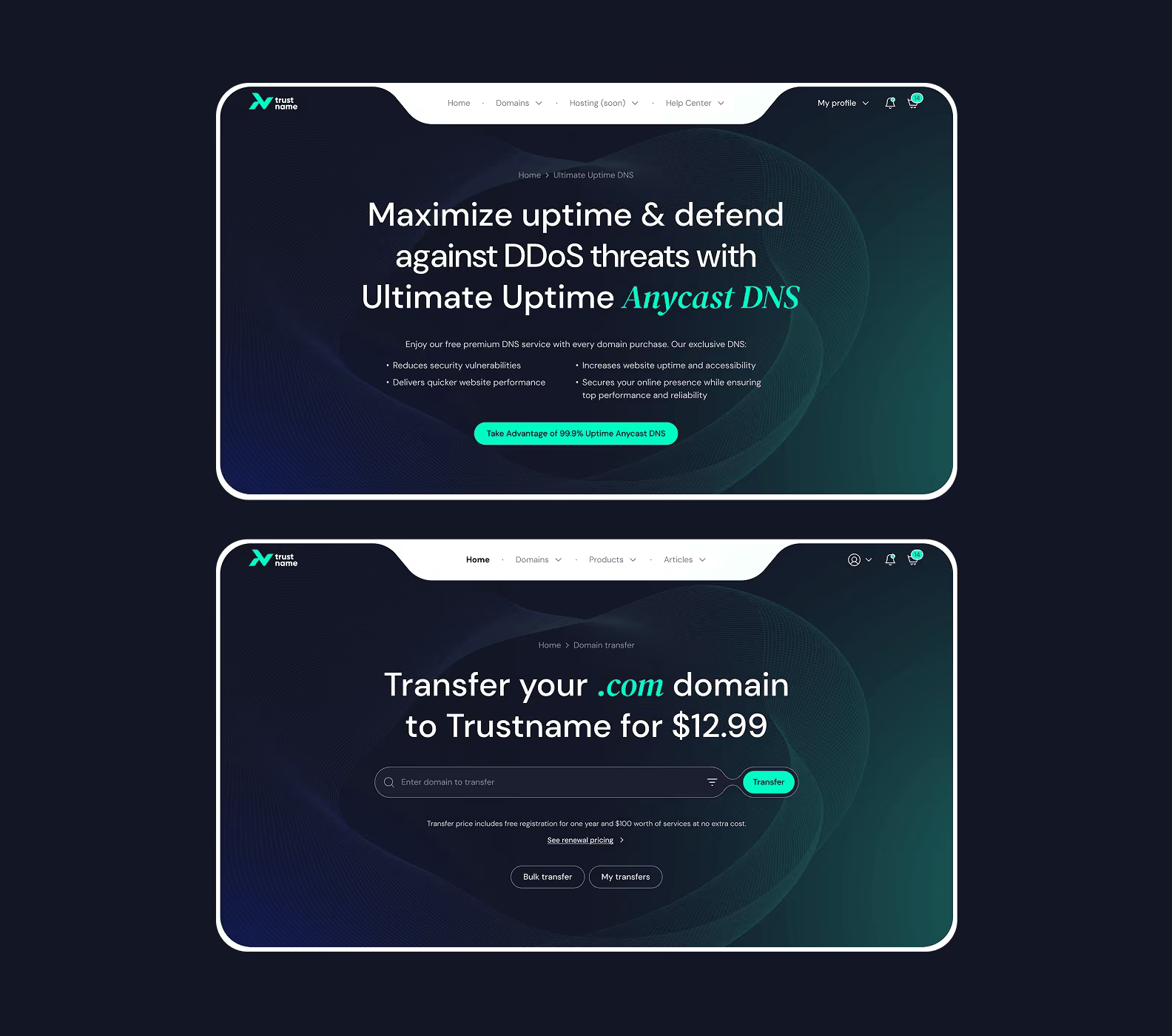
Inside the web app, we used a light theme so nothing would distract users from their tasks. Green buttons provide bright accents, guiding users toward their next steps.
There were challenges here, too! Here are a few of them.
Accepting that we couldn't test domain transfers in staging
We usually test features in staging, an environment that mirrors the live production setup. But testing domain transfers, which move a domain name from one registrar to another, was technically impossible there. We could only check them in production, after launching the web app. We had to accept that limitation 🙂
Spoiler: we tested transfers after releasing the first version of the app and confirmed that everything worked correctly.
Working through backend problems
The large number of asynchronous operations put a heavy load on COREhub's server. Tasks built up in the queue, and the system couldn't process them in time. That delayed server responses.
Sometimes the system processed the same tasks more than once, causing failures. It took 2 months to resolve these problems and get the system running reliably.
Spending more time in Scrum meetings helped us solve tasks faster
The project's complexity meant we spent more time in Scrum meetings than we usually do. Rather than have each team member research unclear points alone and struggle with difficult tasks, we decided to discuss them together. We worked through documentation and developed hypotheses as a team.
This helped the team complete the main tasks faster. The project benefited: we finished the main workload with around 350 hours to spare and were often ahead of schedule.
Releasing the first version of the web app and starting to scale
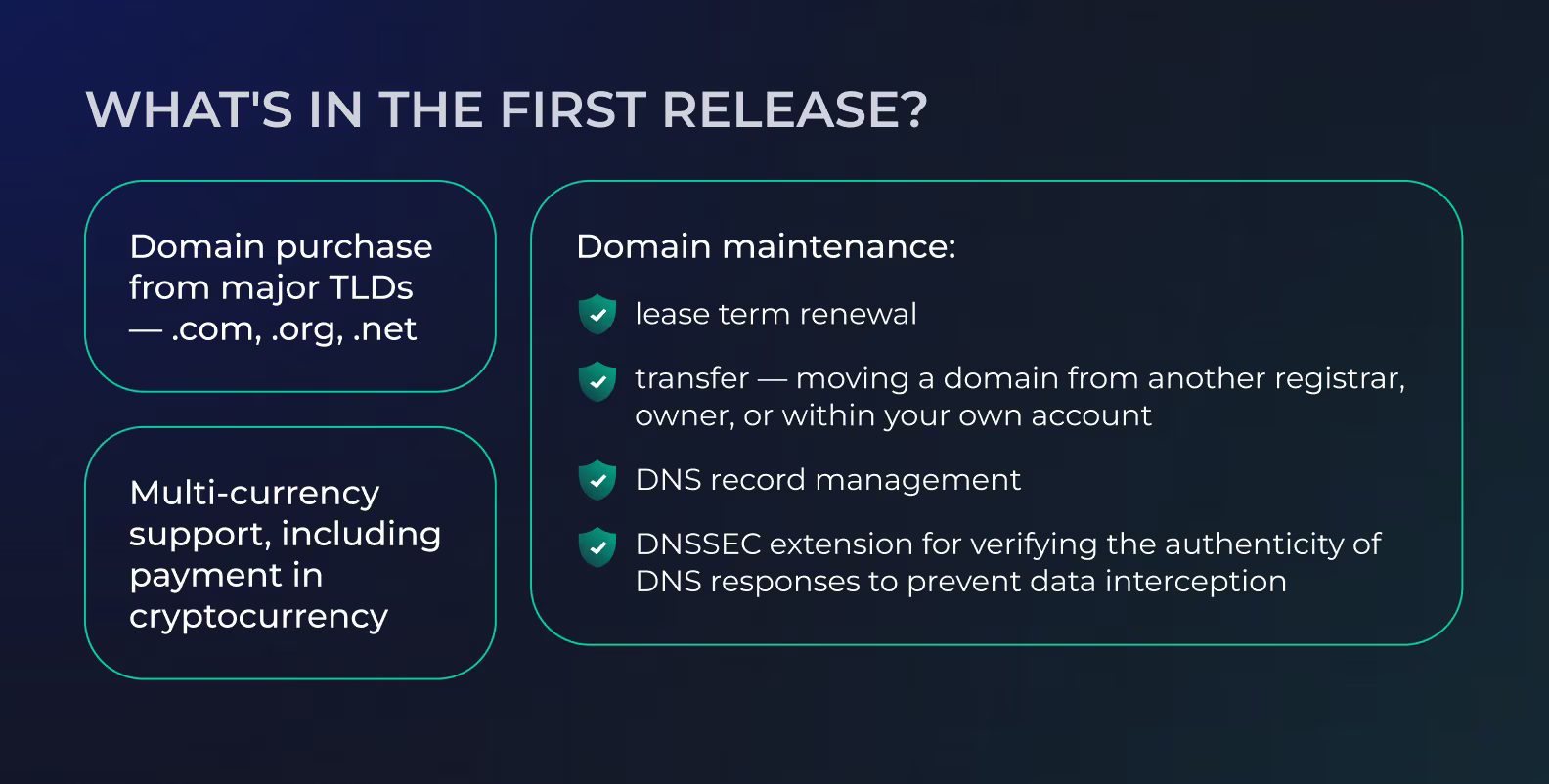
The first version of the domain registrar took us 6 months to develop. We delivered on time and within budget.
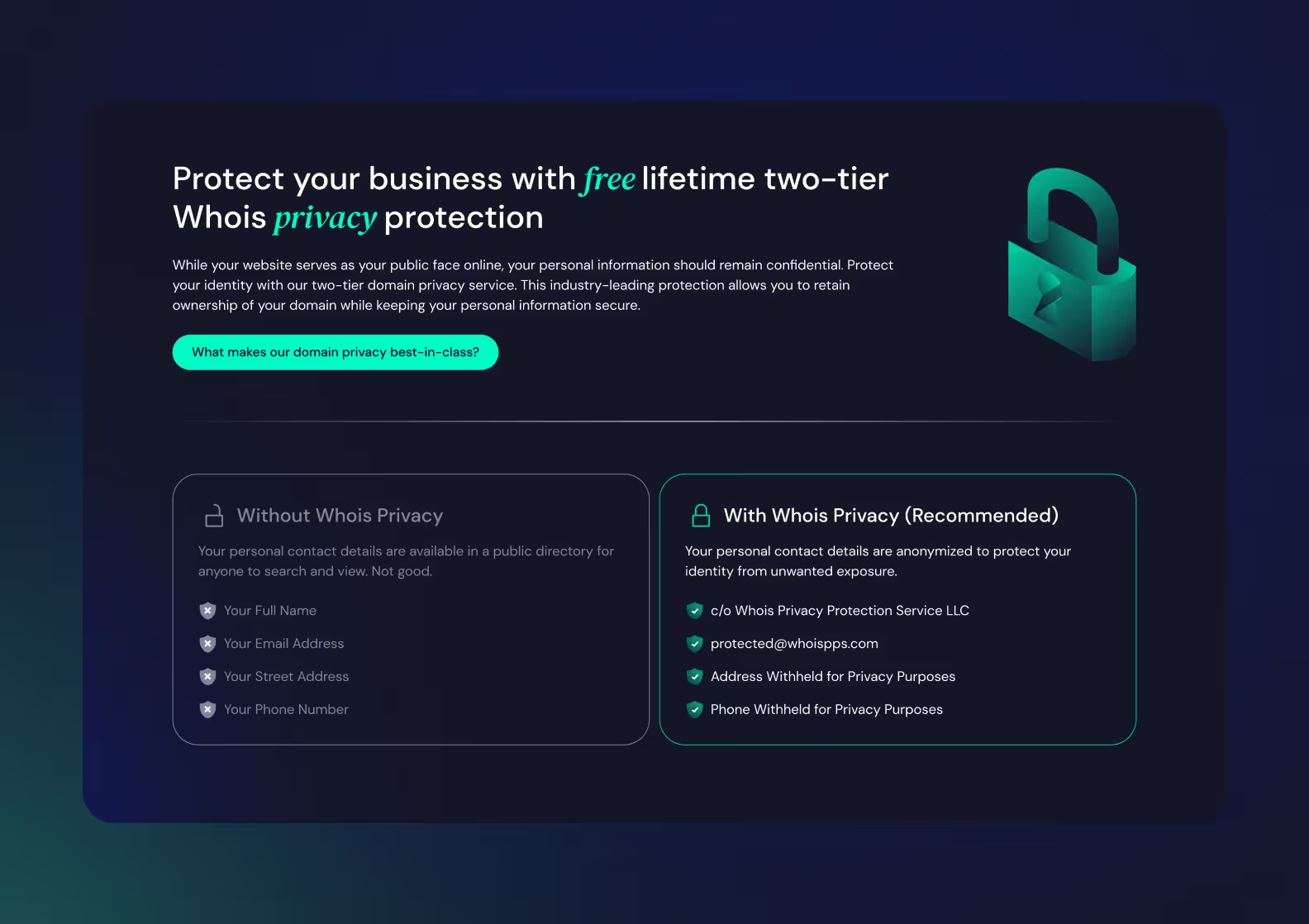
The main difference from similar products is buying and managing domains with maximum data privacy.
But the work didn't end there 🙂 We continued developing advanced features for version 2.0 of the domain registrar and added:
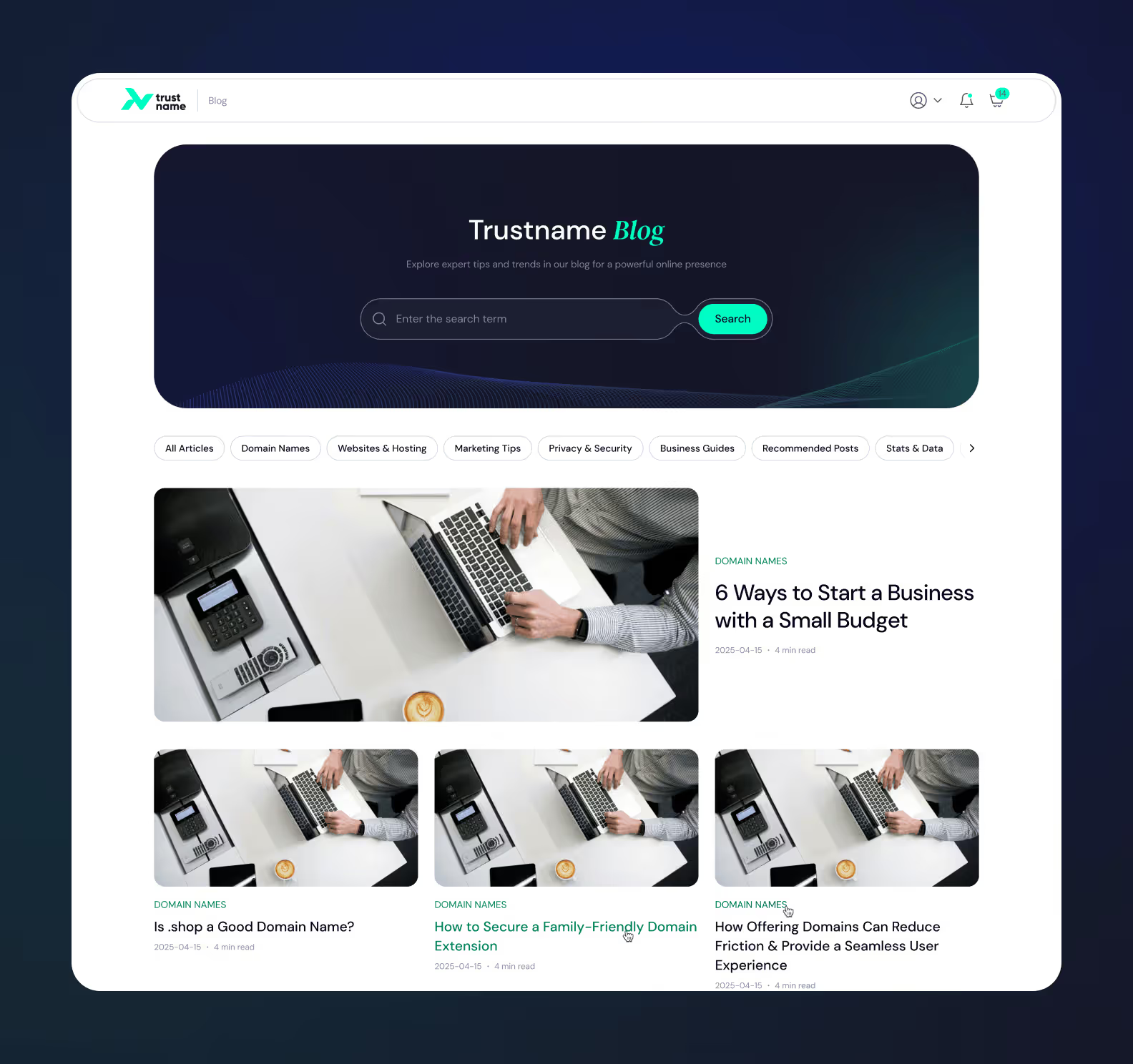
We also added behavioral analytics to help the client identify opportunities to grow the product.
The Trustname web app is live and available to users. It launched in March 2026, with 1,500 domains registered in the first month. We're starting development of a reseller API (application programming interface) for the business-to-business (B2B) segment. The client aims to reach 20,000 domain registrations per month by the end of the year.
The client assembled a product manager, CTO, and marketing team for the project. They plan to keep developing the product and compete in the domain registrar market. There's plenty ahead for the project.
➡️ Building a web app with domain registration or other complex integrations? Let's discuss the scope, design, and technical requirements. Fill out the form for a free project estimate within 48 hours.
Full-cycle custom development. We handle the entire process: design, development, and testing. We'll help you launch or hand over the project and documentation to your in-house team.
Over 10 years of experience. We've been building digital products for businesses and startups for over 10 years. We've completed 550+ projects across the Internet of Things (IoT), EdTech, marketplaces, dating apps, and many other fields.
Modern technologies. We work with a current technology stack to build complex, advanced features. Our solutions are easy to scale, update, and maintain.